

Dear Jomrade,
Today we’ve published:
- “Singapore This Week”, by Jom
- “Notes from a rental flat dweller”, by Sakinah Safiee
This was another week to savour our little red dot’s diversity. From the Shangri-La Dialogue to the WP’s leadership crisis; from the passing of Lionel Tan, acclaimed violist of The Tang Quartet, to the screening of “Samarang”, a 1933 film set here; and from concerns about consuming all those delectable, possibly carcinogenic charred bits of claypot rice, to news about the annual fruiting of durian trees on public land along Lorong Lew Lian. We write about all these—the lew lians aside–in “Singapore This Week”.
Two other stories reminded me of the vast socio-economic divides that exist across our tiny geography. The first concerns a foreign worker dormitory in Sungai Kadut in the far north. Its operator, KT&T Engineers and Constructors, faces more than 20 charges for running a shoddy operation. Failures include: faulty urinals and missing shower curtains in communal toilets, a broken squatting pan in a toilet, holes in damaged walls, broken floor tiles in a corridor, exposed wiring cable and a metal pole dangling from a ceiling, an exposed circuit box, a loose ceiling fan, no guardrails on multiple upper bunk beds, and my favourite, a broken cubicle partition in a toilet. Fancy pooping while your neighbour watches?
These were all found early last year. Somehow I thought our Covid-era excesses, injustices, and subsequent introspection would have spelled the end of such deprivation. Wrong.
On the other, glamorous end of the island came the story of robbery up in the sky. A woman with S$50,000 in cash was looking for a way to convert and deposit it into her bank e-wallet. She found somebody on a messaging app. She went with her daughter to meet them in a room at MBS. There, they were ambushed by three Mainland Chinese men. One restrained her by the neck as they robbed her. They later locked both mum and daughter outside on the balcony. (Both sustained minor injuries.) The men were in a plane on Changi’s runway, bound for Shanghai, when the police caught up with them, ordering the plane to return to the gate.
Though the woman’s identity wasn’t revealed, I’ll hazard a guess that she’s also Mainland Chinese. How many rich foreigners are running around Singapore with S$50,000 in cash? Are such illegal services so normalised here? I’m reminded of the case of the Myanmar arms dealers caught at Changi in late 2023 trying to leave with almost half a million dollars. They were fined a paltry S$20,000 in total.
So yes, our society’s diversity is on full display, as Asia’s rich wash their dirt here, in edifices built by Asia’s poor, who can’t even poop in peace. A regional meeting point, indeed.
- Given Hegseth’s mocking of it, and China’s “low-level” participation, is the Shangri-La Dialogue still relevant?
- Will Pritam Singh remain leader of the WP after its special, end-June cadres meeting?
- How worried should you be, medically, about savouring wok hei and charred foods?
- Pink Dot returns, refreshed
- “Samarang”, a 1933 film set here, and the experience of lost cinematic rituals
- Obituary of Lionel Tan, violist and co-founder of the T’ang Quartet
Above are the issues we chose to explore in more depth.
Other news this week included: local robotic-hands firm Sharpa joins Nvidia and Unitree on humanoid robot project; a new registry of AI agents for 150,000 public officers; the Religious Rehabilitation Group studies the impact of AI and tech on radicalisation; life expectancy in Singapore hits new highs; only 61 percent of people surveyed find our roads safe; CNA on the hidden costs of high dental fees on an ageing population; CNA on the implications of homegrown food brands outsourcing production abroad; ST on how to evacuate when a medical emergency strikes overseas; ST commentary on the importance of anti-drug conversations at the dinner table; the uncertain future for Singapore’s lighthouses; coping with loneliness and self-harm through muay thai; taxi driver looking for the owner of a S$120,000 Rolex found in her cab; Loh Kean Yew’s loss at the Singapore Badminton Open final; and as durians fruit on public land along Lorong Lew Lian, a reminder that you’re not allowed to pick them.
Join 1,700 members keeping Jom independent. From S$10/month—full access, no compromises.
“Notes from a rental flat dweller”, by Sakinah Safiee
Saki first joined us part-time as head of social media, then full-time as head of research and social media, then she started writing blurbs for “Singapore This Week”, then making videos and writing full essays too. She’s started inspiring others in the broader Jommunity. Just in the past week, we’ve had invitations for Saki to make a video covering an event, and pitches from people hoping to mimic her approach in “All in good time: the poetics and politics of partying in Singapore”.
I sometimes forget what she’s up to, partly cos she works so fast, although I do know that today’s essay on life in rental flats was many months in the making, slowly developed from her NTU undergraduate thesis. Her research focussed mostly on the role of gossip in these small, dense communities, and I’m glad she’s broadened that scope for this Jom essay.
What we get, then, is a startling portrait of what life is like for Malay women—both (Gen Z) Saki and her older interviewees—living in precarity at the bottom end of our public housing system. Here’s her opening:
“‘Bring your shoes in, they’ll get stolen.’ Before CCTVs were installed at the staircase landings and corridors, that was my mum’s standard greeting to guests to our rental flat. Over the years I’ve had my rollerblades (thrifted from Cash Converters), a knockoff Yeezy hoodie, multiple pairs of shoes, and even an umbrella, stolen. Before this unit we were living in a three-room HDB flat in Bedok but—in a story familiar to others, I’d later realise—multiple financial missteps forced us out of our home and into the public rental flat system…
Before she moved out, my sister and I used to share the same bed. Our bodies negotiated inches and my mornings were greeted with her drool on my pillow. Outside, in the living room, my parents sleep on single mattresses unfurled in front of our TV console. My father’s snores carry through the flat, cutlery clanks at midnight as instant noodles are prepared, the sounds of the bathroom tap running echoes without restraint. Sound moves easily here, crossing the short distances between rooms.
As a Malay rental flat dweller, it’s hard to not feel like I’m living the stereotypical Malay experience—one that is shaped by prejudice and misrepresentation. Online, you’ll see forums or videos associating Malay identity with a litany of social ills: teen pregnancies and marriages, health deficiencies, deviances, and dysfunctional families. The typical ‘type M’ behaviours…
Meanwhile, intra-community tensions are sometimes captured through the phrase ‘Melayu makan Melayu’ (Malay eat Malay). It’s a colloquial expression that describes the sabotaging tendencies of envious individuals towards more successful counterparts, often through gossip.”
Readers of Teo You Yenn, whom Saki studied under, will probably have some sense by now of life in Singapore’s rental flats, though I’m unsure if there’s been such an intimate and deep first-person account. Thank you for being so open and generous with your story, Saki.
Jom fikir
Sudhir Vadaketh, editor-in-chief
Jom
Behind Jom’s art with Charmaine Poh
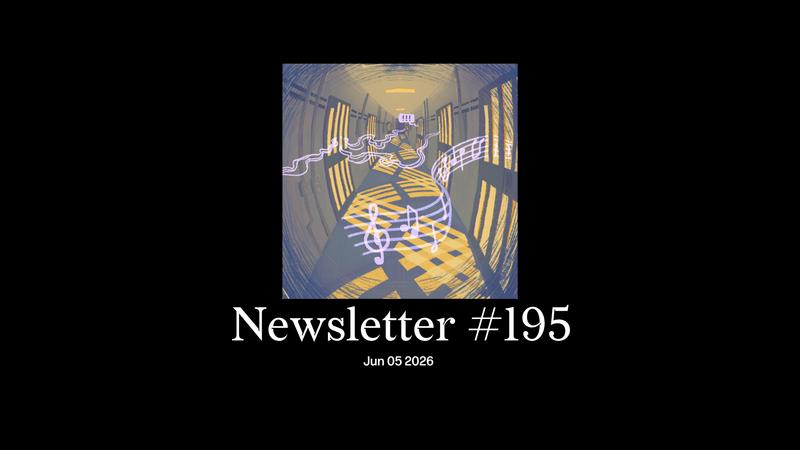
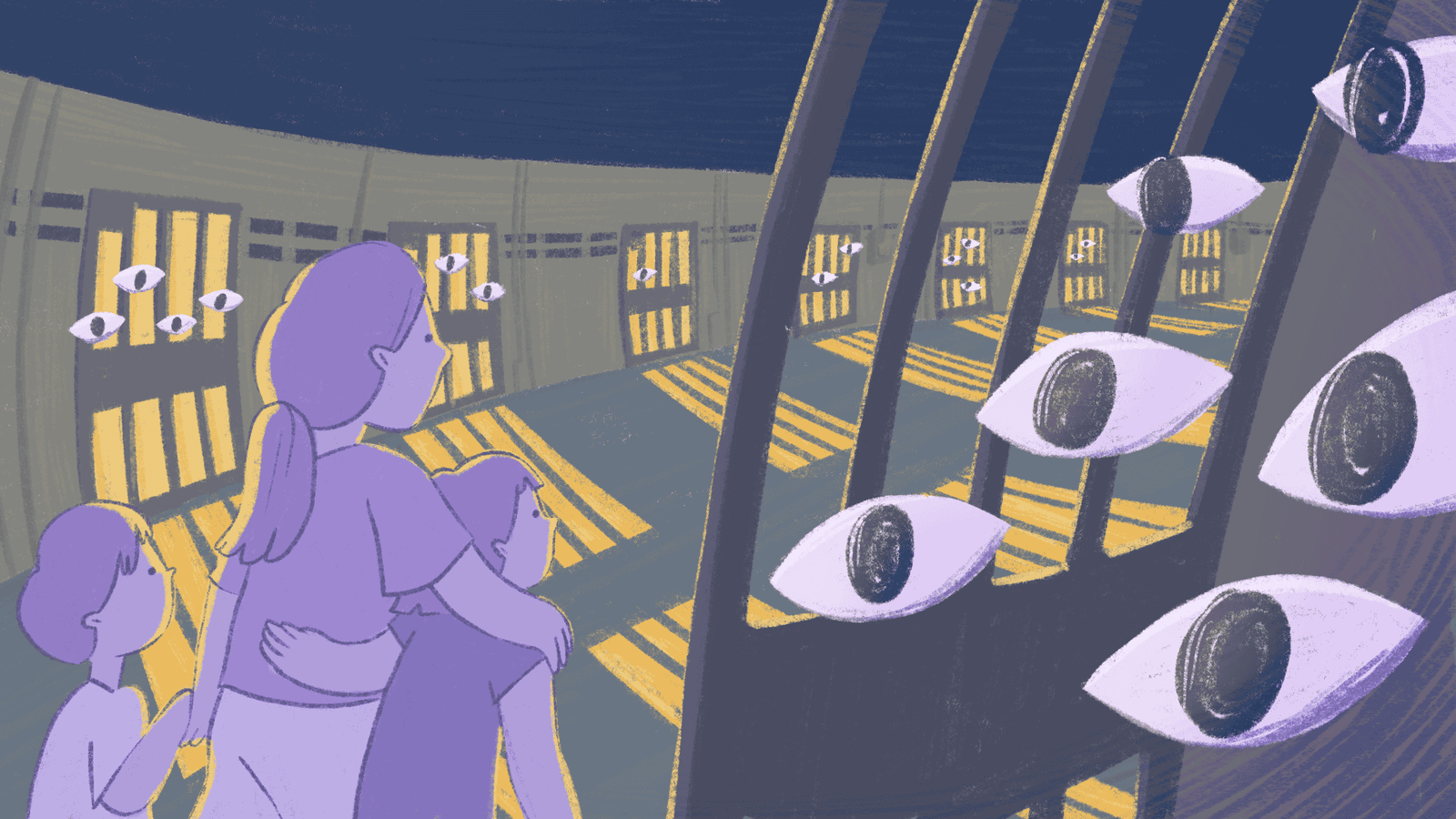
Syafiqah Noorman’s illustrations accompanying Saki’s essay on rental flats focus on architectural elements which contribute to the “democratic surveillance” that occurs in such cloistered urban environments. In the header, a single mother with two children finds herself observed by the inhabitants along a corridor, while the spot depicts how private soundscapes and smells never remain as such, drifting and wafting into communal spaces. The experience of being confronted by each other’s lives on a daily basis helps form an embodied knowledge, which Saki uses to delve into how people under pressure navigate “dignity, uncertainty, and survival.”
Jom on race and class
 Sherryl Cheong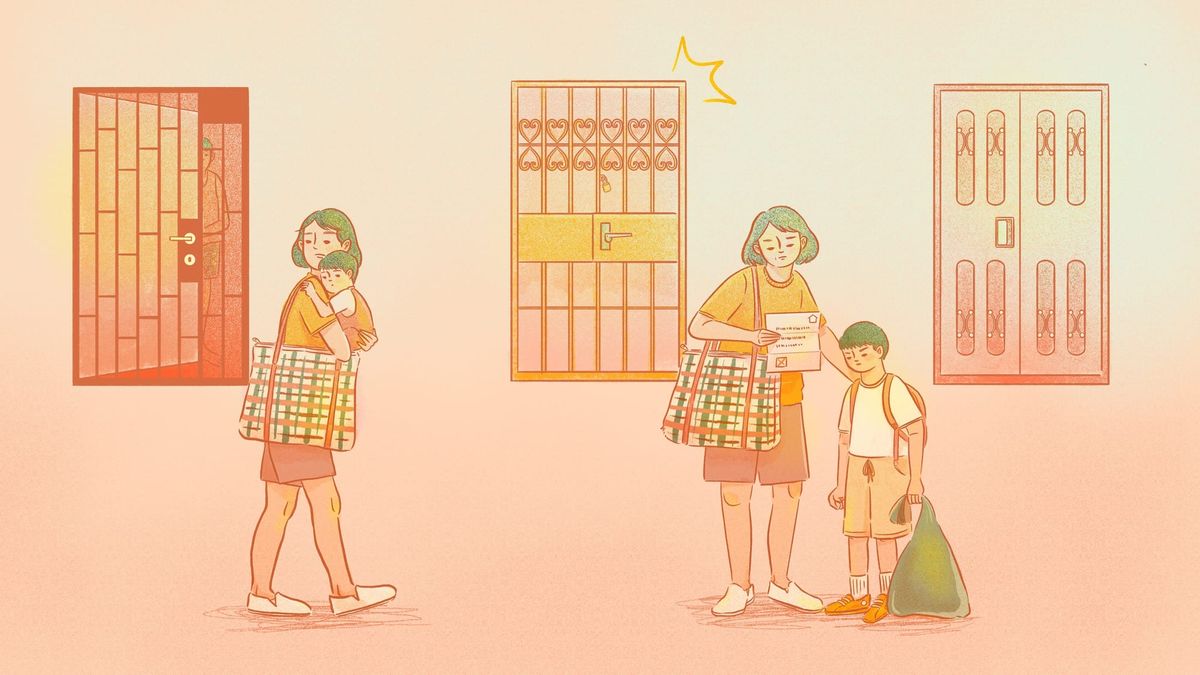
 Jonathan Lin
 Shin Bin Tan
 Reeta Raman
Singapore This Week
Society: Pink Dot spreads out

Contrary to what conservatives here might want to believe, the repeal of S377A was simply a milestone, not a finishing line, in the fight for equality. The 18th edition of Pink Dot, Singapore’s de facto pride parade and one of our most significant social movements, reflects this continued evolution. This year’s campaign is titled “Come get personal”, and seeks to centre the multitude of queer communities in Singapore. This will be done partly through a spatial reimagination of Hong Lim Park—a shift from the usual central stage and concert experience to dispersed zones and “villages” that will focus on different aspects of queer life in Singapore—from relationships and identity, to school, work, community and everyday social navigation. Over 20 community groups will host experiential booths and activities across the park. These include South Asian Pride Singapore and WLWheels, a group of lesbian riders who’ll be there with their motorbikes.
All of which suggests that there’ll be not just single-spot picnicking with chums but more churn through the park, offering “multiple opportunities for participation at different comfort levels”, as the organisers said. “Even in its 18th year, Pink Dot is still the first LGBTQ+ community event many people in Singapore attend,” said spokesperson Andee Tay. “It can be daunting to come alone or for the first time, and this year’s format makes it more accessible for people to connect to the community. At the same time, we wanted to create fresh opportunities for long-time attendees to connect with the community in new ways.”
So whether you’re a newbie, or an oldie suffering from Pink Dot fatigue, you might want to visit Hong Lim Park from 4-8pm on June 27th. Those keen to sponsor Pink Dot can do so here.
Some further reading: “The repeal of Section 377A: democracy, secularism, and acceptable speech under threat”; and “Hong Lim Park: A people’s history”
Other stuff we like
Watch “Al Awda”at Filmhouse, June 14th. Jason Soo’s documentary about the 2018 Freedom Flotilla mission to break the Israeli blockade of Gaza was banned from public screenings from Feb-May. IMDA said the period coincides with “important dates that clashes with the Jewish, Israeli and Islamic calendars. So this will include Ramadan, Hari Raya Puasa, Hari Raya Haji...screening of the film should not catalyze negative sentiments between various groups.” Thankfully, the government has now allowed it.
Celebrate Swedish Midsummer tomorrow. Singapore and Sweden celebrate 60 years of diplomatic relations this year. Organised by the Embassy of Sweden in Singapore, Swedish Midsummer will take place at Gardens by the Bay tomorrow from 4pm, bringing flower crowns, folk music, dancing around the Midsummer pole and Swedish food to the heart of Singapore. Admission is free and open to all.
“Let’s save our school canteens”, this Sunday. Those who attended our recent Jomfest may have heard Yeo Min, co-founder of the Museum of Food, speak on the food panel. This Sunday the Museum, in Joo Chiat, is hosting a discussion where participants will get to “talk about our school canteen memories, hear from canteen vendors, and brainstorm ideas for the future of our beloved canteens.” As always at their events, there will be food: “We're going old-school this round, with some of our favourite childhood snacks.”
A flavour of Jom. Occasionally, Jom publishes essays outside the paywall. These are on issues we think are in the public interest, and deserve a wider airing. In the past two years, we have published nearly 50 such pieces. Read some of these if you’d like to see samples of our work. We hope they’ll convince you to subscribe. And even if you’re here with no intention of doing so, we hope you’ll enjoy these offerings and consider it time well spent!