

A distant relative can’t compare to your next-door neighbour. And water that is faraway cannot save a nearby fire. Put both Chinese proverbs together and it becomes clear—if your house is on fire, you should get a fire extinguisher from your neighbour rather than your second aunt 20km away.
Indeed, there are many other times when a friendly neighbour can be helpful. Missing a pinch of sugar for the dinner bubbling on the stove? Need someone to water your plants in the corridor while you’re away? Want someone to sign your petition protesting the parking situation in your neighbourhood? Check, check, check. Proximity matters, even in a small place like Singapore, as it affects your access to relationships and resources. And so, any systemic sorting of population groups by residential location would create a situation where the network of neighbourly ties and social capital are similarly sorted.
The phenomenon where people are spatially sorted (willingly or not)—by race, ethnicity, nationality and/or socioeconomic class—is known as ‘residential segregation’. A textbook example is the Venetian Ghetto, an area where Jews were forced to live during the 1500s, and which was physically separated from the rest of Venice by gates and walls.
In Singapore, there tends to be much focus on ethnic-based residential segregation. Indeed, the government introduced the Ethnic Integration Policy (EIP) in 1989 as a response to fears that the clustering of different ethnic groups into separate neighbourhoods would undermine social harmony. But there’s typically much less focus here on socioeconomic segregation: the clustering of different income groups.
Why might one care about socioeconomic segregation? Studies suggest that neighbourhoods are important sites where one can form ‘weak ties’: social ties with casual acquaintances that have been shown to be important for obtaining jobs and other opportunities. Imagine, when chatting with your retired neighbour about your post-graduation plans, she mentions a friend who’s the hiring manager at a cool tech start-up you’ve been eyeing, and offers to link you up. But what kind of neighbourhood would this interaction likely occur? In a neighbourhood of mainly low-income residents, weak social ties are unlikely to translate into job opportunities that support upward social mobility. Given the high levels of socioeconomic inequality in Singapore, and growing concerns about social mobility stagnating, we must examine the impact our (much prized) built environment generally, and the EIP specifically, might be having on social stratification.
The first step to understanding the relationship between the EIP and residential segregation (socioeconomic and ethnic) is to estimate levels of segregation within Singapore’s urban landscape. This is what I did in “Do ethnic integration policies also improve socio-economic integration? A study of residential segregation in Singapore”, which was recently published in the journal Urban Studies.
Some of what I found would be unsurprising to most: a cluster around the Holland-Bukit Timah area had the highest combined levels of ethnic and socioeconomic segregation in Singapore in 2020. More unexpectedly, my analysis also suggests that in majority public housing subzones, those with higher levels of ethnic segregation had lower levels of socioeconomic segregation, on average. The inverse is also true. In other words, in and around public housing estates, there is a trend where a greater mixing of ethnicities is accompanied by less socioeconomic mixing.
By focusing on the former, has Singapore paid insufficient attention to the latter?
Residential segregation might sound like a neutral descriptor of an urban pattern—a simple clustering of like with like. Some scholars and policy-makers view this phenomenon as an inevitable outcome of intrinsic homophily: people prefer living amongst their own kind, in other words. This view is widely held in Singapore, and undergirds a long-standing policy to counter such tribalism by mandating a set quota for different ethnic groups within public housing estates.
Public housing makes up over 80 percent of Singapore’s housing stock. New units are typically sold with 99-year leases to citizens and permanent residents. Owners are allowed to re-sell their units, subject to restrictions such as buyers’ citizenship status and ethnicity. Singapore’s largest ethnic group is the Chinese (74.3 percent of the resident population), followed by Malays (13.5 percent) and Indians (9.0 percent), with statistics indicating that the Malay population is less socio-economically well-off than the rest, across various domains. The EIP’s use of quotas, both for original purchases and resales, ensures that public housing neighbourhoods are never vulnerable to the formation of the much-feared ethnic enclaves.
S Dhanabalan, then minister of national development, spoke about this threat when he introduced the policy in 1989:
“There are clear signs that racial congregations are re-emerging. Although the problem has not reached crisis proportions, the experience in other multi-racial societies such as the United States shows that while racial groupings start slowly, once a critical point is passed, racial groupings accelerate suddenly…Mixing the various communities in proportions that approximate the general population has given us racial tolerance and harmony for the last 20 years and more. To allow them to regroup now will be to go back to the pre-1965 period when conditions bred distrust and misunderstanding among the various races and when there were even racial riots. We will, therefore, set limits on the maximum proportions of each racial group allowed in each HDB neighbourhood.”

The EIP has survived many years and criticisms. One philosophical concern is that the EIP is based on a model of ethnic classification and management—colloquially known as CMIO (Chinese, Malay, Indian, Others)—that is increasingly archaic, particularly given the rise in mixed marriages and individuals of multiple, mixed ethnicities who defy neat classification into the four rigid ethnic categories.
(Note: Ethnic identity is often interchangeably referred to as ‘race’ in Singapore, even though the labels we use—Chinese, Malay, Indian, etc—may not be recognised as ‘race’ per se in other contexts. Why this might be so is an interesting question for another time.)
Another frequently raised, more practical concern is its negative effect on minority residents’ ability to sell their flats. “The problem with the EIP is that it restricts the pool of potential buyers and sellers of HDB flats for minorities, potentially creat[ing] artificial inequalities or negative externalities in the medium to long run,” said Saktiandi Supaat, a member of Parliament (MP), in 2021. “For a pocket of minority Singaporeans, [monetising their flats] is particularly challenging as they have fewer to no prospective buyers to sell their flats to. They may have to sell their flats at a much lower than market rate to make it more appealing to same ethnicity buyers. This price may barely cover what they have to pay for their new purchase which greatly impacts on their financial plans.”
Other MPs have questioned the fairness of sacrifice of individual property rights for the collective good. In 2006, Wang Kai Yuen said that “The EIP is meant for the good of the community. However, the cost is borne by the individuals affected…since this policy is meant for the common good, would it be possible for the community to bear the burden instead of having the individual homeowner to shoulder this burden of implementing the EIP?”
Despite these misgivings, local MPs’ allegiance to the EIP has by and large remained steadfast, with most affirming the view that it is needed to ensure that “housing estates do not turn into ghettos where only minorities live” (to quote then minister for communications and information and minister-in-charge of Muslim Affairs Yaacob Ibrahim), a scenario that they believe would negatively affect racial harmony in sunny Singapore.
This Singaporean motivation to preserve ‘racial harmony’ differs starkly from the motivations of racial desegregation advocates in the US and elsewhere. There, anti-segregationists are primarily concerned about correcting a discriminatory, racist legacy of urban (and suburban) development that has oppressed, marginalised, and disadvantaged minority populations. Rather than accepting residential segregation as an inevitable product of ‘natural inclinations’, US housing scholars have documented damning evidence of systemic neglect, as well as institutional and individually motivated racism that have created the stark patterns of Black-White segregation in US cities. Another example of egregious residential segregation can be found in South Africa during Apartheid (1940s to 1990s), where laws mandated ethnic segregation. These examples clearly demonstrate that racial/ethnic segregation isn’t necessarily a natural outcome, but rather can often be an unjust product of concerted discrimination.
Given its roots in racism, it is little surprise that racial/ethnic residential segregation has many deleterious effects beyond social disharmony. In the US, residentially segregated, minority neighbourhoods often lack access to well-paying jobs, good schools, and other types of important infrastructure and services. Furthermore, pollutive land uses, such as waste disposal sites, tended to be located in and near minority communities. For these reasons, disproportionately poorer health and well-being outcomes—including but not limited to mortality rates, cancer, adverse birth outcomes, and even Covid-19 related outcomes—have been observed among residents of racially/ethnically segregated, primarily minority neighbourhoods.
Such concerns about residential segregation are scarcely brought up here, for a simple reason—Singapore would not cop to being racist in its urban development. In fact, policy-makers argue that Singapore’s approach to urban planning is precisely what fosters social equity. “We support social equity…through housing and neighbourhood development. It’s probably the most distinctive element of Singapore’s approach,” said Tharman Shanmugaratnam, then deputy prime minister, in 2014. “Everyone from the low- to the upper-middle income groups lives in the same neighbourhoods and often in the same, smaller precincts. There are no fences or gates, and the recreational spaces are for all. You eat at the same coffee-shops or hawker centres, use the same neighbourhood clinics, the same playgrounds and parks.”

If Singapore is truly egalitarian in its provision of equal access to spatial resources, then mandating ethnic residential mixing wouldn’t be necessary to ensure fair access to resources and opportunities for minorities. It shouldn’t matter whether you live in a Chinatown or Little India, if both neighbourhoods are equally well-served by beautiful parks, cheap food centres, good schools and other important spatial resources. Basing the need for the EIP here off other countries’ very real problems with racial discrimination, racial (and racist) segregation and poorly resourced, infrastructurally neglected ethnic/racial enclaves would constitute a fundamental misunderstanding of the roots of racial disquiet in those jurisdictions.
It’s clear from this unwavering support for the EIP that Singapore’s interests in preventing residential segregation are centred on preserving social harmony through ethnic mixing. While some, including MP Tan Wu Meng in 2017, have raised concerns about socioeconomic segregation, little work has been done to study its occurrence and impact here—possibly because many assume that ethnic and socioeconomic segregation are two sides of the same coin. Given that ethnic minorities are often more likely to be lower-income than the majority—as is the case in Singapore—one might expect a policy like the EIP to also generate substantial socioeconomic mixing. In reality, this is not necessarily true. An ethnically diverse neighbourhood might nevertheless have a uniform income profile. For instance, I found that the Changi Point area has a good mix of Malay, Indian and Chinese residents, but also high levels of socioeconomic segregation because it consists largely of cheaper housing units. Furthermore, policies and social conditions can affect both socioeconomic and racial/ethnic housing patterns in complex and unexpected ways.
Socioeconomic residential segregation is seen as a major societal problem because it often overlaps and reinforces the negative effects of spatially inequitable distribution of resources. Similar to residents in racial/ethnically segregated neighbourhoods, residents of socioeconomically segregated, high-poverty neighbourhoods are likely to have poorer health and well-being outcomes if their neighbourhood environments are systematically deprived of access to important infrastructure, services and job opportunities. While this is a reality in many other cities elsewhere, whether the same dynamic is in play in Singapore is unclear—again, more research is needed to map out and critically assess the distribution of spatial resources against the distribution of different socioeconomic groups in Singapore.

To study socioeconomic segregation, I used property resale prices from 1995 up to 2020 as a proxy for household socioeconomic status. The simple assumption here is—a unit that is sold for a high price is likely to have a richer occupant, whereas a unit sold for a low price conversely is likely to be occupied by less well-off persons. Typically, estimates of levels of residential segregation are conducted using actual population data collected through broad-based population surveys like the national census. Unfortunately, sufficiently spatially fine-grained data about where different income groups reside is not publicly available in Singapore. However, as more spatially fine-grained census data on the ethnic mix of ‘subzones’, which might be considered a ‘town’ or ‘district’, was available, I utilised this data from 1990, 2000, 2010 and 2020 to estimate ethnic segregation.
I then examined how the two forms of residential segregation might correlate spatially, over the years. Since the EIP was implemented, national levels of ethnic and socioeconomic segregation remained fairly low, but also fluctuated in opposite directions. This finding suggests that the relationship between ethnic and socioeconomic segregation may be an inverse one, such that higher levels of one co-occurs with lower levels of the other.
I also identified the subzones with the highest combined levels of ethnic and socioeconomic segregation in 2020. The top five most segregated were Swiss Club, Holland Road, Coronation Road and Dunearn—a cluster around the Holland-Bukit Timah area at the Central-Western part of Singapore. All had no public housing residents, consisted of mostly high-priced transactions, and had a low percentage of Malay residents. The five subzones with the lowest combination of ethnic and socio-economic segregation are Kaki Bukit, Bedok North, Bedok Reservoir, Kampong Ubi, and Simei—a cluster towards the Eastern part of Singapore. All these subzones had the majority of their residents living in public housing.
This exploratory mapping, as well as statistical model results, collectively suggest that public housing residents were exposed to lower levels of ethnic and socioeconomic segregation than private housing residents, who were unrestricted by the EIP. This finding suggests that the EIP has been indeed broadly effective in keeping residential segregation in Singapore low. However, somewhat unexpectedly, my analyses also suggest that, among subzones with majority public housing residents, those with higher levels of ethnic segregation had lower levels of socioeconomic segregation, on average. This same relationship does not exist for subzones with majority private housing residents. One possible reason for this inverse relationship between the two forms of segregation is that the EIP exerts a distortionary effect on housing resale prices and negatively affects lower-income sellers, particularly ethnic minorities—an observation that has been made by other researchers previously.
Chua et al’s (2020) study of social network ties noted a “fair amount of ethnic variety in networks” compared to low levels of socio-economic class diversity. The authors suggest that while Singapore’s policies around ethnic mixing have supported inter-ethnic relationships, “new inequalities have now emerged with class.” Yes, Singaporean leaders have articulated a commitment to socio-economic spatial integration, in the form of planning a mix of different housing types to cater to different income groups within each neighbourhood. However, unlike the EIP, there have been no explicit quotas governing the actual income mix, nor much discussion about whether current efforts to achieve socioeconomic mixing have been sufficient to keep the possible negative effects of socioeconomic segregation at bay.
In conclusion, my research here calls for greater attentiveness to residential integration policies’ impact on both socioeconomic and ethnic integration, which can be complicated and could generate unintended consequences.
Does living in a neighbourhood where most people share similar income levels, complexions, cultures, languages, and potentially life experiences, necessarily translate into close-mindedness and bad outcomes? More research—beyond this and other existing studies that have barely scratched the surface*—is needed to establish how different levels of ethnic and/or socioeconomic residential segregation in Singapore might affect social, economic and health outcomes. Only then can we understand the true costs and benefits of a policy like the EIP, beyond simply ‘maintaining social harmony’.
* Note: As with most, if not all, research, this study comes with a list of caveats, the most important of which is: these analyses constitute a descriptive, exploratory effort to map the contours of segregation in Singapore rather than a definitive accounting of the effects of the EIP. Much more research is needed to truly unpack the impact of EIP on residential segregation, as well as the impact of residential segregation on actual human outcomes.
Shin Bin is an assistant professor at the Lee Kuan Yew School of Public Policy, National University of Singapore. She obtained her PhD from the Department of Urban Studies and Planning, Massachusetts Institute of Technology in 2021. Her research focuses on how built environment interventions and public policy can improve social and health equity. Previously, she worked as an urban planner at the Urban Redevelopment Authority of Singapore.
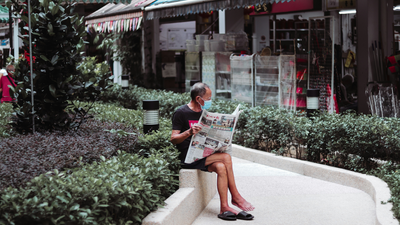
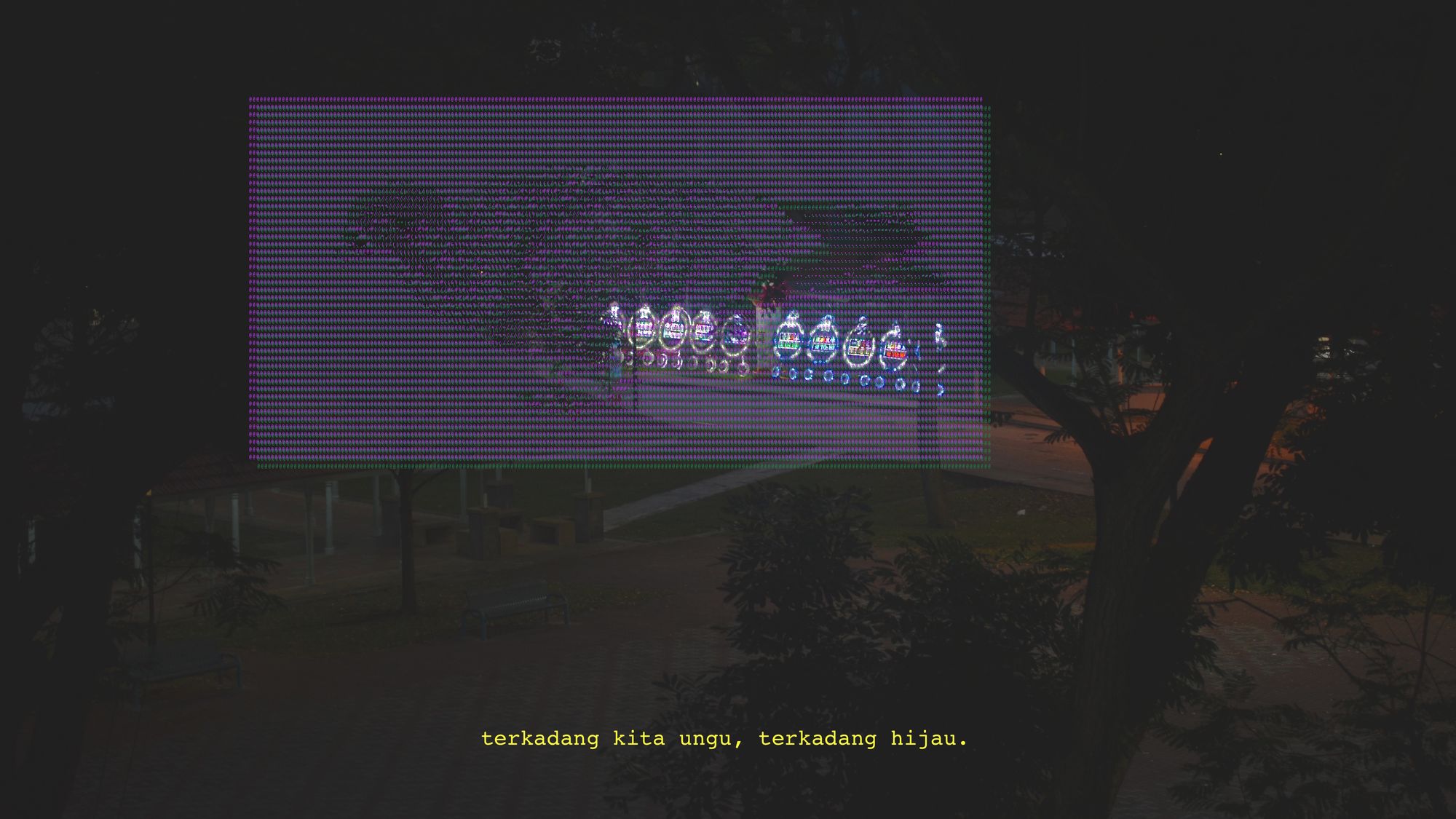
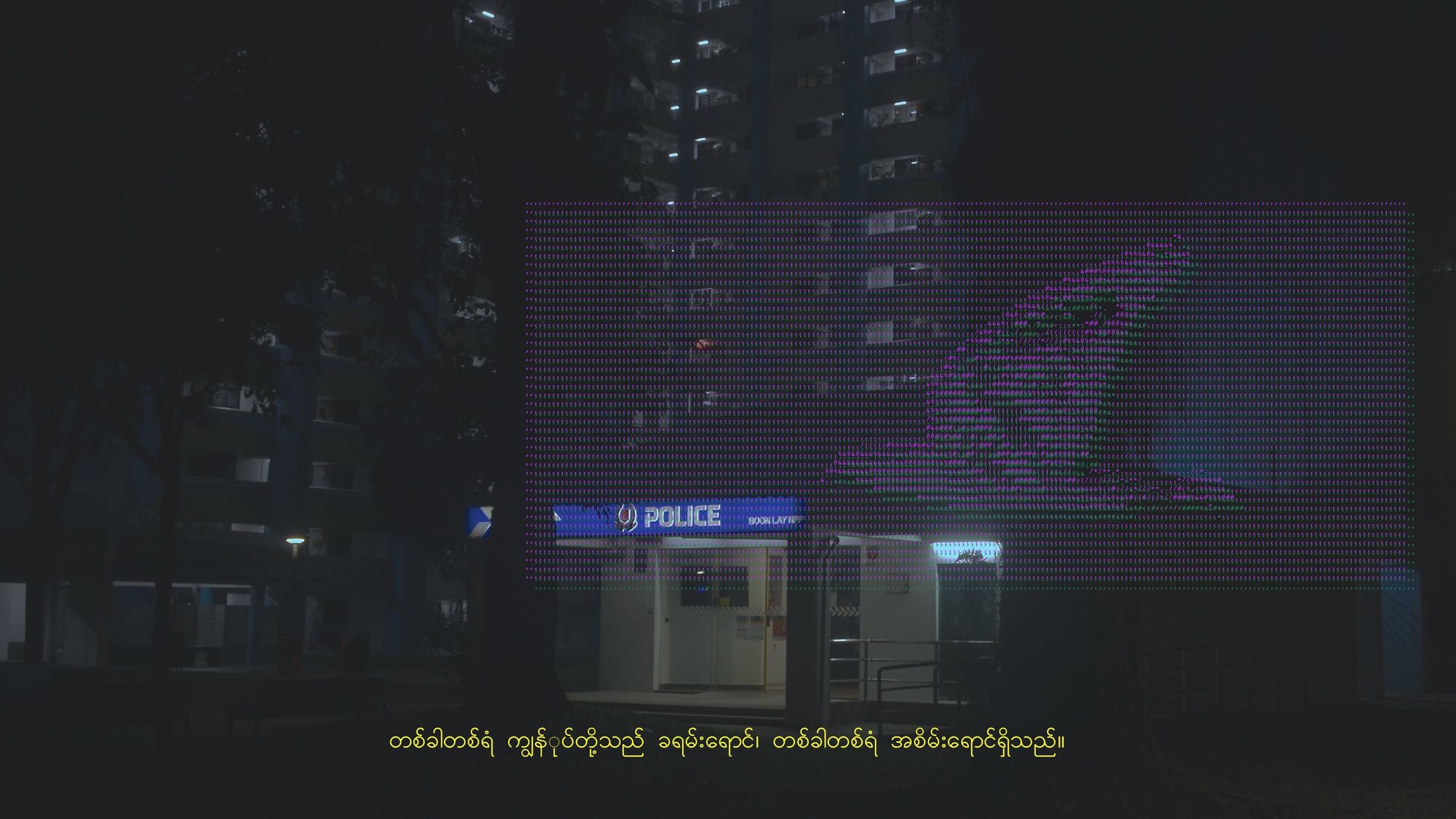
The line “sometimes we are purple, sometimes green.” in the series of photographs called, “Purple Green” by Singapore-based, multi-disciplinary artist Khairullah Rahim, was inspired by the iridescent plumage on the necks of pigeons. In Boon Lay, where the images were taken, residents are primarily from a working-class background, and the neighbourhood is infamous for reporting high(er) incidences of organised crime. While many associate light with safety, there are also lights that illuminate more intensely on some than others. In this work, Khairullah notes the uncanny parallels between the perceptions of wild pigeons—often vilified as disease carriers and culled to control their population size—and representations of marginalised identities, who are surveilled in their living spaces.