
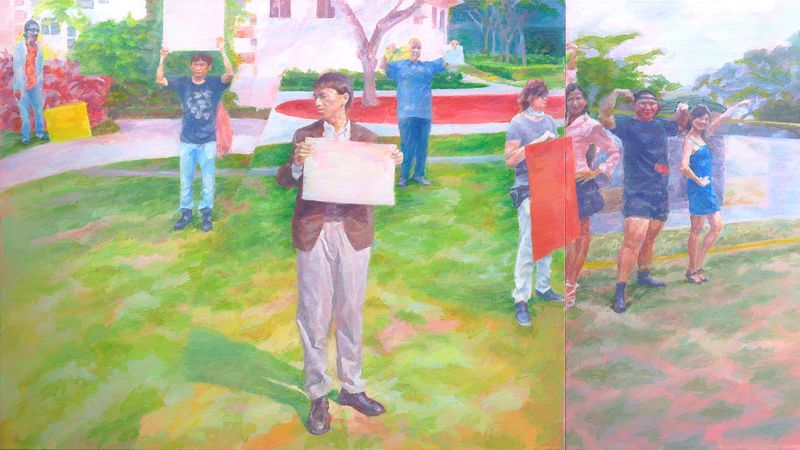
On the evening of February 15th 1959, people were pouring into the 2.3-acre Hong Lim Green—the public park at Chinatown’s edge.
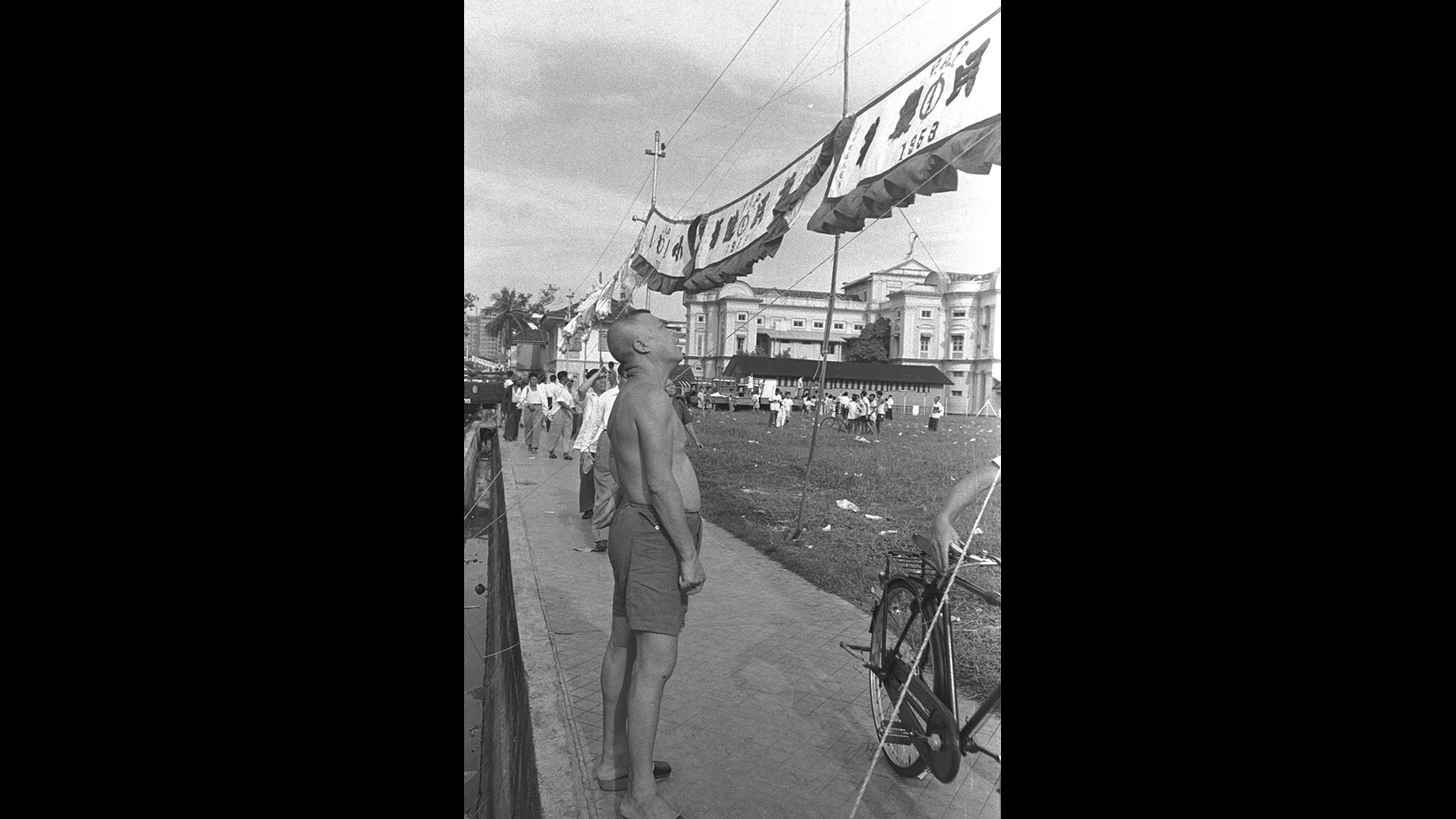
By the time Toh Chin Chye, chairman of the People’s Action Party (PAP), stood up on the makeshift wooden dais formed by joining the backs of two open lorries, a 5,000-strong crowd had gathered to hear him speak. They were expecting fireworks; the PAP was going to make a case for itself as Singapore’s next ruling party, in opposition to the newly formed Singapore People’s Alliance (SPA) led by Lim Yew Hock, the chief minister.
Singapore’s political landscape was chaotic—parties, alliances and leaders holding up crystal balls in front of the electorate, each refracting different futures for Singapore, each promising Utopia. In the near-daily mass rallies promises, accusations and counter-accusations flew through the air like spells designed to sway voters one way or the other. Open spaces were regularly transformed into ideological battlegrounds.
The 1957 Citizenship Ordinance had minted, overnight, a 220,000-strong, China-born electorate, a big chunk of which resided in the areas adjoining Hong Lim. Eager for a stake in the nation’s future, they often assembled at Hong Lim to listen to their would-be leaders; their presence imbuing the park with an energy and a meaning so different from its recent past as the home of an elite club. It was, in Mary Turnbull’s words, a “lusty, vociferous political awakening.”
With his PAP colleagues—Lee Kuan Yew, Ong Eng Guan and others—behind him, Toh lobbed the evening’s first grenade. The ruling Lim government, he alleged, was being backed by foreign interests, including the British and the Americans—the latter had in fact donated half a million dollars to Lim’s SPA.
Having captured his audience’s attention, Toh continued with his party’s governance agenda; the PAP, he promised, “stood for equality between all races, equality of opportunity of education and employment between all Singapore citizens.”
Seven decades earlier, on July 2nd 1887, Hong Lim Green represented a different struggle for recognition and equality. Amidst the sober melodies of the 2nd South Lancashire Regiment band and in the presence of more than a 100 of the colony’s most prominent English and Chinese gentlemen, the Straits Chinese Recreation Club’s (SCRC) move here was being formalised with the inauguration of a new octagonal pavilion, a dainty, white building roofed in soothing green.
Situated in the centre of the green, the pavilion afforded a 360-degree view of the surrounds, including the tennis courts and cricket pitch on its manicured lawns. The magisterial police court building signifying British authority rose in the east, Chinatown’s warrens to the south, the unloading docks of Boat Quay in the north and an assortment of shops, houses and business establishments to the west.
The SCRC, established in late 1884, was the first non-European, non-Eurasian club in Singapore. By encouraging it to move here from Pearl’s Hill, the colonial authorities were signalling acceptance of the Straits Chinese as more equal partners in Singapore’s social life, in recognition of their role as intermediaries with the Chinese migrants streaming into the colony.
For their part, the Straits Chinese’s pivot towards the British was merely a case of recognising the new dominant player in the region’s entrepot economy. Even prior to Raffles’s arrival in 1819, the community had deep economic roots in the region thanks to a long strategic partnership with the rulers of Johor. Culturally too, theirs was a distinct Hokkien Malay identity on which the SCRC (and other similar associations) now conferred a patina of Englishness.
The new start signified redemption too.
The Straits merchant Cheang Hong Lim, of the eponymous park, was an opium farmer—meaning that he had won the right to sell opium locally by making the highest bid at the colonial authorities’ auction.
Opium farmers purchased their supplies on Singapore’s open market, processed it into a smokable form called chandu and distributed it to shops for consumption by Chinese coolies. These coolies worked in pepper and gambier plantations dotting Singapore and the region at the time. Despite both crops’ razor-thin margins, they were sustained by the coolies feeding most of their wages back into buying opium; gambier investors’ shares in the opium farms ensured the system’s “balance”, according to historian Carl Trocki.
Cheang had been involved in a ferocious battle with Tan Seng Poh since the mid-1860s. (Another Straits merchant, Tan has a street named after him in Tiong Bahru.) For five years, there had been gang wars involving the dreaded triads (Chinese secret societies), tip-offs to the police and complaints to the colonial authority until, in 1870, the two merchants had sued for peace and formed a cartel instead. It was a wise move. Over the next decade, they amassed immense fortunes that bestowed them with cloaks of respectability in a colony where the sole social currency for anyone not European was currency itself.
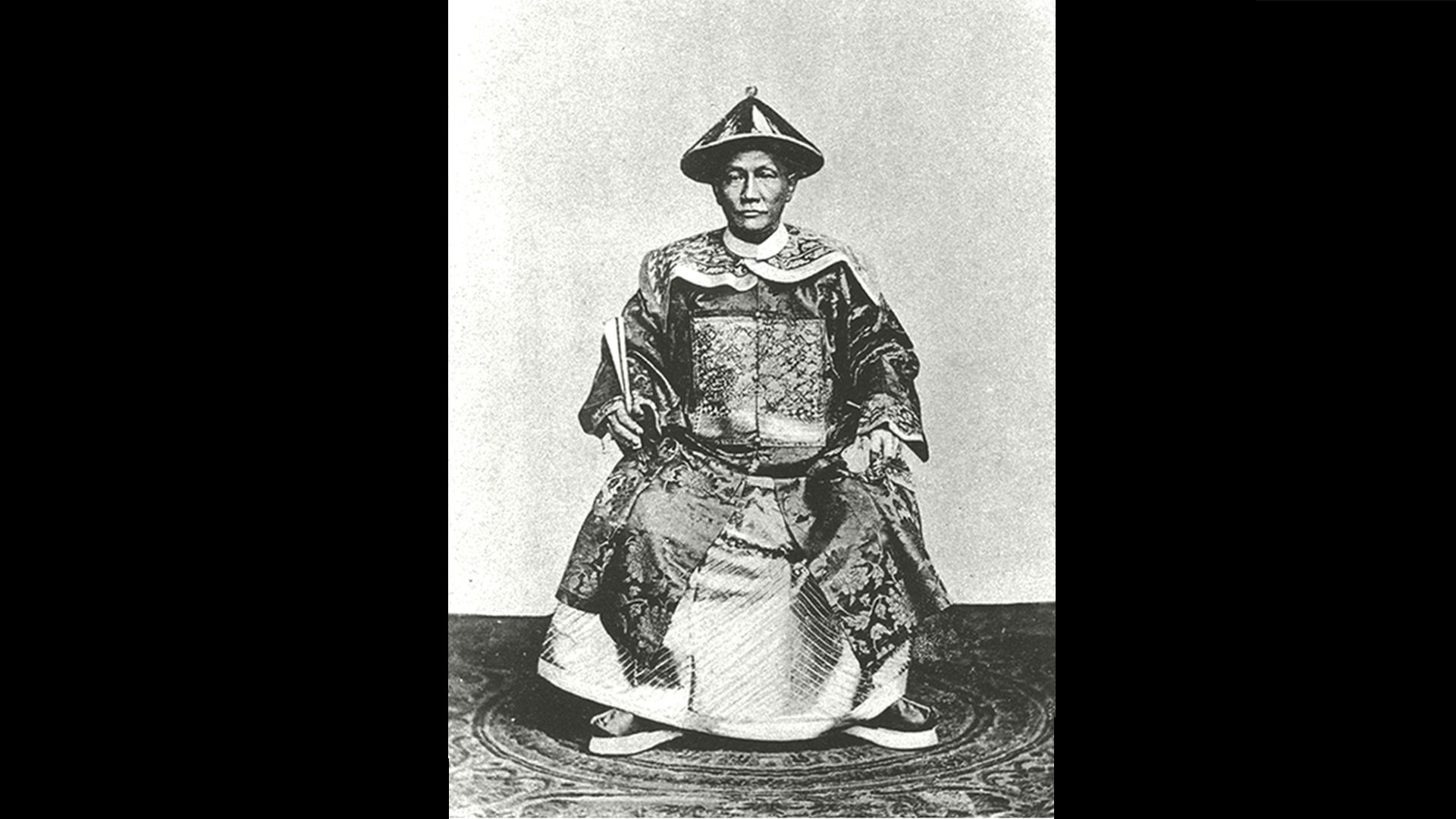
Cheang organised yacht soirees for local luminaries, threw lavish garden parties and, in 1878, spent vast sums on Chinese New Year fireworks, which drew some of the biggest crowds ever seen in Singapore: a contemporary report exclaimed that it “was impossible, from seven o’clock, to walk [a]round the Esplanade,” as people fell over each other in their anxiety to occupy the best vantage points.
Presumably those addicted to Cheang’s opium watched the fireworks from their preferred opium dens.
He also gave liberally to social causes—a school and marketplace were erected, a fire brigade was founded, Chinese temples were built and donations made to mosques for their upkeep. What differentiated Cheang from other philanthropists was that he gave without regard for dialects or clans. This made him a key mediator between the British and the “unruly” communities they sought to control.
In 1876, at the height of his power and influence, Cheang donated money to convert the open area opposite the police court into a public park for the use of Chinatown’s inhabitants. At the time, the area held the “dry sweepings of the Town, consisting chiefly of broken pottery and stones.” Cheang constructed iron railings around the perimeter, and employed a gardener to plant trees and shrubbery to make the green worthy of its name. A more cynical view holds that that merchant wanted to drive up the property prices in the Havelock area where he had significant holdings by beautifying what until then had basically been a rubbish dump.
Such was Cheang’s standing with the administration that anything he demanded was granted with alacrity—gaslights on Havelock Road where he owned numerous properties, and a halt on sago manufacturing because it interfered with some of his business interests were enough to elicit resentful comments in local papers. It seemed as if nothing was beyond this modern-day Crassus.
Until, that is, the fall.
When he was outbid by another Straits merchant for the opium licence in the early 1880s (licences were granted for three years at a time), Cheang embarked on a vast conspiracy to smuggle opium from around the region into Singapore so as to drive down the local prices, and force the current licence holder into losses. This involved hiring thugs and henchmen who unleashed violence not seen since the 1860s battle between Cheang and Tan; policemen were attacked (at least one was stabbed to death), jails broken into to free underlings and shopkeepers cowed into silence.
In April 1883, the government uncovered the conspiracy. Governor Sir Frederick Weld stripped Cheang of his justice of the peace title and forced him to write a grovelling letter of apology, in which he promised to “always conduct myself as a British subject and will break no law nor join any conspiracy nor intimidate any one by threats.”
Weld had the letter printed and pasted all over Chinatown.
Cheang’s decline had been a blow to the larger Singapore Straits Chinese community as well; such a public humiliation of one of its most prominent members had severely eroded its social capital. So when, four years later in 1887, the SCRC’s pavilion was inaugurated in the presence of some of the most prominent English officials, in a green named after the man once tainted with scandal, it symbolised total redemption for Cheang and a reassurance to the Straits Chinese that they occupied an exalted position on the totem pole of Singapore society.
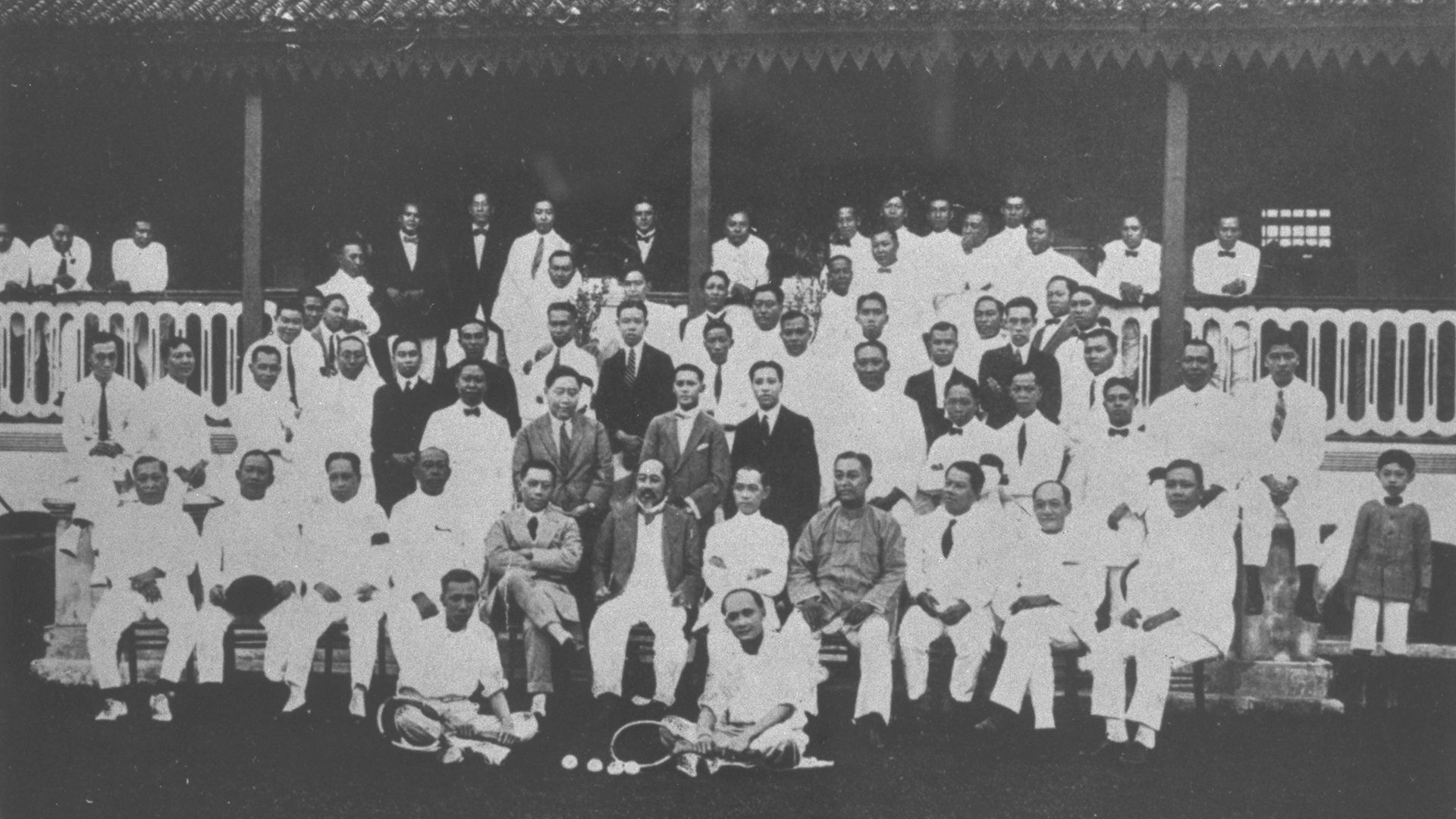
A photo from the SCRC’s heydays shows 20-odd club members seated outside the pavilion after a tennis tournament—some in suits complete with gleaming shoes, others in more traditional garb, two holding on to tennis rackets—representing a bridge between their Chinese ethnicities and Western sensibilities.
What a peculiar sight they must have presented to the immigrant Chinese emerging from and disappearing into the by-lanes near Hong Lim Green. With anglicised, queue-less, men scampering around trying to hit balls over a net or out of the ground, its railing represented not just a spatial division but an attempted cleaving of worlds. Just like today’s labourers, sports were simply not an option for 19th century migrants, preoccupied as they were with making enough to eat, having a roof over their heads and basically, staying alive in a frequently disordered, unpredictable milieu. Anyway, they were unwelcome—if not effectively barred—from SCRC’s hallowed grounds.
As far as the Straits Chinese were concerned though, their pursuit of Englishness was part of the “cultural adaptability” that, according to the historian Mark Ravinder Frost, “became the hallmark of that particular elite for decades to come.”
Perhaps nothing symbolised the adaptability more than the gusto with which they took up cricket. Newspapers from the 1880s to the 1950s abound with reports on matches at the Hong Lim Green. Once it became apparent that the British were going to slope off the island, cricket was swiftly discarded. Admittedly the causality between the two phenomena has not been fully explored yet, but there is no denying that the semiotics of playing a quintessentially English sport on a ground over which loomed symbols of English authority were at least as important to the Straits Chinese as the pursuit of the sport itself.
Even more than cricket, the SCRC took to tennis. Indeed, Hong Lim Green became a nursing ground for top-class players, especially after the First World War.
In the 1920s and 30s, a tennis fan in the area would have likely seen either Khoo Hooi Hye or Lim Bong Soo scampering around on its grass courts. The Straits’ men became such fine exponents that their fame spread from Singapore to the wider Malayan world and beyond. Khoo even made an appearance at the 1924 Wimbledon Championships.
Khoo and Lim are fugitives from local histories—no roads are named after them, no plaques have been put up, they are the subjects of no popular books; outside of esoteric texts, academic papers and a museum or two discussing the development of sport in colonial Malaya, they simply do not exist. Yet, for nearly a decade and a half from the early 1920s to the mid 1930s—they reigned supreme at Hong Lim Green; in Kuala Lumpur, Java, Calcutta, Bangkok, Hong Kong, Shanghai; in a variety of tournaments and exhibition matches.
More importantly, the duo kept the Europeans at bay by winning almost every single trophy of note in Singapore and the region. No European, for example, could get his hands on the Singapore Cup from its inception in 1921 until Lim stopped playing in 1936. Between them, Khoo and Lim won 12 of those 16 tournaments, the remaining four going to other Asians. Half a century after taking up tennis and cricket to enhance their social standing with the English, the Straits Chinese were regularly beating the colonial masters at their own game.
These cricket and tennis matches were more than just sporting endeavours; they represented contests for visibility, for the right to one’s own patch of land, making Hong Lim Green a metaphor for the social status and legitimacy of the Straits Chinese.
By the 1950s the world, the proximal one in the lanes around Hong Lim and the one further afield in South and Southeast Asia, was changing rapidly. After the Japanese occupation—when the park served variously as a police sports ground and a storytelling site for the migrant Chinese—SCRC resumed its activities, but they were soon accompanied by calls for it to be cleared for the general public’s use.
This was partly due to the reputational damage the British suffered thanks to their craven surrender to the Japanese in 1942. British cultural values and those that lived by them no longer represented civilisation’s crowning glory. With labour strikes and demands for freedom of speech, publication and association emanating from Chinatown (and elsewhere), Hong Lim Green as metaphor for equality and legitimacy now applied to a very different demographic—those empowered by the 1957 Citizenship Ordinance.
Having resisted defenestration for the better part of the 50s, SCRC finally upped stakes in July 1959, two months after the PAP came to power. The SCRC moved first to a temporary residence in Shenton Way, and then further away from the city’s centres of power to the Balestier Plain.
Hong Lim Green belonged now to the thousands who gathered regularly to hear the likes of Lee Kuan Yew, Ong Eng Guan and others. Most were Chinese-speaking workers who were glad for any excuse to escape from their cramped homes. Political speeches, especially in Chinese dialects and Mandarin, meant free outdoor entertainment.
The PAP harnessed this politics-as-entertainment model better than anyone else—rather memorably a month before the May 1959 elections, when all 51 of its candidates, clad in white from top to bottom, appeared at Hong Lim Green to introduce themselves to a crowd of 30,000.
After 43 of them won a seat in the 51-member 1959 Legislative Assembly, the PAP quickly scrubbed from Hong Lim memories of its brief but passionate affair with politics. Almost to a year after that parade, an open-air theatre was inaugurated at the park by Lee himself.
“There are two historic meeting places in Singapore. They are bound up with the great events and mass rallies of the last five years,” Lee said. “One was the children’s playground at Banda Street behind Tung Fung and the other is here in Hong Lim Green. There can be no more mass rallies on these two fields anymore.”
Writing about a London park, geographer Matthew Gandy says that “here different urban worlds are separate yet coterminous: preoccupied ecologists and bare-chested cruisers pass each other on the winding paths of Abney Park as if stepping through different worlds.”
As the PAP took to the task of nation-building, Hong Lim Park (the ‘Green’ was dropped in the 1960s) became known primarily for hosting Chinese operas—most notably when, between 1978 and 1985, the Singapore Tourist Promotion Board (now the Singapore Tourism Board) organised a Chinese Opera Series featuring productions by amateur Cantonese, Chaozhou, Hainanese, Peking and Fujian artists.
But true to Gandy’s assessment here too existed separate, coterminous worlds. The park, draped in dense, unfettered foliage and shady trees, provided ideal cover for physical intimacy. Gay men, lacking both privacy as well as social sanction, began ‘cruising’ here at night for “light sexual activit[y]...and perhaps even discreet oral sex.” And so began the latest dance between space and identity that had been part of Hong Lim’s DNA since its inception.
The early colonial history of homosexuality in Singapore is yet to be written but it’s not inconceivable that by its location, nature and the disproportionate number of men in the colony’s early days, Hong Lim provided the privacy that Chinatown’s tiny shacks could not. Certainly, by the 1970s, the Park held a special place in the hearts of many in the gay community.
“It was fortuitous that I chanced upon a Straits Times article one day which reported on the police investigation of public complaints about young boys holding hands at night at Hong Lim Park. My gaydar perked up instantly and I headed there to take a look,” says Dr Roy Tan, activist and unofficial archivist of Singapore’s gay history.
“When I arrived, I saw dozens of men, many of whom were young and handsome, walking around the periphery of the park on the footpaths. Hong Lim Park became my favourite haunt over the next few months.”
The Park became so famous that in the 1970s it warranted a mention in Spartacus, a popular American publication that listed gay friendly places around the world.
Codenames: Hollywood, Honolulu, HL.
On the back of this clandestine publicity Honolulu began attracting people from across the region. In droves they came from Malaysia, Taiwan, Hong Kong and elsewhere, eager to explore and eager to claim, even surreptitiously, the rights that others took for granted.
It soldiered on in this avatar for nearly two decades before a gradual decline through the 1980s.
Firstly, the younger members of the gay community began to discover (and create) more exciting and clandestine spots around the island, reducing Honolulu to a nostalgic rendezvous point for older men. Secondly, the AIDS-induced panic turned the state’s studied indifference—you can do whatever you want as long as you don’t ask for rights—into malevolence.
Egged on by screechy tabloids like Lianhe Wanbao (“Boat Quay a gay haven,” Dec 28th 1989. “Lounge in Orchard Road has become a gay paradise,” Dec 2nd 1989. “East Coast becoming gay,” Nov 20th 1989. “Male prostitutes and shemales in Botanic Gardens,” May 11th 1989.) the police carried out raids across various gay-friendly venues.
At Hong Lim Park on April 8th 1990, nine men were arrested for alleged “homosexual activities”. It had been a little over three decades since Toh—standing on a lorry platform in that very Park—had promised equality.
Soon after, the overhanging trees bestowing privacy were pruned into neat shapes, shrubs were thinned out and the comforting darkness dispelled with bright street lamps. Policeman on patrol became a common sight, and when the remaining tables, seats and benches were uprooted in 2005, Hong Lim breathed its last as gay haven.
What does one make of Hong Lim today? While writing this essay, I visited it a few times; on each occasion it appeared to me to be a forlorn space, ignored by those walking along or even through it. No children running around, no families picnicking, no lounging youngsters, no basking uncles or aunties—nothing that makes a public space Public. The Speakers’ Corner hung out alone amidst trimmed hedges, waiting for someone to come breathe life into it. Hemmed in on three sides by unremarkable commercial establishments, with a major arterial road sidling up to and past it on the fourth—Hong Lim seemed unmoored from its past and out of place in all that glass and concrete.
That is too bleak, a friend pointed out. A side of green served along with the main course of hotels, pubs and gyms, Hong Lim is proof positive that even the most densely populated parts of the most densely populated cities in the world can still have natural spaces—something that many Asian cities appear to have ignored or forgotten. And far from being forlorn it has become the canvas on which the people of Singapore are sketching new dreams, new ways of life and waging new battles for the fulfilment of that extraordinarily perplexing promise all modern societies make to themselves—equality.
On various occasions over the past decade or so, Speakers’ Corner has morphed into a fiery battleground reminiscent of the crucible in which the battle for Singapore’s hearts and minds was fought all those years ago. The 4,000-strong White Paper protest in 2013, the Purple Parade with its rallying cry of equality for those with disabilities (held at Hong Lim from 2013-16), Singapore’s first-ever climate emergency rally in 2019 and most recently the tempest unleashed over the death penalty all belie my morose assessment. Hong Lim is where Singapore gathers to speak out—perhaps not as rambunctiously and maybe a little more skittishly than other democracies—but gather it does.
Nothing exemplifies this better than Pink Dot. It is not a straight writer’s prerogative to say what this symbolism means for the LGBTQ+ community. Perhaps the younger folk are not aware of the park’s history; maybe the older ones don’t care and some probably don’t buy into this sanitised, state-sanctioned, exclusionary (Singaporeans and PRs only) celebration.
But there is something to be said for the Park’s most recent transformation from a space for furtive, fearful liaisons into both a space for public expression of love and an arena where the battle for equality is joined every year. The 2022 edition, held in June after a two-year hiatus, was the most well-attended in the event’s 14-year history.
And what an event it was.
Dissidents, activists and performers; payroll managers, accountants and writers; members of parliament of various stripes too; people out to make a statement, people out just to have a good time; rainbow flags and white umbrellas; bottle blondes and pink streaks; music and speeches; love, laughter and anguish. The optimism (not misplaced, as it turned out) around the repeal of Section 377A was almost tactile.
Singapore was alive.
And Hong Lim Park—witness and participant in our origins and aspirations, a reminder of the choices made and pledges taken, of the battles fought and those to come—was its pulsing heart.
Abhishek Mehrotra is a Singapore-based writer and researcher.
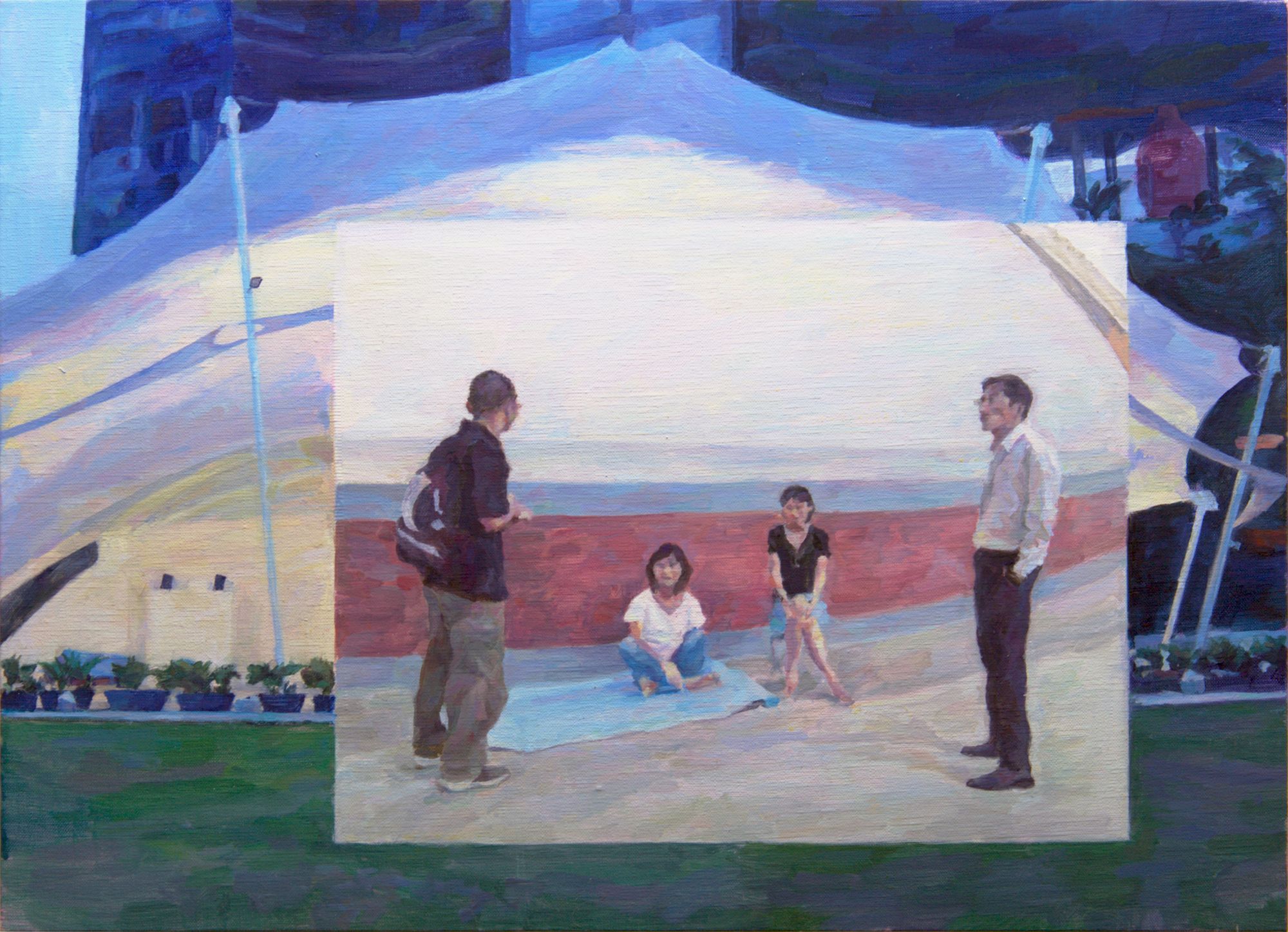
“The Hong Lim Series: Line and Fragments” is Singapore artist Jon Chan's latest solo exhibition that marks a new and ongoing series where Chan surveys the dis/connection between the physical aspects of Hong Lim Park, and the symbolic presence of the person the site takes its name from, Cheang Hong Lim, of whom Chan is also a descendant.