
“Coming up now. See u at fourth floor toilet.” The year is 2014. I’m 16. My phone buzzes in the middle of Chinese class. Hiding my screen in the pleats of my school skirt, I see a text from my friend Fionna. I raise my hand and ask for permission to leave. As I exit the classroom, I glance around guiltily.
I bump into Fionna at the end of the hallway. Her face is red from exertion, and her skirt is flung over her shoulder, having just left her soccer game to run up four flights of stairs. We nod at each other and hurry into the toilet, relieved to find it empty.
“Three more minutes.” We’ve each keyed in the hotline number on our phones, and our thumbs are hovering above the call key. A debit card sits on the sink beside us, borrowed from our tuition teacher. We stare at the clock at the top of the screen. My heart feels like it’s beating out of my chest. 8:59 becomes 9:00. We press the call button. My hands shake as I hear the dial tone.
I can’t remember which one of us got through first. One moment we were silent, tense with anxiety. The next, we were screaming and jumping—we managed to get tickets to Taylor Swift’s “Red Tour” at the Singapore Indoor Stadium.
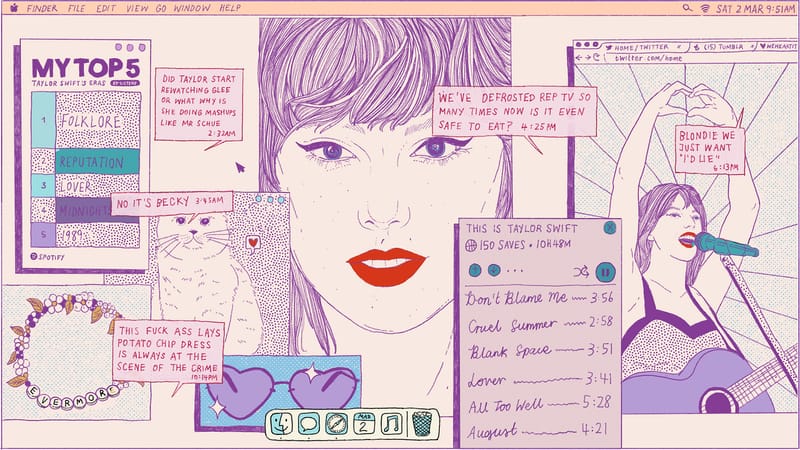
Fast forward 10 years and Taylor’s back. (Given the 17 odd years I’ve been listening to her music, calling her “Swift” feels somehow disingenuous.) The three-and-a-half hour, record-breaking, billion-dollar earning, politicians-begging-her-to-come “Eras Tour” extravaganza features a whopping 44 songs from her 10 original studio albums—technically nine, since she didn’t include a song from her eponymous debut album (a travesty, in my humble opinion). Each era is defined by its own distinctive colour scheme, symbols, costumes, motifs and emotional themes.
It’s no secret that Taylor is at the top of her game now. Since the first “Eras Tour” concert in Arizona last March, she has generated a staggering US$5.7bn (S$7.6bn) for the US economy, was named TIME magazine’s person of the year and won Album of the Year for the fourth time (a first in Grammy’s history), just to name a few milestones. “[The ‘Eras Tour’ is] a journey through her past, starring all the different Taylors she’s ever been, which means all the Taylors that you’ve ever been,” wrote Rob Sheffield, contributing editor at Rolling Stone.
As Taylor defines the cultural zeitgeist in a way we’ve perhaps not seen since Michael Jackson or The Beatles, she offers me a portal to my teenage self—that younger, softer, wilder version of a self that no longer exists.
Being born in 1998 makes me a millenial-Gen Z cusp, which means I use the crying face emoji to symbolise laughter but I also know how to use a DVD player. At nine, I downloaded Taylor’s debut album off LimeWire and transferred it to my pink flip phone; at 10, I listened to “Fearless” on a CD; at 12, I streamed “Speak Now” on Nokia’s now defunct MixRadio; and at 14, I streamed “Red” on Spotify. Taylor’s discography punctuates key changes in technology, so listening to her earlier albums adds a tactile dimension to my memories, transporting me not just to an earlier self but an earlier world.
In that world, the internet was a strange, new thing. The line between the virtual realm and our physical reality was harsher, less penetrable. E-mail was either going to save us or doom us. Families had a dedicated “computer room” complete with a stack of floppy disks. The idea of chatting with strangers halfway across the world was still mind-blowing. There was a collective sense of unknowability—wonder and apprehension in equal measure—of what the internet could be.
Google was also born in 1998. As I grew and evolved, so did cyberspace. When I entered those delicious, dizzying, devastating teenage years, the internet was right there with me. It had begun to permeate physical and social spaces, and was advancing and evolving at a rate that was impossible to ignore.
“Everything was extremity,” wrote author Zadie Smith about her teenage self who had fallen out of a windowsill while smoking a cigarette. “Time dilated or expanded or something.” My years between 13 and 18 were similarly defined by intensity. Unlike Smith, I was too much of a guai kia (Hokkien for “obedient kid”) to smoke on a windowsill. But changing out of my school uniform into “going out clothes” at the *SCAPE toilet was its own kind of high. Fionna and I didn’t play truant or steal clothes from Forever 21 either, but we did fight with radio presenter Boy Thunder on Twitter (rebranded as X since 2022) over the rules of a One Direction giveaway. We cried at Sogurt after failing our exams, wrote dramatic “friendship breakup” letters, did each other’s homework, spent maths class playing “Kim Kardashian: Hollywood” under the table, and forwarded links to our favourite fanfics on Wattpad and Archive of Our Own.
Guai kia or not, every emotion—euphoria and confusion and angst and embarrassment and fear and jealousy and enthusiasm—in teenagehood feels large and seemingly impossible to temper. I’ve always viewed the “terrible teens” as the most transformative time of my life and, as it turns out, so do lots of people. Psychologists call this phenomenon the “reminiscence bump”, where the autobiographical memory of individuals above 40 disproportionately skews towards adolescence and early adulthood. In other words, it’s likely your teenage memories feel just as large as mine.
Except while older millennials and Gen Xers might have spent their teens cutting out pictures of Madonna and NSYNC from magazines, I was busy reblogging gifsets of One Direction on Tumblr. In the 2010s, Bieber fever spread like wildfire with no vaccination in sight. The second Hallyu wave had just crashed against our shores, and Zoella and the “Brit crew” were the biggest Youtube stars. In my all-girls secondary school, we’d fight over whose music video to play on the projector during recess—SHINee or Girls’ Generation, The Wanted or 5 Seconds of Summer. Once, a classmate threw a chair at me for pressing “skip” past her selection. Fan culture was an essential part of playground politics. An awareness of fandoms, and your corresponding allies and rivals in the “fan wars”, were important social knowledge.
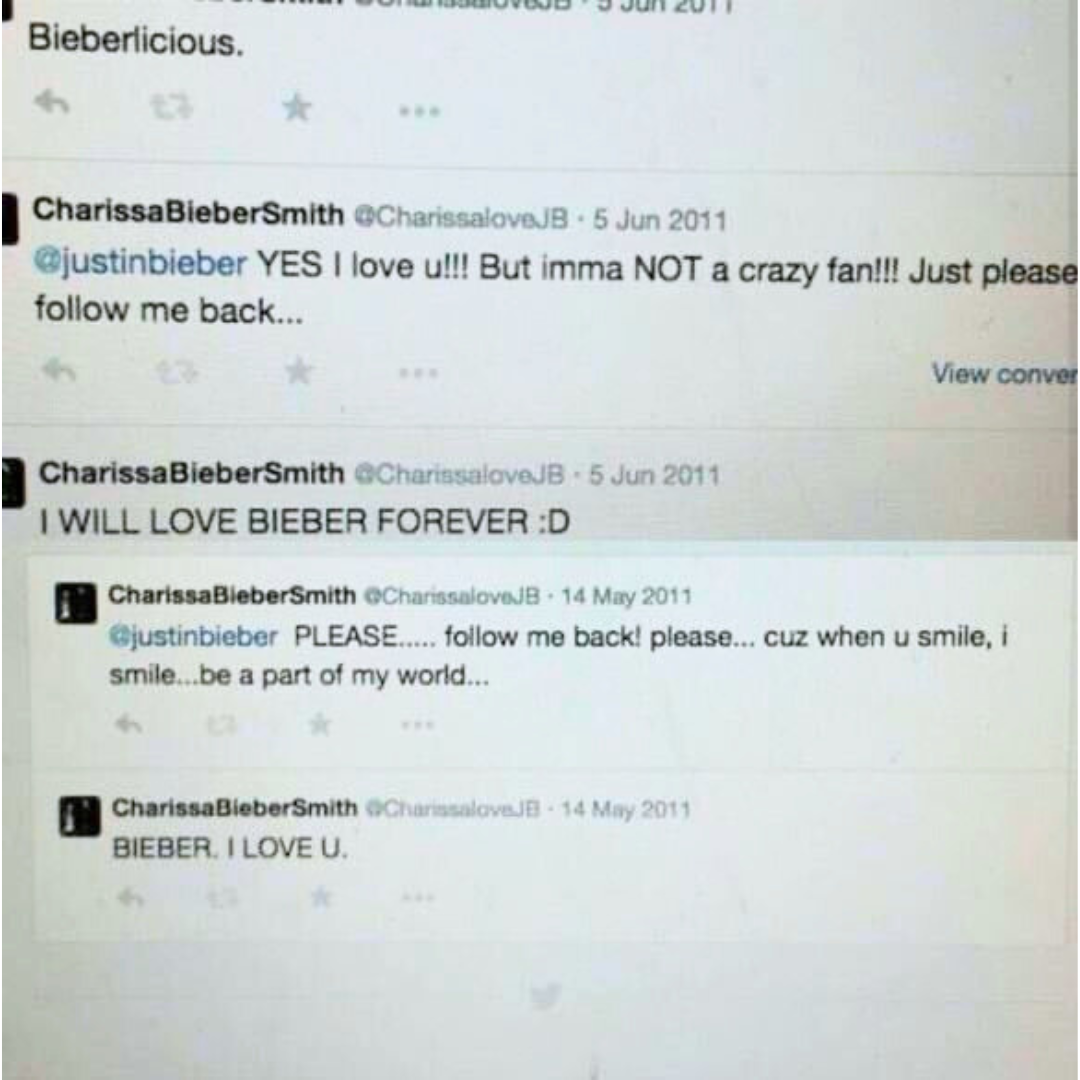
We were consumed by fandom, obsessed and in love with someone fundamentally unknowable and out of reach. Just as Pygmalion fell in love with a statue he carved in the Greek poem “Metamorphoses”, we fell in love with a version of Zayn Malik/Onew/Justin Bieber/(insert name here) we created for ourselves. Or at least, a version of love that could only exist without fully formed frontal lobes. The teenage brain is fundamentally different from an adult’s. During puberty, the brain starts developing more dopamine receptors; its nucleus accumbens, sometimes referred to as the “pleasure centre”, grows to its largest size during this time. The links typically found in an adult’s frontal lobe, which are responsible for analysis, judgement and planning, aren’t connected to the rest of the brain yet. And they won’t be until people reach their 20s. In other words, teenagers are stupid. Or rather, extremely prone to doing stupid things. But unlike teenagers of the past, the teenagers of today have their stupid decisions immortalised on the internet.
But alongside that stupidity is access to a whole realm of emotions we can no longer reach. “Nothing—whether it’s being with your friends, having sex, licking an ice-cream cone, zipping along in a convertible on a warm summer evening, hearing your favourite music—will ever feel as good as it did when you were a teenager,” Laurence Steinberg, an adolescence expert and professor of psychology at Temple University, told The New Yorker.
High highs might mean low lows, but in the extremity of teenagehood, there exists some level of pleasure in emotional turbulence. The enormity of our feelings also translated into a complete willingness to exercise immense energies for our precious parasocial relationships. And that holds its own kind of power. Some of my friends, like Charissa, ran fan Twitter accounts and posted self-made edits of their favourite celebrities’ photos and videos. Others taught themselves Korean and voluntarily translated K-dramas for other fans.
Me? I ran a One Direction fan Tumblr with Fionna. Well, technically we ran a One Direction fan Tumblr for three months until an Australian girl named after a season (it’s either Winter or Summer, neither of us can remember which) staged a coup and locked us out of the account.
For those of you who missed out on the golden age of Tumblr, it’s basically a social media platform to facilitate blogging. Your account is tied to a web address (URL), and you can personalise the aesthetic of your blog with the themes offered. The particularly adventurous can insert HTML codes that allow for special features, like a digital record player that plays a specific song when people visit your site. You can follow different Tumblrs, “reblog” posts onto your feed, and attach links to videos on other platforms like YouTube, among other social functions.
Peak Tumblr saw me running four accounts (five, if you count my short-lived collaboration with Winter/Summer): one on fashion and haute couture, one that was dark and goth-ish, one was a co-run “summer blog” (think: pictures of white beaches, girls in bikinis, sunglasses perched on pineapples, etc) and a last which I characterised as “personal”, ie. I reblogged pictures of dogs and somewhat leftist/socialist-ish commentary that I resonated with. Oh, you were radicalised by The Communist Manifesto? I was radicalised by “Glee” and 300-word Tumblr text posts.
Jean's playlist
Winter/Summer had messaged me on my fashion Tumblr and we bonded over our love of One Direction. Spontaneously, we decided to start a fan account together. I roped in Fionna, who was an even bigger “Directioner” than I was. I’m not sure when exactly Winter/Summer began planning her coup, but to be fair, she spent a lot more time on the fan account than Fionna and I did. She taught herself to use Photoshop and created tonnes of edits of the 1D boys, layering on filters and adding flower crowns and hearts and even writing bits of Y/N fanfic (a genre of fanfic where the writer lets you, the reader, fill in “your name”) in the caption. As a result of her hard work, our Tumblr amassed thousands of followers. I guess she got tired of us riding on her coattails because one day, neither of us could log in to the Tumblr account.
A part of me wishes I was still that stupid. There is a uniquely generative force born from that blind, all-consuming adoration of a celebrity you don’t really know. Fandoms are rarely only mimetic; they are transformative forces, extracting and projecting characteristics, scenarios and/or relationships with their chosen object of mania. The re-imagination of American presidents as non-White, queer college students in a modern!AU (alternate universe) during the rise of Hamilton, is but one great example. “They’re raw material, trellises for the fantasies of self [emphasis mine] being woven around them,” wrote Katy Waldman for The New Yorker. That’s not to say fandoms can’t be annoying, or even dangerous. But we’d be foolish to dismiss all fans as crazy, cultish airheads who can’t think for themselves. The teenage fan is not a passive figure in their parasocial relationship, they don’t enthusiastically and unthinkingly eat up and regurgitate polished, manufactured marketing products. Instead, they actively mould and are moulded by the technologies and resources available to them, sometimes in ways that transcend the capitalist structures of music-making. Erecting a shrine where Harry Styles vomited or making fan-edits begging Zayn Malik to stop smoking, for example, hardly boosts album sales. And this is what I think is so misunderstood about the teenage fan: her adoration and mania don’t stem from Harry Styles the person, but more the role Harry Styles has been shaped to play in her life. He is “raw material” for the imagination, connection with and refuge of the unstable teenage self. Who knows what Harry is like in real life? And more importantly, who cares?
Now that I’m older and my frontal lobe is (more or less) developed, I find myself occasionally yearning for a time when a celebrity could take up the same space in my life as they once did. At 25, my responsibilities are bigger and more serious than they were at 15. Real relationships have replaced my parasocial ones. I’ve learnt to regulate and communicate my own emotions in healthier ways. I can no longer remember the URLs and passwords of my Tumblrs. Not that all this isn’t an improvement—I just wasn’t expecting the existential grief that would come with losing my teenage self. The impossibility of accessing that immense joy, pain and naiveté never occurred to me until it was too late.
And until Taylor started releasing her re-recorded albums in 2021, I thought I had lost that teenage self forever.
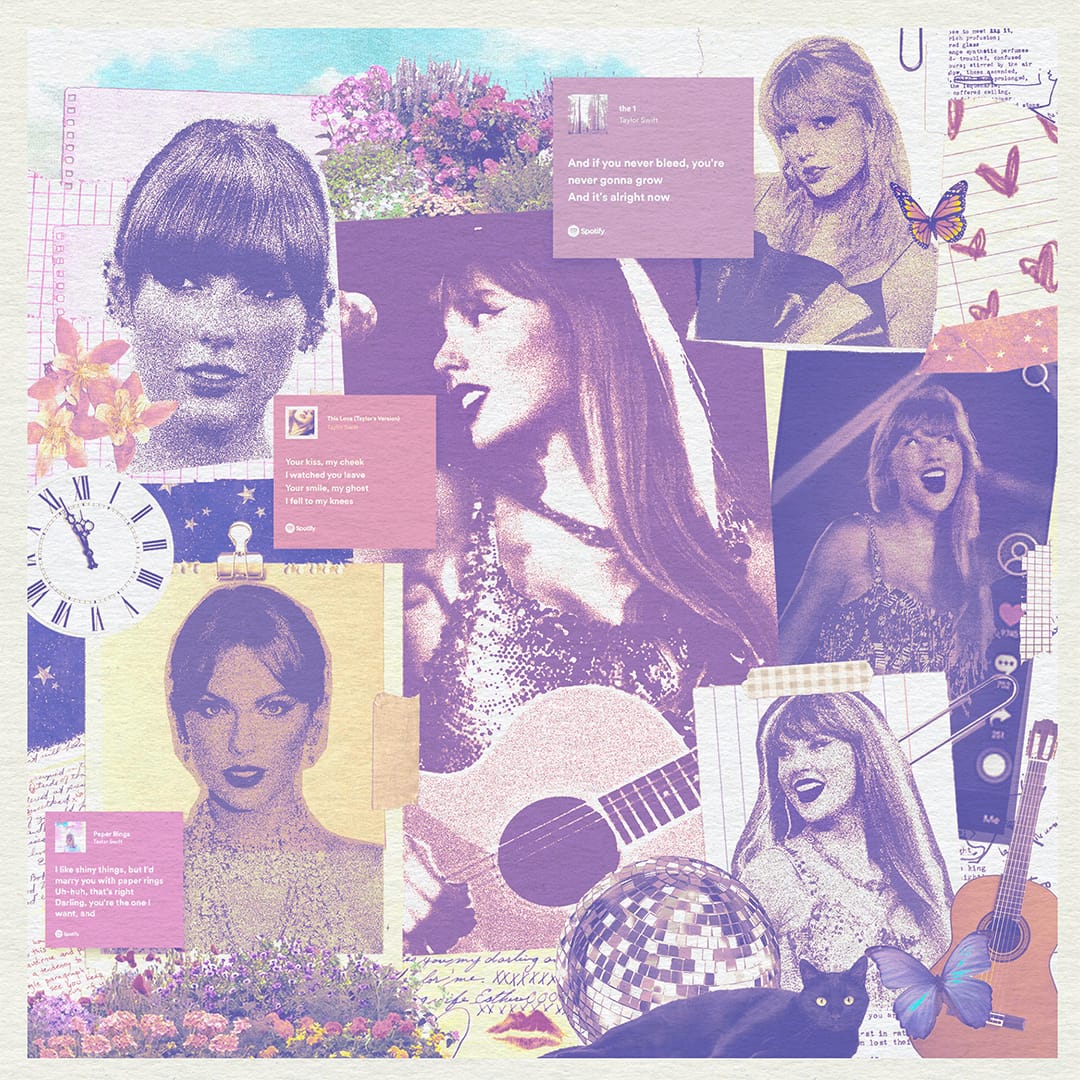
The full context of why Taylor decided to re-record her first six albums is fascinating, especially if you have an interest in copyright law and artist rights. But in a nutshell, Taylor was prevented from buying the masters (original recordings) of her albums from Big Machine Records, a label she had been signed to since she was 15. The masters then ended up being owned by Scooter Braun, a record executive and alleged long-time bully of Taylor.
“I had to make the excruciating choice to leave behind my past. Music I wrote on my bedroom floor and videos I dreamed up and paid for from the money I earned playing in bars, then clubs, then arenas, then stadiums,” wrote Taylor. “[H]opefully, young artists or kids with musical dreams will read this and learn about how to better protect themselves in a negotiation. You deserve to own the art you make.”
Philosophically, a re-recorded album presents a number of metaphysical challenges. Can the same band, producer and artist recreate the magic of a song recorded years ago? Should they even aim to do that? Or should the new goal be to embrace the changes in context and by virtue, in sound as well? Taylor’s re-recorded albums are akin to a musical Ship of Theseus, each note replaced and recreated like the boards of the Greek ship, forcing us to challenge pre-existing assumptions about originality, ownership and sentiment. Furthermore, what happens when lyrics are changed in the process, as in the song “Better Than Revenge”, from the album “Speak Now (Taylor’s Version)”? (YouTuber Daniel J Layton analysed the potential impact of this lyric change on the broader industry.) Fans are also forced to redefine their relationship with those original masters and assess their willingness to, in Taylor’s words, “leave behind [their] past”. The “Fearless” album I listened to at 10—its version of “Untouchable” I put on repeat while crying about my crush dating my best friend—how do I reconcile that with 2021’s “Fearless (Taylor’s Version)”?
Restoratively, as it turns out. As an older me listens to the music re-recorded by an older Taylor, both of us reclaim a piece of ourselves lost to the hard realities of the world. Through this portal that she offers me, I re-mother myself, comfort and protect that young girl who felt so lost and so small. The words of French essayist Anaïs Nin soothe the existential grief I feel about ageing: “I am growing older, perhaps more civilised, less timid, prettier (who knows), but my heart is true to the dreams of my girlhood.”
With every re-release of an album, I form new connections—with this newer version of Taylor’s music, with my past selves and with the teenage fans of today.
Fan culture in 2024 is an entirely new beast. Frankly, I’m out of practice. I’m no longer effortlessly tuned in to fandom politics, and I simply don’t care enough to fight with randos on X. The latest technological forms of fandom (live streams, TikToks, Instagram reels and broadcast channels, etc.) also feel a bit clunky and unintuitive to mid-20s me. But the most interesting change I’ve observed between fandoms past and present is the level of engagement today’s fans have with socio-political issues.
“June 4, 2020: MESSAGE TO TAYLOR- It hurts me so much to say this but we are beyond disappointed with your lack of involvement towards the black lives matter movement…Posting a black square with 13 hearts is simply not enough,” read a Tumblr post “liked” by the official Taylor Swift account.
As Taylor explodes in popularity, so have the number of her critics, both Swiftie and non-Swiftie. And some of them have valid, legitimate concerns: Taylor’s silence on Palestine, her supposed exclusive White feminism, the large carbon emissions from her private jet, and her allegedly performative support for the queer community, to name a few. (By contrast, illegitimate, irrational, extreme forms of hate include the football fans who set fire to photos of Taylor, and those who flooded X with AI-generated deepfake pornography featuring her likeness.)
We caught a glimpse of the tension between Taylor Swift “the person” and Taylor Swift “the brand” in her Netflix documentary “Miss Americana”, where a tearful Taylor begged her team to let her break a career-long silence on politics to publicly support Democrat Phil Bredesen in his senate bid against Republican Marsha Blackburn, in 2018. Taylor’s star has since risen as dramatically as polarisation in the US—after Kansas City, featuring her boyfriend Travis Kelce, made it to the Super Bowl, right-wing conspiracy theories about her supposed imminent endorsement of Joe Biden reached stratospheric levels, according to The New York Times. This tension reinforces the fundamental unknowability of Taylor, and the extent to which her image and behaviour is influenced, limited or even controlled by political and capitalist forces.
What, then, does it mean to hold someone like Taylor Swift morally accountable? Philosophically, what does an ethical pop star look like?
These are questions I don’t have answers to. But I find it difficult to imagine a pop star immune or exempt from the injustices of capitalism. That is of course not to say that Taylor should be understood as a victim in this machine, but what makes me deeply uncomfortable is the form of these critiques. Often, misogyny bleeds into and poisons these seeds of valid concerns. When a legitimate critique of her feminism is polluted by cruel remarks about her body, how do we reconcile with or separate the two? When genuine concerns about the climate impact of private flying sits alongside labels like “environment terrorist”, I wonder whether there’s any version of stardom that is ecologically sustainable, and whether other musicians or corporations are held to the same standards as Taylor.
But the complexity of such critiques doesn’t mean that fans and observers should stop trying to think through them, or lower our expectations of Taylor—both brand and person. Author Jennifer Weiner made a compelling point in the conclusion of her essay, “Why Is Everything Suddenly Taylor Swift’s Fault?”, for The New York Times:
“It’s encouraging to see Ms. Swift’s young fans talking about race and power and privilege and gender. And it’s hard to imagine that those critics wouldn’t also think about their own lives, their own feminism and carbon footprint, the stands they take…In demanding Taylor Swift do better — even when there’s no consensus about what ‘better’ looks like — a whole lot of Swifties may end up doing better themselves.”
And it is precisely that dimension of the fan-celebrity parasocial relationship—where a connection to an idol is inevitably reflected back as a connection to ourselves—which makes it so intensely personal. As paradoxical as it may seem, incomplete and unreciprocated relationships can lead to real, authentic impact on the lives of fans; it is exactly the unknowability of the celebrity that opens up space for reflection, re-imagination and personal change.
Taylor was never at the centre of that space, I am. Even if 16-year-old me didn’t realise it then, gripped by the extremities of adolescence in the school’s fourth-floor toilet, I was then too.
I’m alone, on my own, and that’s all I know
I’ll be strong, I’ll be wrong, oh but life goes on
Oh, I’m just a girl, trying to find a place in this world
Seventeen years after I first listened to “A Place in this World” from Taylor’s debut album, I will be attending the “Eras Tour”. Neither of us will be the same as we were all those years ago. But by celebrating her past selves, I celebrate my own. After all, we’re just girls, trying to find a place in this world.
Jean Hew is Jom’s head of research.
Letters in response to this piece can be sent to sudhir@jom.media. All will be considered for publication on our “Letters to the editor” page.