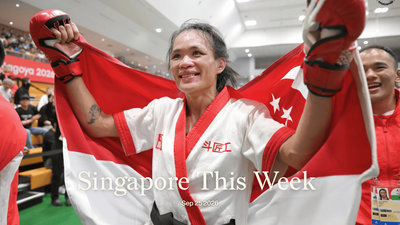

News this week included: local robotic-hands firm Sharpa joins Nvidia and Unitree on humanoid robot project; a new registry of AI agents for 150,000 public officers; the Religious Rehabilitation Group studies the impact of AI and tech on radicalisation; life expectancy in Singapore hits new highs; only 61 percent of people surveyed find our roads safe; KT&T Engineers and Constructors, a foreign worker dormitory operator, charged with numerous failures, including faulty urinals, holes in the walls and no shower curtains in a communal toilet; three Chinese nationals charged with robbing S$50,000 in cash at MBS from a Chinese woman who wanted them to convert it; CNA on the hidden costs of high dental fees on an ageing population; CNA on the implications of homegrown food brands outsourcing production abroad; ST on how to evacuate when a medical emergency strikes overseas; ST commentary on the importance of anti-drug conversations at the dinner table; the uncertain future for Singapore’s lighthouses; coping with loneliness and self-harm through muay thai; taxi driver looking for the owner of a S$120,000 Rolex found in her cab; Loh Kean Yew’s loss at the Singapore Badminton Open final; and as durians fruit on public land along Lorong Lew Lian, a reminder that you’re not allowed to pick them.
Below are the issues we explore in depth:
Our picks
International: Shangri-Lapsed?
It’s a remarkable thing to pooh-pooh one of the world’s leading defence gabfests at said gabfest. But we live in remarkable times. At the annual Shangri-La Dialogue, Pete Hegseth, US secretary of war (gag) and former talk-show host, dismissed talking as a way out of international entanglements even as he talked about how recent talks between presidents Donald Trump and Xi Jinping have yielded a wobbly détente between the US and China. “Less Shangri-La, more ships, more subs” he tub-thumped while wishing “my counterpart was here”. Had Dong Jun, Chinese defence minister, been there, he would have been none too pleased at Hegseth’s reference to China’s “historic military build-up” and his demand for all allies to spend 3.5 percent of their GDP on defence—similar to what the US itself spends.
“Increasing defence budgets will inevitably play into Beijing’s claims that it is being encircled and that Chinese military objectives are purely defensive,” wrote one observer. And yet, Hegseth was more measured this year. For instance, he didn’t even mention Chinese designs on Taiwan, a centrepiece of his 2025 speech. Taiwan itself did not make it to the list of Asian nations who had their hair affectionately tousled for increasing their defence expenditures. The omission must have set Taiwanese hearts aflutter, coming as it did on the back of a US pause on a US$14bn (S$17.9bn) arms sale to their seemingly imperilled nation.
What are we in South-east Asia to make of all this? For realists, Hegseth’s transactional straight-talk is a refreshing change from the burlesque that passes for global diplomacy. His insistence that all nations pay their way to security is a “clear-eyed admission that many countries in the Indo-Pacific will forge their own pathways and choose cooperation based on mutual benefit,” declared The Straits Times (ST). Meanwhile, local mandarin Bilahari Kausikan felt that Hegseth’s frequent allusions to the US as a Pacific power should reassure all that it won’t decamp from the region.
Hegseth’s muscular, prickly posture was in stark contrast to the conciliatory keynote delivered by To Lam, Vietnam’s president, highlighting the “widening gap” between the US and South-east Asian approaches to regional security. To Lam stressed talks and dialogues, and the importance of hewing to the rules-based framework underpinning the post-world war two global order. One leading regional think tank headlined its analysis: “At Shangri-La, Washington and Southeast Asia talked past one another”. For pessimists, the increasingly vicious fickleness of US foreign policy; its proclivity for trade and military wars; its hopelessly corrupt administration that has turned the ship of state into a pirate vessel are all omens that this particular superpower cannot be taken at its word.
The other one didn’t even deign to properly show up. In the absence of its seniormost defence personnel, China was represented by dutifully nationalistic academics and researchers. Chan Chun Sing, Singapore’s minister for defence, smilingly admonished those describing this bevy as “low-level Chinese participation…I don’t think you like people to call you low-level.” Which is all cutely egalitarian, but in the symbolism-soaked diplomatic world, it’s perhaps (China has sent “not high level” attendees before) an indication that such multilateral fora do not befit its stature, especially when they’re suspected of being soapboxes for US talking points. Indeed, China may be preparing to clamber atop its own, if its pushing of the Xianghsan forum as an alternative is any indication. Hegseth may get his less “Shangri-La” after all.
Politics: One smouldering Raeesah
Shangri-La in Orchard, and an inferno in Geylang. Almost five years after Raeesah Khan, then MP with the Workers’ Party (WP), lied in Parliament, Pritam Singh, WP secretary-general, is still dealing with the fallout. This week, somebody leaked a notice to CNA about a special cadres conference on June 28th, “arising from a requisition from 25 cadre members”, or about a quarter of the (reported) 100 total. Their ultimatum to Singh: offer to step down as party chief or face a secret vote. Eugene Tan, associate professor of law at SMU, called it the “first overt challenge—to the Pritam Singh-led WP leadership”.
To understand how we got here, consider Raeesahgate from last December, when Singh lost his High Court appeal following his conviction for lying to Parliament’s Committee of Privileges. “While I am disappointed with the verdict, I respect and accept the judgment fully and without reservation,” he said. The S$14,000 fine didn’t prevent him from continuing as a parliamentarian. But in January this year, Lawrence Wong, prime minister, stripped Singh of his leader of the opposition title following parliamentary censure. (Singh’s rebuttal referenced Tharman Shanmugaratnam, president, who’d also disagreed with his own criminal conviction.) The WP’s internal investigation concluded in April. Noting that Singh’s behaviour reflected judgement calls—including how to empathetically deal with Raeesah, herself a sexual assault survivor—rather than ill intent, its Central Executive Committee (CEC) issued him a “formal letter of reprimand”.
Cadres first requested a special meeting last December. That it’s proceeding despite the reprimand suggests that some are still dissatisfied. Their noon meeting will be followed by the WP’s biennial CEC election. Singh remains incredibly popular both amongst the public—his initial guilty conviction hardly affected his electoral performance—and within the party. On Wednesday, members and volunteers were in buoyant mood at the launch of “StepUp: The Workers’ Party of Singapore 2.0 — The Road to GE2025 and Beyond”, a book co-authored by political historian Loke Hoe Yeong and former WP MP Yee Jenn Jong. “My vote is not secret. I’m going to support Pritam”, said Yee. Like many in Singapore, he believes Pritam is just the latest in a long line of WP leaders to be targeted by the PAP. Yet some cadres will wonder how to reconcile that with respect for an independent judiciary’s findings. A “convicted liar” as leader? How is it that Singh gets off lightly while Raeesah and (another former MP) Leon Perera were (effectively) booted out for…lying? The usual false equivalence retorts, including with the politicised COP origins of Singh’s lie, will for some be academic.
That Gerald Giam, MP and head of policy research, is chairing the special meeting will also invite questions about factionalism amongst the WP’s seniormost politicians. (The WP did not respond to a question about whether Giam is one of the 25.) A final concern will be about the mentor-mentee relationship. “It has to be careful with the people it fields,” Yee replied, when asked about the party’s mistakes. He then referenced Raeesah: “not mature enough”, “don’t do your homework”, “no correction made” even after Singh pointed out a problem in a speech. “It's the responsibility of the person that we put out there,” he said, appearing to absolve her early champion, Singh. But surely there are others who blame him for picking her.
Raeesah, who floated into Parliament citing American activist Angela Davis and criticising policing, represents the party’s dalliance with what’s come to be known, often derogatorily, as wokeism. In the annals of the global anti-woke backlash that’s helped elevate Trump 2.0 and others, the convoluted struggles of one Singaporean politician will hardly register. Sebagai api dalam sekam, like fire smouldering in padi husks, is a Malay peribahasa that depicts a quiet, stealthy danger. In a few weeks we’ll find out if Singh, and possibly the WP, have been badly burnt; or, conversely, if the fields of doubt have finally been razed, leaving a rejuvenated Singh to usher in a period of regrowth.
Society: Charred woes
Spewing forth from a carbon steel wok on fierce flames with temperatures pushing 260 degrees celsius, the smoky heavenliness of wok hei is the quintessential element in dishes numerous and varied: sweet and sour fish; sambal belacan kang kong; stir-fry bok choy; the crispy burnt rice at the bottom of a clay pot; smoked pork ribs; chye poh kway teow. To capture divine poetry in earthbound prose: it’s all down to the Maillard reaction, perhaps the greatest bit of chemistry in food. High heat forces the amino acids and sugars in food together, creating the telltale warm brown colour and wonderful, complex flavours. So, the question sparked by a Facebook user complaining about the black bits in their Hokkien Mee was naturally terrifying: could wok hei delicacies be bad for you?
All those heat-driven interactions also produce unlovely things like heterocyclic amines (HCAs) and acrylamide, both of which are carcinogenic in animals, and likely in humans too—the evidence isn’t conclusive yet. HCAs were first observed in cigarette smoke but are also found in charred fish and meat. HealthXchange, SingHealth’s health and lifestyle portal, advises cancer patients to avoid HCAs; the Singapore Food Agency meanwhile says that healthy people with balanced diets shouldn’t be too concerned. But if you want to be ultra-cautious, you may go a step further. Louis Yap Wei Ming—senior dietitian at Mount Elizabeth Novena Hospital—told ST, “These flavours are part of what makes Singapore food distinctive and enjoyable. I generally eat these dishes as they are, but if I notice parts that are significantly burnt, I simply remove them.”
Acrylamide, on the other hand, is a result of overheating starchy foods like white rice, noodles and potatoes. Again, there are no international standards on how much one should or should not consume; the sole guideline being ALARA (As Low as Reasonably Achievable). In other words, moderation. If we want to put ourselves in mind of heaven without hastening our bodily departure thither, then restraint may be the better part of indulgence.
Society: Pink Dot spreads out
Contrary to what conservatives here might want to believe, the repeal of S377A was simply a milestone, not a finishing line, in the fight for equality. The 18th edition of Pink Dot, Singapore’s de facto pride parade and one of our most significant social movements, reflects this continued evolution. This year’s campaign is titled “Come get personal”, and seeks to centre the multitude of queer communities in Singapore. This will be done partly through a spatial reimagination of Hong Lim Park—a shift from the usual central stage and concert experience to dispersed zones and “villages” that will focus on different aspects of queer life in Singapore—from relationships and identity, to school, work, community and everyday social navigation. Over 20 community groups will host experiential booths and activities across the park. These include South Asian Pride Singapore and WLWheels, a group of lesbian riders who’ll be there with their motorbikes.
All of which suggests that there’ll be not just single-spot picnicking with chums but more churn through the park, offering “multiple opportunities for participation at different comfort levels”, as the organisers said. “Even in its 18th year, Pink Dot is still the first LGBTQ+ community event many people in Singapore attend,” said spokesperson Andee Tay. “It can be daunting to come alone or for the first time, and this year’s format makes it more accessible for people to connect to the community. At the same time, we wanted to create fresh opportunities for long-time attendees to connect with the community in new ways.”
So whether you’re a newbie, or an oldie suffering from Pink Dot fatigue, you might want to visit Hong Lim Park from 4-8pm on June 27th. Those keen to sponsor Pink Dot can do so here.
Some further reading: “The repeal of Section 377A: democracy, secularism, and acceptable speech under threat”; and “Hong Lim Park: A people’s history”
History weekly by Faris Joraimi
A mechanical projector rattled softly in the dark, casting faces of long lost humans emoting in crisp sepia on the wall. The faces watching them—living, breathing, laughing—lit up as moments of irony, slapstick, and melodrama registered across nearly a century. It was Saturday evening at the basement studio of the Goethe-Institut, and a 16mm print of an obscure film called “Samarang” (1933) was screened. Shot entirely in Singapore, the film is a remarkable and bizarre adventure barely masquerading behind elements of ethnographic documentary. In a fictional kampung by the sea called Samarang (a name no doubt inspired by the major port-city in Java), two “Malay” villagers, the statuesque but lowly Ahmang (Captain A. V. Cockle) and the headman’s daughter Sai-Yu (Theresa Seth), pursue a romance. They frolic in the kampung, as a whole crowd of extras—uncredited local children, women in kebayas, men in sarongs—mill about, occasionally speaking to the star couple. There is a scene of the village watching a wayang kulit (shadow-puppet play), accompanied by a gamelan ensemble. The camera zooms in on their expressions, of amusement, thrill, tedium: brown humanity persisting through the difficult racial politics of that time.
For there was, after all, the unequal situation of a Hollywood studio (B. F. Zeidman) parachuting into Singapore, not to mention the predictable colonial script of Malays as noble savages, and wily Chinese. To gain the fortune needed for his beloved’s hand in marriage, Ahmang is tricked by Chang Yu, a pearling boss who needs divers for his latest venture, into visiting a cannibal-infested island. About a dozen wild animals appear, all likely sourced in Singapore, at the time a booming regional wildlife trading hub: tropical creatures from the Malay Archipelago were consolidated in Singapore before being shipped to zoos in Europe and America. At the post-screening talk between Iman Yahya, the rare film collector from Kuala Lumpur who acquired that 16mm print of “Samarang”, and Warren Sin, former film programmer at the National Museum of Singapore, we learned that this film was just one of a slew of similar works churned out in the 1930s with the same formula: exotic locale, live animals, a romance plot. “King Kong”, released the same year as “Samarang”, was among the few that gained canonical fame.
But the screening event itself—called “Camphor, Menthol, Jungle Claw: Performance, Screening, & Rave”—was something of a delightful curiosity, the latest in an ongoing series organised by the collective ffigs. Started as a “parallel-slash-counter festival” to the Singapore International Film Festival (SGIFF)—its name in reverse—ffigs wants to “reimagine what communing around film looks like”. Entertainment and storytelling aside, we get the privileged experience of lost cinematic rituals. The film abruptly stopped halfway, as the 16mm reel—which can only contain up to about 45 minutes of footage—had to be manually replaced with a second. And since it was made in 1933, “Samarang” is a silent film with a jazz-inspired score. It’s true what Norma Desmond said in “Sunset Boulevard” (1950) about motion pictures before the talkies: “Still wonderful, isn’t it? And no dialogue. We didn’t need dialogue. We had faces.”
Arts: The art of playing second fiddle
The string section dominates every western orchestra, its hourglasses of varnished wood tucked under jaws and wedged between legs. There’s the violin, the showy protagonist whose virtuosos can commandeer fandoms and conjure snaking lines out concert halls. There’s the sensuous cello, which demands that you straddle it, whose dusky, dulcet tone also straddles the range of the human voice. There’s the double bass, an instrument so large and so delicate that players will strap it into the seats next to them on flights, secure it with seatbelt extensions, curl up in the crook of those cinched waists like a lover.
But what of the viola? It’s an instrument often intended to accompany, not to lead, initially designated for the “inner voices” of symphonies and string quartets to fill out the harmonies of a work, never its melodies. The viola is the middle child of the string family. It took Lionel Tertis, the tireless British violist and teacher of the late 19th and early 20th centuries, to popularise the mellow instrument: one just a bit larger, and lower in sound than the violin, both marginal and sometimes maligned, “necessary for the balance of part-writing, but hardly considered worthy of much notice in itself”. And it took another Lionel, himself the middle child of a teacher father and homemaker mother, to be the steadfast inner voice of Singapore’s first professional string quartet, glueing its constituent parts together.
In the 1980s, a teenaged Lionel Tan began viola lessons with the late Jiří Heger, principal violist of the Singapore Symphony Orchestra (SSO). He won the viola/cello section of the National Music Competition the year after, then won a scholarship to London’s Royal College of Music, where he promptly won his namesake’s prize for outstanding performance, named for Tertis himself. Lionel spent 11 years with the SSO before he and cellist brother Leslie, along with violinists Ang Chek Meng and Ng Yu-Ying, strutted onto the stage as the T’ang Quartet in 1992. More rakish boy band than starchy chamber ensemble, the group’s appeal was immediate: they were dapper in Ermenegildo Zegna, then shed the suits for a topless shoot. The consummate performers and committed educators packed both concert and school halls, treating both equally. Their musical chemistry reflected a deeper camaraderie, one that sustained the group for almost three decades as they trotted the globe, produced four albums, pocketed international prizes and nurtured generations of students, two of whom would replace Leslie and Lionel when they left the quartet. “Many people have the misconception that musicians without a solo career end up performing in chamber music groups. That is a fallacy,” wrote Chang Tou Liang, one of Singapore’s most prolific classical music reviewers. “The truth is you have to first be a top-notch soloist in order to master chamber music. And Lionel was a top violist, and a string player of the highest order.”
Lionel died on Sunday, aged 60, after a prolonged struggle with oesophageal cancer. Leslie mourned the baby brother he’d “always looked up to”, the gifted musician who was also a suave athlete and dashing adventurer. “He was charming, I was dour. Lionel had girlfriends, I did not know any girls. Lionel led—I was always a step or two behind,” he wrote. “Tonight Lionel beat me to it again. He should not have departed before me but he did.” Lionel’s chosen instrument takes a certain discipline to master. With its thicker strings, a viola is slower to respond to the bow than its flashier sibling. This means a violist must move their bow a fraction of a second faster than a violinist when they’re playing together. But even a fraction of a second is a second too soon. “Good night my sweet brother,” Leslie wrote. “It’s a short flight. We will see each other again.”
Faris Joraimi, Abhishek Mehrotra, Sakinah Safiee, Corrie Tan, and Sudhir Vadaketh wrote this week’s issue.
Letters in response to any blurb can be sent to sudhir@jom.media. All will be considered for publication on our “Letters to the editor” page.
If you enjoy Jom’s work, do get a paid subscription today to support independent journalism in Singapore.