

Dear Jomrade,
Today we’ve published:
- “Singapore This Week”, by Jom
- “Living better, fuller, more joyful lives: ideas from Jomfest”, by Jom
- Videos of each of the four Jomfest sessions: keynote by Teo You Yenn; arts; food; and sports panels.
It’s been a big week. America’s 250th, the wedding of the century in NYC, Iranians mourning Khamenei. And of course, the curious case of Buntono, the blond 49-year-old owner of a Geylang frog porridge eatery, who goes by only one name, lives in a Serangoon Gardens landed property, drives a Lamborghini, and was charged last Friday with evading taxes of almost S$3.8m.
FROGS! Who knew? Yup, we’re all probably in the wrong job. (And I can’t wait to watch a character inspired by Buntono.)
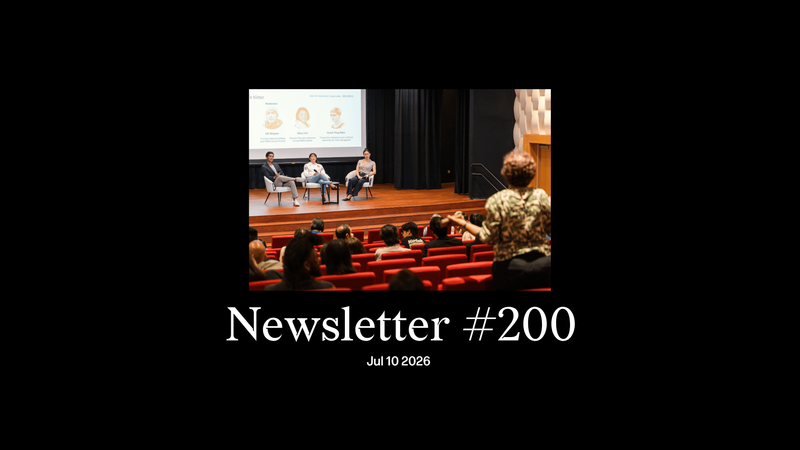
Still, if you’ll permit some navel-gazing, this is Jom’s newsletter #200. Should I add an exclamation mark there? I’m often unsure how effusive to be with these little milestones in a (still) loss-making media start-up, but anyhow, thank you. We wouldn’t be here without your support. I hope you never tire of hearing that, because all of us are grateful every day.
It’s also a bit surreal that we recently pulled off our first half-day ideas festival, Jomfest. A big thank you to our sponsors, speakers, and other contributors. It’s sheer coincidence that our event content is ready just in time for issue #200.
And next week, you’ll be getting a special one-off newsletter written by Corrie, our arts editor. She’ll be sharing her thoughts on the upcoming season of The Studios by Esplanade, which runs from July 24th-September 6th, with “precarious bodies” as its theme. It’s our second bit of sponsored content with Esplanade (here’s the first), and Corrie has devised a quite innovative structure, pairing everyday forms of precariousness that we all feel with each of the five shows.
If you’re into theatre—and even if you’re not, but that feeling of precariousness resonates with you—do click on the links to find out more. Jom has no intention to ever engage in mindless, mediocre advertising, but we are in favour of calibrated, thoughtful sponsored content that resonates with our audience—and we believe there’s much alignment with the programming at Esplanade. Ultimately, in this uncertain new media world that we’re trying to make sense of and thrive in, such content can be a win-win-win. Sponsors reach the right eyeballs, our readers get “advertising” that’s actually informative for their needs/wants, and we, Jom, in the middle, are a little closer to sustainability.
And if you like what you see next week and are also keen to partner with us, send me a note. We’ve got a pretty cool group of over 8,000 people here.
Finally, if you’re keen to engage more deeply with the Jommunity, do check out our Telegram group. This week Abhishek, our head of content, and Faris, our history editor, have been discussing the latter’s essay on fashion, including that perennial question for Singaporean males: if not Uniqlo, then what?
- Parliament throws up ideas for the future of Singapore’s transportation industry
- Alvin Tan, Lawrence Wong, Michael Thng, David Neo, and other politicians in the news
- Why physiotherapists are quitting the public sector for private
- Meta Glasses and other smart glasses: grab or fear them?
- Taledrops and Racoonhead, two new(ish) bands
Above are the issues we chose to explore in more depth.
Other news this week included: Singapore and Indonesia “strategically aligned” on the Strait of Malacca, and also sign a carbon credits pact; space pact between Japan and Singapore; Singapore and Timor-Leste’s push to strengthen economic ties; new blueprint for Greater Sentosa; seniors going back to school; pro-PAP sites (once again) post falsehoods about the WP; religion on the decline; lower alcohol limits for drivers, who could also face jail for holding phones while driving; a new NUS minor in criminal justice; 22 years jail for man who raped 13-year-old girl and treated her as an “ashtray”; the Transformative Justice Collective receives a Documentation Award at the 9th World Congress Against the Death Penalty in Paris; 15-19 coffeeshop fires a year; fresh uncertainty for Filmhouse and Carnival Cinemas given potential Golden Mile sale; BTS in Singapore in December; ST interview with a fish geneticist; ST multimedia piece on Subbuteo in Singapore; and Tampines Changkat’s fearsome cicada catching.
Join 1,700 members keeping Jom independent. From S$10/month—full access, no compromises.
“Living better, fuller, more joyful lives: ideas from Jomfest”, by Jom
Our inaugural Jomfest, consisting of four panel discussions at the Asian Civilisations Museum on May 19th 2026, was a celebration of 13 Singaporeans striving on the margins. (Article above, and video links below.)
Keynote: Pooja Bhandari and Teo You Yenn are two seeking to nurture a more compassionate, egalitarian, and inclusive educational system. Watch their discussion here.
Arts: Usha Chandradas, Mok Cui Yin, Aditi Shivaramakrishnan, and XUE are some of those nurturing artistic communities by creating spaces where interdependencies can flourish, and liberate individuals from unforgiving market conditions. Watch their discussion here.
Food: Yeo Min, Anugerah Murni, Toffa Abdul Wahed, and Vasunthara Ramasamy are members of the culinary community pushing our conceptions of food and heritage beyond tourist-driven caricatures. Watch their discussion here.
Sports: May Ooi, Quah Ting Wen, and UK Shyam are some of our sports stars who, despite seemingly impossible odds, have pushed us to greater sporting heights. Watch their discussion here.
Jom berjaya
Sudhir Vadaketh, editor-in-chief
Jom
Jom on striving from the margins
 Maya Viswa
 Shen Chenzi
 Corrie Tan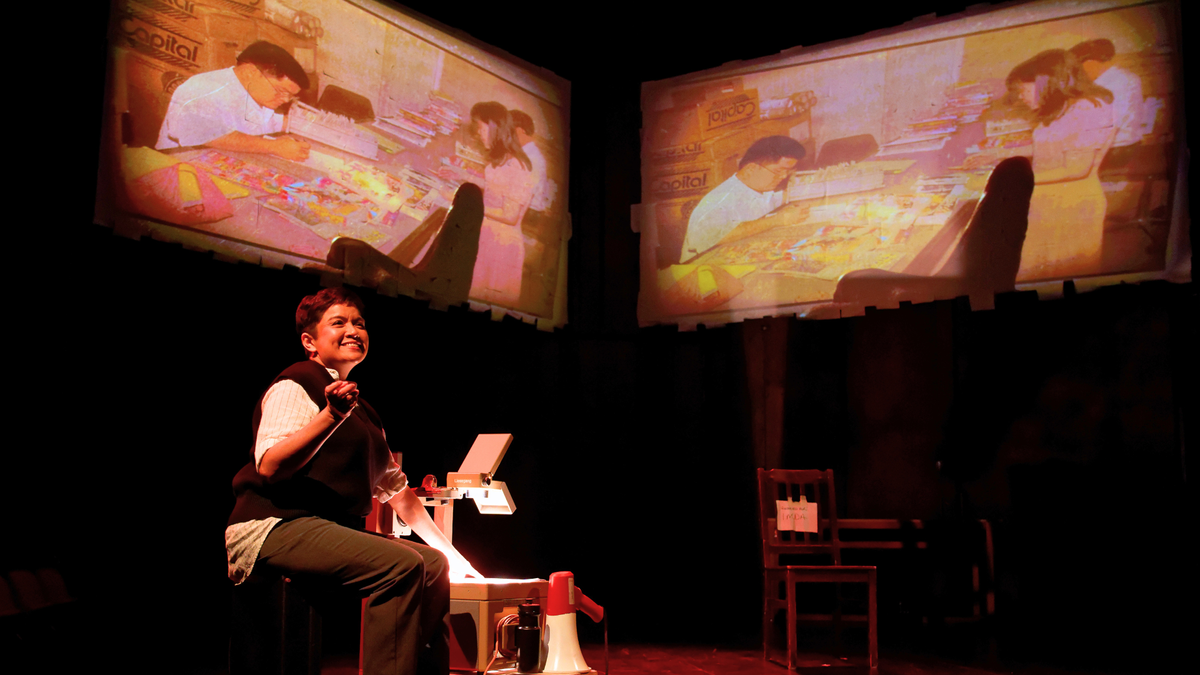
 Sudhir Vadaketh
Singapore This Week
Politics: Alvin Tan, Lawrence Wong, Michael Thng, David Neo, Stephanie Tan, Goh Meng Seng

The PAP as arbiter of truth. The case for one-party dominance. The reality of elite governance. Some classical concepts from the Singapore consensus were this week dusted off and given a contemporary shine by younger politicians, sparking the usual rebuttals. On Saturday, the PAP’s youth wing celebrated its 40th anniversary with a bash for 1,200 people at MBS. It announced a new youth academy that will run training workshops to “serve Singaporeans on the ground”; alongside a new fellowship programme that will give 40 Young PAP (YP) “activists” a S$5,000 seed grant each to run programmes. Alvin Tan, a minister of state and YP chairman, made an impassioned speech that sought to draw a distinction between the “artificial” elements in the world today and what it means to be “authentic”, a word he uttered 16 times.
“In modern politics, there is a constant temptation to prioritise the narrative over the truth, that as long as the optics look good, the truth can be managed…Authentic leadership means choosing the harder right over the easier wrong. That is the PAP ethos.” For any political party anywhere to suggest that it values truth over narrative is bound to invite criticism, never mind one that has exercised epistemological hegemony since independence. Political commentator Bertha Henson and lawyer Yeoh Lian Chuan were quick to note the PAP’s own pursuit of narrative over truth in terms of Singapore’s early history; while Jom recently mentioned the PAP’s ignorance of its own racist words and policies as it demonises others and crafts its own anti-racist narrative. The PAP has, at best, a rather complicated relationship with the truth.
In his speech, Lawrence Wong, prime minister, alluded to the dangers of feisty politicking. “The real competition is between Singapore and the rest of the world...” The WP’s Michael Thng responded online: “This isn’t how competitiveness is built. National sports teams do not get sharper by cancelling their domestic leagues to save energy for international tournaments…PM Wong’s framing gets the causality backwards. It is precisely because Singapore is the underdog externally that we need real contestation internally.” Wong did call for internal party diversity, saying that the PAP wants “people with different experiences, perspectives and ideas”. In other words political pluralism in Singapore, not unlike in China and other one-party states, is best realised within the confines of a single, hierarchical, Leninist structure.
In Parliament, during the debate over dialects sparked by “Dear You”, a Teochew-language film, David Neo, acting minister for culture, community and youth, admitted that he hadn’t watched the film: “Ministers have no time to watch movies.” He clearly meant it as a joke, though it touched a few raw nerves. Senior politicians in Singapore have a tradition of reminding us how hard they work, perhaps to justify their obscene salaries. But the refrain has grown tired, if not horribly unsympathetic, as workers here increasingly struggle to put food on the table, and sometimes die from overwork. For a culture minister to not watch the movie in question is bad enough, but to poo-pooh the arts in general—as seemingly less worthy than other intelligentsia pursuits —reveals much about elite mindsets.
“Minister in charge of culture don’t watch movie, minister of transport don’t take MRT, minister in charge of fertility no baby,” went one joke online. Like management consultants, Singapore’s scholarly elites have long prided themselves on their ability to parachute themselves into any area and soon after dish out worldly wisdoms, to hell with lived experience. Perhaps what Wong should promote is not just greater diversity among new recruits, but a culture in which his current charges, wages notwithstanding, can live more ordinary lives.
Finally, Stephanie Tan, the articulate young politician from the Progress Singapore Party, resigned, citing “differences in opinion in the direction of the party”; while Goh Meng Seng and Derrick Sim have stepped down from their leadership positions at the People’s Power Party, known best for its bigotry and political opportunism. Tan will be missed.
Other stuff we like
Sponsored listing
The Studios by Esplanade. The annual season of intimate shows at Esplanade – Theatres on the Bay returns from July 24th-September 6th, with “precarious bodies” as its theme. It features works from Australia, Belgium, Iran, Malaysia, and Singapore. Feeling anxious, uncertain, or precarious given all the turbulence around you? These theatrical offerings just might be for you.
“The King of Fruits: My life as a durian influencer” in equator. “On Douyin, China’s TikTok, influencers explain how to use the fruit in desserts like ice cream and mooncakes, and even in hot pot. Livestreamers sell thousands of pieces per session...soaring demand is fuelling a new wave of Chinese investment and small-farmer emigration to Southeast Asia, notably to Laos.” Here’s a fascinating interview with one of them.
“The Distance Between Awareness and Understanding: AFR-SG on Refugees, Displacement, and Public Understanding in Singapore” in Picture Perfect Project. An interview with Mathilda Ho, co-founder of Advocates for Refugees-SG (AFR-SG), on how to foster a better public understanding of forced displacement and Singapore’s place in broader humanitarian debates.
A flavour of Jom. Occasionally, Jom publishes essays outside the paywall. These are on issues we think are in the public interest, and deserve a wider airing. In the past two years, we have published nearly 50 such pieces. Read some of these if you’d like to see samples of our work. We hope they’ll convince you to subscribe. And even if you’re here with no intention of doing so, we hope you’ll enjoy these offerings and consider it time well spent!