

In a time of intense global turmoil, with immense human suffering across the world, there is much for us all to be thankful for in this city-state we call home. Yet beneath the glittering facade lies the harsh reality of gross inequalities, the exhausting rat race, and entrenched societal definitions of, and pathways to, “success”.
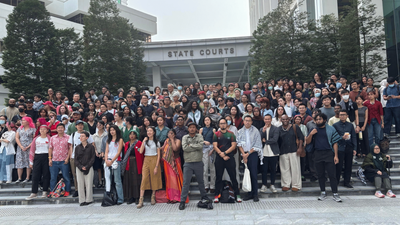
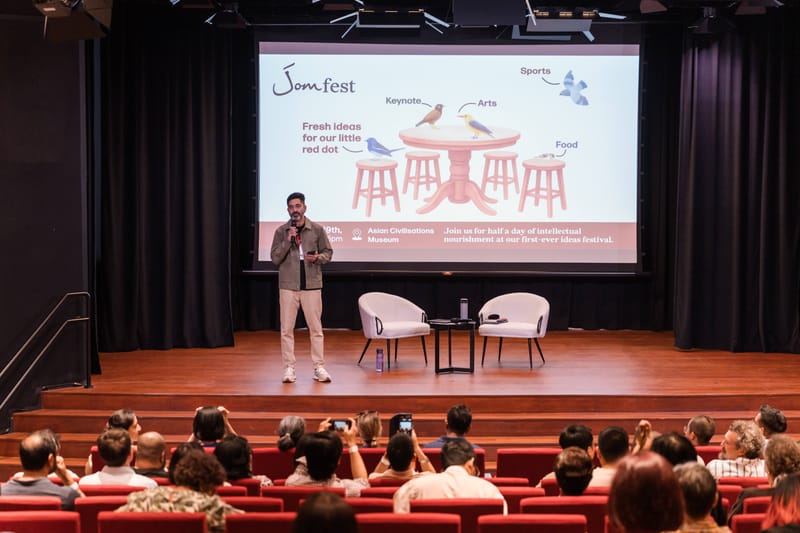
Our inaugural Jomfest, consisting of four panel discussions at the Asian Civilisations Museum on May 19th 2026, was a celebration of 13 Singaporeans striving on the margins.
Pooja Bhandari and Teo You Yenn are two seeking to nurture a more compassionate, egalitarian, and inclusive educational system.
Usha Chandradas, Mok Cui Yin, Aditi Shivaramakrishnan, and XUE are some of those nurturing artistic communities by creating spaces where interdependencies can flourish, and liberate individuals from unforgiving market conditions.
Yeo Min, Anugerah Murni, Toffa Abdul Wahed, and Vasunthara Ramasamy are members of the culinary community pushing our conceptions of food and heritage beyond tourist-driven caricatures.
May Ooi, Quah Ting Wen, and UK Shyam are some of our sports stars who, despite seemingly impossible odds, have pushed us to greater sporting heights.
This week we’ve published the full Jomfest panel discussions on YouTube. Below are some highlights.
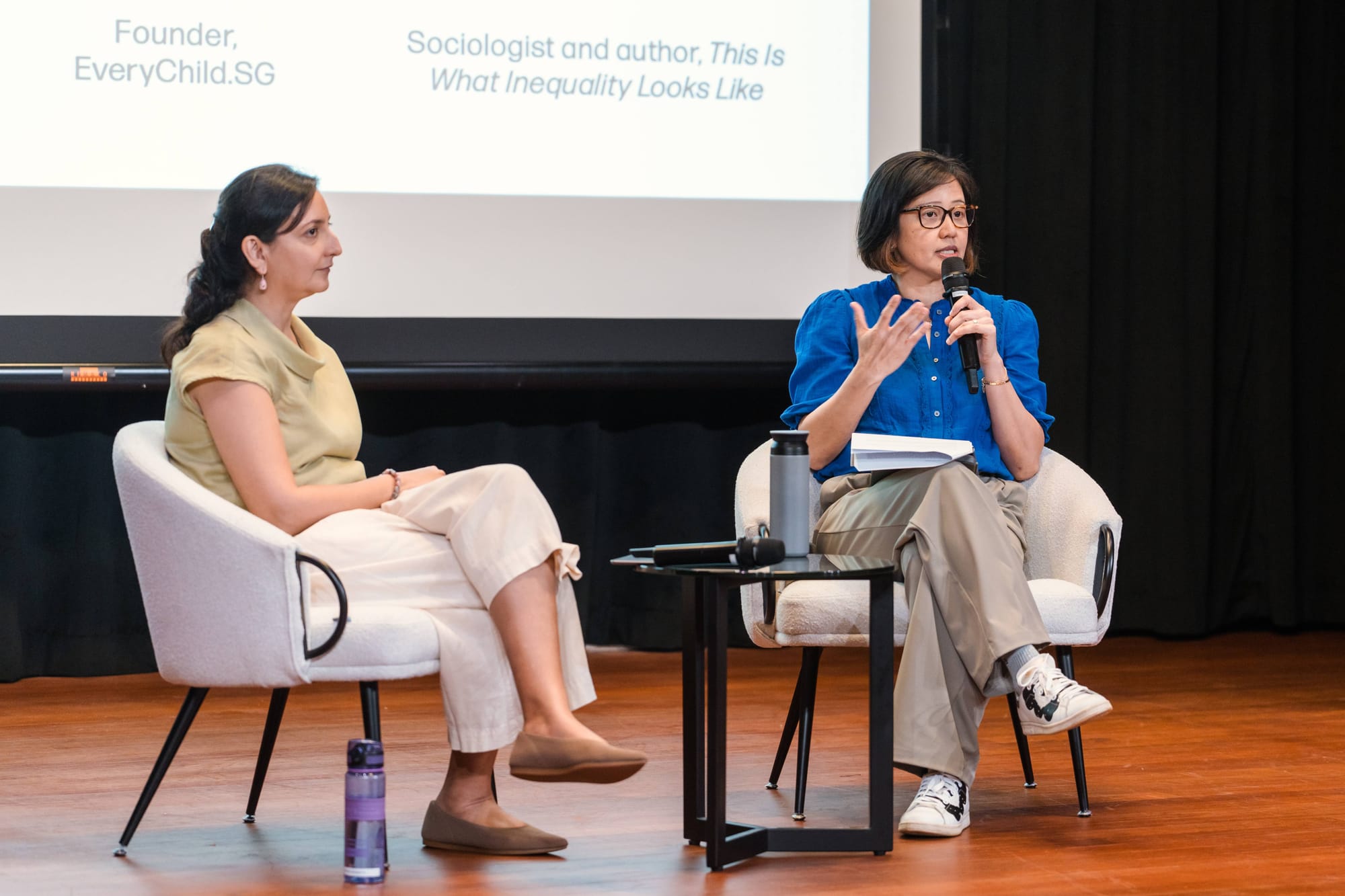
Keynote: The fruits of our labour
“I think Singaporeans still believe in family…we want to have families still, but…we just need a bit of help to make the system work for us.”—Pooja Bhandari, founder, EveryChild.SG.
We understand labour differently today than a few decades ago, even if there’s still some way to go before caring for the home and its inhabitants is conferred the same societal and material recognition as sitting in an office. Teo You Yenn, sociologist, further enriched this understanding during her keynote. Many parents in Singapore can outsource various aspects of caregiving labour when their kids are young—changing diapers, bathing, and feeding—to grandparents. Some can afford helpers. Public resources are poured into child care facilities and other kinds of institutional support for those with infants.
But You Yenn’s research revealed that virtually all parents, irrespective of class, hit the limits of outsourcing when children begin formal instruction. Anyone who has sat head in hands as their kid proudly proclaims that three times four equals 10 would relate. “When it comes to education,” said You Yenn, “they [the parents] feel it more strongly as their work.” That means education too becomes a form of “care labour”, perhaps more stressful and certainly longer-lasting than infant care. The pressure ratchets up as the clock ticks down to the PSLE, the unforgiving sorting machine all kids in local schools are put through at a ridiculously young age. Time, treasure, and in some cases, tears, flow freely.
You Yenn was responding in part to a query by Pooja, her interlocutor and founder of EveryChild.SG—a parent-led collective calling for a societal rethink of childhood—on whether the known stresses of the local education system may play a role in putting some off from the whole child bearing and rearing enterprise. Research on this is scant. But, said You Yenn, “as a society, we are very aware that these are…the contours of life in Singapore. So it must have a broad effect, right, in shaping how people think about their decisions?”
Keynote: Neoliberalism’s distortions
“I felt this unease in all the conversations, where people feel there is one thing that they should be doing for their children, yet they are being driven to do something else.”—Pooja.
What are the costs of growth at all costs? The reduction of human beings to atomised units of labour creates a hierarchy decided by economic output. Those atop are convinced they’re there by dint of hard work and talent; those below are in a perennial struggle, either to elbow their way up or to accept that the place they occupy is the place they deserve. Humanity’s innate tendency towards cooperation is replaced by competition, and the state—essentially a collective whose primary function ought to be upliftment for all—retreats from its role as provider of public goods. Public spending is “viewed with some level of suspicion,” said You Yenn.
Left to their own devices in a shifting, shuffling hierarchy, people are perennially anxious—the possibility of downward mobility is very real, and its consequences very material in a highly unequal society. You Yenn found that even upper- and middle-income parents are worried about whether their children will have enough because of the precarity engendered by a dog-eat-dog world. And since the competition, the precarity, and seeming zero-sum nature of modern Singapore has been so deeply internalised, the natural instinct to solidarity and collaboration has weakened. It’s this “anxiety and self-preservation drive in our society, rather than plain selfishness or apathy” that prevents parents from coming together, agreed Pooja. How can we make space for more voices? How can we recognise more diverse forms of families? How can we create a future that prioritises not only economic output but also joy, wonder, and contentment?
Important questions to consider, if we’re to move away from a spiritually impoverished, market-driven existence, and recapture the rich essence of a “village”.
Watch the full keynote discussion here.
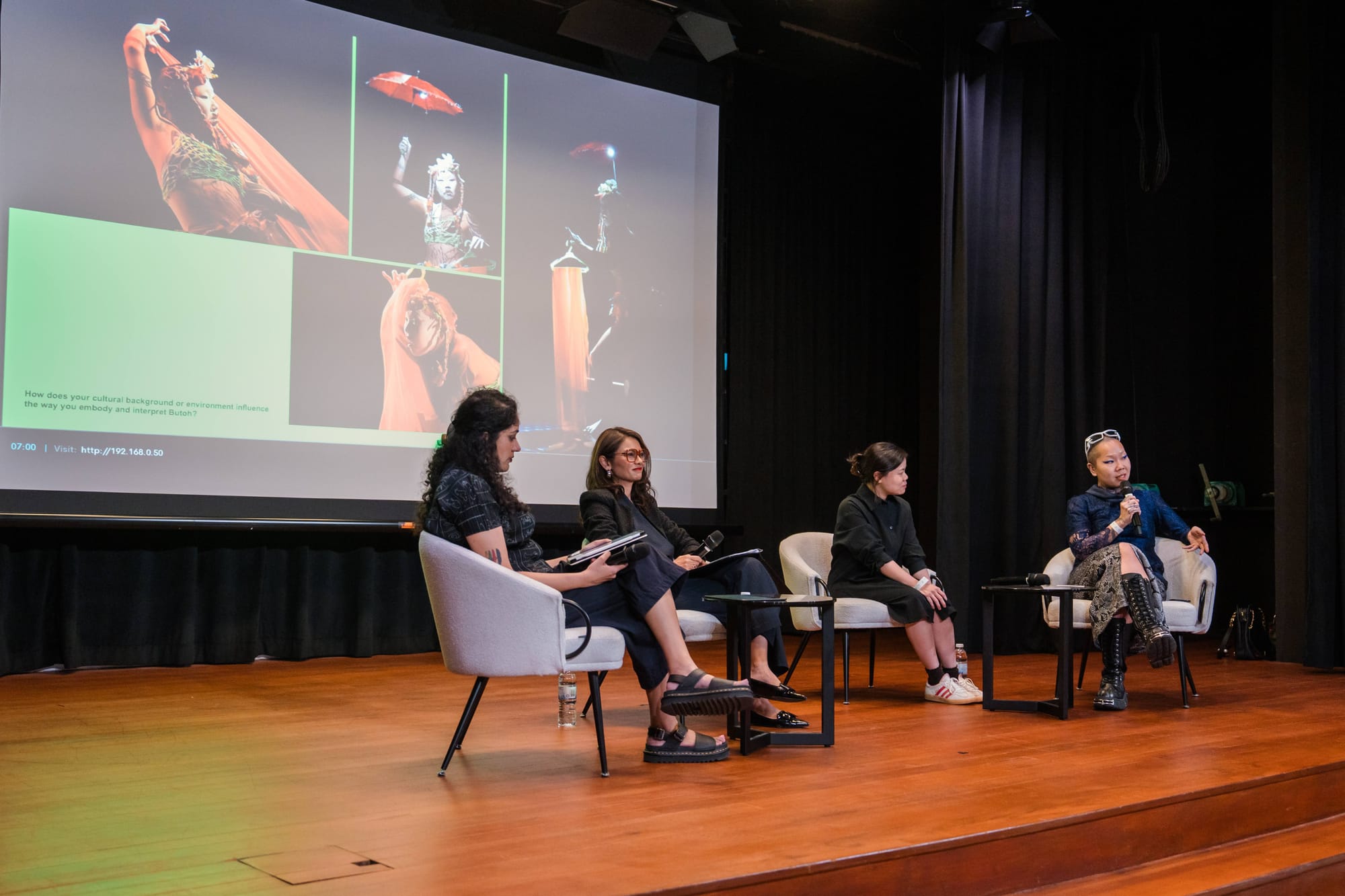
Arts: The sum of many p(arts)
“Singapore…doesn't really allow for…the individualised experience of the artist.” —XUE, founder, Butoh Collective and co-founder Endless Return.
That artistic freedom follows financial freedom is almost axiomatic for Usha Chandradas, lawyer and Plural Art Mag founder. “I have other jobs that pay me good money…and that actually gives me the room and the space to be able to do the work with my magazine that I want to do,” she told attendees of the arts panel. Usha’s assessment rings true when one considers that the state is the biggest funder of the arts in Singapore, giving it outsized influence over what does and does not get produced. And it’s not shy of exercising that influence—the funding cuts to local theatre company W!LD RICE for promoting “alternative lifestyles”, and the withdrawal of a grant to graphic novelist Sonny Liew for content that could “undermine the authority and legitimacy of the government” just two prominent examples in a list long enough to justify its own section on the National Arts Council’s Wikipedia page.
The same financial precarity that forces some to dilute their work (or concentrate on other funding sources) coerces others into taking up undesirable jobs. “Not everyone can afford to say no to an unfair contract, not everyone can afford to walk away from what might be an ethically compromised room,” said Mok Cui Yin, arts producer and currently head, Biennale at Singapore Art Museum. It would help for artists to know their rights, which includes the absolutely vital knowledge about what they can say no to. Perhaps that could be part of the larger support system that XUE feels is lacking. Young artists get little guidance on how to navigate the gargantuan bureaucracy, with its mounds of paperwork and pernickety rules.
But XUE also pointed to a fundamental truth beyond the threat of censorship, the grey legal zones, and the lack of guidance. In our quest to be this perfect global city with arts without the warts, we stifle creative expression and foreclose the journeys that young creators need to take in their paths to greatness. “We need to let the artists make mistakes, but the money only comes to the artists that don't make mistakes. And therefore, what you have to give in Singapore is the answer and not the idea…There's no room for dialogue.”
Freedom of. Freedom from. Freedom to. A “best-in-class” arts ecosystem needs “best-in-class” liberties.
Watch the full arts panel discussion here.
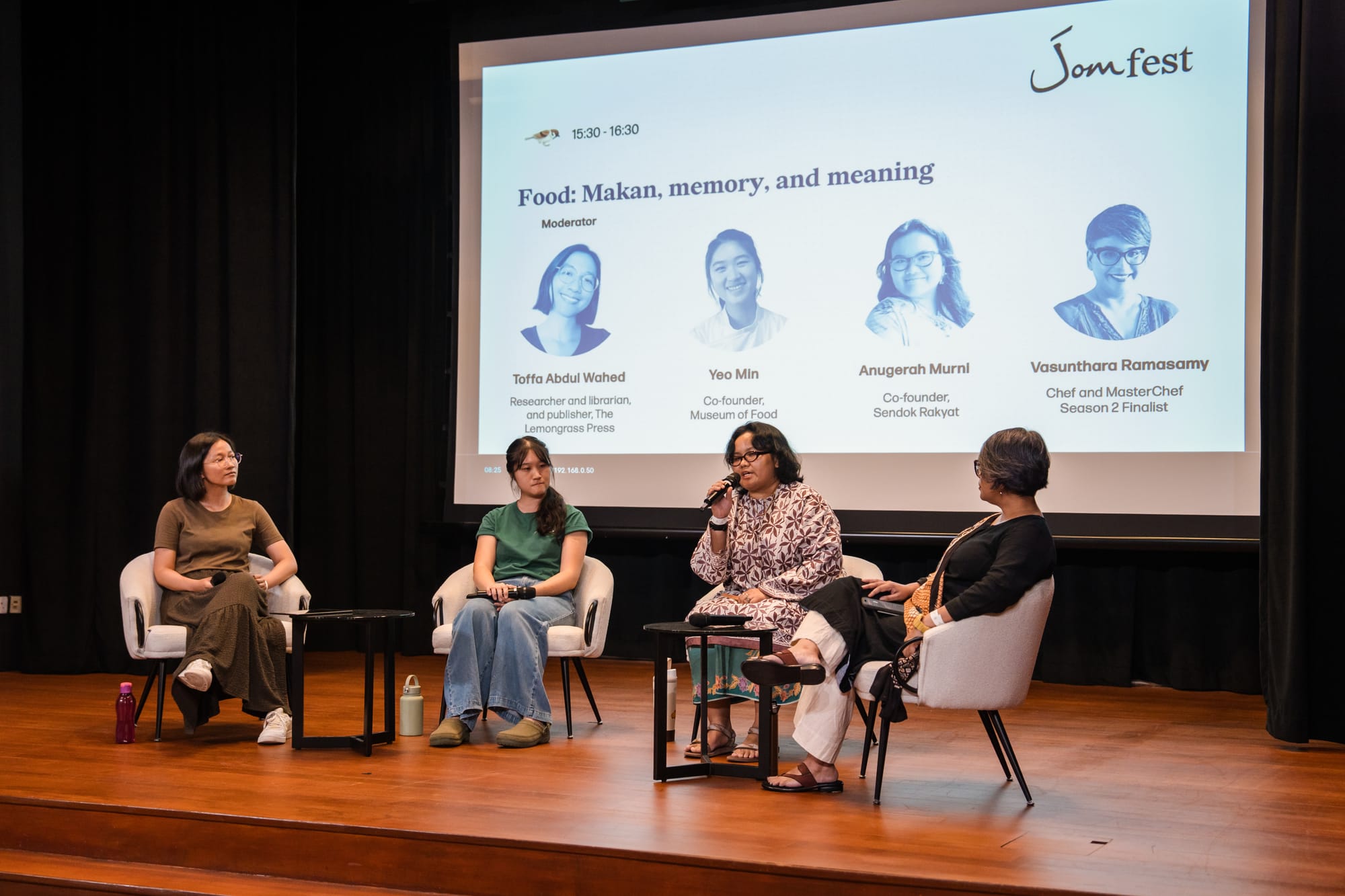
Food: Is our pot melting?
“What is different in Singapore compared to our South-east Asian counterparts…is the lack of home cooking. [In] Vietnam, Malaysia, Indonesia...young people drive that industry of trend-based food but at the end of the day they go back to what is food of belonging to their people.” –Vasunthara Ramasamy, contestant on MasterChef Singapore Season 2 and private dining chef.
Recipes scribbled on scraps of paper, instructions conveyed across kitchen counters, ingredients fished from memory—culinary heritage is retained, sustained, and transmitted through the hundreds of rites that together make up the ritual of cooking. When the ritual begins to disappear, it takes with it all those rites, flattening heritage and identity into the caricatures hawked around by tourism boards. Chilli crab, chicken rice, nasi lemak, fish head curry, satay, roti prata. A 2015 survey indicated that only 22 percent of Singapore households cook daily, less than half of those in London, Shanghai, and Paris; and only a quarter compared to four decades ago. Families are nuclear, homes are smaller, lives are busier, and as Vasun said during the food panel: “Home cooking has become…what our domestic helpers cook.” This is not a slight on helpers, most families can’t afford one anyway, but rather a warning about how rootless we’re in danger of becoming.
Some might say that Singapore’s culinary heritage resides in its hawker centres and canteen food. But modern life has raided these repositories too. The median age of our hawkers is 60; that youngsters are shying away from this most Singaporean of callings shouldn’t surprise anyone even slightly aware of the stresses and inequities of 21st century hawker culture. Canteen food, for decades prepared with love and artisanal care by aunties and uncles, is now handed out in sterile boxes. Vasun worried: “Not cooking at home, not having canteen food. Then what are the young people growing up to think is Singaporean food?” Allied to this is our port-city’s predilection for embracing the latest trends at the expense of our own first loves. Vasun spoke about local Michelin guides filled with other cuisines, and young chefs steeped in French-cooking techniques. “In Singapore, I feel we are sort of like a boat drifting along wherever the tide brings us,” she said. If we’re not mindful, we may soon find that while our bodies inhabit this tiny island, our tongues, memories, and identities are all at sea.
Watch the full food panel discussion here.
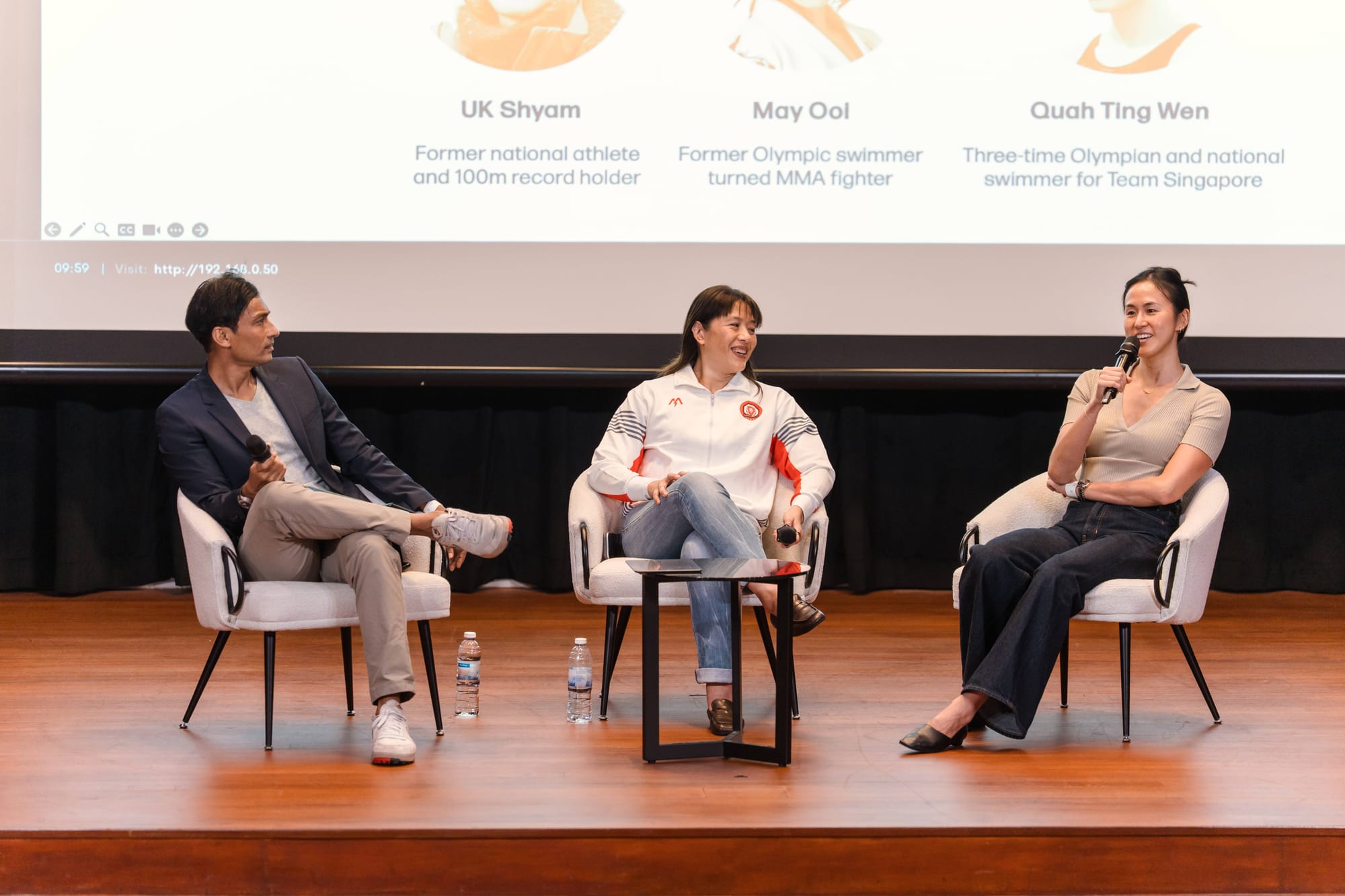
Sports: Our sporting life
“One of the very common questions that I get from parents when their children are in primary six and five would be, how good is my kid? What is the probability of me being able to use swimming to get my child into a top tier school?” —Quah Ting Wen, Olympian and Asian Games medallist.
How does a nation achieve sporting greatness? Does it simply prepare the soil for a sports culture to take root or does it nurture certain crops, likely at the expense of others? That was one of the tendrils of discussion to emerge from the sports panel. “Mighty May” Ooi, former national swimmer, professional MMA athlete (and a medical doctor) felt that resources should go into simply encouraging young kids to play—“they could be jumping rope…or bowling or play darts, just anything”—so they explore all manner of sport before landing on one that interests them the most. Kinetic skills picked up at a tender age are easily transferable because as the body gets bigger and stronger, it can adapt to different requirements. Such an approach would cast the widest possible net in Singapore’s perennial quest for world-class athletic talent. “It’s a bit shortsighted when we think about early specialisation,” said May, referring to some local schools that require kids to already be skilled at a sport to be able to participate. “So…[when] the barrier to entry becomes a little bit higher...it means you have to…send your kids to classes before they even go to the first CCA in school.”
But UK Shyam, former national track and field star, and swimmer Quah Ting Wen, Singapore’s most bemedalled athlete, wondered about the tension between spreading access widely and creating world-class athletes in a resource-constrained nation. Should Singapore continue funding its over 60 sports associations, or should it concentrate on those with the most medal-winning promise at international competitions? “If you look at all the small countries that are very successful…they are not afraid to choose the sports that they are good at and to invest in.” Shyam’s point was that if Singapore desires more Joe Schoolings, then it should be choosier in allocating money.
“Are we being elitist?...Are some sports more prestigious than others? Is it wrong to choose?”
Watch the full sports panel discussion here.
If you enjoy Jom’s work, do get a paid subscription today to support independent journalism in Singapore.
Letters in response to these discussions can be sent to sudhir@jom.media. All will be considered for publication on our “Letters to the editor” page.
Correction notice 1: In the July 10 Jomfest newsletter sent to all subscribers, we mistakenly attributed event photos to Grace Baey. Grace helped us put together the videos but the photos were by Louisa Violet.
Correction notice 2: The quotes at the beginning of the two keynote blurbs were earlier attributed to You Yenn.