
When AP Nagoor Masood stepped ashore in Singapore in 1920, he was following a rich tradition. For centuries, Muslims from south India had braved the tempestuous Bay of Bengal to trade in Malaya and beyond—daring archipelagic odysseys that turned mendicants into merchants, obscurities into icons.
But Masood was breaking from tradition too. His predecessors were almost always men travelling alone, chasing fortunes in South-east Asia. Some married local women and stayed, giving rise to the Jawi Peranakan. Others were peripatetic, spending parts of the year in the region trading textiles for tin and betel nuts before returning to their families in the storied port cities that dotted the Indian subcontinent’s eastern seaboard: Nagapattinam, Karaikal, Tranquebar.
Masood, his wife Meeral, and their children came from Kadayanallur, in the lower reaches of the subcontinent’s mighty Western Ghats mountain range. Kadayanallur was part of the “handloom belt”, one of numerous weaving settlements clustered in India’s deep south. For generations, its Muslim weavers had worked on looms perched in the front rooms of their narrow, palmyra-thatched houses that opened out into the streets. It was hard work, often involving entire families. From morning to night, Kadayanallur rang with the clacking of the wooden shuttles moving across the loom, carrying the weft back and forth through the warp to produce textiles that were sold in the town bazaars.
Often, the buyers were coastal merchants who prospered trading these textiles in Kerala, Ceylon, and further asea in South-east Asia—one variety popular in the Straits Settlements was called “Singapore cloth”. But none of this translated into economic abundance for the weavers themselves. In the distorted imperial economy, families like Masood’s survived on diluted corn porridge; rice was a luxury, affordable only twice a week.
When famine struck in the wake of the first world war in 1920, even that gruel vanished. “Starvation deaths became common,” recalled one of Masood’s sons, Maideen, then seven. Desperate, Masood tied his meagre savings in a cloth bag slung around his waist, Meeral gathered the brood, and they set off on a punishing 400km road trip to Nagapattinam. There, they boarded a ship for Penang and thence to Singapore.
Contrary to most popular accounts of 20th-century maritime fare, Maideen thought the food on board was “delicious”. Perhaps anything was a feast after famine. Here was one final break from their wealthier migratory predecessors: Masood’s family came not for riches but for refuge. Many more would follow in the coming years.
In stark contrast to famine-stricken and economically decrepit Kadayanallur, Singapore was a boomtown, with GDP climbing over 10 percent annually through the 1920s. This growth was powered by an expansion in international trade, and high prices of Malayan rubber and tin extracted by migrant labour toiling on peninsular plantations. As money poured in, a torrent of activity followed. The first world war had awakened the British to Singapore’s strategic value. Even as they plundered one colony—over a million Indian soldiers fought in the war, more than 74,000 died—the colonisers poured resources into another. Already, Keppel Harbour housed the world’s second-largest graving dock, built during the war, and used for ship construction and repair. Work on the Causeway began in 1919. The Sembawang naval base and the Seletar air force station would soon follow suit.
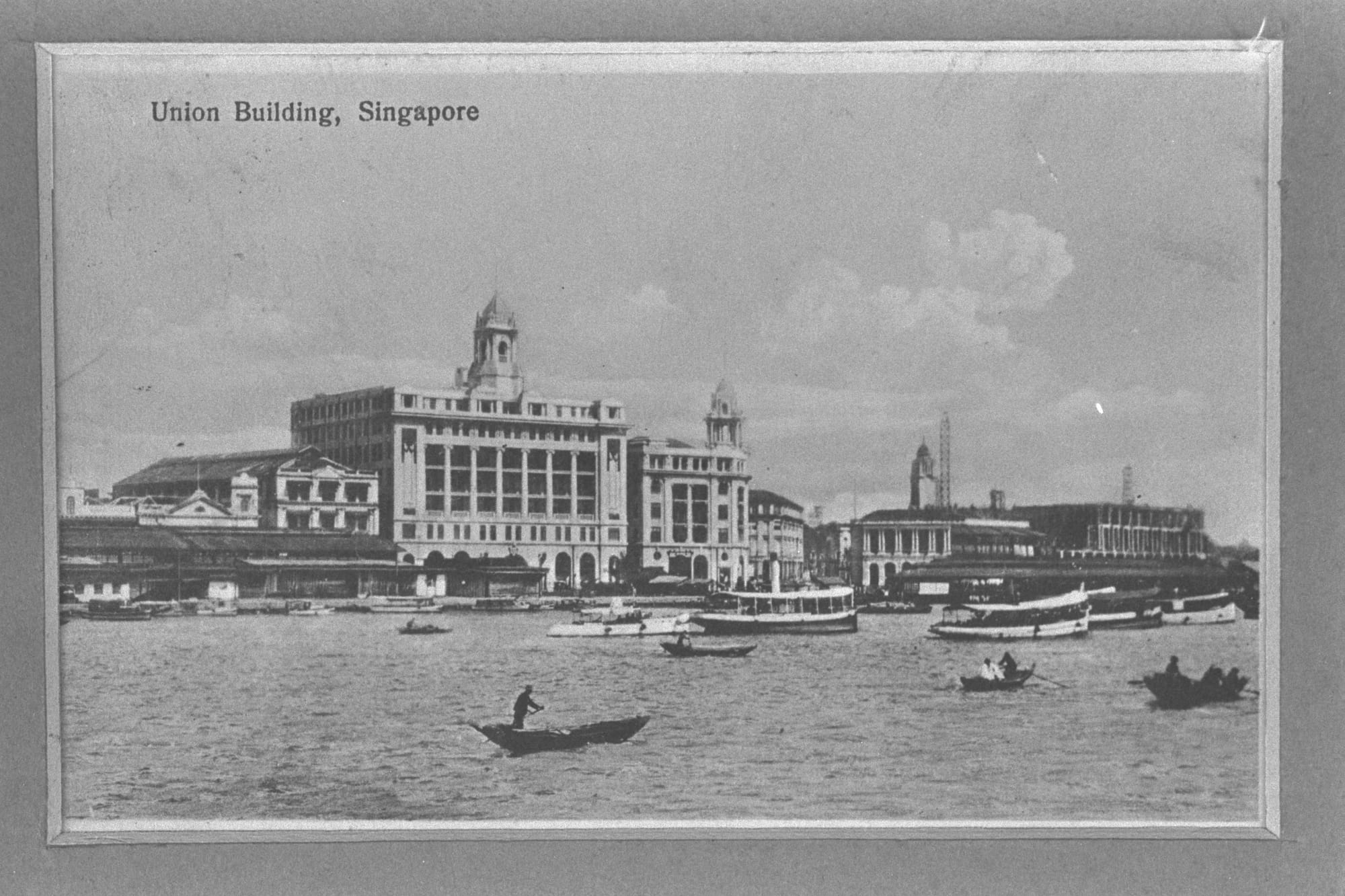
Meanwhile, the south was a maelstrom of commercial activity. The low-slung 19th-century structures on the Collyer Quay waterfront were giving way to a quartet of buildings that together made up Singapore’s first high-rise skyline. The seven-storey Union Insurance building at 21 Collyer Quay came up in 1924; HSBC’s steepling “cathedral” one door down in 1925; and the monumental Fullerton Post Office in 1928. Soon after arriving in 1920, Masood began work as a labourer on the fourth: the five-storey Ocean Building that The Straits Times (ST ) called “an imposing pile” when it was finished in 1923.
The family settled along a marshy stretch of Tanjong Pagar Road, in the shadow of the city’s gleaming skyline they were bringing to life. Over the years, the area had become a miniature ethnic enclave of 100-odd Indian Muslim families who had migrated from Kadayanallur and other nearby villages in similarly straitened circumstances. Some men worked at the docks, loading and unloading the ships that powered imperial trade; others, like Masood, worked at Collyer Quay. A lucky few with basic education secured posts as peons or warehouse inventory takers. Women led tougher lives. Meeral, Masood’s wife, would rise at 2.30am to pound coriander, cumin, chilli into powders and pastes used in Indian cuisine. When Singapore stirred, she would go around selling them to shops, restaurants, or homes. She would then return home to tend to the children and other domestic chores.
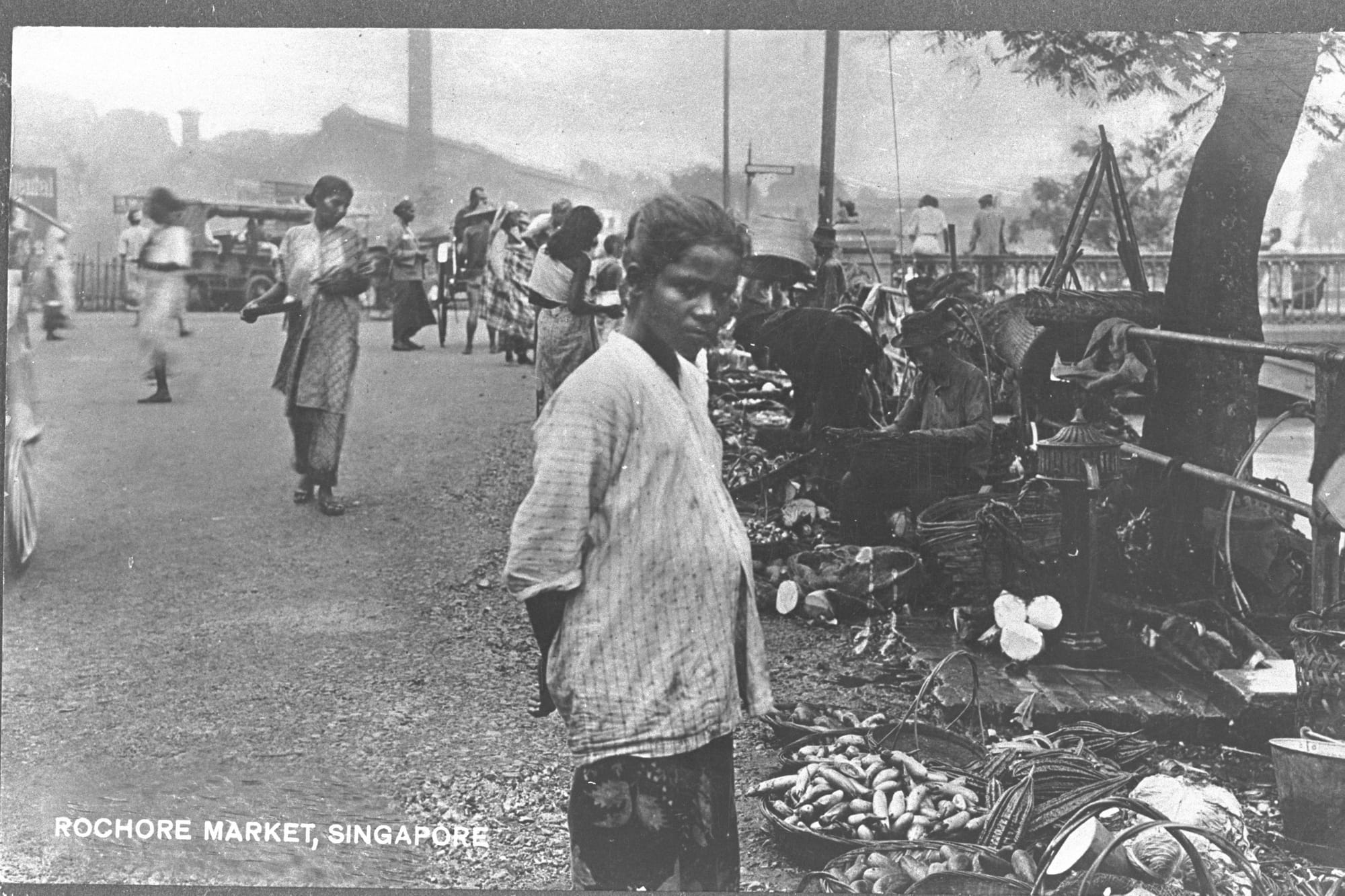
Home was one of eight to 10 rooms carved out from the ramshackle wooden shophouses whose concrete avatars are such a feature of Tanjong Pagar today. Each room housed an entire family, a shophouse could have 40-50 people living under its roof. At night, women and children slept within; men spilled out onto the pavements outside. It was discomfiting, but there was comfort too, in being surrounded by familiar faces. “Tamil Muslims led an isolated social life in the company of individuals from their natal villages or districts. Their interaction with other Tamil Muslims was similar to that with others in Singapore and was largely confined to economic activity,” wrote A Mani, a lecturer at the University of Brunei.
Intracommunity bonds thickened. But as more families from Kadayanallur migrated to Singapore, identities frayed into ever-finer threads. This was part of a larger inter-war trend in which Indians, much like the Chinese with their clans, were splintered into a bewildering array of associations formed along socio-cultural, religious, and linguistic lines. Disagreements among Singapore’s Kadayanallur Muslims were most visible in matters of faith. Families belonged either to the Hanafi or Shafi’ite school of jurisprudence. Shafi’ites, the majority, were further divided into four distinct sects: chinna katchi, periya katchi, melakatchi and keezhkatchi (literally: small party, big party, west party, and east party), each adhering to a different holy man they had venerated in India. There were few intermarriages, and little mingling outside of work.
The sects formed distinct associations. “They [the migrants] were even bringing in maulids (religious recitations) aligned with their respective factions, and collecting ‘tax’ in their name,” Maideen recalled. “This created divisions and hostility within the Kadayanallur community in Singapore.”
Maideen came of age in this fractious era. He’d received a basic education up to Primary Six in a thinnai school—classes held on a raised sitting area at the front of a house—before taking up menial office jobs with the many trading firms lining Raffles Place and Collyer Quay. It was a hardscrabble youth, marked by a relentless hustle for slightly better pay. “In one place they would pay 5 silver and in another place they would give 6 silver, so there was a tendency to run to that place,” he remembered. It was only in 1931, when he became a peon at Imperial Chemical Industry (ICI), one of Britain’s largest manufacturers, that a semblance of stability followed. He would retire from ICI 37 years later.
A steady income allowed Maideen to exercise his reformist zeal. Still a teenager, he joined the Singapore Junior Mercantile Co-operative Society, a peon-led collective that campaigned for labour rights and dignity. At the time, peons and office boys were barred from using elevators in most commercial buildings, forced instead to trudge up and down multiple flights daily. Ocean Building, built on the labour of Maideen’s father, Masood, was one of them. “This restriction was particularly distressing for me,” he recalled six decades later. Thousands agitated for years before the ban was finally lifted in the late 1930s. Back in Tanjong Pagar, Maideen batted for the rights of Kadayanallur’s women, promoted education, and railed against the antiquated customs he felt were holding back the community. Success was uneven. But the one thing that eluded him through the 1930s was bringing together the warring Kadayanallur factions.
If anything united the era’s larger, disparate diaspora, it was Indian nationalism. In the 1930s, the subcontinent was a cauldron bubbling over with anti-British sentiment, and its heat radiated all the way across the Bay of Bengal to Malaya. New arrivals carried news of mass protests and political upheavals. Newspapers, magazines, and periodicals followed, keeping Singapore’s Indians abreast of the existential struggle roiling what most still considered “home”.
Vernacular press chimed in frequently and forcefully. In 1935, an Indian weekly, called Indian, was launched in Malaya with the express purpose of reminding migrants that they were Indian. Singapore’s Tamil dailies, including Tamil Murasu (also founded in 1935), obsessively covered the travels, speeches, and negotiations of Mahatma Gandhi, the man leading the Indian independence movement. Other leaders like Jawaharlal Nehru, later India’s first prime minister; Rabindranath Tagore, nationalist poet and Nobel Laureate; and Srinivasa Sastri, labour leader, toured the region, drawing rapturous crowds. On these fleeting occasions, perhaps even Kadayanallur’s katchis forgot their differences.
“The bid for India’s independence dominated the political consciousness of the Indians,” wrote the scholar Judith Nagata, “and the entire Indian community constantly looked over its shoulder to events and issues back in South Asia.” The wave of nationalist sentiment drove many to enlist in the Indian National Army (INA), the anti-colonial, Nazi-allied armed force founded in Singapore by the guerrilla leader Subhas Chandra Bose.
The records are unclear on Kadayanallur Muslims’ involvement with the INA. Yet, the community was hardly insulated from the currents washing ashore. Maideen avidly read news of Gandhi’s marches and imprisonments. But he was equally drawn to Mohammad Ali Jinnah—Gandhi’s fiercest rival, fervent advocate for Muslim rights, and the primal force behind the Partition that led to Pakistan’s creation. Maideen wrote an article in Tamil Murasu suggesting that the Muslim leader’s birthday be celebrated in Singapore. The paper’s founder-editor responded with an editorial agreeing to “personally…lead” the celebrations if the local Muslims raised 100 silver dollars to fund them. Nearly 6,000 crowded into Happy World, one of Singapore’s grandest venues, to honour a man charting a future for Muslims an ocean away.
The tension between being “here” but belonging “there” sparked two reactions. Among the ruling British, it fostered a deep suspicion of Indian collectivism. Imported reactionary fervour was unwelcome in the Straits Settlements. When a group of Indian Muslims that included Maideen tried to register a society called the United Muslim Association, the colonial authorities refused, suspecting them of sympathising with the Indian independence movement. The applicants tried again with a new name for the society, the Muslim Progressive Association, and Malayanised monikers for themselves: Maideen became Maideen bin Masood. The application was approved. It was a foreshadowing of the ways in which Indian Muslims, including those from Kadayanallur, would navigate the maze of identities in independent Singapore.
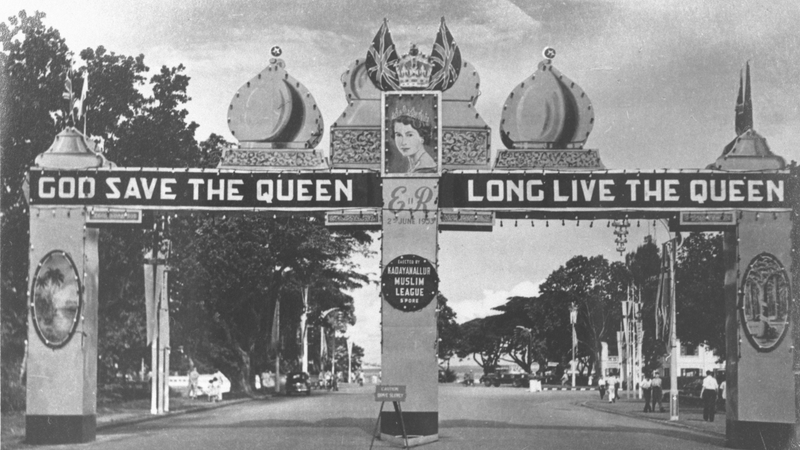
The more visceral reaction came from the Malays. The community had watched with rising unease the swelling ranks of Indians and Chinese in the region. In contrast to themselves, mostly farmers and fishermen outside the economic mainstream, these newcomers arrived as cogs in the colonial-capitalist wheel. By 1941, they’d together outnumber the Malays in Malaya. With greater numbers came vocal claims on resources, louder demands for rights, and a growing cultural footprint in Malaya. All this despite the fact that, in Malay eyes, Indians and Chinese migrants had a transient and transactional relationship with the region, their hearts still residing in the lands of their birth.
Singapore, where large numbers of Malay elite lived alongside a huge migrant population, became the epicentre of Malay nationalism. In 1926, some journalists, government officials, and merchants under the leadership of Mohammad Eunos Abdullah formed the Kesatuan Melayu Singapura (KMS), or the Singapore Malay Union, to further the community’s socio-economic interests. Descendants of Indian Muslims and Arabs were barred. KMS was the frontrunner for virtually all major Malay ethno-nationalist organisations, including the United Malays National Organisation (UMNO).
The exclusionary nature of Malay nationalism, wrote William Roff in The Origins of Malay Nationalism (1900-1941), was “symptomatic of the fundamental problem facing the Malay…that of self-recognition, of discovering himself and then retaining his identity amidst the plethora of alien cultural forces which had increasingly pressed upon him during the past half-century.” The movement would eventually embrace narrower patrilineality: only those with Malay fathers would count as “pure” Malays.
The suspicion and distrust oozed out towards Indians and Indian Muslims too. The Malay media published polemics reminding them of their status as foreigners without any rights in Malaya. Some Indian commentators smugly rejoined that Malaya would have been a jungle without Indian and Chinese migrants; others claimed Malaya itself was part of a “Greater India” because of the subcontinent’s cultural influence. By the end of the 1930s, Malay nationalism, including discussions on rights, belonging and “betul Melayu” (truly Malay), had touched fever pitch.
Perhaps threatened by Malay exclusionism; certainly weary of sectarian strife; and maybe realising that unity was the only way to carve a space for themselves in the port-city’s volubly varied society, Maideen and other community leaders managed to convince the different sects to merge, forming the Singapore Kadayanallur Muslim League (SKML) in August 1941. Within months, the Japanese invaded.
“Tanjong Pagar had fairly wide streets, bustling in the 1950s with trams, trolley buses, trishaws, bicycles and cars, and lined with crowded homes…The multi-coloured shop floors opened out into the markets which quickly led to wet markets, hospitals, police stations, schools, cinemas, playgrounds, even a swimming pool,” one ex-resident fondly recalled in the 1980s. One building, more than any other, signified the material and communal shift from the kampung of Maideen’s childhood: the Umar Pulavar Tamil School (UPTS).
Its origins lay in the simple belief that education was the only way out of poverty. Maideen had been consumed with the cause since his twenties. He’d picked up some English at ICI; read Tamil newspapers regularly, contributed to them occasionally; and often helped community members write letters to their extended families in Kadayanallur. As general secretary of SKML, he could tap into the resources of a far more cohesive community.
A community-funded school was one of its earliest priorities after the Japanese Occupation ended. Maideen and his companions organised public talks and knocked on hundreds of doors in Tanjong Pagar. In March 1946, the first few children traipsed up to the top storey of a modest shophouse at 72 Tanjong Pagar Road for free Tamil classes conducted by two volunteer teachers. Within weeks, the number of kids had grown to more than 50. English was added to the curriculum, and teaching hours extended for peons (“office tambies”, a term that managed to combine derision with affection) who wished to learn the language. Chairs donated by the community replaced floor seating.
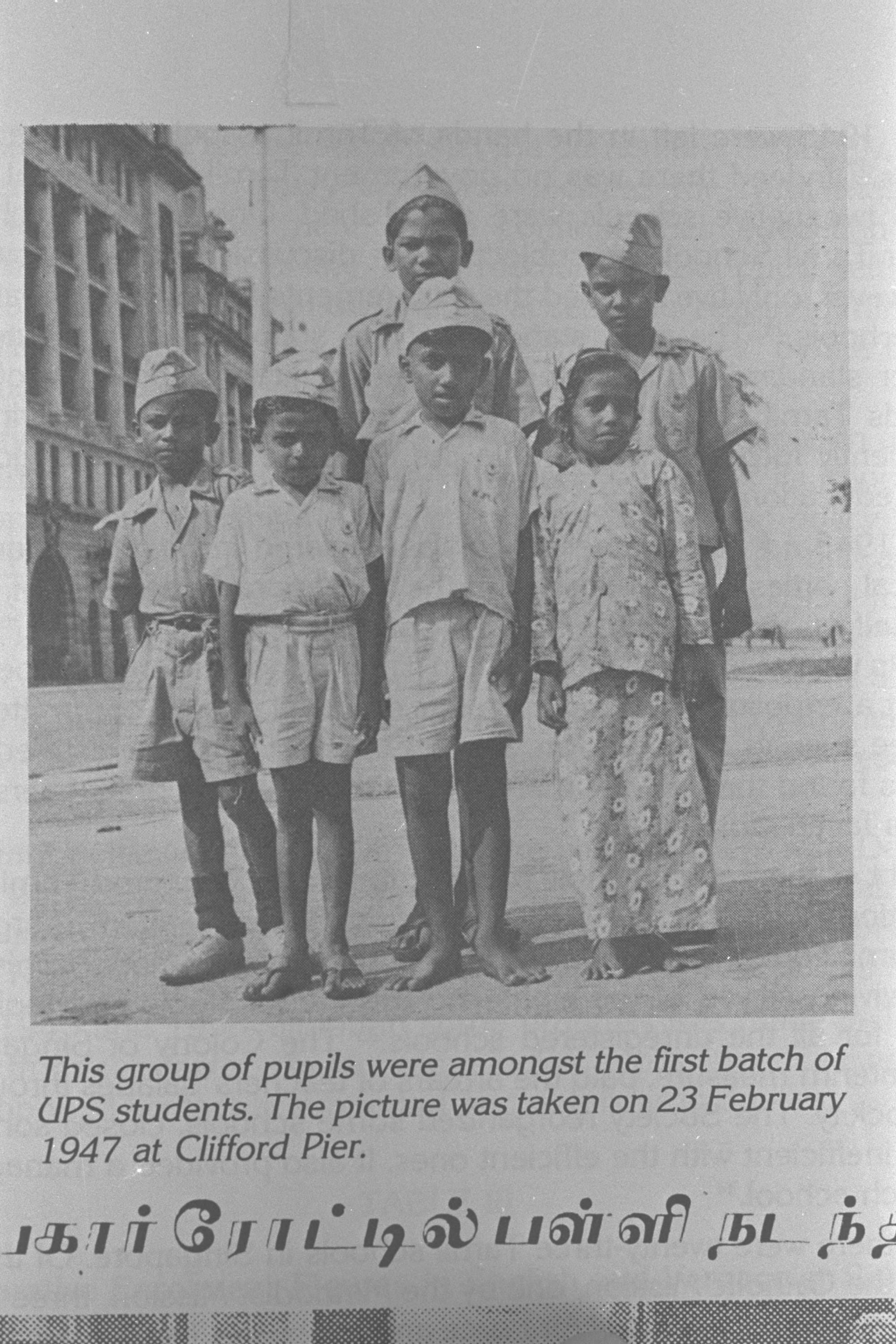
The initial days weren’t without friction. Instead of a traditional school, one group wanted a madrasa where students learnt Arabic. But Maideen stood firm. “I posed a question to the leader: if his son were to compose a letter in Arabic to anyone in our village, would the recipient be able to read it? I contended that learning Arabic [in this context] often resembles teaching a parrot to speak.”
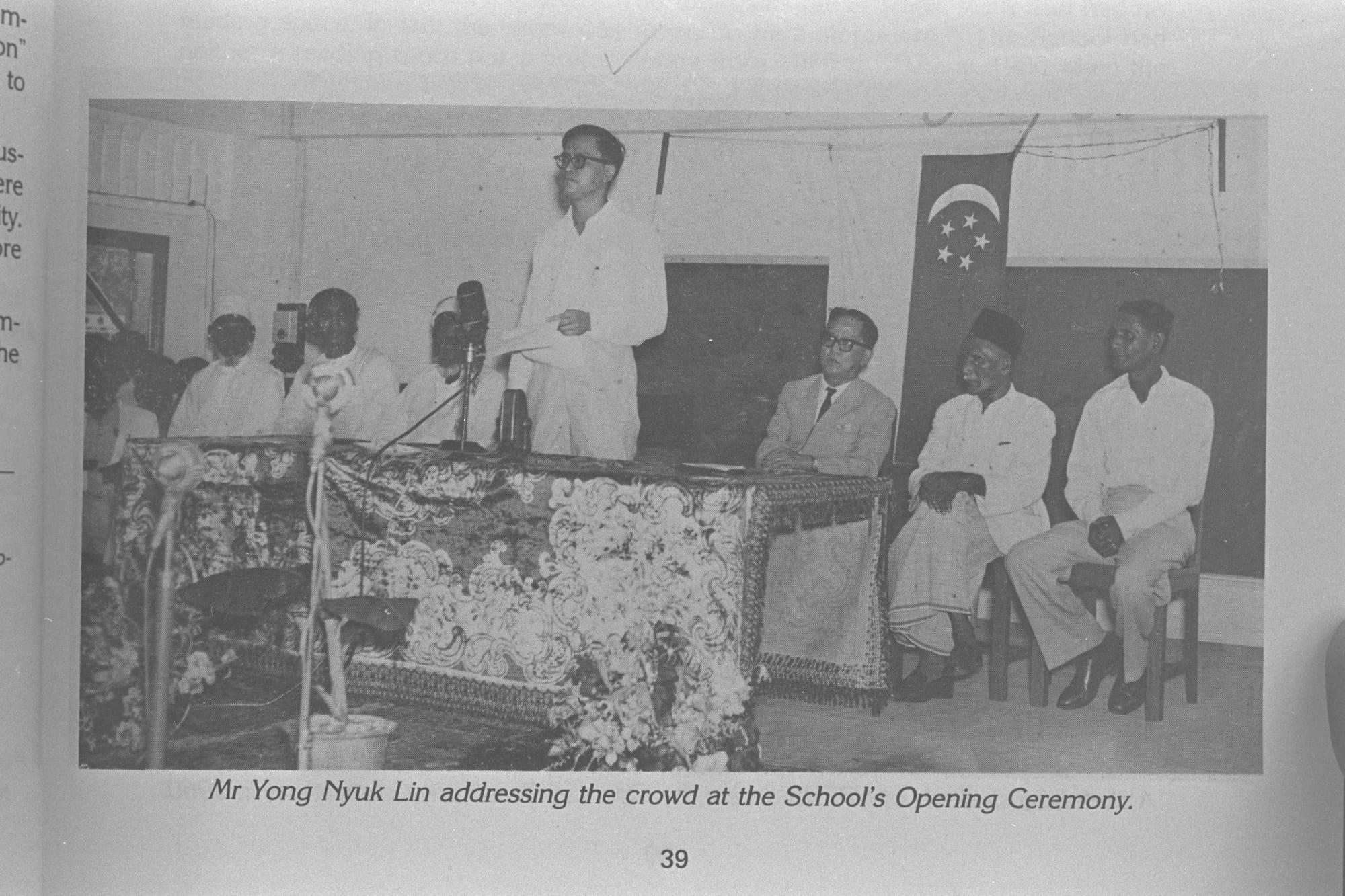
By 1950, the clamour for education was such that the SKML raised M$10,000 (Malayan dollars) from the public—league members and non-members both—and persuaded the colonial government to grant a further M$6,000 for a new school building on Maxwell Street. (Lest this give the impression that the authorities supported vernacular education, nearly 80 percent of the government’s education budget went to English-medium schools whose syllabi wilfully neglected Chinese and Indian contributions to Malaya.) The result was a single storey, two-room, brick and concrete structure with wide windows and a sloping roof of corrugated tiles. Of simple conceit, it was filigreed with big aspirations.
From the outset, Kadayanallur Muslims had occupied the lowest rung of Singapore’s informal Tamil Muslim hierarchy. The women were scorned for selling spices; the men for working as peons, stevedores, and construction hands. The discrimination fed upon itself: their food, their clothes and their “accented” speech (as one modern researcher was told) all became coded for inferiority.
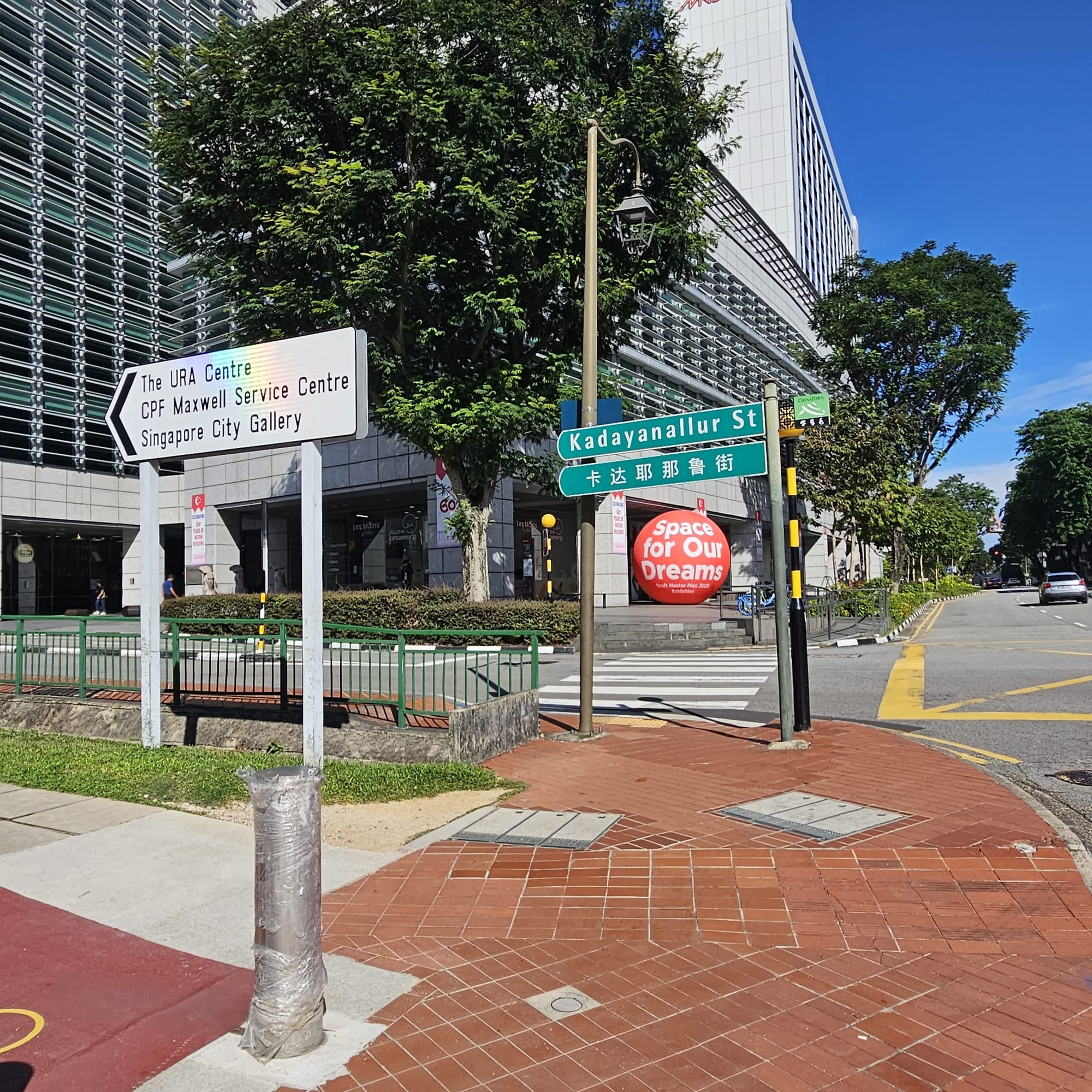
The Umar Pulavar school, named after a renowned 17th-century Tamil Muslim poet, wasn’t just an attempt to shape a better future for its children. It helped the community cloak itself in dignity and self-respect. (Even if it wasn’t always easy. For years, English-language newspapers called it “The Peons’ School”.) By 1954, demand led to afternoon classes in addition to morning ones, and the introduction of secondary education. Colonial authorities loved the league’s boot-strapped approach. They were spared the planning and most of the cost; all they had to expend was a few laudatory words at school functions. Increasingly, they began to extend recognition to SKML. In 1952, the league requested that Cook Street, perpendicular to Tanjong Pagar Road, be renamed for their hometown. The authorities went a different way—in May, a road abutting UPTS was renamed Kadayanallur Street.
Local leaders watched this growing bloc with interest. Lim Yew Hock, future Singapore chief minister, was already a UPTS patron; Lee Kuan Yew, future prime minister, was a familiar presence in the area, mindful perhaps that SKML’s waxing influence could bring in valuable votes from the Tamil Muslim community in his Tanjong Pagar constituency at a time when elections were genuinely competitive. Maideen told an interviewer that SKML leader SN Sheikh Ali Saheed endorsed Lee’s nomination papers for the 1955 Legislative Assembly polls. (After the PAP won in 1963, Lee would thank the SKML for helping “make possible our success in the last elections.”)
The patronage was reassuring at a time of extreme uncertainty in the larger colonised world. In Malaya, the process that would culminate in Singapore becoming sovereign had begun in 1946 when nine states along with the Straits Settlements of Malacca and Penang were corralled into the Malayan Union. Singapore alone was retained as a crown colony. That, and later developments, too complex to describe here, would move the focal point of Malay nationalism from Singapore, where it had started under the KMS in the 1920s, to the peninsula. Its target too would change, from Indians and Chinese to colonialists. Singapore’s Tamil Muslims may have been relieved, especially because they and the wider Indian diaspora were grappling with a fresh dilemma.
India and Pakistan were already independent; Malaya was clearly heading the same way. In an earlier world, boundaries mattered far less in the port cities of South-east Asia, “shaped to an unusual extent by mobility,” the historian Sunil Amrith wrote. For wealthier merchants and traders long used to sailing freely, the new world’s hardening borders were especially dispiriting. Through the decade’s early years, many clung to the hope for dual citizenship. Nehru though decisively rejected the idea, and the Indian government urged the undecided to choose between the land of their birth, and the land they inhabited. In 1955, RK Tandon, Indian commissioner, baldly told Malaya’s Indian migrants: “this [Malaya] is your land”. Still, many wavered.
Matters came to a head in 1957 when, following years of pressure from migrants facing the possibility of being rendered stateless after the communist takeover in China, the Lim Yew Hock government promulgated the Singapore Citizenship Ordinance. All those born in Singapore were immediately eligible; those born or naturalised in the Federation of Malaya and other British territories had to prove two years’ residence; those from Commonwealth countries like India, eight. Any Chinese migrant who’d been in Singapore before the Japanese Occupation or could prove 10 years’ residence was eligible too.
Upper-class vacillation flipped the political weight of Singapore’s Tamil Muslim communities. The labour migrants, peons, and petty shopkeepers from Kadayanallur, Tenkasi and other poor areas of south India had arrived in larger numbers, brought their families, and put down deeper roots. Through kin associations like SKML, institutions like UPTS, and the burgeoning support of local leaders, they now had a bigger stake in Singapore’s public life.
And yet, even though their conviction to stay was stronger, it could not have been absolute. What did citizenship entail? What benefits would it bring? And what restrictions? The government launched an education and registration drive, Operation Franchise, to address these questions. Meanwhile, informal advocates like Maideen stopped fellow kampung dwellers in the streets, and knocked on the doors in Tanjong Pagar’s lanes and alleyways. Citizenship, they told their kinsfolk, would mean a closer community, a stronger voice, and the right to have their concerns heard.
But even Maideen had no answer to a fundamental question: What was Singapore? It “was not yet a state, nor was its future path to independent statehood clear,” wrote John Solomon of the University of Melbourne. “[I]t faced a number of possible futures: as a sovereign independent state, as a British self-governing territory…or as an incorporated part of a federal Malayan state…” Uncertainty must have especially plagued those who arrived in newer migratory waves of the late 1940s and early 1950s, when the subcontinent’s political arc was more clearly defined. Maideen captured their ambivalence in a Tamil idiom, aathula oru kaal, chetula oru kaal: one leg in the river, another on the mudbank. In his proud estimate, “99 out of 100” Kadayanallur Muslims finally hitched their fate to Singapore’s. Fittingly, many became citizens at UPTS—a designated registration centre.
“The adage Vanathukku ponalum inathudan vandhu adai—Even if you go to the forest, you should return to your family—seems increasingly irrelevant in today’s context, where individuals often prefer solitude.” As far back as 1989, Maideen was bemoaning the loss of kinship. SKML membership started dropping in the 1970s and 1980s, and became “acute” in the 1990s, according to Raj Mohamad, who joined as a member in 1987 and is now SKML president. The trend tracks Singapore’s rapid post-independence economic growth. From S$2,834 in 1970, GDP per capita grew nearly fivefold by 1980; more than doubled over the next decade, and rose another 50 percent by millennium’s end, reaching S$36,944 in 1999. Community-level figures are unavailable, but sociological studies over the decades help trace a silhouette of change. “[T]heir leaders agree they are not well established in economic as well as social fields…most of the working population are found to be labourers and peons,” was how a researcher described Kadayanallur Muslims in 1973, before the seeds of education and hard work had flowered.
A quarter century later, they had. “When you’re oppressed and discriminated, you tend to develop an agitation and motivation. Currently they [Kadayanallur Muslims] are more successful…we have just sat back, complacent…these people have progressed,” a respondent from another Tamil Muslim community told an NUS scholar in 1999.
As prosperity spread, communal bonds thinned. After the 1957 Citizenship Ordinance, migration from Kadayanallur virtually stopped. Until then, for new arrivals who landed with a “trunk full of clothes, family behind [them], barely eaten,” as Raj Mohamad put it, SKML would be the first port of call. In the years that followed, the league’s substantial influence was often exercised. Senior leaders could help land jobs, get loans, create links within the community, and help families quickly settle into life’s rhythms. Kinship networks still mattered—they always do—but less so as more and more individuals began slipping into the economic mainstream. Identities too were circumscribed by the Chinese, Malay, Indian, Others (CMIO) model, birthed by the British and adopted by the post-colonial state. With racial categories used as rivets in nation-building, there was no room, and little incentive, for microcultures to flourish. In 1982, the Umar Pulavar school—by then offering primary to high school—shuttered, one of the many vernacular victims of the English-speaking global order Singapore welded itself to.
The many forms of UPTS had embodied the community’s evolving dreams: from furnitureless quarters on the top floor of a shophouse to a modest two-room building to a modern three-storey structure that housed a library teeming with Tamil and English tomes. From those buildings would emerge teachers, educators, and cultural medallion winners like the poet KTM Iqbal who would reshape the Tamil of their forefathers into the local idiom spoken across the nation today. (The love and pride in the mother tongue is captured in SKML’s motto: Islam engal vazhi; Tamizh engal mozhi. Islam is our way; Tamil is our language.)
Umar Pulavar’s closure was only the beginning. Soon, change would engulf the rest of Tanjong Pagar. As part of Singapore’s sweeping move to HDB high-rises, residents of the close-knit enclave were resettled, first to places like Queenstown and Clementi, then farther afield as ethnic quota policies took hold. Of the people and things that clothed the area in community—the shops whose owners knew all comers; the wet markets where familiar voices greeted each other; the open-air bath into which children cannonballed—only one remained by the 2000s: the forlorn but proud sign bearing the name Kadayanallur Street.
SKML now wants to be the “go-to for Indian Muslims in Singapore,” Raj Mohamad said. “I want to change the narrative from being a reliant community to a contributing community.” The Kadayanallur in SKML now has little relevance beyond the historical resonance. For the younger generations, even that is tenuous.
“We have no roots [in Kadayanallur]. Zero.” Basir Amir is a strapping 30-something with thick spectacles, a curly mop, and an easy smile. We met in the Coffee Bean at International Plaza, Tanjong Pagar Road a five-minute walk away. Basir heads SKML’s Youth Engagement & Development wing tasked with bringing a new generation into the league’s fold. Like most born in the 1980s and 1990s, he has never been to Kadayanallur.
Much has changed there. Since tighter borders crimped eastward migration, Kadayanallur Muslims have looked west, to the oil-rich, labour-hungry Gulf nations. Like the merchants of yore who sought fortunes in Malaya, it’s only the men who go, spending much of the year away from their families. Migration and remittances collide like tectonic plates, pushing those narrow, pitted houses ever upward, floor by new floor. The town’s soundscape, once dominated by loom shuttles, is now a cacophony of bikes and cars. Memories of the great 20th-century migration to Malaya grow faint.
Larger South Asian migration to Singapore continues, of course. But Masood and Maideen’s economic descendants, the low-wage workers who prop up the city-state today, haven’t a path to citizenship and no say in its socio-civic life. Other migrants, like me, are fortunate to have the paper qualifications needed to win the state’s approval.
Basir, meanwhile, runs his own budding architectural firm, and is currently part of a decade-long project to convert a parcel of land in Chikkamagaluru, a beautiful Indian hill town 800km north of Kadayanallur, into a resort. “How’s that going?” I asked. His smile almost flickered into a giggle; perhaps he was too polite to spell out the challenges of working in a country so wildly unlike Singapore. I wondered if he was skittish thinking that I, a new citizen, still consider India “home”. Me? I was taken by the poetry of it all. A century ago, an Indian sailed across the Bay of Bengal to shape his life, and this land. Now, a Singaporean heir soars over the same waters to shape that land, and his life.
Abhishek Mehrotra is Jom’s head of content.
This piece was first published in Jom’s annual print magazine issue No. 3, released last year. Raj Mohamad, SKML president and an interviewee, objected to its historical portrayal of Singapore’s Kadayanallur Muslims. His letter can be read on our “Letters to the editor” page. Though Jom and Raj disagree on several points, we’re grateful for his willingness to engage us on them.
Other letters in response to this piece can be sent to sudhir@jom.media. All will be considered for publication.