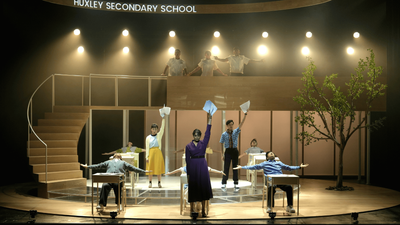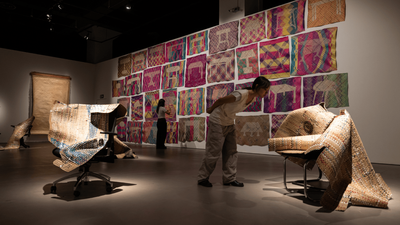


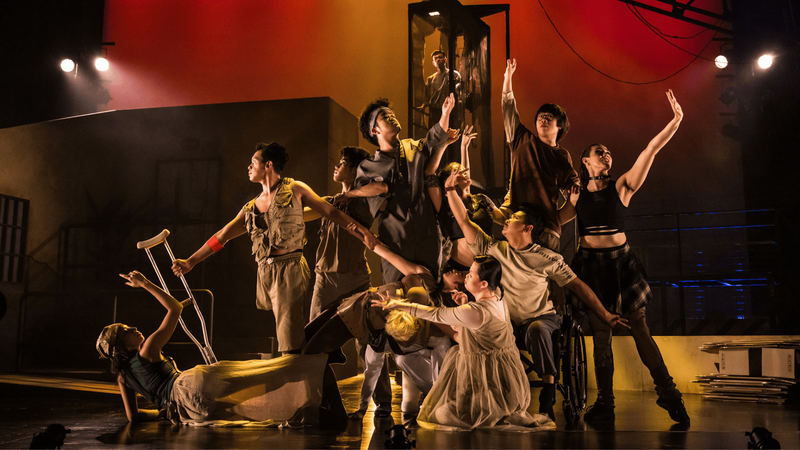
Skeletal scaffolding, stark metal frames, and scuffed concrete surfaces. A dozen dancers move through this industrial landscape in shifting formations. Some cross the space quickly; others stay close to the ground, folding and unfolding as the group gathers, then breaks apart. Among the ensemble are dancers with limb differences, mobility impairments, and Down syndrome. Their movements vary in pace and quality. At times, they come together in a shared rhythm; at others they separate into smaller clusters, the relationships between bodies constantly shifting as they move across the stage.
This was the opening scene of “COLONY”, a dance production commissioned for the 2025 Singapore International Festival of Arts (SIFA) and staged at the Drama Centre Theatre. The show gathered bodies that are often kept apart or treated as out of place, and also put them in close proximity to those taken as the norm. Difference was not hidden or resolved neatly, but allowed to exist, between movement and stillness, harmony and tension, belonging and exclusion.
The production was the result of years of patient, often lonely work by disability-led organisations and arts institutions who built the scaffolding of access one rung at a time: sign language interpretation, extended rehearsal timetables, choosing venues with ramps and elevators, awareness-building for those who may never have worked with artists with disabilities before, and accessible marketing practices like using dyslexia-friendly fonts.
These access practices were woven into the fabric of “COLONY”. Audio narration, typically offered to blind and low-vision audience members over headsets—was now piped in over the main speakers for the entire audience, describing changes in staging and movement. Creative captioning, projected on a screen alongside the ensemble, translated spoken word and sound into evocative text that moved with the choreography. These access provisions were unremarkable in the best possible way. What was once treated as purely functional, a set of assistive tools separate from art-making, had become part of performance itself.
I was lucky: I had a backstage pass to the making of “COLONY” in the months leading up to its premiere. My mother, Audrey Perera, produced the show. Through her, I saw how much invisible work goes into a performance like this: coordinating complicated schedules, troubleshooting last-minute technical issues, ensuring accessibility measures were in place, and keeping artists supported and safe.
Through rehearsal clips, updates, and stories from the team, I gained an intimate knowledge of the people behind the production, the challenges they navigated, and the processes they put in place. With almost half its cast identifying as having a disability, “COLONY” is a marker of how far disability-led arts in Singapore has moved from the wings, and towards centrestage. This essay traces that wider ecosystem: the access officers working within institutions, the artistic directors imagining new kinds of collaborations, and, at the centre of it all, the artists themselves.
When audiences enter a theatre in Singapore today, accessibility features are often already part of the experience. Vision-impaired audience members may use headsets for audio description, either pre-recorded or live. Some productions offer touch tours, where visitors can move through the set, run their fingers over the textures of its props or structures, and get a sense of its spatial layout before the show starts. For d/Deaf and hard-of-hearing audiences, subtitles may include sound descriptions, alongside live sign language interpretation.
But for Tung Ka Wai, these features represent a relatively recent shift. When he first began performing in the early 2000s, very few such practices were the norm.
Born with limb difference, Ka Wai entered the arts industry at a time when disabled bodies were often trotted out on stage for what he bluntly calls “inspiration porn”. Artists with disabilities were frequently framed as objects of pity, or brought in for the sake of appearing inclusive. We recognise this now as the outdated “charity model” of disability, which identifies a disabled artist’s condition over their agency and personhood.
Back then, what few collaborations took place were informal and ad hoc. Access was something people figured out as they went along. This often meant relying on those around you: fellow practitioners helping with transport between rehearsal spaces, stepping in to describe visual elements, or adjusting movements in the absence of trained access workers.
Ka Wai, who has a degree in Chinese Studies from the National University of Singapore and a Master’s degree in Playwriting from the Taipei National University of the Arts, has a kinetic, responsive presence on stage. In rehearsal, he can shift quickly from playful and animated to focused and precise, improvising as he picks up on the energy in the room. He’s performed in theatre and dance productions at various festivals in Singapore, and is also a seasoned arts educator, both in mainstream schools and with disability-led platforms.
In a candid conversation looking back at his journey in the arts, Ka Wai described the past decade as a gradual shift: from environments where disability had to be constantly explained to spaces where access could increasingly be taken for granted. This included the 2020 M1 Peer Pleasure youth theatre festival and the 2024 production “Dance a Dance from My Body”, a Singapore-Taiwan collaboration where access support was already built into the process.
The Covid-19 pandemic accelerated this. Safe distancing measures and extended lockdowns meant that live performances had to move online. This also meant that artists had to learn a new set of conventions for the digital medium. Captioning quickly became standard practice, as did alternative ways of conveying atmosphere or touch.
Accessibility became a condition of participation. A few theatre groups were among those pushing this forward. The Necessary Stage, for instance, had already been experimenting with captioning and relaxed performance formats, while Singapore Repertory Theatre expanded its use of digital platforms, training, and accessibility features during the pandemic. Their work helped normalise these practices. As artists and disability-led groups experimented with these new formats, agencies such as the National Arts Council also began incorporating accessibility more visibly into policy conversations, supporting platforms like the Arts & Disability Forum and funding initiatives that encouraged more inclusive programming.
One of the pioneers in this field is ART:DIS (formerly Very Special Arts Singapore). The nonprofit has offered education in visual art, music, theatre, and dance to disability communities since 1993—and has long emphasised that persons with disabilities have professional artistic skills to develop, not simply therapeutic needs to be fulfilled. ART:DIS currently offers a range of arts education tiers. In their “Foundation” programme, you can get an introduction to anything from firing ceramics to playing the angklung. Then at the “Emerging Artist” level, you get to shadow an established artist and take hands-on masterclasses to build the career of your choice, whether that’s project management or curation.
Many other initiatives have emerged since the 2000s. Some, like Access Path Productions, have been experimenting with aesthetic conventions taken for granted in the theatre. Their 2018 production, “And Suddenly I Disappear: The Singapore ‘d’ Monologues”, was the country’s first multilingual, intercultural, and transnational theatre project led by artists with disabilities. This series of fictionalised monologues, presented by a mix of established and emerging artists from both Singapore and the UK, combined poetry, personal anecdotes, and a generous dose of “crip humour” to confront audience members with true-to-life accounts of what it means to be disabled in both countries. In his monologue, the Singaporean rapper Danial “Wheelsmith” Bawthan pushed back against the medical model of disability, which hyperfocuses on “fixing” or “normalising” perceived impairments in disabled bodies. “This body is dangerous,” the wheelchair user declared, “Why should we need a cure?”
As a former dancer myself, I was humbled when I first encountered the work of Redeafination, a dance company led by d/Deaf performers. You might recognise them from the 2022 National Day Parade music video, where they’re jiving with Singapore Idol Taufik Batisah against the glittering CBD skyline. The group choreographs their work through vibration, rhythm, and visual cues, challenging deeply ingrained assumptions about what a medium like dance depends on. “In order to hear the music, we hear the vibration of the floor and we internalise the beat and rhythm into our body. That’s when we establish the beat by counting, by clapping. So when we clap, we will feel the music,” one of their members, Patricia Merilo, told Channel NewsAsia. “Once we understand the beats, we will try to apply them to our dance moves. Then we keep repeating the dance moves and blasting the music until we perfect our moves.”
However, even as access becomes more commonplace, Ka Wai remains cautious about how disability is framed within the arts. “I really don’t think we need the word ‘disability’ at all,” he told me. “People are just different.”
His discomfort with being introduced as “an artist with a disability” reflects a broader unease with reductive labels. While they may increase visibility, they can also flatten lived experience. And each artist has their own preferences for how their identity—or identities—is presented to the world.
To Ka Wai, it’s less about accommodating disability but “disabling” disability itself: recognising how language, institutional design, and social expectations may limit our understanding about what disability is, or can be. Raising awareness about such minority communities, he suggests, is not only about empathy, but also about understanding how differences become visible and might inadvertently become a burden on the very people it exposes.
These tensions are often most obvious in the rehearsal room, rather than on stage. Well-meaning able-bodied practitioners sometimes lean into an over-protective caregiving instinct—stepping in too quickly, softening feedback, or over-adjusting choreography in ways that limit what artists with disabilities are actually able to explore or push through.
Without sufficient time, resources, and trust in these rehearsal processes, artists with disabilities risk being either over-exposed as symbols of inclusion, like a token body on stage, or under-challenged in the name of accommodation, deprived of their own artistic agency.
Our larger arts institutions and platforms have been grappling with these issues for some time. Gina Koh has been with Esplanade – Theatres on the Bay since its inception in 2002. She previously worked in its marketing and communications team, but now serves as its key accessibility officer. She talks about her role, and its duties, with an infectious ardour.
“Accessibility is not an add-on,” she told me. “There’s no sudden spotlight…It has to be embedded into everyone’s work…We have a role to play on a national level, in helping to tell stories.”
Gina is constantly thinking about how access is communicated, organised, and sustained so that Esplanade can welcome anyone who enters its doors at any time during its busy, year-round slate of programmes and shows.
As soon as it began implementing accessibility practices, the Esplanade realised these could not be treated as a separate service. In 2021, the national performing arts centre established an internal taskforce that brings together all its programming and operations teams, from the front-of-house to its education staff. Even the tiniest of everyday interactions matters, however they may unfold across the sprawling complex. “[F]rom security to ushers to hosts, everyone embodies this accessibility,” Gina said.
All of these conversations often happen months before the show. By the time the audience arrives, the work is largely invisible: we rarely see the planning meetings, consultations, and internal debates that made it possible.
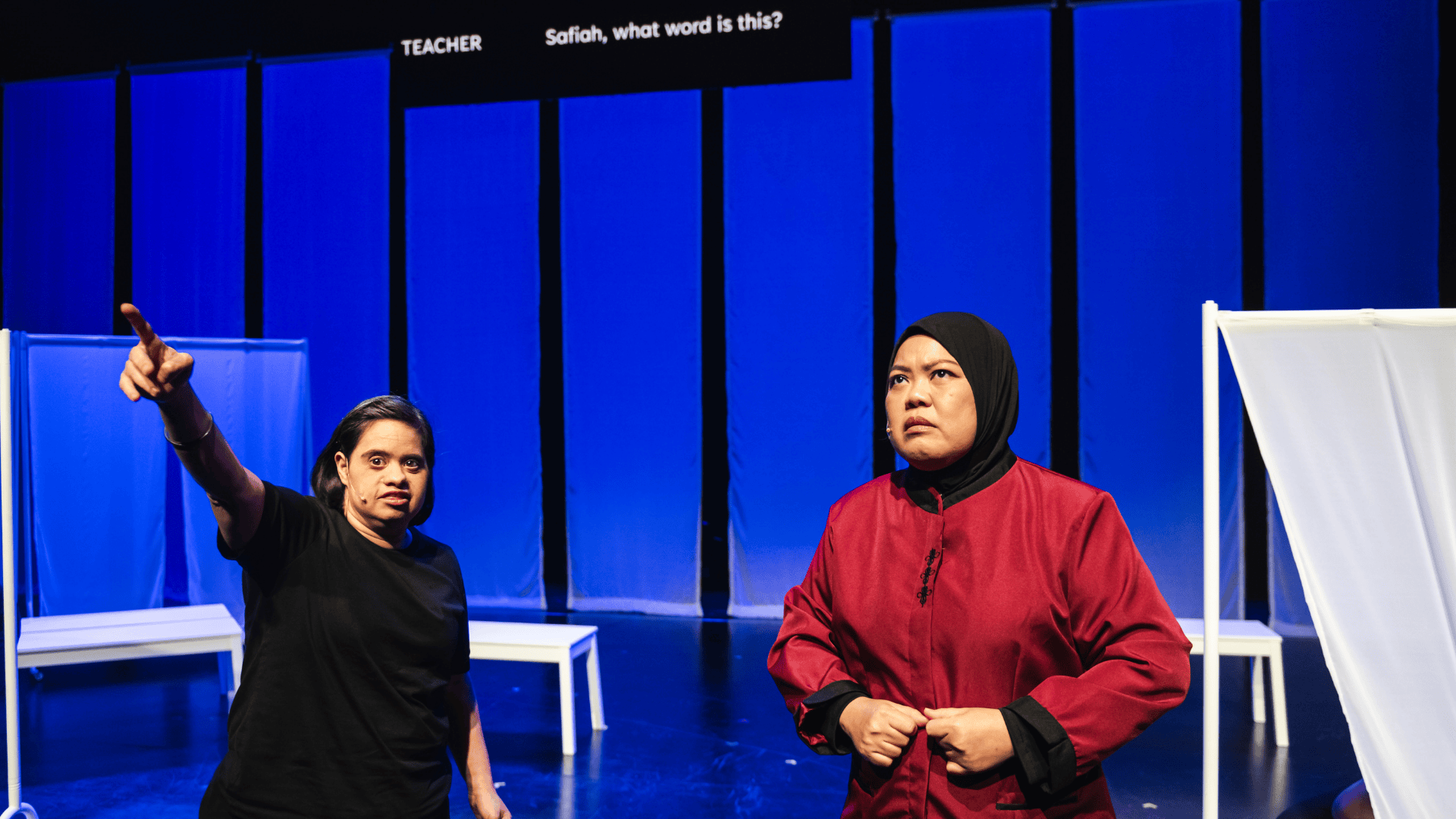
In January this year, the Esplanade hosted “Invisible”, a show at the 2026 Singapore Fringe Festival. The production starred Jaspreet Kaur Sekhon, a performer with Down syndrome. Playwright Haresh Sharma had written her a role deliberately against type. She played Anita, a demanding hotel guest, while the other three non-disabled performers played service staff, subordinate to her every whim. Anita wasn’t a beneficiary of care, but an imperious figure of authority whose actions, sometimes flippant, even callous, drove the plot.
The Esplanade task force and the Fringe Festival team revved into high gear. They were expecting an especially diverse crowd requiring multiple layers of access. Programming teams consulted disability organisations and audience members. Front-of-house staff were briefed on how to support visitors who might require assistance, such as alternative seating—in a place they could see subtitles more clearly, for example. Marketing teams were extra careful about how the show was described online to ensure the language used was clear and respectful. Reviewers eventually praised the show for overturning conventional representations of disability. The Straits Times pointed out: “The overlapping stories of each woman weave a complex tapestry of what disability looks like and how many hide in order to ‘pass’ in society.”
For Gina, progress is measured less by scale than by continuity: “We celebrate every win we have, it’s not a numbers game.” A “win” can take many forms. Perhaps an audience member who feels comfortable enough to return for another show. Or a performer who is given the space to make choices on stage. Or, on an even larger scale, a production where access is fully integrated from the outset rather than added on at the end.
Yet Gina is clear that organisations alone can’t transform the field, especially a tiny ecosystem like Singapore’s. She’s attended conferences and workshops on access in countries such as Australia, where artists with disabilities engage with complex themes (including sexuality, intimacy, and relationships) with nuance and confidence.
On her wishlist is not just more funding, but a broader shift in how access is understood: longer-term support, better job security for access workers, and clearer career pathways for those entering the field. But beyond infrastructure, she emphasises the need for something more embedded. Access cannot stop at ramps or features alone; it has to be part of education, conversation, and the way people understand one another. Without that, accessibility risks remaining technical rather than transformative.
Those who form the backbone of access work (such as audio describers, sign language interpreters, access consultants) are still typically hired on an ad hoc basis, hopping between institutions with little continuity and plenty of financial precarity. A lot of niche expertise and embodied memory is lost between projects if an experienced access worker decides to leave. Every new access worker has to be introduced all over again to a disabled artist’s preferences, or the specific shorthand the creative team might be using in their work. Trust and communication takes time to cultivate, and a constantly changing stream of access workers doesn’t help.
There have been some inroads into professionalising these vocations. Equal Dreams, a social enterprise that’s often hired by festivals and arts groups here, offers systematic training in skills like creating accessible spaces. They also give their trainees a direct pipeline to hands-on work. Let’s say you take one of their courses in speech-to-text interpretation. This mode of interpretation, which requires that you be a reasonably fast typist, focuses on capturing the meaning of what is said rather than a deluge of verbatim information, much of which may be redundant or at a volume too challenging to process quickly. Once you finish the course, you almost immediately get the chance to start working with d/Deaf clients in polytechnics and universities, sitting in on their modules and accompanying their higher education journeys.
But this still isn’t enough. Singapore’s access ecosystem still depends heavily on short-term project funding, and partnerships with big corporates’ philanthropic arms (like Temasek Foundation), or soft power diplomacy platforms (like the British Council). Some of these have resulted in pilots and training initiatives, but can’t substitute for more permanent and sustained resourcing.
The result is a persistent paradox. Access has become increasingly visible in institutional branding and arts programming. A couple years ago, the Esplanade devoted an entire season of its main dance platform, “da:ns focus”, to dancers with disabilities. And one of the headlining acts at this year’s SIFA is a reimagining of Shakespeare’s “Hamlet” by a group of performers with Down Syndrome; it’s also rolling out a three-year platform for regional artists to explore how the arts can be made more accessible and inclusive in both process and presentation. Yet the labour that sustains these blockbuster acts often remains hidden—folded into goodwill, overwork or personal commitment—rather than recognised as professional expertise.
Disability arts is a contested terrain in Singapore. While most artists and groups here would agree that we all need to get on the same page when it comes to better policies, infrastructure, and resources for access workers and artists with disabilities—there’s a lot of disagreement on some of the big fundamentals: representation, language, and leadership. This reflects deeper questions about how disability can be understood and represented in diverse ways within and among cultural institutions. The practitioners I spoke to described these debates less as obstacles than ongoing negotiations that required patience, deep listening, and a willingness to sit with discomfort rather than forcing consensus too quickly.
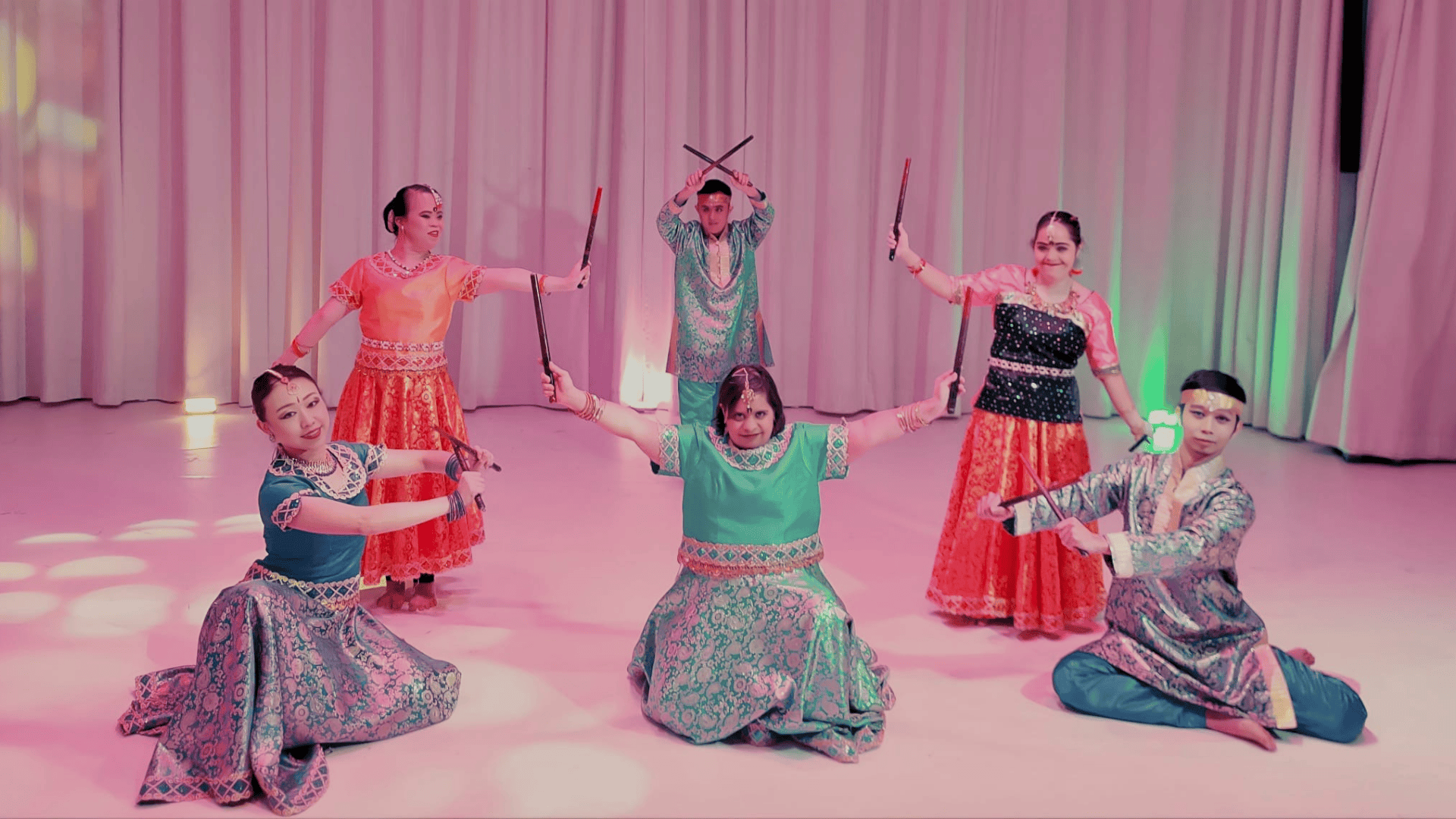
A disability community, like any other minority community, is far from a monolith. Deaf-led groups, for example, may prioritise things like linguistic sovereignty, which is the right of a community, especially a minority or indigenous one, to define and use its language in the ways it sees fit. This is especially so if a language that has been marginalised or discriminated against. A mixed-ability dance company might instead focus on how it can collaborate with dancers with very different physicalities, such as how a Deaf dancer and a performer with Down Syndrome might rehearse and move together on stage.
And sometimes, access needs can sit in tension with each other. A structure designed to support one group can unintentionally make things harder for another. For instance, practices like live captioning or note-taking often require people to slow down their speech. For some neurodivergent individuals, however, this can feel unnatural or even frustrating, disrupting how they process and express their thoughts.
Even the vocabulary used to describe various disabilities reflects these different stances. In Deaf communities, the capitalised “D” often signals a cultural identity rather than a medical condition. Instead of seeing themselves as having a disability, these communities position themselves as a linguistic minority. And while some artists might prefer descriptors such as “differently abled” or “neurodivergent”, others might want to reclaim the word “disability” as their political identity, one connected to disability rights and collective advocacy.
It’s likely—no, expected—that able-bodied artists, institutions, and audiences will not always get the language “right”. But it is the negotiation of these differences that is part of building a more inclusive cultural ecosystem. Those who get to determine the language deployed in each circumstance reflects the power differentials: who sets the terms of collaboration, who distributes the funding, and who’s seen as the expert, or the beneficiary.
One of the cultural leaders navigating many of these tensions is Kavitha Krishnan, Artistic Director of the Diverse Abilities Dance Collective (DADC), and my former dance teacher. I first met Kavitha when I was six, and trained under her throughout primary school. I remember her being kind but firm, never one to lower expectations or let us hide behind excuses. She pushed us to take ourselves seriously as dancers, and to see potential where we might not have seen it ourselves. That clarity has stayed with me, and it’s shaped how I understand her work now.
Long before disability-led performance was in the public eye, Kavitha was already experimenting with what inclusive dance might look like. As a young dancer, she had been struck by the work of then Very Special Arts Singapore (now ART:DIS), where she first encountered performers with disabilities and saw how the arts could hold space for very different kinds of bodies and experiences.
In 2007, Kavitha founded Maya Dance Theatre, a non-professional dance-theatre company that experiments with blending classical and contemporary Asian forms. DADC was set up in 2018 as a community offshoot of Maya, and has since grown into a 15-strong team of both professional dancers and newcomers to the form. “[T]here wasn’t a space like this in Singapore.” she told me.
Later, as an occupational therapist working with the organisation, she began to see both the possibilities and the limitations of that space. While the work was meaningful, she realised that much of it was still framed around participation and social engagement, rather than artistic rigour. That realisation pushed her to think more seriously about training, performance quality, and what it would mean to support artists with disabilities as professionals.
Then in 2012, Kavitha and some of her dancers went to watch a show at the Esplanade. One of them came up to her after and quietly said she wished she could perform in “good places like this” more often, not just in disability-specific contexts. She asked when she might be able to tour overseas like other professional dancers. The question shook Kavitha. She asked herself: “What have I not done enough of?”
It was this pivotal moment that would eventually lead to the founding of DADC.
Kavitha wanted to shake up how dancers participated in the company, and give them more of a stake in its creative and social vision. The early years were tough. She experimented with giving them both performing and administrative duties in the hopes that this would build their confidence and agency, with mixed results. Some were eager to assert themselves in rehearsals or meetings, while others struggled with the unfamiliar responsibilities. These differences meant that Kavitha had to have ongoing and consistent discussions with her entire team rather than paper them over with quick solutions. “It is about treating artists with disability as full participants, as adults, as dreamers, as leaders, not as objects of charity,” she emphasised.
This approach is not without its challenges. In a company where dancers have very different needs, tensions do arise. Some dancers require more structure and repetition, while others push for greater independence or faster pacing. Kavitha’s approach is not to resolve these differences by defaulting to the lowest common denominator, but to work through them, adjusting processes, redistributing responsibilities, and encouraging dancers to support one another as much as possible. It is slower, and sometimes messier, but it creates a safe space where difference is negotiated rather than flattened.
Over time, she saw how this approach transformed the dancers’ sense of ownership in the company. June, a dancer with Down syndrome who was one of DADC’s first few students, now serves as the company’s full-time office manager, and hopes to one day take over as artistic director of the collective. Kavitha believes that in order for dancers with disabilities to shape the sector, they need to be an integral part of its leadership and management.
One of my favourite parts of “COLONY” happens near the end. Earlier, the fragmented ensemble had been scattered across the stage. Now, they huddled together, coalescing into a single entity of interconnected individuals, supporting and being supported by each other.
Minutes later, the curtain comes down. Then, the formation loosens. One by one, the dancers break into separate sequences, each moving in their own style and rhythm. From street to hiphop to contemporary, each of the 13 dancers had choreographed their solos, their moment to dance as themselves, just as they were.
My mother was often backstage until the start of each performance. Then, she’d slip into different parts of the theatre to watch the audience’s responses. The standing ovation on the opening night moved her to tears. “It hadn’t come home to me until those moments,” she told me later, “the magnitude of what the cast, crew and creatives had created together, and the beautiful ideal world which could be possible.”
One evening, a male audience member came up to her and started to speak, but couldn’t hold back his tears, and left. A few days later, the team read his personal response to the show in one of the hundreds of feedback forms they received.
My mother reflected: “Sometimes as producers, we forget how powerful the impact on our audiences might be.” The process had been demanding: the narrative, choreography, and original music were all developed simultaneously within a tight timeframe. The work had been physically and emotionally taxing for all involved. But my mother had no regrets at the personal cost—because of the collective gain. For one dancer, the show was his final major production due to changing health needs. Another dancer had a personal epiphany: it was not about being the best dancer on stage, but about dancing in a way that allowed others to shine.
“COLONY” took all three constituencies—artists with disabilities, access workers, arts leaders—building on years of quiet, insistent work, so that it might manifest on a mainstream stage. I began to read the performance as a metaphor for conjuring community in a bleak landscape. Each of us takes on different roles in the ecosystem which, taken in isolation, may feel like lonely work. And, very often, artistic growth is uneven.
But it takes all of us coming together, despite the frictions and disagreements, to sustain the colony we’ve built, and will continue to build, long after the applause fades.
Maya Viswa is a conflict resolution practitioner working at the intersection of peacebuilding, policy, and cultural intelligence. Part of the School of the Arts graduating class of 2017, she has carried her background in dance and theatre into her work, shaping a practice that sees the arts as central to dialogue, human rights, and collective understanding. She is the Co-Director of Hoffman Viswa Peace Partners, a women-led peacebuilding consultancy working across regions to support dialogue, and more intentional approaches to human rights.
Letters in response to this piece can be sent to arts@jom.media. All will be considered for publication on our “Letters to the editor” page.
An earlier version unintentionally omitted the Fringe Festival’s contributions to accessibility for the production of “Invisible”. Sorry.