
Dear Jomrade,
This week we’ve published:
- “Singapore This Week”, by Jom
- “Beyond access: disability arts, labour, and inclusion in Singapore”, by Maya Viswa
Jomfest, 1-6pm, May 19th, ACM. Our first ever event microsite is now live! Big thanks to Scott, our new tech lead, for building it. There you'll find the updated programme, panel descriptions, speaker images and bios, FAQs, and our sponsor and partner list.
Early-bird pricing is over. We’ve sold over 100 tickets but still have some regular-priced ones left. Get yours now.
On Saturday I saw many of you in Bedok for the launch of Unease, Teo You Yenn’s latest book. The Common Ground building was filled with leftie luminaries. “Someone remarked to me before that a TYY book launch is civil society’s equivalent of a Taylor Swift concert,” wrote Walid Abdullah, fellow NTU professor. Oh, on that note:
Jom Baca book club: Unease with Ahmad Zaid
From April 7th to May 20th, we’re reading Unease: Life in Singapore Families by Teo You Yenn. Next week, we'll be hosting the first formal discussion, over Zoom. This will focus on the Preface & Chapter 1: A world-class city, a paradox of unease. Here are the details:
📆 Monday April 20th 2026
🕑 8pm - 9pm
🎙 Discussion led by Sudhir Vadaketh, Jom’s co-founder and editor-in-chief
Meanwhile, a lively exchange is already underway on our Telegram channel! A sample:
“Maybe inequality is what is harder to hold in frame than poverty.
If the problem was just poverty, we can just discuss ideas to uplift a relatively contained segment of society. But if the problem is inequality, taking responsibility for that might mean asking questions like “what has to change to narrow the divide? what will i and those i love most lose? can i tolerate the losses? And, if not, what is my complicity in this?”
After the book launch ended on Saturday, many rushed to Hong Lim Park, where a (slightly) younger generation of activists had gathered for a “Stop the US War Machine” rally organised by Students for Palestine Singapore. (Dress code: black + keffiyeh.) One remarkable banner, “This is what terrorists look like”, had the images, from left to right of: Bill Clinton, Jeff Bezos, George W Bush, Donald Trump, Barack Obama, Elon Musk, and Joe Biden. How very bipartisan of the diplomatic Singaporean. Notwithstanding the continued restrictions on speech and activism in Singapore, and regardless of one’s views on what constitutes terrorism, it’s worth cheering the free and peaceful expression, probably unthinkable pre October 7th 2023.
At the far north of our island came the first public sighting of treasured toddlers: three Sri Lankan leopard cubs, three-months old, are now in the Singapore Zoo enclosure, marking the first birth of the species there. Mother Yala, eight-and-a half, moved here from the UK; father Asanka, five, from Australia. “Their introduction was gradual and carefully planned—beginning with visual contact through a barrier, followed by access to shared spaces at different times so they could become familiar with each other’s scent,” said the Mandai Wildlife Group. Lessons, perhaps, for humans prone to rushing into things.
And yet again, the main event was in our city centre, the continuation of the defamation trial of the century: K Shanmugam and Tan See Leng, two ministers, are suing Bloomberg and Low De Wei, its Singaporean reporter behind the 2024 article, “Singapore Mansion Deals Are Increasingly Shrouded in Secrecy”, about good class bungalow (GCB) transactions. I’ll pick up from where we left off last week.
Much of the questioning again revolved around whether Low had some agenda against the two, particularly Shan, described in an internal Bloomberg e-mail as “our favourite minister”. The literary flourishes from the fearsome Davinder Singh, representing the ministers, were quite something: the story’s data, language, and framing were designed to “stick the knife” into the ministers; “crafty drafting”; a “fictional piece full of falsehoods”; and, my personal favourite, an article “written by a pen dipped in gall”.
Low held his ground admirably, delivering some lovely lines. “I don't go to bed every night thinking about him [Shan] or how to bring him down,” he said. And to Singh’s accusation of deliberate misleading, he responded with a Chinese idiom, 杯弓蛇影, loosely translated as mistaking the bow in a cup for a snake, imagining threats where none exist.
What worried me the most this week was the discovery that SLA had deliberately chosen not to share information about a publicly accessible property database—the Integrated Land Information Service (INLIS) INLIS—in response to Low’s questions leading up to the publication of the article. Apparently SLA does not proactively share this with media outlets to protect individual details from potential public abuse.
Low knew about INLIS separately, but it was germane to the discussion, and I worry that this revelation will just worsen the relationship between journalists and government agencies, who should both always be communicating in good faith. It’s also my worry with the case at large. All of us will suffer if journalists and civil servants lose trust in each other.
Join 2,000 members keeping Jom independent. From S$10/month—full access, no compromises.
- Why the crude oil supply crunch is causing plastic prices to rise, affecting many goods
- Pickleball: neighbourly nuisance or sporting revolution?
- Heroic animals, featuring Magawa, landmine-clearing maestro
- From European colonists to UNCLOS, how humans have divided the seas
- What does SG Art Book Fair’s missteps and subsequent outrage reveal about us?
Above are the issues we chose to explore in more depth.
Other news this week included: “It won’t happen,” responds Lawrence Wong, prime minister, to a journalist’s question about restricting fuel exports, as Singapore and Australia commit to keep LNG and diesel flowing; the SDP’s Paul Tambyah calls for petrol tax cuts and a temporary windfall levy on oil and gas firms; “Lumpy medical spending and medisave limits”, explainer by the WP’s Jamus Lim, calling for greater flexibility with the scheme; Students for Palestine Singapore hold an anti-imperalist rally at Hong Lim Park; school bullies will face punishments akin to those for vaping, including suspension and caning; barred by their employers from home Wi-Fi, domestic workers find other ways to get online; an ST multimedia piece showing how terrifyingly fast AI chatbots can identify you through your online behaviour; BlueSG, the defunct, point-to-point, car-sharing service, attempts a reboot; the iconic satellite dishes along the BKE are dismantled; a Geylang restaurant faces a backlash after charging a family S$2 for “outside drinks” (two kids were drinking from a mineral water bottle); Japanese Keisuke Honda and Welshman Kai Whitmore join the S League, with the latter open to citizenship; and poor Gan Kim Yong, deputy prime minister, who, having suggested that Singaporeans should take more public transport and switch from aircons to fans amidst the energy crisis, will likely now be mocked whenever he doesn’t.
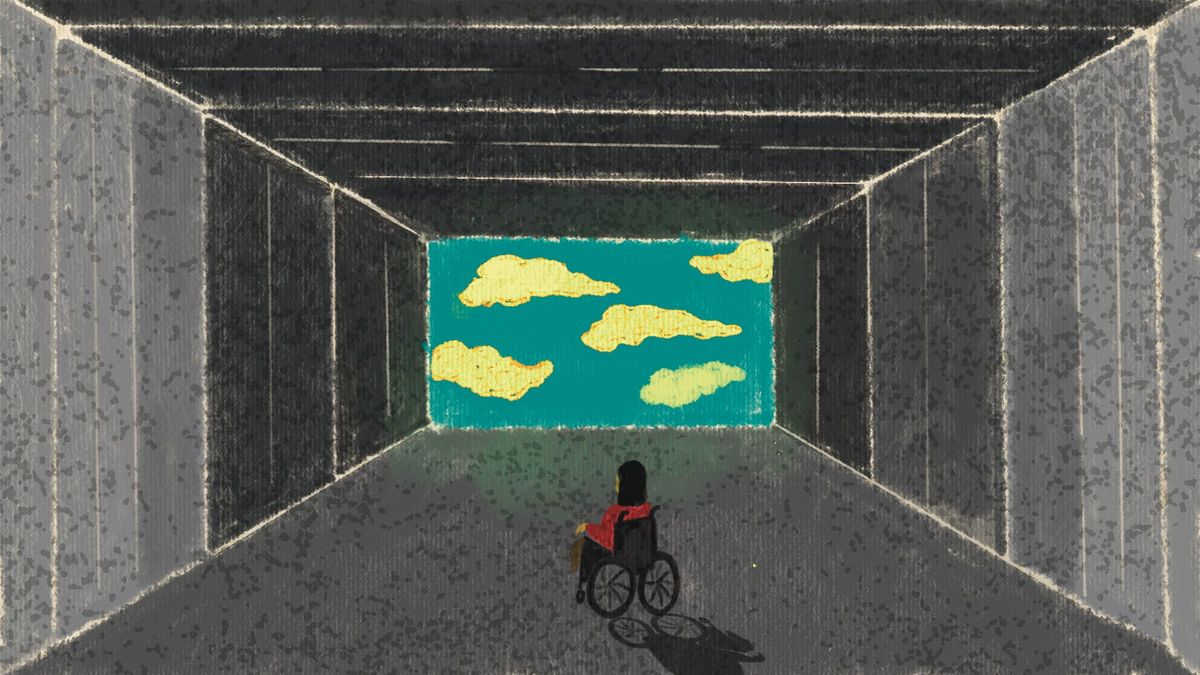
“Beyond access: disability arts, labour, and inclusion in Singapore”, by Maya Viswa
What does it mean to be truly inclusive of all humans, regardless of able-bodiedness? We recently had an internal convo about this in relation to accessibility at Jomfest, which resulted in two of our FAQs, notably one on Jomfest’s principles. I’m unsure if any of us has the right answer, and as an organisation, it’s a question often complicated by available resources and an imperfect understanding of our constituents. If a d/Deaf or blind and low-vision person would like to attend Jomfest, will we be able to offer them class-leading assistance and facilities? I know we won’t, I’m embarrassed to say.
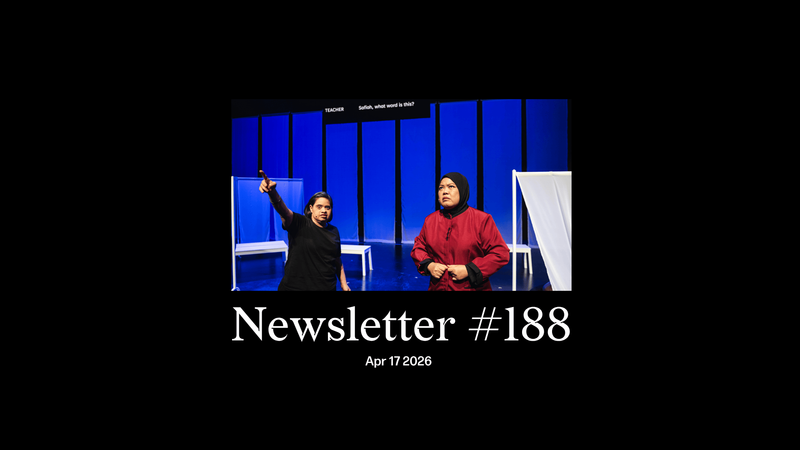
Even as we grapple with our inadequacies, we must keep striving. I take some consolation from the rich conversations that are now occurring every day across spaces and sectors, as we try and learn from each other. It’s in that breath that today’s essay is a vital one. Maya is a SOTA graduate and a London-based conflict resolution practitioner working at the intersection of peacebuilding, policy, and cultural intelligence. She opens her essay with a description of “COLONY”, a dance production that inspired her research, one which features dancers with limb differences, mobility impairments, and Down syndrome.
“These access practices were woven into the fabric of ‘COLONY’. Audio narration, typically offered to blind and low-vision audience members over headsets—was now piped in over the main speakers for the entire audience, describing changes in staging and movement…What was once treated as purely functional, a set of assistive tools separate from art-making, had become part of performance itself.
I was lucky: I had a backstage pass to the making of ‘COLONY’ in the months leading up to its premiere. My mother, Audrey Perera, produced the show. Through her, I saw how much invisible work goes into a performance like this: coordinating complicated schedules, troubleshooting last-minute technical issues, ensuring accessibility measures were in place, and keeping artists supported and safe.
…With almost half its cast identifying as having a disability, ‘COLONY’ is a marker of how far disability-led arts in Singapore has moved from the wings, and towards centrestage. This essay traces that wider ecosystem: the access officers working within institutions, the artistic directors imagining new kinds of collaborations, and, at the centre of it all, the artists themselves.”
Jom belajar,
Sudhir Vadaketh, editor-in-chief
Jom
p.s. last week Jo Teo published, “Spilling the tea on social media politics”. And this week they followed it with one of their signature videos on the topic. Watch it now on Facebook, Instagram or TikTok.
Jom on inclusivity
 Miguel de la Fuente-Lau
 Tsen-Waye Tay
 Jom
Jom Sherryl Cheong
Singapore This Week
Society: PET peeves

It begins with crude oil. Refined and reformed, its intermediates are used to produce two unassuming substances: purified terephthalic acid (PTA) and monoethylene glycol (MEG). The former is fine white powder; the latter is a clear, odourless, and slightly viscous syrup. Blended into a slurry, the two are put under heat and pressure from reactor to reactor before being cooled into polyethylene terephthalate (PET) resin. This “father of plastics” is found in food packaging, bottles, tubes, and also in the material that forms polyester fibre, fast fashion’s main staple.
With the war on Iran impacting supplies of crude oil, the price of plastic has and will rise. “Our plastic pallet [used in packaging] suppliers have doubled prices and even cancelled contracts because they literally cannot commit to the prices before the war,” Chayadhorn “Ing” Kitiyadisai said in a video explainer on TikTok. Kitiyadisai is the founder of Ingu Skin, a Thai science-driven skincare brand launched in 2022.
Indeed, manufacturers have been hit with rocketing production, utility, and transport costs—forced between cancelling and potentially losing customers, or committing to orders while facing a “sharp profit squeeze”. Some South Asian garment makers are absorbing much of the higher energy and logistics costs as they fulfill orders placed months ago. But once inventory is depleted and new orders placed, consumers can expect a 10 to 15 percent rise in clothing prices. Malaysians meanwhile, are facing a shortage of Farm Fresh milk at supermarkets. The brand clarified that a lack of PET resin has forced it to shift more products into paper cartons and ultra-high temperature (UHT) packaging. This plastic squeeze has also been felt by a local soya sauce maker.
The rise in PET costs has increased demand for recycled plastic. While some early adopters recognise recycled plastic as a hedge against future supply squeezes, the broader market is still adopting strategies that prioritise short-term optimisation over supply security. Still, any industrial waste reduction is welcome; already, the war has had a catastrophic impact on the environment. For consumers too, this is an opportunity to become more conscious of our waste production, as the war serves up daily reminders of the deleterious impact choices made thousands of kilometres away by people unknown can have on us.
Other stuff we like
One Piece book club. The peer-to-peer library Maktaba Books is hosting a book club on the popular manga in collaboration with advocacy and political education platform CAPE. Pop by to discuss the popular series’ themes of “absolute justice”, racism, discrimination—and your favourite character arcs.
CSSI Conversations: Creating a Child-Centric Society. In this inaugural dialogue hosted by the Centre for the Study of Social Inequality, social worker Cindy Ng-Tay, community arts leader Lin Shiyun and founder of nonprofit EveryChild.SG Pooja Bhandari (also a Jomfest speaker!) will discuss what makes a good childhood—and how kids can flourish in Singapore today.
Save Bollywood Farms, an organic farm located at Kranji Countryside that offers farm-to-table dining and educational experiences. Its lease ends December 2026. Sign the petition to urge the government to grant an extension.
A flavour of Jom. Occasionally, Jom publishes essays outside the paywall. These are on issues we think are in the public interest, and deserve a wider airing. In the past two years, we have published nearly 50 such pieces. Read some of these if you’d like to see samples of our work. We hope they’ll convince you to subscribe. And even if you’re here with no intention of doing so, we hope you’ll enjoy these offerings and consider it time well spent!