


Dear Jomrade,
Today we’ve published:
- “Singapore This Week”, by Jom
- “Slow style, formal pleasure”, by Faris Joraimi
With almost 60 percent of humans living in urban areas, projected to rise to almost 70 percent by 2050, what better place for mayors and urbanists to gather than a city-state pushing 100 percent. Newspapers across the world raved about their mayors visiting Singapore for this week’s World Cities Summit 2026.
Raisa Treñas-Chu, the first female mayor of Iloilo City in the Philippines, presented her “city for everyone” agenda that combines sustainable development, digital innovation, and community-centered programmes. Chandrababu Naidu, the chief minister of Andhra Pradesh in India, shared a vision for Amaravati, its new greenfield, high-technology capital city, to which farmers “voluntarily” contributed some 35,000 acres of land. (Some have called it a “silent dispossession”, others “not a model India can follow”.) Meanwhile Ciprian Ciucu of Bucharest, Romania sounded defensive about visiting a city some there called “too far away” (never mind that we covered his costs). Bishkek, Cali, Kigali...the march of mayors goes on.
Announcing a new “Mayoral Fellowship” that seeks to foment relationships between even more mayors around the world, Lawrence Wong, prime minister, also flirted with the geopolitical remappings that many seek in this bizarre world, scything urbanites from country bumpkins. “[S]uch city-to-city cooperation matters more than ever in a world that feels more divided and fragmented. Between countries, governments may not always see eye to eye on every geopolitical issue. But cities can still find common ground, exchange practical ideas, and learn from one another’s experiences.”
Thanks, boss. Important, though few, if any, in the room were leaders of both city and state. At moments like this, with Wong waxing lyrical about Singapore’s successes, it’s always interesting to ponder our exceptionalism. In some ways, it’s easier to be a governor of a city-state. I bet every other mayor would love if, like Wong, they had a moat around their city to control humans, guns, and other volatile flows. In other ways, it’s harder: unlike other cities, we lack a hinterland that offers resources, a forested respite from urban density, and a pressure valve as local costs spike. The city-state can feel like a pressure cooker like no other.
How do you think Singapore is advantaged/disadvantaged by being a city-state, as opposed to a city in a bigger country? Do reply and we’ll collate the responses.
- The #mentoo movement in Singapore
- How can we fight the rise of sexualised deepfakes?
- Why queueing has become a Singaporean ritual
- Yakult and your microbiome
- Ultrarunning in Singapore
Above are the issues we chose to explore in more depth.
Other news this week included: highlights from the World Cities Summit 2026; London to embrace Singapore’s approach to public housing; Singapore’s growing interest in East Africa; Israel criticised for obstructing humanitarian aid in Gaza; retrenchments grow in Q1 as vacancies drop; a Singaporean refutes claims we’re not hungry enough, pointing to low wages instead; AI drives Singapore’s export surge; brace for higher electricity bills from July; Joel Tan, a Harvard PhD, recounts his struggles with the Singapore education system; nursing home licence revoked for serious care and safety lapses; first inclusive playground, in Tampines, and the first Inclusive Justice Law Centre; residents frustrated about “a decade of inconveniences” with the North-South corridor; condo faces pushback against discriminatory leasing policy; a plan to extend extend Semakau landfill's lifespan; habit change, not penalties the key to improve recycling rates; new rulebook for landowners with coastal protection responsibilities; the challenge of rejuvenating Orchard Road; Tengah’s new reservoir; ST analysis of the “rubbish chute problem”; CNA explainer on the Small Claims Tribunal; ST feature on a Singaporean bodyguard; ST multimedia piece on curling in Singapore; and a new ACM exhibition linking Islamic empires and Nusantara.
Join 1,700 members keeping Jom independent. From S$10/month—full access, no compromises.
“Slow style, formal pleasure”, by Faris Joraimi
You may know Faris, our 29-year-old history editor, for his expansive knowledge and elegant writing, but he’s also an exquisite dresser. I noticed this the first time we properly hung out, some five years ago (a year before Jom was founded). We’re neighbours in Pasir Ris, and over the years, whether on the beach or in town, I sometimes see him and feel like wallowing in some boomer sartorial inadequacy. Am I underdressed? Don’t you feel hot in that?
So stately is the man in dress and demeanour that we sometimes joke that he was born fully-formed, emerging from the womb with pleated pants, pipe in the mouth, and original copy of Moby Dick in hand. (And well, if you needed more proof, hypebeast featured NYC-based Faris in last year’s Eid selection.) I’m glad that, for this piece that first appeared in last year’s print issue, he embarked on a topic that brings together so many of his interests. I’ll leave you with a few introductory paragraphs.
“The first time I visited a tailor, all I wanted was a new pair of trousers. Pleated, half-gurkha, creased down to the cuffs, with side-adjusters. I went to Tanjong Pagar, where the tailor pulled out little books of swatches—square samples of fabric—to choose from. I ran my fingers over them, in navy, maroon and sage-green, from open weaves to twills. It was like Geylang Serai on Hari Raya eve, choosing fabric for curtains and sofa-covers. I was transported to Arab Street, my mother and aunts thumbing Swiss voile for their baju kurung, the trader unrolling one cylinder after another from his library of patterns. All those years watching them with envy! It was my turn now…
Classic menswear evolved out of industrialisation, the spread of capitalism and the global dominance of the British Empire…But there was already sophisticated male style in this region. South-east Asians always kept up with worldly fashions that came along trade routes. Indian-loomed cottons—Gujarati patolas, Deccani chintz, Bengal muslin—were a vital currency. Brocaded Chinese silks were prized diplomatic gifts. 18th-century Perak royalty supposedly dressed like Chinese mandarins. Persian-style coats were adopted by Siamese rulers.
RJ Wilkinson, a 19th-century British official, observed that Malays welcomed all these influences ‘with the avidity of the born wanderer that the Archipelago had made him.’ The more exotic and foreign the garment, the finer it seemed.”
Jom bergaya
Sudhir Vadaketh, editor-in-chief
Jom
Jom on craft
 Jean Hew
 Damien Thow Xin Wei
 Seet Yun Teng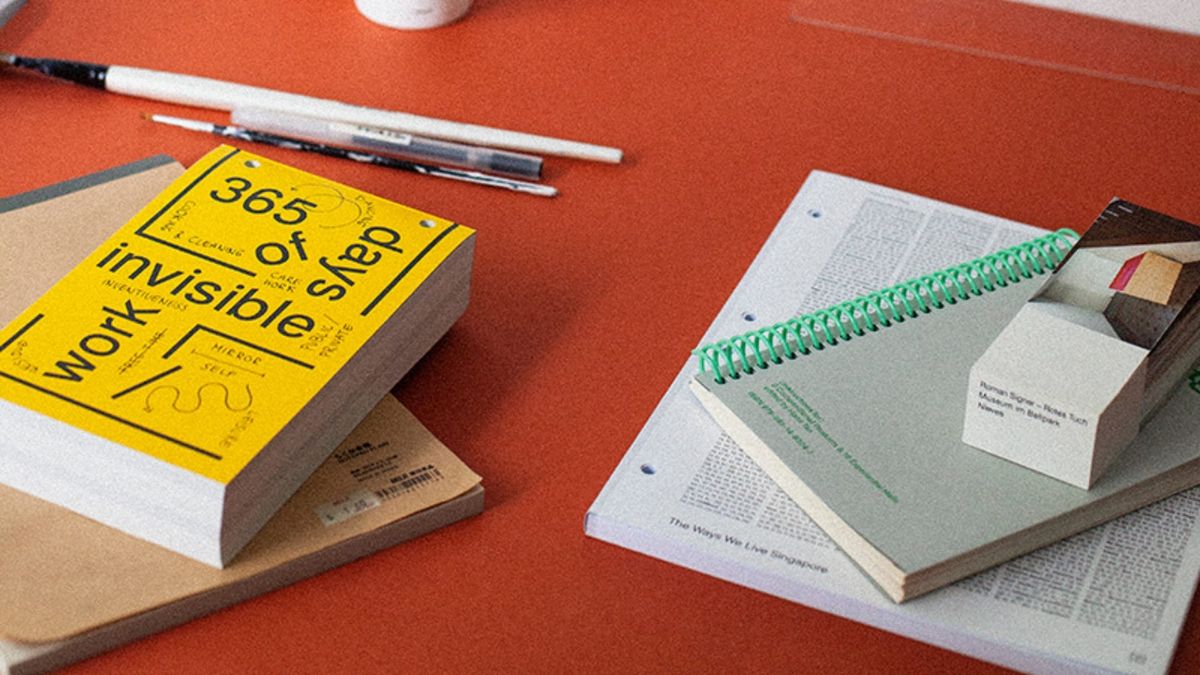
 Corrie Tan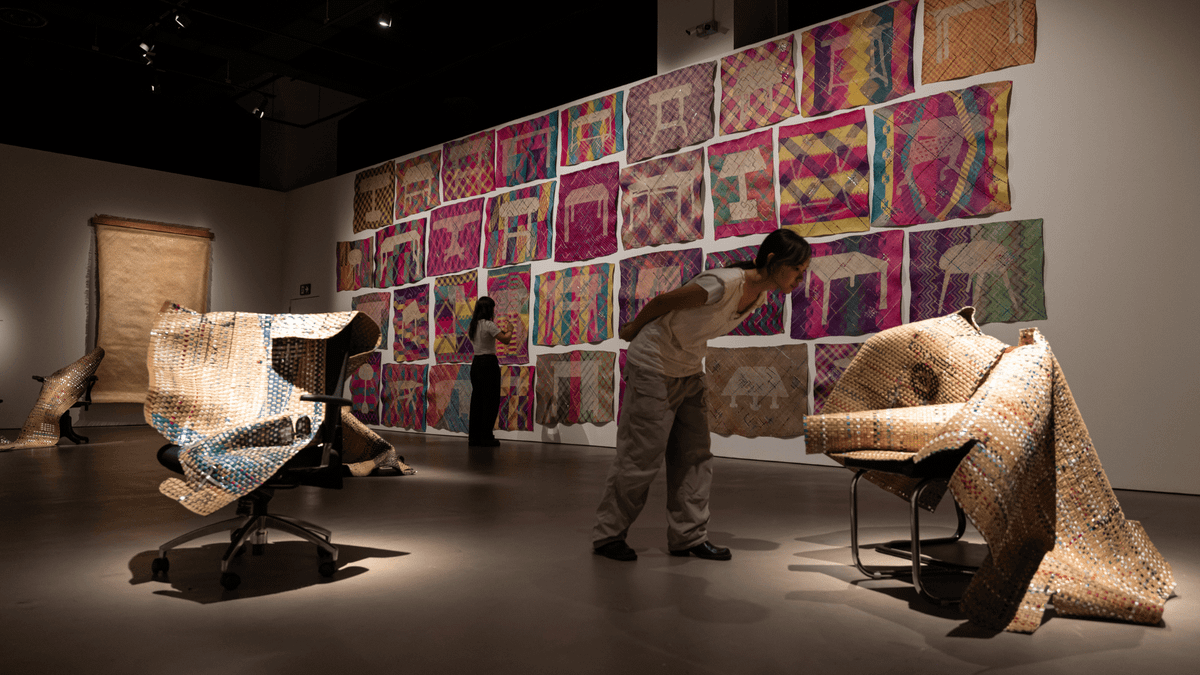
Singapore This Week
Food: Gut instinct
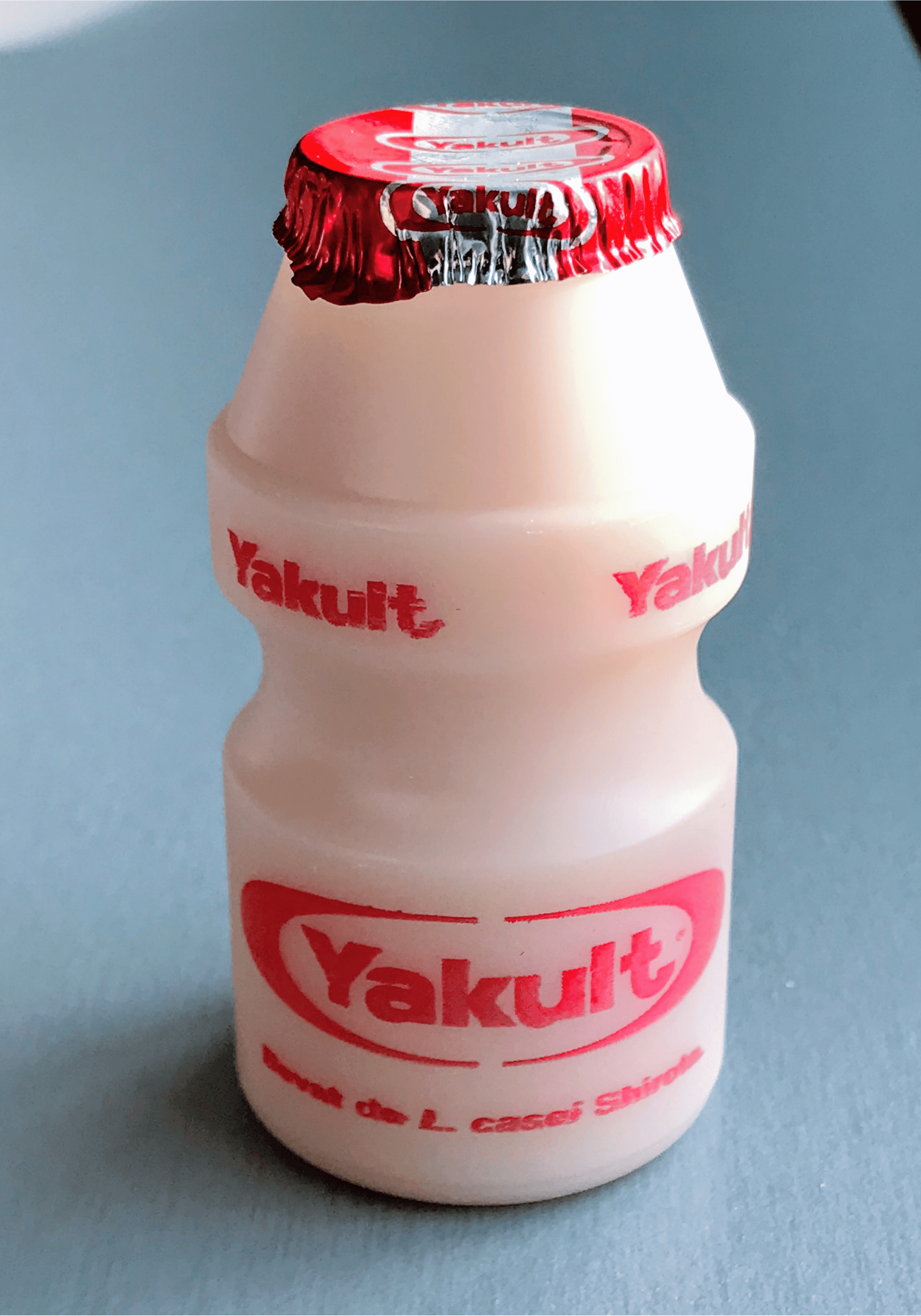
How do you get a kid to chug a probiotic? Sugar, colour, flavour. Kawaii and functionality help too. Generations of Singaporeans will remember squeezing the waist of that curvaceous bottle with one hand, while pulling the foil at the top with the other (or plunging a teeny straw in). “Original, Grape, Green Apple or Orange?” is the Yakult Singapore equivalent of “Chocolate or Vanilla?” Grown men still get weak in the knees, and drop their cans of beer, when offered that viscous portal to their youth. Which explains the tears shed around town this week following the news that Yakult will replace Orange with Peach next month.
While Coke, Pepsi, and Dr Pepper were originally formulated by pharmacists tinkering with botanicals and tonics, Yakult was born in a microbiologist’s lab. Aghast at the cholera and dysentery ripping through early 1900s Japan, Dr Minoro Shirota, attracted to preventive medicine, focused his research on microorganisms. In 1930, he cultured a strain of lactic acid bacteria resilient enough to glide past gastric juices and bile, their predators in the stomach’s murky soup, to reach the intestines where restorative magic could be performed. The first bottle shipped in 1935, and in the 1960s-70s the firm entered countries with sizeable Japanese populations: Taiwan, Brazil, Hong Kong, Thailand, South Korea, the Philippines, and then, in 1979, Singapore.
Local operations grew from three containers at Hillview Avenue to the current large plant in Senoko. Peach is the first new flavour here in 46 years. As society’s perception of sugar has evolved—the NUTRI-GRADE “D” rating is like a stain on Yakult’s otherwise salubrious packaging—the brand has responded with salutary alternatives, such as Yakult Ace Light, which received the Healthier Choice Symbol by the Health Promotion Board (aka our gastronomic killjoys).
Yakult’s health benefits are easy to overstate. Still, it was ahead of its time, an appetiser for the smorgasbord of fermented foods that have lately perfumed—or polluted, your senses depending—this zeitgeist of the microbiome: kefir, kimchi, kombucha, miso, sauerkraut, yoghurt, and whatever else is multiplying in that hipster’s cobwebbed cupboard. Humans have long instinctively understood the digestive system’s salience to wellbeing: from the ancient Greek’s melancholia, literally black bile, as a determinant of mood, to the Japanese conception of hara—variously translated as abdomen, stomach, and gut—as a person’s spiritual centre. (Hara wo kimeru, the belly has decided, just one of many metaphors.)
Our modern scientific understanding of the microbiome—the trillions of microorganisms that live in and on us, especially in the intestines though rarely in the (perilous) stomach itself—is really in its infancy. It’s been called “the second genome” and “the second brain”. “[T]here’s this sack of shit in your gut that is influencing what goes on in your head,” author Michael Pollan said recently, noting that it’s finally time to discard dualism, or the Cartesian distinction between mind and body. Ours is increasingly a world of somatic practice for bodies that keep the score. A World Appears: A Journey into Consciousness, Pollan’s latest book, questions whether consciousness itself might emanate from our bodies, rather than our minds. Food for thought, the next time you glug on a Yakult.
Other stuff we like
Inclusive Careers Fair tomorrow. The 7th annual edition is from 10am-5pm tomorrow at WeWork, 21 Collyer Quay. The fair seeks to facilitate connections between employers and talent, including LGBTQ+, persons with disabilities, neurodivergent individuals, racial/ethnic minorities and women in Singapore. Over 30 companies from Airbnb and Nomura to Suntory Global Spirits are recruiting for over 1,000 Singapore-based open positions across industries, job functions and seniority levels.
“Reading Together” survey. Researchers from NTU and NIE are surveying book club participants and organisers aged 21 and above. 10 respondents, chosen via lucky draw, will each win a Kinokuniya vouchers worth S$30. More information here.
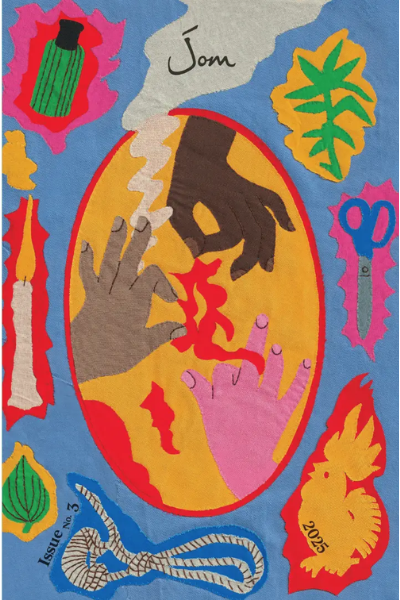
A flavour of Jom. Occasionally, Jom publishes essays outside the paywall. These are on issues we think are in the public interest, and deserve a wider airing. In the past two years, we have published nearly 50 such pieces. Read some of these if you’d like to see samples of our work. We hope they’ll convince you to subscribe. And even if you’re here with no intention of doing so, we hope you’ll enjoy these offerings and consider it time well spent!