


The first time I visited a tailor, all I wanted was a new pair of trousers. Pleated, half-gurkha, creased down to the cuffs, with side-adjusters. I went to Tanjong Pagar, where the tailor pulled out little books of swatches—square samples of fabric—to choose from. I ran my fingers over them, in navy, maroon, and sage-green, from open weaves to twills. It was like Geylang Serai on Hari Raya eve, choosing fabric for curtains and sofa-covers. I was transported to Arab Street, my mother and aunts thumbing Swiss voile for their baju kurung, the trader unrolling one cylinder after another from his library of patterns. All those years watching them with envy! It was my turn now.
The finished trousers sat on my natural waist right at the navel. Taking up two-thirds of my form, they elongated my legs and concealed my midsection flab. I felt cradled, like sitting on a chair carved just for me. I wore them to the library, to nasi padang brunch, to the theatre. Before long I made another pair, in coffee-brown and from a cotton-linen blend. They elevated even a modest readymade Oxford shirt, or a plain T-shirt tucked in.
Those trousers were my portal to the world of tailored clothes, and the ways of wearing them, termed “classic style” or traditional menswear. Imagine the formal Western menswear of the 1920s to the mid-20th century. With slight variation, the typical ensemble includes a plain long-sleeved shirt, underneath a jacket (single- or double-breasted), matched with high-rise trousers, a necktie and pocket square. Real shoes—not sneakers—dark and polished, solidify each stride into a resounding click.
Classic menswear evolved out of industrialisation, the spread of capitalism, and the global dominance of the British Empire. In colonial centres worldwide, the suit became the unassuming uniform of the public man, whose sartorial restraint mirrored moderate passions and rational disinterest. The standard appearance of the suit-and-tie was compatible with the egalitarian ethos of bourgeois society. At social clubs, soirées, coffeehouses, and literary salons, men in suits engaged in polite conversation. Their social world was built around public discourse and mass consumerism.
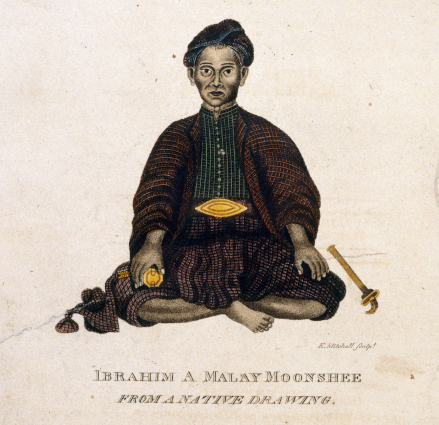
But there was already sophisticated male style in this region. South-east Asians always kept up with worldly fashions that came along trade routes. Indian-loomed cottons—Gujarati patolas, Deccani chintz, Bengal muslin—were a vital currency. Brocaded Chinese silks were prized diplomatic gifts. 18th-century Perak royalty supposedly dressed like Chinese mandarins. Persian-style coats were adopted by Siamese rulers.
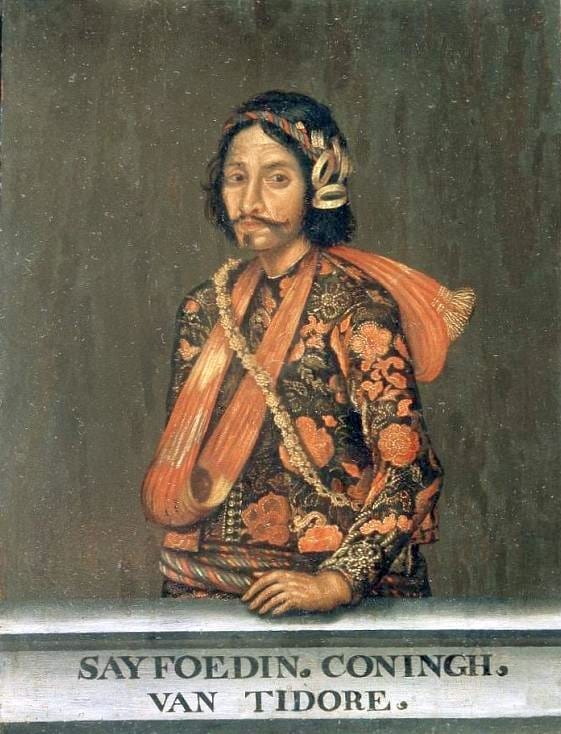
RJ Wilkinson, a 19th-century British official, observed that Malays welcomed all these influences “with the avidity of the born wanderer that the Archipelago had made him.” The more exotic and foreign the garment, the finer it seemed. Local rulers understood that style was power. A prince of Johor in 1603 wore a vibrant striped sarong, velvet slippers, and a silk headdress. Gem-inlaid gold chains and rings adorned his neck, arms, and fingers. To the fisherman or forest-gatherer, their rulers must have glowed like gods. But the politics of style was never separate from pleasure. Malay noblemen fussed over the fold of their head-wrap (destar) and the shimmer of their songket. In 15th-century Malacca, one royal favourite would undo his sarong and refold his head-wrap 12 to 15 times, before he was satisfied. Though style was never reserved for kings and ministers; 17th-century Pahang was prosperous enough that male commoners donned lustrous clothing too.
For later Europeans, though, this regard for appearances was a moral defect. Englishmen who’d “gone native” in late Mughal India were ridiculed back home, victims of Asiatic excess. John Crawfurd—British Singapore’s second Resident—said that Javanese and Malays had a weakness for measuring a man’s greatness by “the richness of his trappings and decorations”. Wilkinson disparaged their tradition of proper dress: “The Malay has been a fop for centuries and is a fop still.” Some locals found the popular fashions distasteful for other reasons. Raja Ali Haji, the 19th-century Bugis scholar, condemned Malay dandies wearing European pantaloons and jackets for being inappropriate (janggal).
Dressing, even leisurely, was always more complicated than “self-expression”; your clothes fashioned you, too. With their sarongs and kerises, Jawi Peranakan and Chitty Malacca men were marked differently from their paternal ancestors in India, as creole offspring of the Malay World. Meanwhile, King Chulalongkorn of Siam, Sultan Abu Bakar of Johor, King Kalakaua of Hawai’i, and Japan’s Meiji Emperor all wore European military dress to join the new order of “civilised” nations. Military jackets with streamlined shoulders and waist-suppression signified modern power, rational and active.
Male Asian commoners were permitted—not without controversy—to embrace Western wear more fully and rapidly than women. A gendered binary was imposed on history: the modern was masculine, the traditional was feminine. And so the suited gents of 1930s Shanghai contrasted with qipao-wearing ladies; in modern India, the sari remains an everywhere dress for women, compared to men in shirt and pants. Modernity sharpened gender divisions that were previously less apparent, in a region where men wore gowns, robes, and skirts.
We may think of these shifts as no different from today’s “trends”, but they made South-east Asia’s modern social transformation possible. When Malay, Javanese and Siamese elites began wearing European dress in the 19th century, they were redefining ideas about government, the economy, space, and time. The ruler was no longer just a sacred link between gods and mortals, but a statesman in an international system of borders and bureaucrats.
From Istanbul to Tokyo, rulers adjusted their bodies to a new language of power involving small, everyday adjustments: buying Italian furniture, sitting on chairs, travelling by steamship, playing billiards. These changes were just as revolutionary as opening up the realm to maps, mines, plantations, and railways. At the British Empire’s height from the late 19th century, the lavish adornment of native chiefs at glittering ceremonies reinforced the vision of a stratified universal order, in what historian David Cannadine called “imperialism as ornamentalism”.
As the focus of politics shifted from rulers to crowds in the early 20th century, cloth became a resource of self-reliance against unjust systems. Gandhi fought the British Empire with a spinning wheel, calling on Indians to restore their textile wealth. Indonesia’s earliest nationalist party began as an Islamic trade union organising Muslim batik traders to compete against Chinese and European economic dominance. The Zhongshan suit, popularised by Mao, unified the proletariats of the communist People’s Republic. Its austere militarism defied both Qing extravagance and the Republic of China’s bourgeois decadence. A garb of Third-World solidarity, the Zhongshan suit’s last famous wearer is the centenarian Mahathir Mohammad.
The 1960s’ counterculture upended liberal respectability, making casual wear acceptable in public. Fitness culture in the 1970s made sportswear part of everyday “athleisure”: tennis polos, football jerseys, and running shorts. Ralph Lauren and Abercrombie & Fitch conspired to flatter fit boys with low-rise jeans and polos hanging on solid chests. These days, fashion moves in erratic directions rather than the old top-down trickle from elites to the masses. As social media further fragments and shortens attention spans, one New York Times reporter believes we now inhabit a “post-trend universe”. A market analyst thinks our frenetic dash, from one short-lived trend to another, is a “mega-trend” of its own.
This aesthetic pluralism enabled the supposed rebirth of classic style. Sartorial blogger Derek Guy traces the revival to the mid-2000s, with authors like Alan Flusser making classic style accessible, and an overall turn to “vintage” clothing. Yet outside its niche community, classic menswear maintains a bad reputation. The suit is synonymous with the patriarchy and the evil nexus of global finance, government, and corporations keeping us all powerless and poor. Suited salarymen and technocrats, who solve and obey, reinforced the connection between suits and modern mass control.
In humid Singapore, the suit lost its battle against comfort and practicality. You need an exceptional reason for wearing it. Our male politicians wear suits at summits and swearing-in ceremonies, but seem to prefer those expressing as little personality as possible. Style and sober negotiation can’t mix.
Growing up in the 2000s, buying “nice” clothes meant a fast-fashion mall chain—Topman, Giordano, ESPRIT—or a department store. They were convenient and easy on teens spending part-time wages. Never part of a defined subculture or fandom, I amassed a rotation of graphic tees, bermudas, and lycra. I dabbled with drainpipe jeans, no thanks to Dior’s Hedi Slimane. We say it’s boring now, but Uniqlo’s arrival took away the pressure of choice created by an oversaturated fashion cycle. It promised a clean, fresh start. The solace of low-cost conformity seemed irresistible.
In university, a friend who quietly scorned my wardrobe, suggested tailoring. She sent me Instagram profiles with Singapore men in relaxed coats and sharp trousers. Too hot for the tropics? That’s what linen is for, sir. In that thumbnail reality, taste and quality mattered.
Online, I found people debating the rules of classic style, lamenting its decline, and nurturing its comeback. I watched The Gentleman’s Gazette, a YouTube series covering the nitty-gritty of neckties, overcoats, hats, and boutonnières. It was helpful to know the codes, but the dogmatic “Do’s and Don’ts” turned clothes into costume. The couple Hugo Jacomet and Sonya Glyn hosted Sartorial Talks, introducing classic menswear as an outlook and attitude. Dressing well was important, so don’t save it for special occasions: for Jacomet, life is a special occasion.
On messaging boards Ask Andy About Clothes and Styleforum, people asked about shoe-sizing, laundering cotton-linen trousers (hand-wash or dry-clean?), and the merits of tweed. Connoisseurs aside, this was a society of amateurs like me. They built spaces of information, about materials, obscure labels, and techniques of maintenance. Names of Italian mills floated like words in a liturgy: Loro Piana, Caccioppoli, Solbiati, Vitale Barberis Canonico. British magazine The Rake, founded by Singaporean publisher Wei Koh, is a practical style guide grounded in history, classic convention, and craftsmanship. I read Derek Guy’s blog Die, Workwear! which won web-wide fame after a Twitter algorithm glitch. There’s nothing “timeless” about classic style, he wrote, citing Immanuel Kant and Pierre Bourdieu. Good style shifts with changing class relations, group values, and aesthetic judgement.
I wanted to talk to someone in Singapore who wears suits by choice. One blazing afternoon, I met Huzir Sulaiman over iced lattes. Huzir’s a playwright, actor, and director, often seen in suits at the theatre, the office, and rehearsal rooms. His colleagues joke that he never wears anything else.
“Huzir wears shorts!” he said. “Huzir plays badminton in shorts. When Huzir goes walking up Bukit Timah, he’s not wearing a suit. I’m not wearing a suit to the poolside.” That day, he wore a long-sleeved batik shirt and full-length trousers. Not one of your glossy printed florals that Singaporeans carelessly call batik, but actual hand-waxed cloth in the sekar jagad pattern, a mix of central Javanese off-white matching soga brown and pastel blues from the coastal workshops. The weather was warm, and he was running errands outdoors.
For Huzir, who began wearing suits at 16 and has kept it up since, context is key. His overall approach to dressing is formal, which doesn’t always mean “Western”, or replicating colonial norms. Formality is his way of communicating respect to others that was central to his upbringing, he said. His parents were never knowingly under-dressed. Huzir’s mother Mehrun Siraj, former commissioner of the Malaysian Human Rights Commission (SUHAKAM), instilled in him a love of fabric, patterns, and textile histories. She was meticulous about which kain (hip-wrap) to pair with her baju kurung, always made by a seamstress. Huzir pictured her outfits for me with his mind’s eye, silk sarongs matching a full silk baju, and a little geometric pattern on a silk tudung.
“She was somebody who took great pleasure, I think, in the aesthetics of things. My dad, I suppose he liked to look good, but it was primarily about doing the right thing. Whereas my mom took pleasure in pattern, in texture, in drape.”
Huzir’s father, the notable Malaysian lawyer Sulaiman Abdullah, wore a Western suit for court work or meeting clients, but a baju, sarong, and serban (head-wrap) for everything else, including giving lectures. Whatever he wore, he wore correctly. Socks were always knee-length; short socks exposing the leg when one sat were vulgar. “But it was never flashy. Neither me nor my father would show a single brand. It was nothing about luxury. It comes from a place of attempting to be correct and respectful.”
Dressing well honed expert movement between settings, and the grammar of different materials. Huzir is a prolific batik-wearer, but hosts dinner parties at home in a kurta. In frigid theatres, air-conditioned classrooms or teaching stints in colder climes abroad, he wears a suit. With each garment, he plays with its special characteristics. A kurta is best for exploring colour; a batik shirt, colour and pattern. But a Western suit, sitting close to the body, allows sculpting silhouettes in ways unavailable to the loose-fitting kurta or baju kurung. To only wear the suit-and-tie as formal dress, for Huzir, would forsake an Asian cosmopolitanism that’s persisted for centuries.
Many restrictions remain, however, laid down centuries ago in the Malay royal courts. The Sulālāt al-Salat. īn lists what has to be worn in the sultan’s presence, such as cloth draped over the shoulder. Yellow is still royal and forbidden to everyone else. Huzir grew up in Kuala Lumpur, where sumptuary laws—dress codes defined by social status—are stricter than in Singapore. “I was 48 when I bought my first yellow shirt,” he said, fearing an accidental encounter with some Raja Muda or Tunku Mahkota at restaurants in Bangsar. Government offices in Malaysia require visitors to dress in at least long trousers and a long-sleeved shirt. There’s also the basic Islamic commandment to cover up your “intimate parts” (aurat) in public. Clothes determine the apt movement of bodies in space. Length and cut mean the difference between access and refusal, elevation and exclusion.
Huzir believes this performative shape-shifting, even in the past, was a South-east Asian act of consideration for others and outsiders. “Even the idea of a batik shirt,” he said, motioning to his torso, “I want to signal that I am drawing from my textile heritage. But the morphology of the garment is entirely Western. What is this collar? What’s all this buttons nonsense? Why should something migrate from the lower half of the body to the upper half?”
Singapore was a culture shock. Beyond the most official functions, Huzir found that people in power wear windbreakers, as Parliament live feeds show. “I understand, of course, it’s important to democratise. They are not setting a governing elite apart by their dress.”
It’s almost too easy to explain this difference through stereotypes of the neighbours’ opposite political cultures. Malaysia, with its regard for titles and connections, is still a world of appearances. Singapore, supposedly valuing talent and ability more, judges the individual underneath the clothes.
I recalled Lee Kuan Yew’s 2009 speech in Parliament, telling Viswa Sadasivan, then a nominated member of Parliament, that the National Pledge is just an aspiration, penned by an idealist. “I should bring the House back to earth,” declared the grey eminence, wearing a plain grey windbreaker and track pants.
Classic style may uphold rules in one society, and break them in another. In Singapore the suit gains rebellious potential. “It actually does become a punk pose of its own,” said Huzir. While his mother advocated for human rights, his father was “extremely left-over-centre” with a legal practice spanning many pro-bono cases. A respectful front gave room to manoeuvre around boundaries and push unorthodox positions.
I yearn for appearances at a time when broadcasting our innermost thoughts and passions is a banal social expectation. Upper-class subtlety is not something I grew up with, either. My parents and their parents worked for a living, and put their best foot forward. Our photo albums are full of dapper grandfathers and male relatives either in full baju kurung and polished shoes, or pleated trousers and collared shirts. One great-grandfather went to gatherings in a coat and sarong. They were Old School. In the rough and tumble of the colonial port-city, they made striving in style a way of life.
That starch-and-ironed working class puts their coddled descendants to shame. Unlike us, they owned a few quality pieces that lasted decades. The snobs reminded them of their place; Lim Chin Siong, the anti-colonial unionist, was mocked for wearing a jacket and cravat in Parliament. On the streets, Lim always wore a proper white shirt and pleated pants, performing the message that everyone deserves a dignified life.
Before I left for graduate school in New York, I went to tailor an “odd” jacket and trousers. While a full suit is cut from the same cloth, an odd jacket is made with a different fabric from the trousers. This is a more casual look, but in the 2020s it’s probably more formal than usual at academic conferences and classrooms.
For the sake of my bank account, I opted for it made-to-measure. A bespoke suit would be an epic, expensive quest lasting many months with multiple fittings and every stitch worked by hand. Mine would be machine-built, according to my dimensions. I found Kay-Jen, a tailoring studio with a persuasive house cut, or signature design. Contrary to popular belief, suits have designs varying by region, city, and individual tailors. The suits of London’s Savile Row, for instance, are known for structure and ample padding. Kay-Jen draws from the fluid and lightly-constructed Neapolitan school, with curved gorge lines and minimal padding. Their jackets’ wide lapels and proportions also resemble the classic style of the mid-20th century.
At the time, Kay-Jen was in a shophouse on Erskine Road, a handsome little lane going up Ann Siang Hill. I had my appointment on a hot Wednesday, the shop air-conditioned and scented with palo santo. I was in the hands of Matthew Lai, head cutter and founder of Kay-Jen (a modified version of his Chinese name). The soft-spoken 30-something has reserved movements. I said I was moving to somewhere with four seasons, so I’m sorry I can’t ask for the tropical linen suits you’re good at. I needed a jacket for autumn and spring. Something not too heavy please, but sturdy enough for the gusts and loose enough for layers.
Matthew suggested wool twill, which keeps out the cold with its close weave, but still soft for an appealing drape. Flannel for the trousers. Swatch books were pulled off their shelves, proving how impoverished our vocabulary of colour is. I recalled the Japanese menswear authority Akamine Yukio discussing the Edo concept of “forty-eight browns and one hundred greys”. Savour the spectrum.
Avoiding the risk of looking dim and dour, I settled on a blue that was dark but not quite navy, from an English mill. The grey of choice was a supple, speckled, Italian thing. Matthew asked about the jacket’s features: did I want the pockets with flaps, jetted, or patch? Again, I sought his opinion. “Sir, it’s what you want.” This whole project was too stressful for someone indecisive. Flaps it was, and notched lapels.
The measuring began. I was a patient under a doctor’s expert examination, maintaining an erect posture as he recorded my form like a slow-exposure photograph. Huzir called this an idealised way of holding yourself. The jacket will always remind you of it, years after your youth. My youthful body was never athletic, but tailoring forgives all. It conceals your faults and embraces your misproportions. You can’t tailor your way to fitness, but it’s a refuge from the exacting ideals pushed by the global garments industry.
My final bill, reader, was not cheap, but I felt calm committing such a majestic splurge. This was about more than buying clothes. It was about patronage, craft, the obligation of someone who writes for a living to support other creative workers. A lifetime of relationships, experience, skill, and learning must be worth something.
Matthew apprenticed under a master tailor. He can’t afford to chase fashion trends. Fit, proportion, and quality are his pillars. “There’s no politics there. If you’re good, you’re good. You cut a well-proportioned jacket, use good material, everyone can acknowledge that.” The perfect suit, if one existed, rests on universal principles. It doesn’t matter if the tailor is Singaporean, Japanese or Italian. “We all speak the same language.” The best are simply sensitive to the basics of proportion and lines.
The focus on cutting quality fabrics to achieve a flattering silhouette is usually credited to Beau Brummell, an English high-society figure during the Regency (1795-1837). His style was part of a broader shift in European fashion, away from embellishment towards tailoring. A growing attitude that favoured understatement drove Englishmen in the 18th century to renounce the bright silks and feathers of their Elizabethan ancestors. In the early 19th century, lace, embroidery, and knee-length breeches further gave way to complementing the male form. Yet even this simplicity demanded a flair for texture, lines, and carrying them well. Careless nonchalance concealed effort. And it was expensive, even then. Brummell died poor.
Maybe this is why dressing up seems suspect these days. It doesn’t gel with our present love of thrift, and the equation between wealth and visual minimalism. In Singapore, like elsewhere, British and American imperialism made Protestant frugality a political virtue and status marker. Even the truly rich now dress like they work too hard to care about their appearance; consider the tech billionaires wearing hoodies, T-shirts, and baseball caps. Yet post-war global capitalism, joining up supply chains, enabled and encouraged conspicuous consumption. Neoliberal economics wants citizens who work hard, earn, and spend, but within their means. To satisfy their hunger for affordable goods as a sign of the good life, factories churn out junk, made by underpaid labour.
When Matthew goes out, he’s startled at how much polyester there is in off-the-rack clothes. “People fail to realise that fast fashion, fast design, cheap quality are warping their brains,” he said, referring to the general expectation that everyday items—from clothes to appliances—be instantly attainable.
In this vicious cycle, low demand and economies of scale make handmade goods more expensive, as skill depletes.
Matthew educates his clients on what the process involves, and why they pay so much. This is the range of work a tailor does to make up for the effects of mass-made goods. Hours are long. The price of a suit compensates for the cost of craft, in an economy where so many forces combine to make craft almost impossible. Is tailoring, then, a moral choice? Villains and abusers of every stripe are also great lovers of craft and beauty. A tailored person isn’t always more ethical. But then neither are wearers of fast fashion, implicated in a system of waste, pollution, and exploitation far larger than any individual.
As we talked, I noticed a little icon about five inches tall sitting on Matthew’s shelf. “That’s Joseph holding baby Jesus. My parents gave it to me when I opened the shop.” I wondered about Joseph’s connection to tailors, but he was a carpenter. A fellow workman. Matthew recalled wandering in Naples, visiting tailors who displayed calendars of the Virgin Mary, elaborate altars and shrines in their studios. Tailoring seems like a natural vocation for those raised in such a tradition, revering beauty, image, incense, and vestments.
Far from the dry Mediterranean, the sun outside stared us down. Surely it’s hard to convince Singaporean men to suit up, even in linen.
“Tailoring doesn’t need to be formalwear. If you can’t layer, then accessorise,” said Matthew, like an absolution for Singaporeans good at making money, but clueless at spending it. Eat, wear, and buy well-made things. Appreciate them. Take your time.
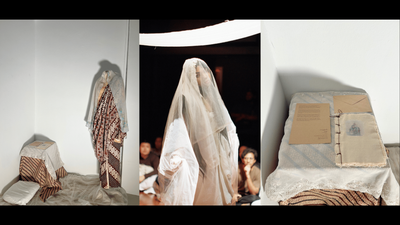
Young designers and wearers are reclaiming slow style beyond the Western canon, incorporating batik and traditional silhouettes into everyday wear. Regional fashion never stopped evolving, but among the sea of brands trying to contemporise the baju kurung, Behati, founded by Malaccan twink Kel Wen, memorably combines an expressive structuralism with the billowing garment’s gentle sway. Wen’s vision of baju kurungs wearable in any setting—outside conservative, even ethno-nationalist definitions—recovers a relationship to the Malay World that was once practical and fluid, not symbolic and rigid.
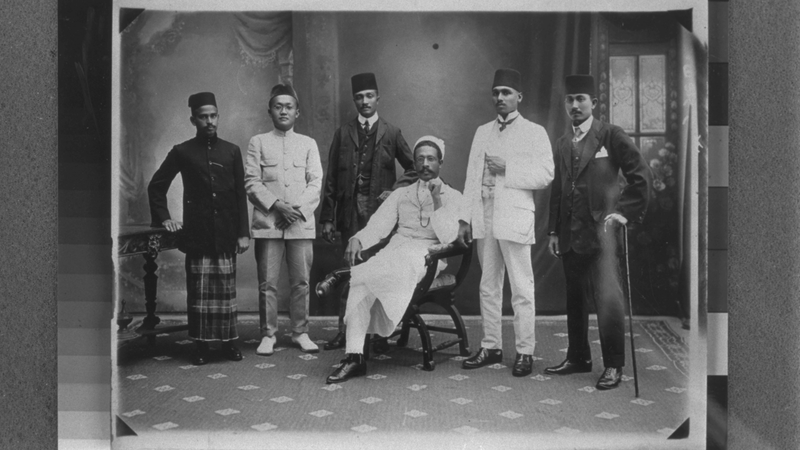
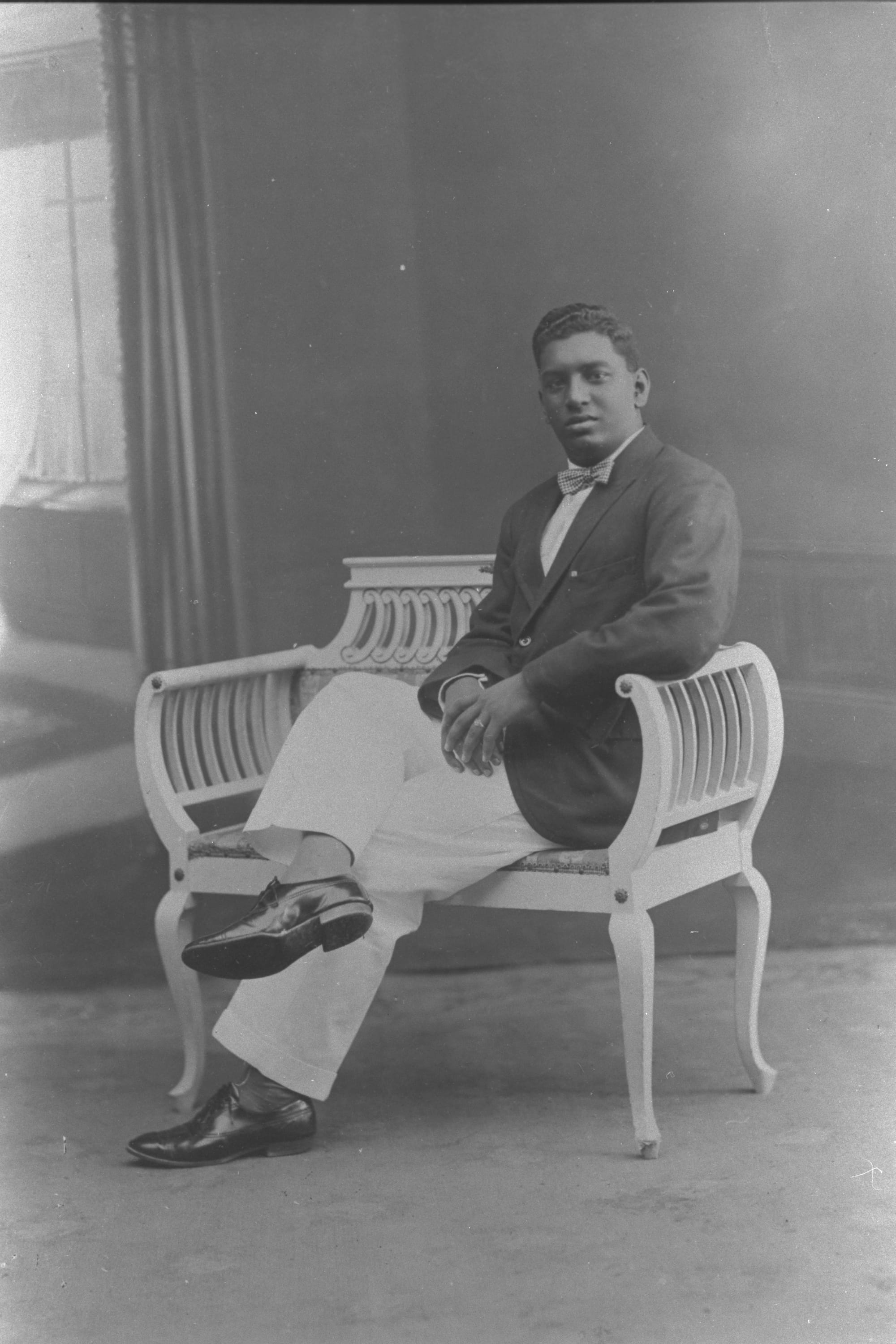
Though it’s a mistake to think classic style, in the Western sense, isn’t “ours” too. A hundred years ago, men in Malaya already wore it well. The Lee Brothers Studio portraits, the largest single collection of photographs in Singapore’s National Archives, are full of gentlemen in suits, hair coiffed, from the 1920s and 1930s. Chinese in linen and bowties, Jawi Peranakans in coat and sarong, Malays in jacket and Ottoman fez, all looked at the camera with ease and grace.
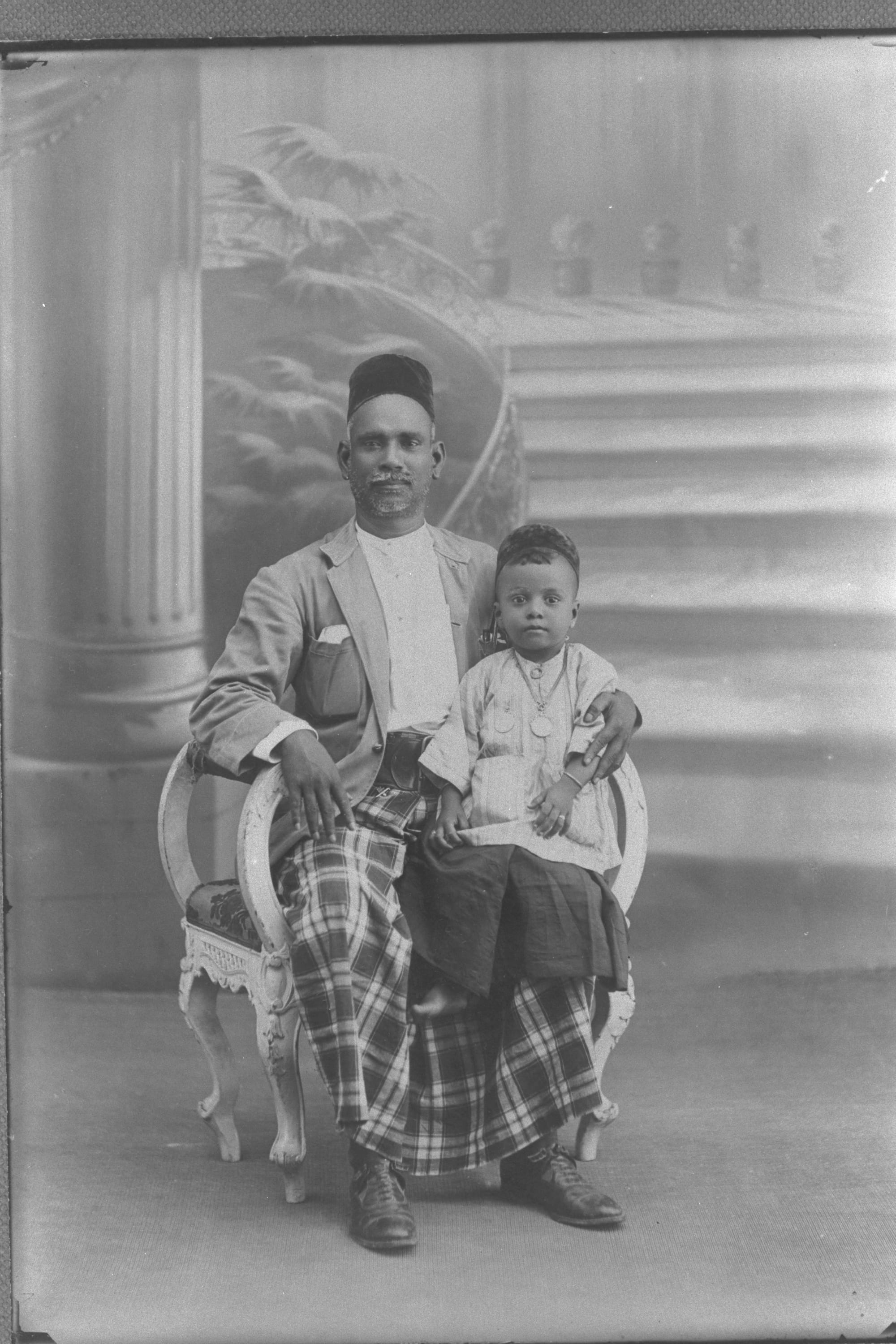
I hesitate to call it resistance or transgression, words inscribing them to a neat narrative of liberal empowerment. Though did they feel that same complicated pleasure that I do, of performing something you’re not, and being transformed? Our ritual of dress acts on our bodies, opening up possibilities beyond what bodies can achieve. Not the beauty of muscle and tone perhaps, but of outline, posture, and movement. Though in some ways a male pleasure, slow and formal style unsettles masculine obsessions with brute speed, strength, and function. Sensuous, out of time, perhaps more than a little vain, the tailored man walks. I want what he’s wearing.
Faris Joraimi is Jom’s history editor.
This piece was first published in Jom’s annual print magazine issue No. 3, released last year.
Letters in response to this piece can be sent to sudhir@jom.media. All will be considered for publication on our “Letters to the editor” page.