




Dear Jomrade,
Today we’ve published:
- “Singapore This Week”, by Jom
- “A sheep farm and slaughterhouse in Johor”, by RV and me, with photographs by Ore Huiying
Jom’s reader survey. If you haven’t yet, please fill out our 2026 reader survey now. It’ll take only 10-15 minutes of your time. The better we understand you, the better we can shape our products for you.
The shift in regional winds has tempered the haze here this week, but the diplomatic brickbats have intensified. Tuesday’s viral video by Mohammad Lutfi, a former Indonesian trade minister, stunned many, particularly with his directness in calling out so many of our ministers; as alarming was yesterday’s threat by Prabowo’s energy minister, to halt exports to countries “that do not respect Indonesia”. (It’s one of Singapore’s main natural gas suppliers.) “Don’t come begging when you need something, but when there is another issue that can actually be discussed, behave like a relative who has no manners.”
Is it all just wayang? Earlier this week an opposition politician (and others) suggested to me that this is sophisticated ASEAN statecraft: coordinated, theatrical, cross-border outrage that plays to a domestic base, while leaving the real transnational capitalist and political power structures unblemished.
I’m not so sure, it all seemed genuine enough to me. Still, we’ll know the truth soon. After the dust settles, if no companies, whether in Indonesia, Malaysia or Singapore, face serious sanctions or penalties—a continuation of decades-long protection—we’ll know that this week’s political firestorms represent simply the new, social-media-powered ASEAN wayang.
Last week we told you about a familiar haze script being played out (we might have been wrong!) and about our addiction to palm oil, and why the issue is so intractable. This week we assess the main cross-border attacks, and the impact on our region’s most vulnerable people.
If you’re looking for haze-related answers, discussions, or simply some communion with other teary-eyed souls, sign up for this Sunday’s “SG Haze Town Hall” organised by SG Climate Rally and PM Haze.
- MY, ID, SG, and ASEAN leaders under fire for the haze
- What impact is the haze having on the region’s most vulnerable?
- In a skills-focused future, should employers ignore degrees and titles?
- What e-wallet risks and vulnerabilities should you look out for?
- Betel nut, paan, sirih, and the world’s oldest known “drug use”
- AGEncy Fest, “Rites of Us”, and other artistic approaches to grief and mourning
- Mourning ArtsEquator
Above are the issues we chose to explore in more depth.
Other news this week included: SG and Sweden to expand cooperation in emerging tech, sustainable energy; Lee Hsien Loong worries about rival port cities; CPF maintains A grade in global pension ranking; Singtel fined S$1m (less than 0.1 percent of annual profits) for three-day outage; dance, shelters, and other ways South-east Asians are turning haze anger into action; construction firms protecting workers from haze; ST multimedia piece on the pros and cons of work friendships; taxi and ride-hailing fares up 50 percent in five years; food delivery riders torn between health and income during haze; personalised treatment for medication-resistant depression now offered in SG; mental health practitioners call for lower or no parental consent as more youth seek help; more people in their 30s-40s seeking help with credit card debt; the lost railway line on Lazarus island; hawkers worried about unhappy customers if they cut salt; bodybuilder died at 20 from illicit weight-loss substance; risks when Botox and fillers become routine maintenance; Orang Laut SG opens its first pop-up cafe; and haze relief for our animals.
Join 1,700 members keeping Jom independent. From S$10/month—full access, no compromises.
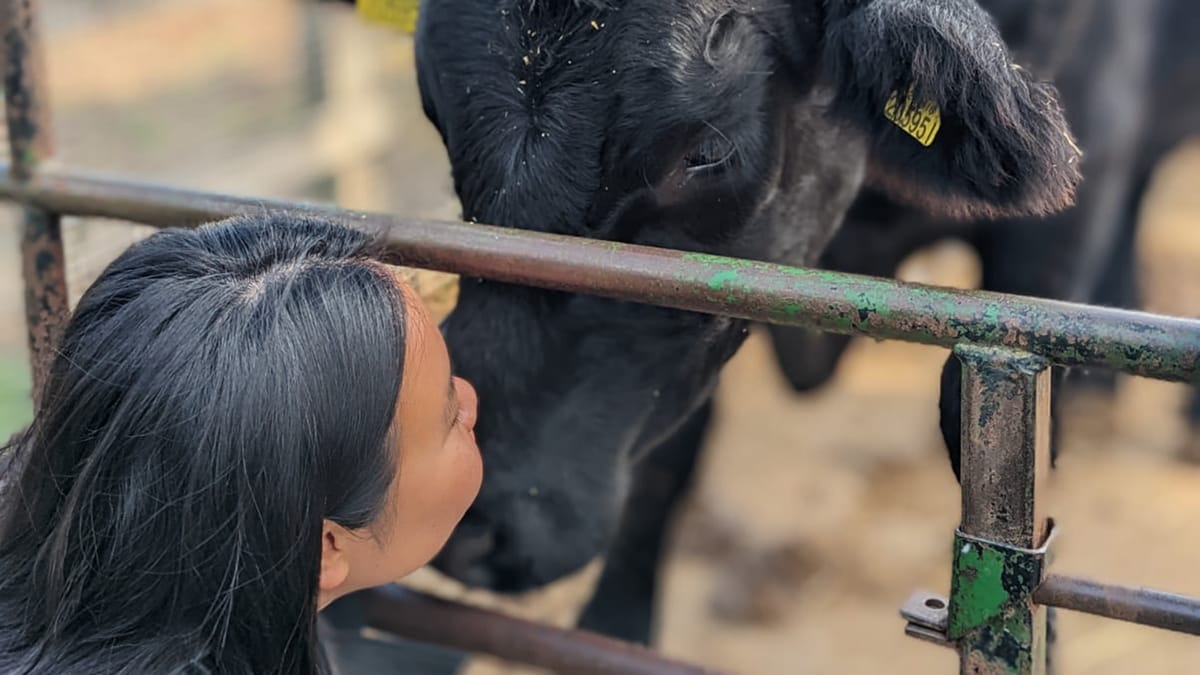
“A sheep farm and slaughterhouse in Johor”, by RV and me, with photographs by Ore Huiying
Today’s photo essay is close to my heart for many reasons, including the bonds between Malaysia and Singapore, the notion of farming moving from our space-constrained city to lands nearby, and my lifelong journey with food, becoming more deliberate about what I eat. (I’m pretty sure I’ll always be an omnivore, though lately I do appreciate being vegetarian for some meals every week.)
We’re deeply grateful to the team at Aliyah Rizq for hosting us at their farm in Desaru, Johor, taking us to a slaughterhouse nearby, and for trusting us with this story. I’ll leave you with a few paragraphs:
“Have feelings for the chickens in the park translated to the chickens on the farm? Singaporeans still, for the most part, have little connection to the animals we eat. Many of us do not know about the lives they lead, about the people whom they rely on for care and sustenance, about their surroundings, about their first and last breaths, about what they even look like. Industrialised agriculture thrives on the opacity that diminishes our empathy, that reduces beings to vacuum-packed chunks of meat.
Why do we use one moral lens to gaze upon one animal, and a different one for another? To what extent are our reflexive classifications (dog = pet; sheep = food) a symptom simply of unquestioned shibboleths being passed down? A fair meditation on these questions demands a centering of farm animals, and some visibility and transparency into their lives. The Jom team—almost all of us are omnivores—felt that a visual portrayal of them might offer us all a new way of seeing.”
Jom pandang,
Sudhir Vadaketh
Editor-in-chief, Jom
Jom on more-than-human relationships
 Pamela Ng
 Amandas Ong
 Tsen-Waye Tay
 Choo Yi Feng
Singapore This Week
History weekly by Faris Joraimi
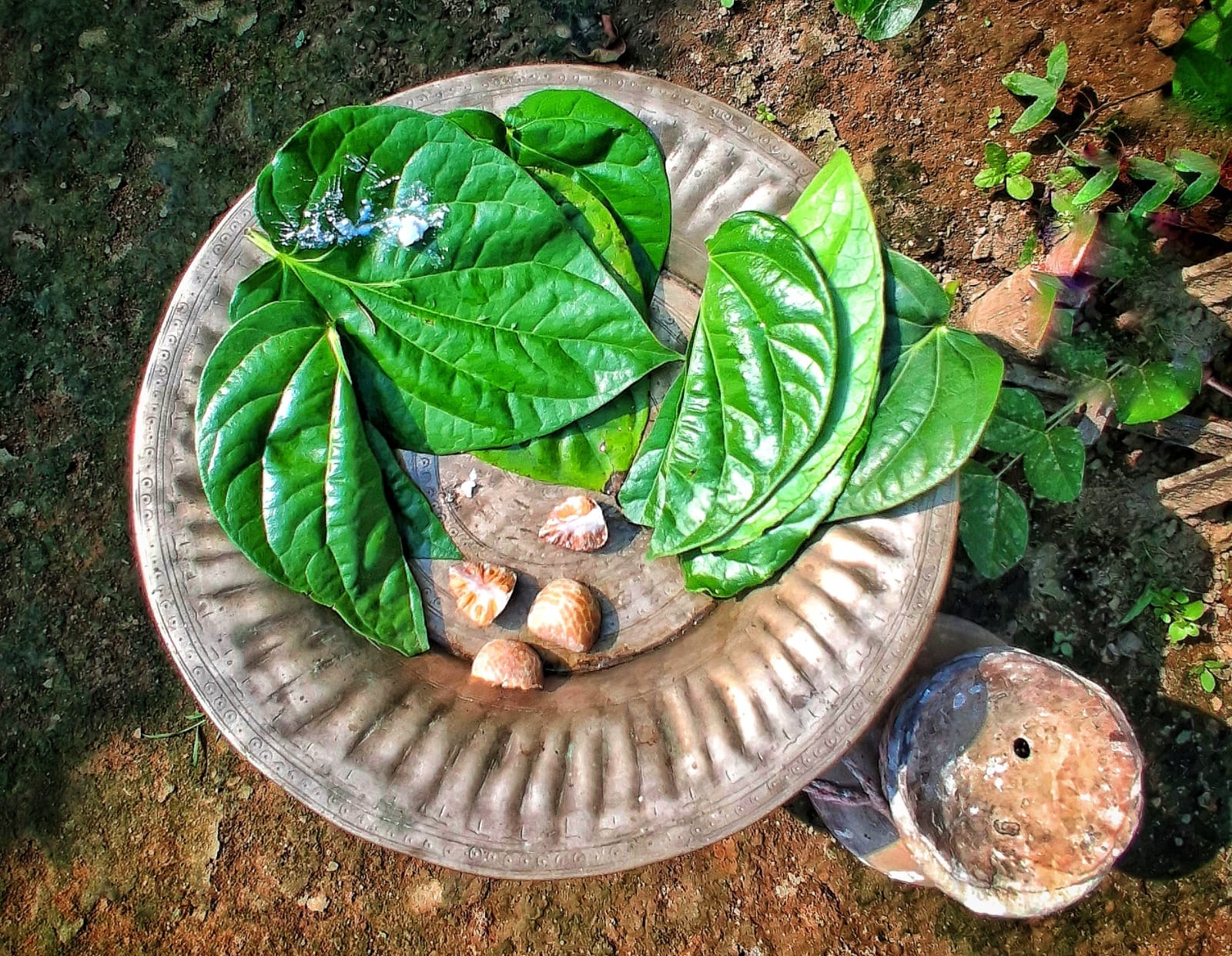
Australian archaeologists recently found the oldest-known evidence of “drug use” by humans, right here in South-east Asia. On the island of Sulawesi, now part of Indonesia, researchers investigated a pair of skeletal remains: one of which was 7,000 years old, while the other was at least 16,000 years old. Both had teeth ground down so much that the gums were exposed, “like someone had a drill head shaped like a gobstopper and wore away the inner part of the tooth,” said Adam Brumm of Griffiths University, Brisbane. A paper he co-authored containing these findings was published last month in the “Science Advances” journal. Were these ancient foragers chewing stones? Analysis of their teeth detected traces of arecoline, a psychoactive compound that induces a state of relaxation and reduced anxiety when consumed; in other words, a high. It’s almost certain they would’ve been sucking on the nuts of the areca palm tree (Areca catechu), which is endemic to South-east Asia and where arecoline naturally occurs.
Sucking on areca nuts will release some arecoline and cause numbness in the mouth, but not enough to induce an intense, recreational high. That requires mixing the areca nut with slaked lime, and wrapping them in betel leaf (Piper betle) to form a bundle called paan in South Asia, and sirih in the Malay world. Chewing paan or sirih was done by a vast swathe of humanity for hundreds of years: South Asians, South-east Asians, and Pacific Islanders. European explorers were disgusted at how almost everyone beyond a certain longitude of the planet incessantly chewed and chewed this thing which stained their teeth blood-red. The Scottish merchant Alexander Hamilton wrote that every trader who visited the sultan of Kedah had to chew sirih that the sultan himself had chewed before, and “it is very dangerous to refuse the royal morsel.” Whatever these squeamish outsiders felt, it was a practice that unified all strata of society, whether peasants needing relief from labour or princes freshening their breath. Elaborate traditions grew around chewing betel, and ornamental boxes built to contain and transport its ingredients are among the most stunning works of South-east Asian art. After the introduction of tobacco and rolled cigarettes, betel-chewing became unfashionable in many places, yet the habit survives in Myanmar, Taiwan, and much of South Asia. Even in Malaya the practice endured until quite recently among old women: my great-grandmother still chewed betel till late in her years. But today, you can more readily find a paanwala in New York City than a sirih-chewer in Tanjung Pinang.
If the ancient foragers couldn’t have gotten high enough from areca nuts to do it for fun, why did they chew them? Though the journal article calls it the “earliest recorded evidence for the habitual use of a neuroactive plant drug,” they were not really “addicts” in the contemporary sense, to borrow the pejorative term governments use to demonise everybody from recreational users to those with substance use disorders. The researchers think the ancients needed pain relief for toothaches, but the areca nuts just damaged their teeth more over time, leading them to use it again. The constant cycle of self-soothing and self-injury is also invoked in the discourse around addiction today, but it is framed as a moral issue rather than one of available resources and robust systems of social support.
Other stuff we like
Love Potions & Co. There’s a new pop-up store in the neighbourhood—run by your friendly occultist-next-door. Vignesh Kumar Singh writes, directs and stars in this one-man show that’s quite possibly the first-ever meeting of black magic and red-nose clowning. This work-in-progress performance promises plenty of light-hearted interactivity, but also a tender intimacy.
“Apocalypse Now and Then”, Arundhati Roy’s searing critique of AI in Equator. “The auguries are raining down hard. Think or Sink. Comply or Die. Look Up or be Left Out. And so, with these not-so-gentle threats, it has come to pass that the Age of AI – Actual Idiocy, Actual Super Idiocy, Recursive Snowballing-Idiocy – is upon us.”
“The strange, underrated intimacy of L.A. sidewalks”. Amanda Lee Koe takes us from sweat-slicked Singapore to the sensual sidewalks of Los Angeles, where she’s currently based, in this photo essay—pairing high-exposure snapshots of glamorous strangers with an intimate exposé of her meander through the bars and back alleys of the City of Angels.
SG Haze Town Hall, 3-5pm, this Sunday. Organised by PM Haze and SG Climate Rally, discussions will include: how the haze affects our health, our wildlife, our economy, and people like outdoor workers; the limits of the Transboundary Haze Pollution Act and how to strengthen it.
A flavour of Jom. Occasionally, Jom publishes essays outside the paywall. These are on issues we think are in the public interest, and deserve a wider airing. Over the years, we have published nearly 50 such pieces. Read some of these if you’d like to see samples of our work. We hope they’ll convince you to subscribe. And even if you’re here with no intention of doing so, we hope you’ll enjoy these offerings and consider it time well spent!