

“Love involves the ascription of a very high value to a being who is separate from the subject and not fully controlled; it cannot be love if the response is fully controlled.” - Martha Nussbaum
Nestled snugly between two river-facing apartment blocks in south London is a place that I have come to love dearly. What had been written off as a desolate wasteland in the 1960s was transformed by some capable hands, over the last 47 years, into a charming little urban farm across 2.2 acres. A 15-minute-walk from where I live, it is very much a community project in that it trains and employs residents in the neighbourhood—especially adults with special learning needs—to tend to its livestock and vegetable plots. All of its produce is sold in its shop, where locals are regularly seen patiently queuing to buy eggs, cheese or sausages.
Since the beginning of spring, the farm has opened up access to areas that were previously shut off to the public. Before the pandemic, you could only stand behind the fence of the front yard and watch as sheep and goats frolicked, dozed, and chewed on hay. Now, visitors are allowed to walk down a stone path to see a range of other animals. There are spacious shelters attached to the enclosures for the chickens and pigs, while the cows and donkeys graze idly across a small pasture.
One of the things I noticed about the farm after a week was that the animals are predominantly female. A couple of rams and billy goats are only brought in on loan during breeding season from September through January, after which they are promptly whisked back to their owners.
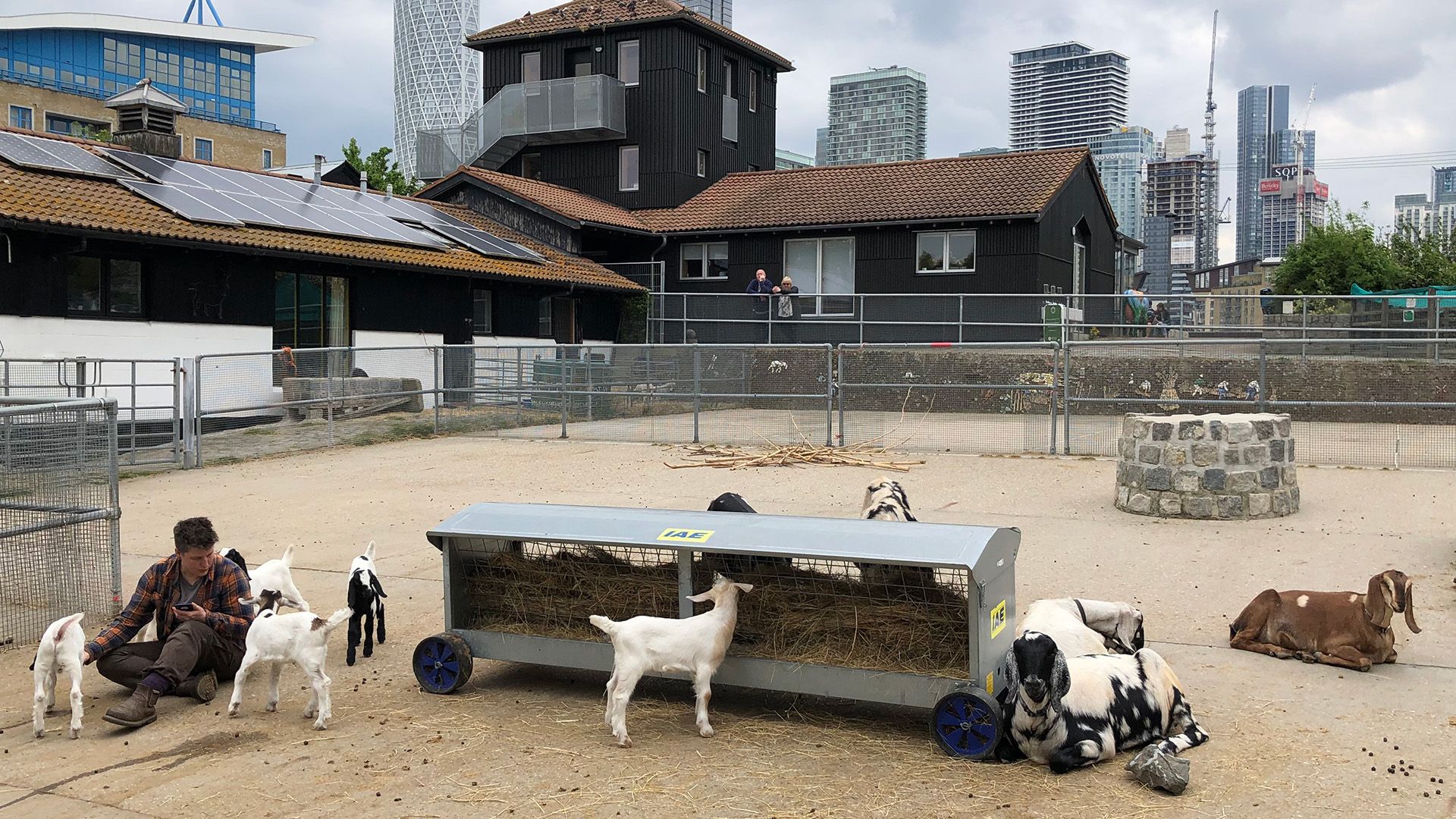
“The ladies boss us around here,” a farm worker once joked while sweeping up droppings from the goats’ pen, as one of them yawned imperiously. In a sense, the farm is like a boisterous girls’ school, except one that is incessantly clucking, grunting, braying and bleating. There are two donkeys that I call the Gilmore Girls: they are mother and daughter, and they spend their days placidly wandering the grounds, impervious to the shouts of young children enraptured by them.
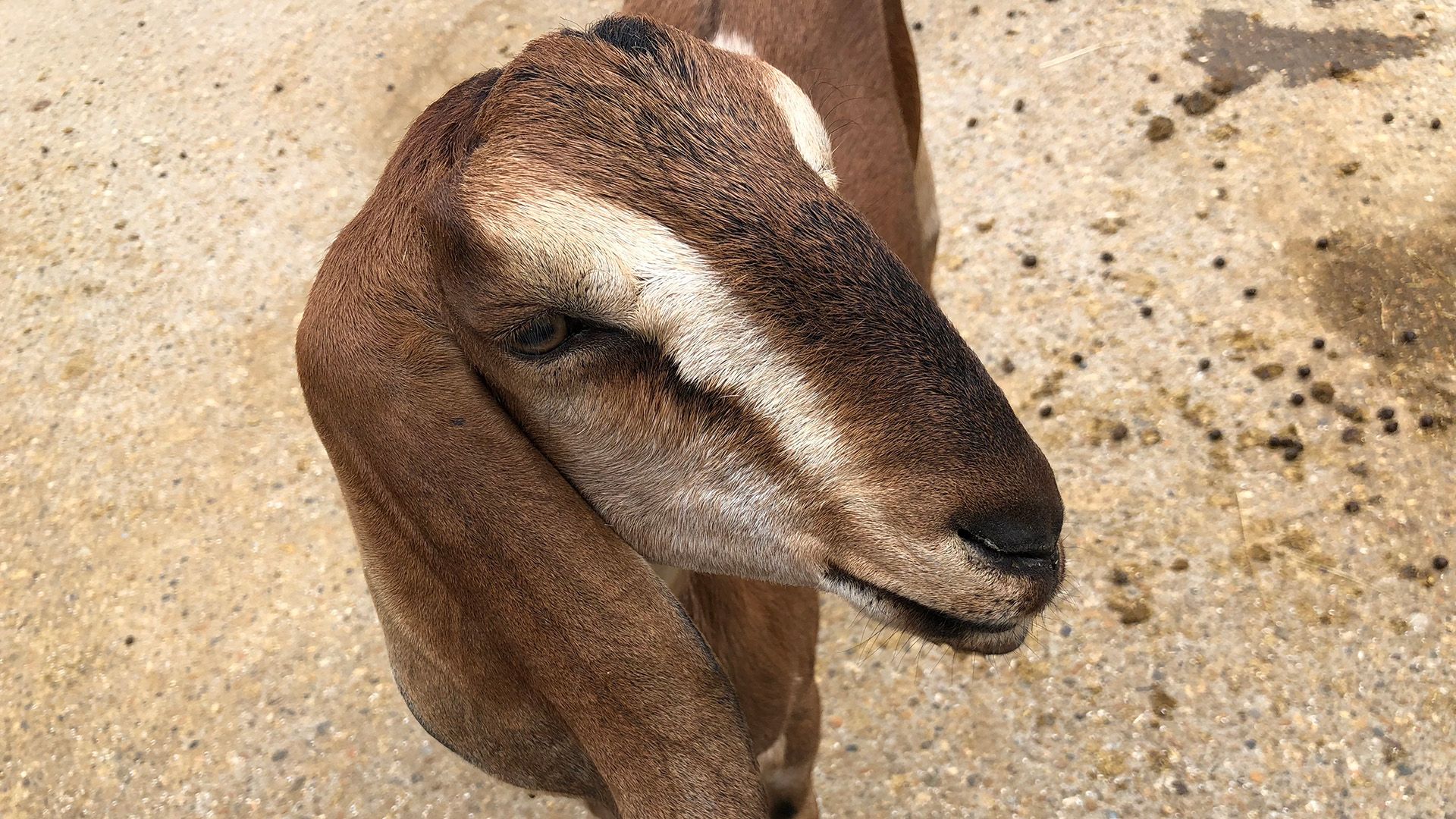
The first animal I got to know was a young, brown goat that I decided to name Mabel. Like other Anglo-Nubians, a species which emerged in the 19th century by cross-breeding British goats and a mix of goats from North Africa and the Middle East, Mabel is lop-eared. Almost immediately, I noticed that Mabel was quite different from the rest of her herd. Unlike the other goats, which go into a demented frenzy and snap at one another when someone tries to feed them, Mabel always looks on with complete serenity, even if it means missing out on food. When the other goats have calmed down, she comes up to me to have her ears stroked, closing her eyes in what I assume to be contentment.
I often laugh at the pure absurdity of it all: I’m a grown woman who comes to visit her goat friend, every day. Over summer, I would find her lying on the ground, trying to cool down from the heat. She would raise her head quizzically to look at me, then go back to napping. I still can’t be sure if this means that Mabel does recognise me.
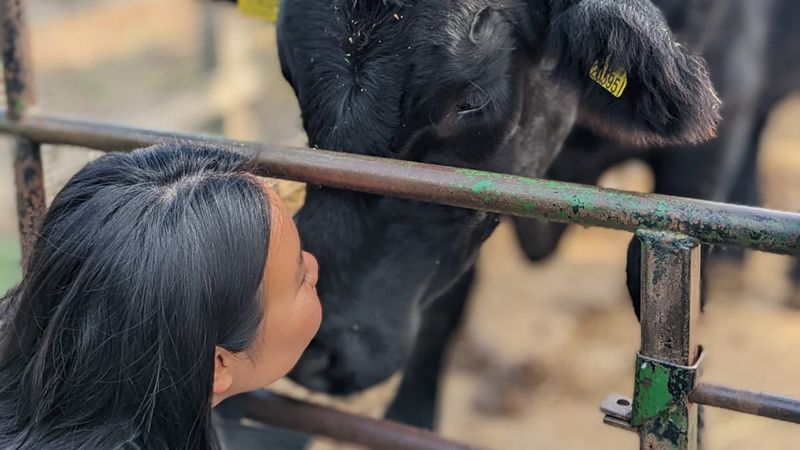
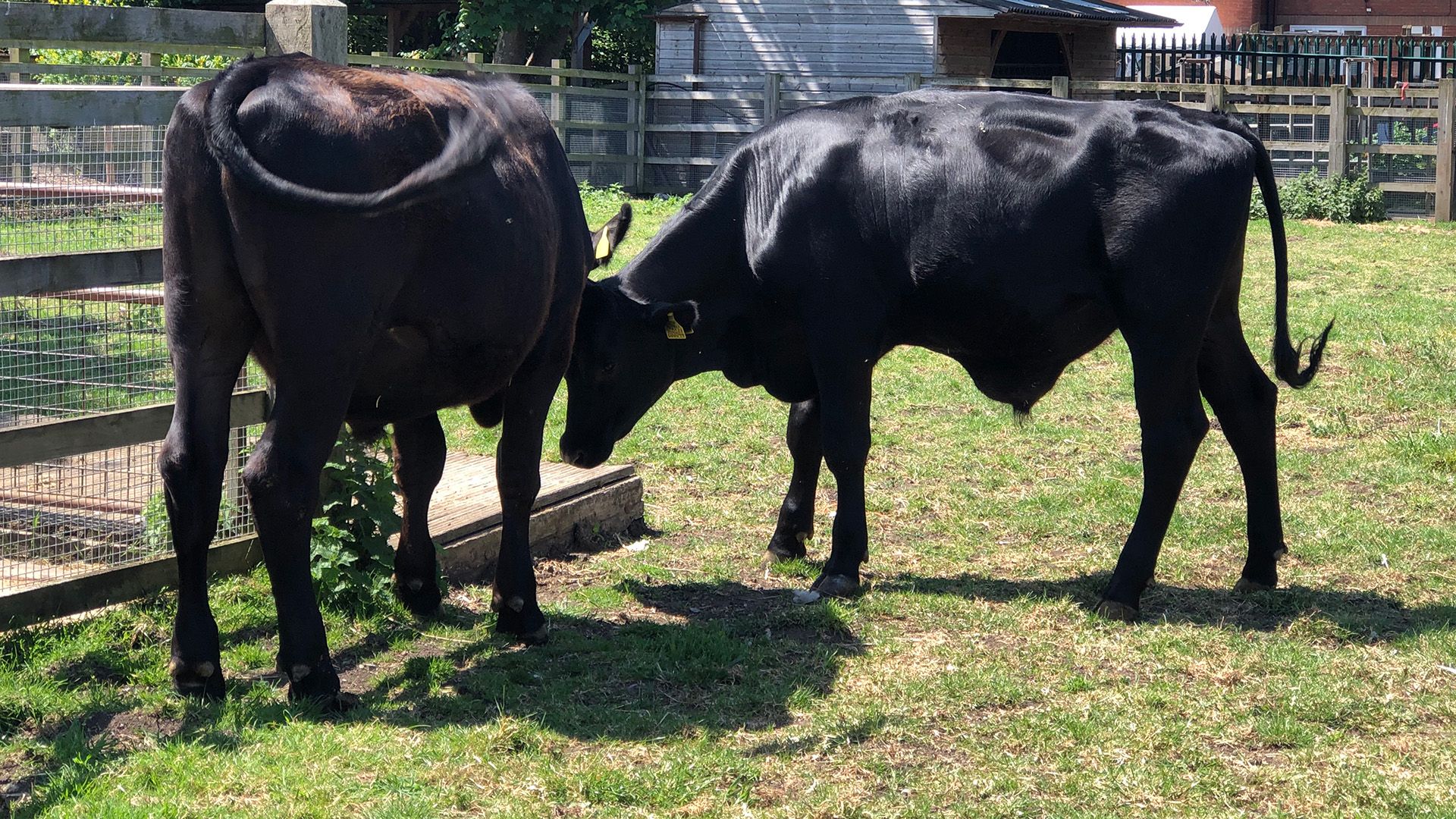
But it was the two young bulls living on a secluded end of the farm that really stole my heart. It appears to me that of all your quintessential farm animals, cows seem to be the least popular with visitors. Their hulking stature and torpid gait give them a standoffish air that is in stark contrast to the playfulness of the farm’s smaller, cuddlier denizens like lambs. But once you’ve become familiar to them, their shyness melts away, revealing the gentlest and most gregarious of large herbivores.
According to the farm’s Instagram account, the bulls’ names are Jammy and Dodger (after a popular jam biscuit sold in the UK), and they’re each about a year old. I had never taken much interest in them until the day Jammy lumbered up to the fence and stared at me. I approached him to touch his head, and was startled by how soft his black hair was. If you have ever held a cow’s gaze, you’ll know that they arguably have the most beautiful eyes in the animal kingdom—limpid, wide, and framed by the longest lashes.
I saw Jammy and Dodger bound across the grass when they were happy, and moo relentlessly to express their displeasure when they were shut up in their paddock. I also enjoyed watching them groom each other: cows lick each other’s necks and bodies to express friendliness and emotional attachment. “They’re just like big puppies,” one of the volunteers at the farm, a veterinary student, exclaimed to me on a recent visit. Dodger, initially the more timid of the two, started tentatively coming up to me, and trusted me enough to let me cuddle him through the fence. To be the object of an animal’s affections is a wonderful feeling that cannot be overstated, as all pet owners will no doubt attest to.
Many times, I looked on with mild bafflement as schoolchildren, chaperoned by their teachers, squealed in fear when instructed to feed Jammy and Dodger. “Come on, I’ll buy you an ice cream later if you feed it!” I once heard a boy who looked to be about nine or 10 cajoling his classmate. “I can’t do it,” was the shrieking reply. It’s striking how the presence of animals instantly makes city dwellers so nervous, whether they’re adults or children. We are now so estranged from the land and the source of our food, that our interactions with the animals that give us sustenance seem deeply unnatural.
Getting to know Jammy and Dodger made me feel extremely conflicted about my relationship with animals. I once asked an elderly volunteer what would happen, when their time at the farm was up. “They load them in a van and send them to the abattoir, and they come back in boxes,” he told me.
As I said goodbye to Jammy and Dodger that summer’s day, I walked away with tears in my eyes. It hit me that the prospect of losing my bovine friends—who I now knew from observation to have complex, rich and varied social lives—felt unbearable to me, too.
If aliens landed on the planet tomorrow and took a tour of it, they’d instantly see that our primary impact on the animal world isn’t demonstrated by the TikTok videos of our dogs and cats doing funny things at home, or in the photos we share of our wildlife encounters with sloths, giraffes, and deer. Rather, they’d discover that our relationship with animals is most continually defined by farms and slaughterhouses.
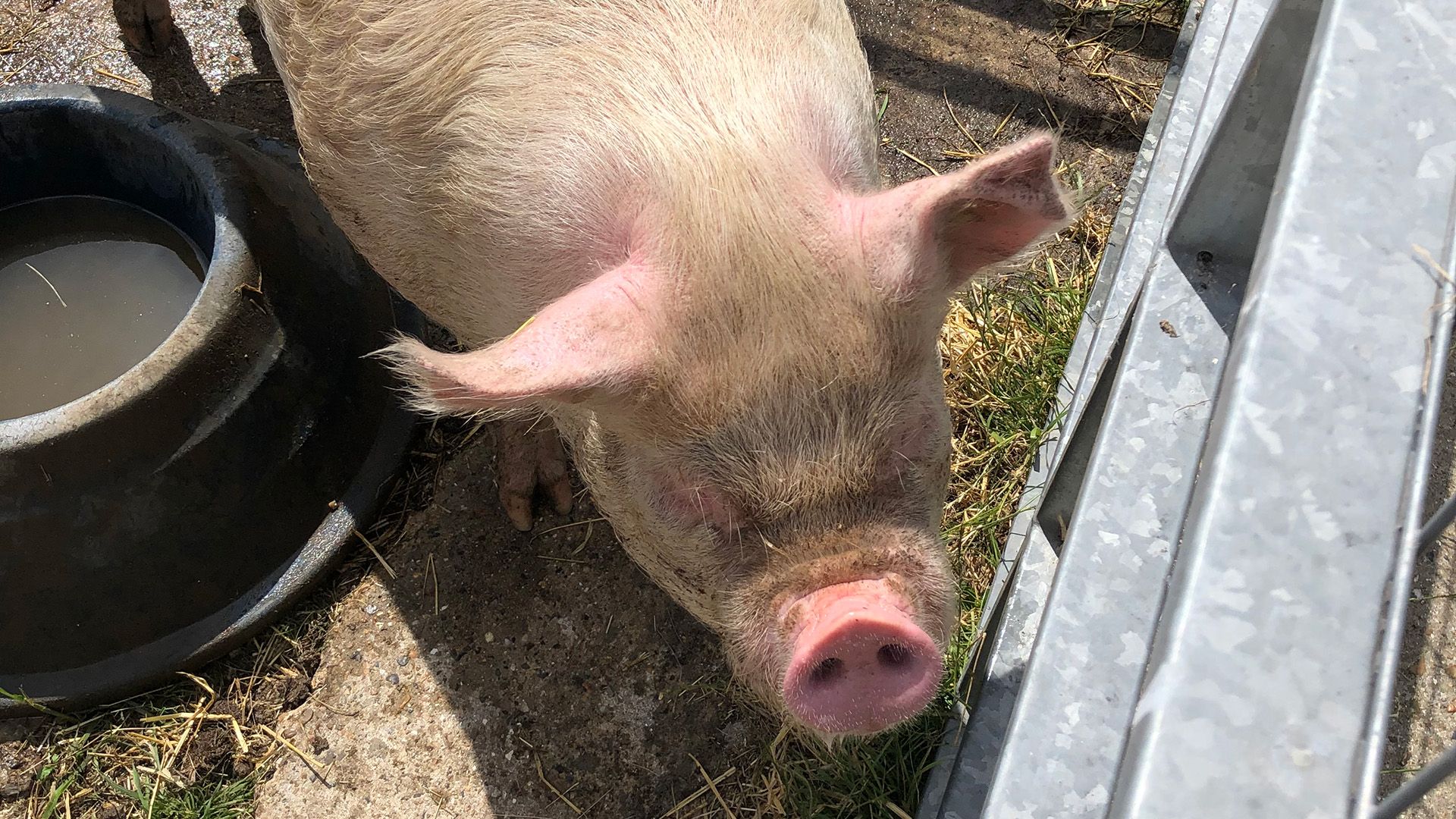
Seventy is the crucial number. Mabel, Jammy and Dodger are just three individuals out of a whopping 70 billion animals farmed for food globally, each year. Farm animals dwarf the total human population by almost 10 times, and just one percent of farms occupy 70 percent of all agricultural land. Over 70 percent of the world’s farm animals now live in factories, “raised and killed in conditions with no analogue in history.”
In the past, hunter-gatherers had an intimate knowledge of the animals they killed and ate: they had deep insight into their patterns of behaviour, and they foraged and hunted with a full appreciation that these animals were inextricably tied to their continued existence. Today, these dwindling communities—including, not too far from home, the Orang Asli in Malaysia and the Mentawai people in Indonesia—still hunt for food.
But, increasing global wealth over the last 50 years has caused a dramatic surge in meat consumption, which can be met only through industrial production. The vast majority of us now need only to walk into a supermarket and buy the cut of meat we want, cooking it for dinner without getting much, if any, blood on our hands the way our ancient forebears did.
In Singapore alone, the average person consumed 62kg of meat in 2021 (compared with over 100kg in Australia and the US, but just 4.5kg in India, where it’s rising fast). You might own several pets in your lifetime, but the hackneyed adage that you are what you eat rings true.
To ignore the impact of our lives on animals, and theirs on ours, is to dismiss a crucial part of the narrative we tell about the way we live. In other words, we should be uncomfortable addressing the issue of how our existence intertwines with that of animals, and the power we wield over them. Encouraging conversation about how we eat and what we eat, while acknowledging that there is no straightforward answer, is far better than not thinking about it at all.
Owing to my encounters at the farm, I’m in the process of switching to flexible vegetarianism, away from my previously omnivorous diet. I don’t miss beef at all, but being Singaporean Chinese, it’s harder to wean myself off pork. At my weakest moments, I tell myself that a predominantly vegetarian diet is better for the environment and my health.
But I’m well aware that my consumption of meat has always called for cognitive dissonance. Like so many people, I’d unhesitatingly call myself an animal lover. Though my itinerant lifestyle makes it difficult for me to own a pet, I enjoy playing with strangers’ dogs in the park, and cat-sitting whenever a friend makes the odd request. Whenever I’ve had the opportunity and means, I’ve always been thrilled to come close to wild animals. In Rwanda, I had the magical experience of having a baby gorilla grab my hair and put its palm on my shoulder when I was trekking in the jungle; in Bolivia, an inquisitive alpaca walked with me and my cousin for half an hour when we had lost our way on an island. The idea of watching these animals being killed is outrageous.
In contrast, throughout my life, I’ve not had a problem being indifferent to the agony of the chickens, pigs and cows I’ve eaten. I’ve been guilty of saying, “Well, at least they might have had good lives before they died for us!”
But what really makes a good life?
Jammy and Dodger admittedly haven’t had the hellish fate of being born in a factory farm. They could live up to 20 years if they were allowed to, but most male cattle reared for beef are killed before their second birthday. (Dairy cows don’t fare much better, as they’re milked to exhaustion and then sent to the slaughterhouse.) Can one have a good life, if there isn’t much of a life at all?
A significant amount of research has gone into developing humane livestock handling practices prior to slaughter—in particular mitigating the high stresses experienced by animals while being transported to the slaughterhouse. But there is also some evidence that killing techniques don’t always immediately work, and that farm animals remain conscious for long enough to die a protracted, agonising death. They’re packed into rooms, ensconced by the stench of blood and guts. Then they’re individually electrocuted and their throats slit.
The horror of meat production isn’t just experienced by animals; it torments human beings, too. In the UK, where I live, slaughterhouse workers are often vulnerable people who end up developing trauma and mental illness from participating in the constant carnage.
There is a certain misconception that a concern for the well-being of animals is an Occidental preoccupation, and has got nothing to do with us. Not so: although the animal rights movement is associated with Western names like Peter Singer and PETA, vegan ethics have been a core idea in Asia for a long time. The Indian emperor Ashoka, who ruled from 268 to 232 BC, famously outlawed cruelty towards animals. In Japan, a fervently Buddhist country, meat-eating was banned for 1,200 years, with the consumption of beef being especially taboo. Ironically, it was Emperor Meiji’s decision to emulate Western practices that led to this ancient dietary law being abolished. It appears that animals have been firm fixtures in our moral universe for thousands of years, and that traditional and religious doctrines espouse benevolent engagement with animals.
Which points to another big question: why should we care about how animals feel? For centuries, humanity’s most outstanding minds from Aristotle to Mencius have strived to show us how different we are from animals. We have sophisticated intelligence, we’re empathetic, our moral codes are highly evolved. But these arguments only go to prove precisely that we must take more ownership and responsibility for our attitudes towards animals. Even if animals don’t have an understanding of justice or morality, it doesn’t change the fact that we do, and have the ability to ameliorate their suffering. As the Kantian philosopher Christine Korsgaard writes, on our obligation towards animals: “We are distinguished by our ability to construct a transcendental, rational order out of the essential love of life and the goods of life that we share with the other animals...And that is why we have duties to the other animals.”
Increasingly, I’m also starting to drift away from the idea that our intellect and ability to empathise makes us so radically different from animals. Recently, my friend and I attended the farm’s shearing day. We were amazed: each time an ewe was taken away to be sheared, the rest of the sheep would turn towards her and baa loudly—seemingly in protest—until she was released. Even the lambs joined in. While it is cruel not to shear sheep, as it prevents them dying from overheating and minimises the risk of parasitic infection and disease, the manner in which they’re taken from the herd, shoved into an uncomfortable position with a loud device tugged through their fleece appeared to be frightening for them. “Do you think they’re unhappy with the way their friend is being treated?” my friend asked. Based on what we had seen, it was hard to disagree.
Cattle, like sheep, are herd animals with social hierarchies and an understanding of seniority. The sounds they make aren’t just pointless bellows; they’re filled with meaning. Because modern farming means they’re moved around from one farm to another, they moo to connect with new friends, and try and find their old ones. I’ve often wondered how Jammy and Dodger might be different if they didn’t only have each other. The point is: even without projecting our uniquely human emotions onto them, animals are smarter and more thoughtful than we give them credit for—and there is still much to be discovered about the complexities of their experiences.
I do think that we possess a quality that is ineffably, inescapably human, and that is our search for moral betterment, and the cornucopia of ways in which it is driven by love. Philosophers such as Iris Murdoch and Martha Nussbaum have suggested that our emotional responses to people and other beings around us are an essential aspect of our morality: contrary to assumption, emotions are inherently cognitive, as they embody both thought and feeling.
Jammy and Dodger were sent to the slaughterhouse in November, after I had shared several wonderful months with them. One day I went to the farm and their paddock was simply empty. A farm hand told me, euphemistically, that they “went in the morning”. I returned home in a haze of tears.
Our love for animals is wondrous and extraordinary in that it is not strictly necessary for our survival—and yet it challenges us to really think about what a meaningful life, sensitive to the needs of other beings that share our world, might look like. I don’t know if what I felt for Jammy and Dodger was love, and I am even less sure that they felt love for me. What I do know is that being with them elicited a peculiar ache: a mix of shame, tenderness and warmth, brought on because they made me reconsider how I live. Alexander Pope wrote that “to err is human”. But what a marvellous thing it is to be prodded towards humility by our failings, and to acknowledge that there is always a path to improvement.
Amandas Ong is a London-based freelance journalist reporting on social justice issues. Her work has appeared in Al Jazeera, The Guardian, Bloomberg, VICE, Foreign Policy and other publications. She is a grantee of both the International Women's Media Foundation and the National Geographic Society.