
In mid-March, about a hundred Harvard alumni and friends gathered at the Singapore Island Country Club (SICC). Smack in the middle of our city-state, SICC abuts some of Singapore’s only remaining virgin forest, offering exclusive views of the MacRitchie and Lower Pierce reservoirs, a time-travelling vista onto the tropical island that once was. Aside from Singapore’s most expansive golf courses, its 7,800 members and their families also have access to an Olympic-sized pool, seven tennis and four squash courts, a 130-seat theatre, a 12-lane bowling alley, and numerous other facilities befitting a club whose membership now costs some S$400,000. Harvard x SICC is a confluence of privilege and old-money grandeur.
Yet taking centre stage that night was not the archetypical politician or tycoon blessed by the establishment, but a medical activist whom Singapore had effectively forced into exile in the 1970s. Dr Ang Swee Chai, who’d moved to the UK and then gone on to co-found Medical Aid for Palestinians (MAP), was back in Singapore for only the third time in 47 years, to receive the 2024 Harvard Club of Singapore (HCS) Fellow Award. Alumni, journalists, activists, and other invited guests, many in suits and gowns, sipped on wine and took selfies while doubt hung in the foyer’s air. Is this really happening? Are Israeli spooks around? Since when do you dress up?
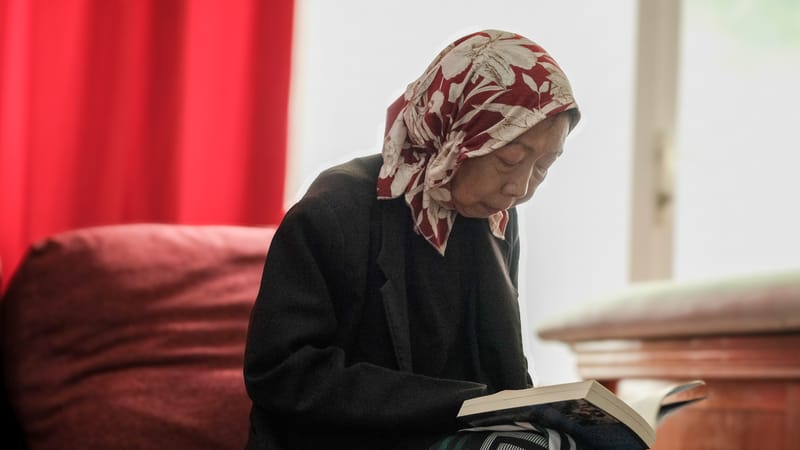
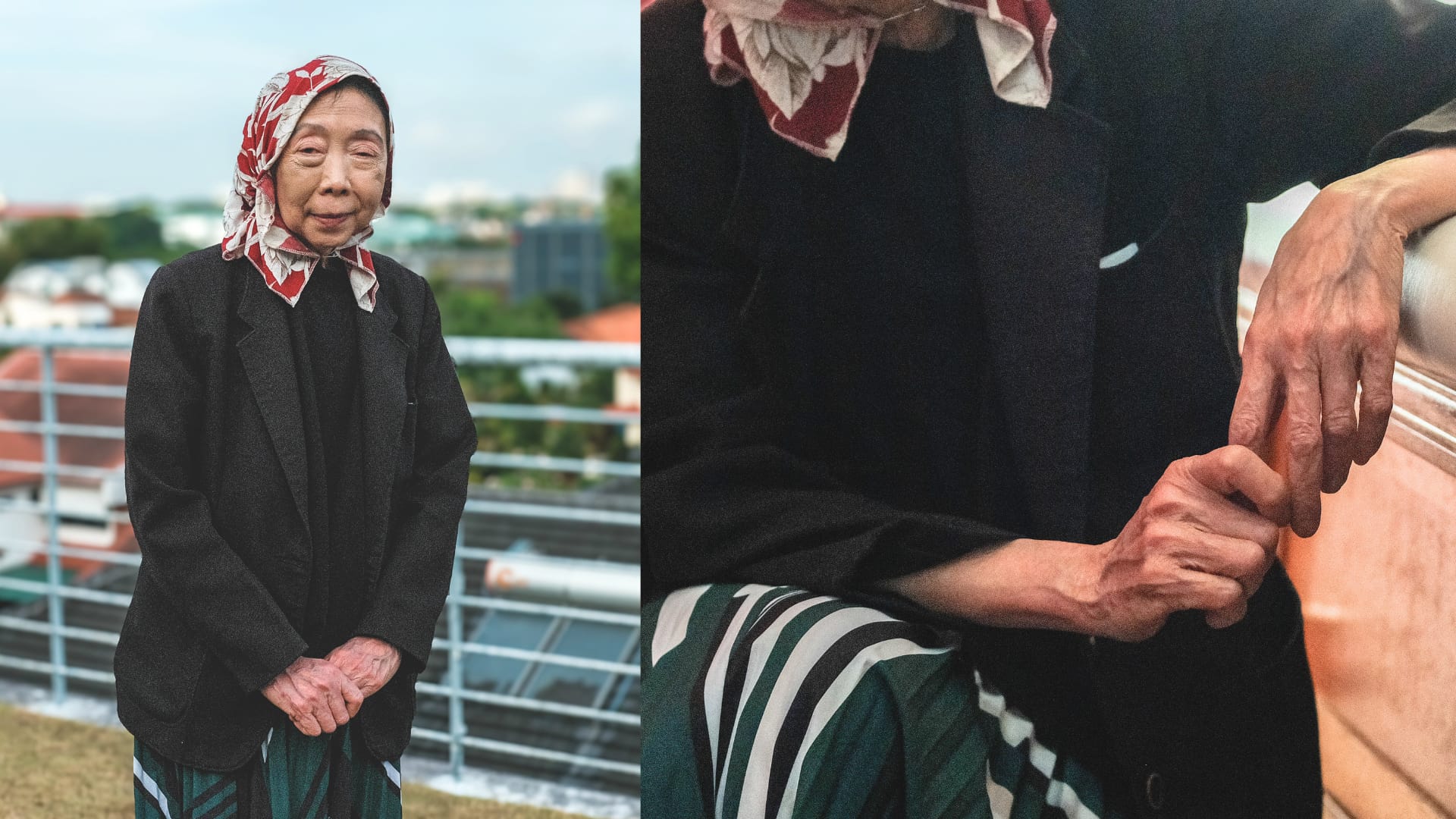
After we were seated in the ballroom, Noeleen Heyzer, a former UN under-secretary and perhaps Singapore’s most accomplished international diplomat, introduced Ang as a “distinguished orthopaedic surgeon, a humanitarian, an advocate for peace, a dear friend, and a towering inspiration for us all.” But she was nowhere to be seen. When 4”11’ Ang rose from her chair to walk to the stage, we could then spot her red-and-white headscarf moving purposefully between heads on seated bodies. “She may be small in size, but she is a giant among us,” Noeleen had said.
Ang, 76, stepped onto the stage, and then onto a special platform that had been placed behind the podium for her. “I am a little bit speechless, and a bit overwhelmed,” she began, unused to such pomp and ceremony for her work. “This is very prestigious, and I can only thank you for letting me speak, thank you for putting me here, to represent them [Palestinians], and that’s why I’m here.”
We applauded. Ang paused, as assistants rushed on stage to fix a PowerPoint glitch. From a pocket in her black jacket she pulled out a chain, on which widgets dangled. “Always bring two USBs, in case one doesn’t work,” she said. We laughed. Many in the room, working mostly on the cloud, hadn’t held a thumb drive in years. Though unplanned, it was a fitting prelude to a talk that would also transport us through time and space, to a place where such contingencies still matter.
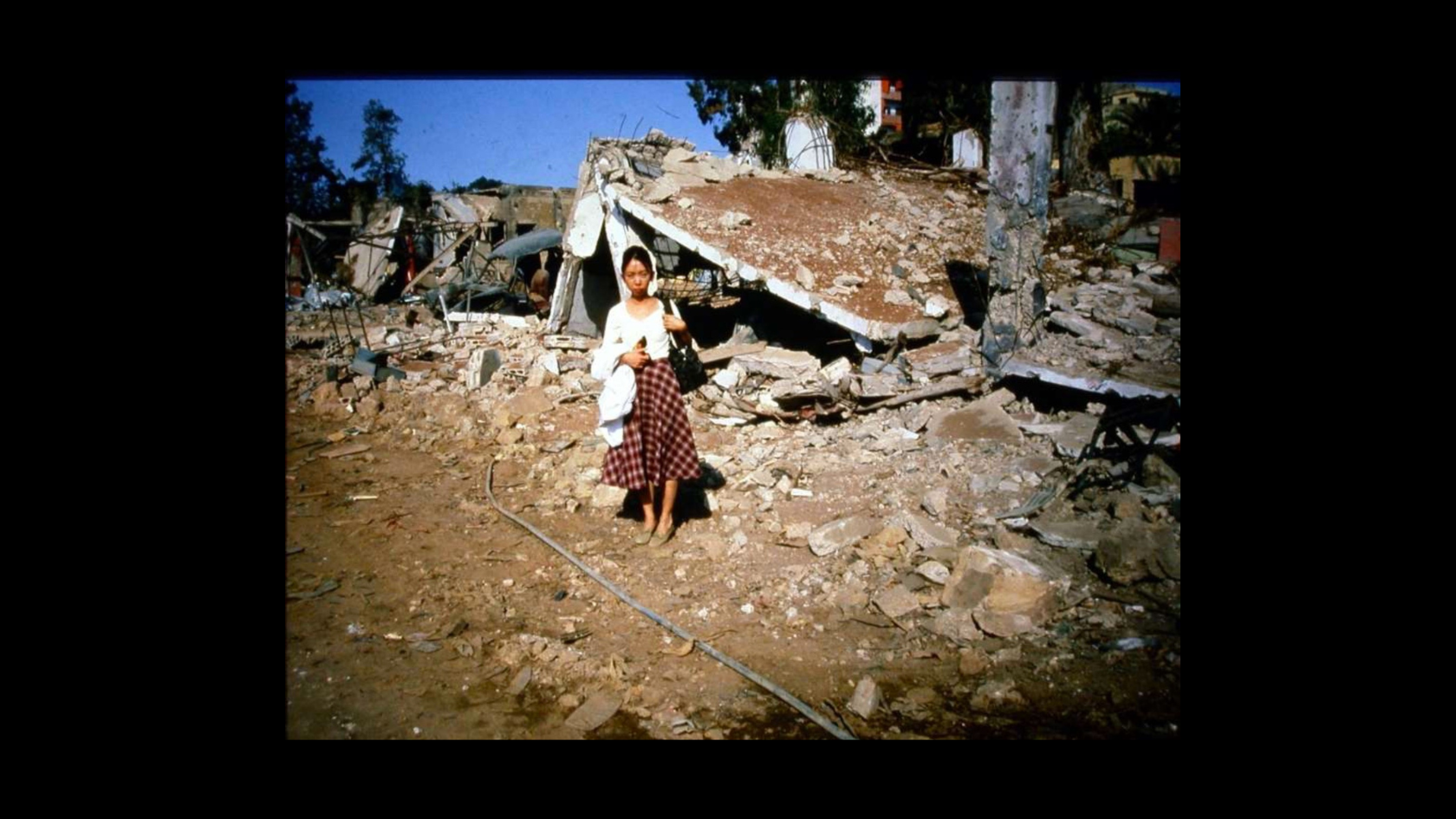
Over the course of the next 40 minutes, Ang shared her life’s work through a 183-slide presentation, “A woman Surgeon with the Palestinians”. She narrated methodically in sync with a visual compendium: photos of her younger self in Lebanon with colleagues, in the operating room, and in front of rubble; photos of bloodied, dead Palestinian bodies, including babies on hospital beds and young men lying, slain, on abandoned roads; meticulously sourced charts showing the carnage in numbers; countless web URLs with page titles like “What actually happened on 7 October 2023” and “Medical complicity with torture”; maps with lines to counter other maps with lines; photos of smiling Palestinian children, Gazan sunsets, and lush orange groves; photos of buildings exploding, limbs with gaping holes, and the charred remains of a person’s head, charcoal-coloured crumbs breaking off; more smiling children, their paintings, flowers in Gaza, and the intricately woven fabrics of Palestinian women.
It was an emotional rollercoaster that was confronting for us all. The room went silent, food went untouched. It’s not easy chomping on lobster risotto while looking at images of phosphorus burns. “They just burn, until they burn all the human flesh, and all the water has disappeared,” Ang said, of the munitions that Israel has allegedly used unlawfully on civilians as recently as last year.
HCS Fellow Award events tend to be laudatory spectacles where an individual’s empowering, inspirational life journey is revealed. Ang’s was a complex biography—her own story intertwined with that of the Palestinian people, told through analytical and ethnographic evidence that seemed crafted for a truth commission. She had come to bear witness.
Over the course of a week in Singapore, Ang repeated her plea to hundreds of Singaporeans, from mainstream media journalists and medical students at the National University of Singapore (NUS) to opposition politicians and activists.
There’s been much gloom in Singapore since Hamas’s savage attacks on Israel on October 7th, and the subsequent onset of Israel’s war on Gaza. Part of the reason for this is that ordinary Singaporeans have felt disempowered and voiceless, with peace rallies and other public gatherings banned, even as Singaporean hawks publicly support the war and Israeli arms manufacturers sell their wares here.
And yet, despite all these seeming impediments to building a thriving democratic society, Ang told Jom that, after this recent trip back to Singapore, she has never been more hopeful for change.
Resistance is in Ang’s blood. When her mum was seven, she registered herself in school, disobeying her polygamous father—Ang’s grandfather—who believed that a woman’s place should be at home. After he took his fourth wife, Ang’s mum left home and never returned.
During world war two, she, like many other ethnic Chinese, was captured and tortured by the Japanese. Ang recalled her mum’s words in From Beirut to Jerusalem: “It’s not as bad as it sounds. The first time, you’re scared you’ll give away your friends. But there comes a point when you pass out. Once that happens, you cannot feel pain anymore. Once you have learnt that, you can beat your torturers.”
Ang’s parents met in Outram Road prison. They later married, and travelled to Penang for Ang’s birth in 1948. When Ang was little, the family moved into a two-bedroom flat in Upper Serangoon in Singapore. She attended Kwong Avenue Primary School and Raffles Girls’ School before studying medicine at the University of Singapore (NUS’s predecessor). She then did a Master’s in public health and community health medicine before specialising in orthopaedic surgery. She wrote: “Surgery also combined my three passions: medicine, kitchen work (using knives and cutting up meat) and sewing.”
Ang converted to Christianity in medical school, and through the faith also found terrestrial love in lawyer Francis Khoo. His “deep commitment to social justice was to him a Christian obligation”, she wrote in her eulogy to him in 2011. Khoo would soon defend factory workers and student leader Tan Wah Piow in an industrial unrest incident that had infuriated Lee Kuan Yew. Tan was jailed for a year, and in 1976 fled Singapore for the UK, where he sought asylum. It was a season of arrests, as Lee’s government cracked down on many perceived enemies, including lawyers Gopalan Raman and Tan Jing Quee. (It arrested over 800 under the ISA in the 1970s, Teo Chee Hean, then deputy prime minister, confirmed in 2011.)
Ang wrote: “In 1976 when I sensed that he [Khoo] might be detained under the Internal Security Act I asked him to marry me, so that if he were to be arrested I can visit him in prison and at least be his link to the outside world. We married on 29 January, 1977.”
Khoo fled to London in February before he could be arrested, according to Teo Soh Lung, former detainee, opposition politician, and co-editor of Escape from the Lion’s Paw: Reflections of Singapore’s political exiles (which features Ang, Khoo, Tan, and others). Officers from the Internal Security Department (ISD)—Lee Kuan Yew’s “secret police”—instead showed up at Ang’s operating theatre while she was operating on a patient. Ang told them to wait outside. They detained and interrogated her for two weeks, and released her only on the condition that she’d fly to London and convince Khoo to return. (ISD did not return a request for comment.) She joined him in exile, and on her next trip back to Singapore, 35 years later, did indeed return with him—in the form of his ashes.
Those unaware of all this might think that Ang scooted off to the UK in the late 1970s for her own reasons. Not true. Lee’s government, in one of its paranoid, cruel bouts, effectively booted out a Singaporean who went on to become an international star. It’s a sobering thought not only as we strive to make amends for prior injustices, but as we contemplate all the Singaporean activists harangued by the current PAP government.
More galling, perhaps, is the fact that Ang and Khoo loved Singapore so much. In From Beirut to Jerusalem, she remembers her feelings in 1959, as a 10-year-old, observing Singapore attaining self-government from the British. “[P]arty politics made very little sense, but the thought that Singaporeans were having their own rule and their own anthem was simply grand. Everyone was a Singaporean or a Malaysian, whether their ancestors came from India, China or Indonesia.” Khoo, till his very last day, wanted to return “to his beloved Singapore”.
Singapore didn’t want them, but others did. After fending off the same professional sexism she experienced here, Ang became the first female orthopaedic surgeon consultant appointed at the St Bartholomew’s Hospital in London. In 1982, she flew to Cyprus—where the heat and red hibiscuses made her “violently homesick”—before taking a ferry to Beirut, Lebanon, to volunteer in Palestinian refugee camps. There, she was reminded of Chinese New Year firecrackers in Singapore by morning machine-gun fire. She witnessed the horrors of the Sabra and Shatila massacre, in which as many as 3,000 civilians were slaughtered by Israeli-backed militias. She and others worked through the night on a “never-ending conveyor belt” of high-velocity gunshot wounds. “One bullet through an abdomen could easily transect the intestines in several different places, explode the liver or kidney, and fracture both the spine and pelvis on its track in and out of the body,” she wrote. From Beirut to Jerusalem references her journey to testify about the massacre in Israel. In 1984, Ang and Khoo co-founded MAP. Ang and Khoo also became British citizens, renowned particularly for their medical and charity work.
The question of belonging and identity lingered. Palestinians often saw Ang’s ethnicity first. At the HCS dinner, she described a conversation with some children. “They kept calling me the Chinese doctor. ‘The Chinese doctor is back. She’s alive. Alhamdulillah,’ praise be to God...I kept telling them, ‘I’m not Chinese, I’m from England.’”
The children replied: “No. You are not British, you are Chinese. The British very, very bad. They gave away our country. And now we are refugees. China very, very good.”
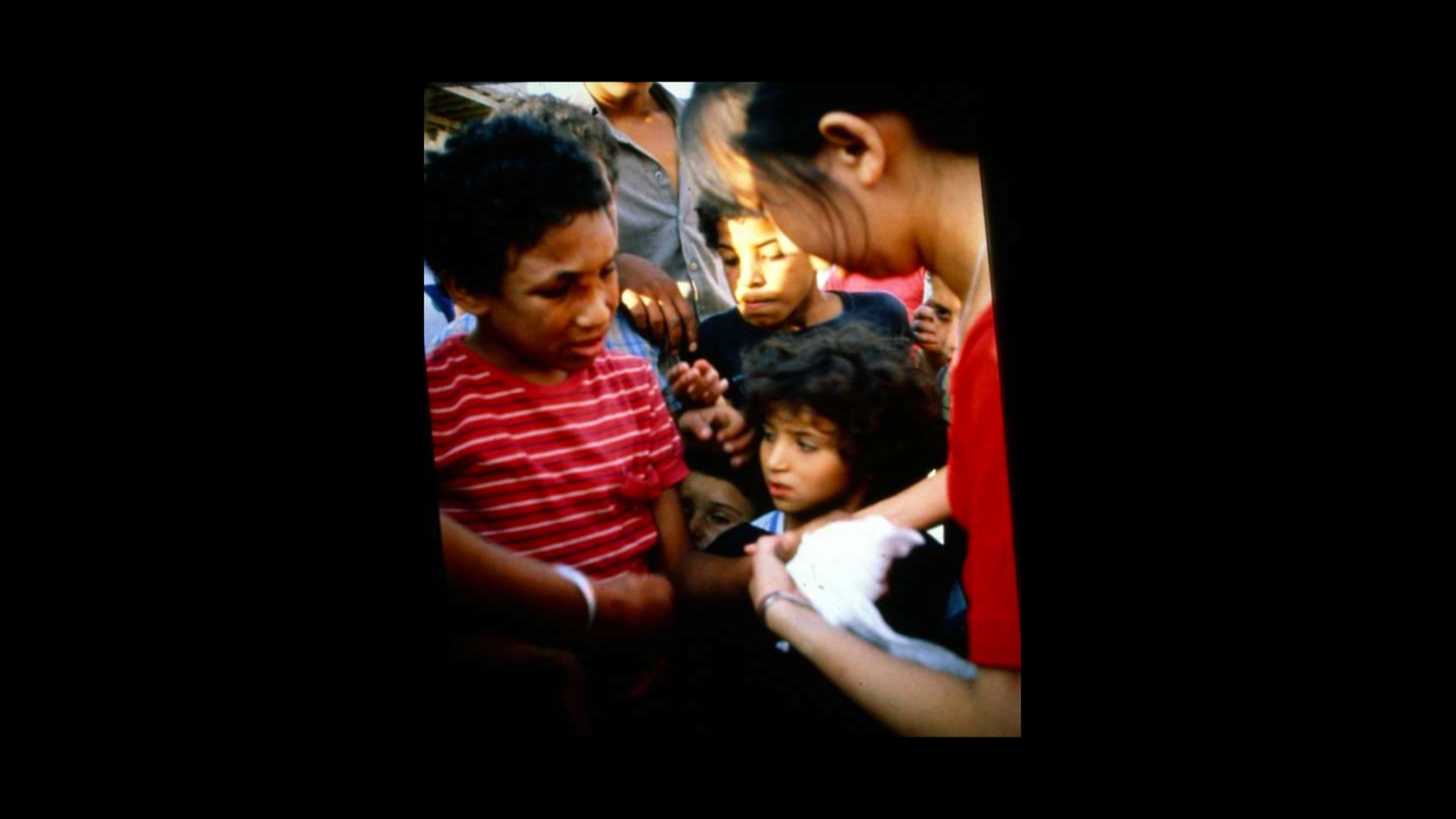
Sabra-Shatila also marked Ang's politico-religious awakening on the Israel-Palestine question, after she’d been raised on a diet of pro-Zionist Christian liturgy in Singapore. She was 33 during the massacre in 1982, when she realised, as somebody who’d hitherto supported and defended Israel, that she had “blood on my hands”. In From Beirut to Jerusalem, she wrote about asking God for another 33 years to serve the Palestinians, and asked them to forgive her. “And they more than forgave me,” she told Jom.
Ang remained a staunch Christian, and faith only enhanced her relationships with Palestinians—descendants of a land that, before the 20th century, saw centuries of peaceful co-existence between Christians, Jews, and Muslims. Even as many conflated ethnicity and religion, and reduced the legitimate struggle of a multi-faith community to one of “Jews versus Muslims”, Ang stood firm.
In her book, she described a scene where soldiers, who claimed to be Christian Lebanese but may have been Israeli, had taken over the UN building near the Shatila camp. When they discovered that Ang is Christian, one soldier, a “good-looking woman with long, black curly hair and icy blue eyes”, shouted, “You are a Christian and you dare to help Palestinians! You are filthy!”
In 2006, when the Singapore Medical Association (SMA) interviewed Ang, it asked about issues with being “a Christian woman doctor working in a largely Muslim community.” Ang pontificated about how the two communities regard the presence of God in daily life, and narrated a story about sharing her Christian beliefs and convictions in Gaza with a disgruntled listener: a leader from Hamas, one of the more pious Islamic parties. The next morning, a Sunday, he called Ang to inform her that Hamas had prepared a chapel for her in their hospital, which was built by Christian missionaries in 1891. “I have never had such respect for my faith,” she told SMA. In 1987, Yasser Arafat, then head of the Palestinian Liberation Organization, awarded Ang the “Star of Palestine”, the highest honour for service to the Palestinians.
She’s not averse to spiritual meanderings, either. She wrote: “Perhaps there is an evil being trying to play musical chairs or pass the parcel, making the Jews and the Palestinians suffer in turns. What if the Jews and the Palestinians both decided they were not playing this game, and threw the parcel back?”
In 2012, Ang told Jom, the Singapore government issued her a special travel document to bring Khoo’s ashes back. On her next visit in 2020 it gave her an ultimatum: “you will have to renounce British citizenship, and then we’ll give you back the full rights of Singapore citizenship, which we have not removed.” (The Ministry of Home Affairs did not return a request for comment.)
But that was untenable, since Ang’s primary life was by then in the UK, with attendant rights and privileges—“welfare, healthcare and work permit”—that she might lose. “Also, how would I carry out my work for the Palestinians? That is actually the elephant in the room. I don’t only have a British passport. I’ve got two, one for the Arab countries and one for Israel. So I cannot give up, fullstop.”
Singapore doesn’t allow dual citizenships. So if Ang were unwilling to relinquish her British citizenship, the government said, she’d have to drop her Singaporean one. “Will I give up Singapore citizen? No. You know, why should I? My husband has made me promise that I will never ever renounce Singapore citizenship. Francis never asked anything of me. I want to go to Beirut, and give him sleepless nights, worried like hell, he never said, ‘No, you don’t go.’ But giving up Singapore citizenship? No way. Okay. So that I will honour. So I’m not doing it. So they [the government] got very, very angry.”
In 2022, some 63 years after a young girl celebrated her young country’s birth, its release from its colonial master, Singapore revoked Ang’s passport. “So this round, I actually came back on a British passport. Came back as a foreigner.”
Why is mainstream Singaporean society celebrating Ang only now, after she’s become “a foreigner”? How do we create space for people who might love both Singapore and other lands and peoples? What is the relationship between passport and identity, one’s sense of self?
Ang’s journey from Singapore to British citizen over 45 years—From Upper Serangoon to London?—is one that throws up numerous questions about how we should each think about our place in this world, about the badges we choose to wear, about how our movement and behaviours are structured by the diktats of the territorial nation-state system we inhabit.
The poetic aspect of all this is the additional point of resonance between Ang and the Palestinians. Somebody exiled for so long is a champion of the world’s most notable exiled people. She is both an emblem of the system’s failure, and of the individual’s ability to resist, to transcend, sometimes through words. Khoo and her chose the name “Medical Aid for Palestinians”, rather than “Palestine”, so they could sidestep politics and “function wherever the Palestinians were, whether they were living under occupation or in exile.” The territorial nation-state system allowed Palestinians to fall off the map—and to that netherworld Ang simply went.
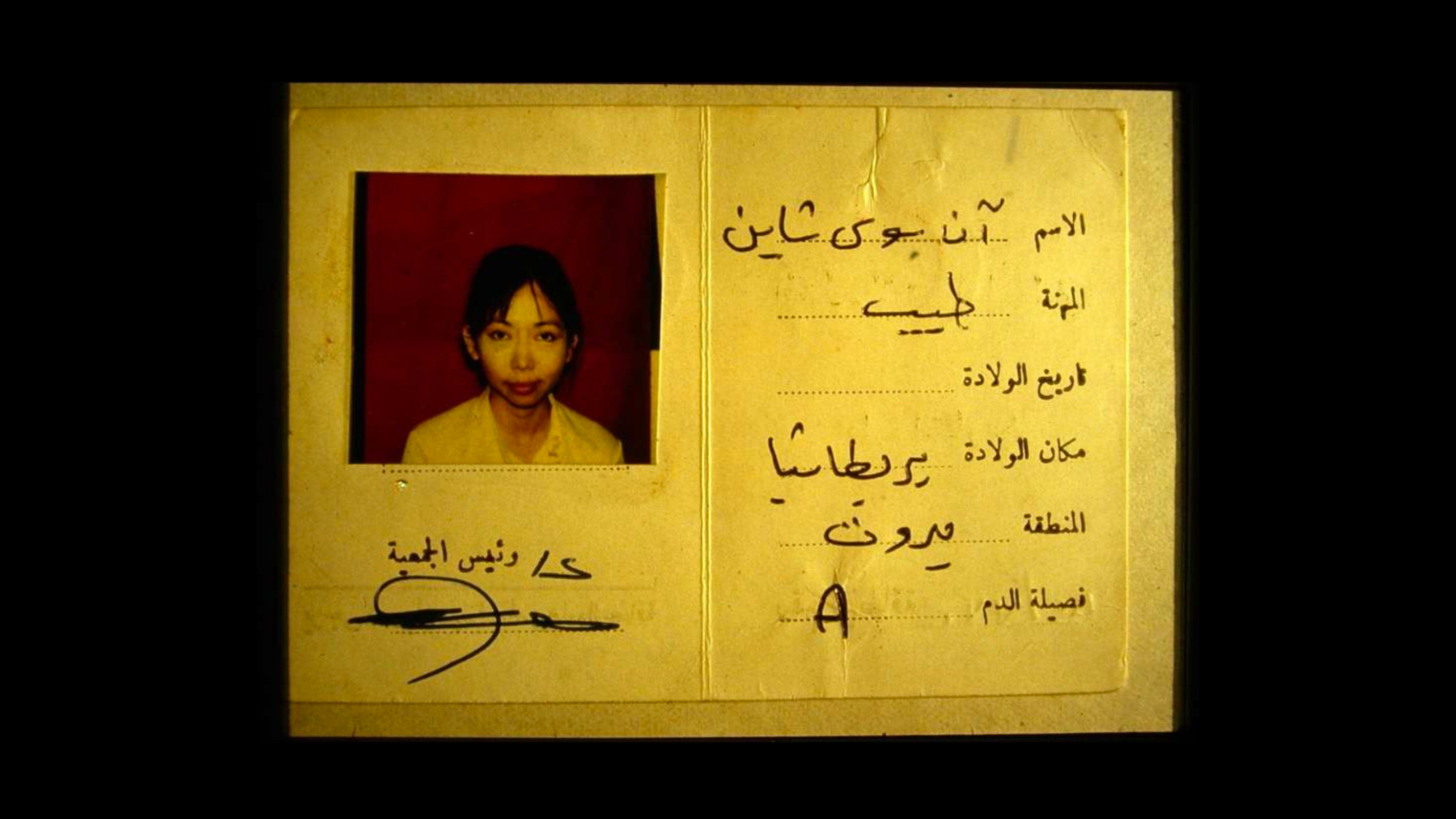
She divides her life, and identity, into two neat chapters: life before the Palestinians, and after. “Before I met Palestinians, I agonised over whether I’m Singaporean, I’m Malaysian, I’m UK, I’m a woman, I’m a feminist. I’m a…Stuff it! After I met Palestinians they’re all gone. Because justice for the Palestinians is justice for all. Freedom for the Palestinians, is freedom for all. My personal circumstance is subsumed to the gross injustice carried on the Palestinians. And I know that unless that’s sorted out, my personal identity and this and that, I’ve got no children, my husband is dead, I’m a widow. Not important, okay?”
At one point in our interview, conducted in a study in Khoo’s sister’s home in Bukit Timah, Ang stopped. She got up, and walked gently, as she does, to a stack of From Beirut to Jerusalem books. She returned with one, sat down, and instantly found the words she was looking for, in the over 400-page book first published over 40 years ago. “He [Khoo] wrote this for the Palestinians because the Palestinians don’t have a passport,” Ang said, of “Passport”. She then read a section in the middle.
what is a passport
but duty-free fags
and airports and customs
and samsonite bags?
but where is my passport
my right to have one
that mark of my birthright
my place in the sun?
where is the passport
for those kept behind
for family and patriots
within the ‘green line’
where is the passport
for sabra, shatila
for millions in menfa
ejected diaspora
where is that passport
for al’quds, ramallah
nablus, jabali’yah
tulkarm and rafah?
when can a passport
cry out ‘Palestine’?
this land ain’t your land
for this land is mine
but this is my passport
the one I hold dear
a flag, a rock
a chequered keffiyeh
for soon I’ll go
where za’ter grow
dance the debkeh
come what may
so come that day
my karameh
so come that day
my karameh
When Ang was done, she said, simply, “So that’s ‘Passport’. I’ve got a [British] passport, you know? But that’s my passport.”
To her Francis, to the Palestinians, and to the day that will come.
Ang was diagnosed with breast cancer in 2021. News of this reverberated through Singapore’s activist circles. Different people asked Jom if we could find a way to interview her. Our attempts failed. It had always been tricky, apparently, to find a spot in her packed schedule. Cancer, understandably, forced her to retreat even more from new engagements. Word filtered through to us that she may not have long left.
“I was in a bad, bad way. So bad that my priest gave me a candle and said, ‘You go and light it at the altar and ask God for a wish.’ That’s Catholic. So I always pray for people. Now, I’ve got to pray for myself. What can I ask? I don’t want to ask for a cure, because life and death is in the hands of God. But I pray for acceptance. So come what may, I’ll make the best of my life to do what I should be doing.”
“Are you better now?” I asked. “You’re never better with cancer,” she immediately responded. “But, but you are. I’m still under treatment of sorts. I’ve had my surgery.” In 2022, she was meant to travel to Cairo to give a keynote speech at a trauma symposium. “I was so ill I couldn’t travel, and I still said I’ll go. My sister broke down and said, ‘You don’t go because if something happened to you, I can’t cope,’” Ang told us. “You know, blackmail…cry you know?” she said, with a wry smile on her face.
Ang postponed her appearance at the conference, finally making it to Cairo last November. She wanted to visit Gaza during a brief ceasefire. “Then it just occurred to me that I couldn’t walk two hours in the rubble, sleep on the rubble, carry my own food supply for one week on my back. And I’m immunosuppressed. And my Palestinians got enough trouble without worrying about me…so now I’m exiled from Palestine. But so are six million Palestinians all over the world, in the refugee camps they’ve got no right of return. So why should I be able to visit their homeland?”
Around the time, Chew Kheng Chuan, the first Singaporean to attend Harvard College and the chairman of the HCS Fellow Award committee, enquired about Ang’s condition through her relative. Chew narrated this story to us in front of Ang, who was hearing it for the first time. (Note: Jom has profiled him too.)
Ang’s relative confirmed that she was fit to travel to Singapore. Chew was glad but told them to keep mum. “The Harvard Club of Singapore is considering giving her an award, but the reason why you can’t mention it is not anything, it’s because I’m afraid it won’t happen,” he said. Chew could nominate Ang, but the entire committee would then have to vote.
“I’ve got Palestine written on my forehead,” Ang quipped, drawing laughs from the six of us in the room. It’s hard to convey how disarming Ang is in person. Her accent is reminiscent of the old, English-educated Malayan elite, with an ever-so-slight Cantonese inflection. There is a crispness and precision to every word, rarely one out of place, with the only fillers being check-ins (“You know?”; “OK?”; “Right?”) to ensure that, through it all, the light and heavy, we’re still following. She has a penchant for little exclamations (“Gee whiz!”; “Stuff it!”) that make me wonder if that 10-year-old is still buzzing around inside. The first thing she said to me was: “I tried Googling you, but there are too many Sudhir Vs out there.”
Hers is a mordant humour, leavened with life’s anguish and hope, less an armour than a rebellion, a snigger in the face of suffering, whether that stems from militia or malady. She recounted a conversation with her oncologist, who wanted to reconstruct the breast she’d lost to cancer.
“Look here, Faisal. I’m a widow, right? I don’t need to have a mammoplasty. I’m quite happy to be a woman with one breast, okay? I’m not Madonna looking for toy boys, okay?”
“Swee, don’t talk like that, you know, you can’t walk around with one breast.”
“Yes, I can.”
Ang’s worries about what she could or could not do in Singapore persisted till her trip last month. “We practise self-censorship. I was so paranoid that I didn’t bring my Palestinian dress,” she said. Given that it was Harvard, and given that Chew had said that she can talk about Gaza, she had wanted to wear her keffiyeh. “But I said this is Singapore, better not. It’s the Israel of the East. So the most I can do is like that,” she said, pointing to her red-and-white scarf and black-and-green skirt. “Palestine colours. So nobody can arrest me. But that was my idea of Singapore.”
She believes that up until the 1990s, her words that night may have led to her being questioned by the ISD. Despite her pre-trip anxieties, she could feel her own sense of freedom expanding with each passing day. “I think what I spoke yesterday [SICC] is very low key from what I said today [NUS]. And if they invite me tomorrow, it’ll be totally out of bounds. Because, you know, this is, if I want to talk the way I talk in England.”
In 2014, she faced accusations of antisemitism, after it emerged that she had forwarded via e-mail a video titled “CNN, Goldman Sachs, and the Zio Matrix” by David Duke, a neo-Nazi and former grand wizard of the Knights of the Ku Klux Klan. She responded that she didn’t know who Duke was but was “worried” about there being any truth to the video’s claim that “Jews control the media, politics and banking”. When in Singapore, she warned us on multiple occasions about the dangers of antisemitism. “I will never say anything antisemitic. Antisemitism is racism. We are not racist.”
Ang said she’s drawn great hope and inspiration from Singapore’s young people. “They all want to support Gaza, right? Of course, I’m not standing up and saying ‘From the river to the sea’. [Which to some Jews means the erasure of their people.] But I’m telling you that I can [now] stand up [in Singapore] and say, ‘Gaza will survive. We will support the rebuilding of Gaza. They have friends here.’ 10 years ago, five years, I can’t do that. Crazy or what? And even before I came off the plane, I learned that six million was raised by Singaporeans given directly to UNRWA [United Nations Relief and Works Agency for Palestine Refugees in the Near East]. Can you imagine that?”
I asked what more Singaporeans could be doing. Ang said that the rebuilding of Gaza will require all of our support. “I remember the slogan which we use in England, ‘Gaza, Gaza, don’t you cry, we will never let you die.’ You cannot say that without seeing them through, with the hospitals rebuilt, their mosques rebuilt, their churches rebuilt.”
“You’re not just talking about money?”
“No, I’m not talking about money, we are talking about support at all levels. Which means that if it’s safe to go to Gaza to teach, then you go and teach. If you want to go and help build, you go and help build, right? If you want to go to playschool and play with the children and teach them Singapore Singlish. You can do that too.”
Ang also asserted that it’s impossible to separate the humanitarian work from the political. She was once asked if she were overstepping her responsibility as a doctor by speaking up for the Palestinians. “We have to practise preventive medicine and one way of preventing massacres and death is to speak up. Is that humanitarian? Or is that political?” She emphasised the importance of asking those in need what they actually need. She recalled that in 1982, before leaving for Jerusalem where there’d be much publicity, she had asked Palestinians if they wanted food, antibiotics, money, or anything else. “The women of the Red Crescent told me, ‘Doctor Swee, make sure you tell our story. Make sure that the whole world sees us as human beings. We are not human animals.’”
At NUS, Ang also urged young medical students and faculty members to do more. Ang and Chew recounted two conversations. One was at a private lunch. A faculty member, after hearing Ang speak, said something to the effect of “we must train our staff to speak up.”
“This is incitement!” Ang giggled. “That is what Palestine has done to me. Before that all I did was marry Francis Khoo.”
Another was in the forum with students. The conversation was moderated by an establishment stalwart, former attorney-general V K Rajah. “There were quite a few people who stood up to say, what an honour it is and all that sort of thing,” Chew recalled. There was also a woman who was “choking up with what she was trying to say.”
She eventually asked Ang: “What can we do? How do we organise?”
Ang replied: “You will know what to do.”
A few hours after Jom interviewed Ang, I saw her for a third and final time at Chew’s house. The 20-odd guests, a mix of academics, artists, politicians, and activists—some of whom, like Chew, had once been detained under ISA—mingled over wine and kueh-mueh.
When Ang arrived, I accosted her. “Please can I copy the PDF of your presentation? We want to refer to it, to use images from it in this article.” She reached into the pocket in her jacket and pulled out the same chain with two dangling thumb drives. “Use this one, it’s easier to find,” she told me. “The other one has so many files. All my tax returns and other files are there.”
“Oh, you shouldn’t tell that to a journalist,” I said. She laughed, but then caught herself. She started to remove the thumb drive with the confidential information from her chain. And then, barely seconds later, she caught herself again, perhaps recognising that this is no longer the Singapore she once knew. She decided not to remove it.
“It’s OK,” she said, looking back into my eyes. “I trust you.”
After engaging in open conversation for an hour, Ang decided that she needed her 183 slides. Cue laptop, USBs, and HDMI cables. I could see others around me experiencing the same emotional rollercoaster I had the night before. Though I was intimately familiar with the content by then, I found myself drawn to Ang’s presence in a new, meditative way. Her voice and words soothed. Being in her presence reminded me of what Ram Dass, a spiritual guru and another person whose repetitive words offer comfort and shelter, had said about connectedness: “It’s the vibrations that emanate from you.” Ang’s aura, her vibrations, seem otherworldly.
After Jom was done that afternoon, Walid Abdullah, assistant professor at Nanyang Technological University, interviewed her for his popular “Teh Tarik with Walid” show. (Disclosure: Walid was one of four in a Jom advertising campaign last year.) He suggested that she’s the closest thing that Singapore has to “a national hero”. But then again, she’s never been bound by geography, identity, or nation. Walid and I later chatted, and wondered if she actually represents something more, something closer to divinity, offering us all a portal into something mystical, helping us grasp for our better angels.
“I’m not angry,” she told Jom. “I’m driven by hope, and faith, and love. Hope for a better future.”
Sudhir Vadaketh is Jom’s editor-in-chief. Additional contributions by Jean Hew and Tsen-Waye Tay. Jom is also indebted to Chew Kheng Chuan, Chan Lishan, and the Harvard Club of Singapore.
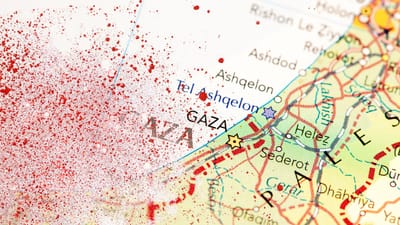
This is the last in a three-part series about Israel’s war on Gaza. “Genocide in Gaza? Our moral responsibility” by Jom’s team was published on April 5th. “Merdeka, Palestine” by Iskandar Manis was published last week.
Amendment: an earlier version of this essay did not include the paragraph detailing Ang being accused of antisemitism, and her clear disavowal of it. It was added later in response to reader feedback. We thank them.
Letters in response to this piece can be sent to sudhir@jom.media. All will be considered for publication on our “Letters to the editor” page.