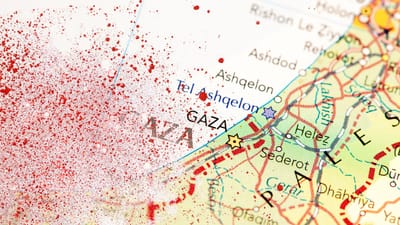

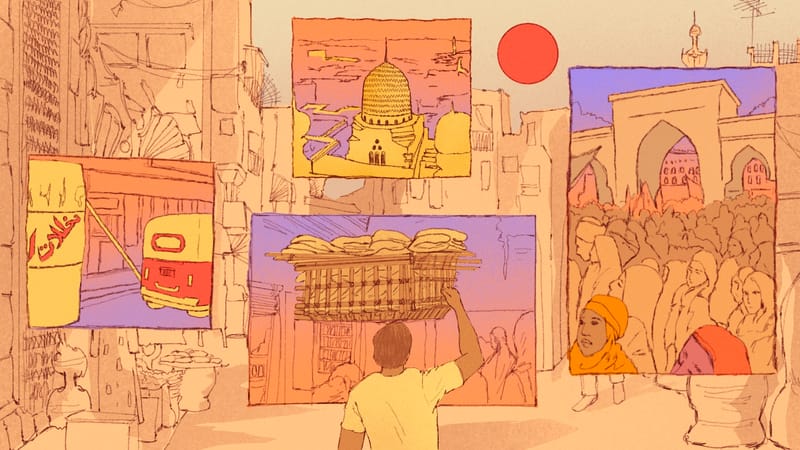
To get to Cairo, Reem and her family travelled for a week over hundreds of kilometres along one of today’s most hazardous migration paths. They first walked on the supposed “safe passage” from North to South Gaza. “Stop and they will shoot you,” she said, recalling how they could not attend to the scores of injured and dead on the streets. The passage was a trap, she believes, set up by Israeli forces to intimidate and attack Palestinians. Having survived, Reem and her family then paid thousands to enter Egypt through the Rafah border, around 320 kilometres from the Egyptian capital.
We met in an apartment-turned-boutique in an upper middle-class neighbourhood. Every day, hundreds of families from Gaza were showing up at this volunteer-run organisation in the hopes of securing clothes, food, and housing.
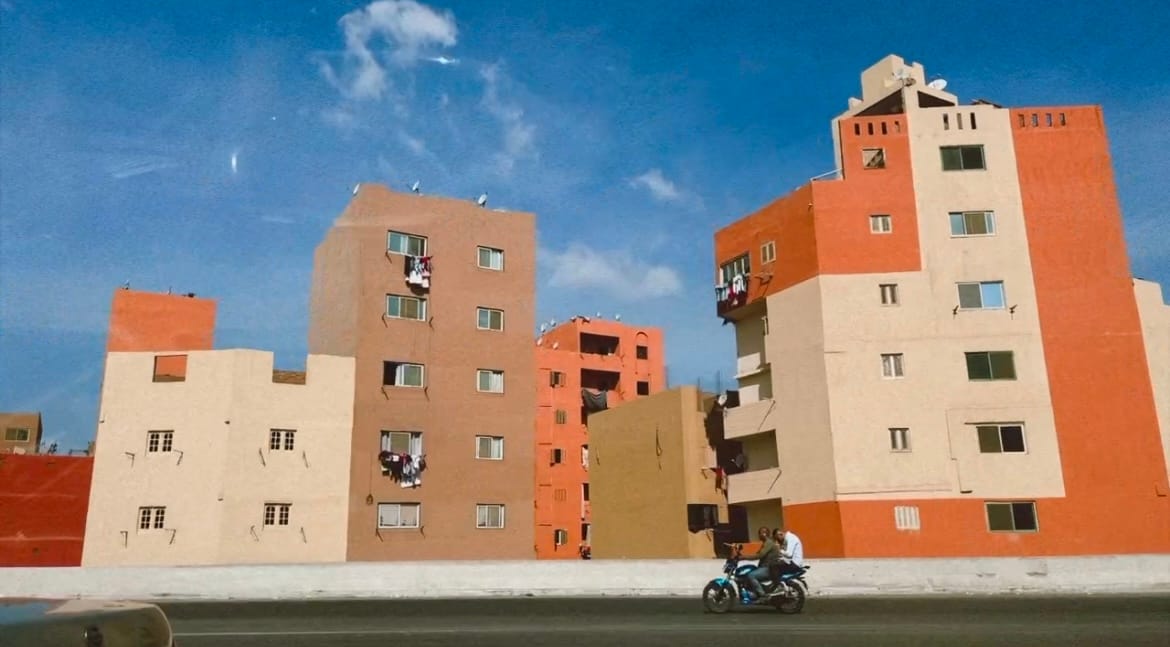
Standing on the balcony, Reem squinted at the uninspiring, half-occupied buildings around us. She was struck by the pollution; how the air seemed to have a permanent murkiness to it. “The Cairo filter on Instagram is real!” she joked, and I laughed, agreeing. Looking out at Cairo was like piercing through layers of grey. It had taken time for me to get used to the feeling of dirt settling on my skin each day—a combination of desert dust whirling in from the city’s outskirts, and soot from the unceasing traffic and construction.
“What about you? Why are you here?” Her question made me pause: Singapore is my home. I came to Cairo, to a place so distant and starkly different from home, by choice. Reem’s question almost made me feel ashamed. Palestinians embody loyalty and rootedness to the land of their birth.
Many of Cairo’s newer residents had to flee home due to difficult circumstances; they found refuge in the Arab world’s largest metropolis. My husband, our toddler and I had no reason to run, but found in Cairo the freedom to live outside the status quo, and an opportunity to disentangle ourselves from the shackles of an all-too-familiar, secular and Western-centric world. The privilege inherent in our ability to live outside of the system is not lost on me; in Cairo deep polarities exist and mingle, and unequal realities greet you everywhere you go.
“Why are you here?”
Greater Cairo sprawls over 5,000 sq km—over six times the size of Singapore—and has a population of around 22m. It is home to 9m international migrants from 133 countries, of which almost 800,000 are registered refugees from over 62 nationalities. Um Al Dunya, they say. Mother of the world. A popular phrase tossed around romantically by tourists to describe Egypt, but also wielded by the government to fuel nationalism and stir pride in the country’s past. Its capital is crumbling under the weight of its own burgeoning population and a laundry list of domestic ills, yet incessantly expanding to receive others.
Migration and the associated concepts of mobility and transnationalism have intrigued me since I was a young girl. My father was a ship captain, and I spent a chunk of my childhood at sea, which cemented my love for travel. My core childhood memories include watching my mother bending over baskets of colourful vegetables in a bustling Mumbai market, before being pushed over by a passing cow; being passed around and having my cheeks squeezed by random shopkeepers in Hong Kong; and playing deck hockey on board a ship with a kid-sized stick the crew had made for me.
Despite the frequent travel, I felt rooted to Singapore, having grown up around a lot of family and friends. It was not till my parents migrated to the United Arab Emirates more than a decade ago that these attachments to home began to wane (probably my way of coping with the big change). I would spend my early 20s traveling extensively, and splitting my time between Dubai, Boston, where I attended university, and Singapore, where I returned after graduation.
As a Singaporean, one tends to take the ability to travel and move overseas for granted. My passport grants me the privilege of entering 195 countries visa-free, and the ability to leave when things get rough. Coming from a wealthy country more aligned with the Global North also means that I am perceived a certain way: English-educated, with money and access to better resources. Wherever I go, I am treated relatively well as an English-speaking “expat” (in contrast to “migrant”). I would learn that such labels reflect hierarchies of power and privilege that are upheld by our modern nation-states.
As individuals make their way through the pluralistic cacophony of Um Al Dunya, these hierarchies are embedded in our interactions. “My husband is studying here,” I told Reem. But not Islamic sciences at the prestigious Al-Azhar University, as is customary for many students from Singapore and South-east Asia here. Instead, my husband was pursuing his masters in Philosophy and Islamic Studies at the American University in Cairo (AUC).
In Cairo, like elsewhere in the Global South, an international education is a symbol of social status, synonymous with being English-educated. English is a gateway to internationally oriented, higher-paying jobs, and the opportunity to live abroad. Many middle- to upper-middle class Egyptians from our social circle aspire to send their kids to international schools from the nursery to tertiary level. English offers, alongside the promise of a higher standard of living, interaction with the outside world.
In the book Cairo Cosmopolitan: Politics, Culture, and Urban Space in the New Globalized Middle East, Anouk de Koning writes: “In Cairo, familiarity with the significant outside, barra, and the adoption of explicitly cosmopolitan styles has long been a marker of elite status.” Barra or cosmopolitan here does not mean interaction with the globally diverse, non-Arab world, but a specifically Western world. The “cosmopolitan” Cairene sits in mixed-gender, upscale cafes modelled on their European or American counterparts; and has a taste for cappuccino rather than Arabic or Turkish ahwa.
But while such spaces reflect one strand of Cairene cosmopolitanism, it is not the cosmopolitanism I am interested in exploring, nor the one most visible to me in Cairo. As a Singaporean Malay who grew up more acquainted with English and the global monoculture, I found myself more drawn to the intersection of Arab and Islamic worlds that sit at the city’s core.
It was a Friday, a few months into Cairo. Alone in our apartment, I was six months pregnant, famished and miserable, but the thought of cooking weighed me down like a rock. Adjusting to Cairo had been rough, and pregnancy was testing my tolerance for every inconvenience. I was sitting on the sofa questioning my life choices when the doorbell rang.
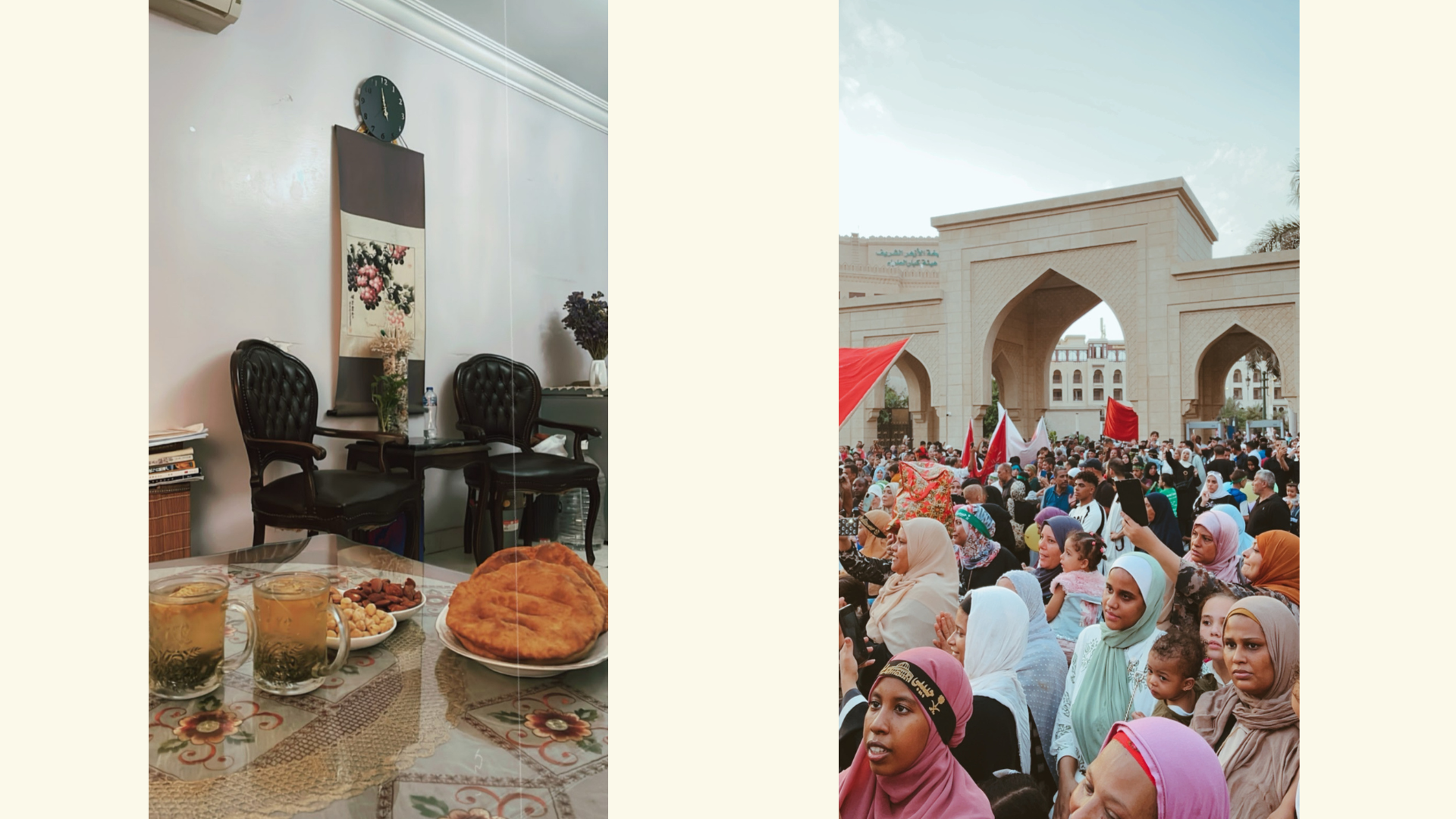
“Jumaah Mubarak, my mother cooked this for you.” I recognised Dina, the young daughter of our Chinese neighbours from down the hall, with whom we’d only exchanged waves. I gasped a thank you and looked down; it was a plate of cold noodles and fluffy, spiced bread, all made from scratch. I had never had cold noodles and bread this good before, but it felt strangely familiar. They quickly became family to us.
The parents had met as religious students in Al-Azhar University, and ended up staying. They spoke fluent Arabic and Mandarin, while their two children could converse in English too. Despite having settled in Cairo, the family maintained close ties to their homelands in Xinjiang and Qinghai. The father ran a business exporting marble to China, while the children spent summers in the Tian Shan mountains helping their grandfather at the family’s bee farm. Whenever they hosted us, they’d share beautiful snippets of their culture and village life.
But a dark cloud often hung above our conversations. They always had new stories of nerve-racking surveillance, mosque demolitions, and growing persecution of Muslim communities in China. We heard similar accounts from other Chinese Muslims. Cairo allowed them all the freedom to be themselves.
But to access that freedom all foreigners have to first obtain a residence permit from the General Administration of Passports, Immigration and Nationality, located in Abassiya, a drab but imposing building named after the neighbourhood it’s in. During my first visit, my husband was not yet at AUC, and so it was upon us to carry out this notoriously cumbersome process without the university’s assistance. Some would call it an initiation into chaos. Even locals dreaded going. It took us five frustrating visits over four days, the first of which involved an officer flinging our documents at the glass barrier that separated us.
The experience ruffled me but I remember being struck by how people seemed to arrive in Cairo from everywhere. In the mass of bodies at Abassiya, one could pick out religious students from Central Asia, China, India, and Indonesia, made distinct by their patterned skull caps, and the style of their loose-fitting clothes. Eastern Europeans with summer properties in Egyptian beach towns like Sharm El-Sheikh and Dahab stood in line, still clad in colourful bermudas and sunglasses. There were rows and rows of Sub-Saharan African women, and old men with turbans and wooden sticks, standing out like sages in a pool of the dreary and weary, as if the drudgery of migration was just a part of life.
Out on the streets, this richness is in full colour, and one often forgets, if only briefly, the imposing presence of the territorial state looming over the city.
Down a serpentine alley in the Azhar neighbourhood, where many Indonesian students of Al-Azhar University reside and open businesses, Indonesian boys dole out varieties of steaming hot bakso in an upper floor apartment of a run-down building. A half hour drive away in the Hayy Sabi’ neighbourhood of Cairo’s sprawling Nasr City district, Malaysian and Pattani food vendors spill out onto the street selling homemade treats during Ramadan. When we lived there a year ago, an Uzbek tandoor graced us with fresh non bread every morning.
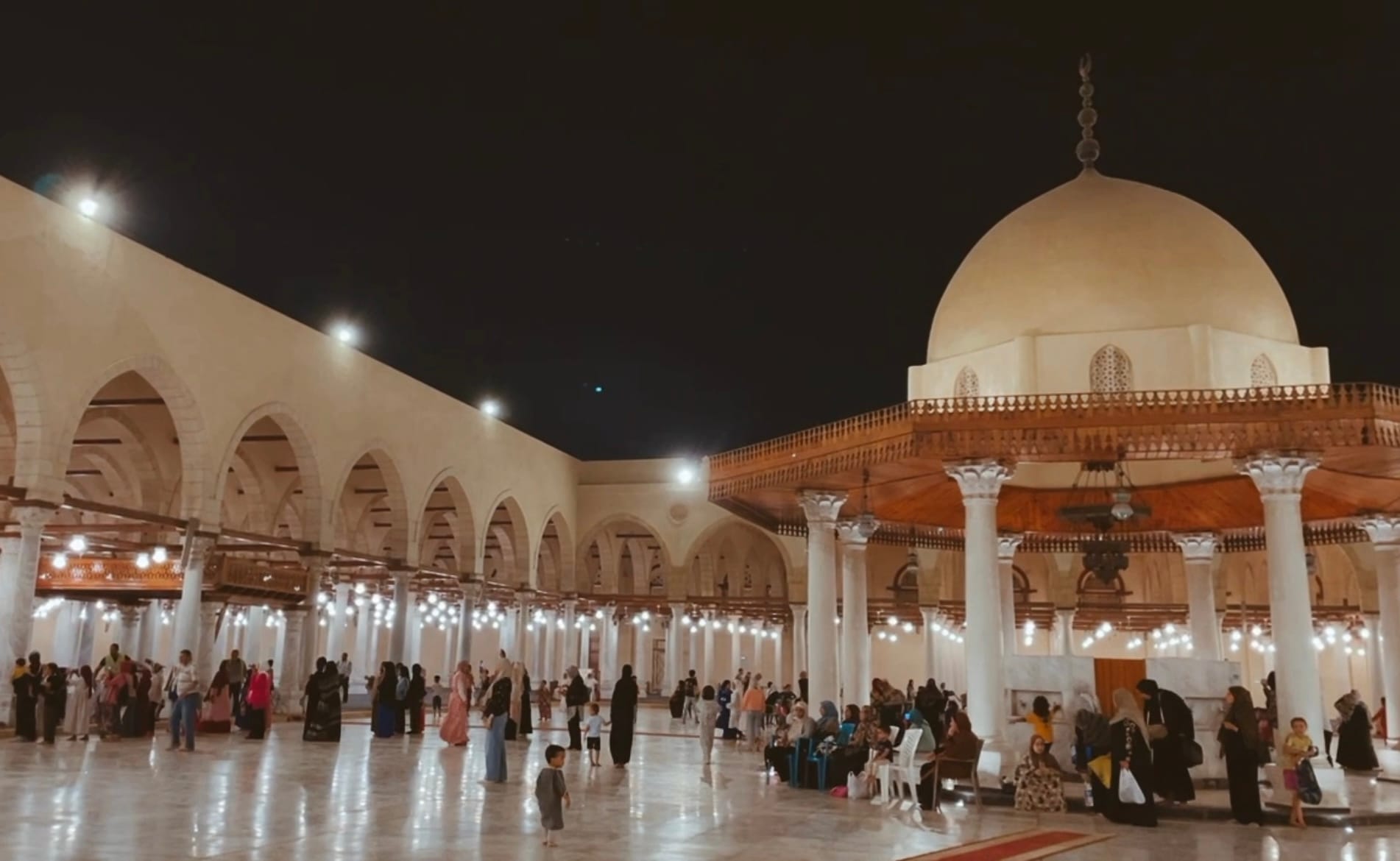
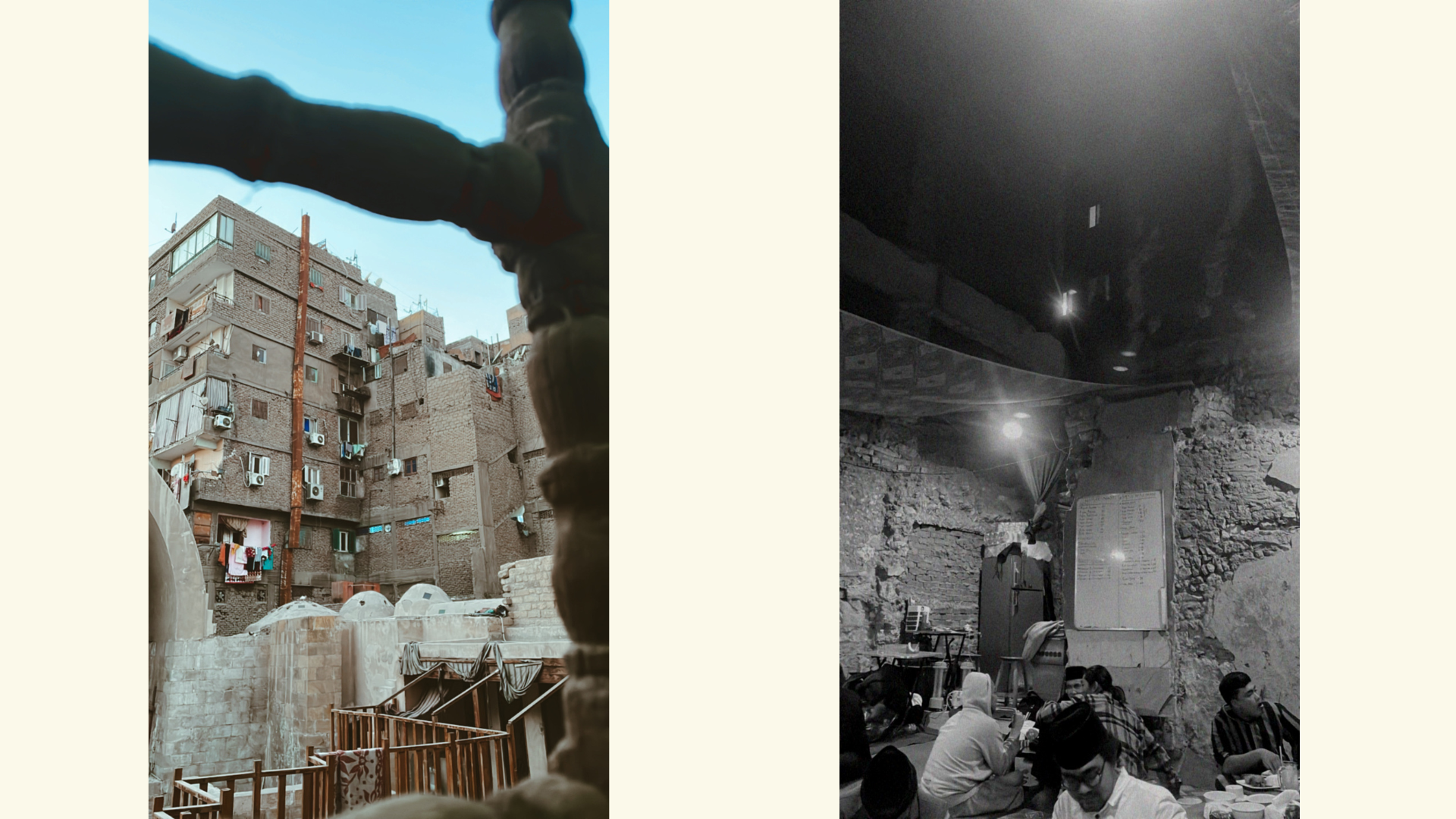
Looking around, one could almost forget that this was Cairo, if not for the fact everyone spoke Arabic. In parts of Old and Islamic Cairo, age-old trades still operate out of ancient caravanserais and souks. In the city’s historic grand mosques, worldliness fades away to simplicity and community. Was I getting a feel of what the Islamic cities of old were like, long before modern national borders existed?
Egypt itself has been ruled under several Arab and non-Arab Muslim dynasties over the course of its long and ancient history. The city of Cairo was founded in 969 AD by the Fatimid caliphate (909–1171) as the centre of an empire that extended from North Africa, stretching from present-day Morocco to Palestine, Yemen and Syria. It replaced Fustat, Egypt’s first Islamic capital, the ruins of which were absorbed into the boundaries of Cairo, alongside two previous capitals Al-Askar and Al-Qatta’i. The expanding city of Cairo would later come under the rule of the Ayyubids (1171–1260) and Mamluks (1250–1517), before being conquered by the Ottomans (1299–1922). It was later briefly occupied by France after a military expedition led by Napoleon into Egypt and Syria, and colonised by the British for forty years (1882-1922). Cairo’s landscape bore the rise and fall of foreign empires, each leaving an indelible mark on its cultural and urban fabric.
Despite its multilayered history and diversity, Cairo is not a city of global stature. If you Google the top 10 cosmopolitan cities in the world, Dubai is the only one from outside the US and Europe to make it to the list. Sure, more than 90 percent of Dubai’s population is foreign, but as multicultural and embracing as it is, its “internationalism” is mostly in service of the neoliberal capitalist order.
In Dubai, consumerism is the beat that pulses through the city to the track of multinational corporations and high-end culture. A foreign labour and service class keeps it running, while locals and well-off foreigners live in disparate worlds that rarely intersect. Dubai’s primary spoken language is English (if not Urdu or Hindi, among the working class), undoubtedly a symbol of Western globalism. During the many years I lived there, it always felt like everyone and everything was merely floating and consuming things on the surface. It was hard to access anything deeper, more grounded in the land and its people. Was it just me?
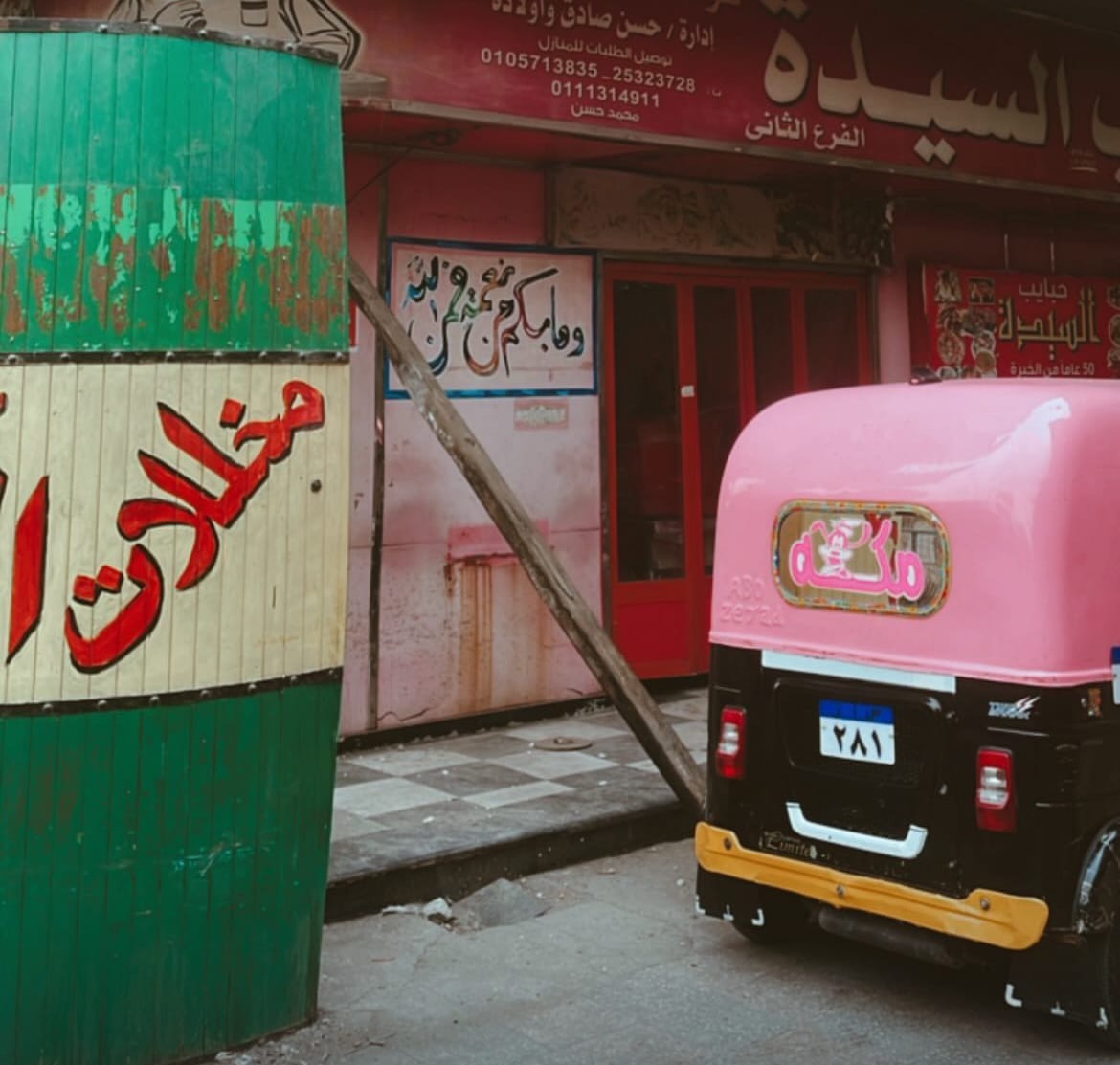
In Cairo, despite the growing influence of English amongst the young and affluent, Arabic is ubiquitous; one cannot navigate nor really appreciate Egypt without it. Since coming here, I can count on both hands the number of times I’ve heard an English song on the radio, or watched an English-language film. As someone who thinks and writes more naturally in English than my mother tongue, this is refreshing. Ask an Egyptian to sing an old Arab song, and they will serenade you with a medley of classics. I wish I could do the same with Malay.
Arabic is also the key to many of Cairo’s treasures. Understanding daily expressions in Egyptian Arabic gave me an insight into Arab worldviews and values. Classical Arabic—which I’m yet to master—allows one to access the wealth of books, manuscripts, and teachings by Islamic scholars. The latter is what attracts droves of foreign Muslims to Cairo, and it is not unusual to sit in homes where people gather for traditional study and devotional practice. Here, the Quranic recitation, supplications and poetry are typically read in Arabic but in the style of the host’s culture, which could be strains of Sudanese, Malay, Chinese.
As a Muslim, it might be natural to appreciate these lingering elements of old Islamic urbanism. But I have the freedom to float through the various worlds that Cairo holds with relative ease. The same cannot be said for other foreigners who are kept under the watchful eye of the state. When it comes to the agnabeya, or elkhawega (two words meaning “foreigners”, although the latter is used specifically to refer to a white businessman), the state organises people based on race and nationality, into hierarchies of exclusion and structural violence.
Migrants from other struggling economies are viewed with competition and suspicion. This is particularly true for African migrants, even though Egypt shares the same continent and history with its southern neighbour, Sudan. Since war broke out there in 2023, over 1.2m Sudanese have sought refuge in Egypt. Despite this sheer volume, the humanitarian response from Egyptians has been relatively muted. Sudanese refugees continue to live on the fringes of Cairo’s strained economy, coming into conflict with poor Egyptians in their struggle for jobs.
Looking at how Sub-Saharan African foreign workers are treated in the Gulf, and in other Arab countries like Lebanon, it would not be wrong to presume that a deep-rooted racism—likely grounded in colourism—exists in the region. Bias bleeds through top-down attitudes and official policies towards Cairo’s migrant populations, of which African communities are deemed a threat to peace.
A year ago, I hired Kemi, a Nigerian woman, to help with cleaning the apartment weekly. One day, she came to the house anxious, and without the usual brightness in her eyes. The Egyptian police had been conducting raids on apartments housing African migrants, she said, and there were police stationed at the nearby roundabout to check on cars carrying African passengers. She got home safe that day. A week later, she texted me from the plane to say she’d been caught and deported.
To put things in perspective, two American and British girls we befriended obtained their visa within two hours of their first visit to Abbasiya. After my husband joined the AUC, a fixer was assigned to manage all our papers and smoothen out the process at the visa office. Since then, it has rarely taken more than a few hours each semester.
According to Max Andrucki in The visa whiteness machine: Transnational motility in post-apartheid South Africa, the visa system acts as a neo-colonial machine that sorts which bodies can be where. White people are given the material privilege to move, usually spared from the security checks that others are subjected to. In fact, white professionals are assumed to be “high-skilled”, essential to the circulation of neoliberal global capital and thus desirable in many Global South economies.
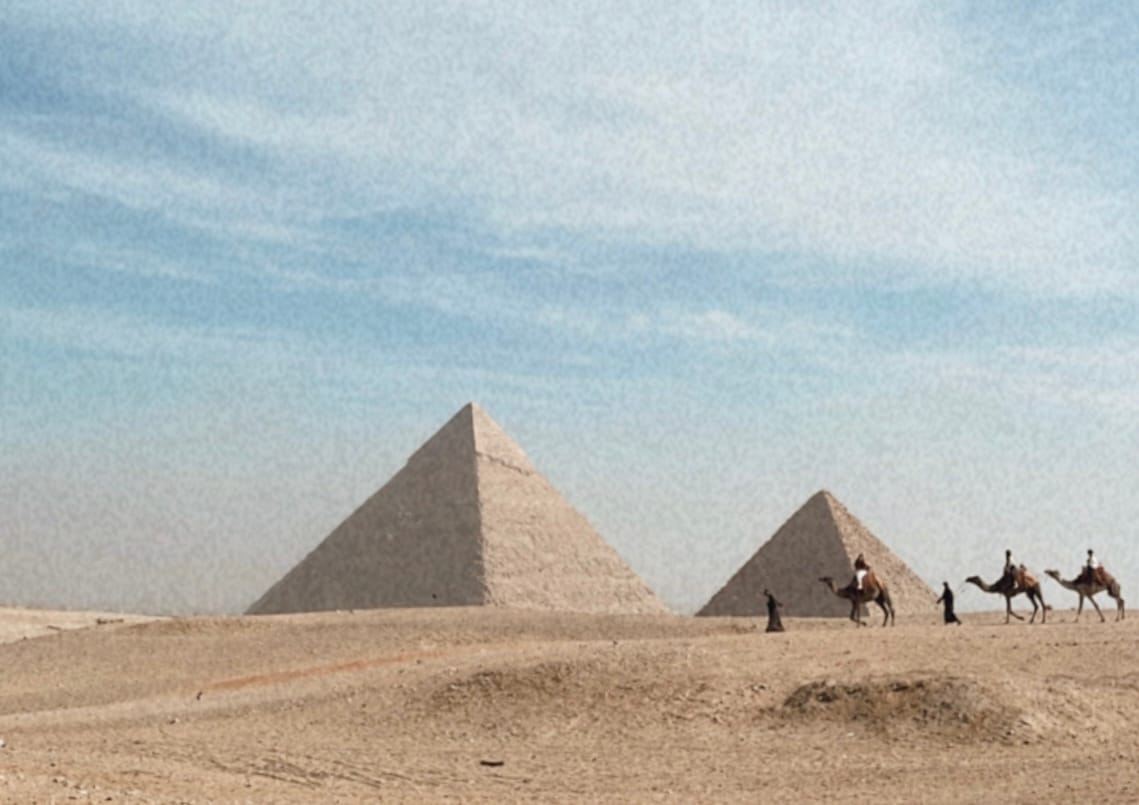
Every year about 15m tourists visit Egypt, home to ancient world wonders, but most Egyptians, even those better off, have never stepped foot outside of their country. With a passport ranked 90th in the world, travelling even for leisure is hard. Many are subjected to spiny bureaucracy and racism when traveling to the countries in the Global North. My Syrian and Egyptian friends had to drive five hours to Hurghada, a city nearly 500 kilometres south-east of Cairo, just to apply for the Schengen visa that grants entry to the European Union. They had to further declare that they were not affiliated with armed groups or organisations during the process.
Such inequalities are also embedded in migration policies back home. Singapore has a bifurcated migration regime where migrants with highly skilled professions are able to bring their dependents, and move towards permanent residency. Meanwhile, domestic and construction workers from the same region cannot migrate with their families and have no rights to residency. Singapore furthermore does not grant asylum nor accept refugees.
In “Bani Adam (Children of Adam)”, the 13th century Persian poet Sa’di wrote: The children of Adam are parts of one whole, for they were formed of a single essence. When one member is hurt by fate, the other members cannot remain at ease.
How do I make my peace with all the seeming unfairness around me, all while basking in the bounty of a city so rich with history and human diversity? It is hard. As Sa’di implies, it is natural to try and reduce harm where we can. Cairo is not free from the structural violence that pervades many modern nation-states, but in this city there are spaces that transcend the limits of the worldly order.
A month ago, I sat in a lush garden of a vernacular villa an hour outside of Cairo. I was surrounded by well-off Egyptians, Arabs and other Muslims from abroad who had come to sit at the feet of Islamic scholars and benefit from their wisdom. The shaykh was a revered man from the Gambia, whose relative youth defied the typical archetype of a sage. His disciple was a renowned teacher and theologian in America, an old white man who, by his beard, reminded me affectionately of Dumbledore.
Near the front where the teachers sat, an old Nubian man from Aswan was swaying to the beat of the drums, rejoicing in the presence of these revered men and praise of the Islamic Prophet Muhammad. It struck me how this space cut across colour and social class, and was in less service to neoliberal capitalism than it was to something more universal and sublime. I was reminded of a quote from the Prophet Muhammad’s last sermon, the spirit of which is often forgotten but can always be evoked:
“All mankind is from Adam and Eve, an Arab has no superiority over a non-Arab nor a non-Arab has superiority over an Arab, also a White has no superiority over a Black nor a Black has any superiority over a White except by piety and good action.”
At a time when the prevailing global order has failed to stop perhaps the most documented genocide in history, I find myself looking elsewhere for hope and humanity. Cairo, with all its flaws, has offered me another view of cosmopolitanism, woven by both the universal and the particular, the material and spiritual.
Zafirah Zein is a writer on the human rights and culture beat. She is based between Egypt and Singapore.
Letters in response to this piece can be sent to sudhir@jom.media. All will be considered for publication on our “Letters to the editor” page.