


Why love one but eat another?
It is a question that humans have possibly grappled with since we first domesticated animals: dogs, probably 15,000 years ago or more, and sheep soon after. Today we mostly regard one as pet, the other livestock. One is a companion, attending to our deepest emotional needs; the other a vehicle that converts the sun’s energy, via grass, into market products, including meat, milk, and wool.
Our language reflects deeply-held beliefs about which beings are more deserving of our consideration. Our subconscious classifications, moral and market, of animals according to their “use” are so embedded in our culture that most children are indoctrinated in them with no real chance to wonder why. It is why most omnivores instinctively recoil at the thought of eating dogs, but marvel at Merino, and drool at spit-roasted lamb and Sup Tulang.
Jains, sometimes called the earliest animal-rights activists, and modern vegans, are two of the few groups to resist, to insist that we destroy moral distinctions between our species and the more-than-human world. Their influence here is minimal, but growing: Singaporeans’ relationship to animals is evolving rapidly, their welfare ever more important.
At the glittering, leading edge of care and spending are the “pawrents” who throw ostentatious dog birthdays and fly on Singapaw Air, a “pet private jetshare”. Far from these emissions-soaked declarations of animal love are the many everyday acts: the spotting of rare nestings; the rescuing of pangolins; the shaming (and jailing) of abusers; the tip-toeing around starfish in inter-tidal zones; the freeing of trapped crows even at the risk of jail time; and the sharing of space with chickens, now so common around this global city that the crowing at dawn evokes memories of a kampung long gone.
Have feelings for the chickens in the park translated to the chickens on the farm? Singaporeans still, for the most part, have little connection to the animals we eat. Many of us do not know about the lives they lead, about the people whom they rely on for care and sustenance, about their surroundings, about their first and last breaths, about what they even look like. Industrialised agriculture thrives on the opacity that diminishes our empathy, that reduces beings to vacuum-packed chunks of meat.
Why do we use one moral lens to gaze upon one animal, and a different one for another? To what extent are our reflexive classifications (dog = pet; sheep = food) a symptom simply of unquestioned shibboleths being passed down? A fair meditation on these questions demands a centering of farm animals, and some visibility and transparency into their lives. The Jom team—almost all of us are omnivores—felt that a visual portrayal of them might offer us all a new way of seeing.
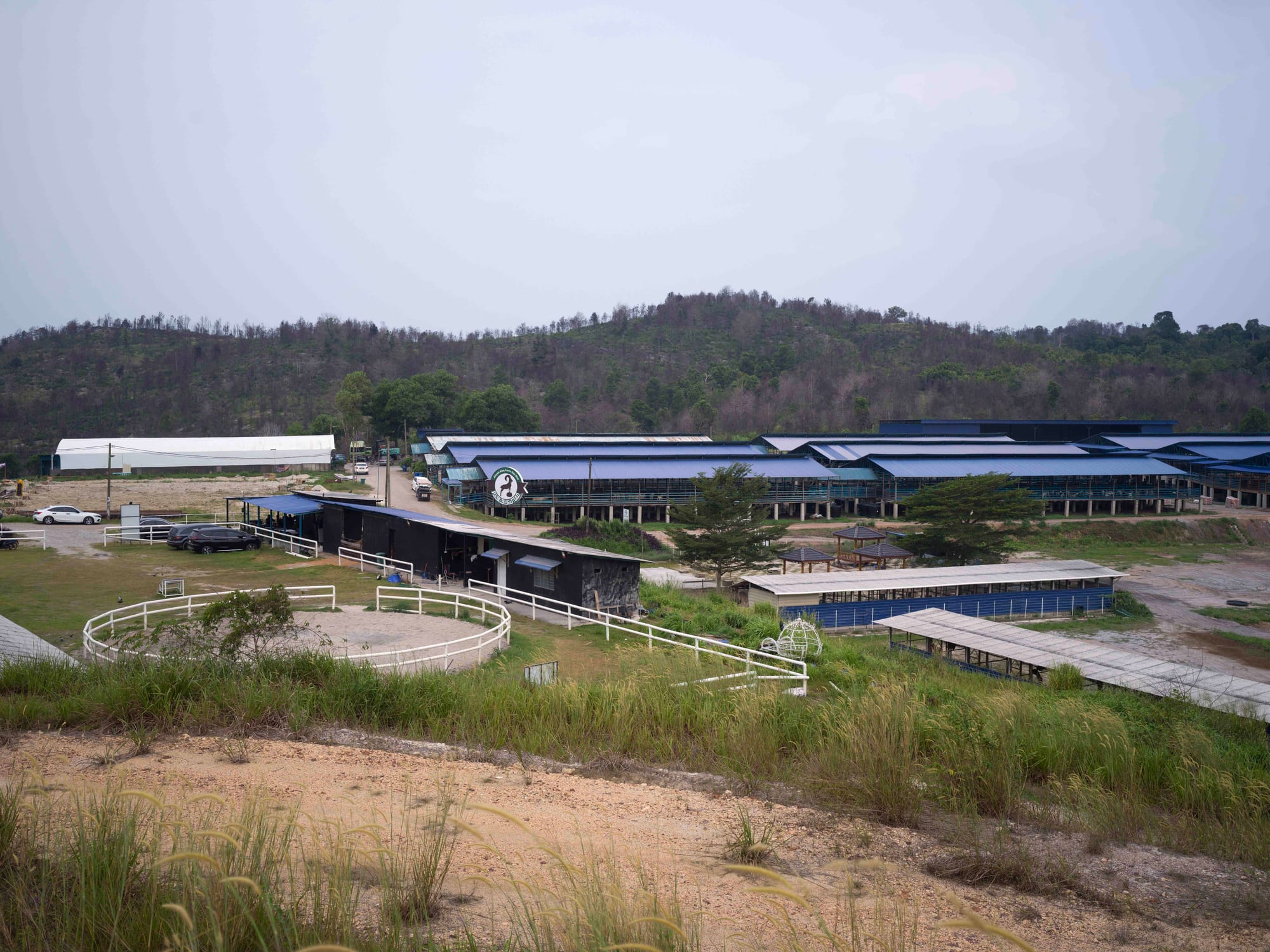
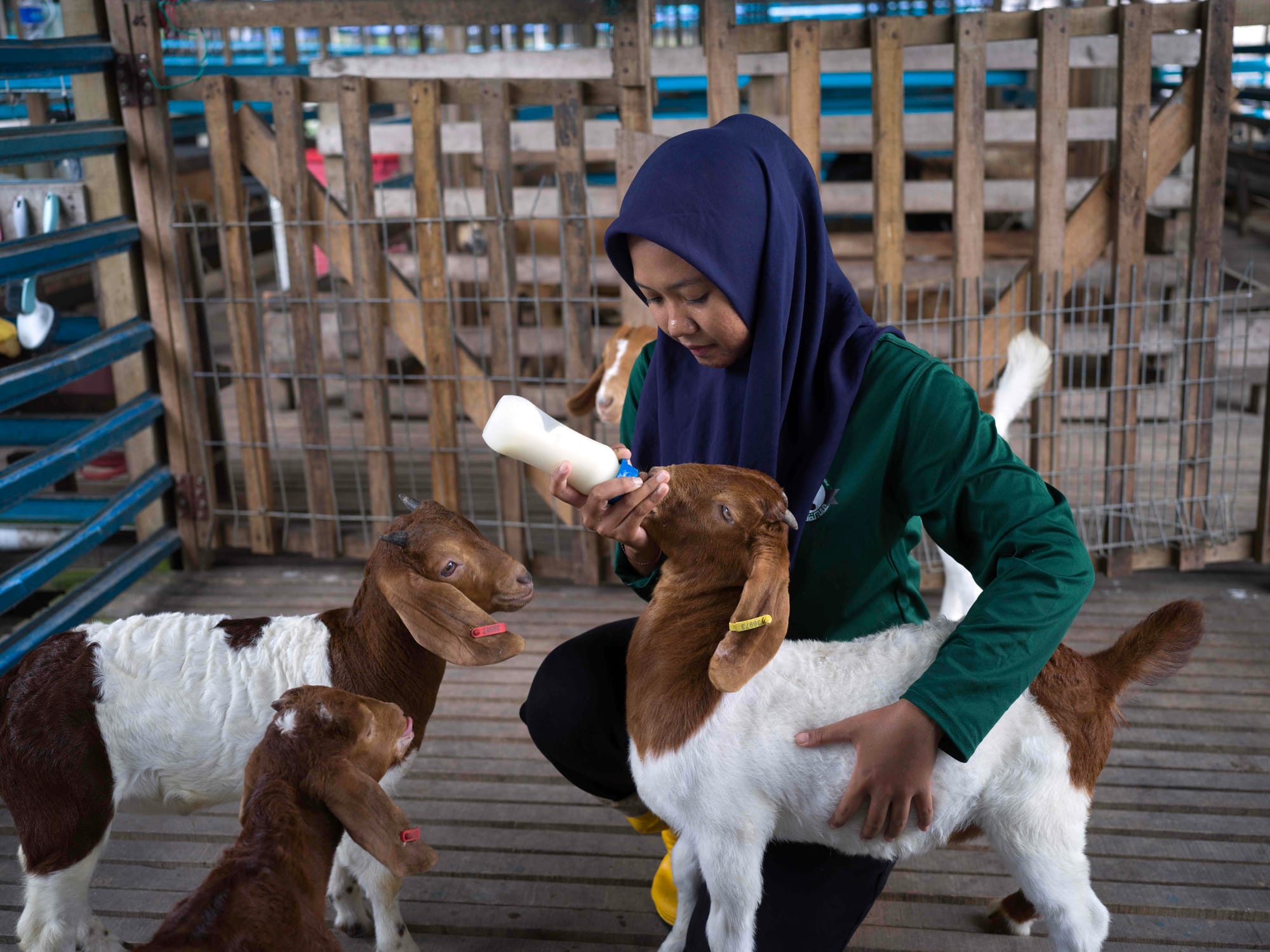
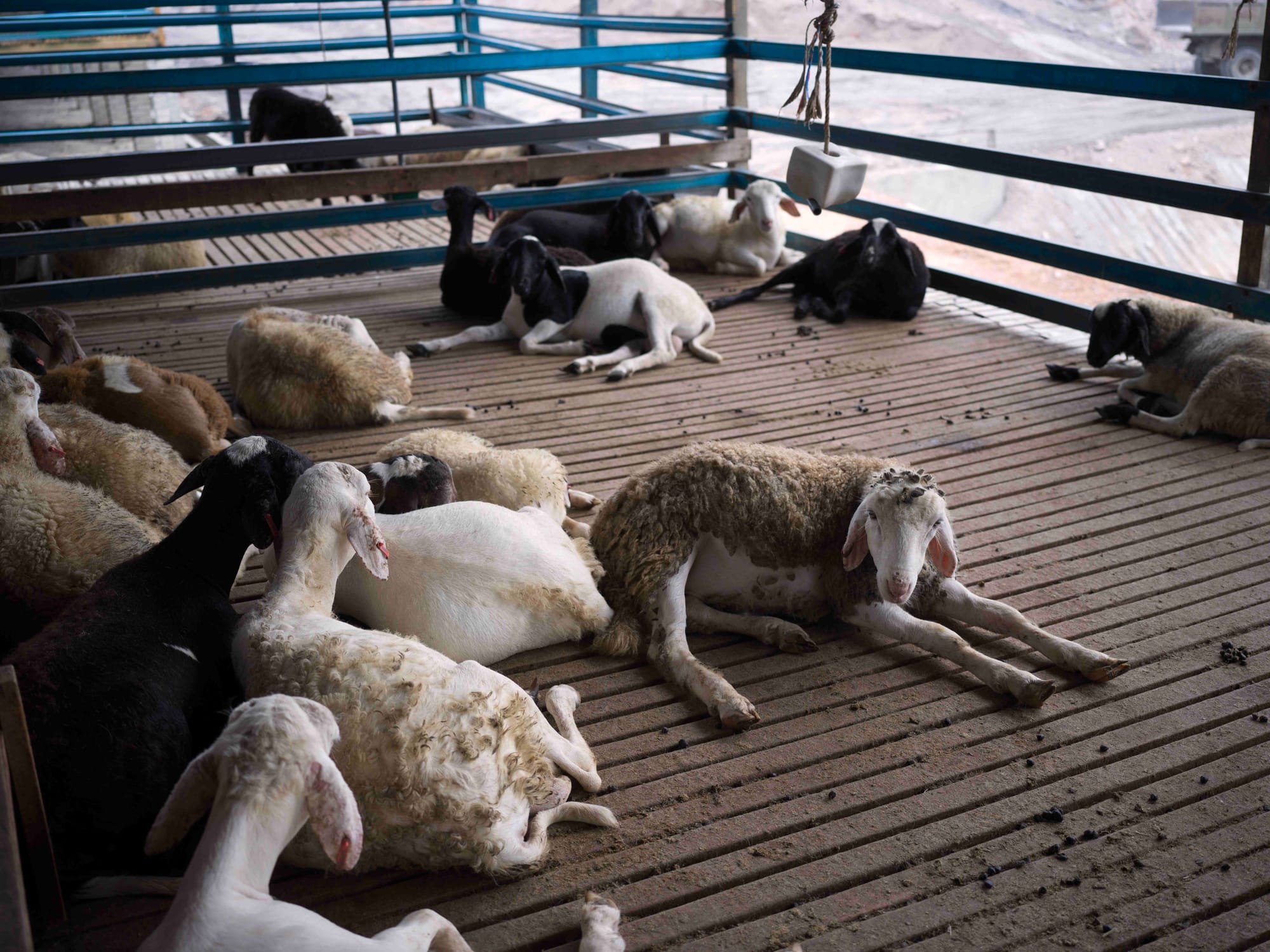
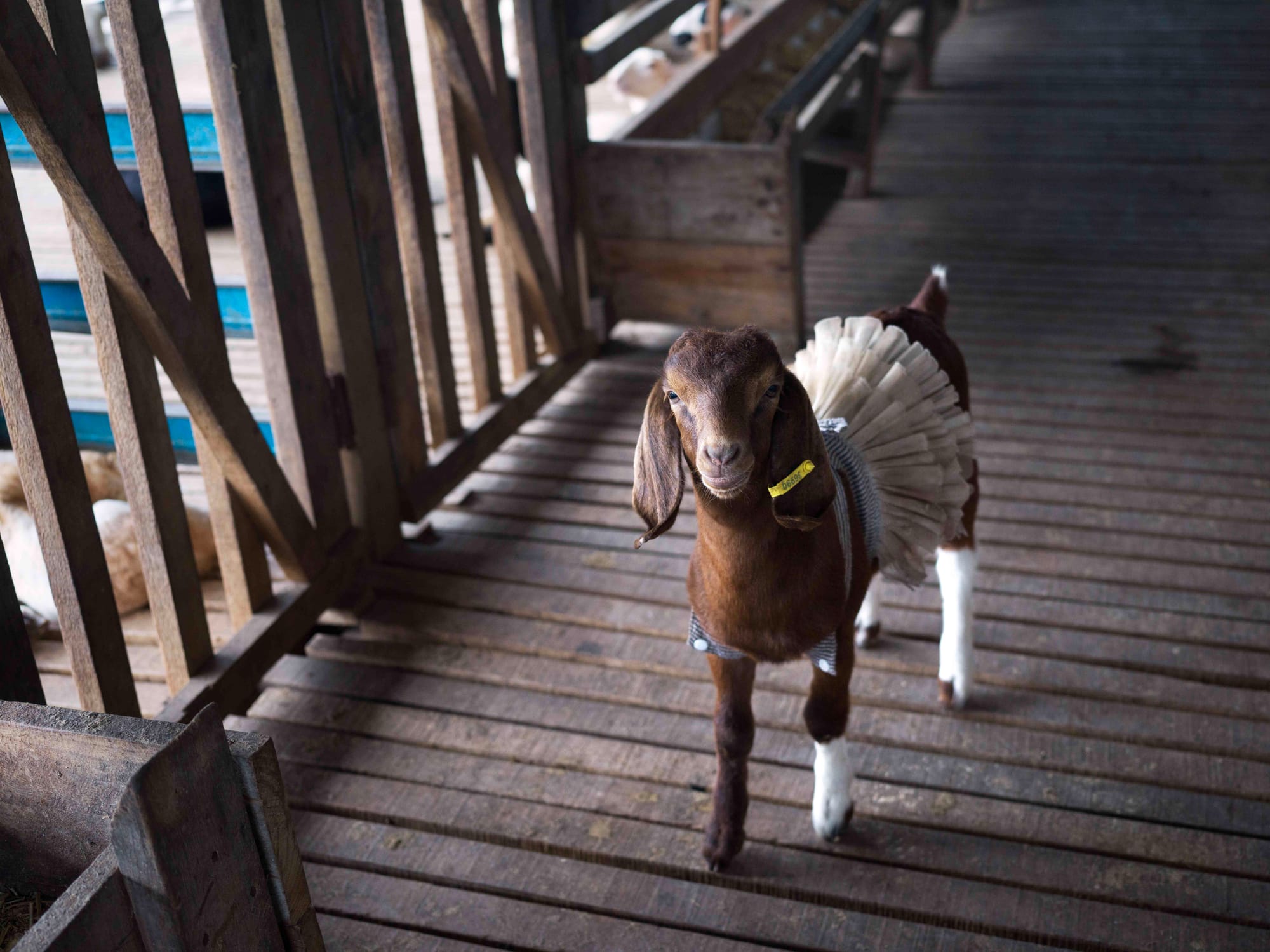
Our research led us to the Singapore-owned Aliyah Rizq farm in Desaru, Johor. Among their business innovations is a sheep-investment model, as well as a zoo alongside their sheep pens. Visitors can interact both with animals we observe—like ostriches, porcupines, and a civet cat—and those we eat. It is an illuminating experience.
The Aliyah Rizq team graciously hosted us at the farm, and also at a slaughterhouse. There, for the first time in our lives, we observed the slaughter of a sheep. It was for the fulfilment of a nazr, which is a vow made to God to perform an act of devotion, often upon a condition being met—for instance, “If I get into medical school”, or “If my mum’s cancer is cured”.
In this case, it was in relation to a milestone for a composting business that Akid, an employee, had started on the side. The nazr was a way for him, having achieved his target, to share some of his blessings with the less fortunate. All the sheep’s meat was to be distributed to the farm workers. They typically only get to eat it when there’s a nazr or aqiqah (a slaughter to celebrate a newborn), Akid told me. It was a slaughter, in other words, that was imbued with meaning. Through God there was a connectedness between all beings present, and also a circularity within the sheeps’ lives, for their manure makes up the compost.
What follows is our depiction of those events.
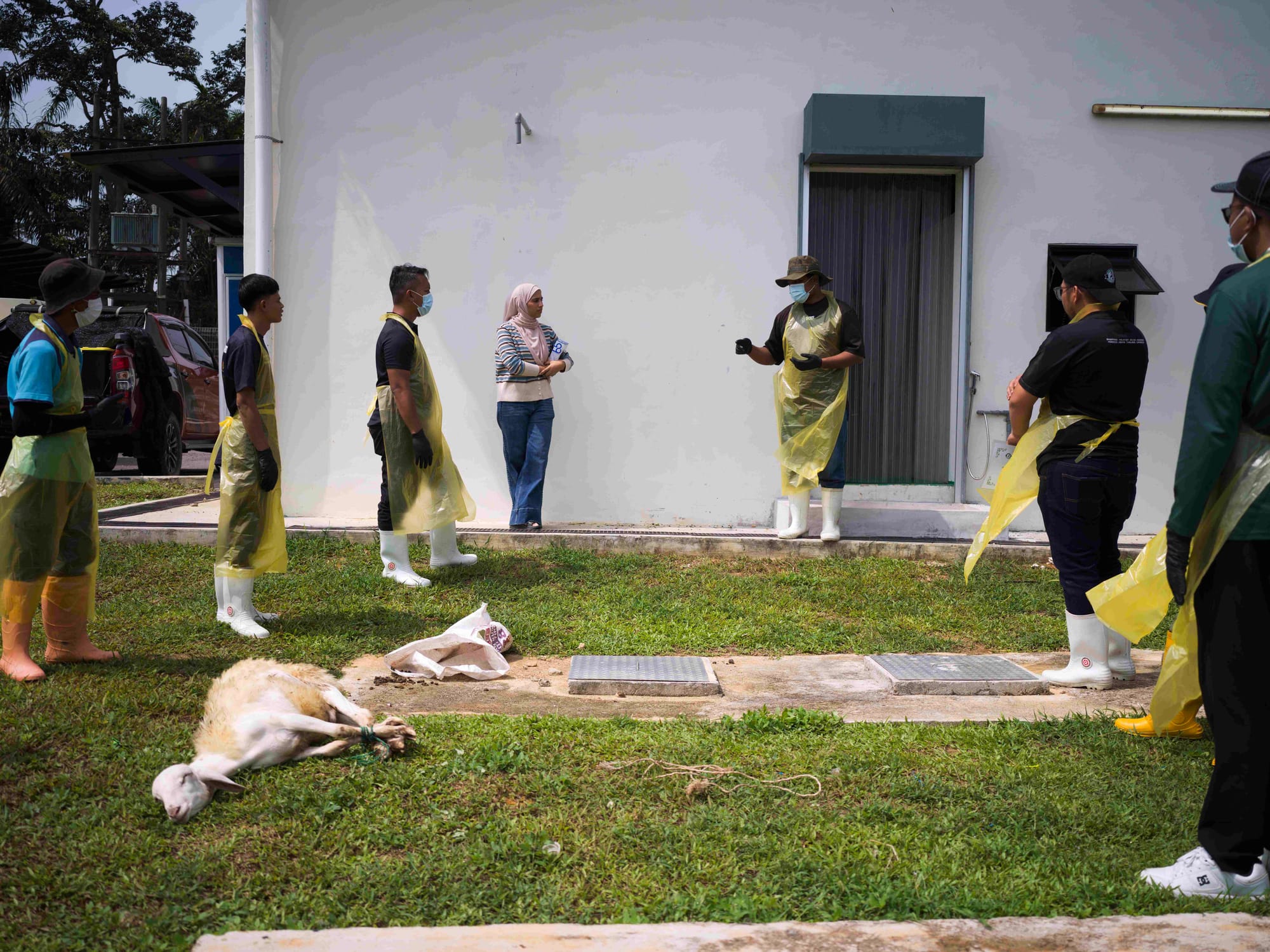
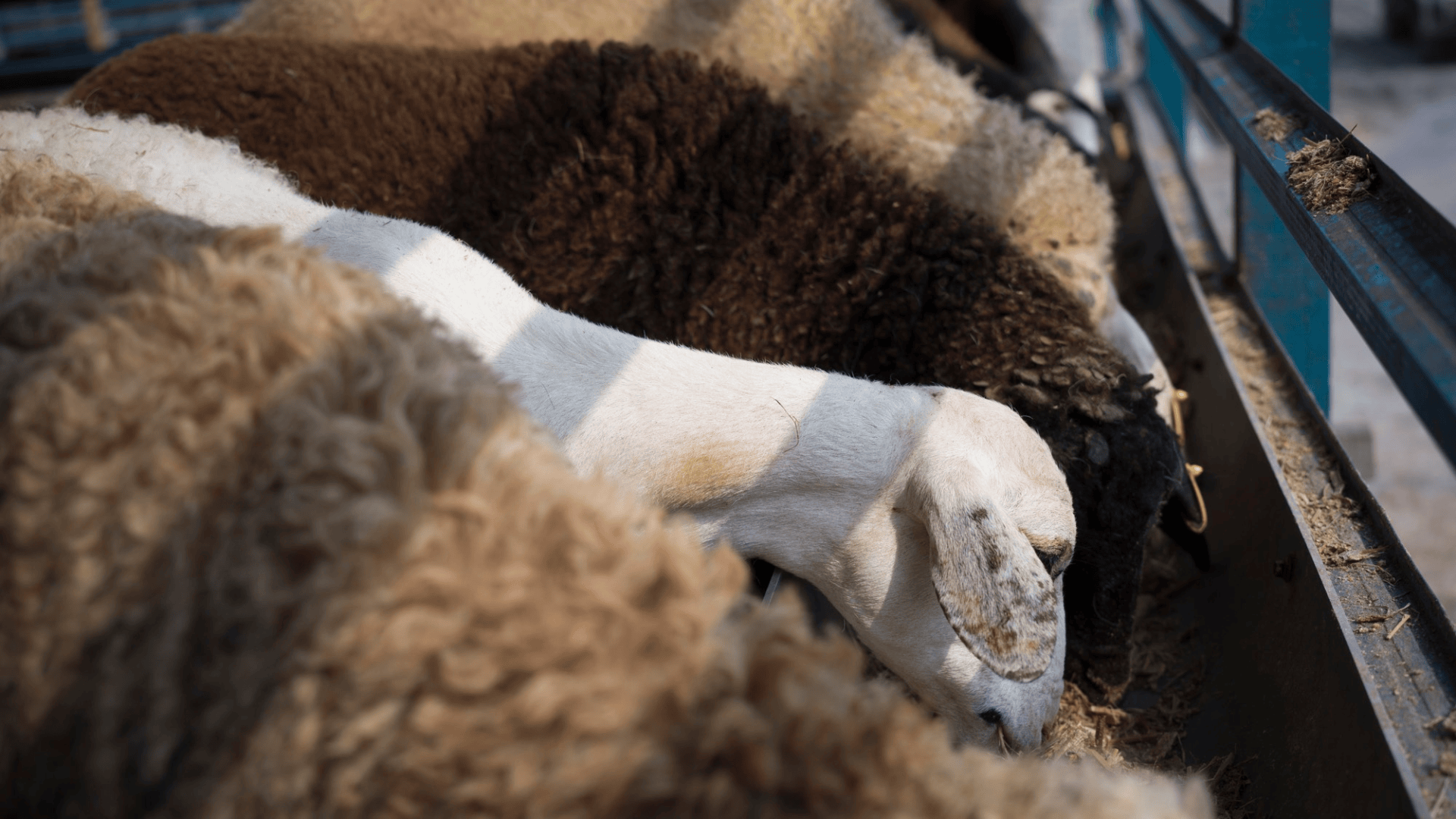
The first time we laid eyes on sheep #12356, he was on a grass patch outside the slaughterhouse, his legs having only just been bound, his head resting on the turf, his upper lip curled ever so slightly, his eyes opening and closing. He occasionally lifted his neck and bleated softly. His ivory hide and sparse fleece are characteristic of his White Dorper Cross breed.
To understand why a mammal native to South-west Asia is even in Malaysia, we need to return to ancient Mesopotamia. Sheep were domesticated between 11,000 and 9,000 BC for their meat, fat, and hides. Selection for their fleece (wool) became important maybe only around 6,000 BC, given evidence from Iran (Persian rugs and much else would follow). They spread to the Indus Valley by around 7,000 BC, Europe by 6,000 BC, and China by around 3,000 BC. Of the world’s roughly 1.4bn sheep today—or one for every seven humans—China has by far the most.
It’s only in the past two centuries that sheep were recorded in the Malay world, having almost certainly voyaged by sea. The Dorper, one of 1,000 odd breeds today, was bred in South Africa specifically to be a fast-growing, meat-producing animal, one able to survive in arid to wet conditions, suited to intensive feeding, and which doesn’t require much shearing. “The ability of this breed to put grass into weight gain is remarkable,” wrote a farmer in upstate New York, on the Small Farms blog of Cornell University’s College of Agriculture and Life Science. “As they say, the proof is in the pudding eating [sic]. If my product would be poorly finished or wouldn’t taste good, I surely would lose customers. Instead, I get raving reports back and I never seem to have enough market lambs to make everyone happy.”
Sheep #12356, in other words, comes from a long lineage of beings who are here for a specific, commodified reason. No more or less, arguably, than the palm that’s native to West Africa but now blankets the Johor landscape beyond the slaughterhouse. We wonder if these other beings look at us humans—Chinese, Indians, Malays—and wonder about our own provenance. Some of our own ancestors were, of course, shipped over for a specific, commodified reason.
How did we all meet here? How do we perceive each other? Who’s keeping who alive?
We knelt down next to sheep #12356, stroked his head, touched his body. We wondered whether our caress offered any kind of comfort, whether it even meant anything to him. And as we were pondering our own inadequacies, sheep #12356 was lifted off the ground and swiftly placed on a metal table.
There, he would bleat for the last time.
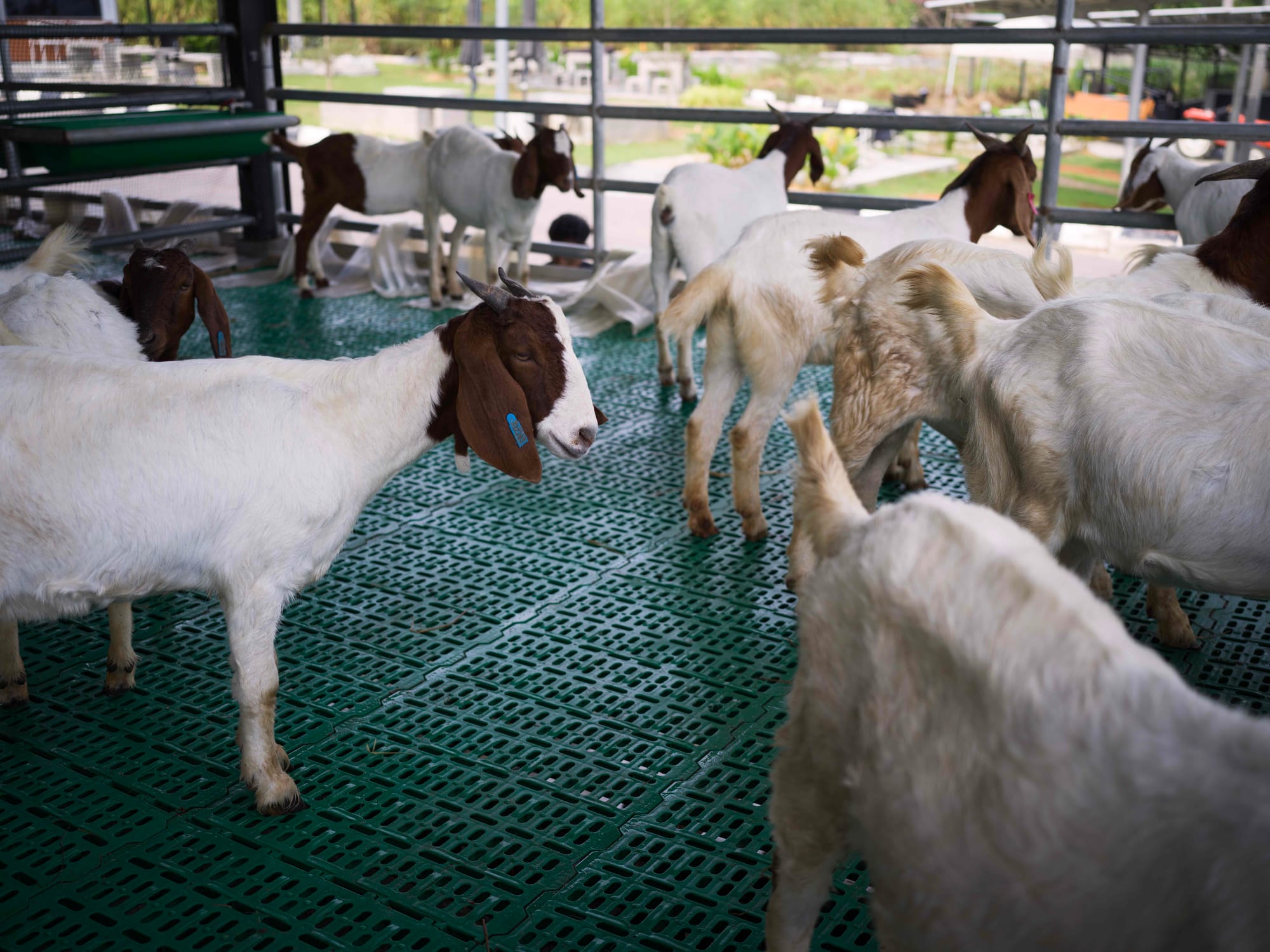
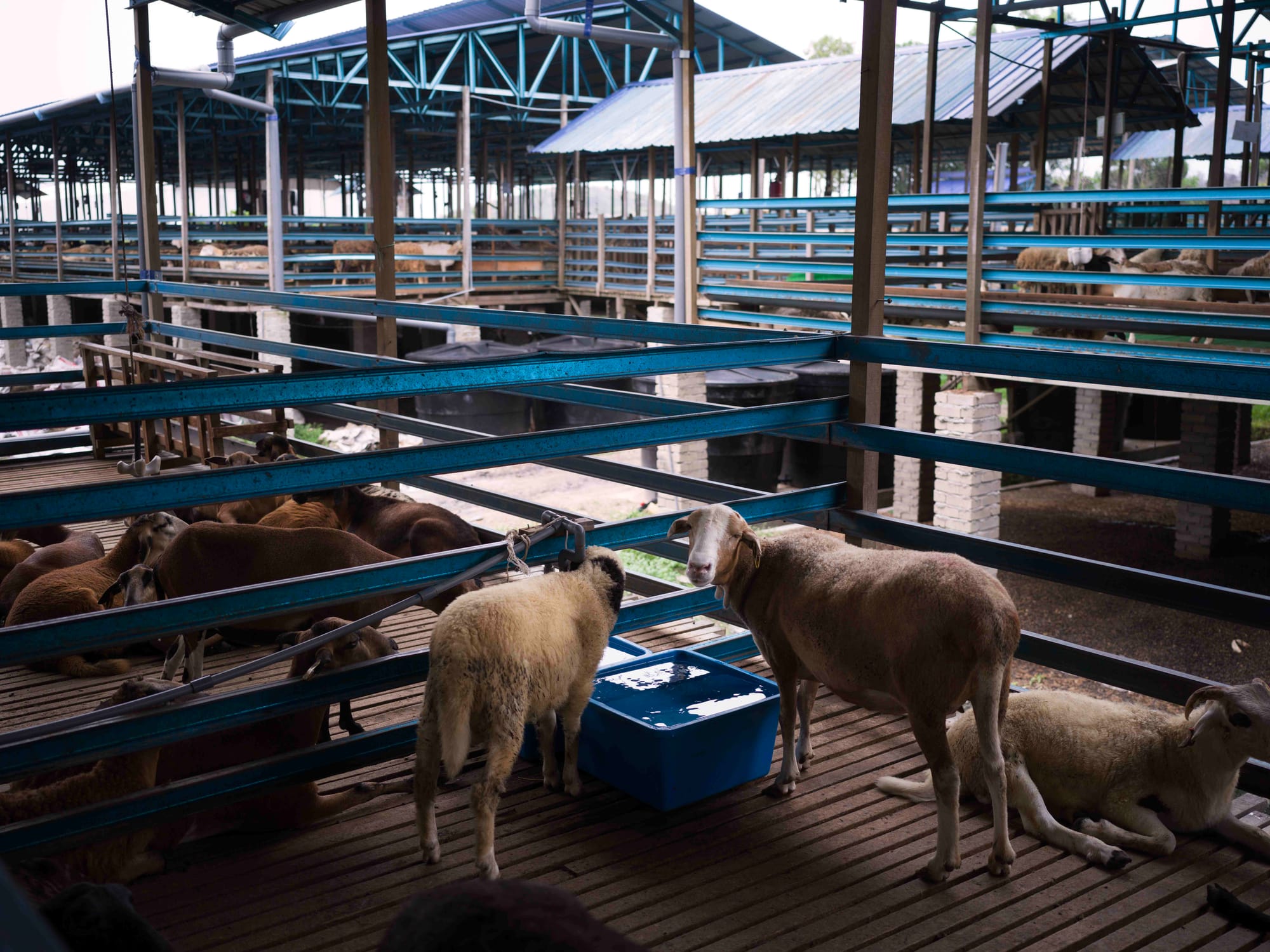
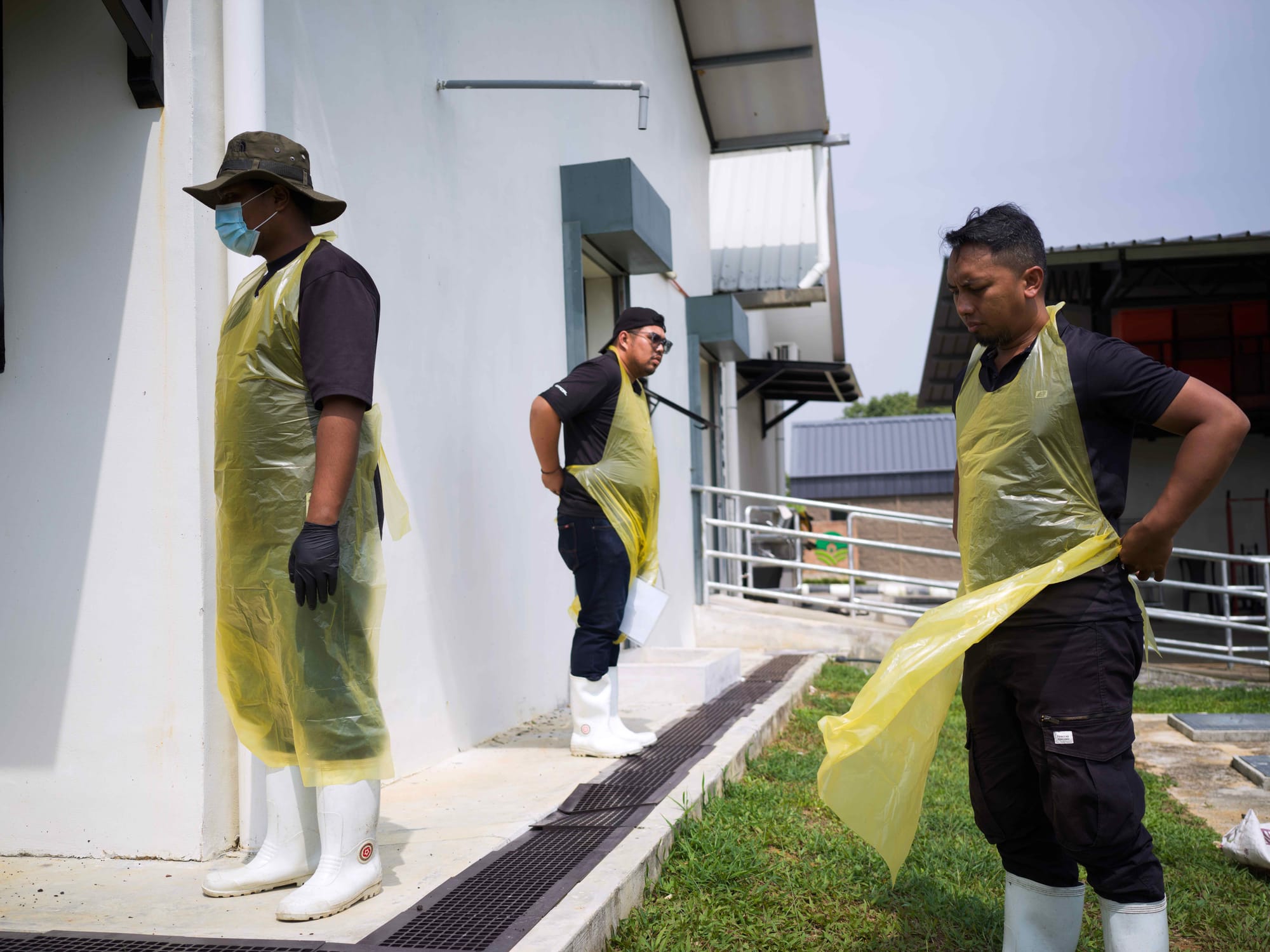
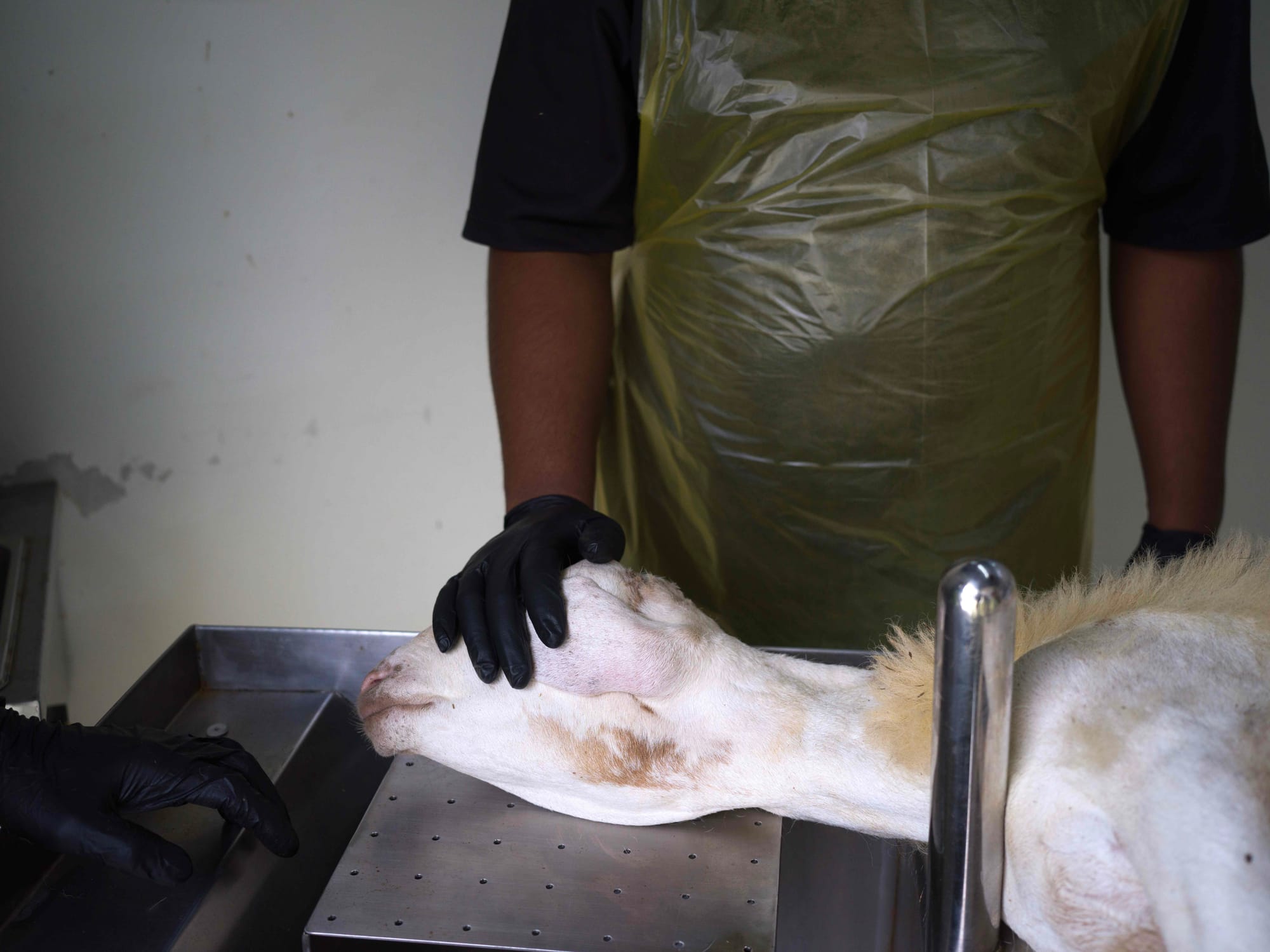
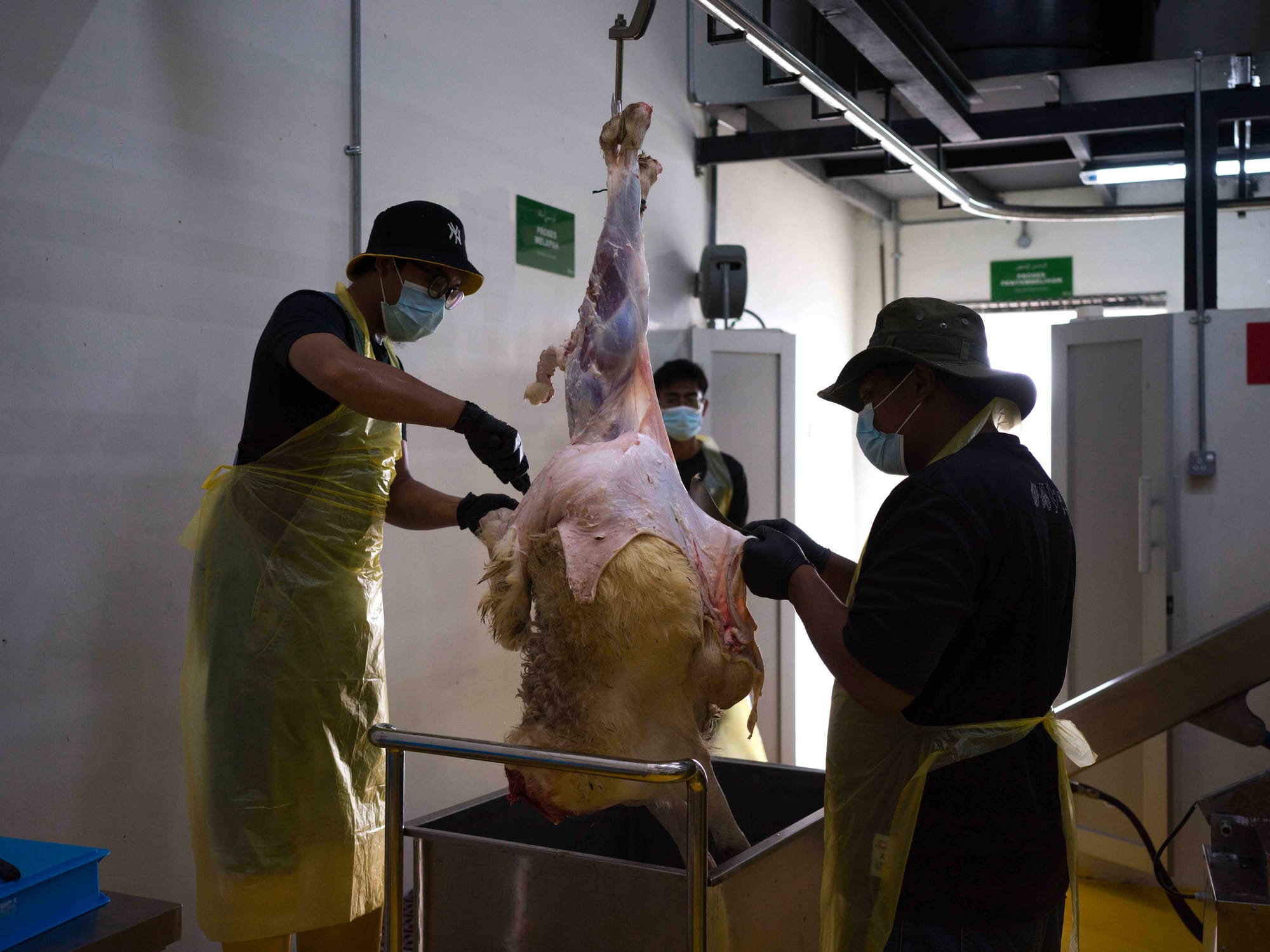
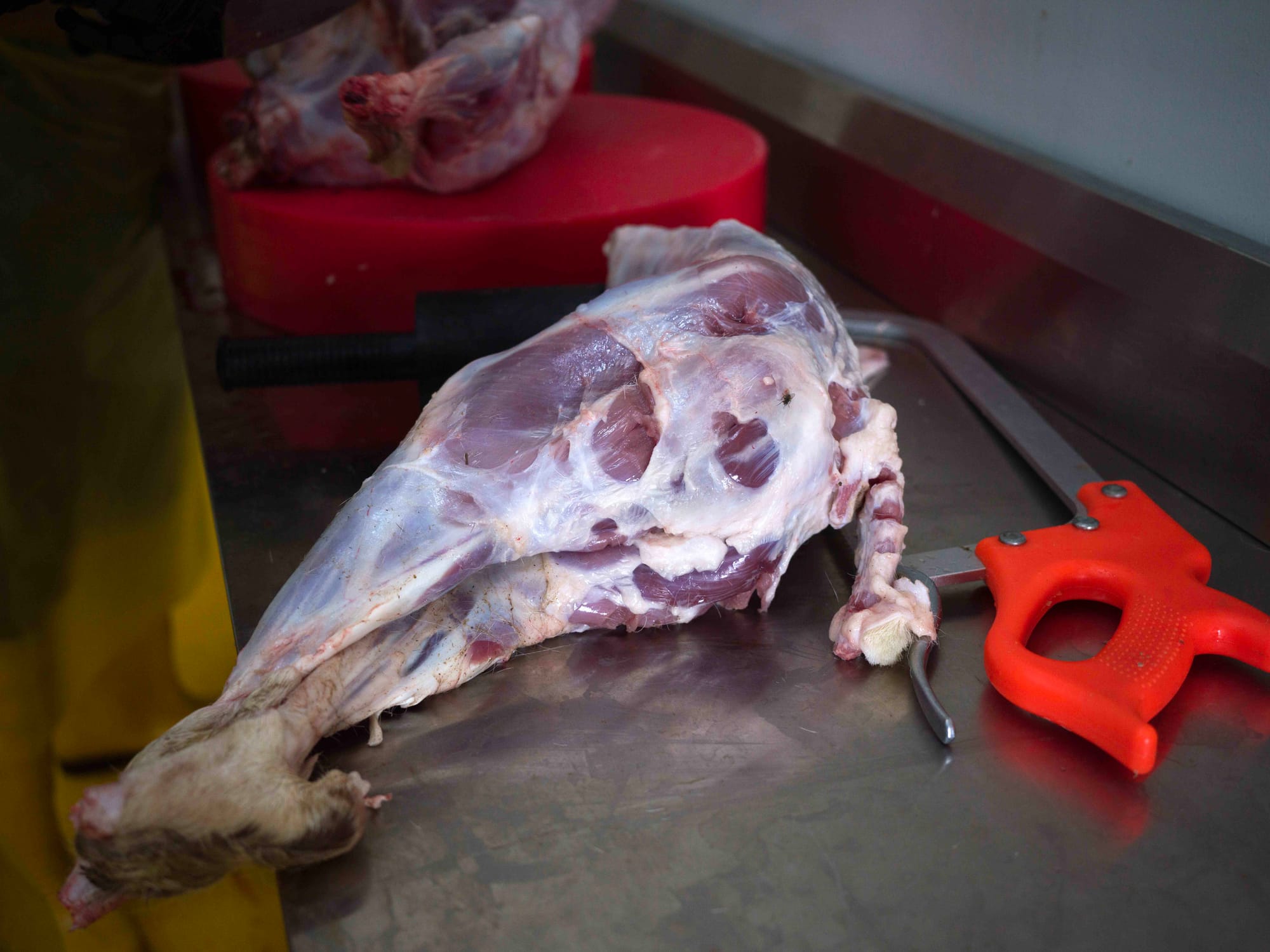
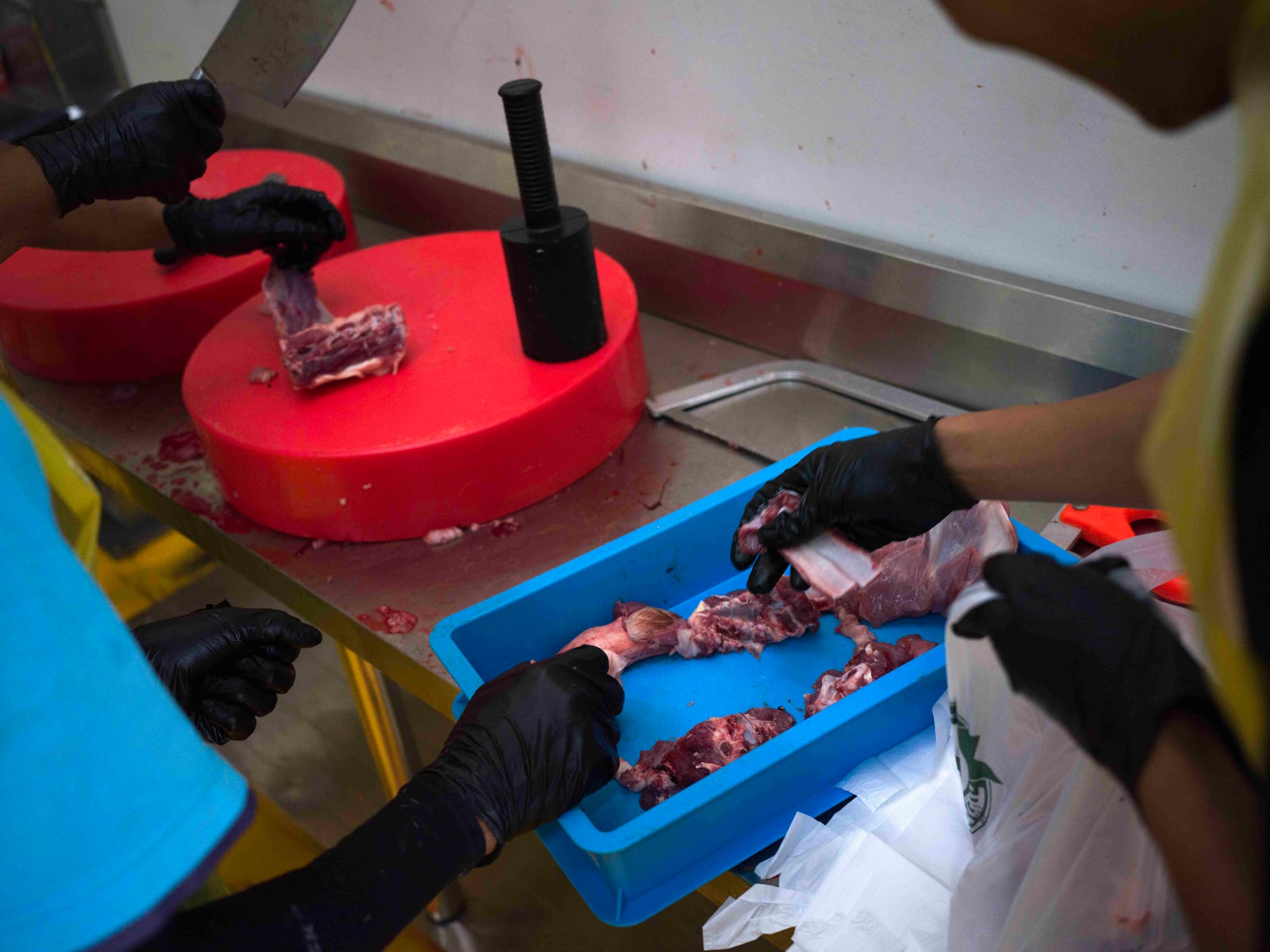
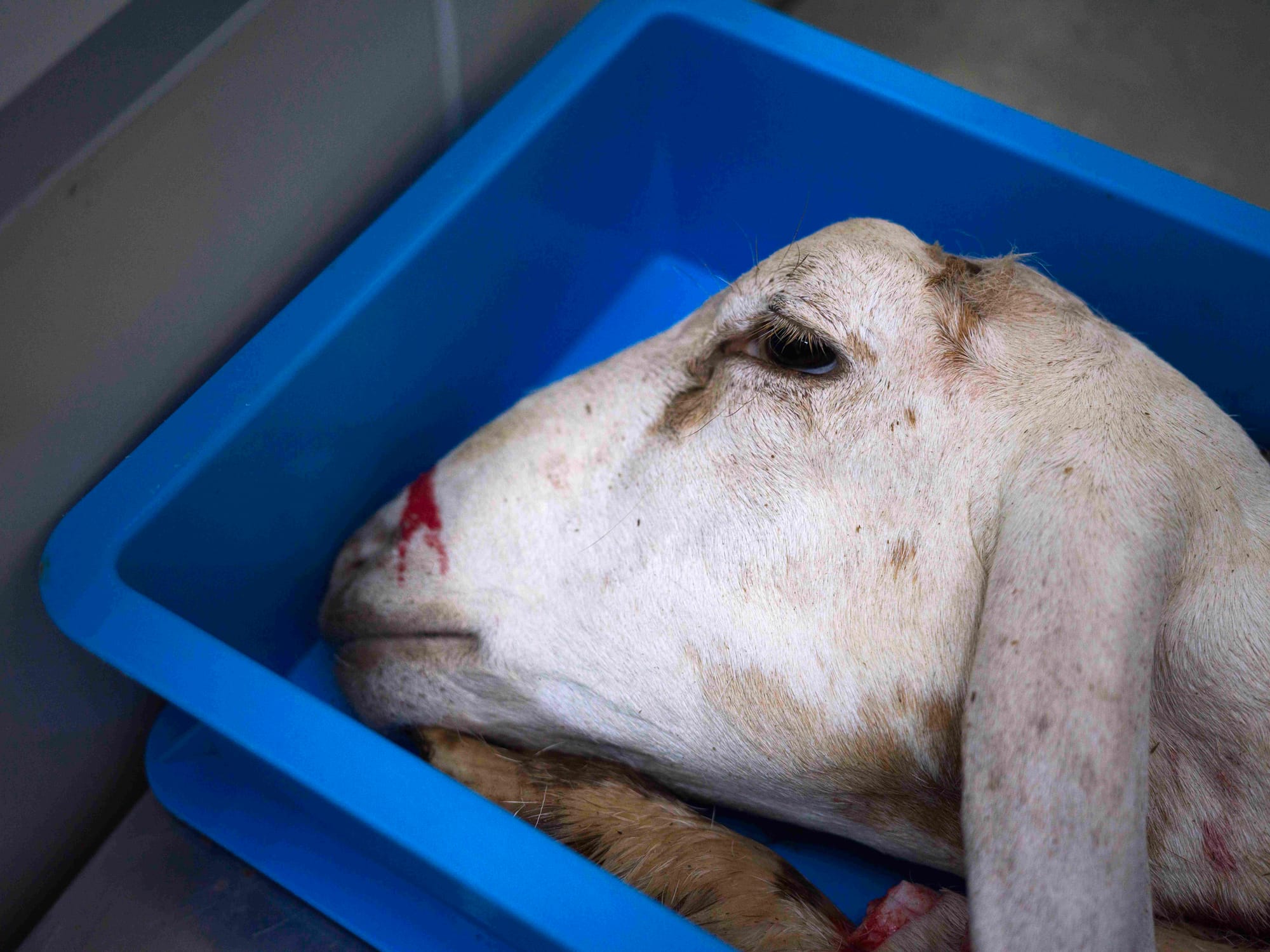
As we looked one last time at sheep #12356, we understood that we, conscious beings, were looking at one who also is/was. Recognising him for the individual he is/was, we decided we don’t want to remember him by a number.
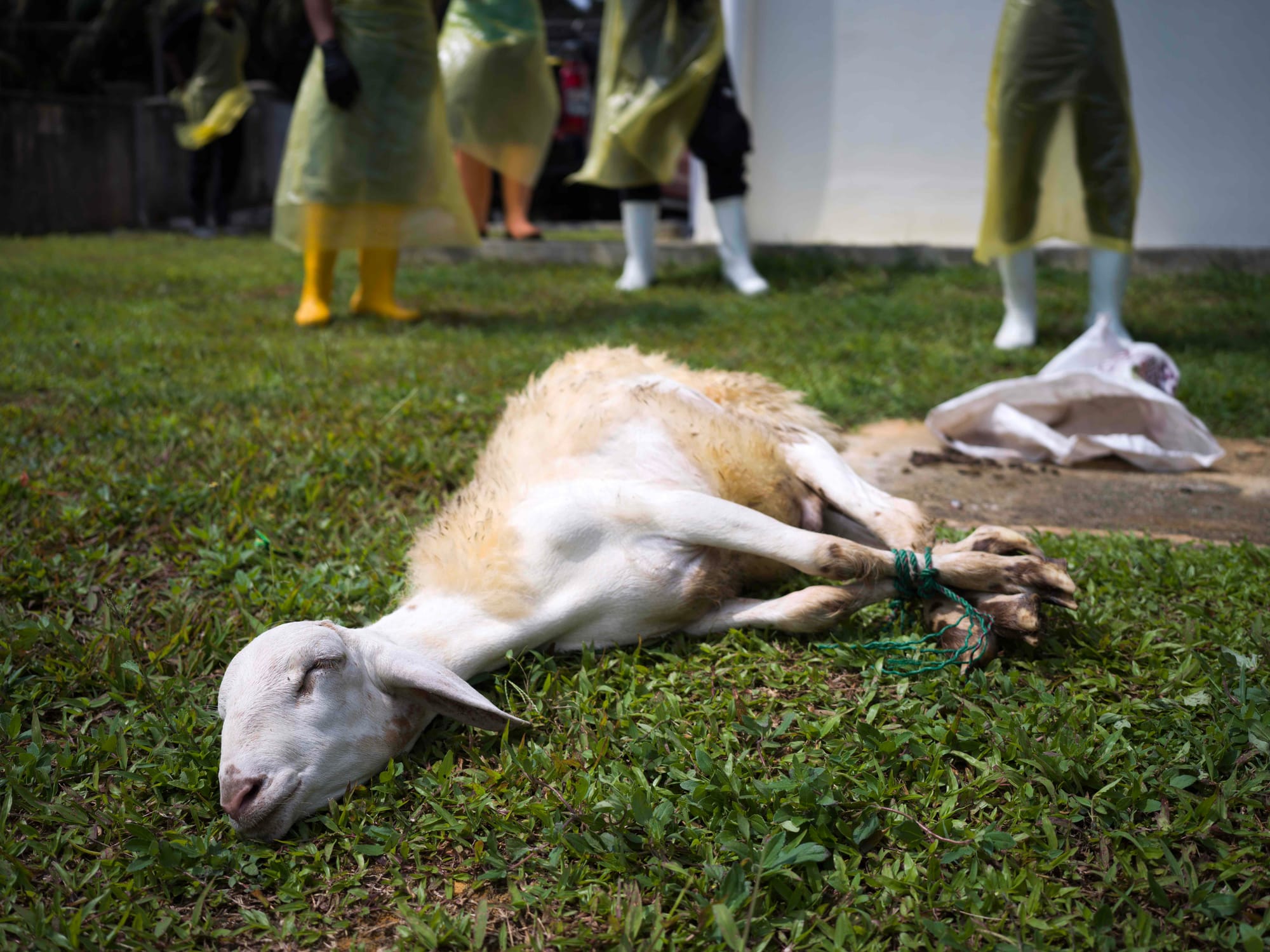
And so we gave him a name.
The Jom team is grateful to Aliyah Rizq for hosting us, including at a nasi campur restaurant in Kota Tinggi, where we ate a variety of foods. We encourage all to visit their farm in Desaru to get closer to the animals we eat, to change our perception of them.
Note: Singapore does not currently permit the import of sheep meat from Malaysia. Most of it comes from Australia and New Zealand. This is true even for korban, the ritualistic slaughter of lambs during Eid, itself inspired by the biblical story of Abraham’s (Ibrahim’s) sacrifice of his son. (A few mosques conduct local korban slaughters with livestock from Australia.)
Aliyah Rizq and others are working with the Singapore Food Authority to broaden our agricultural relationship to our immediate neighbour, which will, among other benefits, reduce our food miles.
Thanks also to our readers, Ahmad Zaid and Aleithia Low.
Ever since some wonderfully annoying dogs changed the way she sees animals, RV in her quiet ways hopes to tell the stories of the invisible animals existing among our midst and @seeing.animals is a work in progress for that. There’s some joy in this as she’s found herself in the company of several rescued animals in sanctuary settings. From the familiar furry faces to the gentle, hooved giants, and the woolly and feathered friends, all living the best lives they can!
Ore Huiying is a documentary photographer from Singapore. Her practice revolves around storytelling, which she believes is basic to human beings. She grew up in rural Singapore, but was uprooted to an urban environment as her country underwent development. As a result, Ore is drawn to narratives of people and places affected by development, with a focus on Southeast Asia, a region she feels deeply for.
Sudhir Vadaketh is Jom’s editor-in-chief.
If you enjoy Jom’s work, do get a paid subscription today to support independent journalism in Singapore.
Letters in response to this piece can be sent to sudhir@jom.media. All will be considered for publication on our “Letters to the editor” page.