

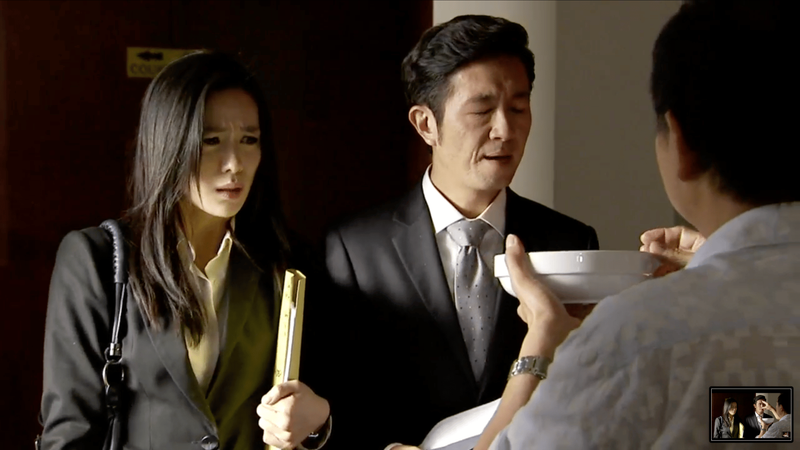
Wendy Lim, dressed in monochromatic black and white, is racing through the hallway of the Supreme Court. We might say that she’s trapped in a suit of woe, because her case is falling apart before her eyes. Already at the rough end of an admonishment by her boss (“you know, you used to be a lot better than this.”), she senses an acute credibility crisis. Being the niece of the firm’s managing partner is not going to help Wendy if she’s going to be out of the game this early on. Her only recourse lies beyond the worldly remit of her legal training. Plucky Wendy, in other words, has to get creative.
These judicial jitters are typical of “The Pupil”, the Singaporean legal drama created by Lee Thean-jean, whose first season hit the screens in 2010. Its second season was trotted out just a year later. The show’s spiritual successor, “Code of Law”, spanned five seasons and eight years before concluding in 2020. These pulpy legal dramas were the guilty pleasures of my childhood, the sanitised Singaporean equivalents of “Suits” or “How To Get Away With Murder”. The episodes were easy watches, each focusing on a case of the week, which might involve such entertaining issues as suing a school for not accepting your child, or tussling over the use of tissue packets to chope seats in a hawker centre.
It was easy for me to adopt an unrealistic view of the hallowed legal profession in Singapore; to my teenage sensibilities, it was scintillating and suspenseful and, at times, salacious. And the shows were snarky, clever, ruthless and, in hindsight, replete with more prurient jokes that I only began to appreciate later on. The music was a particular brand of emotionally extortionate Channel 5 music, and the personal lives of those lawyers on the show were pretty dramatic. I was surrounded by enough aspiring lawyers in school to get a pretty good sense of where that drama originated—and to be filled with a pretty good sense that I never wanted to become a lawyer.
But the show drew me in, nevertheless. It responded to my burgeoning interests in such topics as the importance of skilful rhetorical weaving, but also a flair for theatrics. Most unexpectedly, however, was the way it got me thinking more deeply about the universe of ghosts. These were not ghosts in the metaphorical sense, as in the ghosts of the past, or the ghosts of the nation-state. These were ghosts in the spectral sense, swirling about the realm of the show to alter the trajectory of Wendy’s cases. Here was a TV show interested in a faithful rendition of the Singaporean legal scene, but also one that chose to accommodate the supernatural world within itself. This raised many questions for my 15-year-old self. Now, over a decade later, I am finally proposing answers to them. And they have to do with the peculiar relationship between the real and the ghostly in Singapore.
Why have ghosts in a legal procedural? Ghosts flit across radio airwaves and podcast recordings, from “Misteri Jam 12” to “Ghost Maps: True Southeast Asian Horror Stories”, where the voluminous amount of horror content honours the tradition of spooky tale-telling perfected in the empty toilets of overnight school camps and the idle chitchat of late-night family gatherings. Ghosts matter every time a decision is made about which HDB flat to buy, or what office space to rent. They even slip into the world of public policy, like when Tan Chuan Jin, former speaker of Parliament, made a nervous joke about a haunted neighbour situation he’d had to deal with at a Meet-the-People Session. One of his constituents complained about an upstairs neighbour dragging chairs around, only to find that the former resident had died, and the flat was empty.
“From time to time, we encounter issues that may be beyond an MP’s ability,” he posted to Facebook. “And I mean waaaaay beyond.”
In the interstices of the rigid categories that comprise life in this rational and bureaucratised nation, the ghost makes its gossamer entrance. Often interrupting the steady rhythms of life, these encounters are unsettling precisely due to their transience. This piece is dedicated to what I call the ghostly interlude—the moment a supernatural glitch unsettles an otherwise decidedly rational continuum. And it is the Singaporean legal drama whose operations I interrogate in order to get a peek into this mysterious interruption.
I’m both a researcher and teacher of literature, and have often found myself needing to communicate its importance to my students, pointing out how a literary work might carry the DNA of a society, revealing its political operations or cultural infrastructure. The same can be said even for something as innocuous as the Singaporean legal drama as an object of popular culture. For the late scholar Stuart Hall, a pioneer in the field of cultural studies, culture was no innocent thing. “…culture is a dimension of everything,” he wrote. “Every practice exists in the material world and simultaneously signifies, is the bearer of meaning and value.” Hall theorises culture as neither frivolous nor separate from society, but in an inseparable relationship with the world at large.
“If you want to play in the area where deep feelings are involved, which people hardly understand,” he concluded, “you have to look at culture.”
Hall played an integral role in setting up the intensive study of cultural practices that people had previously paid no mind to. His insights are relevant as we survey the Singaporean cultural landscape. In our cultural diet, especially in institutional settings, we tend to prioritise the consumption of realist modes of cultural representation. We like our books, plays, and films to be a faithful reflection of the world as it is. In this, we have much in common with the earlier British realist writers, such as Charles Dickens and George Eliot. For them, the powerful reflection of life in realist work offered us the tools for a re-examination of society.
This social realist mode is common across the Singapore O- and A-level literature syllabi. Here, teens hone their analytical skills on plays such as Faith Ng’s “Normal”, about the everyday challenges of Singaporean secondary school students; or Jean Tay’s “Boom”, where a small family struggles with urban renewal and the impending en bloc sale of their home. We also see the connection between a realistic people and a realist sensibility in the fact that non-fiction dominates the Singapore reading market. According to the National Library Board’s 2024 National Reading Habits Study, most adults here “consider reading as having a functional role rather than for pleasure”. This is not something surprising for a country in which the terms ‘pragmatic’ and ‘realistic’ carry such a premium.
Yet, this is also a country consumed by horror. Janus-faced Singapore, so committed to the real and the pragmatic feels equally drawn towards accounts of itself as irredeemably possessed. We binge on True Singapore Ghost Stories, published by a group of authors under the pseudonym Russell Lee; the 27th and latest book was the most-borrowed tome from our libraries last year, and the series has sold over 1.5m copies since it began in 1989. What’s truly chilling about these stories, funnily enough, may be the implication of radical equality: no one gets to escape the spirits. Grace Yeoh, in a CNA op-ed, confessed that “the most terrifying thing was knowing these stories allegedly happened to ordinary Singaporeans in ordinary places during an otherwise ordinary day – and therefore it could happen to any one of us.” Then there’s the long-running horror anthology “Incredible Tales”, which started out on broadcast TV in 2004 and is now streaming on Netflix. These reenactments of urban legends and paranormal accounts, largely submitted by viewers, also boast the ageless presenter Utt Panichkul, and an impressively eerie earworm of a soundtrack.
In both cases, ghost stories take the form of short vignettes. As a reader or viewer, you’re torn between the fear of what happens next and the anticipation that urges you to keep pursuing the story to its fantastical end. The Singaporean sensibility is also tugged in two directions: on the one hand, it is committed to reality, and to things as they are. On the other, it is compelled towards ghostliness, tantalised by the goosebumps from things as they might be. It is not for nothing, the cultural geographer Joshua Comaroff noted that many consider Singapore “the most haunted city on earth”. It is a place that “seems uniquely possessed by the subject”. This obsession with ghosts has been documented even in the arrival of British colonialism: it was said that when Stamford Raffles first came to the island, he was warned by the locals to stay away from Fort Canning Hill, then called Bukit Larangan, meaning “forbidden hill” in Malay. The hill was so forbidden due to the swarm of ghosts inhabiting it, ghosts that would presumably have scared the wits out of Raffles.
Crucially, this coexistence disproves the notion that a modernised society should spell the end of what is known as supernatural thinking. The more a society modernises, so this common thesis goes, the less it believes in the fantastic. Modernisation with its disenchantment and bureaucratisation, however, is not a frictionless phenomenon that sweeps away everything in its path, consigning the spiritual to irrelevance. For the anthropologist Avery Gordon, the ghost is not merely a dead person but a figure that makes visible what is otherwise absent in the story of modernity, revealing a place where “history and subjectivity make social life”. The ghost is connected to the unresolved questions of our social imagination.
This observation can be a potent one, particularly in South-east Asia where ghostliness proliferates. A striking example of this is in the work of anthropologist Aihwa Ong, who from 1979–80 documented frequent instances of spirit possession amongst female workers in Malaysian factories. In her book, Spirits of Resistance and Capitalist Discipline: Factory Women in Malaysia, she suggests that troublesome female spirits are a conduit for anxieties about gender dynamics.
Ghosts tell us things when they appear, but they also demand from us an interpretation to make them real.
I am fascinated by moments where the real world and the ghostly world collide. We might even draw a line between them: the real world as the domain of the educated and the literate, and the ghostly world as the realm of the superstitious and paranoid. You don’t mention ghosts in a formal setting, for fear of being scoffed at.
But this is a convention Singaporean legal drama does away with. This world of realism, delicately preserved, instead is infiltrated by the ghostly world. The procedural becomes a portal. It hosts an encounter between the two, and stages the reaction of the realists to the ghostly, for us to witness and to learn from. The contradictions of Singaporean society are in full bloom. To the austere court of law, enter: ghost.
“The Pupil”, as its title indicates, is a story about education. Specifically, it has to do with Wendy’s induction into the legal profession at the fictional firm of Roberts & Fong. There are difficult bosses, exhausting clients, lots of paperwork, office tensions, and morsels of delectably awkward romantic intrigue. Her education is a brutal one, but Wendy is a diligent learner, even when she has to move in unorthodox directions.
Wendy is played by an ardent Rebecca Lim with the kind of bumbling earnestness and awkwardness that immediately endeared her to an earnest and awkward nation. The moment we find her racing through the Supreme Court hallways in a state of crisis is also the moment she has her first ghostly encounter. This also takes pride of episodic place as the finale of the first season. Over the span of two hours, the unravelling of the case moves in tandem with the unravelling of Wendy’s personal life. Wendy and her superior Dennis (Adrian Pang) end up representing a couple who are suing Chan Chong Wai aka “Mr Chan” (Richard Low), a Chinese medium.
His wrongdoing sits at the apex of Singaporean ire: to ward off spiritual disturbances, he ends up giving them bad housing advice, which reveals that he’s probably a bad spiritual intermediary. There’s nothing like the wrath of the scorned Singaporean sandwich class. They sue him.
Enter: ghost. The lawyers of Roberts & Fong are precisely the kind of Singaporeans who scoff at the supernatural. “I know what you’re thinking, stupid housewife who believes in stupid things,” the wife admits to her legal team. But her “stupid” beliefs immediately gain substance when the courtroom becomes subject to a ghostly siege.
The couple’s previous lawyer falls mysteriously ill, witnesses are hesitant to testify for fear of Mr Chan’s supernatural prowess, and the very courtroom seems to be morphed subtly by his presence. If we are used to seeing the courtroom as a space of sterile seriousness, where all are equally subject to the weight of evidence, Mr Chan shows how the supernatural might tip the scales.
First, Mr Chan terrifies a skittish witness who’s had to be persuaded by Wendy to testify. The moment the witness begins to speak, Mr Chan lets out a sneeze of such proportions that the entire courtroom seems to reverberate with its power. Even the judge is disconcerted. The witness changes her story entirely, jeopardising Wendy’s case.
As the case tumbles downhill, the supernatural begins to get to Dennis and Wendy too. They face a series of highly unlucky and improbable events: he bumps into his office door, which is mysteriously shut; her phone rings in court, a bizarre improbability given her careful diligence; and finally, he’s completely drenched by dirty water on his way to the office. This slate of incidents compels the usually unflappable Dennis into wearing a red shirt in court to avoid further bad luck. But it is Wendy who decides she must take active, if otherworldly, steps to outmaneuver Mr Chan, adapting to these spiritual intrusions in order to win. Notably, Wendy does not attempt to defeat the supernatural—she works around the rules set by them.
Her first course of action is to peer outside her circumscribed realist vision: quite literally. As she turns to the audience gallery, she notices a dishevelled man holding up a bowl of water. A suspicious Wendy tails the man and realises he’s in cahoots with Mr Chan, who has instructed his accomplice to lift the bowl for the duration of the trial in order to secure their victory. Wendy promptly steals the enchanted bowl when the man takes a toilet break. Roberts & Fong wins the case in the end, and it is in the flicker of Mr Chan’s expression that one sees his awareness of having been beaten on his own turf, rather than the grounds of legal practice. Because this is the final case of the season, one can take this as the show’s final lesson to Wendy on the malleability of the courtroom to malignant supernatural influence.
This episode teaches us how to read the disruption of the ghostly interlude. It appears that ghosts are eminently capable of interrupting our rational and technocratic society, and scrambling its modes and operations. Wendy’s humility lies in accepting the possibility that her finely honed legal training cannot win against supernatural manipulation. This allows her the opportunity to one-up a seasoned medium. And, more importantly, this doesn’t mean that Wendy has completely mastered the intricacies of spiritual lore or cosmology. It merely requires her to listen and adapt to the cry of the spiritual. The ghostly interlude is shrouded in inscrutability, though it offers a chance for those who would yield to the perceived humiliation of limning its depths.
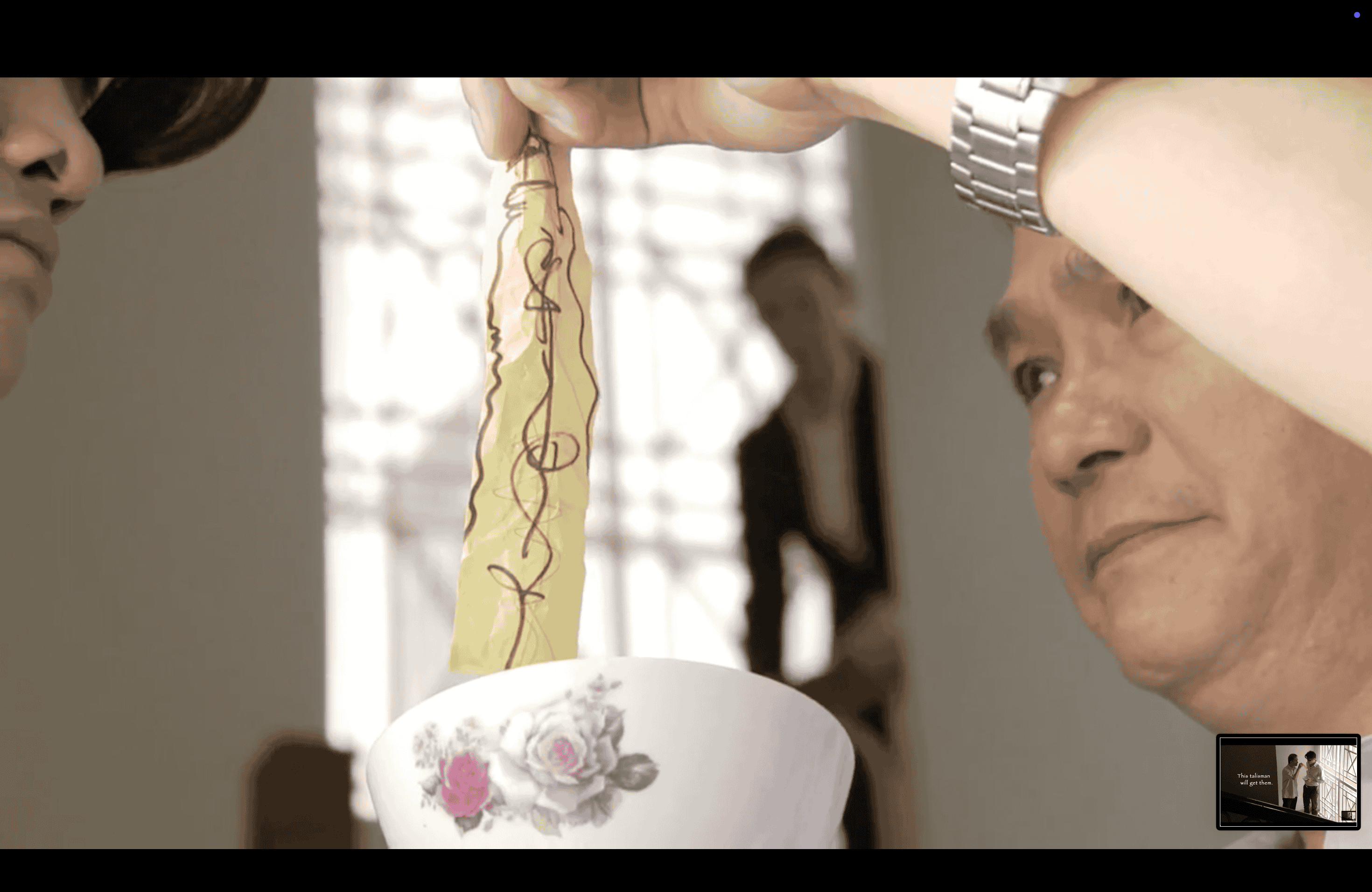
Mr Chan, ever the popular villain, returns in the next season, only this time as a client. Now claiming to have lost his powers, Mr Chan insists that he is still capable of telling whether or not someone is spiritually disturbed. This is key to his case, in which he is being sued by another couple who’ve bought his house. They claim that there are residual spirits from Mr Chan’s practice haunting them. Yet Mr Chan insists, on pain of death, that the house is not haunted. The lawyers are puzzled. They ask Mr Chan how he knows this—despite having lost his powers. So Mr Chan dispenses an avuncular aphorism: “Just because you don’t know how to cook char kway teow—doesn’t mean you cannot eat it, right?”
The lawyers are, understandably, stunned by this incomprehensible truism. But this moment’s ridiculousness also offers us a counterpoint to a national and professional identity constructed through the work of investigation, inductive, and deductive reasoning. Mr Chan’s logic proffers a countervailing mode of expertise, premised on intuition and a tacit knowledge, rather than an explicit one. It’s an important reminder for all of us, in our confident rationality, of what lies beyond our remit. Who are the ‘ghosts’ who flit in-between categories of our strict social and economic strata, whose knowledge systems don’t fit the confines of technocratic modernity nor the formalised lineages of organised religion? These aren’t just spectral presences, but flesh-and-blood people who are illegible to the ways we conventionally think, or do, kept outside of the boundaries of our realist world, whose beliefs are dismissed like the prattlings of a ‘stupid’ housewife.
The ghostly interlude floats over from “The Pupil” to its spinoff, “Code of Law”, a Singaporean approximation of the eternal “Law & Order”. Each episode is, similarly, a two-parter, featuring both the investigation and the prosecution of crimes in Singapore. In the third episode of the first season, Jacob Fernandez (Keagan Kang) and his cast of defence lawyers must represent a psychologist charged with strangling his wife. The only problem is that the accused, Wilson Tay (Sonny Lim), seems to require psychological help himself. The calm and coherent Mr Tay codeswitches between his mild-mannered self and the voice and mannerisms of a child who calls himself “Ah Boy”. Mr Tay tests the patience of all involved, his lawyers included. The case falls apart, and he is sentenced to hang.
This time, the spiritual asserts itself just outside the courtroom threshold. In a moment of unusual sobriety, Mr Tay apologises to Jacob for not being a better client. As the lawyers, perturbed, leave the room, the camera—like Wendy did before—turns and widens its gaze. It snags on…something. It’s the shadow of a child. This time, we spectators get to see what the judicial system doesn’t, or won’t. Maybe Mr Tay wasn’t acting up after all. Maybe he was truly under the sway of something that only the camera glimpses, that no lawyer or officer does. The ghostly interlude strikes again.
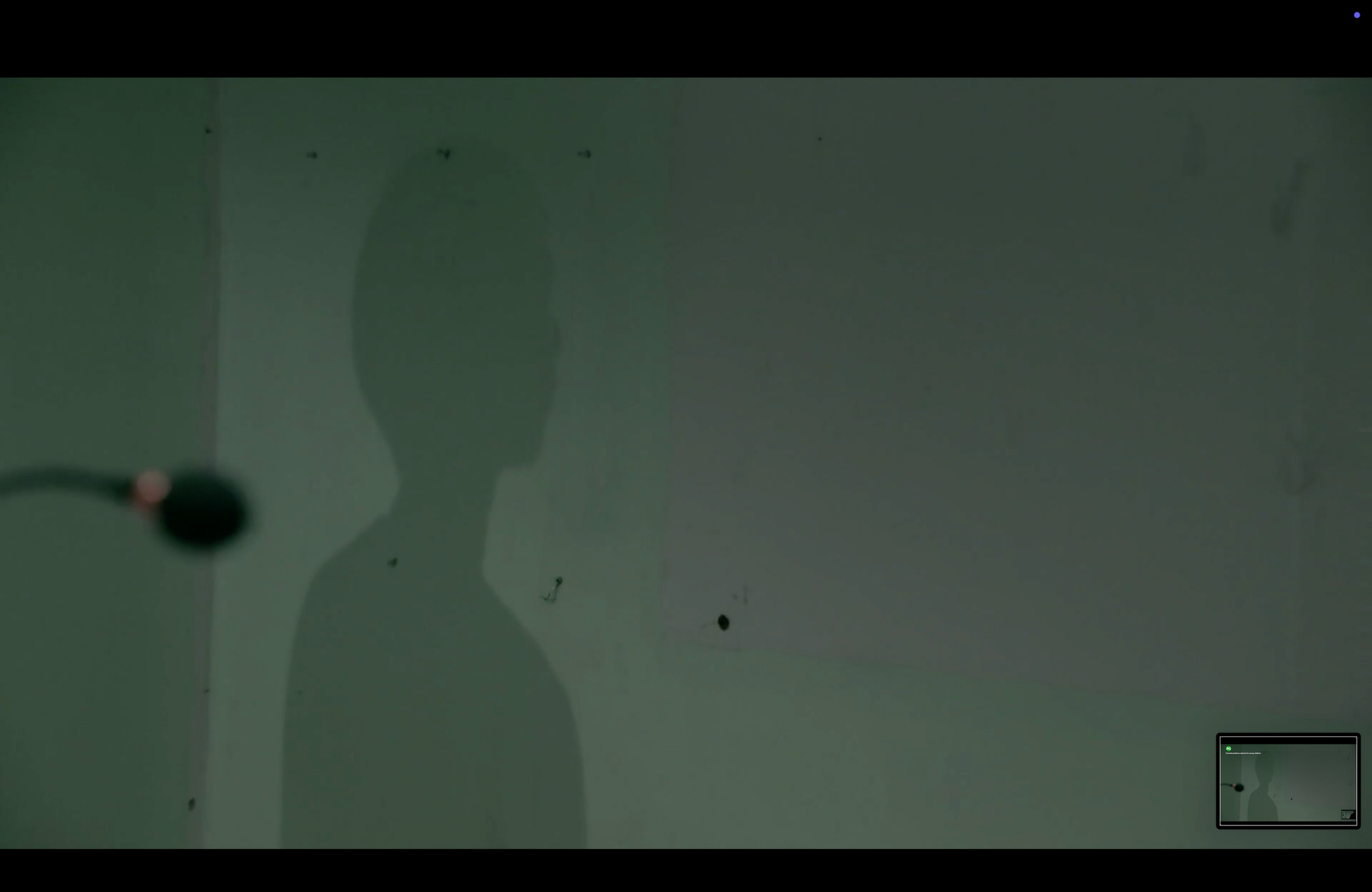
In court, Ah Boy had insisted that he was the spirit of Mr Tay’s son, killed by his own mother in a spiral of postpartum depression. Mr Tay had helped her cover it up. For Ah Boy’s spirit, it’s an exceptionally clever ruse: far more satisfying to kill his mother through his father, then force his father to face some kind of punishment for his role. But what’s concerning about the case as it transpires is the narrow leverage of legal mechanisms at work. What Ah Boy effects is a brand of supernatural justice that escapes the scrutiny of the law—even as he also evades recognition for his role: courtrooms cannot indict spirits of crimes. Simultaneously, the justice Ah Boy enacts is also one that the courtroom can’t fully acknowledge, bound as it is by its own rigorous standards of evidence and proportion. Manipulating the court proceedings and seizing a satisfying revenge is, you could say, child’s play for this terrifyingly intelligent ghost child.
Let’s, for a moment, take the legal profession, at least in the context of “The Pupil” and “Code of Law”, as that status symbol that amalgamates many things in Singapore society: a stellar education, a steep but well-trodden path to success in a highly rational and bureaucratic apparatus and, ultimately—when all the rungs are scaled and one is made partner—settled predictability and financial stability. All this is liable to the attack of the supernatural, revealing vulnerabilities we are unwilling to admit, but also uncomfortable realities we refuse to reckon with. The ghostly interruption is always present, and looking away isn’t enough to exorcise all of the forces that operate outside of our standardised and taken-forgranted modes of success and security. Even the systems we’ve built to keep out, or tame, the formless, invisible, or simply strange.
If “The Pupil”’s realist instinct is what led its writers to include tales and cases of the supernatural within its slate of legal cases, then even the realist show seems to admit to the differing orders of reality occurring in a place as supernaturally febrile as Singapore. If the supernatural is a fundamentally unavoidable reality, and the Singaporean realist story will always be plagued by these interruptions, then perhaps we must take a different emotional orientation towards them.
To a society that takes pride in its rationality and logical correctness, these stories compel us to cultivate other impulses in response to uncertainty and unpredictability, including a sense of humility, or even respect, and awe. The ghostly interlude alerts us to the blind spots of our over-confidence, but also to forces outside of our crutch of control.
Within broader South-east Asia, Singapore’s status as haunted is not exceptional. We are caught within the larger web of a region whose encounter with post-Enlightenment modernity did not cause it to lose its belief in the extra-rational. Singapore is a rich node of the larger Muslim world, undoubtedly influenced by Muslim ideas of the supernatural. In Islam, the concept ajaib broadly connotes a sense of astonishment towards a reality that exceeds the faculties of the human imagination. The upshot of ajaib in the Muslim tradition is a posture of perpetual humility, to the presence and power of forces beyond our control. The spiritual becomes a way to think about the divine writ large. Such a position lends itself well to life in Singapore, where we can perhaps be too resistant to things that appear fantastical, unrealistic, or even ridiculous. Ajaib teaches us that the fantastical nature of a tale does not necessarily take away from its reality.
In our tiny human existence, we may only be aware of the realities we are capable of mastering. But through Wendy and Jacob, Roberts & Fong, Singapore and its legal procedures, and the ghosts that move easily through the gaps—we see through a pop culture classic how we can never, in fact, rule over what we will ourselves not see. Our ghostly spectatorship demands that we learn how to see differently. We are drawn into a perpetual séance between our rationalist confidence, and the vast, unknowable realm of the spectres.
Khairillah Irwan is a literary scholar and educator. He is fascinated by the lively traffic between larger ideological currents and seemingly smaller literary forms, and spends his time trying to come to terms with cultural forms and practices that have come to be considered irrational. He is currently pursuing his PhD in comparative literature at New York University, working at the intersection between Arabo-Islamic and Southeast Asian cultural worlds.
Letters in response to this piece can be sent to sudhir@jom.media. All will be considered for publication on our “Letters to the editor” page.
If you enjoy Jom’s work, do get a paid subscription today to support independent journalism in Singapore.