


Like many Indonesians in Riau, Fitri Uswatun Hasanah last visited Singapore decades ago, when it was still possible to sneak across the maritime border without a passport. She may have noticed that the city had already attained (in 1975) near-universal access to electricity. Today it has one of the world’s most reliable grids.
But just about 100km away in the island of Galang, where the 37-year-old elementary school teacher lives, life is different. While Fitri has fairly reliable access to electricity from the local grid, many surrounding islands do not, and continue to rely on diesel generators for power. She knows of at least two islands—Pulau Abang and Pulau Korek—that still lack access to reliable electricity.
Life without reliable electricity is a problem made of Riau’s geography: an archipelago of 2,400 islands where there is a big socio-economic gap between urban hubs linked to industrial zones like Batam and Bintan, and outer islands too remote to be plugged into the grid. People living on these outlying islands make do with as little as five hours of electricity a day at roughly the same cost as those, like Fitri, with round-the-clock access to grid power.
The provincial government promised that all homes in Riau will be connected to the grid by 2026 or earlier via undersea cables. But in the meantime, those without constant power face disruptions to their livelihoods. Fishermen without cold storage can’t freeze their catch, forcing them to sell quickly at lower prices. When bad weather disrupts supply routes, fuel deliveries stop, triggering blackouts that compromise clinics, schools, and children trying to study at night.
The state recently piloted the Riau archipelago’s first cooperative-based solar power plant on Sembur Island, through its flagship rural development initiative known as the Koperasi Desa Merah Putih (KDMP). However, experts have expressed concerns around the scheme, given the government’s poor track record in maintaining similar solar projects.
Even as residents there contend with old and persistent governance challenges, they know that the shiny metropolis to the north continues to advance rapidly through various phases of its own energy transition. Fitri belongs to one of the 250 families in Dapur Tiga, a village in Galang that might be displaced by the Wiraraja Green Renewable Energy & Smart-Eco Industrial Park—the latest planned national strategic project to unsettle communities in the Riau archipelago.
She’s aware of Singapore’s plans to import solar power from the Riau Islands, but is unfamiliar with terms like “net zero” and “decarbonisation”, which are driving these decisions. “It is ironic that the energy is being exported to Singapore when some people here don’t even have electricity,” she tells us.
It is one of the many contradictions, challenges, and costs associated with Singapore’s “clean” energy drive—impacting our immediate neighbours, their livelihoods and practices, and their ecologies, from the dugong to mangrove forests.
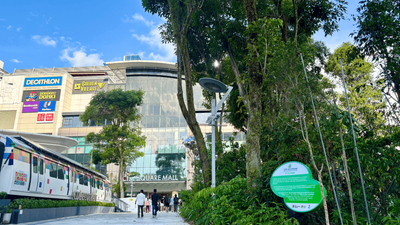
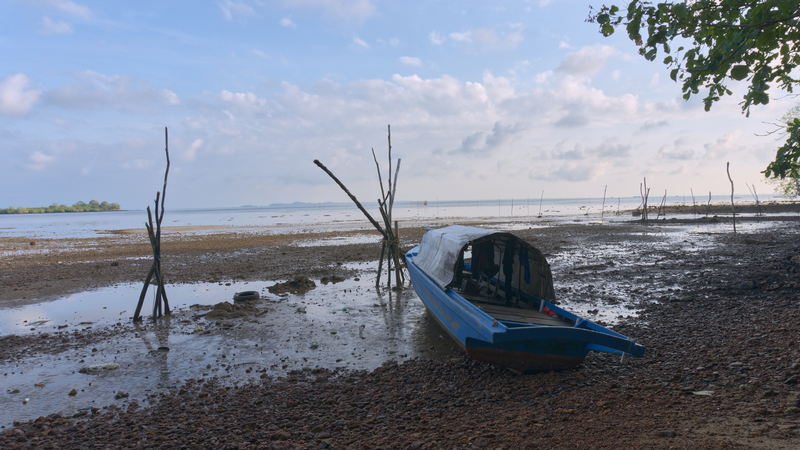
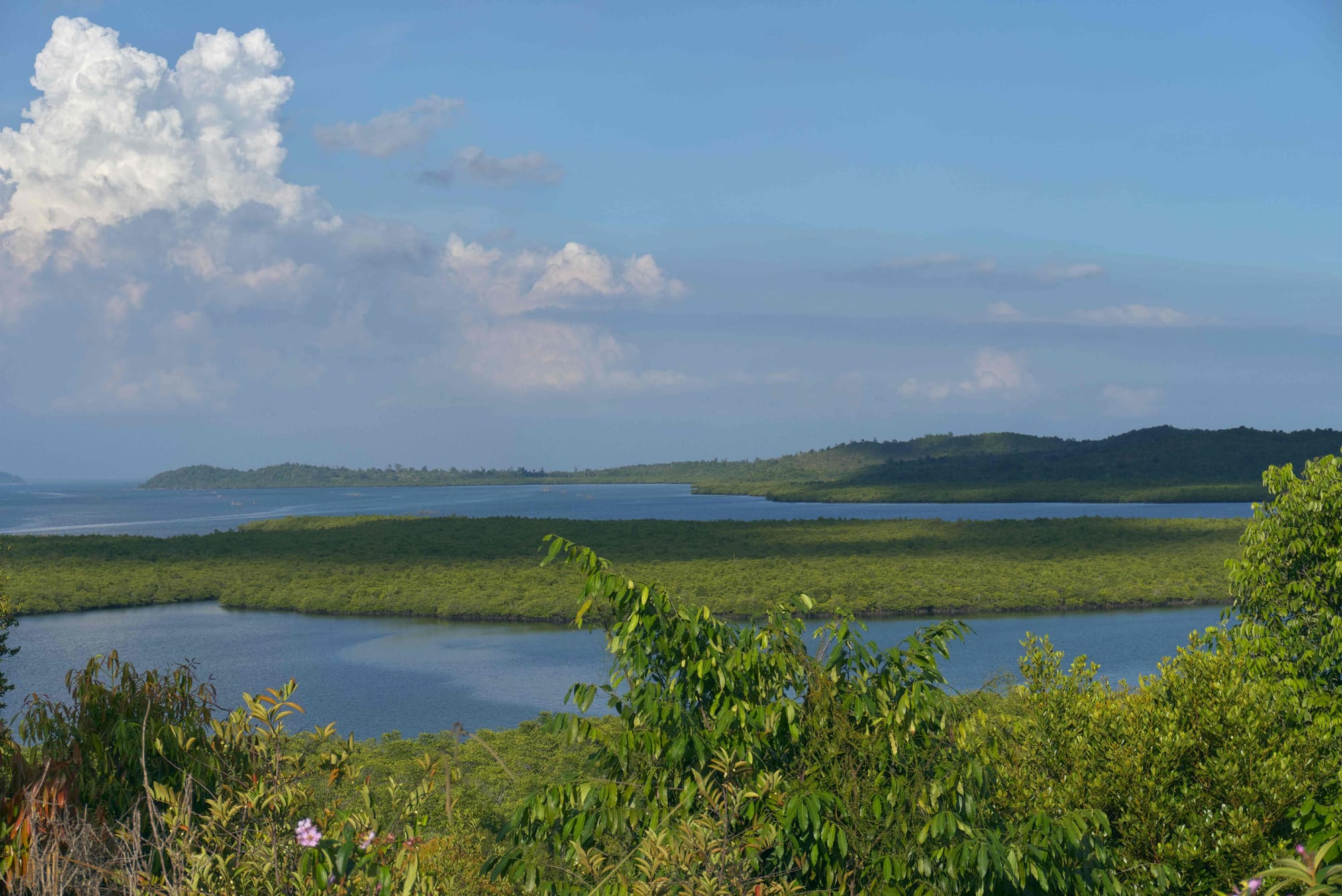
To reach the island of Galang, we had to take an hour-long ferry across the Singapore Strait to Batam, before driving south for hours, across the island of Rempang—a journey that saw the familiar sights of Batam’s shopping malls, hotels, and industrial development slowly give way to large swathes of mangrove forests, quiet coastal villages, and kelong-style restaurants on wooden stilts.
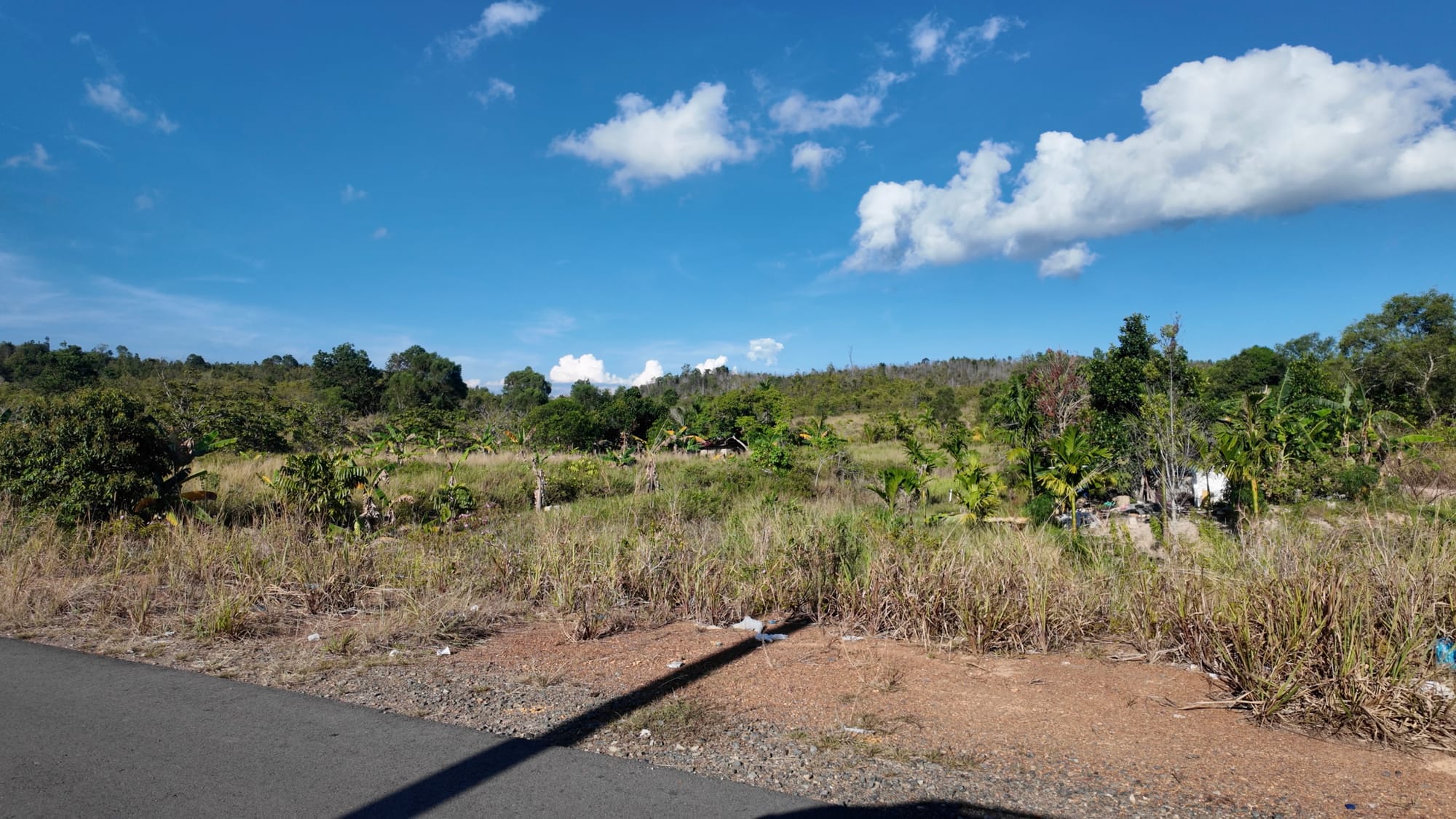
But thousands of hectares of land on Galang could soon be razed to make way for the Wiraraja Park. It’s one of many that Indonesia is co-developing with Singapore in the Batam, Bintan, and Karimun (BBK) region, where key components for the countries’ cross-border clean energy trade, including solar panels, subsea cables, and battery energy storage systems will be produced.
Indonesian and Singaporean politicians have promoted the emerging green industrial boom as a “win-win” for both countries. If Riau becomes a regional renewables energy hub, locals stand to gain from jobs and technology transfer. It is worth noting, however, that no explicit commitment has been given to improving the electrification for its over 2.2m inhabitants, who currently pay more than the average Indonesian for electricity, due to the province’s reliance on natural gas and—in areas yet to be connected to the grid—expensive diesel generators.

For Fitri, the cross-border power scheme only makes sense if the city-state is desperately lacking energy to meet its own needs. “But of course Singapore needs the energy,” she says. “If Singapore wants to pay for it, it must need it.”
The specific need for policymakers here is in tackling the power sector’s outsized contribution to emissions, part of the broader, national 2050 net-zero target. For electricity generation, Singapore is currently heavily reliant on imported natural gas—cleaner than coal, but still a fossil fuel—including piped gas from Indonesia.
Solar is the land-scarce nation’s most viable source of renewable energy. Singapore’s rooftop solar capacity now surpasses even the total solar capacity of Indonesia, whose land area is roughly 2,600 times bigger.
But even with these efforts, domestic solar energy is projected to meet only 4 percent of Singapore’s total electricity demand by the end of this decade—and 10 percent by 2050. A large part of Singapore’s clean energy supply will be met through imports, which are expected to make up roughly a third of its energy needs by 2035, and up to 60 percent by 2050, under scenarios where regional cooperation is strong. Over half of this is set to come from large-scale solar farms in Riau: 3.4 gigawatts to be precise, projected to power roughly 595,000 households annually. Put another way, the Riau archipelago’s immense solar potential is being exploited primarily to help meet the decarbonisation needs of Singapore.
Launched with much fanfare in 2024, the Wiraraja Park had by then already secured over US$17.6bn (S$22.4bn) in investments that promised to create over 36,000 new jobs. Yet, further details remain scarce. An environmental impact assessment, also known as Amdal in Indonesia, for the new development has yet to be released.
It expects to get approval from BP Batam, the free trade zone authority, for the first phase of development on 1,000ha this year so it can start exporting silica products to Europe and the US by 2029, the developer tells Jom. Its second phase entails converting another 2,900-odd hectares of forest.
Fitri, originally from Lombok, has neighbours from Java, Sumatra, and Nusa Tenggara. They migrated to the islands closest to Singapore in search of better economic prospects, in a widespread practice of circular migration known as merantau. But she’s been there now for over two decades. She tells us that her family is willing to move to make way for the new project if the compensation is fair, new houses are built, and most importantly, if the relocation is not forced.
The project developer, Wiraraja Group, told Jom that it has already consulted the affected communities in Galang and will offer employment in low-skilled maintenance work to residents aged 20-55. But will jobs materialise?
The region has a history of unfulfilled employment promises that date back to the late 1980s, when the SIJORI (Singapore-Johor-Riau) growth triangle was first mooted: combining Singapore’s capital, logistics, and managerial expertise with the cheap land and labour of Johor and the Riau Islands. Though the investment boom that followed attracted large numbers of economic migrants to Batam, employment growth has not kept pace.
According to 2014 figures, there were only 3,737 jobs for 11,728 job seekers in Riau. Many who headed for Batam ended up settling on surrounding islands like Rempang after struggling to find work. And even as billions flowed into the region—mostly benefiting the big Indonesian and Singaporean conglomerates—many of the jobs created were lower-value than advertised.
The widely hyped agreement has made a resurgence of late, with Vivian Balakrishnan, Singapore’s foreign affairs minister, suggesting that a strengthened deal could attract investments in transport, data centres, and the mythical Asean Power Grid (which has been talked about for half a century, with little to show for it).
Unsurprisingly, green industrialisation plans in Batam—including EV supply chains as well as solar and battery storage manufacturing linked to Singapore—are being promoted using language similar to the original SIJORI vision: regional integration, foreign investment, industrial upgrading, and “future jobs”.
If history repeats itself, the owners of companies such as the Wiraraja Group will make billions, while the likes of Fitri may miss out.
Another conglomerate, the Salim Group, which spearheaded the development of Batam and Bintan alongside Jurong Environmental Engineering and Singapore Technologies Industrial Corporation, is also well poised to benefit from Riau’s next phase of industrialisation.
Its subsidiary Gallant Venture is in the midst of developing a solar farm on Bulan Island, just southwest of Batam, alongside PacificLight Renewables and Medco Power Global under an entity known as Pacific Medco Solar Energy. It is one of the six projects granted conditional licenses to export solar power to Singapore.
Bulan Island is more familiar to Singaporeans for supplying, till recently, two-thirds of our fresh pork. An industrial pig farm was built there, by another Salim Group subsidiary, after Singapore outlawed the sector in the 1980s due to its pollutive impacts. By 2028, the first green electrons from Bulan Island are set to make their way across the straits, following the same journey as the live hogs that came before them—albeit through undersea cables.
Singapore’s Energy Market Authority (EMA) has also granted these licenses to Singa Renewables, Vanda RE, Adaro Solar International, Equator Renewables Asia, and Keppel Energy. But none of the companies have publicly disclosed where exactly they will site their solar and battery storage projects.
Vanda RE’s director Enda Ginting said that the location of its project will be chosen based on how well it can support reliable solar power generation while minimising potential impacts on communities and the environment. “We view local communities as long-term partners, which is why we have engaged with communities since project development work began in 2022,” Ginting told Jom in a written statement.
He added that Vanda RE, a joint venture between Gurin Energy and Gentari International Renewables—Malaysian state oil and gas firm Petronas’s clean energy solutions arm—adheres to internationally recognised safeguards, including the Equator Principles and the performance standards set out by the World Bank’s International Finance Corporation.
“We also comply with all Indonesian laws and regulations, including Amdal. Where international standards are more stringent, we apply those,” Ginting says. Furthermore, a community hotline has been set up for affected communities to directly reach the company. None of the other renewable energy developers that Jom reached out to has responded to queries, as of the time of publication.
An EMA spokesperson told Jom that “project developers are responsible for complying with the applicable laws, regulations and permitting requirements in the host country, including those relating to land use, environmental management, supply chains, and stakeholder engagement,” and that “[w]e are unable to comment on specific project locations, commercial and supply chain arrangements, or individual companies’ investment decisions.”
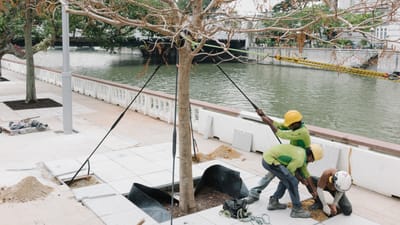
Singaporean conglomerate Sembcorp will also develop two new low-carbon industrial estates in Batam. The first, located in Tembesi, started development in 2025. It will be powered by a floating solar farm in an adjacent reservoir nearby. The second will be located in Tanjung Sauh, one of the smallest islands on Batam which was recently designated a special economic zone. Both projects are intended to power energy-intensive businesses, such as data centre providers, with green energy.
Despite being branded as “green” and in service of a “just” energy transition, Singapore’s development of a new sustainable industrial zone risks reproducing older patterns of frontierisation—a process by which seemingly unused or underutilised areas are marginalised and exploited in service of capital.
To make way for Sembcorp’s Tembesi project, nearly 800 families were forced to move—some of whom, despite refusing relocation, were forced to watch their homes get demolished by officers from the army, police force, and BP Batam.
It was not the first time that a “green” industrialisation project in the Riau archipelago seeking to meet increasing demand for clean energy from wealthier nations has been met by community resistance. In mid-2023, the Indonesian government’s plans to transform Rempang into an “eco-city” filled with luxury housing, tourism spots, and glass-making factories came to light when villagers awoke to armed police and military tanks lining their roads.
Despite living there for at least two centuries, they were being evicted for the new national strategic project—a designation that allows developers to bypass environmental and social safeguards to acquire the land quickly. The project’s developer, PT MEG, had secured a reported US$11.5bn (S$14.6bn) investment from China’s Xinyi Glass Holdings to build a massive solar panel manufacturing facility using Rempang’s rich reserves of silica and quartz sand.
“It is such an unjust act that the government is trying to push this project as part of a transition to clean energy for Indonesia and the wider South-east Asian region,” says 43-year-old Sukri, who like many Indonesians uses only one name. “The government should prioritise the well-being and welfare of the local people first, before focusing on foreign investments, because people are being sacrificed here.”
Sukri resides with his wife and two kids in Pantai Melayu, one of the nine villages continuing to oppose the “eco-city” project under the Rempang-Galang United Community Alliance (AMAR-GB), which was formed in 2023.
Born and raised in Rempang, he inherited his land from his grandmother and sees it as his duty to protect it. One day he will pass it on to his children. A fisherman and farmer, he grows coconuts, mangoes, cempedak, durian, rambutan, and jengkol. His family depends on the land and the sea, and he treasures the quiet rhythm of rural life and its clean air—far from the smog of neighbouring Batam.
Distrust of the authorities still runs deep among local residents, despite Indonesia’s minister of transmigration, Muhammad Iftitah Sulaiman Suryanagara, assuring residents that there will be “no more forced relocations” on a recent joint visit to Rempang with BP Batam.
We learned that PT MEG’s parent company, Artha Graha—owned by wealthy Indonesian businessman Tomy Winata—has also reached out to provide aid in the aftermath of forest fires that swept across the archipelago two weeks before we arrived due to the unusually harsh and prolonged dry season. (Winata, and Anthoni Salim of the aforementioned Salim Group, are some of the so-called “nine dragons”—a group of influential Chinese-Indonesian business moguls that control a significant part of the nation’s economy.)
“No matter what the company says, we will always be here and ready to fight back,” says Sukri. At one of AMAR-GB’s outposts where members used to stand guard each night to look out for authorities, some sleeping on the roads to block anyone attempting to enter their villages, members recounted the acts of violence and intimidation they have endured as part of their resistance.
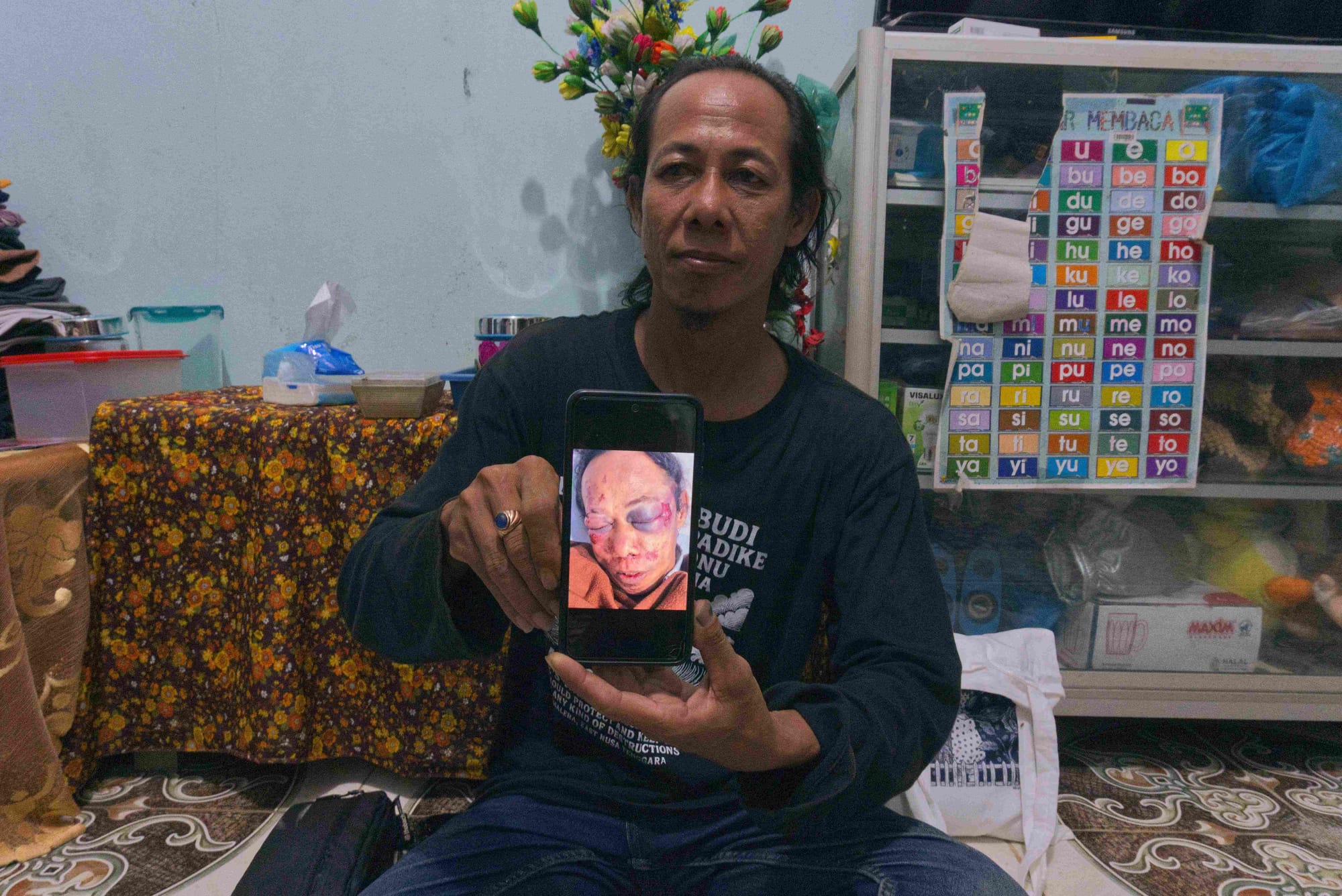
Zakaria, 44, a resident of Sembulang Hulu village, showed us a graphic image of himself with a giant bruise on his swollen right eye and multiple lacerations over his bloodied face. He had been beaten up by hired thugs—including an army man they identified from a military member card left behind at the scene—at that very outpost in 2024.
It took him weeks to recover from his injuries. He could not remember being admitted to hospital. Others had arrows shot at them. Another victim told us that his car was smashed by the authorities, who threatened to burn down his house if he continued resisting the project. Indigenous to the area, Zakaria says his ancestors endured great hardship to build his village, and he would not stop defending their legacy.
As for the more recent arrivals who relocated to make way for the Eco-City project, Zakaria says they are no longer his concern. “Moving there was their choice,” he says with a dismissive shrug. The indigenous people of Rempang insist they would rather give up their lives than have their land converted into an industrial complex. “If we have to die to stop this project, we will,” says Sukri.
While authorities under the new Indonesian administration are no longer using force, they are still resorting to “inappropriate” compensation to convince people to move, such as merely Rp4m (S$286.8)—an amount that is below Jakarta’s monthly minimum wage—in monetary remuneration, alongside sofas and electric bikes, says Sukri. “The childhood memories, the culture, the history, and the links to our ancestors have been embedded in this land for hundreds of years,” he says. “Nothing compensates for moving.”
To challenge the prevailing narrative that industrialisation is necessary for progress, the remaining villagers resisting the Rempang Eco-City project have been building their own collective markets through their fish catches and farmed produce. “We don’t need your project. We are already self-sustained. The economy here is good,” says Sukri. “We are just regular people who have lived here for years and years. We know this environment well and this is where we make our livelihoods.”
Surveys conducted by Trend Asia and Transparency International Indonesia in 2025 found that the average monthly household income of affected households is about Rp32.8m (S$2,349.6)—far higher than the government’s estimates of Rp3m (S$215.1) a month.
Though development in Rempang has paused, conflict has been escalating elsewhere on the island. Earlier this year, some residents of Sungai Buloh and Sungai Raya villages—who are part of the AMAR-GB resistance—were summoned for questioning by the police for allegedly “working on, using, or occupying” the nearby forest without authorisation.
In 1986, the Ministry of Forestry designated it as a hunting forest, i.e. conserved for recreational hunting. Residents who have been living in the vicinity for generations say this decision was made without meaningful consultation. Still, the villagers could farm the land with no repercussions.
Then in 2018, a ministerial decree changed the status of the hunting zone into a convertible production forest—meaning that the forested land can legally be converted for other uses. In practice, land under this category is often later released for the development of industrial estates, plantations, and other infrastructure.
It is only after this change that the villagers started being criminalised for farming on the land and going about their daily activities. They fear that the law is now being used to further assert state control under a different guise to take away their land.
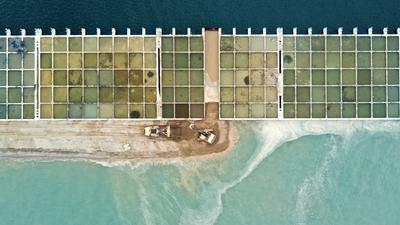
In neighbouring Bintan, the expansion of “green” industries has unsettled the region’s cultural and environmental diversity. In Kawal Pantai on the east of Bintan, large patches of mangrove forest and sea grass have already been cleared to accommodate an aluminium processing complex, which stretches across 4,579ha. (Aluminium is a key input in clean energy infrastructure, used in solar panels, wind turbines, and energy storage.) Owned by PT Bintan Alumina Indonesia (PT BAI)—a subsidiary of Chinese firm Shandong Nanshan—the industrial complex doubled its annual alumina capacity to 4m tonnes from domestically mined bauxite in end-2025.
Plans to enlarge the complex have led to the widespread clearing of nipah palms—which the indigenous sea nomads deem as a sacred resource connecting them to their ancestors and the land. Located near burial grounds, the young mangrove leaves are rolled into cigarettes which are lit as an offering to their ancestors—who the Orang Laut believe are still alive in another dimension to provide guidance—in a ritual known as buat asap.
Working with Singapore Indigenous rights non-profit Orang Laut SG, Kawal’s residents have rallied against the graveyard’s relocation, and say that land reclamation that has carpeted important mangrove nurseries for young fish was done without their consent.
Johanes Jamil, an Orang Laut elder, fisherman, and teacher, observes that about half of the mangrove forests in the area where he lives have disappeared since 2017, when PT BAI started developing the area. These days, he says it’s not easy to find crabs or prawns, and juvenile squid have started to emerge from their mangrove nurseries before they have reached maturity. “When baby squid go out to sea before they’re ready, it’s a sign from our ancestors that something bad is happening,” he said on a video call with Jom in April.
Following alleged intimidation by PT BAI workers in January, the community has formally applied for a tanah wakaf, or land certificate, to protect its burial grounds, which have existed since the 1970s.
After raising their objections against PT BAI’s expansion plans, the Bintan regency brokered a meeting between the Orang Laut community and PT BAI representatives, where residents were given verbal reassurance that there were no plans to resettle them or move the graveyard. Instead, the government intends to improve livelihoods through cultural tourism. However, the authorities have not provided the community with a written statement to confirm this.
In the village of Tenggel on Poto Island, off the eastern coast of Bintan, Andi Suratno, a fisherman, says his fishing catch—done by placing bubu, or traditional fish traps, underwater—has declined by 75 per cent since PT BAI’s aluminium smelter was fired up almost a decade ago.
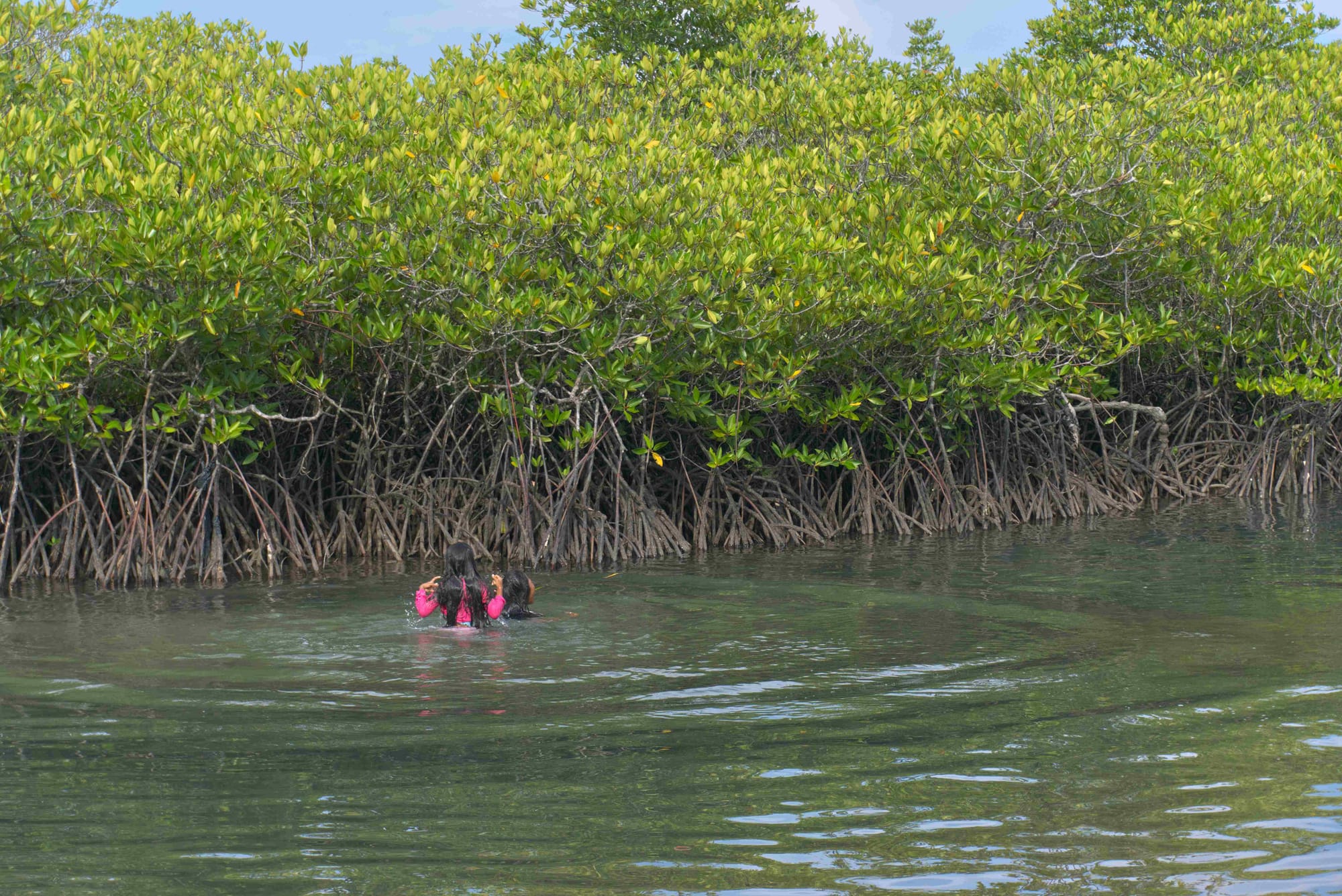
The village is home to about 115 families who have lived on the island for generations. Andi says he is willing to stomach heavy industry on his doorstep with the expansion of PT BAI’s industrial complex—if the price is right.
But he says his community, who are mostly economic migrants from Sulawesi, has only been offered food aid and promises that his children will be schooled by the company. He is prepared to publicly protest against the project if compensation talks fall flat, he warns.
As it is, he says he was not initially informed that the project was happening, nor of its environmental impact—the results of an environmental impact assessment have not been made public yet. Jom has approached PT BAI for comment.
Impending sand mining operations in the waters off Numbing Island—which overlaps with the fishing zone—could further reduce these fishermen’s catches. According to local media reports, two of the five companies that have acquired mining permits are linked to Tomy Winata’s Artha Graha Group and Salim Group’s PT Fahreza Duta Perkasa.
In May, around 200 Bintan fishermen staged a protest calling for the revoking of these permits. The fishermen suspect that the sand might be exported to Singapore, which imported vast quantities from the Riau Islands in the 1990s to construct Jurong Island for its oil refining facilities. The sand extraction back then was so extensive that Indonesia had to undertake its own reclamation works to prevent Pulau Nipah, which acts as the country’s maritime boundary marker with Singapore, from disappearing in the early 2000s.
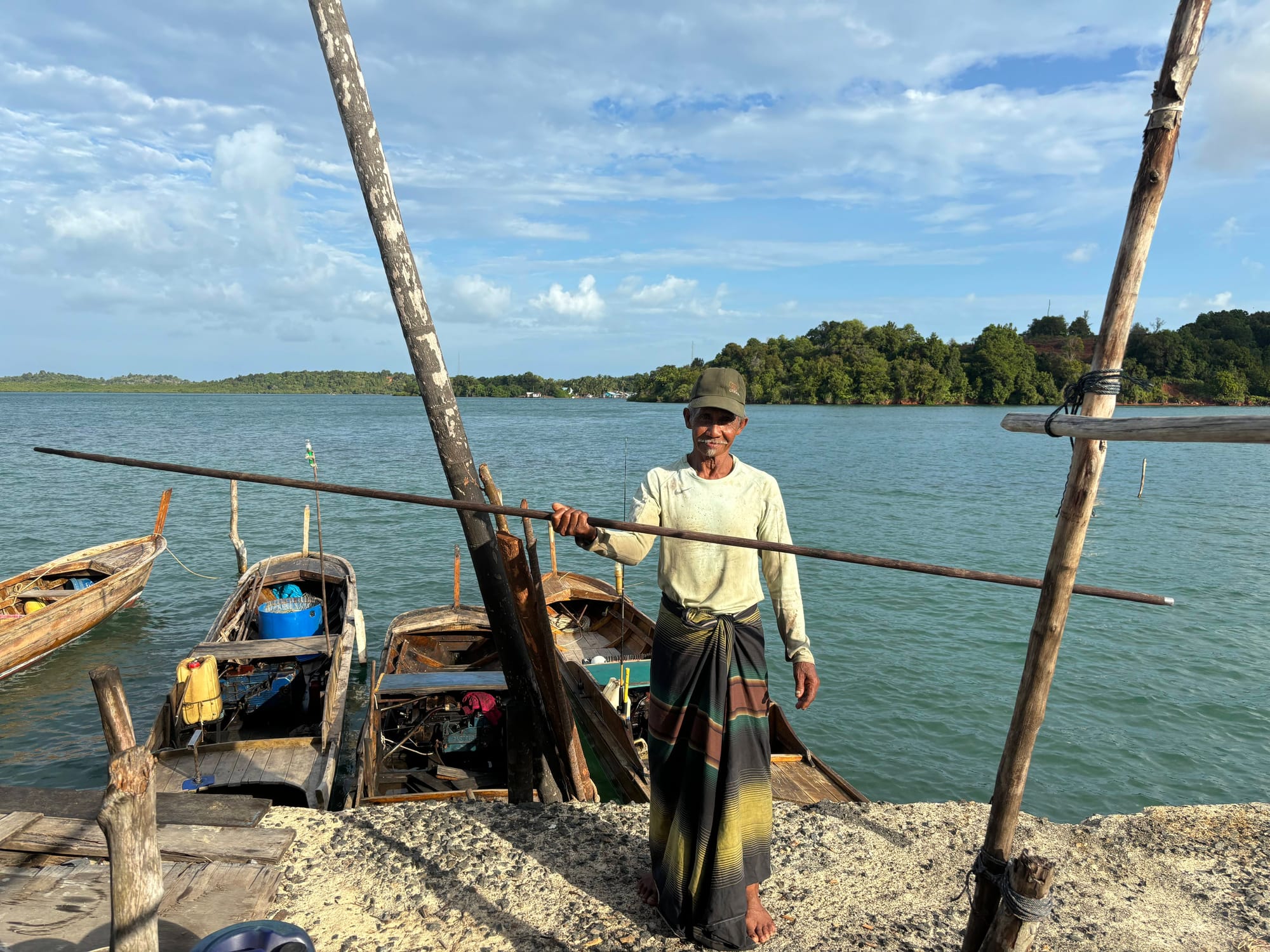
On Air Glubi, an island adjacent to Poto settled by Orang Laut in the 1970s, a retired dugong hunter, Musa, says the expansion of PT BAI’s industrial complex could be ruinous for the elusive marine mammal he says only he knows how to track. Though he no longer kills dugong—his “pension” is paid by a local eco-resort—he tells Jom that he has had to move their traditional fishing grounds further out to sea to avoid PT BAI’s ships. He says he feels powerless to stop the encroachment on Poto, was never consulted about the project, and his community does not possess the skills to benefit from any employment that the industrial park may bring.
In late April, dozens of people from the islands of Kelong and Air Glubi held a joint protest in the waters in front of PT BAI. Hospitality operators have also clubbed together to fight PT BAI, arguing that industrial expansion on the small low-lying island will kill tourism. The collective, called the East Bintan Coastal Tourism Actors Forum (EBCTAF), say it was not consulted in any of the development plans for Poto Island, and have appealed to the chairman of the Riau Islands house of representatives over the shrinking of a marine protected area (MPA) in 2020 that exposed Poto to development.
The group points to research carried out by the Maritime University of Raja Ali Haji (UMRAH) in 2020, which estimates that US$47bn (S$59.9bn) in ecosystem services provided by mangroves and tropical forests could be lost if the industrial park is built on Poto Island.
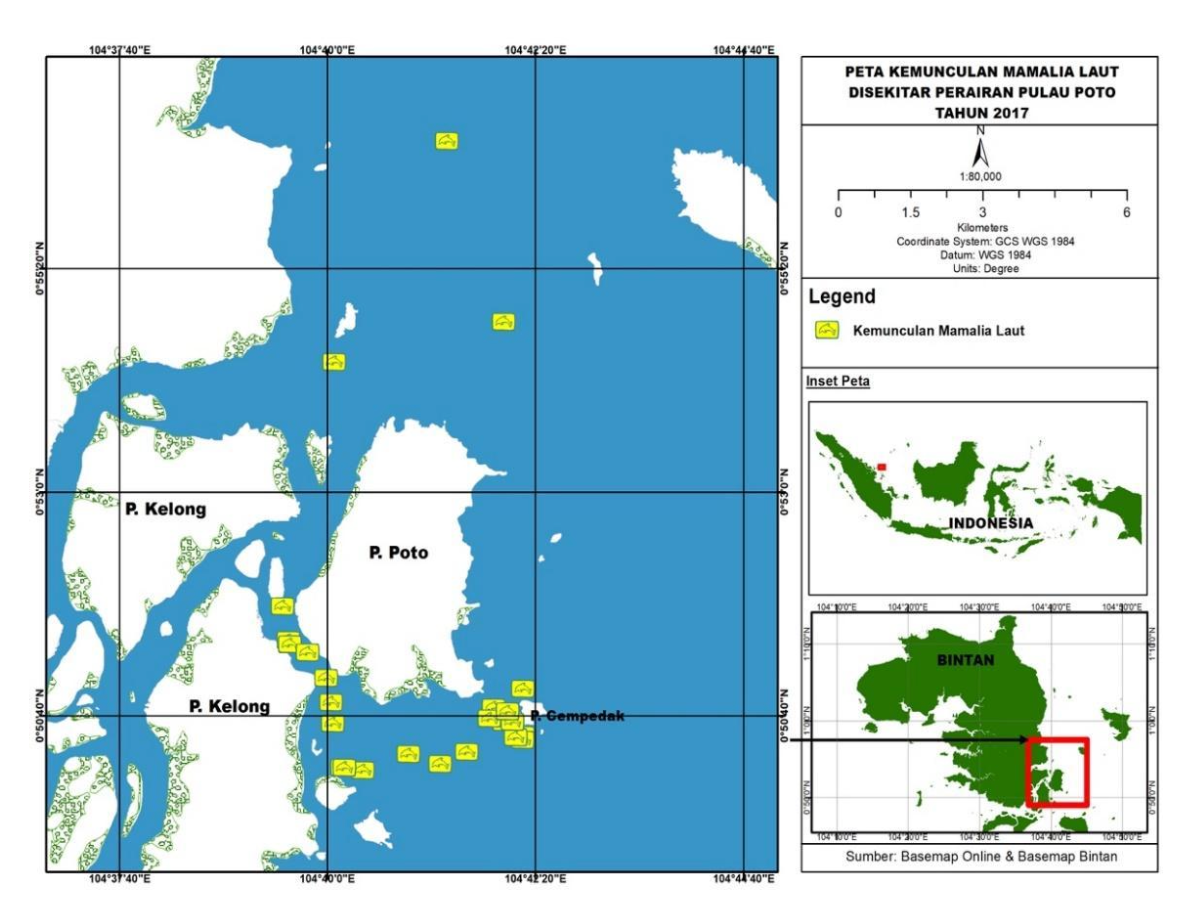
UMRAH’s study found that marine mammals including Irrawaddy dolphins, Asian small-clawed otters, and dugongs were frequent visitors to Poto, and they are three of 19 species classified as endangered by the International Union for Conservation of Nature (IUCN) that live in the area.
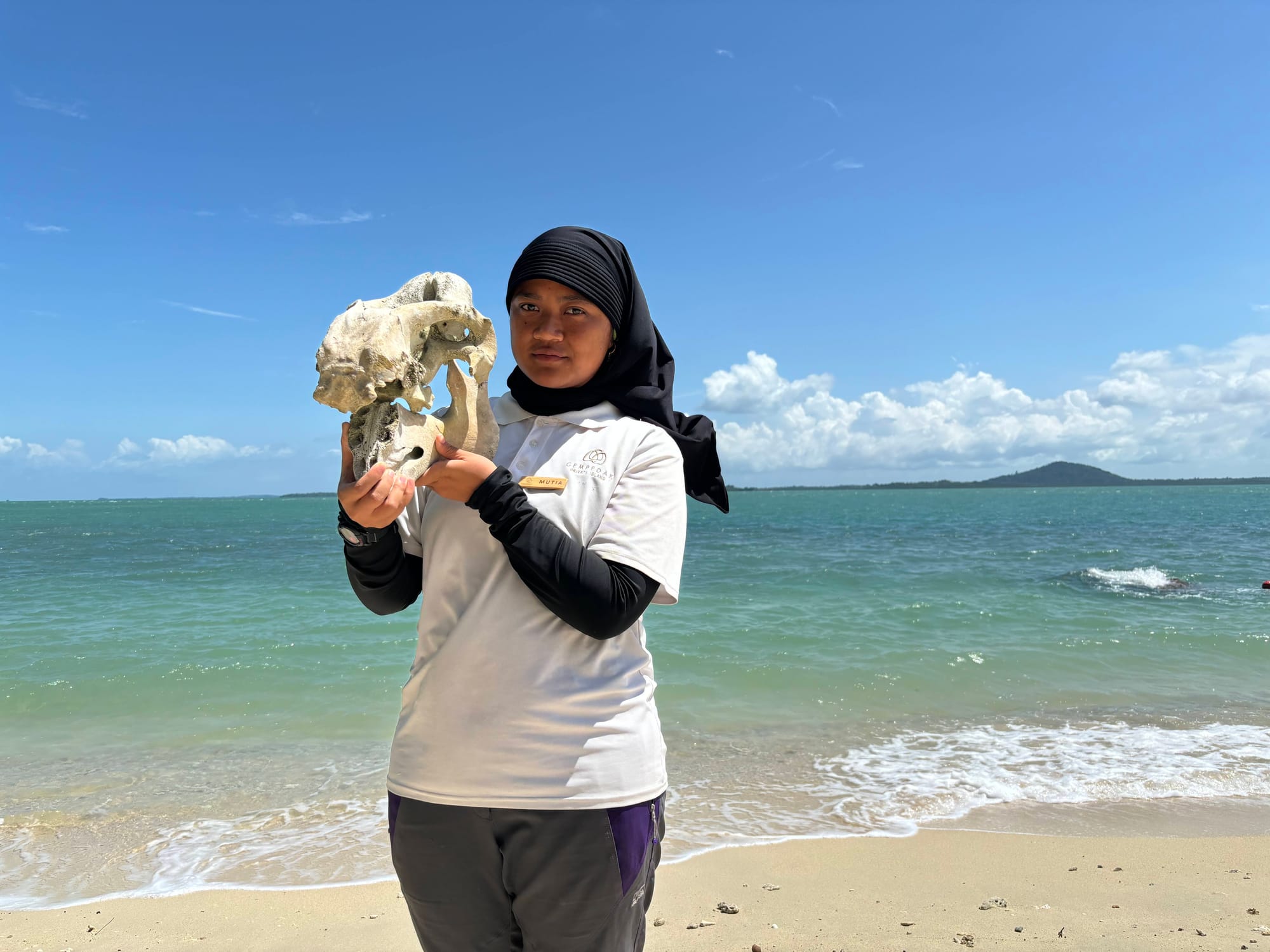
Asyafa Mutia, a marine biologist who works on Cempedak, a Singapore-headquartered private eco-resort island directly opposite Poto, says that the impact of the development on species living in the area, such as bamboo sharks, dolphins, and dugong, will likely be significant. Filter-feeding species such as giant clams, sea cucumbers, and sea stars have already been affected by legacy bauxite mining, while many fish species were overfished before an MPA was set up, she says.
EBCTAF also contends that the waters east of Bintan Island are shallow and populated with coral reefs, which will make it difficult for large vessels to sail around Poto. Anchoring in waters around the island will put additional pressure on the reefs, and the release of ballast water and waste from anchored vessels will put additional environmental strain on the area, it says.
The discovery of new coral reef fish species off the shores of Cempedak could help the case for the area’s conservation. An expedition in April led by renowned marine biologists Nesha Ichoda and Mark Erdmann found various species of fish, including a gobi, sand diver, and grub fish, that could be endemic to the area.
The team hopes that the area could be preserved by quantifying how dependent tourism is on biodiversity. A similar feat was achieved at the Papuan Bird’s Head Seascape (BHS) in West Papua, where Ichoda and Erdmann work. BHS is now a global model for proving that protecting biodiversity can boost high-value eco-tourism.
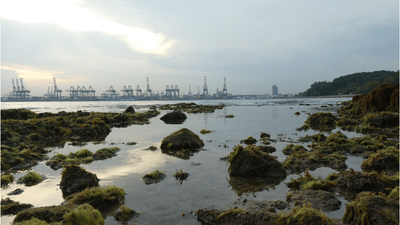
From Pantai Melayu in Rempang, it is possible to get a clear view of the Singapore Strait, without the ubiquitous ships that clutter the horizon of the urbanised city-state. Despite being islanders, most Singaporeans are now strangers to the sea, which has been pushed to the periphery of everyday life by prosthetically enlarged coastlines. But for the inhabitants of Rempang and Bintan, the sea is their lifeline and passageway. There remain strong historical and cultural ties that connect them to the surrounding coastal territories, including Singapore.
The SIJORI economic grouping appears to have emerged from tabula rasa in recent decades. But for centuries, the waters around present-day Singapore, the Malay Peninsula, and the Riau archipelago formed a single seascape.
Johanes Jamil, the Orang Laut elder who is fighting to protect his ancestral lands in Kawal from the expansion of PT BAI’s aluminium smelter, points out that one of the graves in his community cemetery belongs to an indigenous elder who was born on Pulau Semakau, one of Singapore’s southern islands. Just a few generations ago, the island was inhabited by Orang Laut communities with ancestral connections to other maritime tribes on nearby islands. Now it’s used to store Singapore’s incinerated rubbish. (And is slated to be combined with its neighbours to form a “Western Island”.)
Johanes recalls the time Firdaus Sani, the founder of Orang Laut SG, visited his village last year and met his grandmother, Kancil. She presented Firdaus with an ancestral will in the form of a dugong’s tooth and a turtle skin ring—for the protection of the Orang Laut descendants in Singapore.
“She wanted to give [the ancestral will] to Firdaus because she felt a spiritual connection with him. She not only wants to protect her community in Kawal, but feels the connection with the Orang Laut in Singapore,” he said.
“We are serampuan. We share the same origin, the same root. We live in the same ocean. We share the same currents. We eat the same fish. We are like a big family. If one member gets sick, the rest should give their care and attention.”
Robin Hicks is a freelance journalist covering nature, climate and business.
Gabrielle See is a Singapore-based journalist drawn to stories of people and places shaped by extractive development, with a focus on South-east Asia.
Letters in response to this piece can be sent to sudhir@jom.media. All will be considered for publication on our “Letters to the editor” page.
If you enjoy Jom’s work, do get a paid subscription today to support independent journalism in Singapore.