

In How to Do Nothing: Resisting the Attention Economy, writer and artist Jenny Odell pleads with readers to step off their digital treadmills, to unplug and enact “some kind of interruption, a removal from the sphere of familiarity”, even if briefly. These interruptions are akin to retreats, she says, and “they affect the way we see everyday life when we do come back to it”. Odell’s book provided the words I’d been searching for all these years. Bird-watching, or birding, is my retreat. It is also comfort and balm, soothing my device fatigue and reorienting my attention to the physical and the tangible: nature, wildlife and beyond. Over the years, I have returned to the same Singapore parks and the same spots in Malaysia to train and lend my scarce, limited attention to our biodiversity—and by extension regain the capacity to be attentive in my own life.
In 2021, around the same time when I first read Odell, local Telegram and Facebook birding groups were all aflutter. Singapore was seeing a mysterious influx of birds seldom found here: the Tree Pipit (Anthus trivialis), Spotted Flycatcher (Muscicapa striata), Buff-rumped Woodpecker (Meiglyptes grammithorax) and the Green Broadbill (Calyptomena viridis). Some thought this could be due to unusual weather patterns in the northern latitudes.
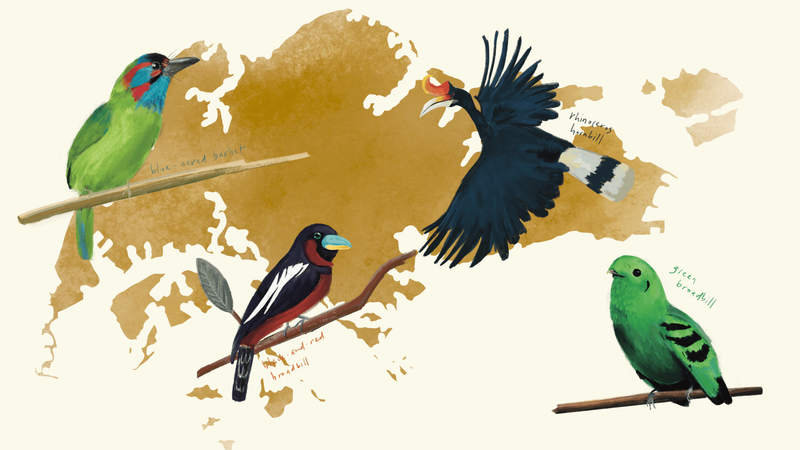
Curious and cautiously excited, some friends and I headed to Pulau Ubin in search of the Green Broadbill, once a denizen of these parts, now a rarity. When we arrived, a few fellow birders were leaving after a futile morning in search of the sought-after visitor. The Green Broadbill is a shy creature, well-camouflaged and not inclined to emerge from the forest’s canopy. Luckily, it made an exception for us. Soon after reaching, we spotted a familiar movement that indicated flight. It was greener than the greenest leaf, because of how small changes in feather structure reflect light. A small bird, about 17cm long, Green Broadbills have rounded heads, widely gaped bills and short tails. Male broadbills have black ear patches behind each eye and three black bars on each wing, while females are paler green with no black markings. With its foliage-green plumage of feathers, it could otherwise go unnoticed, sitting motionless inside the lowland rainforest cover.
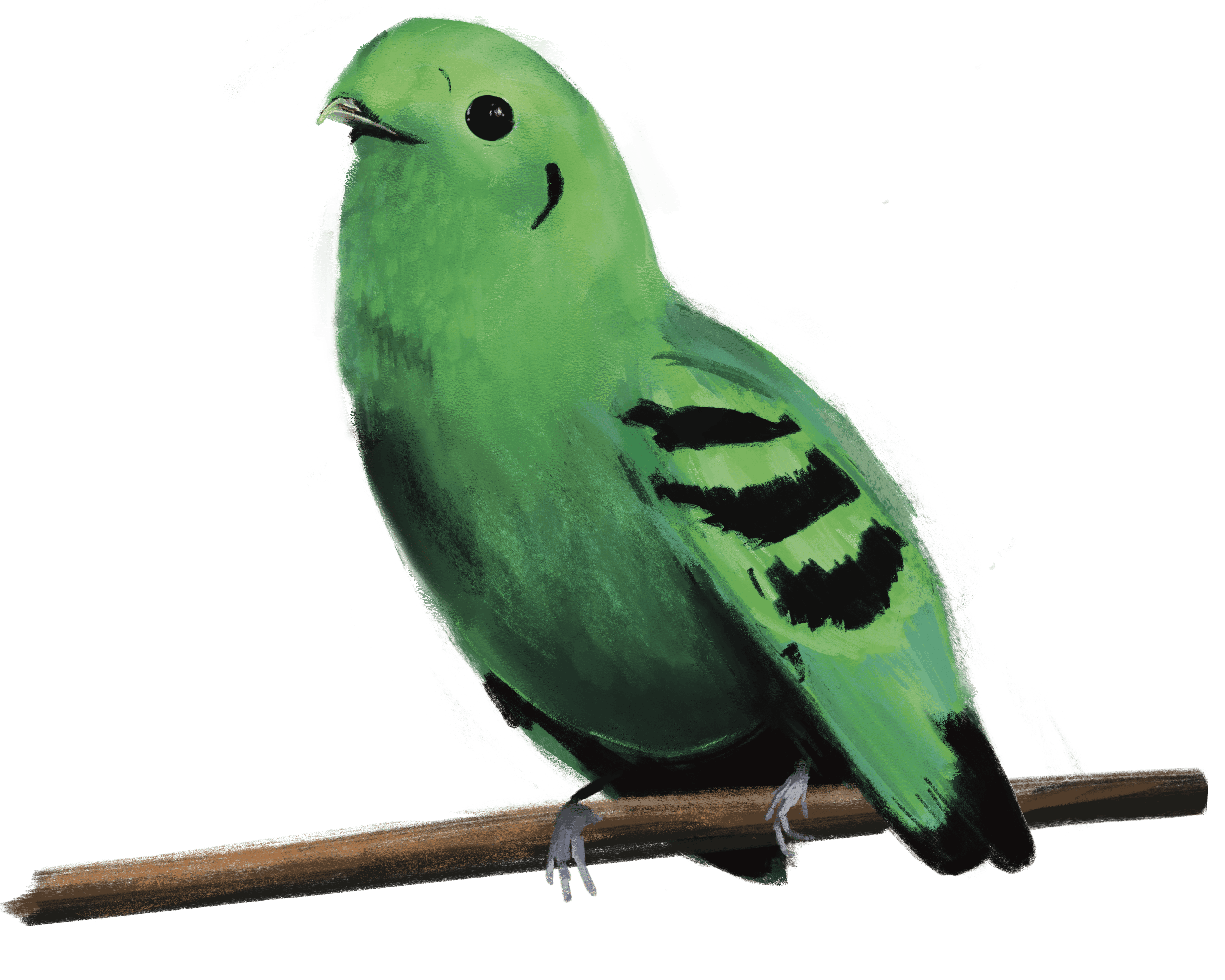
Our eyes widened and our faces filled with glee. From 25 metres away, we celebrated in total silence, pumping our fists in the air and cheering within. The sheer ecstasy I felt in that moment was stunning in its intensity. The essence of birding, captured in a moment.
But a sobering thought tinged our celebration. We had been aching to get a glimpse of a bird that had once been native to the island—found, according to Stamford Raffles, in the “retired parts of the forests of Singapore”. Indeed, the first Green Broadbill ever recorded was found here in 1819, and also has the distinction of being the first bird from Singapore to be described and given a scientific name.
Prior to colonisation, 82 percent of Singapore’s land was occupied by lowland dipterocarp forests. Another 13 percent consisted of mangrove forests, while freshwater swamp forests formed 5 percent of the landmass. Such richness made the island home to a diverse array of bird species. The William Farquhar Collection of National History Drawings, commissioned between 1803 and 1818 by the eponymous first resident of Singapore, comprises 477 works that provide invaluable information for understanding the changes to our biodiversity.
Colonisation drove rapid deforestation and clearance for agriculture, urbanisation and infrastructure projects. By 1900, 90 percent of Singapore’s primary forests had been cleared; and they continued to be felled at a rapid pace after independence. Today, primary rainforests occupy a meagre 0.28 percent of Singapore’s landmass, while secondary forests—including abandoned rubber plantations—take up about 21 percent. The fragmented patches of primary forest and mature regrowth that are left around the water reservoirs in the Bukit Timah and Central Catchment Nature Reserves cannot sustain large populations of these birds, most of which require large areas of relatively undisturbed forests for foraging.
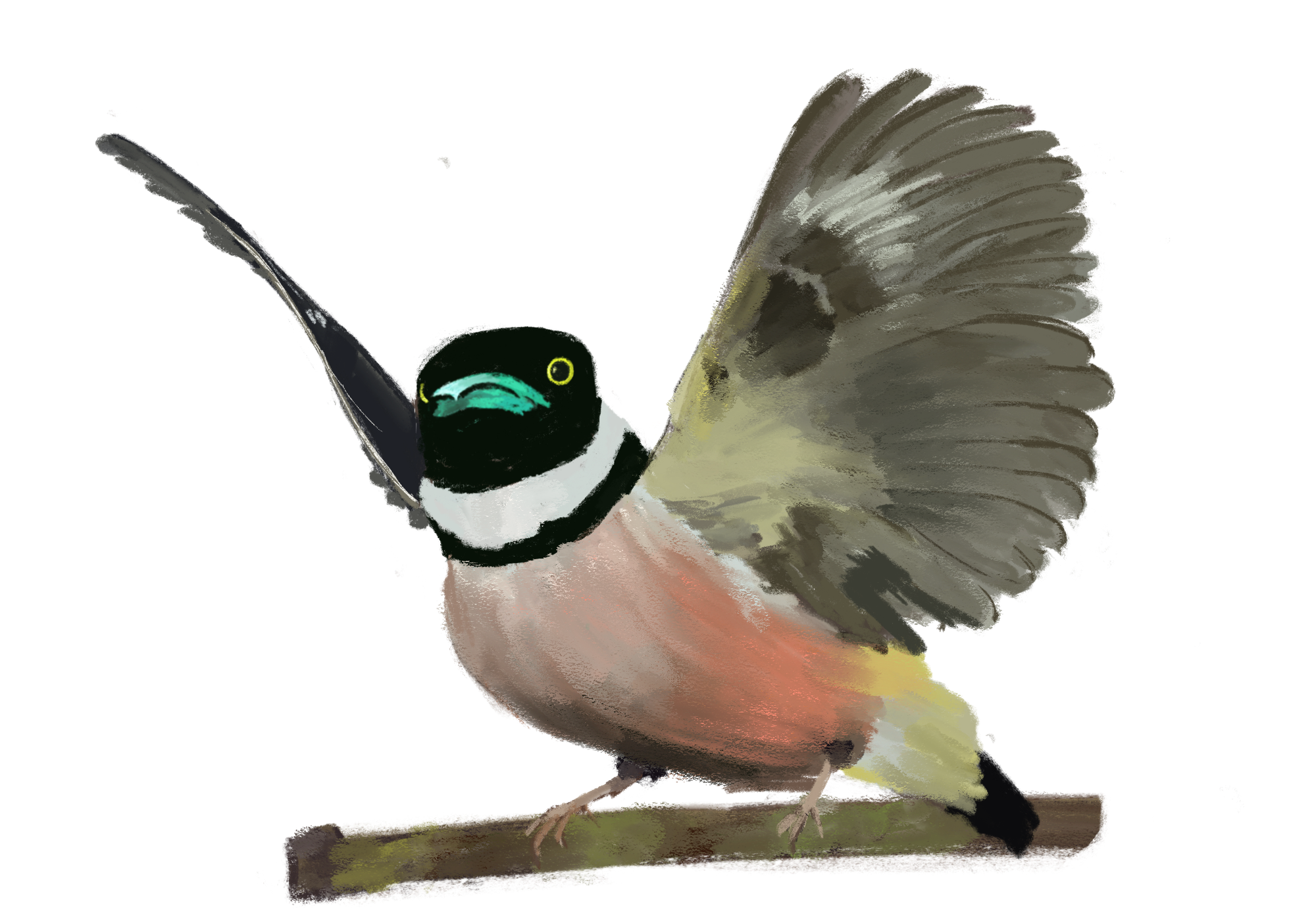
The impact on rainforest avifauna has been profound. Of the over 70 native species recorded in Farquhar’s collection, 16 are now extirpated. Singapore’s forests, once alive with dazzling colours and bewitching sounds, have been emptied of 58 bird species, out of 195 ever recorded here. That’s a third of all avifauna lost. This includes broadbills. And not just the magical green one that brought us such joy on Pulau Ubin; the Black-and-Yellow Broadbill (Eurylaimus ochromalus), which depends on swamp forests with large, tall dipterocarps (a family of tropical trees) for insects, molluscs and fruits, has left our shores.
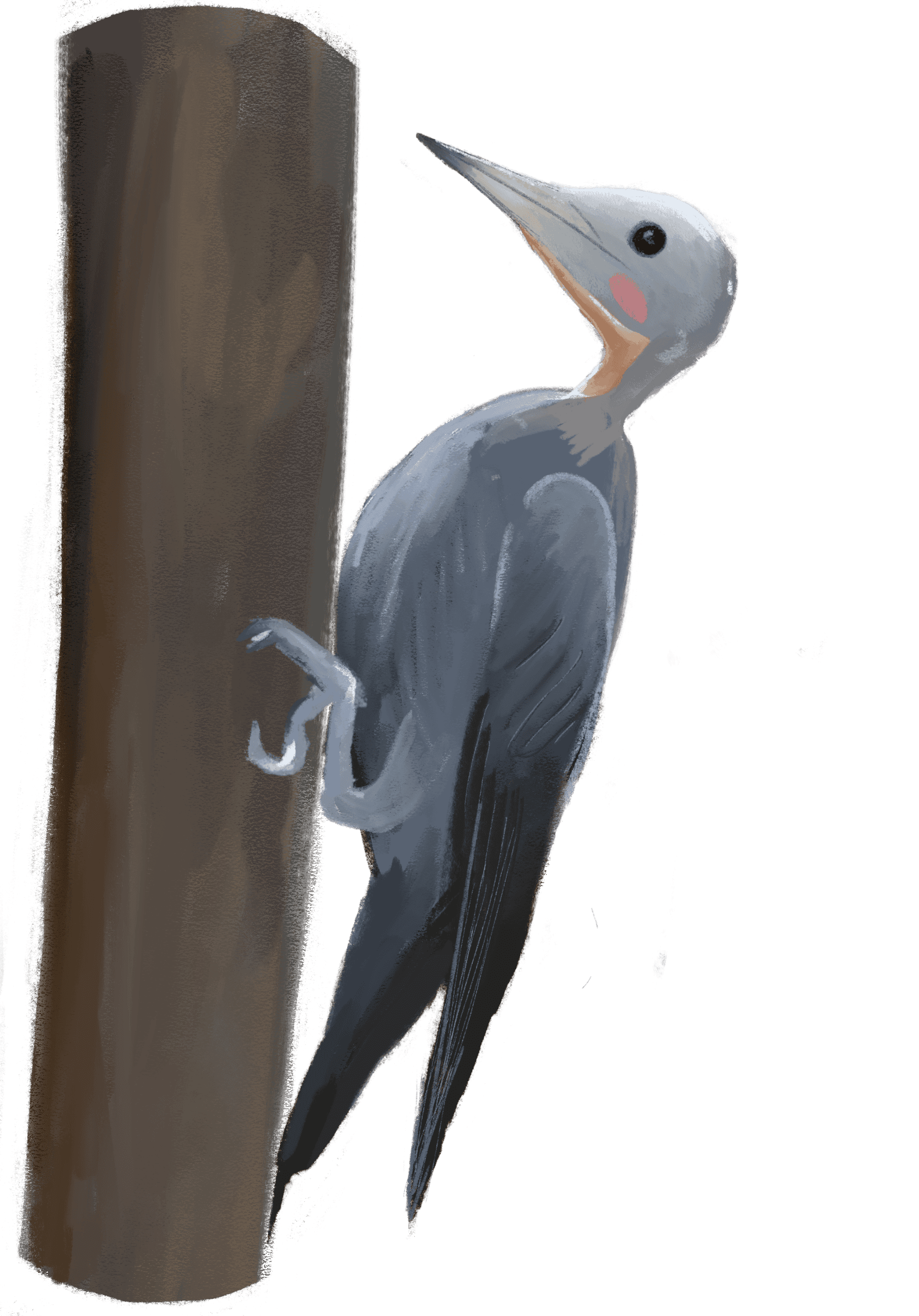
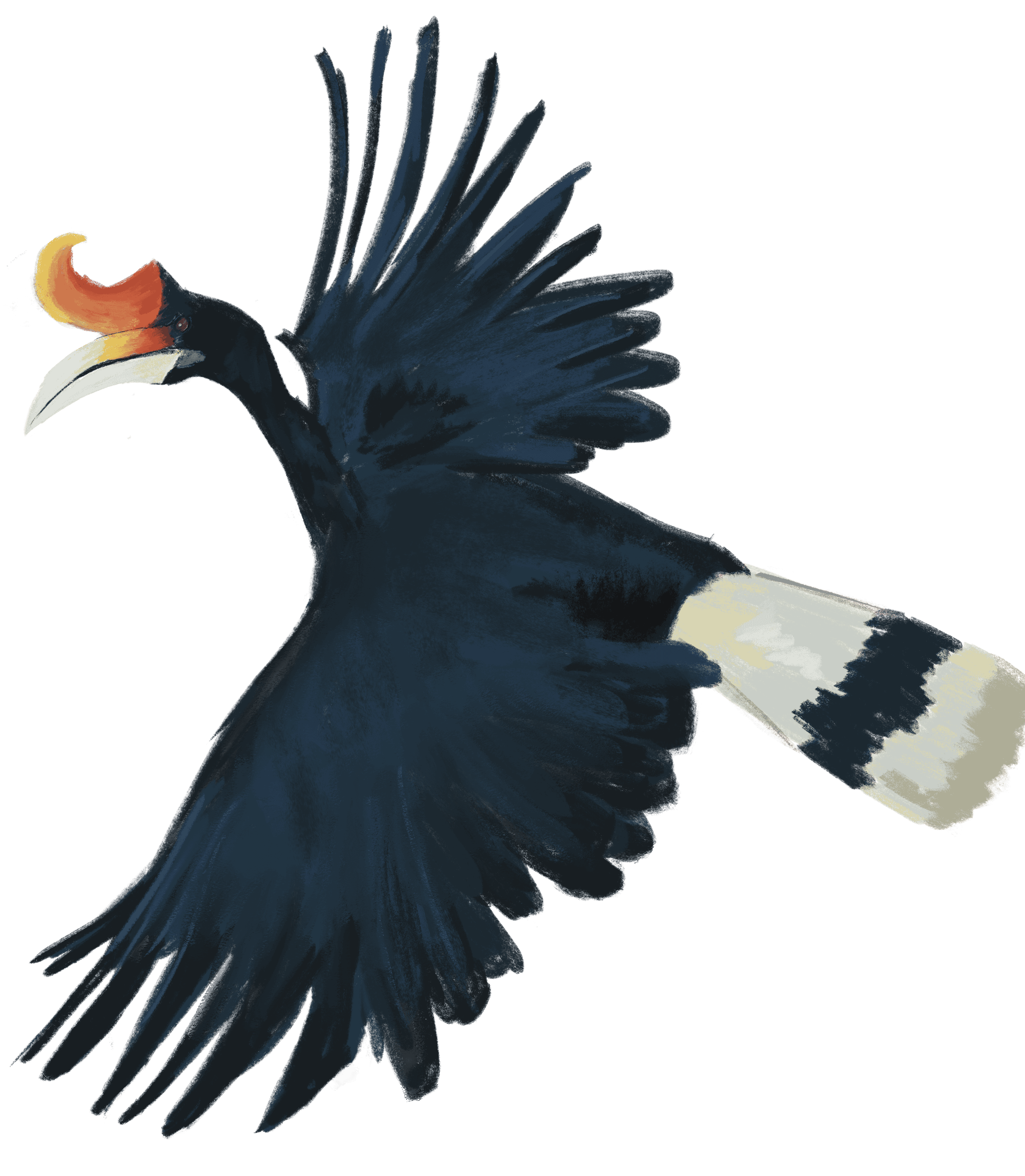
The list, depressingly, continues: trogons, hornbills, nine species of woodpeckers, four species of kingfishers, two species of barbets and two species of babblers. These birds have evolved to thrive in the dense, closed-canopy environments of tropical rainforests, where they rely on the complex structure and diversity of plant species to survive. Trogons, for instance, use the dense understory for foraging and breeding, while hornbills need large trees with hollows for nesting and roosting. The Rhinoceros Hornbill (Buceros rhinoceros) thrives in closed forest areas, defined as forest cover with more than 40 percent canopy density; while the Helmeted Hornbill (Rhinoplax vigil), the largest of the hornbills, thrives in huge expanses of primary rainforests, often in hilly areas. The trogons and the two hornbill species were last recorded here in 1921. Of the latter, only the Oriental Pied Hornbill (Anthracoceros albirostris) is extant locally—a joy to behold, as well as a sorrowful reminder of what no longer is.
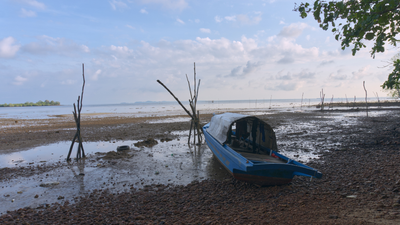
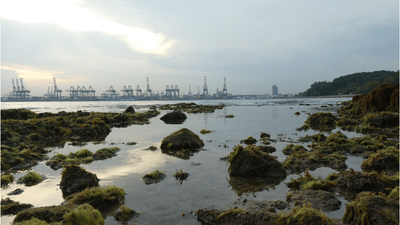
Moving outward towards the coast, Singapore’s natural sandy shores and mangrove forests have felt development’s blow too. In the early days, mangroves were ravaged for firewood, charcoal, kelong poles and timber for building boats. Later, the very areas on which they flourished were “reclaimed” and converted into industrial and residential lands. For instance, almost 220ha of Sungei Pandan mangroves, once lining the banks of the Pandan and Jurong Rivers, were cleared for the Jurong Industrial Estate’s expansion. Mangrove-fringed estuaries, such as the one in Kranji, have been dammed (an apt word) to make freshwater reservoirs. Port development and coastal protection measures have done the rest. Between 1958 and 2014, 80 percent of our mangrove forests were lost; today only a few fragmented patches and key reserves in Sungei Buloh, Khatib Bongsu and Pasir Ris remain.
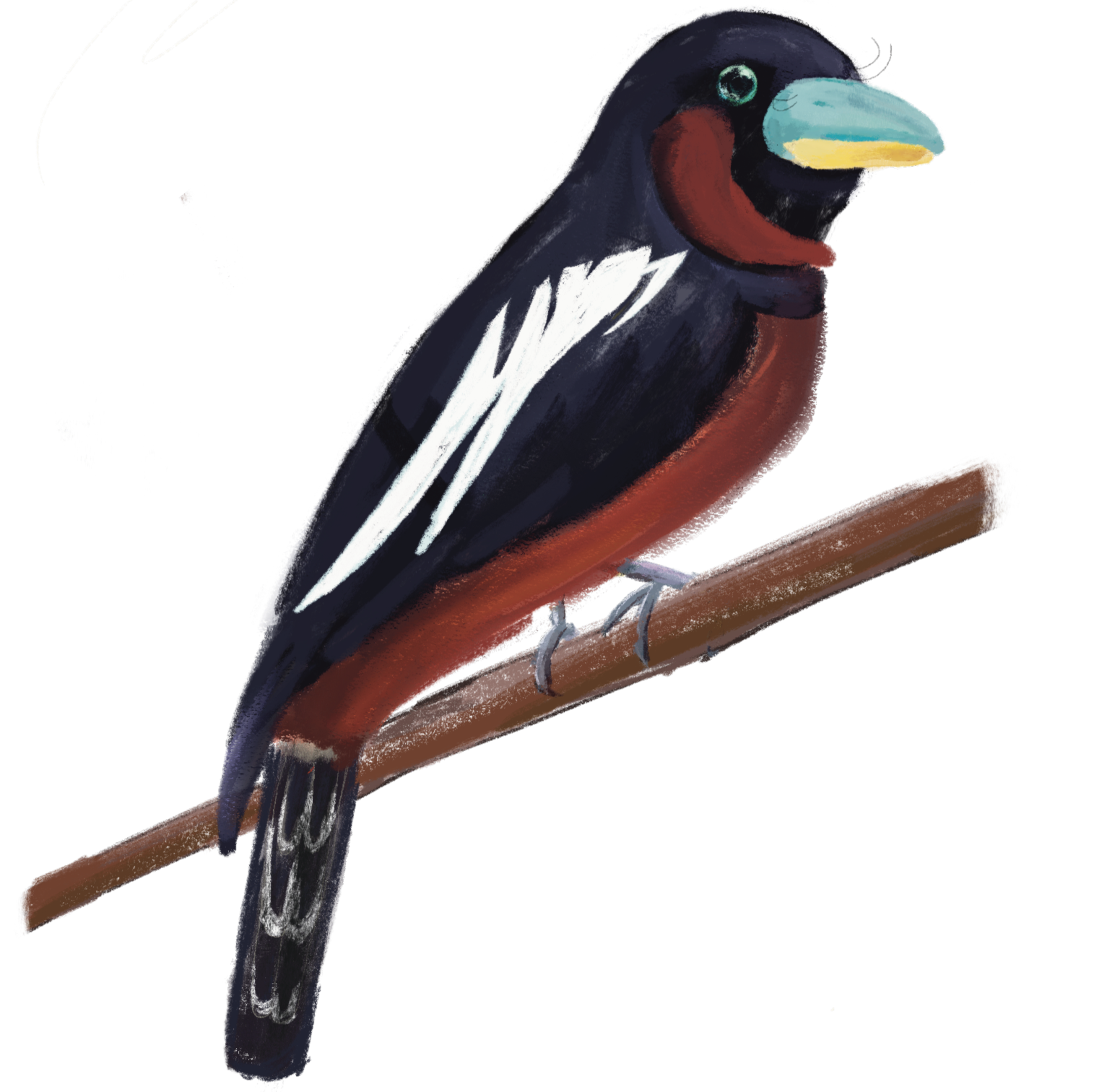
This habitat destruction has shooed away shore and sea birds. The Beach Thick-Knee (Esacus magnirostris), a large and stocky bird that used to be found along the coasts, is now a rare visitor. The Black-and-Red Broadbill (Cymbirhynchus macrorhynchos), notable for its contrasting plumage, is extirpated in Singapore but fairly common in Malaysia’s riverine lowland forests, mangroves and swamp forests. The Greater Painted Snipe (Rostratula benghalensis) can still be found here, but its population has dwindled due to meagre coastal wetlands and marshes, where it likes to hide. Other species have declined too, including the Spoon-billed Sandpiper (Calidris pygmaea), the Great Knot (Calidris tenuirostris), Ruddy Kingfisher (Halcyon coromanda), Malayan Swamp Babbler (Pellorneum rostratum), Mangrove Pitta (Pitta megarhyncha) and the Mangrove Blue Flycatcher (Cyornis rufigastra).
Given how rare sightings are, birders in Singapore have to be alert to the slightest movement and attentive to the faintest birdsong. Patience is our comrade, and luck, a fickle friend. We become used to the waiting and comfortable with the stillness. And yet, larger questions remain. What avenues exist for all of us to redirect our attention towards local ecology and bioregion? How do we “resist the attention economy”? How do we revitalise our connection with our immediate environment? How do we care for it?
In 1819, two Frenchmen, Pierre-Medrad Diard and Alfred Duvaucel, accompanied Raffles to study Southeast Asia’s flora and fauna. While here, Diard and Duvaucel commissioned local artists to draw the hundreds of specimens they had collected. Today, the Museum National d’Histoire Naturelle in Paris is home to 117 of these drawings. Ninety-one of them are of birds. Similarly, birds constitute the largest single group of animals illustrated by Farquhar’s artists. There is immense irony in local artists illustrating the voiceless and nameless to fuel colonial-era natural history, taxonomic classification and scientific research—while themselves remaining unnamed and underappreciated. The more pertinent point here, though, is that birds were the natural muses for those who captured their beauty, elegance and flight with such skill and tenderness.
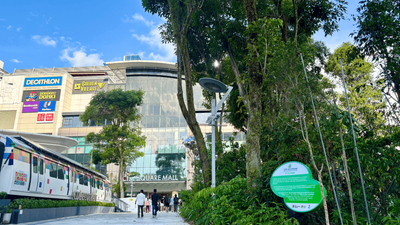
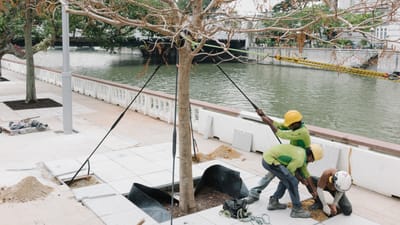
Singapore’s subsequent growth, first as a colonial port and then a global business hub, transformed its multi-species habitat, in Tony O’Dempsey’s words, “into a more simplified landscape that would fulfil the needs of a western trade company and the humans that served it”. A simplified landscape, in terms of biodiversity, is an impoverished one. Perhaps now is the time to refocus our attention on conservation and habitat restoration to protect, and maybe even restore, our natural heritage. Perhaps one day, the kingfishers, trogons, broadbills, barbets and others that have left us will once again grace our forests and shores with their lilting melodies and glorious hues.
Beyond marvelling at these magnificent creatures, bringing back the birds would be an exercise in introspection—interrogating how we can be human, and re-examining what it means to be human, perspectives we overlook at our own peril. Jenny Odell alludes to this when she says that birds and birding have the capacity to “change the granularity of [human] perception”, such that when we next walk in nature we may realise that birds are “almost everywhere, all day, all the time”. By rerouting our frazzled, digitally stimulated attention, we can acknowledge the biodiversity around us, and slowly welcome more and more nonhuman actors into our reality.
We might realise that such experiences, which decentre the human, bestow a much-needed perspective on our longstanding entanglement with nonhuman animals and the environment, thus embedding us in history and in place.
Xiaoyun is a writer, researcher, and graduate degree fellow pursuing a Master’s in Geography and Environment at the University of Hawaiʻi at Mānoa. She focuses on the political ecology of ecotourism and human-nature interactions in South-east Asia. Climate-concerned and passionate, she curates programmes and experiences to cultivate human reconnection with nature and the environment. She’s animated about any opportunities to support the sustainability and climate transition sector in Hawaii and Singapore.
Jay is an ecologist and photographer. While they gravitate the most towards birds, Jay is keen on seeing all and more of the world. They are interested in the integration of scientific documentation with creative representations of the natural world.
This piece was first published in Jom’s annual print magazine issue No. 2, released last year. Letters in response to it can be sent to sudhir@jom.media. All will be considered for publication on our “Letters to the editor” page.
Correction notice: A previous version indicated that Farquhar commissioned the drawings between 1819 and 1823.