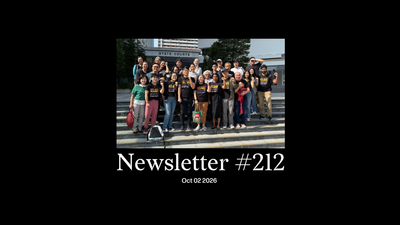




Dear Jomrade,
Today we’ve published:
- “Singapore This Week”, by Jom
- “Enter ghost: spiritual disturbances in the Singaporean legal drama”, by Khairillah Irwan
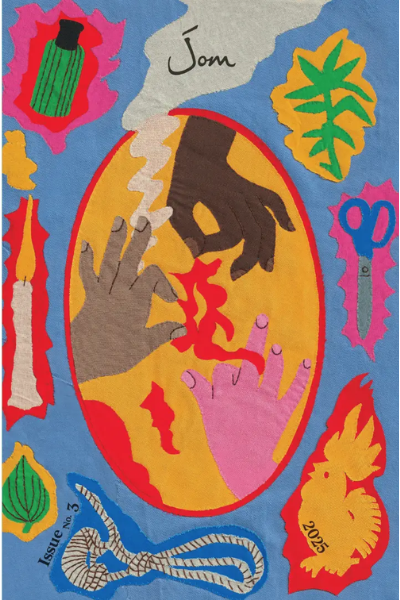
Print and tote sale, 48 hours, beginning 8pm tonight. Once a year, we leave our digital realm to deliver you the warm comfort of print. Issue No. 4 is almost here. Ahead of that, we’ve decided to cut the prices of issues 2 and 3, just for this weekend. (Issue 1, you may know, is sold out.) If you haven’t yet gotten copies, here’s your chance. And even if you have, well, they make great gifts. Pick up a Jom tote too while you’re at it.
Free next Tuesday evening? Some spots have opened up at our annual Patrons’ dinner. It’s a chill affair at a bar, nothing sit-down or formal about it. If you’ve been thinking of becoming one, and would first like to get to know the team and other Patrons a little better, join us! Bring a plus one too. Just reply to this email and let us know.
Well, after weeks of slow creep, the haze has truly hit. We’ll now allow ourselves to feel some empathy for our Indonesian neighbours. The fortunate among us will remain indoors gulping on purified air, while we look out the window at those who must keep toiling. But what does it all mean? Who’s to blame? How do we fix this? The answers, of course, are quite close to home—read our two blurbs on haze and palm oil in “Singapore This Week”.
From the inequality of haze to the inequality of space, captured by two stories this week. One was about those new passenger car monstrosities. (Never mind the Bentleys, have you seen the size of some of those new BYD and Hyundai EVs?) Well, they’re apparently having a hard time squeezing into older parking spaces, so CNA sent journalists to experience the trauma of three notorious car parks.
Meanwhile, “MOST Pathetic BTO 4 room Kitchen EVER SEEN” by Reno Scout must be one of the funniest home videos I’ve seen. He methodically explains, measuring tape in hand, why cooking/laundry areas in new flats should be branded “one-person kitchens”. All with quintessential Singlish sarcasm. (Even drawing a response from HDB.) Perhaps this is where the drive for “affordable” housing on ever pricier land is leading us.
And given that wealth inequality is poised to keep rising, I wonder: how long before Singapore has cars that are bigger than homes?
- The haze: same old script or something new?
- Oil palm, that evil crop
- Some discomfiting truths about charitable giving
- What .agi, .maga, and other new Internet domain names reveal about digital society
- AGEncy Fest, “Rites of Us”, and other artistic approaches to grief and mourning
Above are the issues we chose to explore in more depth.
Other news this week included: Bloomberg commentary on why SG can fix South-east Asia’s haze; MRT reliability hits a new high; commentary by NUS prof on property wealth tax; GIC’s 45th anniversary public exhibition; Anthropic opens SG office; Lawrence Wong and Tharman Shanmugaratnam on AI’s threat to the “bottom rung” of career ladder; MY’s “Silicon Island” for its AI ambitions; new measures to block malware and phishing sites; “MOST Pathetic BTO 4 room Kitchen EVER SEEN” video draws rebuke from HDB; how new big cars are outgrowing older parking spaces; 71-year-old graduates from SUSS with multiple degrees; ST commentary on 60 being the new 40 for work; lawyer Charmaine Yap wins global award for work and advocacy for vulnerable groups; pre-school teachers to get 2 hours of weekly protected time for non-teaching tasks from Nov 2027; Singaporeans advised to postpone pilgrimage to S Arabia amid security concerns; SG startup recovers lithium from EV batteries; goodbye IMH, hello National Centre for Mental Health Singapore; commentary by NUS prof and comms manager on the limits of Singapore’s Nutri-Grade labels; woman who molested man and teenage boy by kissing them gets 21 weeks’ jail; SGIFF stands by “The Assassin(s)” despite controversy and calls for withdrawal; 2026’s F1 sees second-highest turnout; and Cassidy, the 3-legged cat who’s SMRT’s “Big Boss”.
Join 1,700 members keeping Jom independent. From S$10/month—full access, no compromises.
“Enter ghost: spiritual disturbances in the Singaporean legal drama”, by Khairi Irwan
Why are Singaporeans so fascinated by ghost stories? What does it say about our collective psyche and approach to life? In his first piece for Jom—originally for print issue No. 3—Khairi, a literary scholar and educator, explores these questions through two TV legal dramas: “The Pupil” and “Code of Law”. His is a specific form of media criticism, an almost microscopic analysis of characters and actions. It demands close reading and patience at moments, for which the reader is rewarded. I’ll leave you with some overarching paras:
“The Singaporean sensibility is also tugged in two directions: on the one hand, it is committed to reality, and to things as they are. On the other, it is compelled towards ghostliness, tantalised by the goosebumps from things as they might be. It is not for nothing, the cultural geographer Joshua Comaroff noted that many consider Singapore ‘the most haunted city on earth’. It is a place that ‘seems uniquely possessed by the subject’. This obsession with ghosts has been documented even in the arrival of British colonialism: it was said that when Stamford Raffles first came to the island, he was warned by the locals to stay away from Fort Canning Hill, then called Bukit Larangan, meaning ‘forbidden hill’ in Malay. The hill was so forbidden due to the swarm of ghosts inhabiting it, ghosts that would presumably have scared the wits out of Raffles.
Crucially, this coexistence disproves the notion that a modernised society should spell the end of what is known as supernatural thinking. The more a society modernises, so this common thesis goes, the less it believes in the fantastic. Modernisation with its disenchantment and bureaucratisation, however, is not a frictionless phenomenon that sweeps away everything in its path, consigning the spiritual to irrelevance. For the anthropologist Avery Gordon, the ghost is not merely a dead person but a figure that makes visible what is otherwise absent in the story of modernity, revealing a place where ‘history and subjectivity make social life’. The ghost is connected to the unresolved questions of our social imagination.”
Ghost x Haze? Artists, it might be time.
Jom baca,
Sudhir Vadaketh
Editor-in-chief, Jom
Jom on criticism
 Corrie Tan
 Dan Koh
 Aditi Shivaramakrishnan
 Corrie Tan
Singapore This Week
Tech: The last word

If you were in Suntec City in early March 1999, you probably traipsed right past the inaugural meeting of the Internet Corporation for Assigned Names and Numbers (ICANN). How could you have not, with that name?
But ICANN is one of the most consequential bodies around. It was formed in 1998, a laudable move by the US government to transfer oversight of the internet’s naming system to an independent, global non-profit. Before that, one company, Network Solutions Inc. (NSI), held a juicy monopoly over registrations under generic top-level domains (gTLDs) like .com or .org. Anticipating a catastrophic failure of regional governance, say you wanted to set up a site called www.haze-lailiao.com. Your only option was to register it through NSI. It was both the “registrar” selling you the address and the operator of the .com “registry”, the master list of existing .com addresses. With mass internet in the offing, this was simply not on; and discussions at ICANN’s Suntec meeting helped transform the monopoly into a marketplace of thousands. (In case you’re worrying about NSI, it was acquired by Verisign in 2000. Verisign still operates the .com registry which makes it some S$1.92bn annually.)
In time, ICANN’s authority expanded to doling out gTLDs, that is, the equivalent of .coms and .orgs. Here’s how it works: periodically, ICANN puts out a call for a fresh set of gTLD applications, and after assessing them on a variety of technical and financial criteria, decides which ones can proceed. The first round introduced us to .info and .museum among others; the second to .cat and .xxx. The most recent completed round, in 2012, brought forth some 1,200 new ones, ranging from .media (as in jom.media) to .wtf (as in idiocracy.wtf).
You could be forgiven for thinking that the majority of applicants are adolescents. But ICANN charges over S$250,000 per application, so probably not. TLDs are big business, a particularly desirable one can invite multiple applicants who may end up in a bidding war. For instance, Google paid ICANN US$25m (S$32.1m) to beat out 11 others for the right to operate “.app”. Other companies base their entire business models on buying loads of internet real estate, hoping some hit pay dirt. Many have in the past.
ICANN has been criticised for failing to impose sufficiently tough safeguards on the registries and registrars it oversees, allowing some TLDs to become scammer havens. “They have zero interest in making life difficult or less profitable for registries or registrars because they are essentially wholly dependent on the money that they get from them,” said one industry veteran. “[A]s soon as you start…asking for proof of this or that, you’re introducing overhead costs…therefore reducing your income.”
The organisation is currently reviewing some 1,600 fresh applications. Predictably, .agi, .superintelligence, and .agent are being fought over by the likes of Google, Meta, and OpenAI. Accompanying them are the hot-air trio of .trump, .maga, and .fart, the latter among scores of applications sent in by one group backed by US$36m (S$46.2m) from a single investor.
But naked profit doesn’t drive everyone. A queer-owned and operated Belgian NGO has applied for the .meow TLD—meowing can be a queerness tell in internet subculture—because “each time someone registers a .meow domain, most of that money comes directly to us. Instead of pocketing it, we’ll funnel it straight back into queer people and projects worldwide.”
When ICANN releases new TLDs on November 17th, you know who to root for.
Other stuff we like
Kalaa Utsavam 2026. The annual Indian festival of arts is back at Esplanade, this time with a slate of shows that bring you from Bedok to Bollywood, from raucous stand-up comedy to delicate Sufi poetry.
“We’re Learning to Live with Waymos. It’s Going Weird”. Efficiency, costs, lower accident rates, fewer biases against minority riders. We’ve heard the technophilic arguments for driverless taxis. The New Yorker this week investigates some teething issues, including a cat death, sex in the backseats, and this: “On the Fourth of July, Waymos in San Francisco drove over fireworks being set off in the street. One car caught fire; another just kept driving until its unnerved passengers requested to end the ride.” Waymo, btw, is launching in SG in 2028.
Jawi Reading Group. Read, discuss, and engage with materials spanning different genres and types of literature. Each session features a reflection on a selected text, starting with Hiburan magazine. The programme is conducted in Malay and English.
A flavour of Jom. Occasionally, Jom publishes essays outside the paywall. These are on issues we think are in the public interest, and deserve a wider airing. Over the years, we have published nearly 50 such pieces. Read some of these if you’d like to see samples of our work. We hope they’ll convince you to subscribe. And even if you’re here with no intention of doing so, we hope you’ll enjoy these offerings and consider it time well spent!