

Dear Jomrade,
Today we’ve published:
- “Singapore This Week”, by Jom
- “Raiding Riau: the hidden costs of Singapore’s ‘clean’ energy drive”, by Robin Hicks and Gabrielle See
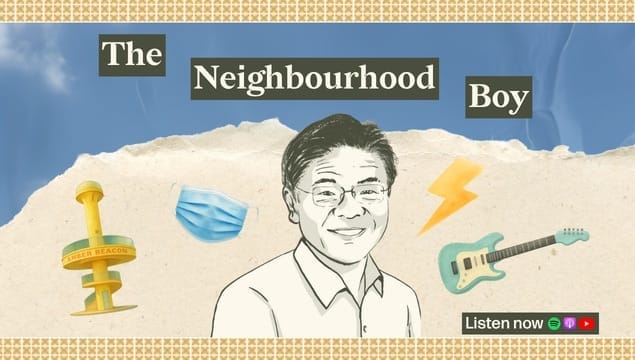
“The Neighbourhood Boy” podcast. Thanks again for listening and sharing feedback! Jean mentioned in the last episode that we were going to invite Lawrence Wong for a possible bonus episode 5. I wanted to share the news that he declined because of his schedule, quite soon after the podcast launched. Oh well! Perhaps for our next scripted podcast we’ll choose an interesting protagonist in SG who’s keen and has the time. Any ideas? Reply and let us know. And if you still haven’t listened to “The Neighbourhood Boy”, listen now on Spotify, Apple Podcasts, YouTube, or wherever you get your podcasts.
Jom Cakap with Jean Hew, 1-230pm, October 10th, at Druggists. And for those who just can’t get enough of Jean, here you go. Hosted by Abhishek, Jom’s head of content, Jean will discuss her experience developing, hosting, and researching “The Neighbourhood Boy”. Ask her anything about her self-described “parasocial relationship” with the man whose “story parallels the Singapore story.” Tickets are free but limited, and we’ll advertise the event publicly tomorrow. Get yours now.
Still on Lawrence, the story that made me smile this week was his guitar diplomacy with the Thai PM. Just kidding, that was a somewhat cringey “Let it be”.
Rather, it was about the six-year-old girl who wrote an “appeal” letter to “Lorens Wong”, effectively chiding his government for its fertility drive, saying that she did not want to become an older sibling. “Even though you want to give us a lot of money, we don’t need more money,” she wrote on a foolscap paper. “Also don’t listen to [older brother] Adam if he wants more siblings, because I don’t want. Please Lorens Wong.”
Awwww, so sweet lah. Her mum gave her the address of the Prime Minister’s Office, and she mailed it off. Lawrence replied, saying among other things, that she did not need his permission to “remain the youngest in the family”.
From further away came the news of Wendell Berry’s death at 92. The farmer and activist who “extolled America’s agrarian past”, said The New York Times in its obituary, “wrote more than 50 volumes of poetry, fiction and argument that championed small family farms, the environment, local foods and interdependent communities, and railed against chemicals, most technologies, agribusiness and distant government.”
It’s only in recent years that I’ve very minimally gotten acquainted with his work, but as a writer, three things immediately fascinated me about him. Aside from his obvious eloquence, another was his decision at 30 to go and live in ulu-dom: a two-room cabin on the Kentucky River, near his farm, where he wrote on paper only during daylight hours, eschewing electricity, with his wife as critic and typist.
The third was that the pragmatists of our world always dismissed him as hopelessly naive, out of touch with the supposed demands of the modern world. For somebody who’s also been called “the contemporary conscience of American agriculture”, that’s no bad thing. Prophets like him must keep pushing the limits of our imagination beyond the spreadsheets. If you’re looking for something to watch this weekend (and feel like supporting indie film), “Look & See: A Portrait of Wendell Berry” was a 2017 Sundance official selection.
Finally, for what the coincidence is worth, I hope that this week’s essay (more below) is also a small tribute to his legacy.
- The EU studies SG’s Project Wolbachia, as global warming disperses plagues and pestilence far and wide
- How afraid should we be of adulterated cabbage and other Chinese foods?
- Pokemon, Yu-Gi-Oh!, and Singaporean obsession with Japanese culture
- Ethno-fascist movements in China, India, and Malaysia
- SQ21 and other queer family stories
Above are the issues we chose to explore in more depth.
Other news this week included: Thailand shortens visa free stay for Singaporeans (and others) to curb crime; activists Elijah Tay and Jolovan Wham handed 19 charges by cops for their peaceful demonstrations; HDB confirms Gillman and Maju forests destruction; Firdaus Daud takes over Faishal Ibrahim’s grassroots work; Pritam Singh sings a Hokkien song outside a void deck; Tommy Koh wins Ramon Magsaysay award; new three-day cooling-off period for loans taken from licensed moneylenders; why China’s super-rich are returning; tenants at Punggol East container park upset by impending closure; tenants at Marina Square surprised by short notice of closure; Satay by the Bay to make way for new wetlands attraction; SG weighs daily social media use limits; new private not-for-profit hospital in the east; how one woman gives children from low-income families a space to be themselves; the tourist who stole a S$200K diamond by hiding it in his mouth; rising suicide deaths among those in their 30s; how banks here compete for wealth management talent; retailer loses defamation suit against customer over negative Shopee review; designer turns discarded eggshells into homeware; Ah Boys actors mentor new generation in Jack Neo’s latest film; the ethics of foraging in Singapore; and—hope for humanity yet—a good samaritan cradling an elderly man’s head in Serangoon Central before the ambulance arrived.
Join 1,700 members keeping Jom independent. From S$10/month—full access, no compromises.
“Raiding Riau: the hidden costs of Singapore’s ‘clean’ energy drive”, by Robin Hicks and Gabrielle See
Some of the reasons we started Jom were: to perform good investigative journalism, producing deep, thoroughly-researched pieces that are months in the making; offer viewpoints that the mainstream media, in hock to the PAP’s developmental agenda, would never broach; and hopefully mitigate the innate insularity and navel-gazing of the Singaporean, helping us understand the true impact of our actions on our dear neighbours and the entire planet.
It isn’t often that a single piece checks all those boxes. I’ll leave you with bits of Robin and Gabrielle’s intro:
“Like many Indonesians in Riau, Fitri Uswatun Hasanah last visited Singapore decades ago, when it was still possible to sneak across the maritime border without a passport. She may have noticed that the city had already attained (in 1975) near-universal access to electricity. Today it has one of the world’s most reliable grids.
But just about 100km away in the island of Galang, where the 37-year-old elementary school teacher lives, life is different…She knows of at least two islands—Pulau Abang and Pulau Korek—that still lack access to reliable electricity.
…Fitri belongs to one of the 250 families in Dapur Tiga, a village in Galang that might be displaced by the Wiraraja Green Renewable Energy & Smart-Eco Industrial Park—the latest planned national strategic project to unsettle communities in the Riau archipelago.
She’s aware of Singapore’s plans to import solar power from the Riau Islands, but is unfamiliar with terms like ‘net zero’ and ‘decarbonisation’, which are driving these decisions. ‘It is ironic that the energy is being exported to Singapore when some people here don’t even have electricity,’ she tells us.
It is one of the many contradictions, challenges, and costs associated with Singapore’s ‘clean’ energy drive—impacting our immediate neighbours, their livelihoods and practices, and their ecologies, from the dugong to mangrove forests.”
Jom fikir,
Sudhir Vadaketh
Editor-in-chief, Jom
p.s. We’ve soft-launched our Comments section too. Robin and Gabrielle will also soon be sharing some thoughts about what it was like producing the above piece, which you can read at the end of it. Join the conversation now!
Jom on ecology
 Choo Yi Feng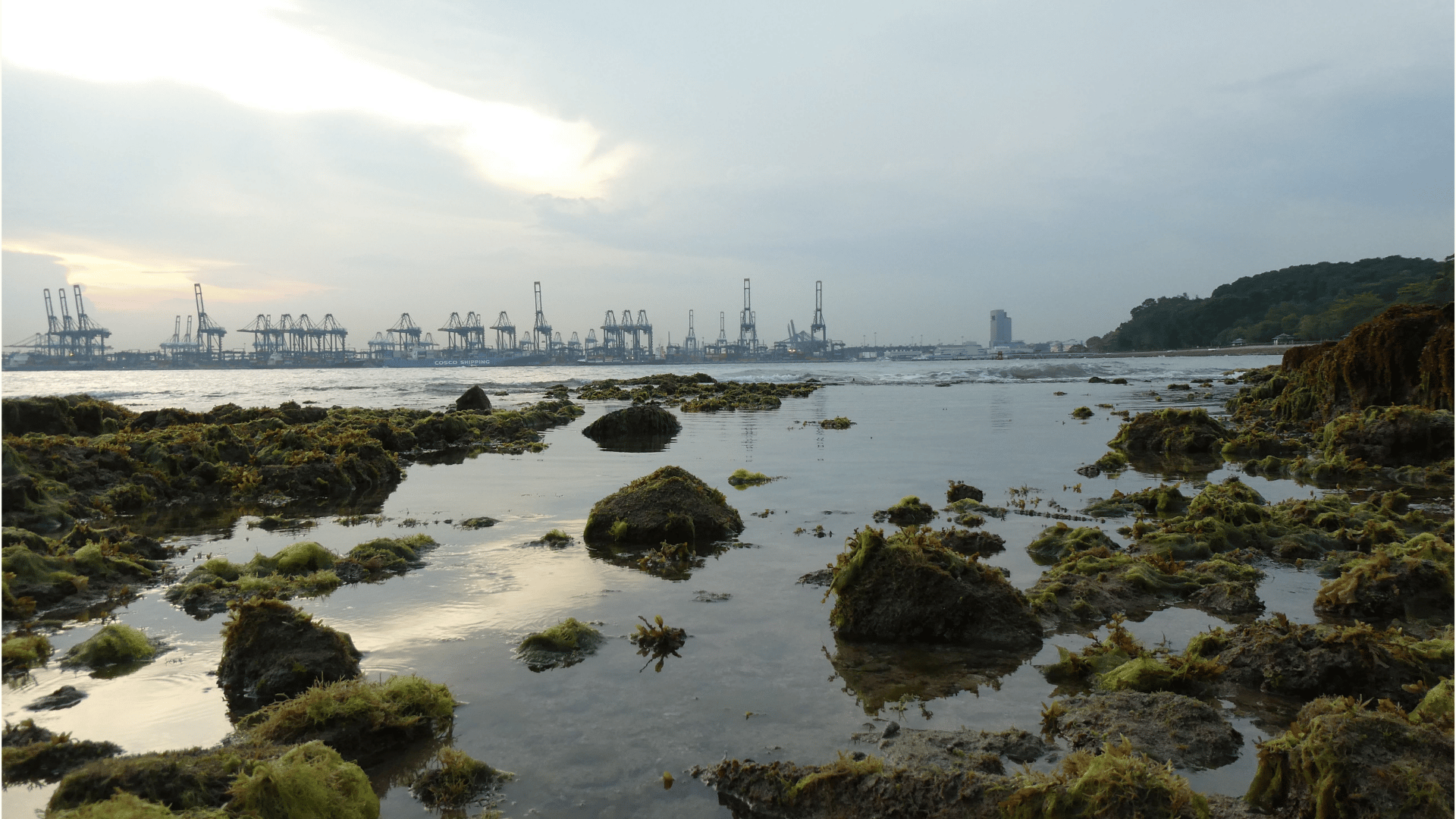
 Aleithia Low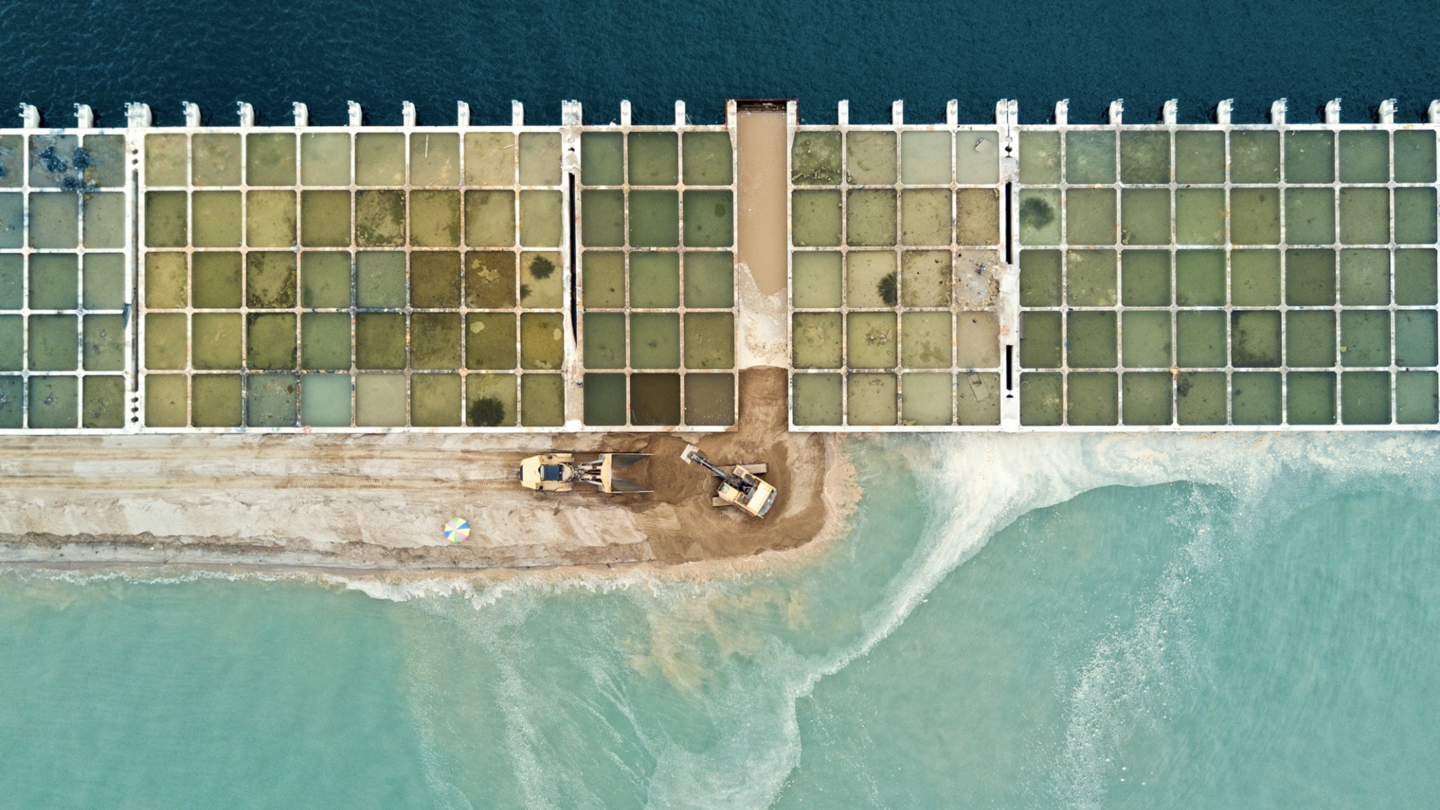
 Xiaoyun Neo
 SG Climate Rally
Singapore This Week
International: Buzz
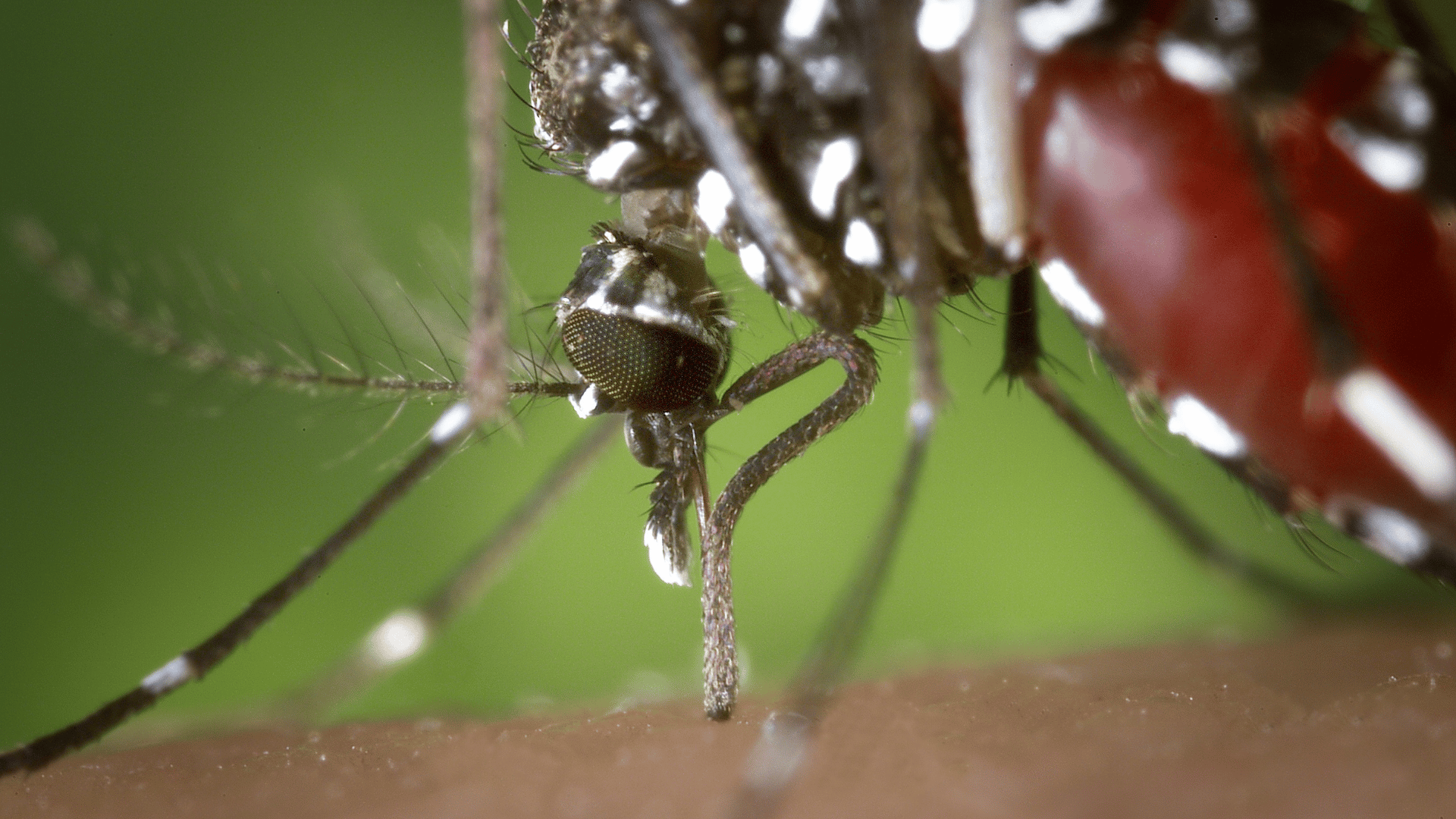
Imagine being sat in a streetside Parisian café, all café au lait, beret, baguette, and stereotypes. Warm sun, gentle breeze, and chic passersby. In this urban Eden, an incongruous sound slithers into your ear canals. Distant at first, just a hum, but unmistakably familiar. In step with your rising dread, it soon turns into a drone and then a roar, accompanied with the noxious white vapour that hangs over your getaway paradise. Singapore residents who visited the French capital in September 2023 may recall the trauma.
It was the first time that streets and neighbourhoods of Paris were fumigated against tiger mosquitoes which can carry the dengue, chikungunya, and Zika viruses—the upshot of a journey which began when their pioneering forefathers hitched a ride on used tyres sent from Asia to France in the early years of the 21st century. Globalisation took the tigers to Europe; climate change’s warmth has likely helped them flourish in the decades since. In 2022, the EU saw 71 locally acquired dengue cases. Before you say “pfft, what’s the big deal?”, pointing to over 32,000 cases in Singapore alone that year, consider that the EU recorded just 73 cases across the previous decade. The number climbed to 130 in 2023, and crossed 300 in 2024.
“Europe is already seeing how climate change is creating more favourable conditions for invasive mosquitos to spread into previously unaffected areas,” said Andrea Ammon, director of the European Centre for Disease Prevention and Control. Echoing her, Erol Fikrig, infectious diseases chief at the Yale School of Medicine told The New York Times that “mosquito-borne diseases are becoming more important in the United States.”
Countries are slowly adjusting. To combat dengue, the EU is studying the feasibility of adapting Project Wolbachia. Launched here in 2016, Wolbachia results in the female Aedes mosquito—the species that spreads the virus—laying eggs that do not hatch. Sites covered under Wolbachia have seen a 70 percent reduction in the risk of getting dengue. The EU is also educating trainee doctors in diagnosing and treating Zika, dengue, and malaria, previously mere footnotes in medical syllabi.
A reorientation of global public health systems may well be needed, as outbreaks caused by pathogens spreading in areas with previously inhospitable climates become increasingly common. Mosquitoes transmitting malaria in the east African highlands, ticks carrying disease to new parts of North America, and warming waters allowing Vibrio bacteria to infect swimmers in the Baltic Sea with sores, lesions, and blood poisoning are all further proof of global warming’s potential to disperse plagues and pestilence far and wide.
Interestingly, some evidence suggests that every one-degree rise in maximum temperature beyond 31 degrees Celsius is associated with a 13.1 percent reduction in the cumulative risk of dengue infections in Singapore over six weeks. A respite from the “Fever Demon” here would have been cause for celebration except that a hotter future holds other demons for us too, from the wider spread of Zika, chikungunya, and water-borne diseases to heatstroke.
The Ministry of Sustainability and the Environment recently outlined plans for more than 300 “cooling centres” in the event of a heatwave while the Ministry of Manpower has made it mandatory for outdoor workers to be equipped with cool drinking water, breathable clothing, and emergency ice packs from December. Laudable steps all, but with the UN just announcing that the world has handsomely missed the goal of limiting global warming to 1.5 degrees above the pre-industrial average, we may soon find that the only things staying cool and healthy are our precious data centres.
Other stuff we like
Odeon: An Ode by Ethos Books. Odeon was a movie theatre directly across from the Raffles Hotel Arcade. In Theophilus Kwek’s first book of creative nonfiction, we delve into the building’s many lives, and those of the enigmatic characters who have sought refuge in these walls.
The Theatre Green Book. This free, open-access resource is designed to support more sustainable theatre-making in Singapore. It offers practical guidance on productions, operations and buildings, adapted for a local context.
Public Creative Agency Workshop – My Life Story. This five-part autobiography writing workshop, part of T:>Works’ AGEncy Fest, is designed for those aged 60 and up. Participants will document various aspects of their life stories—such as family, health, career and identity—through the Guided Autobiography framework, facilitated by gerontologist Normala Manap.
“AI can help young people, but it can’t help them grow up”, a commentary in ST. “The question is therefore not whether young people should use AI, because they undoubtedly will. It is which aspects of becoming an adult still need to be lived rather than delegated.”
A flavour of Jom. Occasionally, Jom publishes essays outside the paywall. These are on issues we think are in the public interest, and deserve a wider airing. In the past two years, we have published nearly 50 such pieces. Read some of these if you’d like to see samples of our work. We hope they’ll convince you to subscribe. And even if you’re here with no intention of doing so, we hope you’ll enjoy these offerings and consider it time well spent!