



Dear Jomrade,
Today we’ve published:
- “Singapore This Week”, by Jom
- “The fight for Singapore’s wild spaces”, by Choo Yi Feng
Ebola. Flotilla. Iran, lah.
There’s a lot of depressing global news at the moment. And as our little red dot is valourised yet again as a safe haven amidst the madness, it’s also easy to be overwhelmed by complicated feelings, a mix of survivor’s guilt and the urge for truth-telling: no, it’s not as good as you think, not everybody lives a “first-world” life. (Another construction worker death and a confirmed tuberculosis case are just two data points.)
And yet, I also found lots to be thankful and hopeful for. Tuesday’s sold-out Jomfest at ACM was such fun, validation of this wonderful, diverse community we’ve together nurtured. Thank you to the 200-odd people who took time off from your workweek to join us. Event write-ups, photographs, and videos: akan datang.
On the left, we often lament the impact of capital inflows—surging in because of the war in the Gulf—on house prices, the cost of living, and inequality. But Usha Chandradas, lawyer and co-founder of Plural Art Mag, reminded us that there are opportunities here to attract funding for the arts. Similarly with social programmes that are dear to us, something I heard from people who had attended the Philanthropy Asia Summit that same day.
Also, said Usha, referencing the smoking samsui woman mural incident, our voices matter. When we organise and speak up, change can happen. A new public consultation and survey report from SG Mental Health Matters, a citizen-led mental health movement, also reminded me of this. It wasn’t too long ago that “mental health” was a bad word in this hypercompetitive society.
But thanks to the tireless efforts of many people—including the much-maligned Gen Zs aka “strawberry generation”, who’ve pushed for healthier workplace norms—we’re now in a different phase of our mental health journey, the report said, focused on developing “conditions that enable people not merely to cope, but to flourish.” (We cover the report in more detail in “Singapore This Week”.)
Finally, several people flagged to me a commentary, “S’pore depends on migrant workers. Why do we accept conditions we would never tolerate ourselves?” in The Straits Times this week. They were surprised by the level of criticism and introspection. Over the past few years, we’ve mainstreamed this dialogue—with thanks to, I think, not only our activists, but also the young journalists working in our mainstream papers. Kudos.
So yes, even as we rightfully shed some tears for those far away, let’s keep doing our work here.
- The Chinese have tangping, the Japanese hikikomori—but how are young Singaporeans checking out?
- What’s our societal awareness about mental health and how can we do better?
- What the SQ321 investigation reveals about turbulence and our ability to forecast weather
- Small Modular Reactors and Singapore’s seemingly inevitable embrace of nuclear power
- The “Temasek Wreck” and the ethics of salvaging history from the ocean bed
- The Singapore International Festival of the Arts (SIFA)
Above are the issues we chose to explore in more depth.
Other news this week included: SDP youth wing’s new council; WP’s Pritam Singh cheers HDB upgrading in Eunos; data confirms capital shifting from the Gulf to Singapore amid war; the Philanthropy Asia Summit; Singapore MRT reliability hits strongest level in nearly 18 months; OpenAI commits over S$300m to SG for its first Applied AI lab outside the US; Linda Lim on AI’s impact in the US; IMDA suspends Simba-M1 deal due to potential regulatory breach; H&M moves regional HQ from SG to MY; Meta cuts 8,000 jobs including over 100 in SG; online retailers flagged for unethical, deceptive practices; Amazon leaves SG e-commerce scene; CNA commentary on the prospects for South-east Asia’s budget carriers; deepfake footage of politicians in a S$4.9m government impersonation scam; construction worker dies at Cross Island Line worksite; ST commentary calling for better conditions for migrant workers; one active tuberculosis case (and here’s Jom’s writeup on TB); the Singapore doctor working in war zones like Gaza and Sudan; Tharman on SG becoming a “node” (guess we’re tired of “hub”) for regional artists; Ayaan, Ah Meng’s great-grandson, is our first primate conceived through assisted reproduction; a new species of deadly box jellyfish discovered here; the Asian openbills reshaping local ecology; bird deaths in Singapore hit record high; the Singapore Cricket Club’s facelift; K-pop robots; and Snow City to close after 26 years as Singapore’s first indoor snow attraction.
Join 1,800 members keeping Jom independent. From S$10/month—full access, no compromises.
“The fight for Singapore’s wild spaces”, by Choo Yi Feng
Yi Feng, an “intertidal explorer, climate activist, ecologist and fiction writer”, is one of those young, driven Gen Zs I was talking about. His essay is a clarion call for all who worry about our shrinking wild spaces, from the forests to the intertidal zones. It combines everything from descriptions of the pangolin’s habitat to screenshots of URA zoning maps that reveal imminent developments, and interviews with people with an intimate knowledge of the government’s method of environmental engagement and consultation.
As Yi Feng also makes clear, your voices matter. One passage:
“Of course, in an ideal world, criticism would come from those who not only feel strongly, but are well-informed on the relevant issues as well. In Sam and Alex’s experiences, public demands that are feasible (i.e less extreme) are more likely to be accepted by agencies. Yet, that does not discount the value of the more impassioned cries to protect our trees. ‘Even if the demands are not sensible, at least the agencies know that the heat is on them.’
Voicing our discontent is not simply a matter of venting and lambasting a bunch of poor, browbeaten civil servants. While we are used to seeing the government as a monolith, it is worth keeping in mind that different agencies can have diverse agendas and attitudes towards issues like deforestation. The National Parks Board is often seen as the official overseer of our green spaces. The work that they have put in managing our precious ecosystems has been valuable, and they have the expertise as a technical agency to advise on environmental impacts…
But the scales can tip if the public speaks up. The overseeing agency could start to see sense in the suggestions given to them by nature groups, by environmental consultants, and even by technical agencies such as NParks—that they reflect actual public sentiment, not just the do-gooder dreams of activists. Speaking up is not just about making noise for noise’s sake, it is about nudging the right levers within the bureaucratic machine.”
Because of its urgency, we’ve put it outside the paywall—please read and share. Absorbing Yi Feng’s argument, set against events of the week, I feel it’s appropriate to sign off with the slogan that my co-founders Charmaine and Waye, and our dear Employee #1 Jean, came up with some four years ago.
Jom tulis, let’s write.
Jom baca, let’s read.
Jom fikir, let’s think.
Jom buat, let's act.
Sudhir Vadaketh, editor-in-chief
Jom
Jom on ecology
 Sudhir Vadaketh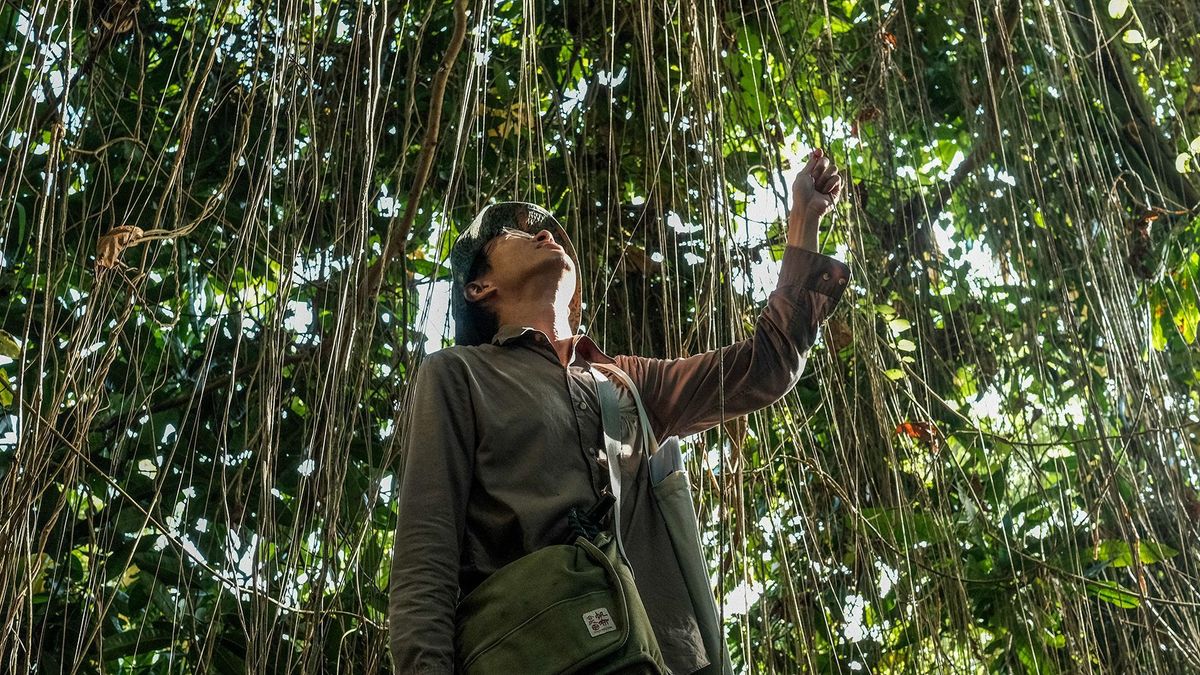
 Charmaine Poh
 Xiaoyun Neo
 Aleithia Low
Singapore This Week
Society: The SQ321 investigation

“How come suddenly…,” the bewildered SQ321 pilot said as severe turbulence violently tossed the aircraft around. There were no storm clouds outside, no visible precipitation showed up on the cockpit’s navigation displays. Commercial aviation depends on prediction. Hours before takeoff, dispatchers, meteorologists, and pilots map flight routes using weather radar, wind data, and live atmospheric readings. But what happens when the instruments fail?
In its final report on the SQ321 incident that killed one passenger and injured dozens—the Transport Safety Investigation Bureau concluded that the aircraft’s weather radar had “likely” failed to detect dangerous weather ahead. Investigators found that the right-side radar had twice under-detected storms in the weeks before the incident, and one total failure six days earlier. The manufacturer’s troubleshooting protocol required the same fault to occur three times within ten days for escalation. Since the malfunctions stretched across sixteen days, no alert was triggered.
Early speculation had suggested that SQ321 was hit by clear-air turbulence—a movement of air masses that lacks any visual clues such as clouds, and is also undetectable on conventional radar. But the investigation showed the turbulence was triggered by thunderstorm activity. Four other aircraft flying nearby reported towering cloud formations reaching between 35,000 and 50,000 ft, clearly visible on their radar systems which were of a different make from those on SQ321. They deviated from the storm cells, experiencing light to moderate turbulence. SQ321 appears to only have seen cirrus clouds in the distance, but not any in its immediate flight path.
John Tan, a lead professional officer of aviation management at the Singapore Institute of Technology, told CNA that pilots are trained to rely on their instruments, not just visual observation. The radar’s understating error had robbed the crew of crucial warning time. “The question is not whether the pilots could predict the exact turbulence,” Tan said. “The question is whether the system provided enough warning for them to react in time.”
To prevent similar incidents, the report urged plane manufacturer Boeing to provide pilots with clearer guidance for identifying radar failures in flight and recommended improved diagnostic tools for on-ground maintenance crews. Investigators also called on the International Civil Aviation Organisation to require older aircraft to be retrofitted with systems capable of recording exactly what weather information pilots see in the cockpit—technology unavailable on many aircraft built before 2023, like the one involved in the incident.
While the relationship between thunderstorms and climate change remains complex, scientists have warned that a warmer atmosphere holds more moisture—roughly seven per cent more for every degree Celsius of warming—creating conditions for more intense storms and greater risk of severe turbulence. Between January and November 2025, fifty-five flights were diverted from Changi Airport because of severe weather, up from nine during the same period the year before. Pilots rely on instruments to interpret skies they cannot fully see. As our atmosphere grows less predictable, the ability to reliably capture and display weather data may become even more critical.
Other stuff we like
Why hurt children hurt children. A black box installation by EveryChild.SG that “aims to break the silence on emotional harm passed unknowingly through generations. With nearly half of Singaporeans having experienced childhood emotional neglect...we must acknowledge how ‘hurt children’ grow up to hurt others.” May 23rd-31st at One Punggol.
Can Singapore’s arts scene compete with streaming? Streaming, gaming, social media, and other forms of digital entertainment are competing for our attention, making it harder for live performances to draw audiences. Corrie Tan, Jom’s arts editor, speaks to Lynlee Foo at Money FM 89.3 about the challenge.
Support HOME’s Women’s Crisis Shelter. “It takes over $530,000 a year to keep our Women’s Shelter running. A place where migrant women escaping abuse, exploitation and crisis can find safety, support and the space to begin rebuilding their lives,” said HOME this week, in a call for support.

A flavour of Jom. Occasionally, Jom publishes essays outside the paywall. These are on issues we think are in the public interest, and deserve a wider airing. In the past two years, we have published nearly 50 such pieces. Read some of these if you’d like to see samples of our work. We hope they’ll convince you to subscribe. And even if you’re here with no intention of doing so, we hope you’ll enjoy these offerings and consider it time well spent!