


Dear Jomrade,
This week we’ve published:
- “Singapore This Week”, by Jom
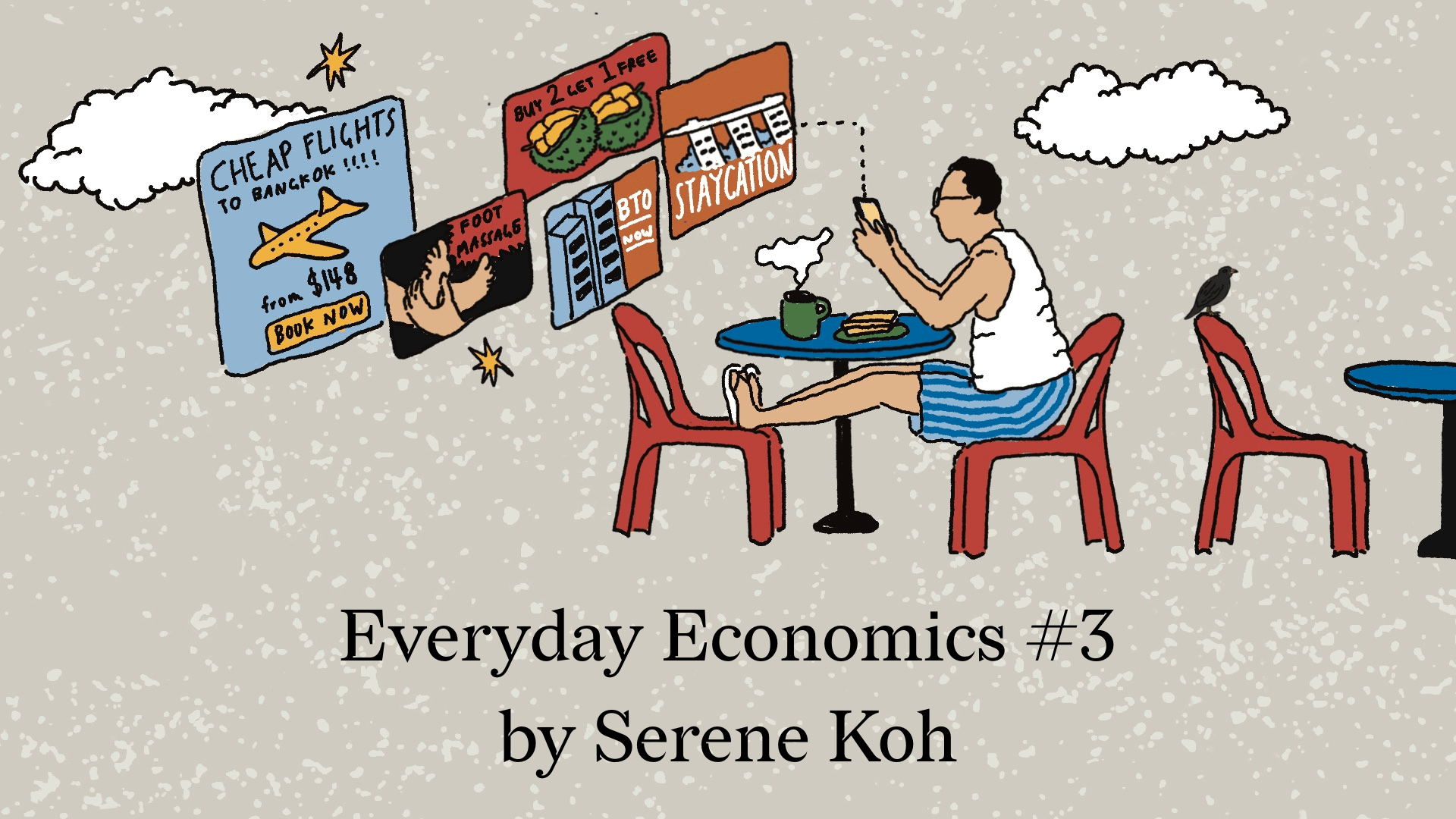
- “Everyday economics: No cycling”, by Serene Koh
Jomfest, 1-6pm, May 19th, ACM. Early-bird pricing is over. We’ve sold 122 tickets and still have some regular-priced ones left.
Jom Baca book club: Unease with Ahmad Zaid
From April 7th to May 20th, we’re reading Unease: Life in Singapore Families by Teo You Yenn. Next Monday, we'll be discussing Chapter 4, Culture x Structure in the Making of Gendered Unease.
📆 Monday May 4th 2026
🕑 8pm - 9pm
🎙 Discussion led by Saki, Jom’s head of research and social media
Register below to participate. You’ll be sent reminders before each Zoom session and also some post-session highlights.
The Jom baca Telegram group is abuzz this week with debates on PSLE, parenting, and the school game. One reader’s example felt like a common experience:
“On (2) ‘The school game / maze’: TYY’s analogy is spot-on.
Having 2 kids in the system, it feels like preparing them for a Harry Potter Triwizard championship from the sidelines. The kids ultimately face the maze of exams alone, but the stakes are shared. A child’s success or failure is accrued not just to the child, but to the school / family and your perceived competence as a parent.
As much as the admission systems are presented as meritocratic, the lived experience is that there are certain distinct advantages for those who live in a higher SES neighbourhood or have alumni status. Consequently, much of parenting is spent acquiring and protecting these advantages…
Caught in this daily grind and the relentless routine to keep running on that treadmill, parents rarely have time to step back and ask: Are you the source of your children’s stress or the source of their motivation?
Discussions are ongoing throughout, so drop in any time.
- As Singaporeans vie to compete in “Beast Games”, we ask: are such reality shows “degrading” and “dystopian” or a valuable socio-cultural lens?
- Why prediction markets are having a moment, even in SG where they’re technically banned
- No further action against SPH Media Trust following its shenanigans around inflated circulation numbers
- Iranians in Singapore, featuring the Namazies
- Beijing has blocked Meta’s acquisition of Singapore-based Manus—what does that mean for our positioning as a neutral ground between China and the US?
- Strava, and the pros and cons of data privacy
Above are the issues we chose to explore in more depth.
Other news this week included: Baey Yam Keng the latest politician to pose on public transport; Sheng Siong to keep prices affordable despite Iran war cost pressures (as its net profit climbs); scrapping PayNow nicknames to fight scams; a regional crackdown on online child abuse nabs 326 people, including 11 men in SG; HOME renews its call for legally mandated weekly 24-hour rest for migrant domestic workers; parental concern about introducing AI at Primary 4; more emphasis on screening for oral frailty; CNA explainer on five everyday habits that cause muscle imbalance and strain; commentary on why flexi-time arrangements are more important to parents and caregivers than work-from-home rights; Gen Zs wanting a return to the low-tech 1990s; global tariff wars might result in more American whiskies in SG; NUS orientation leader’s racist video mentioning “Indians” and smells of “curry” and “onions”; the revamped Malay Heritage Centre; Malaysia arrested 58 suspects after raiding a Kelantan resort allegedly used as a love scam centre targeting Singaporean men; 85-year-old British “Con mum” handed 34 additional charges here; ST explainer on the task force that caught 7,000 cicadas in Tampines; ST FAQs on safety issues for EV owners; ST interview with AWARE’s new leader; and Singaporean Dante Chen’s five-year WWE wrestling career ends.
Join 2,000 members keeping Jom independent. From S$10/month—full access, no compromises.
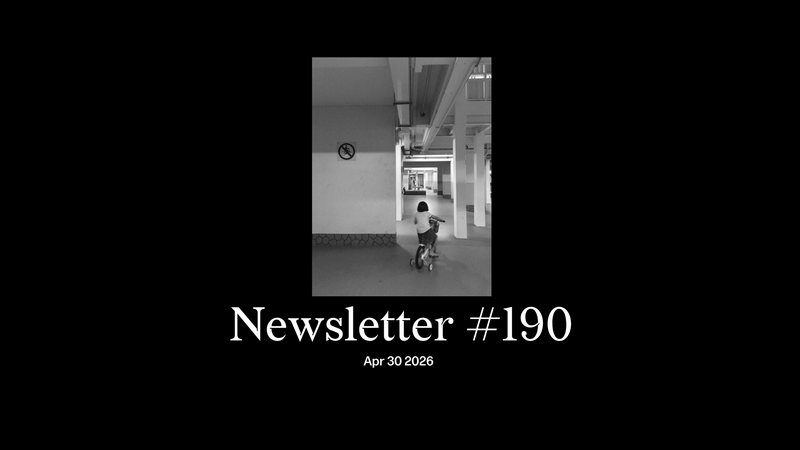
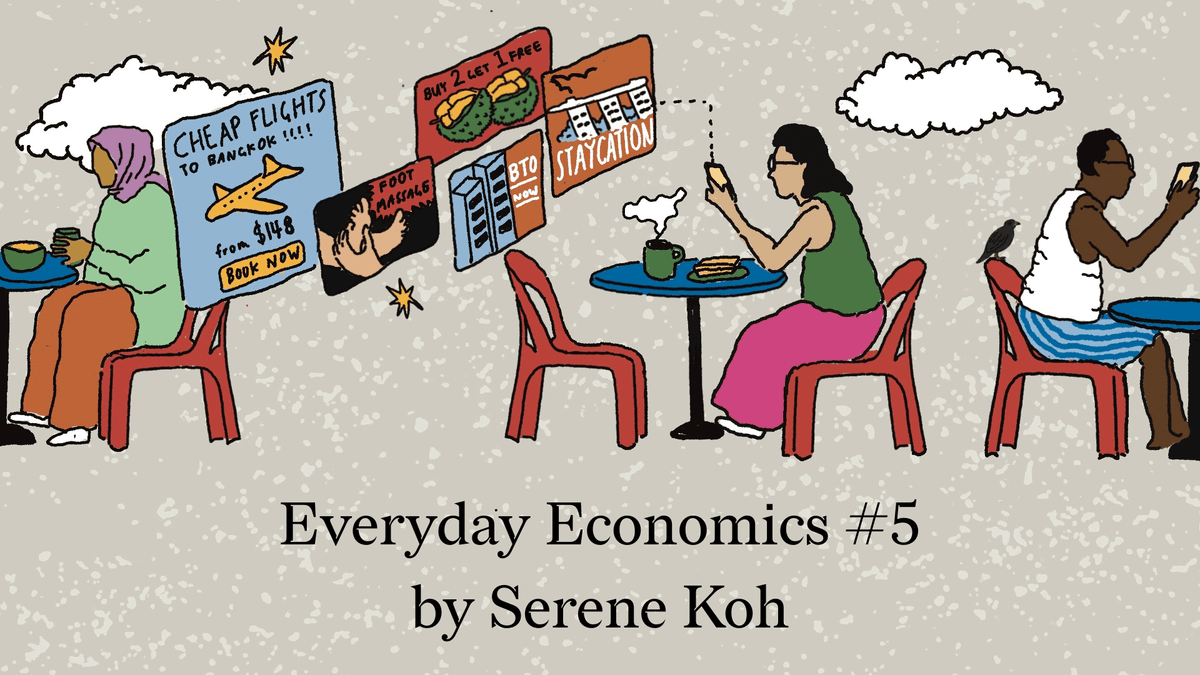
“Everyday economics: No cycling”, by Serene Koh
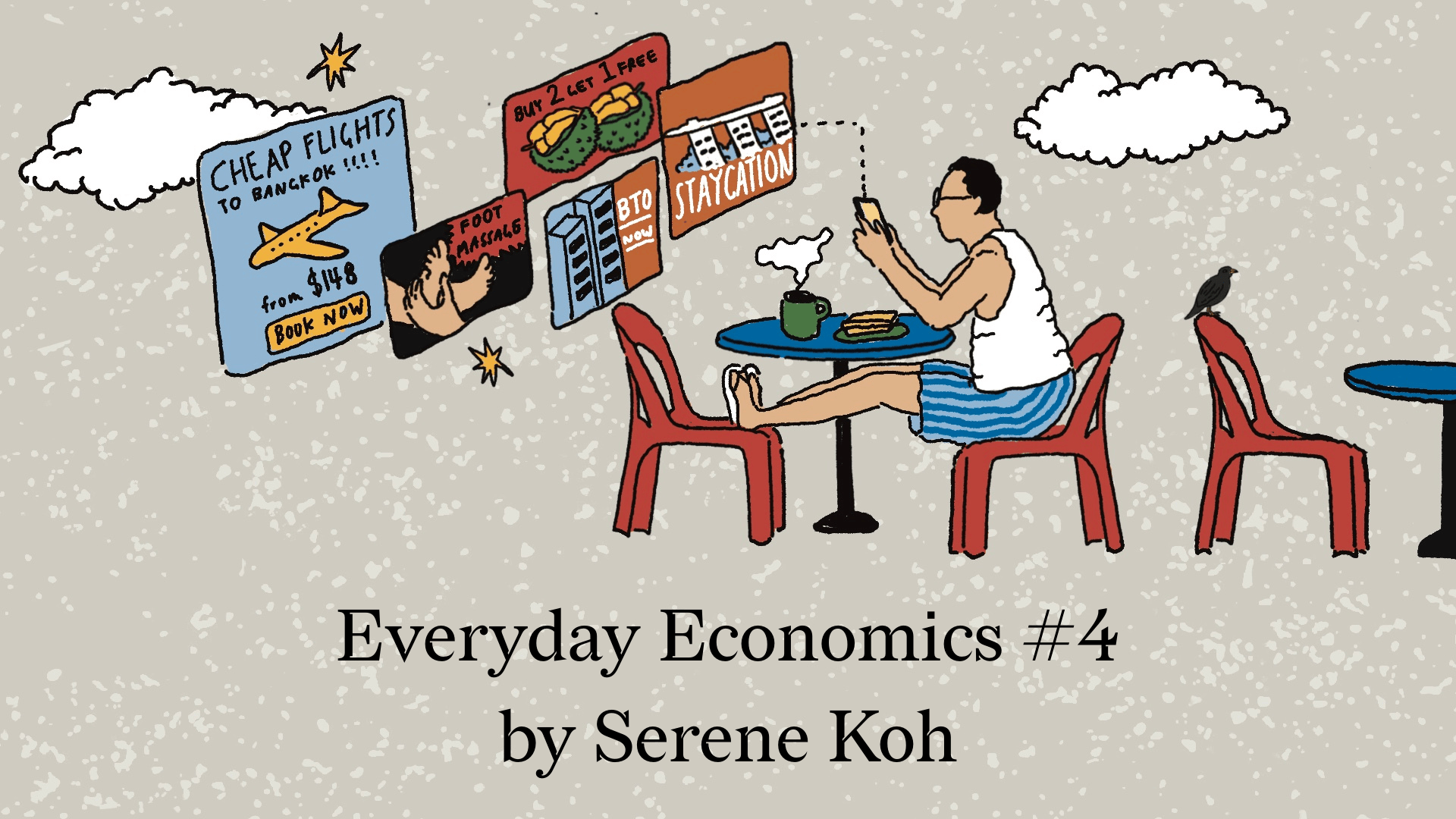
Recall that Serene’s first three columns (see below) were a trilogy about the psychology inside our heads—how we think, mis-think, and justify ourselves in everyday life. The next trilogy—which started with a hawker centre piece followed by one on fruit uncles—is about how societies perform behavioural work through space, norms, and systems, as told through ordinary, Singaporean places.
Today’s is the final of that second trio, about the informal behaviours and customs that govern how we navigate shared spaces, and more generally understand how to communicate, live, and thrive alongside others in society.
It features the beloved void deck, which has been much in the news of late. BBC used the Bayfront frosted mirror saga as an entrypoint to a longer discussion. The Smart Local looked at the Singaporeans turning them into festive wonderlands. ST showed a photographer’s love letter to the “living room” of Singapore’s HDB blocks. Stomp exposed an unker on video scolding migrant workers for resting there. And CNA ruminated on their function as “third spaces”.
Serene, with her behavioural scientist’s eye, shifts the focus to “the informal social intelligence that void decks have always depended on—how residents had to learn to negotiate norms and work things out without anyone writing the rules down.”
And from that she draws lessons that are pertinent to the whole of society, particularly as we strive to nurture collaborative, democratic norms, and grow less reliant on the state and top-down diktat. Here’s one choice para:
“The question isn't whether to intervene—sometimes you have to. It’s what gets lost when the intervention becomes the first instinct rather than the last resort. A poster, a railing, a frosted mirror each resolve a specific complaint. But they also relieve everyone involved of the harder work of figuring it out together. And that capacity—to read a situation, negotiate, work together a little without anyone being in charge—like muscle, atrophies if it is not exercised.”
It’s also particularly relevant on this labour day weekend. In this age of automation, with ever more people besotted by agents and other artificial colleagues, how can we, as humans, keep fostering better dialogue with our co-workers?
Jom cakap,
Sudhir Vadaketh, editor-in-chief
Jom
p.s. see you tomorrow at the Labour Day Rally at Hong Lim Park, 3-7pm. And if you wanna whet your appetite with some videos of last year’s, check out Saki’s interviews with these groups of workers: artists; a delivery rider; HOME, an organisation representing migrant workers; and Project X, for sex workers.
Jom on everyday economics
 Serene Koh
 Serene Koh
 Serene Koh
 Serene Koh
Singapore This Week
History weekly with Faris Joraimi
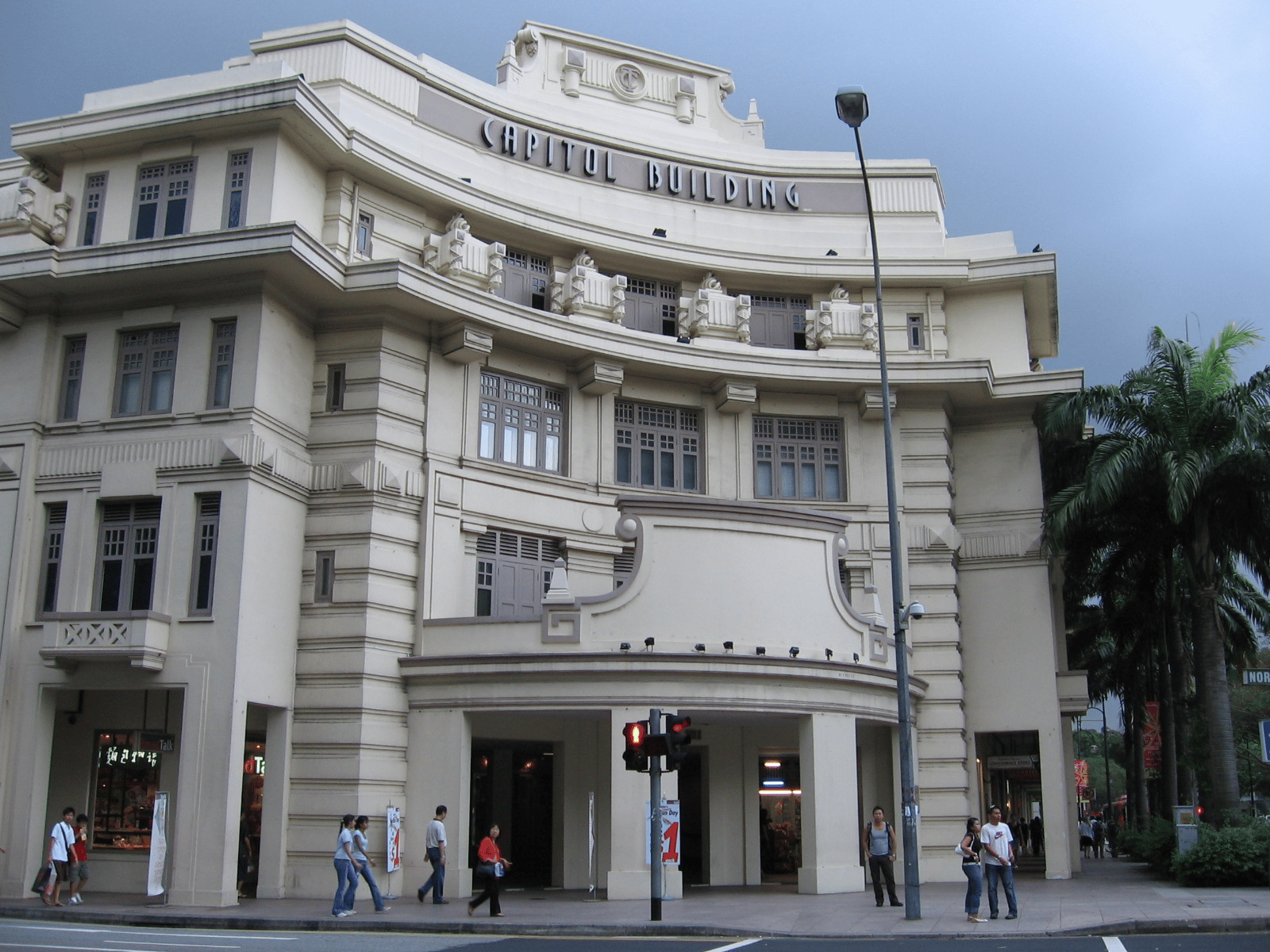
“Well, our origin is in Iran, in a place called Shiraz, south of Iran, not far from the ancient Achaemenian capital of the old Persian empire, a dynasty which ruled between the 3rd and 5th centuries B.C.” With a storyteller’s cadence, perhaps by the dying embers of a caravan campfire, Haji Mohamed Javad Namazie began the fabulous saga of his family to the interviewer at the National Archives of Singapore in 1982. Javad Namazie, lawyer and member of Singapore’s Legislative Council (1947-51) was part of the colony’s small but well-connected Asian elite. Born into a family of merchants, he was also in a web of long-distance relationships threading through Singapore. The Singapore Namazies descend from just one male ancestor whose brothers and cousins made fortunes worldwide: in Egypt, Hong Kong and Iraq. Javad’s grandfather, an indigo trader, first went to Madras where Javad’s father Mirza Mohamed Ali was born; the latter came to Singapore in 1910 to import woven sarongs (“because the Malays in those days used to invariably wear sarongs”). He later grew wealthy enough from various ventures to build Namazie Mansions, still standing today as the Capitol Building.
Javad’s father joined a trade predating colonial Singapore: merchants had been bringing cloth from India to this region since at least the 13th century. In 1685, the Shah of Iran, Suleiman I, sent an embassy to the court of Ayutthaya, and an account of that voyage, named the Ship of Suleiman, records many details of everyday life and culture in 17th-century South-east Asia. From the late 17th century, the Armenians of Esfahan began establishing themselves in places like Malacca, Java, and Penang. Their move to Singapore—with legacies as prominent as the Raffles Hotel and our national flower, Vanda Miss Joaquim—was an event centuries in the making.
But Persianate culture extended beyond the modern-day borders of Iran; the formal prestige of the Persian language in India meant that the South Asian traders in this region (who certainly outnumbered those from “Iran” proper) helped transmit Persian loanwords into Malay, like shahbandar (harbourmaster), nakhoda (captain), anggur (grapes), gandum (wheat), and kismis (raisins). The colonial secretary Richard Wilkinson, who wrote a monumental English-Malay dictionary in 1932, may have had help from Javad Namazie’s father, his good friend, in identifying Persian loanwords in Malay. The geopolitical punditry we get in Singapore tends not to reach back far enough to consider this deep Persianate history, beyond the crude “Sunni versus Shi’a” dynamic that supposedly explains South-east Asian Muslims’ attitudes towards Iran today.
Other stuff we like
“Athisayam”, an award-winning student film. This 13-minute drama-comedy is a tender portrayal of one Indian migrant’s life in Singapore as he tries to be a good father, husband and colleague, wrangling twists of fate and buoyed by ties of friendship along the way.
A flavour of Jom. Occasionally, Jom publishes essays outside the paywall. These are on issues we think are in the public interest, and deserve a wider airing. In the past two years, we have published nearly 50 such pieces. Read some of these if you’d like to see samples of our work. We hope they’ll convince you to subscribe. And even if you’re here with no intention of doing so, we hope you’ll enjoy these offerings and consider it time well spent!