
Dear Jomrade,
This week we’ve published:
- “Singapore This Week”, by Jom
- “Healing the lovesick in the Malay World”, by Faizah Zakaria
Jomfest, 1-6pm, May 19th, ACM. See you in four days! We’ve got fewer than 10 tickets left.
GE2025, one year on. Lots of you joined Jom a year ago, many on annual plans. This period now is thus an important renewal season for us. I hope you continue to support us, and if there’s anything you think we should be doing better, please reply and let me know.
And if your membership has recently lapsed, please consider renewing it now.
Three stories this week made me ponder the Singapore condition: specifically our social conformity—and attendant awkwardness in unconventional situations; and our attitudes towards crime and punishment.
The first was the video of a teen, dressed as an anime character with a shock of pink hair, beating up Amos Yee at an anime convention in Suntec City. It’s the second time Yee has been physically assaulted in public. The first time, when he was just 17 years old, a man slapped him outside the courts, an act that drew (disgusting, shameful) murmurs of approval online.
Whatever Yee’s sins, nobody should be subject to that. The video was particularly tough to watch because nobody intervened, nobody helped. There were ample opportunities to do so. The teen delivered a few blows, then retreated, leaving plenty of space between them. Did he perceive the lack of opprobrium as implicit approval to attack one so demonised in public discourse? Or were those around just too stunned to act, unaccustomed to witnessing public violence? The teen went back for seconds. (Bosco Chun Ho Wang, a Chinese national and Singapore PR, has since been charged.)
The second was the case of a 62-year-old operations support officer whose contract wasn’t renewed. He blamed a woman for his effective firing. And so he retaliated: sending pork slices and the woman’s personal information to seven different mosques, hoping they’d call and harass her. It’s a bizarre confluence, I think, of professional angst, social awkwardness and discomfort (in how organisations and workers communicate), and religious sensitivities. If there’s one saving grace, it’s that in more rambunctious, antagonistic societies, he might have delivered something much worse than pork. With the prospect of more job losses on the horizon, I do hope we get better at communicating in the workplace and, more generally, improving worker protections. (He’s been jailed for 15 months.)
Finally, there’s the story of Kira Peace, the Kiwi singer living in Singapore, who’s been filming herself singing in public places, notably on the upper decks of SBS buses. It’s less her art that is drawing views, but the reactions of disapproving Singaporeans. “The visible discomfort becomes the catalyst that turns content into a cultural flashpoint. Singapore’s social conformity is, in this sense, a resource being mined,” writes Maria Oshige, our intern who’s at NUS. Read Maria’s full blurb in “Singapore This Week” below.
Jom baca book club: Unease with Ahmad Zaid
From April 7th to May 20th, we’re reading Unease: Life in Singapore Families by Teo You Yenn.
Every book has to end; so too the book club (and my section in the newsletter!)
In our final Zoom session last Monday, there were no neat conclusions. There was both hope and angst, more questions than answers. But in that virtual space, we experienced it all together. As a reader mentioned on the call, the only way to see change is to keep going. Here’s to more courageous spaces of all shapes and kinds, for all of us to listen, ask questions, and grow together.
Speaking of spaces, if you’ve not visited our Telegram channel yet, it will be open for another week. Even if you’ve not read Unease, come and browse through the insightful comments and discussions over the past five weeks, or even share your own thoughts too. All are welcome.
- Pakai kabel, and the importance of social capital for Malay upward mobility
- What the Mount Dukono tragedy says about the power of volcanoes, indigenous knowledge, and social media
- Kira Peace, the busker on buses mining social conformity for social media engagement
- As we brace ourselves for a “Godzilla” El Niño, a look at its origins
- Why piano teacher is ranked the second best job in Singapore
Above are the issues we chose to explore in more depth.
Other news this week included: a year after GE2025, ST examines the performance of new political office holders, and new MPs across both parties; ST analysis on AI as the next potential political battleground between the PAP and the WP; SMU professor’s commentary on whether Singapore’s “protect every worker” doctrine can deal with the AI disruption; some UN member states call on Singapore to end executions, reassess POFMA, and establish a human rights body (and MFA’s response); Tekka.sg, a community-led digital platform to help traditional business sell online; ST comparison of premium BTO projects with private properties; Sheng Siong's facial recognition technology helps nab woman who stole 19 bottles of wine over seven occasions; SCMP on Singapore’s attractiveness as an investment haven amid global uncertainty; ST on the rise of Chinese food brands and restaurants here; female board directorships on the rise, but still much work to be done; chronic kidney disease on the rise; pregnancy loss coach’s commentary on supporting parents who’ve tried and failed to have kids; Yishun 10, Singapore’s first multiplex, is set to be redeveloped; Jho Low seeks Trump pardon; and an investigation by Israel’s Channel 13 finds soldiers operated with shoot-to-kill orders for any male in Gaza, killing an Israeli hostage in the process (and we’ve written many times about Singapore’s complicity in the genocide).
Join 2,000 members keeping Jom independent. From S$10/month—full access, no compromises.
“Healing the lovesick in the Malay World”, by Faizah Zakaria
I’ve had discussions with Faris Joraimi, our history editor, about a particular strand of post-colonial scholarship amongst Malay academics that privileged the “rational” and “scientific” over traditional knowledge. It’s something I’ve observed in many post-colonial societies: the embrace of “modernity”, often led by a Western-educated elite, involved some rejection of beliefs and practices considered archaic and perhaps unjust.
Yet in recent decades many younger artists, activists, and scholars around the world have started to wonder what we’ve lost through our sidelining of indigenous cosmologies and customs, certainly in the environmental space. In Singapore, it’s been a joy to witness this. I think of Orang Laut SG’s documentation of our “sea people” and maritime roots, and the interrogation of Chinese ancestral practices by Salty Ng Xi Jie, an artist.
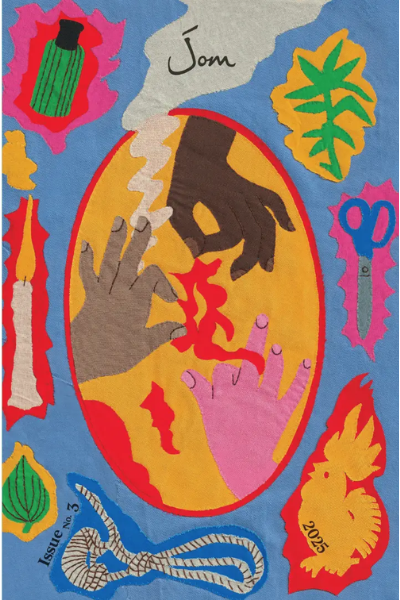
And I think we can situate today’s essay, which first appeared in Jom’s print issue No. 3, similarly. It’s about 19th century Malay love and sex charms, written by Faizah Zakaria, an assistant professor in the departments of South-east Asian Studies and Malay Studies at NUS. I love how she blends scholarship with the lived realities of the dating game, and will leave you with bits of her opening:
“Yet, I also see in this imagined male reader of the past a vulnerability I recognise in my female self of the present: the inability to communicate one’s feelings, and the desperate hope for a miracle. For who among us does not wish to be loved?
A charm, known in the Malay-Jawi vernacular as azimat or jimat, can be defined as powerful words, letters, or figures that can effect a desired change by being read, ingested, buried, or worn in specific ways. Charms have always been ubiquitous, known worldwide by different names and associated with diverse religious traditions: biblical verses written on bread in medieval England, and consumed as medicine; an Arabic supplication from 17th-century South Africa for swift memorisation of the Quran traced onto a white bowl, filled with water, then drank from; magical letters to aid fertility in Ottoman Palestine, written on paper and tied around a sacred rock. The categories we now separate as ‘magic’ and ‘religion’ were once inextricable in common heterodoxy in the quest for desired events that transcended ordinary cause and effect.
Magic is the term retroactively applied to such practices. What we now perceive as magic was, in the past, once experienced as simple faith in the possibility of the wondrous, be they people or objects.”
Jom fikir,
Sudhir Vadaketh, editor-in-chief
Jom
Jom on cultural practices
 Jean Hew
 Damien Thow Xin Wei
 Corrie Tan
 Marissa Lee
Singapore This Week
Society: Explosion in ‘The Spice Islands’
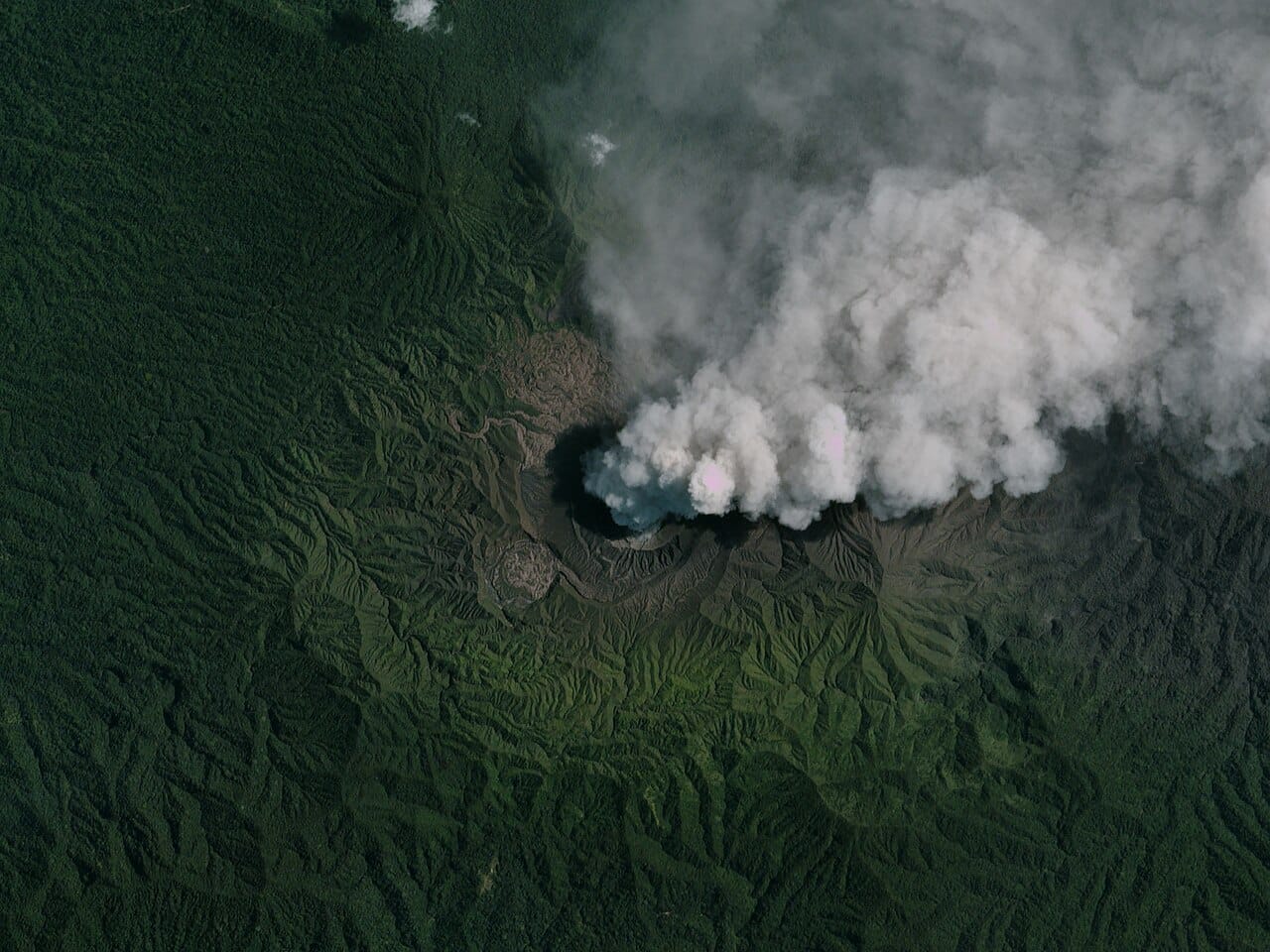
They were there long before we were. From the imposing Himalayas to the majestic peaks of tropical South-east Asia, humans evolved in awe of, and in harmony with, mountains. We mythologised them, as with Meru, centre of the physical, metaphysical, and spiritual universes in Buddhist, Hindu, and Jain cosmologies. Gunung adalah rumah para dewa, the mountain is the home of the gods, said Indonesians long before there was an Indonesia, long before we understood tectonic plates, seismic activity, and the interconnectedness of all matter along the Pacific Ring of Fire. With over 130 active volcanoes across their 17,000-odd islands, Indonesians have an innate, intimate understanding of their power. Some much further away have an inkling. When Krakatoa erupted in 1883, artillery-like sounds were heard in Mauritius, almost 5,000km away. Because of fine particles hitting the upper atmosphere and scattering sunlight, sky hues changed as far away as Europe, with blood-red skies reflected in the paintings of that time.
Following the eruption of Dukono on May 8th, M. Guntur Cobobi, a local resident and cultural ecology researcher, wrote about indigenous practice in The Straits Times: “An eruption in the morning did not stop teenagers from planning a climb that same afternoon. The villagers knew the deer-hunting trails winding behind the mountain by heart. Passing near the crater rim was no different from walking the path behind one’s own house…traditional knowledge passed quietly across generations. Do not build settlements near cold lava channels. Do not clear land all the way towards the summit. Do not overexploit the resources at the mountain’s base. These were values the community observed on their own, without needing formal prohibition from any authority.”
Social media and other digital technologies have laid waste to these traditional forms of being with our planet. Dukono’s majesty and complexity have been compressed into 10 second clips, fodder for businesses and influencers vying for eyeballs. It’s been erupting almost continuously since 1933, with an elevated level of activity since 2008—just in time for all the smartphones and drones that now hover along its edge. There’s everything from a standard close-up of our earth, pregnant and bulging, exploding with ferocity, to the operatic work of Maiyarinjani, showing a woman in a flowing red gown cantering gracefully midway up the mountain, towards mushroom clouds—as if the Ministry of Tourism had hired Kate Bush to film a promo. The video by Kelana Malut, a tour agency, best captures the vertiginous drama that has drawn climbers from around the world. Perched on the edge of a barren cliff’s face, a lemming in a lunar landscape on the Pacific Ocean’s edge, one can peer into the crater as plumes of gorgeous smoke erupt into the air, along with gases, lava, ash and other pyroclasts. Having ascended rock older than humans, one can witness the future of this terrain. The thrill is as much in the watching as in later being watched watching. The home of the gods sees a new social media deity incarnated every day.
On May 8th, Dukono’s eruption killed two Singaporeans, Shahin Muhrez Abdul Hamid and Timothy Heng, and one Indonesian, Angel Krishela Pradita. Criticisms about the hikers ignoring local warnings, as well as the magnetic pull of social media engagement were rejected by Cobobi. “They came to live more fully.” He believes there exists a structural gap in “managing visitor safety” that the Indonesian state must fill. “They deserved better information and better systems.” While true, this is also a moment for introspection about a modern media system that incentivises many others to traipse around the world, parachuting into local communities, without sufficient time to embody their practices, and likely without enough awareness about the power of those before them, those there long before us.
Other stuff we like
Nature writing symposium: Environmental group Cicada Trees Eco-Place is teaming up with Bollywood Farms for a writing symposium aimed at those concerned about biodiversity loss, and the climate crisis. They hope that conversations with local authors, journalists, bloggers, and others in the field will nurture eco-literacy and nature writing in Singapore.
“Singapore academia under the microscope”. As NTU sociologist Teo You Yenn’s second book, Unease, follows her first, This is What Inequality Looks Like, to the top of local bestselling lists, academic Cherian George explains why the supply of rigorous critiques challenging popular and official narratives falls so woefully short of the obvious demand.
POFMA turns seven. ST's Gerry and Mandy, in their distinctive way, ask some hard questions about our “fake news” law.
A flavour of Jom. Occasionally, Jom publishes essays outside the paywall. These are on issues we think are in the public interest, and deserve a wider airing. In the past two years, we have published nearly 50 such pieces. Read some of these if you’d like to see samples of our work. We hope they’ll convince you to subscribe. And even if you’re here with no intention of doing so, we hope you’ll enjoy these offerings and consider it time well spent!