
Four years after the “brownface” controversy, local rapper Subhas Nair recently went on trial for attempting to promote “ill will” among racial and religious groups with his parody rap video, “K Muthusamy” and other social media comments. The trial has divided Singaporeans, revealing a rift in how race relations ought to be managed in the country: should we strive to protect racial harmony at all costs?
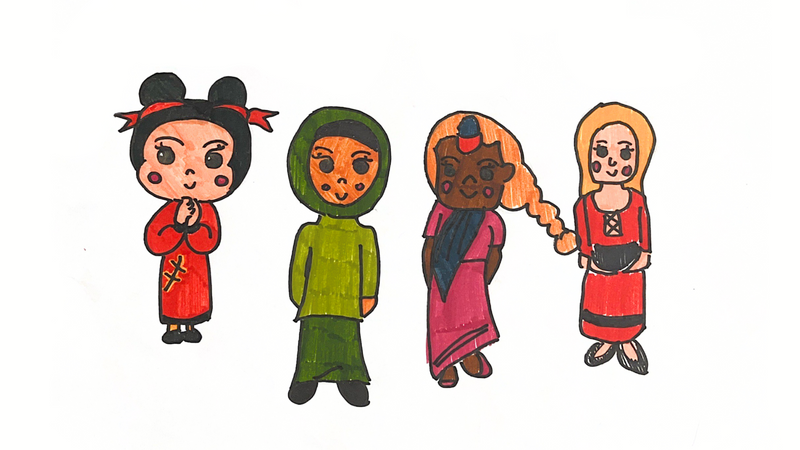
The “brownface” saga began in July 2019, when many Singaporeans took issue with an advertisement for NETS, a local electronic payment service provider, that involved the use of “brownface”. In the advertisement, Dennis Chew, an ethnically Chinese radio personality, dressed up as Singaporeans of different ethnicities, including an Indian man and a Malay woman wearing a headscarf, darkening his skin for some of the portrayals. In response to the advertisement, Subhas and his sister, online influencer Preetipls, released “K Muthusamy”, named after the Indian character that Chew played. In a public statement, the siblings explained that the song—a parody of “F*ck It Up” by Iggy Azalea and Kash Doll—was “born from a place of frustration and pain…where we felt there weren’t enough safeguards for minorities, in terms of how we are portrayed in the national media.”
However, K Shanmugam, home affairs and law minister, claimed that the siblings had crossed the line because their rap “uses four-letter words on Chinese Singaporeans, vulgar gestures—pointing of middle fingers—to make minorities angry with Chinese Singaporeans.” The authorities took down the rap video and investigated the siblings. The police eventually issued them conditional warnings under Section 298A of the Penal Code for wounding the racial feelings of the Chinese community. In contrast, the Infocomm Media Development Authority (IMDA) let off the creators of the original, offensive advertisement with a “stern warning” on the basis that though the advertisement was in poor taste and caused offence to minorities, it nevertheless did not breach the Internet Code of Practice.
The government’s reaction to both the advertisement and rap video was motivated by a desire to maintain social order and stability in our multicultural society. Yet, in doing so, the nanny state may have prevented Singaporeans from engaging in a more level-headed discussion about race relations in Singapore and the reality of racial inequality in a Chinese-majority society. While racial harmony was quickly restored, it was arguably achieved by silencing everyone into submission, including those calling attention to the challenges and injustices faced by racial minorities.
The way this incident unfolded reflects a philosophical imperative—Singapore’s pursuit of racial harmony—that’s backed up by a corpus of laws and attendant potential criminal penalties. To be sure, compared with the 1960s, the relatively peaceful race relations we enjoy today in Singapore is something to be cherished.
However, recent prosecutions have raised questions about Singapore’s punitive approach towards race and racism. As Singapore contemplates enacting new legislation on racial harmony, we must not confuse the veneer of racial harmony for racial justice. The pursuit of the former may come at the expense of the latter, thus preventing us from becoming a more just and equal society for minority and marginalised communities.
In 1991, the government enshrined racial and religious harmony as one of Singapore’s five “shared values”. But, we are not the only society to organise ourselves around this ideal of a harmonious society. For example, Australia has celebrated “Harmony Day” on March 21st since it was introduced in 1999, in conjunction with the United Nations International Day for the Elimination of Racial Discrimination.
What is perhaps exceptional about Singapore’s pursuit of racial and religious harmony is the central role that the law—and the threat of criminal sanctions against those who threaten such harmony—has played. Following the enactment of the Maintenance of Religious Harmony Act (MRHA) in 1990, the Penal Code was amended in 2008 to introduce a new Section 298A which criminalises any act which is prejudicial to the maintenance of harmony between different religious or racial groups. At the 2021 National Day Rally, Lee Hsien Loong, the prime minister, also announced that a new law on the maintenance of racial harmony—modelled after the MRHA—would be introduced.
Yet, the pursuit of racial and religious harmony may obscure other equally, or even more, important ideals. Sociologist Chua Beng Huat has argued that while the idea of racial harmony is a social good that “few can morally deny”, it has been achieved in Singapore by “supress[ing] rather than encourag[ing] public discussions.” In the context of religious harmony, legal academic Jothie Rajah has suggested that the MRHA functions as a “policy and a policing statement” that imbibes in citizens the understanding that “the state’s notion of ‘religious harmony’ is central to the security of the ‘nation’.”
(Rajah has also said that “the ‘Marxist Conspiracy’ was almost certainly the event that precipitated the [MRHA]”, which was likely passed to “repress…another potential civil society leader, the Catholic Church [which] played a prominent role in the ‘people’s power’ movement that forced Marcos to step down in the Philippines.”)
While harmony laws have occasionally been used against those who express reprehensible views about other racial groups, such as former Ngee Ann Polytechnic lecturer Tan Boon Lee, other instances, like the ongoing criminal trial involving Subhas and the conviction of Zainal Abidin Shaiful Bahari for his parody Twitter account “SharonLiew86”, have raised questions among Singaporeans: has our pursuit of racial harmony come at the price of silencing minorities and ironically perpetuating—rather than reducing—racism and other forms of oppression in Singapore?
For instance, some scholars have argued that the state’s response to the parody rap video may have entrenched racism. Sociolinguist Vincent Pak argues that the Nair siblings’ anti-racist intention was rearticulated by the state as racist and offensive instead, which “ensures the maintenance of a racial order”. Similarly, sociologists Selvaraj Velayutham and Bittiandra Chand Somaiah contend that the Singapore government’s “policing of discourses about racial inequality inadvertently normalises racism”.
It is not only Singapore that struggles with the conflict between racial harmony and racial justice. In Australia, critics have suggested that the country’s reframing of anti-racism as harmony has ironically resulted in the denial of racism and the erasure of deep-seated inequalities. Similarly, based on ethnographic fieldwork in a racially diverse suburb in Texas, American sociologist Kiara Douds found that the community had developed what she coined the “diversity contract”, where “race is recognised for certain purposes—including to celebrate diversity—but recognition of racial inequality in the community is disallowed [to preserve] the appearance of racial harmony.”
This “diversity contract” approach to race relations stands in contrast to the more common “colour blind” approach in the US, which avoids any discussion of race at all and aspires towards a “post-racial” society where race does not matter. Critical race theory (CRT) developed in response to this ideology of colour blindness to demonstrate how pretending that race does not exist will not lead to racial equality. Instead, CRT scholars propose a race-conscious approach that does not shy away from and in fact calls attention to how race constructs—and is constructed by—the law and other social institutions.
Given our pragmatic outlook, Singapore has never pretended that race does not matter. In fact, we are one of the few countries in the world where our race is inscribed on our national identity cards. Unfortunately, in relying on the law to preserve racial harmony, we may have similarly subscribed to a “diversity contract”, one which trades the opportunity to confront the roots of racism for a coerced state of racial harmony—maintained by the threat of criminal penalties.
In addition to its potentially silencing effect on antiracist speech, another problem with laws like Section 298A is just how subjective and indeterminate they are: who gets to decide whether someone’s words or conduct is prejudicial to racial harmony or promotes ill-will against another community?
Media studies professor Cherian George has cautioned that if such laws are based on the idiosyncratic feelings of a particular social group (or particular members within the group), there is “an inherent asymmetry in offence-taking [since] offence can be taken even when no insult is intended” and such laws often “place the coercive muscle of the state at the disposal of the most intolerant sections of society”. For example, in India, the Hindu nationalist movement Sangh Parivar has made use of insults law to campaign for the censorship of books and other media that are deemed offensive or contrary to Hinduism. The blasphemy law in Indonesia has similarly empowered Islamic fundamentalists to justify vigilante violence against religious minorities, on the basis that their religious beliefs or practices are offensive or contrary to Islam.
The exercise of prosecutorial discretion in relation to such subjective offences also becomes more difficult to defend in the court of public opinion, which may inadvertently perpetuate the idea that the Singapore legal system is rigged or discriminatory against minorities. This was especially apparent in the lead-up to the 2020 General Elections, when a flurry of police reports were made against numerous individuals, including politicians Heng Swee Keat and Raeesah Khan as well as media personality Xiaxue. While Raeesah was investigated and subsequently given a stern warning by the police for her social media posts about racial inequality in Singapore under Section 298A, the police decided against taking any further action against Heng and Xiaxue for their comments.
The police’s statements on these cases shed little light on how prosecutorial discretion was exercised to determine whether an offence—and if so, which offence—had been disclosed. In Heng’s case, police reports were made in relation to his claim that Singapore was not yet ready for a non-Chinese prime minister. According to the police, Heng’s remarks did not evidence “any intent [emphasis mine] to wound anyone’s racial feelings or promote enmity between different races”. No reason was given by the police for why it decided against any further action against Xiaxue in relation to her claim that South Asian migrant workers “molest people and f*** our maids and leer at girls and flood Little India.” Notably, the police report characterised the issue as whether Xiaxue’s online posts “had intended [emphasis mine] to wound religious or racial feelings and constituted harassment against minorities.”
However, while Section 298 requires an intent to wound racial feelings, an offence can also be made out under Section 298A which only requires that a person knowingly promote racial disharmony. Indeed, the police and Attorney-General’s Chambers (AGC) found that Raeesah’s comments that rich Chinese and white people were treated “differently” under the law and that Singapore “jail[ed] minorities mercilessly” disclosed an offence under Section 298A. From the language of the police press releases which centred on the question of intent, it does not seem that the police and AGC had considered whether Heng and Xiaxue’s comments could have amounted to an offence under Section 298A as well.
Given that Raeesah was the only racial minority among the three, an average citizen may draw the regrettable inference that a person’s race has something to do with whether they could be charged for causing racial disharmony. Ironically, in issuing Raeesah a stern warning, the police might have only reinforced in the minds of some the very point that she was making about different groups being treated differently. More clarity from the police and AGC as to how they enforce such ambiguous laws would go a long way toward increasing public confidence and dispelling any impression that our legal system could be discriminatory in any way.
All this is not to say that the state should not regulate speech at all; as the US’s experience shows, an entirely hands-off approach may be unwise too. Indeed, in George’s Hate Spin: The Manufacture of Religious Offense and Its Threat to Democracy, his research revealed that the First Amendment’s protection of free speech in the US has put religious minorities there in a “globally unique position of having to endure vicious insult with practically no protection from the state.” The American laissez faire approach to hate speech may put even the majority population at risk too, as was the case when a Florida pastor had to be persuaded against burning Qurans by Barack Obama, the president, and Robert Gates, the defense secretary, because doing so could risk suicide bombings by Islamic terrorists on US soil and in the Middle East.
Instead, one potential legislative reform in Singapore might be to move away from vaguely worded offences such as the promotion of “racial disharmony” and “ill will” between social groups, and replace them with more objective ones such as the incitement of violence or hatred. Such a move would also be consistent with Singapore’s obligations under the International Convention on the Elimination of Racial Discrimination (ICERD), which we only ratified in 2017 even though it was adopted by the UN General Assembly in 1965, the same year Singapore declared our independence. According to ICERD, governments should criminalise “all dissemination of ideas based on racial superiority or hatred [emphasis mine], incitement to racial discrimination.” This is of course different from ideas that are offensive [emphasis mine], which is much more subjective and susceptible to majoritarian misuse.
From an enforcement perspective, legal scholar Mari Matsuda has also suggested that, to prevent “opening the dreaded floodgates of censorship”, prosecution of racist hate speech should be carried out only if three conditions are satisfied. First, the message must be of racial inferiority; second, the message should be directed against a historically oppressed group; and third, the message is persecutorial, hateful, and degrading. Anti-racist speech that is offensive to members of racial majorities because they call attention to the injustice or discrimination experienced by minority groups—such as Preetipls and Subhas’s video—would fall outside this definition.
While the proposed racial harmony law—which, according to Lee, will adopt a softer approach to “heal hurt [instead of] leaving resentment”—may boost the remedies available to deal with cases of racial discord, it is important that we take a step back to critically consider which cases should fall within the ambit of the law in the first place. Ultimately, our desire to maintain racial harmony in Singapore should motivate us to take more seriously our pursuit of the greater ideals of justice and equality. Our legislative desire to safeguard racial harmony must extend to the enactment of a comprehensive anti-discrimination legislation that would empower victims of racial discrimination to seek legal recourse against their perpetrators. (In fact, we are already required to do so as a signatory to the ICERD.)
Founding foreign minister S Rajaratnam has presciently noted that “communalism [in a multicultural society] must be and will always remain one of the major problems which, if we do not resolve intelligently, could break our society.” Recent—and more frequent—controversies between different social groups suggest that it may be timely for a national dialogue to reflect on and rethink the way that law is employed as a tool in mediating social differences on our island. In an increasingly polarised, irate and unstable chapter of human history, we must boldly confront the thorny topics of race and racism beyond the law before it is too late.
A lawyer and social justice advocate, Daryl Yang obtained an LLM specialising in public interest and social justice from UC Berkeley’s School of Law on a Fulbright scholarship. His research interests include criminal justice, human rights and comparative equality law.
Letters in response to this piece can be sent to sudhir@jom.media. All will be considered for publication on our “Letters to the editor” page.