

Dear Jomrade,
Today we’ve published:
- “Singapore This Week”, by Jom
- “All in good time: the poetics and politics of partying in Singapore”, by Sakinah Safiee
- “Letters to the editor”. herna efendy questions the power of Singapore’s tuition industry, in a response to “Beyond the rankings: how does Singapore fare against PISA peers?” by EveryChild.SG
What a week it’s been. I joined 30,000 others at the National Stadium on Tuesday, and for a brief moment, suffused with beer and bonhomie, it felt as if all was right in the universe. Check out my colleague Abhishek’s writeup about the match in “Singapore This Week”. We also discuss political interference, social media addiction, the war, and other big issues that matter to you. But if you permit a bit of SG indie media navel gazing from me, what a week it’s been.
There’s the news of the latest hit to TOC and its editor Terry Xu: ordered to pay S$210,000 each to K Shanmugam and Tan See Leng after being found guilty of defaming them. But perhaps the more surprising thing for our community was the announcement that Rice Media had been sold to a social media agency.
I’ve known Rice and founder Mark Tan for almost a decade. We’re friends, and he still offers advice on Jom whenever I ask. Many of us have savoured the writings of Rice staff like Sophie Chew and Pan Jie. My co-founder Charmaine and I have contributed pieces to Rice, notably her exposé on BooksActually.
I don’t think it’s an exaggeration to say that Rice pioneered digital long-form journalism in Singapore. It proved there was a market for it. Without that validation, we may not have even started Jom. All of us in the literary community, and I’d say Singapore society at large, owe Mark and the rest a huge debt of gratitude. Whatever the new owners plan to do with Rice, it seems certain there’ll be a pivot away from traditional journalism.
What should all of us in the Jommunity make of this? Part of me feels depressed: perhaps indie media is never gonna really work in this tiny market. An optimistic, and opportunistic part, meanwhile, wonders if and how Jom can succeed in ways Rice did not.
It’s a confusing time, but regardless, we’ll keep ploughing away. That includes with new “products”, including our first-ever book club. We’ll be reading and discussing Unease, Teo You Yenn’s new book. More details below.
And I’ll also keep ploughing away by asking you to become a paying member. It’s by far our main revenue stream, a key difference from Rice’s business model. Without enough paying members, we’ll eventually go bust. Sure, some of you can’t afford to, and that’s fine. But I’m appealing to those who can. If you believe in the value of indie media in Singapore, and in Jom, please consider a paid membership today.
- Should politicians interfere with the work of civil servants? Featuring Baey Yam Keng
- The Google and Meta indictments, and whether youth social media bans are the way to go
- Should we also worry about smartphone addiction amongst seniors?
- The environmental cost of war in the Middle East
- Singapore vs Bangladesh at the National Stadium
- Choreographic, the Singaporean dance app twirling its way around the world
- Nathania Ong and Lea Solanga in “Les Misérables The Arena Spectacular”
Above are the issues we chose to explore in more depth.
Other news this week included: HDB resale prices dip (slightly) for the first time in almost seven years; free (for now) autonomous public shuttle rides begin operations in Punggol; “quiet cracking”, when employees show up to work but internally struggle with pressure and uncertainty, affects 30 percent of workers here regularly; medical cost inflation is projected to hit a record high of 16.9 per cent in 2026; seizure of a record 830kg of Asian pangolin scales, from some 2,200 pangolins, enroute from Indonesia to Cambodia; a pre-school teacher responds in CNA to a proposal by the WP’s Gerald Giam to keep preschools open later; an explainer on universal basic income by the WP’s Jamus Lim, arguing that Singapore should raise the threshold for Workfare to S$3,500; an analysis of UMNO’s Rumah Bangsa and the quest for ‘Malay unity’ in Malaysian politics by Ariel Tan of RSIS in ST; an ST story about why Terengganu’s residents are content with just the mosque, the river and the sea; an NYT investigation into the links between Binance and Iran, featuring, but of course, a Singaporean bungalow; and Singapore’s plans to become a gold trading hub. (Yes, we’re the hub of hubs.)
Jom baca book club: Unease with Ahmad Zaid
Zaid here! I’m Jom’s community manager. Starting April 17th, you’ll hear from me more often as this space in the newsletter will be dedicated to Jom’s first-ever book club.
We’ll be reading Unease: Life in Singapore Families, Teo You Yenn’s new book. I’ve been lucky to get an early read in for the book club and echo what’s been said in reviews elsewhere—this is an important book. I can’t wait for the Jommunity to join the conversation.
Interested? Follow us on Instagram and look out for an e-mail from me next week as we launch the book club. In the meantime, you can pre-order Unease or read the first pages directly from Ethos Books.
Jom baca.
Jomfest, 1-6pm, May 19th, Asian Civilisations Museum (ACM). Early-bird tickets are on sale till April 13th (regular pricing thereafter). We’ve already sent you a dedicated newsletter, so I won’t bore you further here.
“All in good time: the poetics and politics of partying in Singapore”, by Sakinah Safiee
Younger people drink less, party less, have less sex. I occasionally hear some version of this, and whether it’s true or not, I do know that younger people are quite adept at turning their hobbies into work.
Saki, our head of research and social media, pitched this piece about a year ago to Corrie, our arts editor, and editor of Jom’s print issue No. 3 (where this first appeared). Saki’s “research”, as it turned out, involved attending lots of day parties and “interviewing” lots of party-goers. Dayyyyum, I remember thinking. Wish I’d thought of that one.
But for our sociology-trained Saki, this offered her a chance for a much deeper meditation on time, on rhythms, on the stresses placed on our bodies by a productivity-driven capitalist machine. There’s a blend of party funk and scholarly research here that makes it such a fun read. I’ll leave you with two of my favourite paragraphs:
“A hopping club late on a Saturday night? Not quite. It’s the middle of a Sunday afternoon, and we are at a Thanksgiving Daytime Party in a bar on Purvis Street, organised by the creative collective Secret Pals. ‘Just pals, helping pals in secret’ goes their tagline, coined by co-founders April Luistro, a graphic designer and creative strategist, and Patrick Gerard Elicaño, a freelance photographer and writer. The latter’s on the deck, spinning a mix of groovy hip hop, the street-style techno beats of budots, and familiar Filipino pop songs. But this party’s also a regional one; it’s a tie-up with OnlyPans Taqueria, a Mexican restaurant based in Manila, and the servers are dishing out tacos in their bright red ‘Hot Girls Eat Tacos’ tees. As I watch everyone dancing around me, I realise I’m standing at the intersection of multiple temporalities as time zones, rest time, circadian rhythms, and music tempo all begin to blend into one…
Our everyday life is measured by a different kind of click, clack, clack, clack, click: the cyclical loop of Monday, Tuesday, Wednesday, Thursday, and Friday. But unlike a metronome, we can’t slow down or speed up this tempo. The micro and macro rhythms of our everyday life are determined by a range of institutional forces that incarnate in our calendars, schedules, time zones, and alarm clocks. The late Elizabeth Freeman, scholar of literature, gender, and sexuality, calls this chrononormativity, a process where individual bodies are collectively organised towards maximum productivity. Friday is a special day of the week as it marks the end of a productive cycle and ushers in two days of permissible rest and leisure. This permissibility is not enforced through punishment, but an embodied discipline of productivity.”
Jom renung ria,
Sudhir Vadaketh, editor-in-chief
Jom
Jom on music and movement
 Charmaine Poh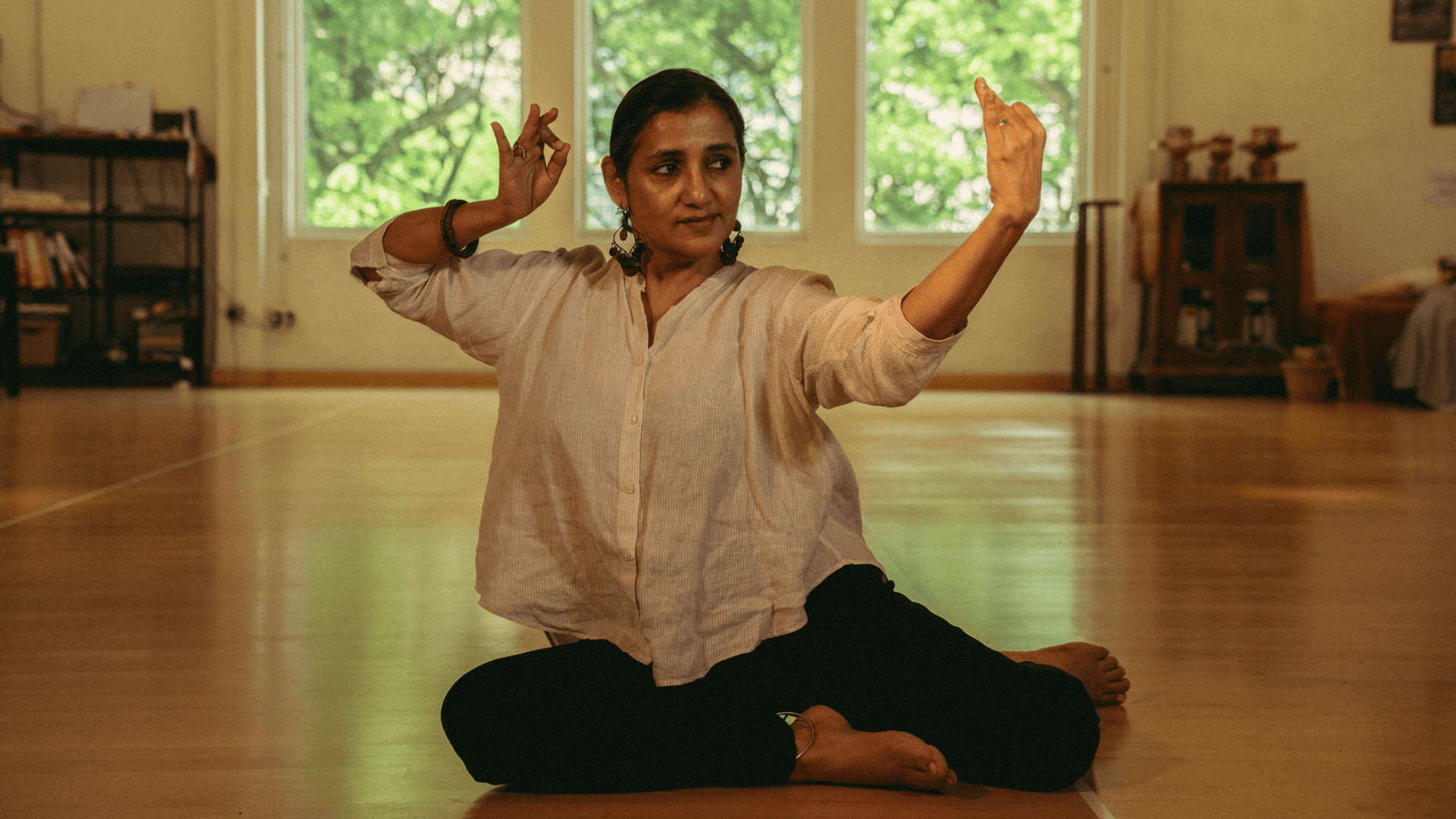
 Khir Johari
 Jean Hew
 Damien Thow Xin Wei
Singapore This Week
Society: And what about the modern elder?

Known online as “Game Grandpa”, 90-year-old Yang Binglin went viral last week after completing “Resident Evil Requiem” unaided: no guides, no walkthroughs, only handwritten notes to track its puzzles and clues. Yang took up gaming in 1996 after retiring as an engineer, and decades later set the Guinness World Record as the oldest male gaming streamer at 87. His latest feat makes a compelling case for active ageing online, for the supposed cognitive benefits of screen time in later life, and perhaps even against much earlier claims of “digital dementia”.
Yet, concerns about teen addiction to social media and phones are now extending to retirees and the elderly too, who are “increasingly living their lives through their phone”. Buoyed by free time, limited mobility and loneliness, many are spending hours on end online. As one exasperated daughter lamented: “I am constantly begging my mom to put her phone down, every time I see her she is just mindlessly scrolling. I swear her attention span is GONE.”
It was not long ago that the chief worry was that older adults would be left behind by a widening digital divide, and become more socially alienated as Singapore pushed towards becoming a Smart Nation. Ironically, the anxiety has flipped. Seniors are now seen as too connected, too often, for too long. But what is to be done? Tackling problematic smartphone use among older adults requires respecting their autonomy, not asserting control over it. That means giving them the tools to exercise self-restraint through better digital literacy and healthier screen habits. A clinical neuropsychologist described the three Cs of behaviours that technology could help with: complexity, connection, and compensatory. People engage in complex activities and boost social connections, supposedly good for the ageing brain, while also compensating for cognitive decline, for instance, by setting reminders to take medication. It won’t be easy. Digital platforms are designed to maximise engagement and encourage continuous use. As Professor Gemma Calvert, a neuroscientist and neuromarketing pioneer, explained: “You tell yourself, ‘Just one more second’, and that second stretches on.”
As the population ages, and regulations restrict teen use, older adults are becoming an important market for tech companies: they often have more spare time and greater spending power. Smartphones will only become more ubiquitous, and more essential to everyday life. To counter the risks of screen addiction—and its sedentary and isolating effects—society will have to find ways to draw seniors back into the physical world. This could mean families and communities also getting off their phones to create inclusive, inter-generational activities that give our seniors a reason to look up from their screens.
Other stuff we like
Museum of Food. A CNA profile of co-founders Emily Yeo and Yeo Min, who want to reconnect Singaporeans with our culinary heritage, including the ingredients, tools, and stories. (Psst: Yeo Min will be appearing at Jomfest on May 19th.)
Singapop: what’s next? T:>Works is hosting a public conversation with musicians Shazza, Dick Lee, Abangsapau and weish, who will discuss the past and future of Singapore pop. What’s a “Singapore song”: global export, or social glue? And what do we need: more indie initiatives, or national infrastructure? Join the dialogue on April 13th.
The world’s great trade chokepoints. This interactive by The Economist analyses the impact on global trade if the world's narrowest and most crucial waterways, like the Straits of Malacca, were blocked.
A flavour of Jom. Occasionally, Jom publishes essays outside the paywall. These are on issues we think are in the public interest, and deserve a wider airing. In the past two years, we have published nearly 50 such pieces. Read some of these if you’d like to see samples of our work. We hope they’ll convince you to subscribe. And even if you’re here with no intention of doing so, we hope you’ll enjoy these offerings and consider it time well spent!