


Dear Jomrade,
Today we’ve published:
- “Singapore This Week”, by Jom
- “Everyday Economics: Bill, please”, by Serene Koh
How do we share space, culture, time, money, and other resources with each other? This was on my mind this week, partly because of our latest Everyday Economics column (more below), but also because of a rather sad series of events to have befallen Nor Syazwan Bin Abdul Majid—or Wan—a descendant of the Ubin Orang Pulau.
For several years Wan has been leading the “Malay KamPUng Heritage Walk”, a two-and-a-half hour tour through Singapore’s last surviving Malay village. In mid-May he wrote about an investigation into his performing of the azan, the Muslim call to prayer, as part of the walk. He regularly does it so participants can “experience the soundscape” of the island at a particular point when the mosque and community were still around.
But NParks received a complaint from somebody about Wan’s supposed performing of a “religious ceremony”, with all its troubling implications about intolerance, secularism, and our shared public space. NParks dismissed the complaint, but the online vitriol that followed (amidst lots of support for him) was shocking.
“This smacks of ‘Tanah Melayu’ (Malay Land) push and should stop!!” and “deport this monkey to Gaza lah” are just two choice ones. I don’t share these lightly, but more so you’re aware of the bigotry present in our racial paradise. There are too many issues to get into here, such as why some displays of religiosity are more accepted than others; and the historical intertwining of (what we today call) religion with culture, heritage, and indigenous life.
Who complained? Why complain? Why not just engage Wan in a conversation that might nudge all parties closer to truth and empathy?
Wan deals with the issue beautifully, incorporating both maternal and Quranic wisdoms, in “Reflections on a heavy Hari Raya Haji”, published on Wednesday. Read, digest, and take a walk with him sometime. (Can use SG Culture Pass, k?)
- Koh Poh Koon resigns from his ministerships, sparking debates about work-life balance
- As the pope worries about AI, is technophilic Singapore having an adequately robust debate about this new god?
- How can we improve sexual education, literacy, and medical access so as to better protect individuals at risk of HIV exposure?
- The Enhanced Games, and the mainstreaming of doping
- As Japan’s 7-11 pioneer passes, an ode to the convenience store
Above are the issues we chose to explore in more depth.
Other news this week included: Singapore’s 2026 GDP growth forecast at 2-4 percent following stellar first quarter; SCMP analysis of the costs of our regional AI boom; ST commentary on why Singapore isn’t great at nurturing homegrown tech giants; chief justice on the challenge of “truth decay” and “echo chambers”; closing oral submissions at the ministers vs Bloomberg trial; Lim Chu Kang land-use changes for agriculture and defence (and the farms affected); war has not deterred Asian Muslims from the haj; ERP may return to Orchard; identity theft almost leads to S$2.9m fraudulent loan; hullabaloo about performing the azan, the Muslim call to prayer, as part of a Pulau Ubin tour; TWC2’s director on three practical measures to help migrant workers; English or Singlish over mother tongues, says new IPS survey; the first local brain tumour removal through eye socket; ST investigation into the Pokemon trading boom; young professionals earning well, but feeling poor; personal bankruptcies on the rise; a new father builds a baby tracker with AI; over 1,000 new marine species discovered last year, with 90 percent still unknown; and a cute little rat on the MRT!
Join 1,800 members keeping Jom independent. From S$10/month—full access, no compromises.
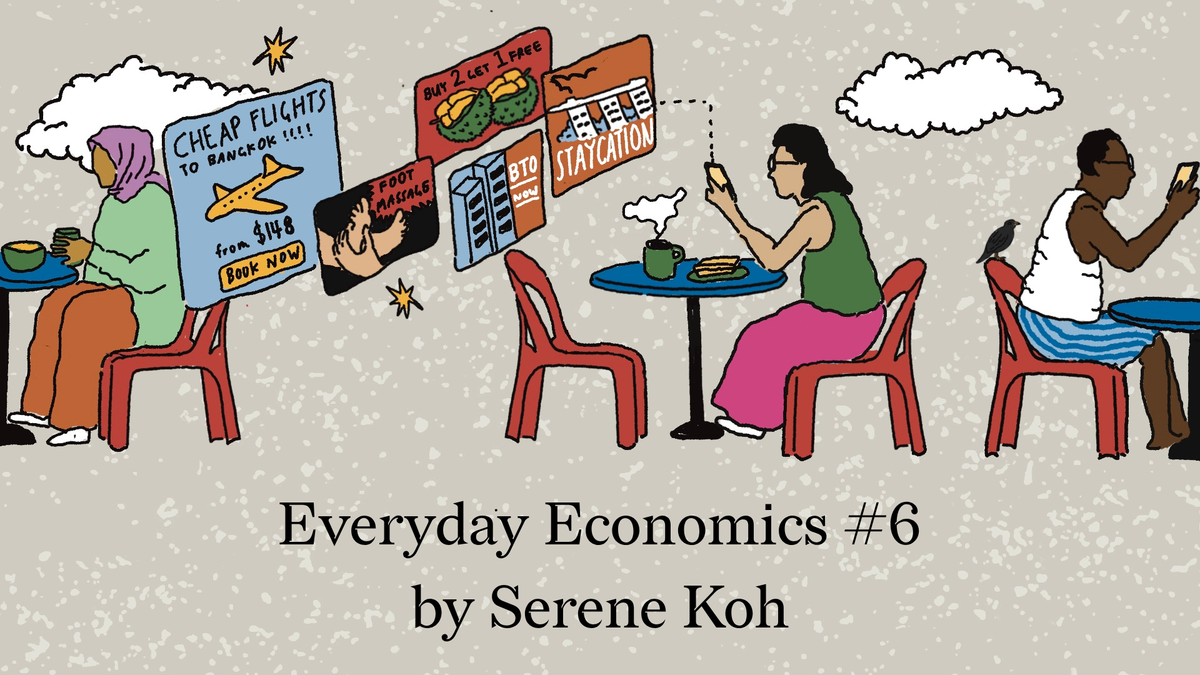
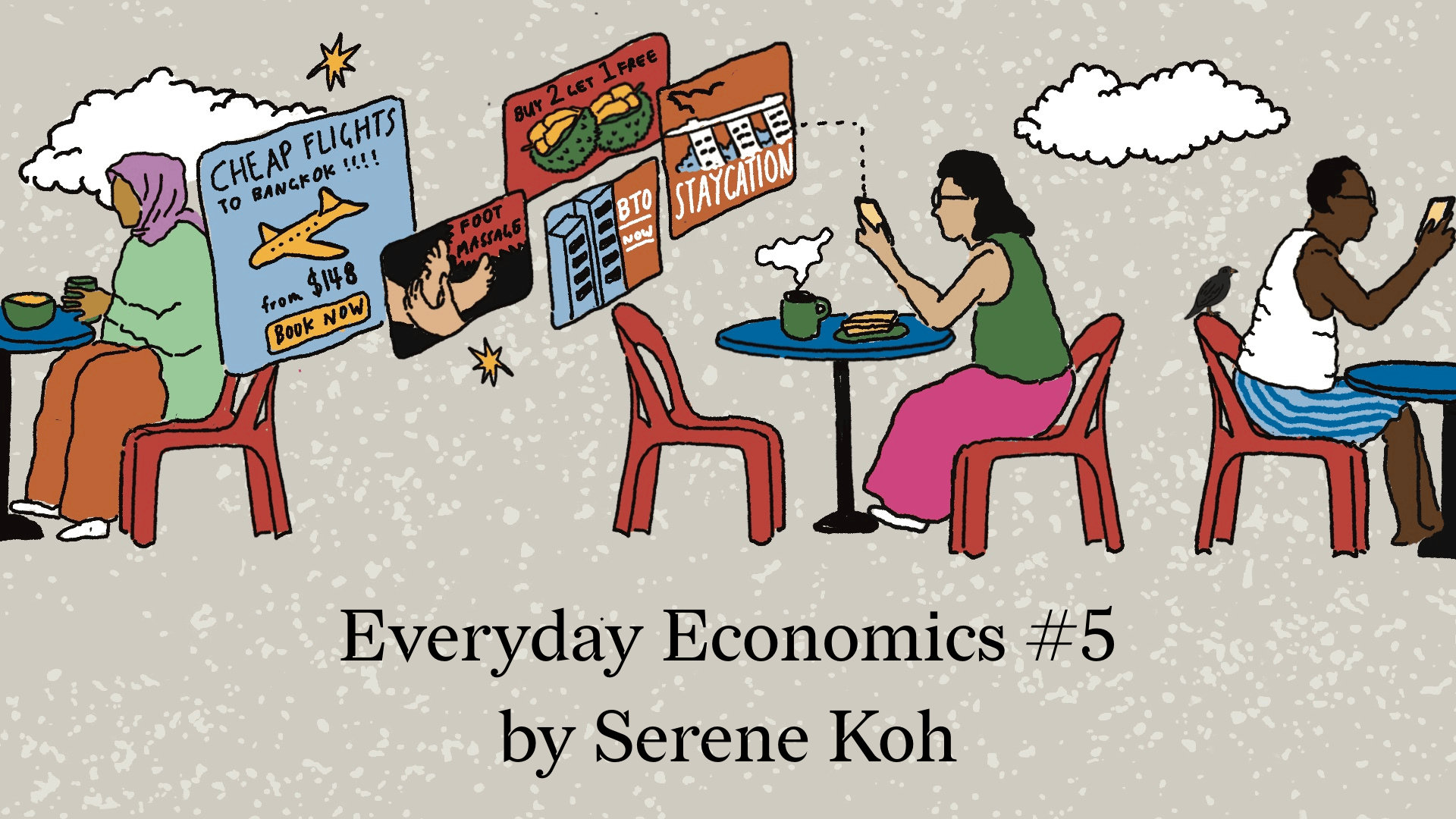
“Everyday Economics #7: Bill, please”, by Serene Koh
It’s amazing that this column has now been running for half a year! You may recall that we started it in response to your wishes in our last reader survey. I’m grateful to Serene for sharing her personal stories and behavioural insights with us, and I do hope it’s the first of many Jom columns. (Food? Music? Gen Z slang?)
Today’s column speaks to something that has probably annoyed every one of you at some point of your life. (And possibly on a weekly basis.) It’s a “fulfilment”, Serene told me, of something she said she’d do in her very first column: “to look at the norms, beliefs, and stories behind every day economic behaviours, and I mention bill-splitting explicitly.”
I’ll leave you with bits of her opening.
“In game theory, the Unscrupulous Diner’s Dilemma is a variation of the Prisoner’s Dilemma. Imagine that a group of people go out to eat. Before ordering, they agree to split the bill equally. Each diner now has a choice: order something modest, or something pricier? If you order something expensive, you bear only a fraction of the extra cost while everyone else shares the rest. But if everyone thinks the same way and orders what is most expensive, everyone ends up worse off than if they’d each just ordered what they felt like having…
I once lived a version of the dilemma at an office dinner. A few of us decided to have dinner together after work—no occasion, just dinner. We ordered the usual—har jeong kai (prawn paste chicken), sambal kang kong, yam basket, hotplate tofu, some vegetables. And chrysanthemum tea. It felt like enough.
Then someone suggested chilli crab…”
Jom belanja
Sudhir Vadaketh, editor-in-chief
Jom
Jom on everyday economics
 Serene Koh
 Serene Koh
 Serene Koh
 Serene Koh
Singapore This Week
Culture: Inconvenient truths
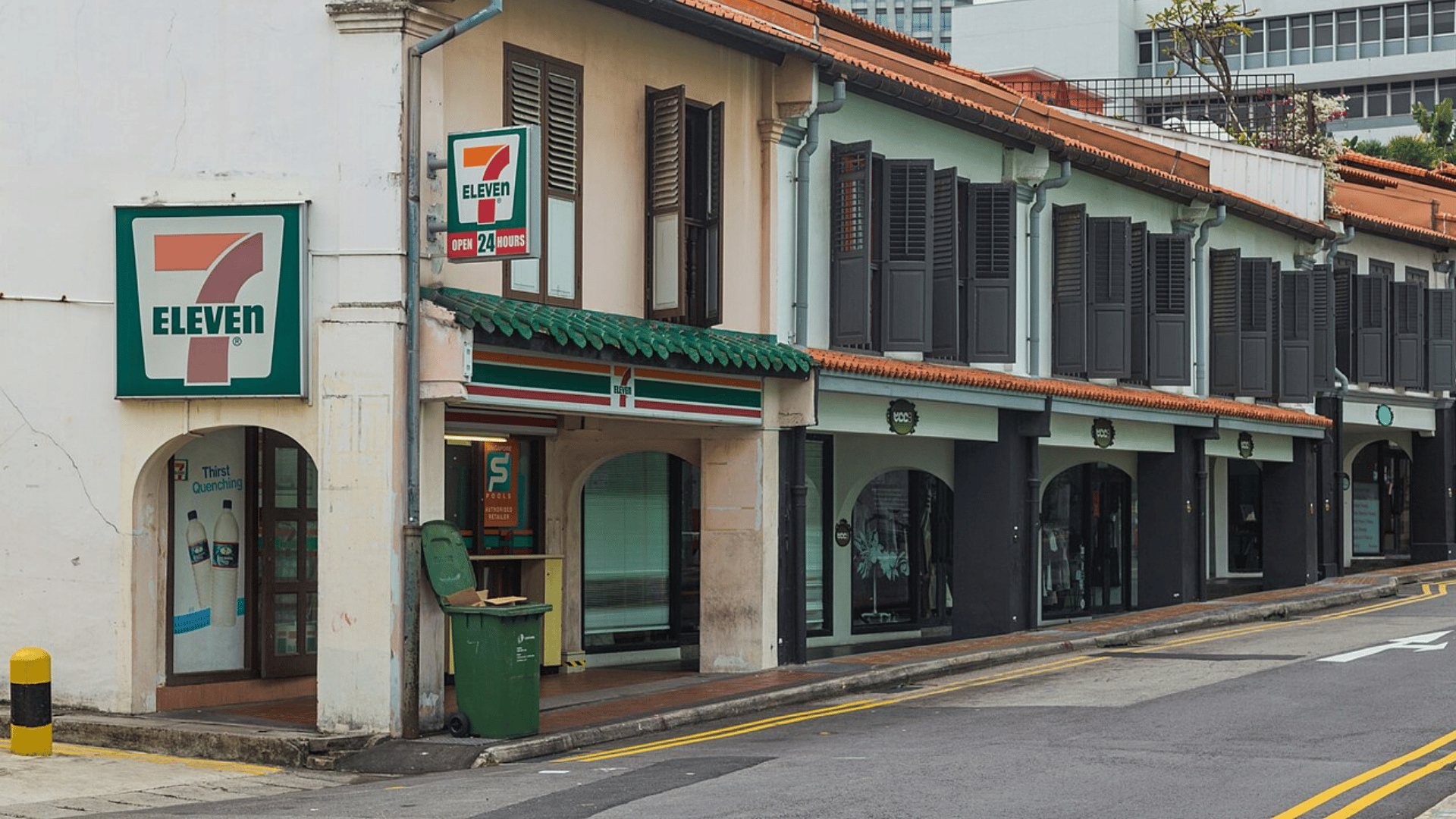
We all know that orange, green and red-striped beacon, that fluorescent lighthouse in the dark. Its well-stocked aisles hold a promise for both the partier and the overtimer: a readymade supper for the weary soul. The golden slick of butter chicken briyani, microwaved to scorching perfection inside a sturdy plastic film tub, those go-to cigarettes, a vodka mixer, or a spire of ice-cream. We’ve all made our late-night and early-morning pilgrimages to the cathedral of convenience: 7-Eleven. The man who spread its gospel died earlier this month, aged 93. All the conveniences we take for granted—from parcel drop-offs to bill payment to thick wedges of onigiri—can be traced back to Toshifumi Suzuki’s savvy. He brought the American chain to eastern Tokyo in the 1970s, and there are now 22,000 across the country. Gavin Whitelaw, Japanese Studies scholar, observed that the convenience store—anointed as a neighbourhood community centre—has become part of the country’s public infrastructure, where a child might complete a first solo errand, or a young person might seek refuge from a stalker. The store doubles as a post office and bank in remote rural areas, and often acts as a provider of essential supplies and information during natural disasters. “People feel a certain sense of affinity and a sense of relief when they see these stores,” Whitelaw told The New York Times.
In Singapore, we once sought out these spaces in the form of our mom-and-pop minimarts, and the mamak shops that lined our void decks. Their storekeepers were also keepers of the neighbourhood: our therapists, afterschool caregivers, phone operators, port of call. Yahyah Amudin opened his Ang Mo Kio mamak shop in 1980, and was so trusted by the community that parents would instruct their kids to wait there for a pick-up. In 2011 the octogenarian had to shutter his store for good, because of his failing health, and failing business. In the 1970s-80s, Singapore had about 3,000 provision shops; as of last year, only some 250 remained. As our family-run shops recede, unmanned and AI-powered convenience stores are on the rise. Vloggers and influencers have made a genre out of convenience store mukbang, chowing down 7-Eleven fare for breakfast, lunch and dinner and extolling the virtues of their open-door policies. And Singapore’s 7-Eleven branches are leaning into TikTok trends like blind boxes and drink mixing to “stay relevant” as they go through a fresh round of revamps.
But perhaps what was most convenient about our mamak shops was their understanding of inconvenience. “We cannot know each other without being inconvenient to each other,” wrote the literary scholar Lauren Berlant, “We cannot be in any relation without being inconvenient to each other.” The uncles and aunties who run our mamak shops know that customers with dementia might accidentally bring items home without paying for them, that harried parents might need an extra eye on their kids after school, that if an elderly regular doesn’t show up, something might be wrong. A Redditor recalled never having to pay for groceries as a 10-year-old because of these informal, credit-based systems, and paid homage to the comforting chaos of their local hangout, and hideout. “Uncle always behind the counter cracking jokes while auntie watched everyone like a hawk,” the commenter wrote. “The uncle and auntie have since passed on and the shop is no more—the whole market complex was bulldozed for a development that never quite took shape and is now an empty field near the entrance to the Thomson Tree Top Walk.”
Other stuff we like
Applications open for The School of Alternate Internets. Feelers, an art and technology research lab, is conducting this programme for “critical thinking, doing, and undoing around our shared online landscape.” Applications close June 17th 2026.
What does migrant workers’ food taste like? Watch Singaporeans try the same food packaged and delivered to migrant workers every day, in this video by Migrant Workers Singapore (MWS), a group made up of migrant workers.
“Singapore is losing its soul in plain sight.” Heidi Tan, the former chef/owner of Flor Patisserie, writes passionately about the challenges facing people and businesses, in a system that “has quietly decided that rental yield matters more than the people who give this city its character”.
A flavour of Jom. Occasionally, Jom publishes essays outside the paywall. These are on issues we think are in the public interest, and deserve a wider airing. In the past two years, we have published nearly 50 such pieces. Read some of these if you’d like to see samples of our work. We hope they’ll convince you to subscribe. And even if you’re here with no intention of doing so, we hope you’ll enjoy these offerings and consider it time well spent!