
For subscribers only
Subscribe now to read this post and also gain access to Jom’s full library of content.
Subscribe now Already have a paid account? Sign in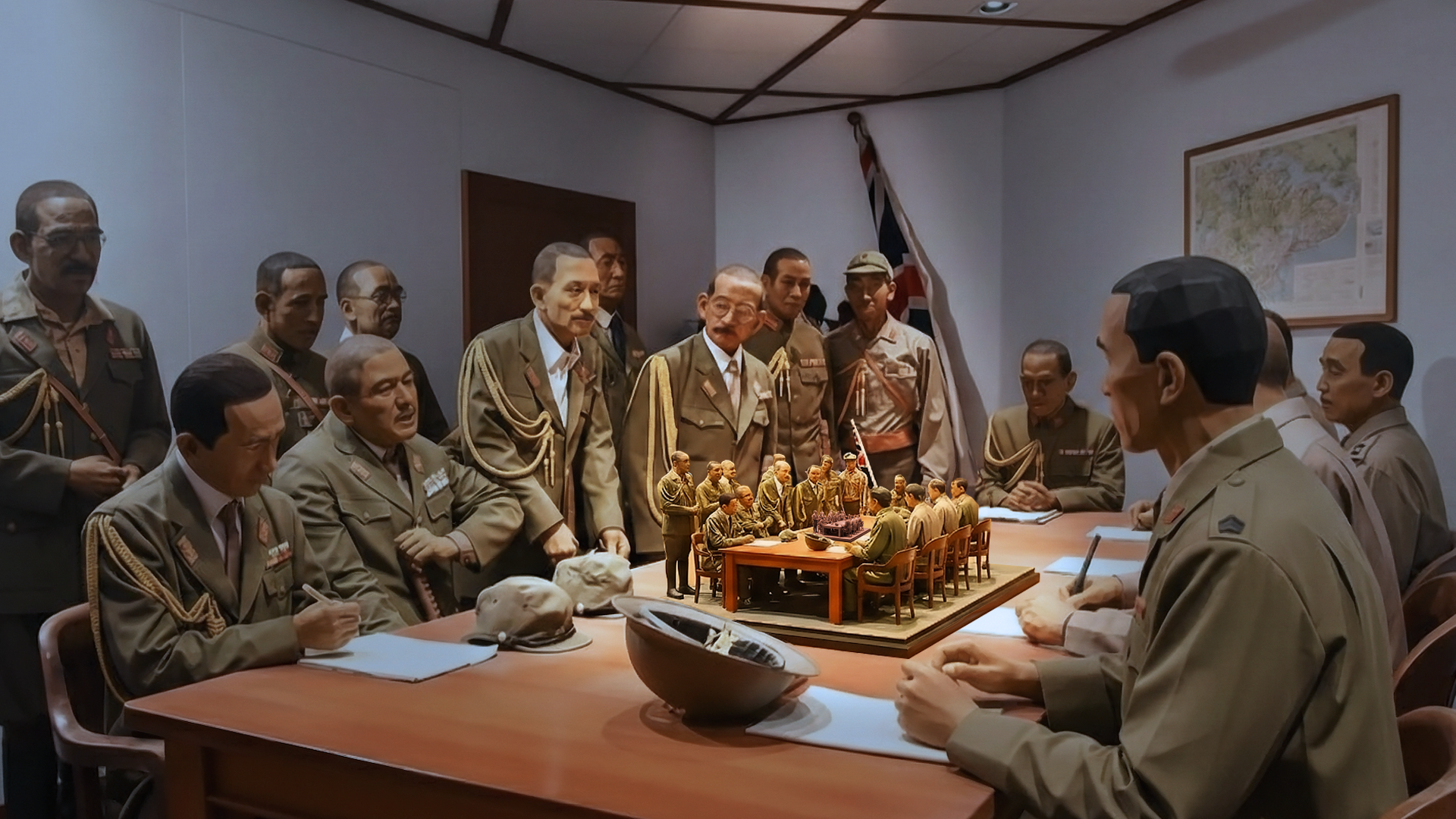
Now more than fifty years old, the zombie-like persistence of Sentosa’s Japanese surrender waxworks suggests there is more to the exhibit than meets the eye. A Singapore story cast without Singaporeans, it tells us as much about those who observe, as those depicted.
Subscribe now to read this post and also gain access to Jom’s full library of content.
Subscribe now Already have a paid account? Sign in
The history of a few emotional men and a great white bird.
Despite colonialism’s incessant efforts to conjure and enforce new categories to better exploit vast populations, Malaya’s dizzying plurality could not be contained.

The traditional Malay music produced by a British company in the 1960s and 1970s is an aural guide to history, tradition and the meaning of change.

Like Singapore, Zhoushan is slowly becoming unmoored from its archipelagic past, losing the gentle rhythms of its sea-bound worlds to the cacophony of capitalism.

Debates about Singapore’s pre-1819 significance, sparked by Ho Ching, offer us a chance to question the very notion of a national history

Please click on the link sent to your e-mail to login to your account.