

Dear Jomrade,
Today we’ve published:
- “Singapore This Week”, by Jom
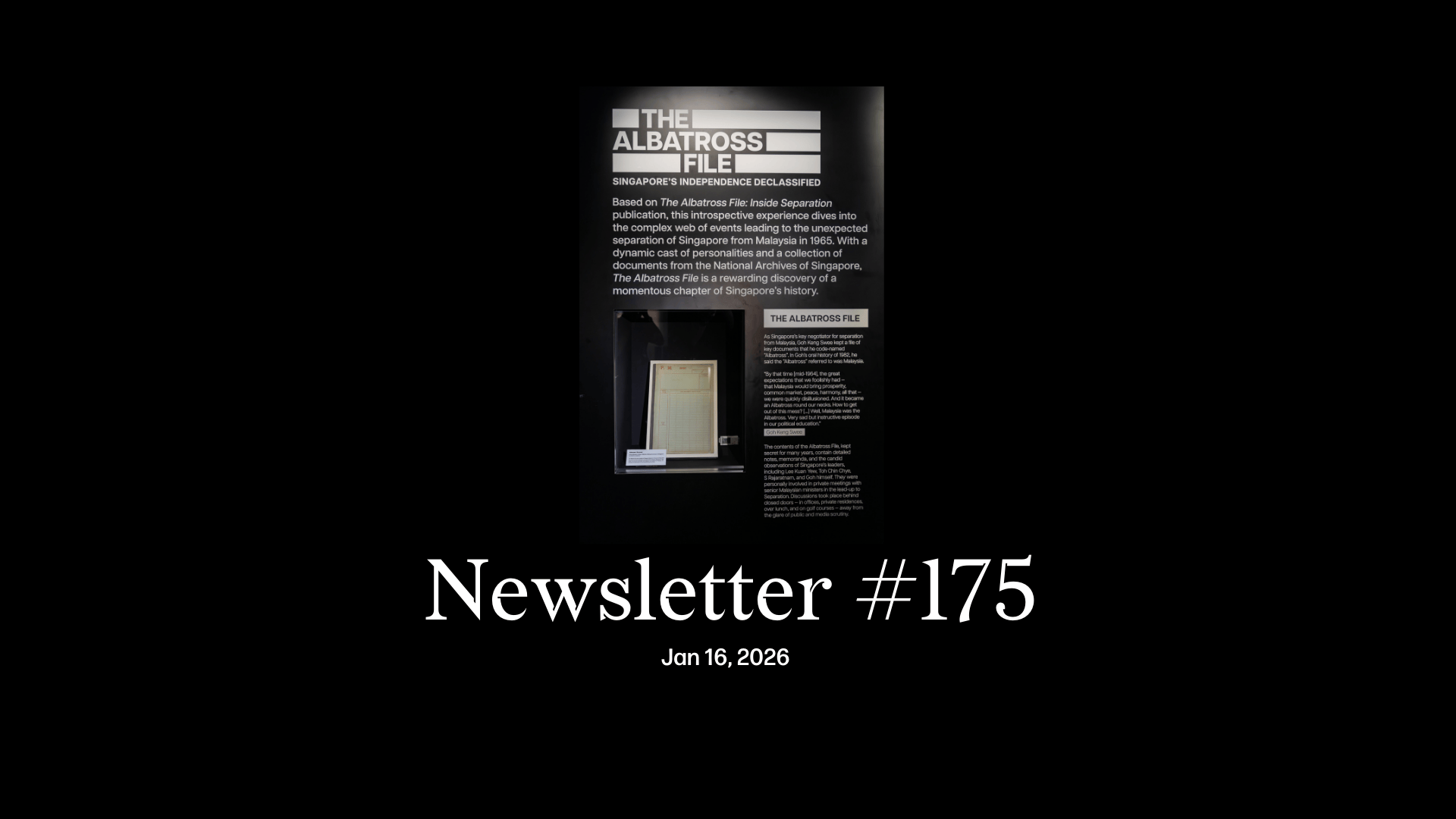
- “Whose feelings? The Albatross Files”, by Faris Joraimi
And today we’ve migrated to a new e-mail newsletter distribution system. What do you think? Well if you absolutely hate it, there isn’t toooo much we can do. But we can try and respond to smaller suggestions. Reply and let us know.
If you think you’re receiving this newsletter by mistake—perhaps you already “unsubscribed” from the old one—my apologies, and you can easily unsubscribe at the bottom of this note. Thanks for your patience during the migration.
Technical lead. I guess we've reached the point where we need more consistent technical help! This is a one-day-a-week, part-time position, which can be based remotely.
Please inform anybody you think might be keen to join Jom! Especially peeps at the intersection of media x technology. We’ve advertised this through professional networks and social media for weeks, and have received lots of applications. Here’s one last push. Applications due by Jan 20th.
- How might Pritam’s demotion as LO affect the PAP’s and WP’s prospects?
- High time we considered a path to citizenship for our Gurkhas
- Manus AI, and tech’s geopolitical challenges
- Do the National Archives belong to the people or the PAP?
- Rebirth of The Projector
- What to watch at COMMA, an arts festival
Above are the issues we chose to explore in depth. Other news included: a shortage of blood donors; seniors visiting the dentist less often; concerns over bus stop construction at Serangoon River forest; how ube became the new matcha; how a veteran teacher is using technology to teach Tamil; rising memory chip prices affecting computer upgrades and Sim Lim Square retailers; an explainer on PSLE bootcamps; and a story about those who go missing—about four people every day—in Singapore.
Join the over 2,000 paying members now to get access to all our content, starting from just S$10 a month.
“Whose feelings? The Albatross Files”, by Faris Joraimi
Thank you, dear history editor, for your patience! Faris’s piece on the SG60 Albatross exhibition and book was done by mid December, but we had to delay it because of the break, and the sudden passing of M Ravi, whose obituary took precedence last week. One of many sections I enjoyed:
“The view of history from the soaring albatross won’t include reactions by ordinary Malays to separation, either, despite UMNO and the PAP clashing over whose political program would “improve” our lot specifically. (Here I go again, the parochial Malay making this all about us.) But we were forced to choose between two sides with little grey in between. As we became minorities overnight, is there some space in this redemptive account of separation for our anxieties and misgivings?
Read another way, the drama of separation is less about the stark choice between multiracialism and Malay supremacy, but what can happen when people are made into a playground for electoral support.”
Faris deals with much else in his piece, including that common question: why now? Whether you’ve been to the exhibition or plan to go, you should read it now.
Jom transitions: editor-in-chief. In last week’s note I announced a one-year leadership succession plan for this particular role. Apologies if I was insufficiently clear. Some interpreted it either as a transition already done and/or that I’ve packed my bags for Kathmandu. So, just to be clear, we hope for Abhishek Mehrotra to take over as EIC in January 2027. Among other positives for Jom, in the three co-founders’ view, this will free up my time to write, develop new products, and keep growing the business. You can’t get rid of me that easily!
Jom!
Sudhir Vadaketh, editor-in-chief
Jom
Jom on Malaya
 Faris Joraimi
 Paul Rae
 Sudarshana Chanda
 Khir Johari
 Faris Joraimi
Singapore This Week

Tech: A world of pain for Manus
In tranquil times, internationalists would have celebrated Manus.ai: a Singapore-based company founded on Chinese expertise backed by a US venture capital (VC) firm with an Indian partner. Instead, Manus is staggering from superpower punches.
Its woes began in April last year, shortly after it released a trial AI agent able to create presentations, apps, and websites from simple prompts. This step change from existing LLMs that needed more human steering attracted a US$75m (S$97.5m) investment from Benchmark, an American VC, at a US$500m (S$650m) valuation. Displeased, Trump’s Treasury Department put Benchmark on notice for a potential breach of a Biden-era ban on US investment in advanced Chinese tech. Manus fired two-thirds of its staff, shuttered its Beijing headquarters, and decamped with its core team to Singapore, new headquarters, to continue accessing US funding. There matters stayed until December when Meta, Facebook’s parent company, acquired Manus for a reported US$2.56bn.
Enter Beijing. The Chinese Commerce Ministry has now opened an investigation into the deal, claiming that it may have run afoul of restrictions on export of tech developed in China. If the Ministry deems it so, China could block the deal and perhaps even hold management criminally liable, reported ST.
It’s not mere politics. Chinese media and even influencers not obviously allied to the government castigated Manus for “killing the donkey after the grinding is done”: exploiting cheap engineering talent to build a world-class product before defecting. Meanwhile, the US funding eco-system, crucial for cash-hungry AI start-ups, is acquiring a taste for Trumpian nationalism and xenophobia.“[W]ow, actions have consequences?” chortled Delian Asparouhov, partner at the storied VC Founders Fund, when Benchmark’s investment attracted US scrutiny. He later accused Benchmark of aiding “the enemy.” Tim Draper, another prominent investor who once backed the Chinese search engine Baidu, has vowed to shun the country until Xi Jinping “sees the light or is replaced.”
None of this bodes well for Singapore, long considered leeward of geopolitical winds. When Manus moved, and then was bought by Meta, some claimed the country’s studied neutrality, its socio-political stability, and openness to business made it the perfect Philosopher’s Stone on which to conduct the alchemy of tech, talent, and capital. Or, to use observers’ more contemporary jargon: it has the potential to become the “vibe-coding start-up of the world” and “The Switzerland of AI”. But this episode and last year’s microchip smuggling fracas (alongside much else) suggest that Washington and Beijing are ushering in a zero-sum age. As the world grows smaller and more selfish, as superpowers strike “with us or against us” poses, and nationalisms turn febrile, what happens in a society which has exchanged its civic freedoms for an economic prosperity reliant on business openness and tolerance?
Some further reading: In “China’s new back doors into western markets”, the FT analysed the trend of “Singapore washing”.
Other stuff we like
Abhishek Mehrotra, Jom’s head of content, in a new CNA documentary. Set against the backdrop of colonial rule and wartime terror, this feature traces the extraordinary life and legacy of Singaporean tennis player and sporting pioneer Lim Bong Soo. Abhishek appears at minute 13:13.
Linda Lim on the need for productivity-led growth. The “Singapore model” of a market economy under heavy government direction has led to strong headline numbers that obscure signs of significant stress. The professor emerita of corporate strategy and international business at Michigan argues for a new approach.
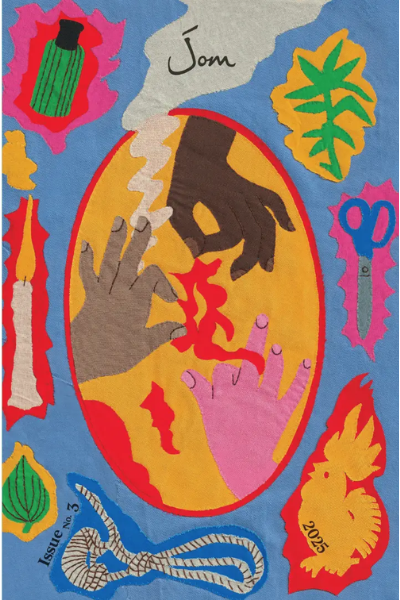
Jom print issue No.3 has just launched!
Dive into its themes of movement, mobility, and magic.
A flavour of Jom. Occasionally, Jom publishes essays outside the paywall. These are on issues we think are in the public interest, and deserve a wider airing. In the past two years, we have published nearly 50 such pieces. Read some of these if you’d like to see samples of our work. We hope they’ll convince you to subscribe. And even if you’re here with no intention of doing so, we hope you’ll enjoy these offerings and consider it time well spent!