
Behind a blazing camera flare, a woman summits a mountain of wild bush: she walks alongside you and your dog, her coiffed hair somehow untouched by the wind, her tightly fitted sarong kebaya somehow unobstructed by the rocky steppe. A glamorous apparition, a sensual spirit. “Singapore Girl, You’re Always There”, rang the 1986 ad from Singapore Airlines (SIA). Over in Thailand, the woman in question is in pink-purple regalia with a regal sash affixed with an orchid flower; sometimes on land, sometimes beside you in the cabin. Regardless of where she is, she is bowing, palms pressed together, promising to “รักคุณเท่าฟ้า” “Love you as much as the sky.” She is one of the “นางฟ้า” or “Air Angels” of Thai Airways (TG).
Being a flight attendant is a famously female profession. “Singapore Girl, You’re A Great Way To Fly” was the suggestive tagline of South-east Asia’s reigning luxury airliner SIA from 1972 to 2007. The Singapore Girl was her nation’s icon of Asian tradition and Western sophistication. Behind the Singapore Girl IP, trademarked in 1977 as the first female icon of a commercial brand, were stringent requirements for SIA’s female flight attendants—as there were for TG’s Air Angels. For both, their appeal relies on the aura of effortless hospitality: “gesture from the heart” (TG) or “service even other airlines talk about” (SIA).
Occupations that aestheticise care, drawing on feminised expectations of service, are known as “pink-collar” work. The term is used to describe nurses, secretaries and flight attendants—occupations where women are typically underpaid, despite high social and economic dependence on their work. In the 1970s, just as SIA and TG were building brands around their female icons, female flight attendants in the US were filing class action lawsuits for gender discrimination and lack of equal pay. They fought, and won the right for their work to be better protected and compensated, eradicating marriage, pregnancy and age bans.
In South-east Asia, the fight to properly compensate and protect the pink-collar labor of flight attendants has experienced (non-weather related) delays. Only as recently as 2022 did SIA drop its policy terminating female cabin crew post-childbirth. With feminised icons central to each airline’s branding, why has it taken so long?
“Air stewardess: single, Thai national, minimum height 160 cms, with weight in proportion to height, and the ability to swim 50 metres non-stop in freestyle” reads TG’s website, on qualifications for Air Angels. (Stewards have similar requirements, though they don’t have to be single.)
My mother became an air hostess in 1981, when she was in her twenties. “Those were the glory days,” she would reminisce, “when Thai Airways was still the number three airline in the world.” Her pictures from the era captivated me: my mother’s willowy figure leaning over an airline galley cart, clothed in a purple-pink silk dress.
TG was established in 1960 as a joint venture with Scandinavian Airlines (SAS). From the outset, it was a flag-bearer of Thai identity. The first planes were named after historic figures in the Thai royal family. The flight attendant uniforms were designed by Pierre Balmain, to mirror the siwilai outfits that Queen Sirikit wore on her historic, CIA-funded 1960 tour of Western nations. As beauty queens became ascendant cultural figures, TG awarded Thailand’s first Miss Universe winner Apasra Hongsakula the position of “Honorary Flight Attendant” in 1966. Flight attendants, like beauty queens, became the face of Thailand’s burgeoning international presence during the Cold War. By 1977, TG was owned by Thais and helmed by (male) Thai pilots. By 1999, the royal emblem was stamped on every plane.
Even as feminist mores shifted vernacular away from the term “air hostess” to the more gender-neutral, “flight attendant,” my mother clung to its original meaning. “To be an air hostess was a privilege, to be a host of the sky. We were taught to look after passengers as if they were guests in our homes.”
Ironically, TG hostesses work hard at making their “homemaking” seem natural—especially to embody genuine “Thai charm”. Alongside intensive serving etiquette and cultural protocol classes covering smiling, posture, serving hierarchies, royal/diplomatic protocol and the iconic Thai wai, flight attendants are also trained in CPR, handling of in-flight medical emergencies, emergency slide operation and passenger conflict de-escalation among other technical and safety modules that are frequently refreshed. The high stakes nature of their pink-collar work was often masked by the elegance and warmth expected of an Air Angel.
Unionisation in Thailand has tracked the rise and fall of the country’s military regimes. Whispers of union activity emerged following the 1932 Siamese Revolution but were quelled by the 1938 military coup. Labour activism saw a renaissance in the aftermath of the 1973 popular uprising, which deposed another military dictatorship. In the breath of liberalisation between 1973 and 1976, 138 unions were formed, Labor Day celebrations were hosted annually, and state-owned enterprises like TG created national associations to push for higher wages and better job security.
In those hopeful years, feminist activism bloomed. Young women refused to participate in beauty contests that capitalised on Thai femininity to build national pride (much in the same way TG did), ultimately leading the civilian government to ban beauty contests altogether. In 1974, an Equal Rights Protection Law was brought into effect, the first such law to focus on women’s issues and gender equality.
TG’s union was officially founded in 1979, just two years before my mother put on her silk uniform. By 1989, TG had three unions: one for general employees, one for technical employees and one specific to flight attendants. But just as Thai civil society began to strengthen, it was quashed by a 1991 military coup—unleashing a violent wave of protests culminating in the 1992 political uprising and deaths of 52 pro-democracy activists in a historic event known as “Black May.” Bangkok hosted its first Miss Universe pageant during the political turmoil, exemplifying the vicious, vigorous return of the military–patriarchy nexus. The unions re-instated in 2000 were but shadows of their energetic 1970s selves, harnessed and controlled by the state. Feminist activism faced the same strangled fate, only to re-emerge from dormancy amidst the 2020 pro-democracy protests.
In the political impasse, TG union had flashes of success with issues that skirted direct state involvement. The union was the first organisation to stand behind cabin crew in passenger conflicts—situations where the feminised humility required of flight service, combined with the hierarchy of Thai etiquette, put cabin crew at a disadvantage. In a 2016 incident, a female Thai AirAsia attendant kraab or kowtowed to an angry passenger, drawing angry comments from the TG union’s president, in defense of the cabin crew’s dignity. In 2008, the union successfully pressured a prime-time Thai soap opera to rectify scenes that sexualised female flight attendants. While some criticised the move as moral conservatism, TG flight attendants emphasised the need for professional respect. In 2010, TG introduced a policy requiring flight attendants to maintain their BMIs and waistlines below specific limits—25 points and 81cm, respectively, for women; 27.5 and 89cm for men—in view of “their health” and “the safety of passengers”; non-compliance would result in a transfer to ground staff. The flight attendants sued, and the National Human Rights Commission publicly condemned the policy. While TG never issued a public response, the waistline and explicit BMI requirements are now absent from staff policy.
However, when TG’s union focused on pay and benefits—issues that would directly impact the state-owned enterprise’s bottom line—they faced life-threatening turbulence. As Thailand began to liberalise its air transportation in line with international adoption of the open skies policy, in 2000, this increased competition from low-cost carriers on key routes. TG’s financial condition flailed. “Thai Airways Angels falling from heaven,” cultural commentators wrote. Mrs. Chaemsri Sukchotirat, the union’s first and only female president (2000–2002, 2008–2013), challenged TG’s low base pay for cabin crew, which linked most of their income to shrinking flight hours. In contrast, Sukchotirat claimed, senior executives were selected and promoted through a government-linked patronage system, earning far more with far less experience in aviation. This came to a head in early 2014, when Thai Airways successfully sued Sukchotirat and three other TG union leaders for US$9m (S$11.3m) for leading a two-day strike for fairer wages. The International Transport Workers’ Federation called it “an attempt to kill off the union.” When Sukchotirat re-emerged at a nine-hour Thai Airways shareholder meeting to call its executives to account for mismanagement, her questions were left unanswered.
From 1980 to 2020, TG’s union and its female flight attendants saw symbolic cultural victories. But, as the organisation faced larger political and economic headwinds (including COVID-19), its cabin crew did not achieve meaningful progress on wage and job security. When TG declared bankruptcy in 2020, the Air Angels’ fall from heaven seemed complete.
The Singapore Girl was born in 1972. Famously created by Batey Ads, she was the gracious embodiment of SIA’s “tradition of friendly service and Asian hospitality.” At a time when Lee Kuan Yew was developing a form of strongman governance that he’d later rationalise under the rubric of “Asian values”, the Singapore Girl represented a different, more commercially minded set of Asian values: caring, gentle and demure.
My first interaction with the Singapore Girl was in primary school. When my Thai mother was asked to dress her Singaporean daughter for a national costume parade in primary school, she was at a loss as to what constituted Singapore’s “national dress”. Eventually, she settled on SIA’s Balmain-designed sarong kebaya—to her, the most recognisable marker of “Singaporean-ness”. Today, the kebaya’s brightly colored floral motifs adorn a waxwork figure at Madame Tussaud’s, where it was consecrated in 1993 as one of just six Asian figures alongside the likes of Benazir Bhutto and Saddam Hussein.
But even in the 1990s, the Singapore Girl’s glamorised, servile demeanor was a lightning rod for commentary. “Singapore Girls are a wildly successful, if unabashedly sexist, marketing tool,” quipped a New York Times (NYT) 1992 headline. In a 1999 article, NYT noted wryly that SIA would not be the first Asian business “using sex to sell seats.” The brand image of the “slim, sweet, smiling Asian girl” was rigorously enforced through requirements that stewardesses—the gender neutral term “flight attendants” would not be adopted until the mid-2000s—be younger than 26, taller than 158cm and maintain a certain BMI level to fit into their snug, tailor-made uniforms. The anachronism of the straitlaced state, with its low birth rate and highly educated women, and its sexualised emissaries drew feminist ire and foreign curiosity. Amanda Heng’s audacious Singirl art project skewers the contradiction, inviting women to submit photos of their bare bottoms—online and, in 2021, in person at the Singapore Art Museum—as a cheeky rebuttal to the Singapore Girl’s “demure” image, laying bare its sexual undertones.
The anxieties weren’t unfounded. In 1993, the year the Singapore Girl turned 21, the first female editor of The Straits Times (ST), Tan Sai Siong, fumed in a column: “Just how many more Singapore Airlines stewardesses must be molested in flight before the airline reduces the free flow of alcoholic drinks to passengers?” Her outrage followed three separate incidents in which German, Japanese and Sri Lankan men sexually harassed SIA flight attendants mid-air. One reader fired back that it was not “alcohol…but the image of the Singapore Girl that has so long been the hard sell of SIA” which triggered the predatory behavior.
The Singapore Girl exemplified the extremes of the pink-collar paradox. As much as she represented the ultimate Orientalised fantasy, she was one of the most well-trained flight attendant forces globally. Every aspect of SIA’s recruitment and training is guided by its cutthroat corporate philosophy, SOAR: Service Over and Above the Rest. SIA’s recruitment process is famously selective, drawing a thousand applicants which are whittled down to a few hundred. New recruits undergo a four-month training program, twice as long as the industry average, covering service procedures, passenger handling, language, communication skills and emergency protocols. Tests are randomly administered to gauge emergency responsiveness. Most SIA employees are retrained yearly. Stakes are high for quality service: during the 2024 turbulence crisis on SQ321, pilots made an emergency landing in Bangkok while flight attendants had to remain calm (“stoic,” one passenger praised) and tend to passengers despite some sustaining their own injuries.
Just as demanding and integral is the training in aesthetics, wherein trainees are educated on the only two make-up color palettes SIA uses, the make-up steps involved, and the designated lipstick colors. Appearance is part of the profession, and it is trained for and evaluated professionally. “The service will never change,” proudly declared Lim Suet Kwee, Madame Tussaud’s 1993 Singapore Girl incarnate.
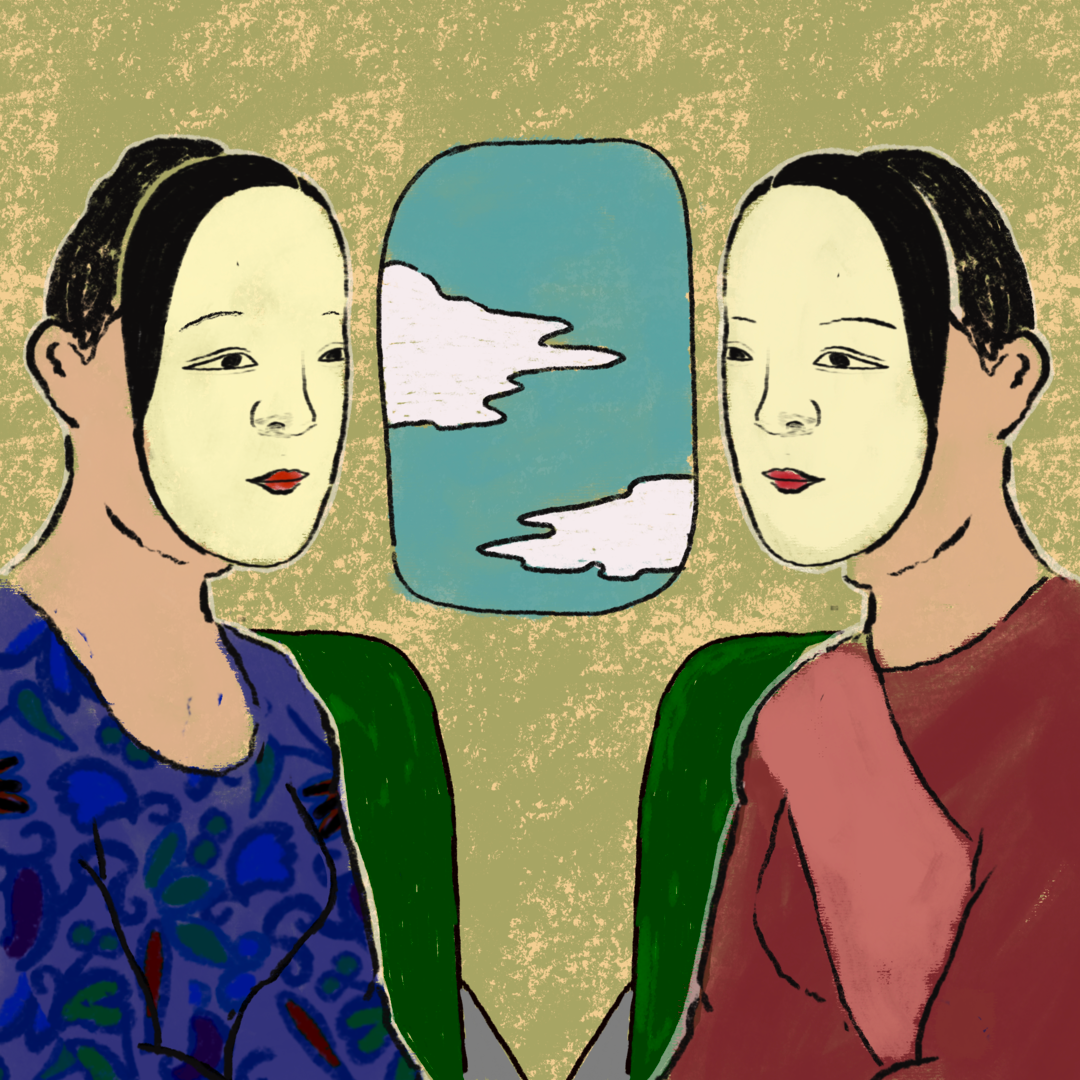
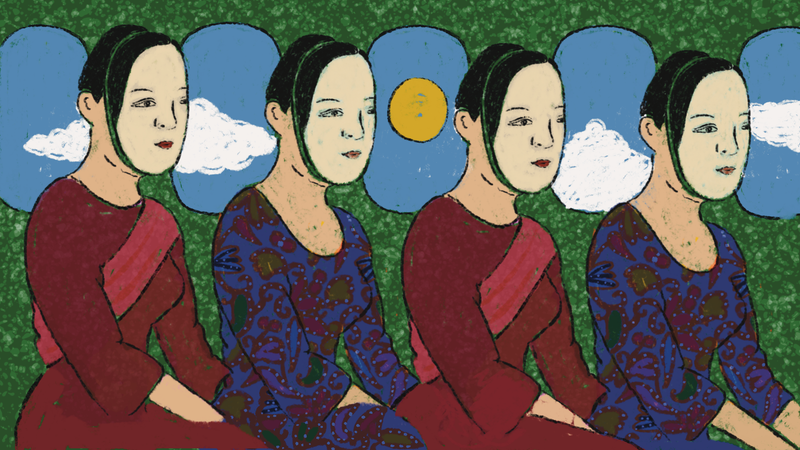
If anything, the intense demands placed on the Singapore Girl—her visibility, professionalism and indisputable centrality to the SIA brand (worth US$2.7bn per a 2025 study)—made her more vulnerable to corporate mistreatment. Like their TG counterparts, SIA flight attendants spearheaded the effort to protect the Singapore Girl’s rights. Up until 1986, SIA was one of the only airlines where “Blue Kebaya” stewardesses were “encouraged” to retire at 35, unless promoted to senior roles. (Kebaya colours denote seniority: blue, green, red, and finally purple, the inflight supervisor.) The SIA Staff Union (“SIASU”) challenged the rule with a letter signed by over 1,000 flight attendants. They argued that stewardesses were being “sexploited” for their youthful looks. The dispute prompted SIA to adjust its retirement rules; barely. The Blue Kebaya Singapore Girl became eligible to 17 years total in her flying life, a Green Kebaya Girl 23 years—still grounding most stewardesses for good in their late 30s and early 40s (male flight attendants hired pre-2004 were obliged to retire at 55).
These changes took place against the backdrop of the pilot union’s direct confrontation with Lee Kuan Yew and their subsequent de-registration alongside a ban on industrial action across all trade unions. In Singapore, unions were birthed by the state in the form of the National Trade Union Congress (NTUC) in 1961, meant to work in tandem with its benefactor, the ruling People’s Action Party (PAP). But working norms were breached in 1980, when the Singapore Airlines Pilots’ Association (SIAPA) launched a work-to-rule campaign and threatened strike action over poor pay and working conditions given a pilot shortage—contravening NTUC’s policy of cooperation over confrontation. Lee Kuan Yew personally intervened, his trembling voice broadcast across Singapore as he struck down the union with a phrase that would reverberate across history: “Whoever governs Singapore must have that iron in him.” SIAPA was comprehensively defanged in the aftermath of the confrontation, with 15 executive committee members charged and convicted, and the union deregistered. The Airline Pilots Association Singapore (ALPA-S) rose from its ashes, quietly taking its place beside SIASU. Unions were pushed towards a “Tripartite Model of Union Activity” thereafter—a clinical framework involving the government, employers and unions which would ensure minimal disruption to Singapore’s well-oiled machine.
Globally, feminist activism often goes hand in hand with labour activism; the Association of Women for Action and Research (AWARE) was founded in 1985, just as the chastised unions began their period of soul searching amidst PAP-furnished guidelines. Women’s rights had historically been the exclusive domain of the PAP, who led the 1961 Women’s Charter and founded its own Women’s League. AWARE was one of the first attempts to push for women’s rights on civil society’s terms—paving the way for a broader feminist and LGBTQ+ movement from the 2000s onwards.
In the aftermath of LKY’s scorched earth campaign against SIAPA, SIASU focused exclusively on incremental rather than fundamental change, adhering to the mantra of cooperation over confrontation. In 2011, SIASU, now comprising more than 7,000 flight attendants, again challenged SIA’s retirement rules. It wanted Blue Kebaya contracts to be extended to 20 years, and Green Kebaya to 25. In 2008, Stephen Lee, SIA’s chairman, had defended the policy as its “competitive edge.” But the union pushed hard. After a year of negotiations, SIA agreed to the 20/25 total flying years rule, and accepted easier contract extensions requiring fewer interviews. The Singapore Girl was now allowed to fly into her 50s. Her male colleagues who joined before 2004 could now work to the age of 62, while those who joined after 2004 adopted the Singapore Girl’s contract structure. (TG had its own tribulations over retirement ages: raising it in 2012 from 45 to 60 for female flight attendants hired under outsourced contracts; and then in 2021 lowering it to 55 for all attendants, drawing union backlash.)
The sharpest illustration of the Singapore Girl’s pink-collar predicament was SIA’s pregnancy policy. Historically, Singapore Girls were forced to quit flying without pay after the first trimester of pregnancy, then forced to quit the airline entirely after submitting their child’s birth certificate. To fly again, they had to re-apply to the role, fresh. AWARE questioned the legality of a policy that seemed to contract the spirit of fair employee practices. “Is a Singapore mother no longer a ‘Singapore Girl’?” snapped one reader in a letter to ST in 2010. As airlines bounced back post-COVID, SIA scrambled to scrap an outdated policy its rivals had long abandoned to “retain…talented people.” (A public bailout of up to S$19bn in 2020 had helped SIA weather the storm.) As of 2022, pregnant Singapore Girls are still placed on unpaid leave after their first trimester but are now allowed to apply for ground jobs until they become eligible for maternity leave. They can resume flying duties thereafter.
In 2019, SIA chose to retain the Singapore Girl after their rebranding exercise. The juxtaposition of the youthful, nubile and, until very recently, virginal Singapore Girl with SIA’s first female CFO appointment in 2023 underscores the organisation’s contradictions. Yet it also mirrors society’s contradictions. The intersection of class and gender has always made for differentiated forms of women’s liberation in Singapore. A big reason high-flying corporate titans can “lean in” is because they’re freed of some domestic chores by underpaid foreign female workers with limited rights, including maternity.
To the extent that some gender discrimination helps make SIA “a great way to fly” and keeps it at the forefront of luxury airliners, it will remain a part of SIA’s culture. Employee rights—no matter how basic the right, nor how visible the employee—will always take a back seat to corporate priorities, which are national priorities. The Singapore Girl is caring and demure when she must be but first and foremost, she is part of an organisation that has that iron in it.
Of all the South-east Asian national carriers, SIA and TG stand out for their feminised branding, their female flight attendants consecrated as national symbols. The symbolic weight of the Singapore Girl and the Air Angel has made reform difficult.
Their fates seem less dependent on labour or feminist activism than on corporate performance. In May 2020, TG entered rehabilitation proceedings under Thailand’s bankruptcy act, its unsustainable debt largely a result of a combination of board political appointees, unprofitable routes, excessive aircraft purchases and opaque procurement. Even as the Company has emerged from Chapter 11 and is soaring to new highs on the Thai stock market with its re-listing in 2025, TG’s Air Angel has lost her luster: not because she was allowed to be older, but because of the uncertain future of the company she represents.
SIA, moving in lockstep with an iron-fisted government, only suffered a single year of EBITDA negative performance in 2023 since its listing in 1985. Today, it is one of the world’s most profitable airlines. The Singapore Girl is still flying high—but only until she is 50.
Pink collar work remains a paradox, especially in Southeast Asia. Across Singapore and Thailand, women are elevated to C-suite roles (SIA has three female senior executives—CFO, CSO, and SVP of Human Resources), while female flight attendants contend with stringent beauty standards, limited career progression and corporate brands that trade on their subservience.
What does the persistence of pink-collar work mean for society today? When we look to these women as national icons, do we also feed the outdated perceptions of what women are “meant for”? Are we willing to accept sexism in certain spheres, where they subsidise “the nation”, but not others?
The diversity of female roles in South-east Asia should not distract from clear instances of structural inequity. Instead, it should provide an opening for further labour and feminist activism, as the yawning chasm between the rights of the female flight attendant—from the TG Air Angel to the Singapore Girl—and the rest of the female workforce becomes increasingly jarring.
Jasmine Chia is a former journalist covering Thailand.
Letters in response to this piece can be sent to sudhir@jom.media. All will be considered for publication on our “Letters to the editor” page.