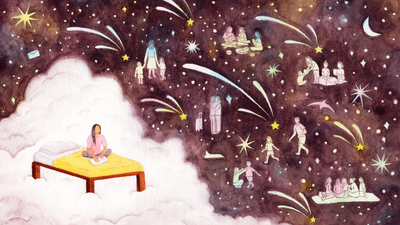

I do the same three things when I wake up every morning: take a Vitamin D tablet, fill and turn on the kettle to make coffee, and play Wordle—a once-a-day, five-letter word puzzle—on my phone.
In fact, if I go to sleep after midnight, I might play Wordle just before bed (Wordle resets at midnight in each timezone). The point is, playing Wordle has become a daily habit that I don’t even think about; it’s just something I do.
My current streak: 121 days.
I like five-letter words as much as someone can like five-letter words, I suppose, but at this point I don’t actually think it’s just about the words anymore; it’s also about protecting my streak. Every potential Wordle loss now means more than not guessing the right five letters; it means possibly wiping out something that feels larger than 121 solved words.
Once you start noticing them, you see streaks everywhere: in loyalty programmes, fitness apps, Pokémon Go. A number grows. A series forms. And at some point, the streak stops being a record and starts to become the thing that matters. That’s usually the point at which breaking it starts to feel like a loss.
If you enjoy Jom’s work, do get a paid subscription today to support independent journalism in Singapore.
Few companies have leveraged the power of streaks as effectively as Duolingo, which has grown to over 50m daily users by gamifying the experience of learning languages. The app has mastered the art of the “nudge” by using a system designed to reward consistency and visible progress. Every correctly reordered sentence and vocabulary match reinforces the user’s effort with a small burst of visual and auditory feedback. It’s a clever bit of behavioural design—not just about learning, but also about creating a steady, reliable feeling of success.
And it works. Millions now do a lesson a day not because they’re particularly motivated but because they don’t want to break the chain. Like my current relationship with Wordle, the longer your streak grows, the more emotionally invested you become in protecting that number. Over time, breaking the streak feels like a personal setback, while maintaining it feels like a small victory.
It turns out streaks have a fairly strong psychological and empirical basis. A recent paper by behavioural scientists Katie Mehr and her colleagues shows that when rewards are structured around streaks, people don’t just keep going—they will do so even when it’s a worse option. In their experiments, people were paid small amounts to do simple tasks and once a streak got going, many were willing to earn less overall just to avoid breaking it.
In other words, once a streak exists, we don’t just try harder to keep it going; we start making choices that might seem puzzling at first glance.
Consider the familiar “buy ten, get one free” stamp cards that sometimes come with your favourite bubble tea or coffee. Many of us will keep going back to the same shop to fill up the card even if there’s a cheaper cup of coffee or a shorter queue just a few shops down. At that point, it’s no longer really about that cup of bubble tea or coffee; it’s about the streak. The last few stamps on the card start to feel more valuable than the drink itself, and stopping now feels like throwing away something you already own. Like my 121 Wordle days.
The motivating power of streaks is so profound that people don’t just accept less to protect them; they will actively pay to preserve them. And Duolingo knows this, which is why it introduced “streak freezes” in 2014. A streak freeze is a feature you can pay for or earn points to buy that protects your daily learning streak. When activated before the missed day, it pauses your streak, keeping the number of days the same for that missed day, preventing it from resetting to zero.
The same impulse shows up in quite a different setting with frequent flyers. People are known to go on mileage runs: flights taken not because someone needs to be anywhere in particular, but because they’re close to hitting a status threshold and deadline. A mileage run is less about where you’re going than about holding on to everything that came before it. In these instances, the streak is no longer just a by-product of learning or travelling; it has become something worth protecting in its own right.
Unsurprisingly, underlying all of this are a few very human quirks in how we think about value over time. Once we’ve put in effort—whether that’s 121 days of Wordle or eight stamps on a coffee card—that effort starts to feel like something valuable, something we don’t want to lose. Economists would call this a sunk cost—the same instinct that makes us sit through a bad movie because we’ve already paid for the ticket, or keep eating a disappointing meal because it feels wasteful to stop halfway. And the thought of losing what we think we already have often hurts more than the pleasure of finding a better deal round the corner. That’s loss aversion at work.
From the perspective of classical economics, this is not how we’re supposed to behave. We’re meant to look at the options in front of us, compare prices and benefits, and choose the best deal. What we spent yesterday shouldn’t matter. A cheaper cup of coffee is just a cheaper cup of coffee.
But streaks reveal how differently we actually think. Once a streak exists, the decision is no longer just about that cheaper coffee two stalls down. It’s about whether we’re willing to break something we’ve already built just to get that cheaper coffee. And more often than not, we aren’t, even when that means walking past the better deal.
In the world of logic, this might seem like a flaw; but in the world of daily habits, it’s a strangely effective tether. Streaks aren’t inherently good or bad; they’re just powerful. And the same force that keeps us buying slightly pricier coffee or blindly protecting a Wordle number can also be put to better use. People use streaks to get themselves to the gym, to keep practising a language, to stay off cigarettes, or to keep a run of sober days going. They can be what keeps us going on days when motivation runs thin. In these cases, the streak isn’t a trap; it’s a scaffold.
Some of my favourite holidays are walking ones, where every day I’d be out walking for hours, just browsing and exploring, sometimes ten kilometres or more. In the evenings, I’d check my Apple Move rings, a daily activity tracker, to see how much I had walked that day and whether I had hit my targets. Though the walk was always the point, the rings became the souvenir, a way of reflecting on what I’d seen and done—the long stretches of road, the unfamiliar streets, the conversations along the way. The streak helped me tell a story about how I had spent my time.
When I get home, the rings do something else that surprises me; they become a reminder of what’s possible, that I’ve just done this, day after day. The numbers aren’t aspirational anymore; they’re evidence—quiet proof that I can, in fact, move that much, that often, if I choose.
I think that’s the difference. Some streaks end up taking over our decisions; others are just a way of keeping track of something we actually care about. The same psychology is at work in both cases. The only real question is what you’re using it for.
Which is a long way of saying: yes, I’m still walking. And still playing Wordle.
Oh, my favourite opening word: C-R-A-N-E. Try it.
Serene Koh is a behavioural scientist and director of the Behavioural Insights Team in Singapore. She also teaches behavioural science at the National University of Singapore.
Letters in response to this piece can be sent to sudhir@jom.media. All will be considered for publication on our “Letters to the editor” page.
If you enjoy Jom’s work, do get a paid subscription today to support independent journalism in Singapore.