

Raja reaches London at the end of August 1935. It’s been a long sea voyage from Singapore on the S.S. Rawalpindi, calling in at Penang, Colombo, Aden, through the Suez Canal into the Mediterranean, then sailing up through the Bay of Biscay. But the Londoners he meets can’t really understand how far he has come. Did you have a good crossing, one of his closest friends will describe an English landlady saying, as though he’d just arrived here, at the hub of the Empire, what she sees as the centre of the world, by traversing the English Channel, or making a trip on the Tube, on the Northern Line from Edgware to Kings Cross.
In London, the daily journey that he makes is more modest, from his boarding house on the fringes of Hampstead to Belsize Park tube station, and then to Charing Cross. In the first years he studies hard, as all colonial students in the metropolis seem to do. He has come to London to read Law at King’s College, at his father’s request and on his money. His brother will stay in Singapore to study Medicine. In the library, and in his room at night, he annotates his books using a dictionary to enlarge his vocabulary. He glosses acerbic as harshness of speech, viviparous as bringing forth young alive, phylogeny as the origins history of races or types of animals. He passes his exams.
Each morning he wakes slowly, like an unfolding flower. He fumbles and switches off the alarm clock, still half asleep. He opens one eye, then another, and then begins to stretch out his limbs.
He has never learned to cook for himself. At most he can boil an egg or make tea and things. In his boarding house, meals are served by Mrs Churchill at the big table near the kitchen at the bottom of the house. The boarders descend the steep stairs from their rooms on the upper floors. Other Malayans room here when he first arrives, alleviating the loneliness of the big city, but they soon depart. A stream of other migrants flows through the house: a banker with Kuomintang connections, a student of the violin from Bombay, a Chinese journalist who has taught at the School of Oriental and African Studies (SOAS), writes for Ta Kung Pao, and broadcasts for the BBC. Few stay long, but he becomes used to ways of living together, living in difference. His friend Subra, who lives nearby, will write about such spaces, that a select number of boarding houses or hostels that admit non-White residents, and their formidable landladies, next to one of whom he feels like a mouse beside a mountain.
At Mrs Churchill’s table, the boarders chew over and consume the news with food. Both are indigestible. The world is changing for the worse. Italy invades Abyssinia. Japanese troops move from Manchuria into China. Germany eats up Austria, and takes several bites out of Czechoslovakia. Then Poland, and a descent into world war. The planet, Raja writes, is sinking into the primeval swamp of savagery and barbarism, with Hitler as its voodoo-man, its warrior chief.
In history, we often combine storytelling with what psychologist Jerome Bruner called the paradigmatic, or logico-scientific mode of thought. We tell the story of the nation of Singapore as a process of unfolding truth, with an understanding of the past imposed from the present. Bruner contrasts such cognition to what he characterises as a narrative mode of thought, which investigates what he calls the broader and more inclusive question of the meaning of experience. This form of cognition, Bruner suggests, is often expressed in the subjunctive mood: it is provisional, speaking not of certainties but of possible worlds.
The boarders in Mrs Churchill’s house live through a history they struggle to make sense of, and continually revise. Only a week before invading Poland, Germany makes a non-aggression pact with the Soviet Union, its erstwhile enemy; Molotov, the Soviet Foreign Minister, notes that fascism is nothing more than a matter of taste. The ground of history shifts under the boarders’ feet: they can no longer tell themselves the story that made sense only a day ago. Their own histories, too, run through rooms and out of the house, to harbours, airports, and suburban cul-de-sacs, where they braid themselves into larger stories. A brother and a sister transiting through the house will migrate and become Chinese Americans: she will train as a pilot, be held up as a role model. The violin student will return to Bombay to teach violin; another boarder will marry, settle in the Surrey suburbs, and open a Chinese restaurant.
We can follow Raja’s own story further in narrative mode, patching together correspondence, journalism, diaries, colonial office surveillance files, annotations, photographs and more, using a methodology adapted from what historian Saidiya Hartman has called critical fabulation. Hartman’s goal in her work is very different from mine here: she attempts to paint a full picture of the disposable lives of those captured, enslaved, and killed during the Atlantic slave trade, and, in a later publication, the lives of young black women in Philadelphia and New York in the early 20th century, by pushing against the limits of an archive marked by violence and recorded by those in power. In Raja’s case, similar techniques, exploiting, in Hartman’s words, the capacities of the subjunctive, help us untangle an individual history from the larger, dominant one into which it has been tightly woven, to leave a sense of incompleteness, of loose threads rather than flawless finality.
Raja is learning to think for himself. There are other, deeper, conversations outside the classroom in the refectories and canteens at King’s, and at the London School of Economics (LSE), just across the road. He joins student groups, and is drawn from words to action. There are rallies to attend, protests, study sessions, and book club meetings. Many of the friends he makes here are from other far-flung parts of the British Empire or the world. They compare notes on colonialism; they become agents in the struggle. Subra is from Ceylon, Mulk Raj Anand from India, Hsiao Ch’ien from China. Others have made less direct journeys: George Padmore, who will serve as Raja’s mentor, is from Trinidad via Tennessee, Moscow, and Paris; Ras Makonnen has cast aside his Guyanese past and reclaimed his Ethiopian heritage. Others, like George Orwell and Dorothy Martin, grew up in England, and are active in the British left. Raja is distracted from his studies. He fails his exams. He takes them again, and fails again.
When he reads now, he does not follow a syllabus, but forges his own path of self-education. He is particularly interested in two problems. The first is the abstract become concrete: political economy—how the world works, and how, precisely, a new, better world might be made. As the war progresses, and the Allied powers gain the advantage, this question becomes more urgent. What kinds of societies will emerge from decolonisation, and how can they ensure justice and democracy for all? The second is the concrete become abstract: the question of race and racism.
To answer the first problem, Raja reads Marx, and other writers who follow the broad structure of Marx’s thought. History is a ladder that human beings climb, in the hope of returning, at the very end of their journey, to that state of equality that marked the very first human societies. Each rung is a mode of production, marked by a particular relationship between technologies, those who work, those who accumulate wealth, and those who hold power. Through the struggle of the working classes, capitalism will give way to socialism, and to a more equal society in which workers control the means of production. Imperialism and colonialism have kept capitalism going, like a zombie, still animated when it should long ago have died. The colonies, outside of port cities like Singapore, have been kept in a feudal mode of production, providing the raw labour to produce primary products: cash crops, minerals, oil. He remembers the rubber estate in Seremban that his father oversees. The sap from the trees has been transformed into the tyres of the double-decker buses that ply the London streets, the Wellington boots that he wears when he pulls the lawn roller in the back garden of Mrs Churchill’s house. Money has been made, but the Tamil tappers who rise each morning in the darkness to collect the sap see very little reward for their labour.
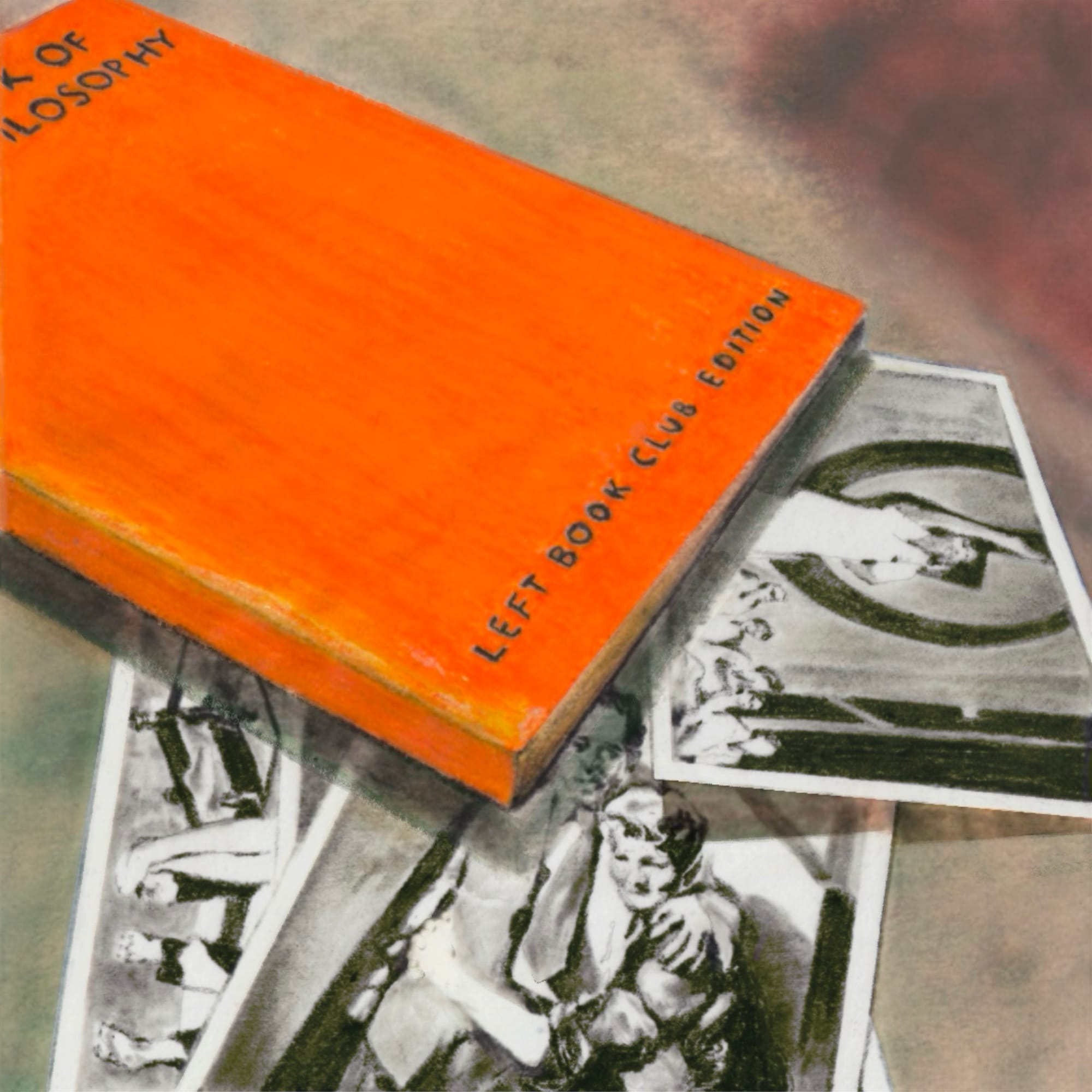
This will change when socialism comes. The proletariat of the world, he will write, are no longer where they were in Marx’s day. They are herded together in the sweatshops of Shanghai, Bombay and Calcutta. In every sense they have nothing to lose but their chains. He will never join the Communist Party of Great Britain. From Padmore, and perhaps from Orwell, he learns a suspicion of structures, of party discipline, of a Communist International that dictates one central interpretation of the world that can change by a simple edict from Moscow. Yet the future will not be capitalist; human beings will rise to a higher stage of social evolution than this, and decolonisation will bring this social change into being.
The second problem is something he encounters every day. Like Padmore, his mentor, he becomes hyperconscious of how he appears to others. Padmore is neat, his shirts well-ironed, his trouser creases ramrod stiff. Raja is more rumpled, but compensates with a gauche panache. He wears light-coloured suits, and baggy trousers with turn-ups. The handkerchiefs in his breast pocket are never straight, but his ties are always neatly, tightly knotted at the collar. He brushes his thick hair back. In the winter, he wears a woollen V-neck pullover when it is colder, a khaki trench coat, even at times a walking stick and a fedora hat. This is not just clothing; it is armour. You think of how you will be seen outside, how visible your difference will be, and how to disarm that difference. Sometimes, his friend Ras Makonnen would write, if you were walking down Piccadilly with a white girl, some white drunk would shout “white bastard” at her. If you wanted to avoid confrontation, you’d let the girl walk a little in front of you, so that you didn’t seem to be together. You wouldn’t quite admit this to yourself—Piccadilly was so full of people, so of course you had to walk in single file.
Another moment: Raja is searching for a hotel in London. He is refused admission because of his race. To me it was like the lash of a whip across my face—and, as it were, while my hands were tied behind my back…One kept licking the wound hoping to heal it, but it became more inflamed. More subtle are the unvoiced judgments between colonial subjects in the struggle for decolonisation. Subra, again, will give voice to a West African tired of hearing from his Indian comrades of the greatness of the Indian past. “Stop it, man, stop it!…We’re tired of it. Your ancient culture!”
Culture, for Raja, becomes the key to undoing race. He reads anthropology: Ruth Benedict and Arnold Toynbee tell him that the so-called racial explanation of differences in human performance is either an ineptitude or a fraud. He attends the launch of Cedric Dover’s Half-Caste, and the two of them, the Ceylon Tamil from Malaya, and the Eurasian Botanist from Calcutta, become good friends. Men do not learn from history, Dover writes, perhaps because they do not learn history. All cultures are hybrid, and the most successful ones are the most hybridised. Where will a new, global, hybridised culture make itself known? In the great port cities of the world: the London they live in now, the pulse of Calcutta Dover has left, its trams moving laboratories in which I could study my own kind, the Singapore they have both passed through, sojourned in, and to which Raja will return a decade later, after the war is over.
As the bombs fall on London, many Malayan students take the passage home. It’s risky. Future anticolonial activist Lim Hong Bee’s ship leaves from Glasgow and first joins a transatlantic convoy: we had barely been out to sea when the convoy was under attack. Raja stays. He has met his future wife, a migrant like him, but from Hungary. He works as a clerk at the Ministry of Supply. He moves from reading to writing. First fiction, short stories that are set not in Seremban, Singapore, or London but in imagined worlds: villages in South Asia where peasants resist the depredations of vicious landlords, a Malay kampung, a train speeding through a country on the brink of decolonisation, carrying a political assassin on board. His writing is recognised. He reads a story on the BBC Home Service; others are anthologised. In February 1942, Singapore falls to the Japanese. Malaya, the model colony is lost; few Malayans resist. The British are shocked. What did they expect?, Padmore writes. How could a people whose existence had been entirely ignored now suddenly assume responsibility in defence of the system which had until then failed to recognise their existence?
This opens space for a second kind of writing. Raja has been supporting himself through journalism, but only now is he given the chance to write authoritatively about Malaya using his own byline. He will no longer be an Indian writer, or a writer from Ceylon. By 1945, he is a Malayan journalist. When he writes of Malaya, capital and race come together. Colonialism has hardened the boundaries of racial communities through a deliberate fossilization of Malay society. The colonial world of Malaya has in fact been two worlds, the precapitalist world of the Malays, and the modern world operated by non-Malays. In the future, a common prosperity arising from economic reform, realised by a government drawn from the people themselves, will soften these divisions. He writes more. He facilitates workshops; he begins to imagine a region called South-east Asia. He speaks at conferences, giving, in Padmore’s words, an excellent survey of race relations as well as the economic and social set up in the Malaya States now under Japanese occupation.
Bombs cease to fall on London, and even the missiles and rockets that replace them grow silent. Germany is defeated, its great cities reduced to ruins. In Asia, the Allies advance. In August 1945, atomic bombs incinerate Hiroshima and Nagasaki. Japan surrenders. Britain elects a socialist Labour Government by a landslide, but the promised new world does not come into being. The Philippines gains nominal independence only, Raja writes; the strings that pull the puppet of the Roxas regime are tightly knotted to Uncle Sam’s purse. In Indonesia British troops, conscripted to fight against fascism, are in action against the native people to restore Dutch rule. The second world war, in all its suffering, has been a liberating convulsion for the peoples of Asia. Yet the conquering armies must liberate—not drag behind them the conqueror’s chains.
Life has changed for him. He has married Piroska. They live together in a ground-floor flat that they rent on the borders of West Hampstead, sash windows streaming in light from a street stripped of metal railings, melted down in the war effort. During these years in London, he has always taken photographs. He carries his camera with him everywhere, in its trim leather case, the thin strap running over his right shoulder and down across his chest. In the boarding house, and on trips to Europe before the war, he has composed portraits and group photographs: friends gathered in the garden behind the kitchen, in front of the lake in Geneva, or on a mountain road in the Alps. He’s also experimented with light, movement, and shade. Pigeons taking flight in Trafalgar Square. A self-portrait by a window, the sunlight burning his cheek and the line of his jaw white. Malayan Chinese friends, and friends from China, their faces the same shade of deep sepia as his own. Later, in the Priory Road flat, he’ll play with angles. A socked foot flexing up from a slipper held to the floor by a pale hand. Piroska reading, the side window of the flat behind her, her hair and the pages of her book golden. Piroska seen from behind, arranging her hair in a mirror from which her face laughs back at the camera. This is a world of forms, not of substance, of surfaces that light brightens or fades. Everything is fluid. And then, when they return to Malaya, in 1947 when they disembark at Singapore, a Straits Times reporter will photograph them, looking separately into the distance, fix them back into history. Mr S. Rajaratnam who left Malaya 12 years ago to study law in Britain returned to Singapore yesterday with his wife. The camera strap is still slung over his shoulder, the leather case at his waist.
In Singapore, Raja will become part of three possible stories. The first we know very well. He’ll become a journalist, actively campaigning against colonialism, seeking Malayan independence. In 1954, he’ll be one of the founders of a new socialist political party, the People’s Action Party. From 1959 onwards, serving as the State of Singapore’s first Minister for the Arts, he’ll urge the formation of a hybrid Malayan Culture, through a process of pressure cooking…deliberately, in the shortest possible time. After Singapore’s departure from Malaysia in 1965, he’ll take on the position of Foreign Minister, making a space for Singapore internationally in the United Nations and the Non-Aligned Movement. He’ll write about Singapore as a Global City, a new form of human organisation and settlement. By the 1980s, he’ll be a senior statesman, serving as Deputy Prime Minister, and then as Singapore’s first Senior Minister. In retirement, he’ll re-engage with the ideas that led to the founding of Singapore as a nation-state, serving for several years as a distinguished senior fellow at the Institute of Southeast Asian Studies. In the triumvirate of Singapore’s founding fathers, he’ll be the theoretician, the philosopher, the thinker.
We could tell a second story from the same historical record, a story of the betrayal of ideals. The journalist who had emphasised the need for freedom of the press would become a key figure in a cabinet that enacted increasingly sophisticated press restrictions. The investigator of Malayan trade union history, and erstwhile president of the Singapore Union of Journalists, who had written that labour disputes had social roots that could not be solved by government sanctions and decrees would support legislation to restrict independent trade unions. Later in life, during 1987’s Operation Spectrum, he’d return to reading Philip Selznick’s The Organizational Weapon, a text written at the height of the cold war about Communist united front tactics. The Law Society, he’d insist, had through infiltration been turned into a combat organisation: he’d vigorously support the detention of a small group of progressive social workers and activists, and later the society’s former president, Francis Seow. Reds were under every bed; the Marxist fox was hiding in the liberal chicken pen in a classic communist penetration technique.
There’s a third story, however, that may be most useful for us today. It’s a story we don’t usually hear in Singapore, a story of contradiction and doubt. In his journalism in the 1950s, Raja struggled with the place of capitalism in development. Capitalism as we know it, he would argue in 1953, would not work in Asia; the state needed to take control to assist a transition to a society based on social and economic justice. Later he became more sanguine, but that hope of social evolution through new, different modes of production stayed with him.
In the 1970s, he began to publicly condemn the growing cult of money-theism in Singapore, the focus on consumption that made wealthy citizens grunt and squeal like pigs scrambling to reach the feeding trough. In the 1980s, privately, in the notebooks he kept, he went further. Capitalist development had perhaps been necessary, but it had produced selfish citizens; the creation of money had crowded out the creation of culture. As the cold war ended, he returned to Marx’s schema of history. Communism had failed, he noted, but it was not clear if capitalism had succeeded. Singapore’s development did not result from the invisible hand of the free market, but the steady hand of the state. Socialism had far fewer adherents, but surely there was something beyond capitalism? In the 1990s, out of government, he returned to his past ideals. Capitalism is a lousy system, he would tell an interviewer. It encourages men to cheat and swindle each other! Socialism would still come.
His doubts had become more public after he stepped down from cabinet after 1988. He had always seen race, culture, and language differently from Lee Kuan Yew: race was a construct, language and culture had nothing to do with one’s genes. Looking for one’s ethnic roots was like searching at night in a dark room for a black hen. In part, this arose from individual experience. Both men had Anglophone intellectual worlds. Lee spent his lifetime attempting to reconnect with his Chineseness, working on Mandarin, a language that was not spoken in his childhood home. Raja grew up speaking Tamil, but then entered into an exclusively Anglophone intellectual world. In Singapore’s CMIO racial classification he was not Indian, but Ceylonese, or Other.
In London, he’d found consolation in this sense of unbelonging, annotating passages in works by American sociologist Everett Stonequist and anthropologist Melville Herskovits. From Stonequist he took the notion of a marginal man...a personality type that arises at a time and a place where, out of the conflict of races and cultures, new societies, new peoples and cultures are coming into existence. As a cosmopolitan and a stranger, this figure represented the more civilised human being. In Herskovits he discovered the distinction between assimilation—the giving up of one culture for another, and acculturation, arising from an exchange based on the relative cultural equality between the giving and receiving cultures. How did this apply to him? I found the answer in England, he wrote in 1955, somewhere between King’s College in the Strand and my digs in Hampstead. It may be that people need to be away from the place they really belong to realise where their roots really are...I returned to Malaya from England after ten years. And now I know the answer. I belong to Malaya, this land of acculturation.
It’s easy for us, with hindsight, to see the flaws of this logic. Cultures were not equal in colonial Malaya: Raja read the Western classics—Homer, Plato, Dickens, Stendhal, Zola—and Asian classical and modern texts, always through the medium of English translation. His experience didn’t offer the possibility of a deeply engaged interculturalism, of the kind Singaporean intellectuals and cultural workers such as Kuo Pao Kun would later explore. Yet it did make him obstinate, unable to accept the growing focus on CMIO-inflected Singaporean identities in the 1980s that still persists today—the ethnic self-help groups, the prescribed mother tongues, the freezing of racial ratios at 76:15:6:3. Even if the 24 per cent minority copulated like mad, he noted acerbically, there was not a ghost of a chance of their even making a dent on the majority lead. His relentless focus on larger social and economic structures and their role in racialisation is perhaps a useful reminder today, when we often make the leap from individual experience to abstract theory without thinking about what comes in between.
In the early 1990s, at the end of the cold war, he had a further hope that was quickly disappointed. Nationalisms would wither away; there would be a new phase of world government. Peoples would wilfully, blissfully forget their pasts. But, just as they had in that London boarding house, many people wished to remember an ancient culture, the greatness of the…past. Yugoslavians became Slovenians, Croats, and Serbs again, often through violence. Even the Bosnian state was subdivided into three parts.
At this time, he began his own journey of forgetting. Piroska had already passed away. In the last decade of the twentieth century, he slipped from mild cognitive impairment to dementia. In his journals, his writing first became ungrammatical, fragmentary, and then the letters themselves began to lose their form. He was angry at first, but later grew quiet. When a reporter found his way into his house at the turn of the century, he found him smiling, welcoming but unable to speak, let alone write.
Sometimes you find the rhythm of a life through your own. Raja first went to live in London almost ninety years ago; I went, like him, as a young man, to study as an undergraduate at the University of London. We both came to Singapore to stay when we were thirty-two. My experience, of course, has been very different. If I am constantly racialised, it’s a racialisation that often carries privileges with it: much of my own work as a scholar, teacher, and writer has been concerned to question this privilege, to work with the discomfort of my position to think generatively about how race works.
Conversations in Singapore have changed since I first arrived. We have a new critical vocabulary that allows minority voices to be better heard and understood: privilege, microaggressions, trauma. At the same time, this vocabulary has its own history and its own limitations. My training and practice in counselling over the last few years, for instance, has made me aware that while recounting trauma is important, so is recounting healing: I’m curious about how scar tissue is stronger than the flesh that was wounded, and who helped in the healing process, how places of healing can become places of social change. This is where remembering other vocabularies that emerge from past thought and witnessing—an intellectual history marked by affect—is important; to see Raja as neither a negative nor a positive caricature, but someone thinking through the contradictions we still live with.
We don’t see him clearly, of course. National histories tend to prune stories, to move certain figures to the foreground, to weed out contradictions. Last year, in London, I tried to trace his footsteps. The bookstore he used to frequent near the British Museum sells used cameras now. The flat he shared with Piroska is still there, although radically remodelled inside. There was a mistake in the records I was using, and I found it difficult to puzzle out which of the ground floor flats it was. I talked to several people in the building. One had worked in Singapore for two years, he told me, in Shenton Way, in that world of money Raja had felt so ambivalent about. He regretted that he’d never had the chance to deeply get to know the place.
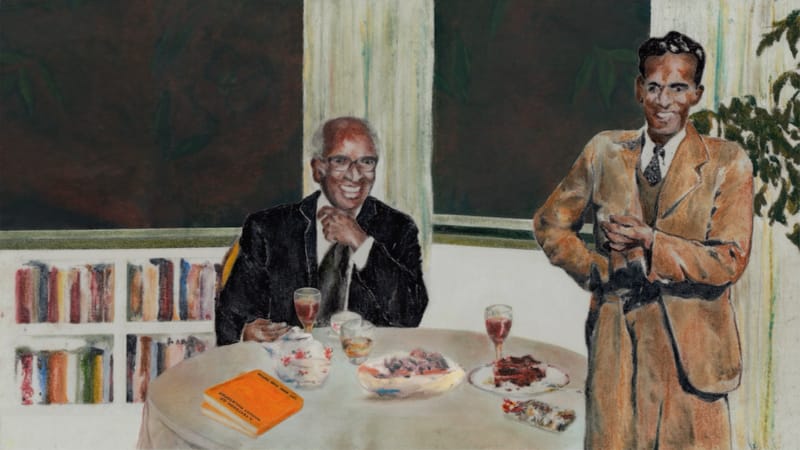
And then, a week later, I visited the boarding house on the fringes of Hampstead. The owners showed me round: we compared the photographs he’d taken with the building now. We climbed up the narrow stairs to what was probably his bedroom. And then we went down to the bottom of the house, and sat around a table substantially smaller than Mrs Churchill’s, in a remodelled kitchen. We drank wine. And then my host said something that made me think of one more of Raja’s annotations, in a book discussing Marx and Engels, next to the comment that Engels generally showed the greatest indulgence toward Marx. He had resigned himself to play second fiddle to him, as a part of his own historical role. She had another connection to Singapore, she said. Her mother had studied at Girton College, Cambridge, just after the war. She’d had a classmate from Singapore—what was her name?—Choo? Her boyfriend Harry used to visit. Harry Lee Kuan Yew. Would I like to contact her? Now she had some stories to tell me.
Philip Holden worked for many years at the Nanyang Technological University and the National University of Singapore, researching and teaching auto/biography studies and Singapore Literature. As a writer, independent researcher, and counsellor he now works at the intersection of storytelling and mental health.
This essay is part of a larger project exploring the generative contradictions of S. Rajaratnam’s thought in a variety of written media, from academic papers to historical fiction. If you would like to explore further the sources used here, consult Philip’s Preliminary Bibliography of S. Rajaratnam’s Writings before 1959 on the NLB website, or contact him at philip@pulauujong.org.
Letters in response to this essay can be sent to sudhir@jom.media. All will be considered for publication on our “Letters to the editor” page.