
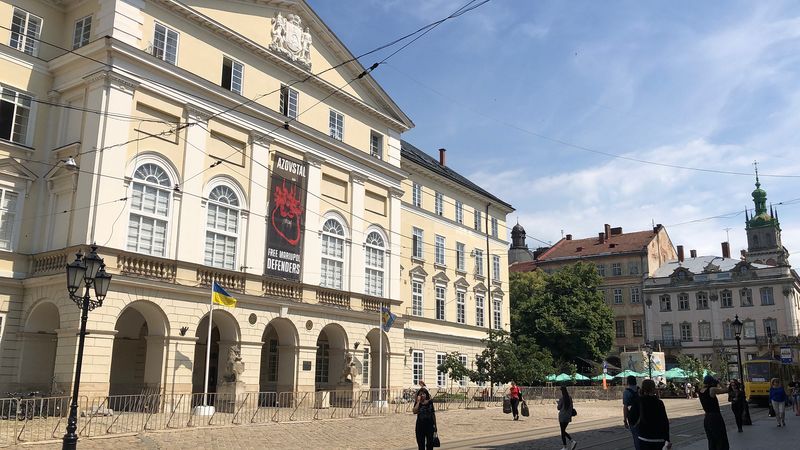
During the first week of my reporting trip to Lviv, a city in western Ukraine, I slept through the sirens when they sounded in the middle of the night. So did thousands of Lvivites. “It’s like a lullaby, isn’t it?” mused a fellow freelancer, who had been in the embattled separatist region of Donbas just before the war began.
It wasn’t until I moved to an apartment facing the city square in my second week that the sirens began to seep into my consciousness. I was much closer to their source, which seemed to me like a dolorous, slow bugle amplified right outside my windows. A man’s gruff voice followed the sirens, announcing in Ukrainian that everyone should head to the nearest bomb shelter as an attack on the region was imminent. At night, past the 11pm curfew imposed on most Ukrainian cities, the siren reverberated through Lviv and its eerily, deserted streets. I would sit in bed and wait for the all-clear siren, which came about 30 minutes later.
Recurring nightmares started to haunt me. Each time, I saw plumes of smoke in the distance outside my apartment. I would grab my notebooks and try to leave, but fail because I couldn’t find my contact lenses. My dreams spilled into waking life. I ended up carrying my notebooks everywhere I went, even if I was just leaving the apartment for a quick meal. I didn’t want to run the risk—no matter how minimal—of losing the stories of all the people I had met, if my building was hit.
A woman who had been displaced from Kharkiv, a city in northeast Ukraine just 40km from the Russian border, told me that she always went to the bomb shelter near the makeshift container town where she had been staying for months. “Even if it’s 3am, I go. But I’m one of the few,” she said. “Most of my neighbours stay put.” On each trip to the shelter, she would eat oranges, something she does when she’s stressed: “I can’t stop. I’ve eaten a lot of oranges since the beginning of the war.”
Until the morning I left Lviv, the plaintive sound of the siren always made my heart sink with an emotion that I couldn’t recognise. Only when I re-entered Poland was I able to give it a name. ‘Dread’: quiet and menacing, the often-overlooked brother of fear.
Six months on, the war in Ukraine has not diminished in intensity or violence. For many people I spoke with, the initial fear and shock have coalesced into layers of resignation and a wilful resolve to stay put. But the dread of potential sudden death is always there. It flows invisibly, like magma beneath cracked earth, threatening to annihilate everything in its path should it rise to the surface.
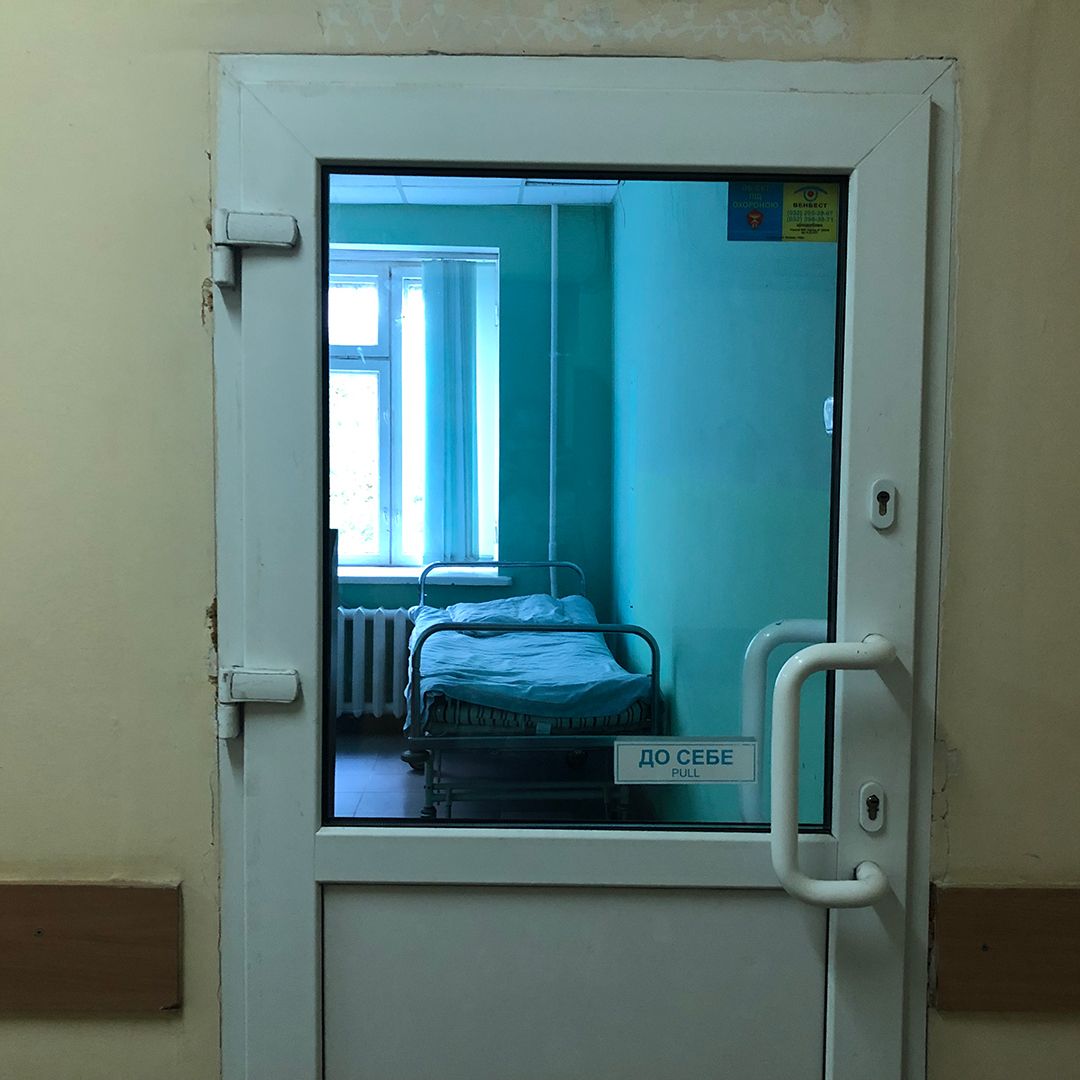
The ability of Ukrainians to be optimistic against the odds often beggared belief. At a hospital that has been treating scores of wounded soldiers, and displaced civilians who are elderly or infirm, we met a medical director who chain-smoked through the entire conversation (do you mind, he had asked, lighting a cigarette before either of us could respond). He appeared aware that the hospital—a relic of Soviet times—was derelict with its peeling wallpaper, dripping ceilings, and bizarre mix of half-dead and artificial plants dangling from darkened corridors.
As we stumbled up a staircase illuminated by a flickering lightbulb, I wondered how anyone—let alone military personnel who’ve lost limbs or are grievously injured—could recover in such a dismal place. Volodymyr Zelenskyy, Ukraine’s president, estimated that up to 200 were dying in Donbas every day, with hundreds more wounded. At the time of writing, the tide has started to turn stunningly in Ukraine’s favour, with its army and territorial defence forces rapidly reclaiming key territories in the east, such as Kharkiv. But not long ago, Russia had greater numbers of both weaponry and troops, and the capacity to keep going through the winter. It’s sheer force of will that has brought many broken and traumatised Ukrainian soldiers limping back to the frontline, while awaiting the supply of advanced weaponry from Europe and the US. The alternative, which is to live under foreign occupation, is simply unthinkable to them.
We met a very impatient tank driver who was seriously injured while defending Chernihiv, a city in the northern part of the country now reduced to rubble. He had lost the use of his legs but was keener than ever to return to the front: “I’m a soldier, you have no idea how it feels to be lying here,” he lamented. It had been five months, but he still couldn’t sit up or move around without support. Still, his mood was good as he regaled us with jokes and what he called “funny stories” about his time in active service. “I recently watched a Jason Statham movie,” he said, “and I realised I’ve probably done more fighting than him.” Privately, his physiotherapist told us that others who had been maimed in the same way never recovered.
Upstairs from the tank driver is a 61-year-old woman from Sloviansk, a city still under Ukrainian control but which is only 10 km from the frontline. She had needed treatment for an ovarian tumour but was unable to get it in her home city, where many medical facilities had been destroyed or were desperately understaffed. Along with her bedridden husband, she was evacuated in mid-July by train with assistance from the Red Cross, and was immediately sent to have her tumour removed at the hospital in Lviv.
She spoke dreamily of her life in Sloviansk. She missed the salt lakes there, she said, where many holiday goers used to spend their summers. She had worked her whole life in a grocery shop that she insisted on keeping open even amid heavy bombing. “Sometimes there was no electricity or gas, but it was fine, we carried on,” she recalled. Before his retirement, her husband had been a train driver. They had chosen to stay in Sloviansk until almost everyone they knew had left: “Nothing can save your home from a rocket.”
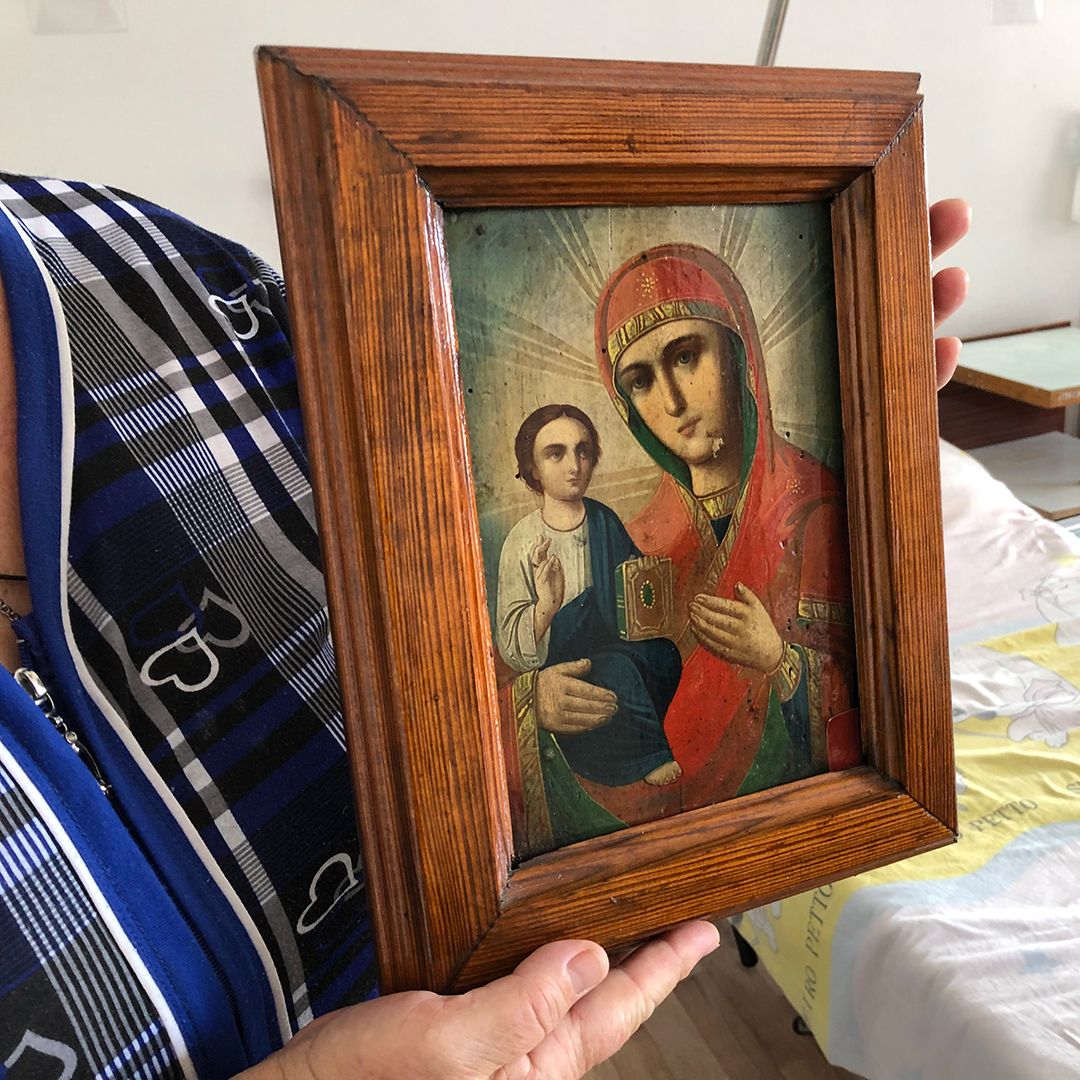
As I turned to leave, she pulled out a small religious painting, the only precious item she had packed before fleeing, aside from a few changes of clothes. “I believe this has been protecting us all this time,” she declared, “and that we will return to Sloviansk one day.”
There were moments of faint comedy that punctuated my experience of being in wartime Lviv. One evening, in an attempt to kill time before passing my unused helmet to the friend of a friend who was headed to the frontline, I decided to have a quick meal at a themed restaurant I had found online called Kryjivka (“Bunker” in Ukrainian). Folklore has it that the site of the restaurant was the last refuge of the Ukrainian Insurgent Army during World War II. Aside from the restaurant’s signature dish, borscht that’s “red like the blood of the enemy”, reviews also rave about the firing range, where inebriated diners can shoot at targets featuring the faces of Stalin and Lenin, and vent their anger on a punching bag with Putin’s face on it. I wasn’t feeling particularly pugilistic, but thought there was no harm in trying some traditional Ukrainian dishes.
There was no sign of a bunker-like facility at the address, only an entrance that yawned open into a gloomy vestibule. Ascending the stairs, I ran into two men with a black Labrador puppy, and bent down to play with it. “You’re looking for a restaurant?” one of them said, his manner jocund. An old man popped his head round the door of the apartment at the top of the staircase: “Come in, come in!” he shouted, ushering me inside before I could change my mind.
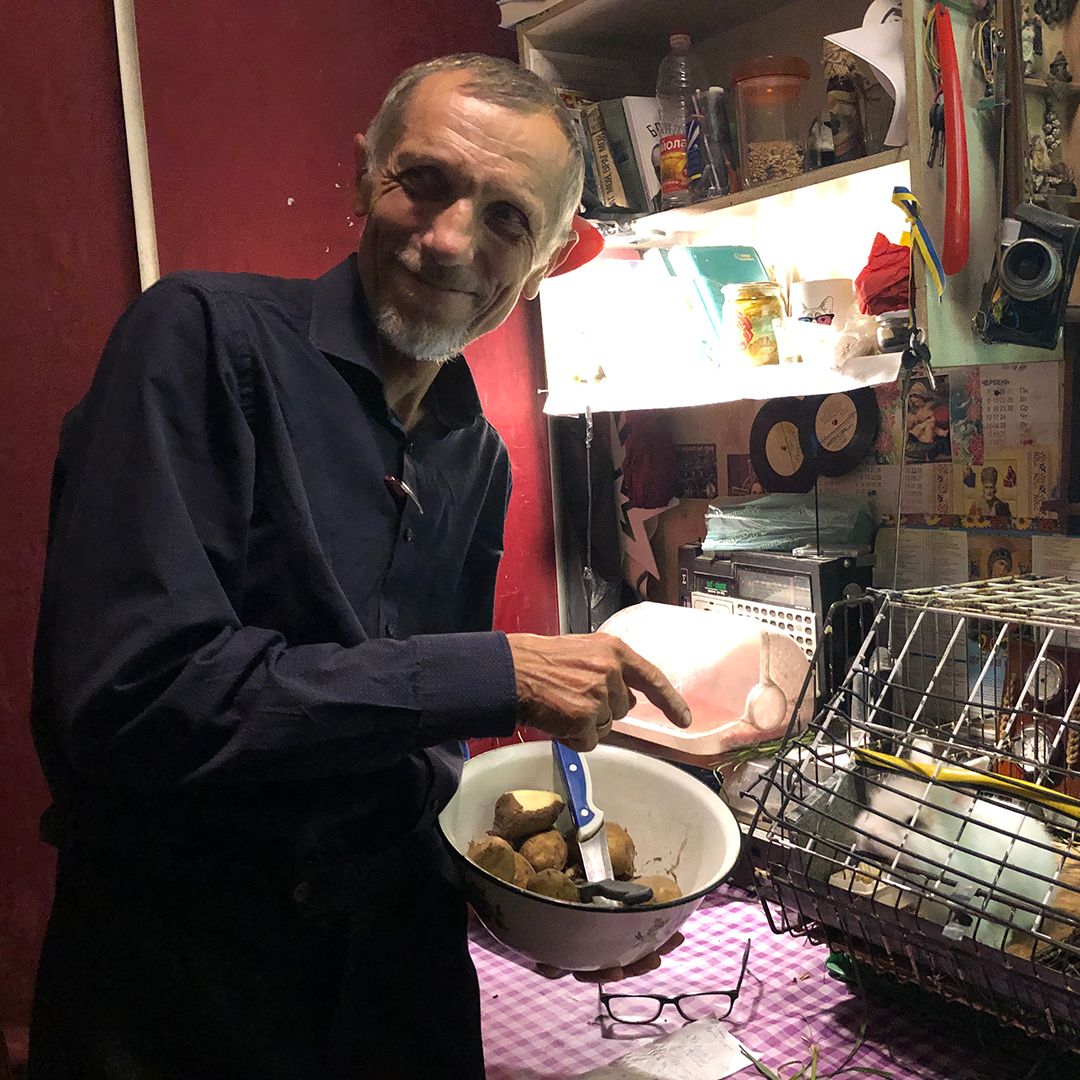
I realised I was in a very untidy kitchen, with a dusty fridge and shelves on the wall filled with random bric-a-brac. The old man was chopping potatoes in a bowl. A rabbit stared at me with limpid eyes from its hutch. “Please, feed rabbit!” the old man yelled, shoving a handful of grass at me. There was nothing I could do but feed the poor creature and pray it wasn’t going to end up on my dinner plate in half an hour. When I was done, he urged me to go past the curtain at the end of the kitchen. I was suddenly thrust into a restaurant space, the tables properly set. A waiter promptly came with the menu. Upon seeing it, my heart leapt into my throat. Even the cheapest drink costs the equivalent of US$20 (S$28), with main courses going up to US$120. (For context, you can have a perfectly decent meal in a mid-range restaurant, inclusive of a starter and a drink, for around US$13 in Lviv.)
When the waiter came back, I feebly asked for a blackcurrant juice and began Googling the restaurant on my phone. As it turned out, the place had been set up as part of an elaborate prank. None of the prices on the menu are real; the old man is a paid actor. When the bill comes, you ask for “the 90 percent discount”, which is then applied to your order. I ended up having a lovely, leisurely dinner while gazing out on the street.
I am often asked whether it was frightening to be in a country at war. Now I reply, “no, not at all”—I wasn’t on the frontline. The only time I was scared was when I went to The Most Expensive Galician Restaurant by accident, and thought for a horrible few minutes that I couldn’t pay the bill.
Something I found quite remarkable was the lack of delusion about how the war was perceived outside Ukraine. “We know that there are lots of foreigners who think we’re crazy, that we should give up,” said a musician I met. “But you can’t make peace with someone who just demands more, more, more. Even if we cede Crimea to Russia, and Donbas, and then all of Ukraine, they’ll never be satisfied. At some point you must draw the line. Can there still be a society, if there are no principles left to defend?” Another man, a priest-soldier with a voracious appetite who inhaled his entire dinner in a matter of seconds, posed a parallel question: “If someone comes into your house, kills your wife and kids, and says he wants to take all the other houses in the neighbourhood, are you going to just walk away without stopping him?”
Ukrainians are proud of their history of extraordinary hardiness, having lost millions to famine and war through the early 20th century. It’s this history in which they have found solace: “We’ve lived through this before, it’s not new for us. We understand that it’s a lot to expect unending help from other people,” said a middle-aged woman I had met at the Polish border before entering Ukraine. “That’s why most of us are making preparations,” she added. “We do what we can to help one another. Nobody’s coming for us. And the sooner we get used to it, the better.” She was carrying bags of headsets and other communications equipment that she was planning to distribute to the territorial defence forces in Odesa.
On my penultimate day in Lviv, I went for drinks with a few medical students who had acted as my translators during one of my hospital visits. They took me to a bar where we shared mojitos and a platter of fried cheese. Two of them, 19-year-old girls called Sofia and Marta, remembered how their parents had implored them to leave for the safety of neighbouring countries. “They were worried that I wouldn’t be able to finish my studies,” said Marta. “They kept saying, ‘you have to go, you need to become a doctor someday.’”
Marta’s parents put her on a bus to Poland despite her vehement remonstrations. From there she went on to Germany, where she spent a month with her aunt’s family. The whole time, she fretted incessantly about her parents and siblings. She was also plagued by an increasing certainty that leaving had been the wrong decision, that she was better-placed, with her burgeoning medical knowledge, to help the sick and wounded back home.
“I hear the air raid sirens every day now, but I sleep soundly, even though I know my country is at war. In Germany, I couldn’t sleep. I was terrified all the time,” she said. Eventually she made up her mind to defy her parents and boarded a bus home. When she turned up on her family’s doorstep, her older brother burst into tears: “I’ve never seen him cry,” she smiled.
Sofia had a similar story. She had been exchanging texts with Marta and other schoolmates from the start of the war. She remembered how, upon crossing the southern border into Slovakia after a 24-hour wait, she was struck by the sense that she had made a mistake. “I always knew I wasn’t going to listen to my parents. I had to come back,” she said. Both girls said they don’t regret their act of disobedience. They spend their days in a surgical ward where the majority of patients are displaced, doing what they can to administer care and to comfort those who are shaken and in pain. I asked if they would be willing to go to frontline hospitals, if Ukraine’s medical system continues to be overstretched. “Yes,” they both said in unison. After a pause, Sofia added, “You know, before the war, I wasn’t so sure who I was. But now I know myself better.”
The bus journey from Lviv to the Polish border is one that passes by plenty of Soviet-style concrete complexes. I thought about how Ukrainians continue to live and work in these drab buildings, thousands of which have been either damaged or destroyed, and how the appearance of one’s home bears an almost negligible relationship with its ineffable magnetism, or with the moral calculus around its defence.
I suspect that patriotic pop songs and state propaganda do little to put 19-year-old teenagers on buses back to war zones, or convince electricians and writers with absolutely no military experience to pick up a rifle and head to the frontline. For the Ukrainians I met, the war triggered an appeal to introspection. It was a call for them to serve an intellectual and emotional commitment to everything they have known and cherished—a commitment that transcends the parameters of nationhood and sovereignty.
Those who had chosen to stay couldn’t care less if the outside world thought that they were foolish for doing so. It was hard not to admire their unwavering conviction, which remained consistent amidst the ever-changing mood across the country—from a sharp awareness of perpetual disquiet, to cautious hope, humour, defiance. Their stubborn unity seemed to me as steady as a rock, inextricable from the land.
Many of us are stirred by dreams of a borderless future. But the war in Ukraine has shown that the construction of national boundaries, no matter how arbitrary, still matters profoundly in the way identities and values are collectively imagined and delineated. I am reminded of how Herodotus lamented that the Scythians were formidable enemies because they had “no cities or fortresses”: because they lived “not by tilling the soil but by cattle-rearing and carrying their dwellings on wagons, how should these not be invincible and unapproachable?”
To belong somewhere is to leave oneself wide open to the world, for better or for worse, and to dig deep rather than stretch far.
Amandas Ong is a London-based freelance journalist reporting on social justice issues. Her work has appeared in Al Jazeera, The Guardian, Bloomberg, VICE, Foreign Policy and other publications. She is a grantee of both the International Women's Media Foundation and the National Geographic Society.