
Dear Jomrade,
Today we’ve published:
- “Singapore This Week”, by Jom
- “Raka Maitra’s migration of forms”, by Charmaine Poh
Like all of you, I’ve been left shocked and speechless by the conflict in the Gulf. This week feels sort of 9/11ish, in that one has to stumble through life, wondering what it all means, wondering if and how the world is going to change forever.
Among other bizarro facts: Sri Lanka was dragged into the war, after a US Navy submarine fired a torpedo (the first time since world war two) at an Iranian warship off its waters in the Indian Ocean—even as millions of people in the region celebrated Holi. The art of living in this moment, as time and space collapse, can feel overwhelming.
I found some solace watching an ST interview of two Singaporeans in good spirits despite being stuck in Doha and Dubai; picking up an old Rumi book; thinking by writing about Iran (below); and editing my colleagues’ fabulous work, especially Saki’s blurb on Ramadan bazaars, at once atmospheric and cerebral.
Tonight, to forget the world, I feel like pigging out on a “berhantu” dish of ramen layered with potatoes and generous amounts of cheese.
- What should we make of Israel and the US’s attack on Iran?
- MPs (and others) should take a bow for a bumper week in Parliament
- How can we raise our fertility rate?
- Ramadan bazaars, and the confluence of capitalism, religion, and social media
- What’s driving the popularity of museum wenchuang (“cultural and creative” memorabilia) among Gen Zs?
- Singapore’s Gen Z and Zillennial jewellery brands are taking the world by storm
Above are the issues we chose to explore in more depth.
Other news this week included: AI tools to simulate public responses to policies and transliterate old Malay-language newspapers written in Jawi; Hougang United sanctioned for fielding a foreign footballer without a valid work pass; a new SIM card checker tool to combat scams; the risk of retinal detachment for those with high myopia; kids among the victims of an alleged S$700,000 Pokemon card scam; an important debate about consumer protection sparked by the WP’s Andre Low; Chan Chun Sing refusing calls by the WP to pay national servicemen a base salary of S$1,800 per month, saying “…I don’t want us to get into the wrong concept that this is a transactional relationship”, which inevitably drew a backlash online, partly because public service has long been turned into a transaction through ministerial salaries; and improving road safety through lower alcohol limits, a tighter demerit points system, and a prospective new law around vehicular homicide—the government was quick to add, however, that criminals wouldn’t be liable for the death penalty. (Guess it’s one thing to kill poor Malaysian mules, quite another a rich Ferrari driver.)
If you appreciate our independent journalism, join the 2,000 odd paying members now to get access to all our content, starting from just S$10 a month. It’s the only way we can keep doing this.
“Raka Maitra’s migration of forms”, by Charmaine Poh
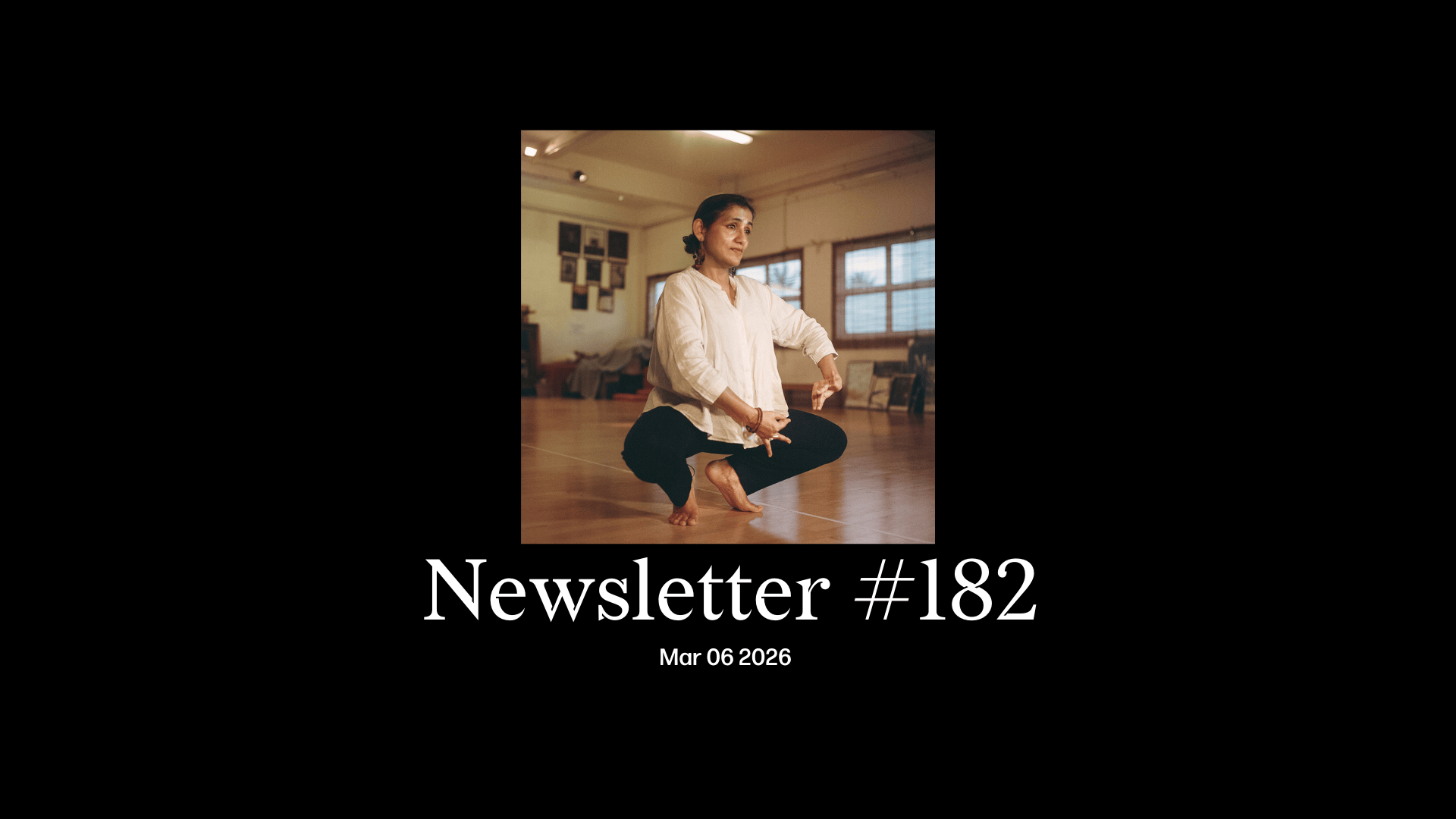
My co-founder has written many great pieces for us, but this is her first profile. Raka Maitra is one of Singapore’s most prominent Indian dancers. Some of you may have seen her quite recently at Esplanade. Chowk Productions, her studio, put on One Part Woman, a dance-theatre production adapted from Perumal Murugan’s eponymous novel.
Charmaine covers many aspects of Raka’s life and practice, but perhaps the one that resonated the most this week for me, was around notions of belonging, identity, and migration, how we each navigate the bounds of culture, tradition and geography, as we make our way through this world. I’ll leave you with a bit from her intro:
“Then again, ever since she embarked on a career as an independent dancer, Raka has taken risks that have clearly questioned the confines of tradition. Early on in her practice, while still living in India, she and her classical dance peer, Shagun Butani, founded The Dancing People, a sort of prelude to Chowk. By then, Raka’s career was already a lauded success. In her 20s, she received a national level young artist award, the Shringarmani, for classical odissi dance. The path seemed clear. Yet her hunger for experimentation drove her to shed safety in the search for one’s craft.
The Dancing People put on a performance entitled The Masks of God that utilised a mix of chhau, a dance form with roots in martial arts and folk traditions, odissi, and modern dance, influenced by Butani’s time in New York, where the modern dance movement emerged. Other practitioners ridiculed her departure from tradition. Like many classical traditions, Indian classical dance is made up of a tight network of elite performers, critics, and producers. To veer away from decorum that has been built up over centuries is to position oneself as different, suspiciously so. After that, the two friends diverged in their paths, with Butani reverting to tradition and Raka hurtling towards where she stands today.
For her desire to contemporise the form, she became a pariah: no one would continue working with her. ‘It was very very hard, because I’m getting cancelled everywhere. So the best thing is to move,’ she said.
This attunement to the sensitivities in India and the possibilities of re-interpretation in Singapore have led Raka to become a protagonist in what seems to be a classic Singapore migration story. At first glance, it appears like she was a trailing spouse, following her husband who worked in finance when he got a job in Singapore. But Raka rejects this trope: ‘I moved here because I wanted to,’ she insists.”
Jom menari,
Sudhir Vadaketh, editor-in-chief
Jom
Behind Jom’s art by Charmaine Poh
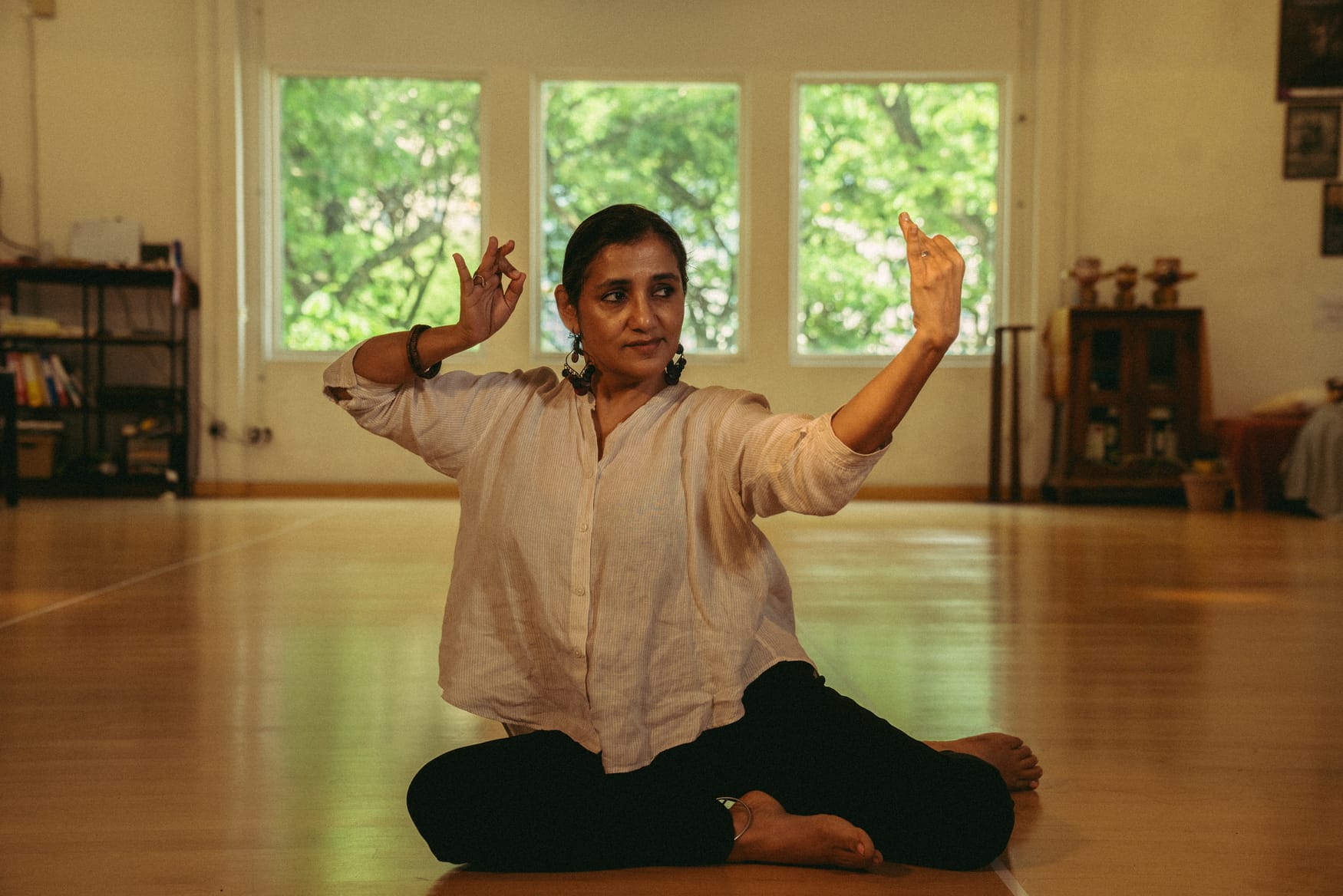
Our commissioned photographs of Raka are by documentary photographer Amrita Chandradas, whose work can be found in publications like The New York Times, Financial Times, and National Geographic. Made digitally and with medium format film, the resulting portraits show daily life at Chowk’s studio along Aliwal Street, moments that depict a deep connection to art being cultivated. The photographs’ sepia hues make them seem steeped in time, a nod to the decades Raka has spent honing her craft, and the rich history of odissi.
Jom on artists
 Corrie Tan
 Charmaine Poh
 Sudhir Vadaketh
 Jonathan Chan
Singapore This Week
Society: Now, shore up the stork market

Singapore’s total fertility rate (TFR) touched a new nadir in 2025, sparking fresh conversations about ways to avert this existential crisis. A good first step would be to make things simpler for prospective adoptive parents and those willing to try fertility treatments (watch out for an upcoming Jom essay on the issue)—by reducing the time, money, and deluge of paperwork needed to bring a child home. Stephanie Tan of the Progress Singapore Party (PSP) suggested egg freezing subsidies in public hospitals, and permitting the use of MediSave funds for the procedure, while urging employers to offer employees wider fertility benefits.
Easing adoption processes and fertility treatments won’t be easy, but it’s perhaps the low-hanging fruit in the reform of an entire culture that now seems terrified of procreation. There’s hope though. South Korea, with the world’s lowest TFR, has reversed its decline in the past two years. Even though it’s early days yet, observers point to financial sops, as well as a raft of recent legislation prioritising housing for newlyweds; improved, affordable daycare access; and up to three years of shared parental leave as possible reasons for the reversal. Singapore too could revisit its current offerings—16 weeks of paid maternity leave for eligible mothers and four weeks for eligible fathers, with 10 weeks of shared parental leave. Both countries would do well to embrace queer families too—allowing, say, adoption and surrogacy—as part of a broader reimagination of the family unit; perhaps utility might prevail where humanity has failed.
Tan also revived PSP’s GE2025 call for a S$1,250 monthly allowance for parents and grandparents who are full-time caregivers to Singaporean kids below seven. Earlier, Shawn Loh of the People’s Action Party (PAP) felt that some of Singapore’s S$15bn budget surplus could be used to provide free childcare, as well as offsetting ongoing childcare costs such as diapers, milk powders and paediatrician visits till the age of 16. While the government has rolled out substantive benefits in recent years, some online were quick to point out that bigger ones like the working mum’s relief has actually been reduced from a percentage of annual salary to a fixed amount capped at S$8,000 for the first child (the official reason was greater equity, since a percentage-based approach favoured higher-income mothers).
Beyond expanded caregiving and financial support, the emotional and physical stresses associated with raising a child in Singapore must be reduced. Many prospective parents dread their children having to go through such a competitive education system, for instance. The PSLE, as just one example, not only involves forking out large sums on enrichment classes and tuitions, but considerable mental strain and in some cases, even trauma. Then there are the long waits, for houses that are getting smaller; the relentless pace of life; and the justified fear that one’s professional prospects will suffer with a child in the picture. Fertility policy, in other words, is not merely about ever more generous handouts—it’s about fostering a belief that raising a child in Singapore is not just manageable, but joyful enough to make the inevitable sacrifices worthwhile.
Some further reading: In “The Untold struggles of single parents in Singapore”, Sherryl Cheong discusses the tribulations of those who don’t fit the state’s favoured traditional family unit.
In “Don’t buy your own koyok: why we must reform primary education”, Pooja Bhandari urges a comprehensive overhaul to make Singapore’s primary education less stressful and more suited to 21st century opportunities and challenges.
Other stuff we like
The Saga continues. If you’re not a podcast listener but a page-turner, you can now order the transcripts of the award-winning AWARE Saga podcast transcripts. Relive the plot twists of this turning point in Singapore’s civil society history on the page in a brand-new publication by Faction Press.
Why did Alexander Graham Bell invent the telephone? History's first phone call was made 150 years ago this month. In this 1998 piece, The New Yorker explains its genesis.
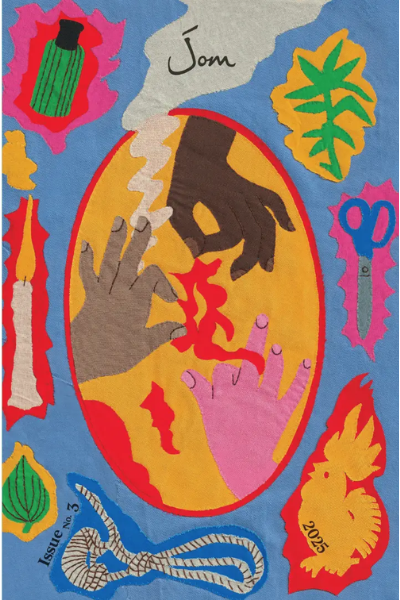
Jom print issue No.3 has just launched!
Dive into its themes of movement, mobility, and magic.
A flavour of Jom. Occasionally, Jom publishes essays outside the paywall. These are on issues we think are in the public interest, and deserve a wider airing. In the past two years, we have published nearly 50 such pieces. Read some of these if you’d like to see samples of our work. We hope they’ll convince you to subscribe. And even if you’re here with no intention of doing so, we hope you’ll enjoy these offerings and consider it time well spent!