
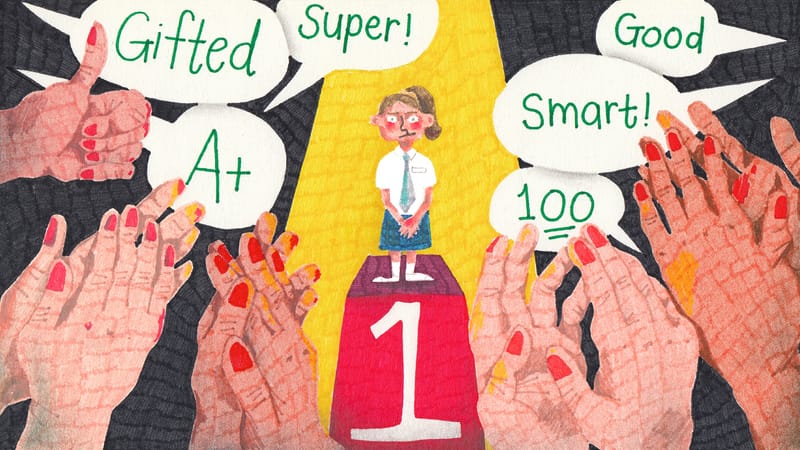
I am nine, in the airport with my family, munching on kaya toast. My mum’s phone rings. As she speaks, her expression changes. She puts down the phone and looks at me. “You got into the Gifted Education Programme,” she says, her joy tinged with disbelief.
“What?”
My dad turns to me to cheer. “You got into the GEP! You’re in the gifted programme!”
I’m gifted. I’m gifted?
Perhaps there had been a mistake? Sure, I had been a straight-A student, but in my competitive primary school I hadn’t ever been top three in my class—or even top five. I once did so badly (or thought I did so badly) for spelling that I faked my mum’s signature on the result. I didn’t know what half of the questions in the entrance test to the programme were even asking. What does getting into the GEP mean? Who will I meet? What opportunities will I get? But mostly: what does this say about me?
The toast, forgotten in the corner of my mouth, soaks up the weight of possibility.
Fast forward eight years, in my second year at Princeton University in the US, I read that the GEP is to be replaced with a different, more inclusive programme. I feel a strange sense of nostalgia. In writing, I am trying to make sense of all those years ago: was the GEP a good thing? Did it fulfil what it set out to do? And, in hindsight, how big a deal was it anyway?
In the late 1970s, Singapore’s economy was slowly shifting from manufacturing to more knowledge-based industries, and needed the human capital to match. In 1978, a team led by Goh Keng Swee, then deputy prime minister, produced the eponymous Goh report that introduced streaming, among other transformative changes to the national education system. From this report was born the GEP, a specialised programme for “intellectually gifted” students. The first intake was in 1984.
The GEP was conceived with two possible entry points. One was for students who did well in the Primary School Leaving Examinations (PSLE): they were invited to sit for a selection test to enter the GEP in secondary school. The other, through which I entered, was at primary three when students took tests in English, maths and general ability, with a focus on pattern recognition. Those selected were sent to one of the primary schools—there were nine during my time—that offered the GEP, and placed in separate classes with specialised teachers and an advanced curriculum.
This was intended to meet students’ “cognitive and affective needs”, that is, nurturing their intellectual, social and emotional growth. Goals listed on the website of the Ministry of Education (MOE) included “higher level thinking”, “productive creativity”, “individual excellence”, but also “strong social conscience” and “responsible leadership”. Students were introduced to complex maths topics and additional English subjects, taught research skills through enrichment project-based programmes, and afforded the privilege of going on an overseas trip.
Lee Kuan Yew’s government unveiled another social engineering project in 1984. The Graduate Mothers’ Scheme (GMS), that gave pre-primary and primary school entrance priority to children of mothers who had gone to university. The GMS was discarded in a year, after a historic electoral backlash saw two opposition politicians being elected for the first time since the 1960s. But the GEP was incredibly popular from its very inception. Parents of 87 of the 100 primary school students selected in the first year took up the offer; the next year, an even higher proportion—117 from 125—signed up. By the mid-1990s, there were more than 800 “gifted” students from primary four to primary six, enrolled in four schools. Each cost the state S$4,300 (nearly S$7,000 today). Eventually, nine primary and seven secondary schools came to offer GEP classes.
The programme’s popularity was understandable. It virtually guaranteed a student’s entry into an “elite” secondary school, which presumably increased the odds that they’d enter a premier university. In brand conscious Singapore, which parent could resist an Oxford or a Harvard? My class made a homogenous beeline to “branded” schools, many through academic Direct-School Admissions (DSA), a programme which allows students to get into secondary schools even before PSLE: Raffles Girls’ School, Nanyang Girls’ High, NUS High…
Of course, the GEP wasn’t necessary for such a route. Many of the people I met in secondary school and Junior College (JC) were also from the GEP; but more weren’t. One of my JC classmates had qualified for the GEP, but had decided against it. We had both still ended up in the same Humanities Programme class at Raffles Institution. Still, it did help. Many of my 20 GEP classmates ended up in elite overseas colleges (Princeton, MIT, Oxbridge); others in top local universities, enrolling in courses ranging from maths to medicine.
Part of me expected that the GEP would unlock some latent genius. Reality hit soon enough. My first year in the programme ended with a 67 percent in maths. In hindsight, this was not bad, but at the time it was catastrophic for someone used to getting As. While my classmates were topping the level (and later the country with their PSLE scores), I was considered average—on a good day.
Some of these classmates were a little terrifying, academically speaking. One of them would write and solve his own maths questions at the end of exam papers, out of sheer boredom. He was part of a small group of students who would dream up questions and challenge each other to solve them. Another got full marks for science (how was this possible?!) in primary six. More astonishingly, two others got 100 percent on English composition. Meanwhile, my compositions, especially in primary four and five, came back marked in bright red (hint: they weren’t cheery ticks).
Still, I had fun. I got along with my classmates; not because they were “smart” but because they were good, interesting people. We wrote fanfiction for every possible classic book of our generation: Harry Potter, Percy Jackson, Divergent, Hunger Games…with a few tales purely of our own invention thrown into the mix. Our teachers were amazing. At 10, I learnt Old English (the earliest form of English, and totally unintelligible to the modern speaker), how to write mystery stories, and the Fibonacci sequence. These were topics that I would never touch again in my life…though I do still love a good mystery. We had Scratch (a game-like programming language) and robot programming classes.
I also had access to a wealth of opportunities. I was in the Bi-cultural Chinese Elective Programme (BiCEP) offered in Tao Nan School, and in primary five, went on a school trip to the Chinese provincial capital Xi’an. The other two GEP classes went to Melbourne. The same year, I did an Individualised Research Study (IRS)—one of the programmes offered in the GEP—on saving habits among students and presented it to a crowd of over 50. It wasn’t all just curricular work either. In primary six, my class embarked on our own dreamy exercise to figure out what we would do if we formed the government. The conclusion: we would have llama-petting field trips and random public holidays for Colourful Socks Day.
I enjoyed my time in the GEP, but it was also stressful and siloed. I felt academically stretched for sure, but there wasn’t a whole lot of social and emotional nurturing or character building, despite MOE’s proclamations. This isn’t surprising, since the entire programme rested on “intellectual giftedness”, measured through two (essentially) IQ tests.
IQ itself is a contentious concept. It’s often seen as a limited categorisation—not measuring things like creativity or practical intelligence (plain old common sense). Intelligence is also not fixed; one’s environment and techniques such as practising mindfulness or learning a musical instrument can greatly improve one’s cognitive abilities. Even at primary three, such intelligence can be honed. The parents of my classmate, Clarissa Ryanputri, had given her IQ books when she was a child, so she could work on her problem-solving skills. By the time we sat for the GEP exam, she was “used to it.”
IQ tests are also an estimate rather than a precise measure, and test takers may have varying scores when taking the same test at different times. For instance, I was bewildered by more than half the questions but since they were all multiple-choice, I guessed. I got in; students I believe were just as “smart” or “smarter” did not. Something as simple as a good night’s sleep (which I got) or excellent luck (which I had), can determine your fate.
Beyond the entrance test, the focus on intellect dominates the GEP experience. Contrary to the stated aims of meeting “affective needs”, the only form of social and emotional nurturing (besides our teachers’ support, more a testament to their individual efforts) was Character and Citizenship Education class. In it, we were told to “love learning” and “be resilient”. These platitudes like, along with the oft-repeated “it’s the journey, not the destination” rang hollow amidst the unrelenting focus on grades and intellectual achievement. As my JC schoolmate Justinian Guan put it, “there isn’t as much emotional cultivation as there is intellectual conservation.”
GEP may have “set us up” for success, but it also limited success to academic achievement. This was reinforced socially. Invariably the most “popular” and admired kids were the high-scorers; grades were what really mattered. Growing up in Singapore’s hyper-competitive education system, we are socialised to admire academic smarts, sometimes exclusively. Knowing that one is seen as smart, and also being told one is very smart are powerful ego boosts (sometimes leading to an inflated sense of self), but equally crushing when you don’t live up to it.
The “GEP brand” also brought with it immense pressure from both outside and within the system. In primary six, some parents banded together to complain about us not having more supplementary lessons to prepare for the PSLE. I remember sitting there looking around at my equally disinterested peers, as the teachers tried to explain that we actually had the same number of supplementary classes as everyone else. Personally, I had no problems with fewer classes, and neither did any of my classmates.
Even though the GEP curriculum was harder, we were judged by the same standards as those in the mainstream curriculum. As Clarissa said, “failing in the GEP is still failing.” Justinian was so embarrassed about getting a 26/50 for his math test that he swore his friend to secrecy about his grade. When my secondary school classmate, Eleanor Chen, scored below 240 for her preliminary exams (the in-school exams before the actual PSLE), her parents scolded her and her school summoned them. She said, “it distorts your perception of what the good grades actually are, how the average Singaporean actually performs academically.”
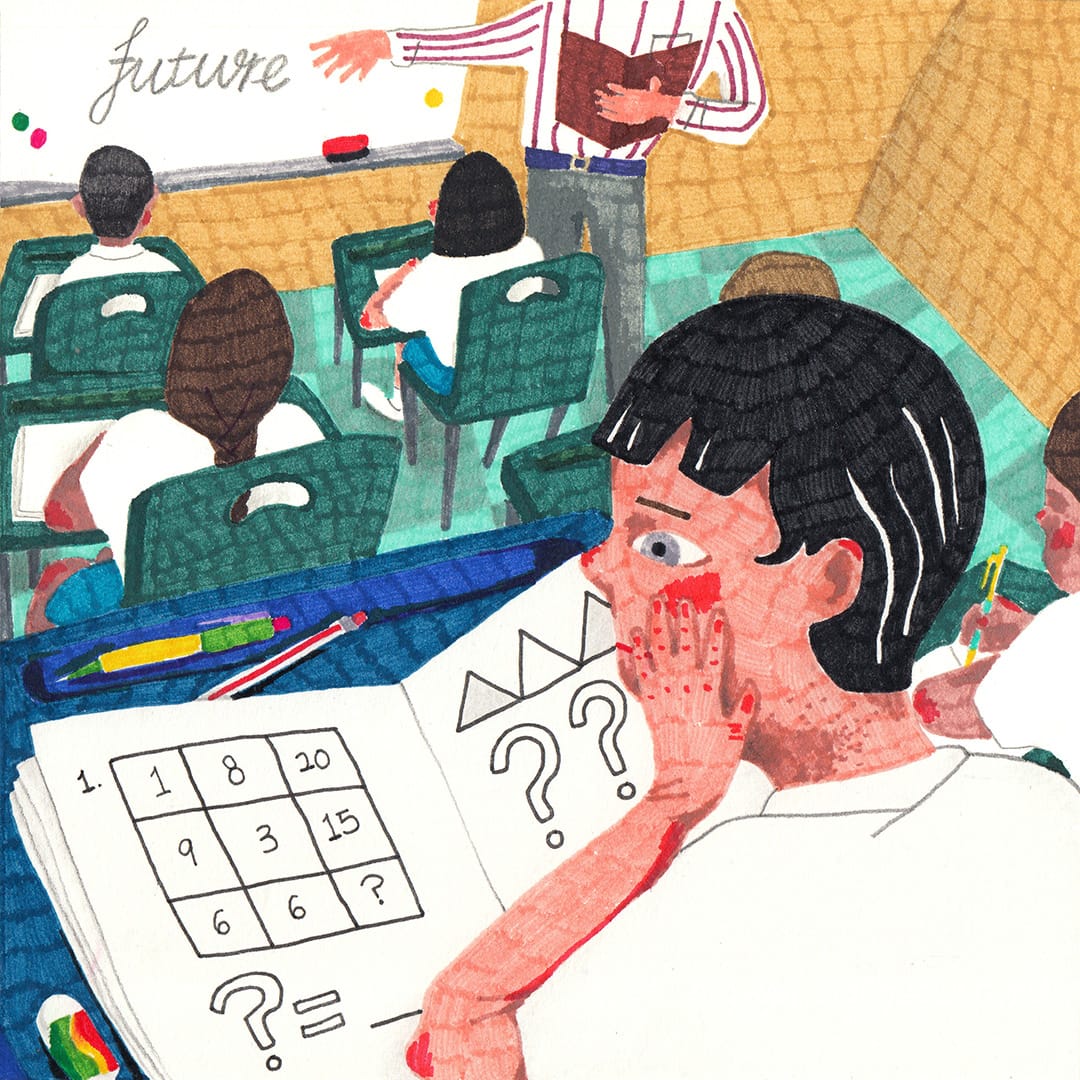
For context, anything more than 250 would place one in the top 10 percent of the entire national cohort. But in my class, anything below 260 was considered bad. Our average score was 270, and this was after most of us had already gotten into a secondary school through the Direct School Admissions programme.
There was never a chance to develop a healthy relationship with failure. We were never told that giftedness didn’t mean perfection; only that anything less than excellence was unacceptable. The fixation on academic excellence at such a young age has been correlated with a greater tendency to suffer from burnout or mental disorders later in life. There is often also a higher proportion of neurodivergent students in gifted classes, but there was no mention of this nor any support provided to meet these needs. Being gifted had to be enough.
Mental health among my peers was often dire. Around me, people were increasingly obsessed with perfect grades, winning competitions and beating everyone around them, out of touch with the larger community. Those that cared barely had time in between trying to keep up in this impossible rat race. “When we set children against one another in contests…we teach them to confuse excellence with winning, as if the only way to do something well is to outdo others,” the American educationist Alfie Kohn was quoted as saying in an excellent white paper produced by EveryChild.sg, a parent-led NGO calling for widespread reforms to Singapore’s education system. “We encourage them to measure their own value in terms of how many people they’ve beaten, which is not exactly a path to mental health,” continued Kohn. A coveted programme like the GEP only intensified the competition, and hence the mental health troubles of those in it. Even if it was in our heads, it was in all our heads.
Streaming from a young age sounds like a good idea: sorting students into classes based on their abilities allows both faster and slower learners to learn at their own pace. Many of my friends in GEP enjoyed the more challenging curriculum, and being part of a community of equally “nerdy” students. Clarissa felt bored in primary one and two, and through the GEP, Justinian finally found friends who read the same kinds of books. But being marked “gifted” also led to bullying and alienation, even if not all GEP students bought into their own “giftedness”.
I had Chinese lessons with the mainstream BiCEP class, and especially at the start I recall them saying things like, “Oh, they’re in GEP so they’re just smart.” (Even though I was the one almost failing Chinese, not them.) A teacher once told my class that other teachers and students didn’t like us because we were elitist, and warned us not to act stuck-up. This sense of alienation was exacerbated by how GEP classes had their own teachers and curricula. Since most time was spent in one’s class (as compared to extracurricular or other activities), GEP students had little opportunity to interact with the wider student population. With the black box of selection and clear separation of students, the hallowed idea of the GEP became entrenched.
This veneration, the value associated with this “brand” has also, inevitably, perpetuated a class divide. This concern had been raised in many fora in 1984, including a parliamentary discussion on the incipient GEP and GMS programmes. Goh Keng Swee, then first deputy prime minister and minister of education had swatted it aside: “I doubt any education policy can prevent the development of a class system in Singapore, or anywhere else,” he told members. Unsurprisingly, such nonchalance has only entrenched the system further.
My mum was in one of the first batches to take the GEP test—she spent the entire test drawing a Garfield on the cover page because she didn’t know what the test even was. Unfortunately, the admission team didn’t appreciate her artistic excellence. By the time I took the test in 2013, everyone knew about it; most were desperate to get in. Richer parents poured their resources into preparing their children especially for the GEP. A friend in Raffles Girls’ Primary School (RGPS), an elite institution that sends a disproportionate number of students to the programme, told me over half of her GEP classmates had gone for GEP entrance-test tuition, which can cost up to S$1,000 a month for a single subject.
Resource disparity exacerbates downstream differences. Although just over 20 percent of Singapore’s residents live in private houses, they provided nearly 55 percent of the students who joined the GEP between 2018-2022. During my time, most of the students who thrived socially and academically were from upper-middle and upper class backgrounds; my friend Eleanor was one of the few GEP students in RGPS who had come from a neighbourhood school instead of another brand name school. For those like her, it was harder to fit in with peers who already knew each other. One of my secondary school and JC classmates had been accepted into the GEP, but decided not to go because she didn’t want to change schools. Once GEP students enter “top” secondary schools and JCs, the gulf widens.
As a former teacher put it, “...accessing opportunities is largely contingent on both academic performance (which places one in a school with more resources or even gives one a higher chance of being selected for programmes to represent the school) and socioeconomic capital of one’s family…”
In 2024, the GEP was overhauled. Instead of only some schools offering the GEP, every school will offer subject-based rather than curriculum-spanning programmes for high-ability students. This approach will widen the “gifted” cohort, from the previous one percent to 10 percent. Furthermore, after-school modules will be offered at designated nearby schools. There will be multiple windows between primary four and primary six for students to join this “high-ability” programme, unlike the GEP which could be entered only through the single exam conducted after primary three. (The secondary school route was closed in 2008.)
The revamped version “tackles privilege and expands access,” wrote The Straits Times. As a friend who was in the GEP said, “the stench of elitism” was far too strong. However, the tweaks don’t represent change, but continuity. For starters, the entrance exam will still be akin to an IQ test, creating opportunities for a (slightly larger) sliver of students in each school, based on quantifiable measures of cognitive intelligence.
There are also practical concerns.
Students are meant to take advanced classes in subjects they show more aptitude in. Today, I infinitely prefer words to numbers; in primary three, maths was my best subject and my English compositions were frequently marked with squiggly red lines. It’s well documented in the “Pygmalion effect” that people tend to prefer and do better in what they have been told they’re good at—that sounds great, but can be detrimental for 10-year-olds still figuring out where their interests lie. If I’d been told my strength was maths at that age, I might today be a self-loathing, and not very adept, mathematician.
More crucially, are there enough resources across 180 primary schools to carry out these programmes? “All schools are good schools” goes the refrain. If that’s the case, why do parents strongly prefer some over others? Obviously, some schools have far bigger alumni groups and larger donations, as well as strong volunteer parent teams, which all contribute to students’ learning. In less well-endowed schools, teachers may be stretched thinly between teaching different curriculums.
Chan Chun Sing, the education minister, stated that there are enough resources to distribute among the schools, and every school would have about 15 students in the programme—less than half the size of an average primary school class for each school. This still means only one in 10 primary school children will benefit from it. And, if, let’s say, the 15 high-ability students are equally distributed across English, maths and science, that would mean five students per class. Is that truly an efficient use of resources? The other aspect of the programme, after-school modules that some students can go for, might more effectively centralise resources, though what these modules are is very vague beyond being designed to “cultivate curiosity and a love for learning”.
In all this, the most fundamental question remains: is streaming beneficial? Research indicates that while it may slightly help those in the higher streams, it has a greater negative impact on those in the lower ones. Self-confidence and motivation take a beating, exacerbating poor performance and progress.
Meanwhile, telling supposedly smart kids that they’re indeed smart tends to reinforce the idea that intelligence is fixed. This creates a mindset which makes them less receptive to challenges, lest failure force a reassessment of their admired intelligence. So, how helpful is it really to tell nine-year-olds that they’re gifted (or by omission, not)?
The other question to ask is: how should “giftedness” be identified? Should schools focus overwhelmingly on academic achievement? Should “giftedness” only be seen as intellectual and cognitive ability? What about character building? What about nurturing and celebrating different forms of intelligence? What about mixing students with different backgrounds and gifts rather than segregating them in a myriad ways?
The education system I went through was rather like a pressure factory. You put a kid in, and they are either sorted to another pile (at multiple junctures), crumble from the pressure, or harden into a “diamond”: straight As, top universities, scholarships. The crumbling is real; the diamond is perhaps illusory. When I graduated from JC, I asked myself for the first time: what do I want? To my horror, I had no answer.
In a world that’s changing with bewildering speed, it is more urgent than ever to ask ourselves what the point of an education is. The conclusion we reach will inform not just the future of our children but the future of Singapore itself.
Faith Ho is an undergraduate at Princeton University. Her fiction and nonfiction have appeared in Singapore Unbound, Cha Review of Books and Film, and her Google Drive. She also enjoys photography and film.
Letters in response to this piece can be sent to sudhir@jom.media. All will be considered for publication on our “Letters to the editor” page.