
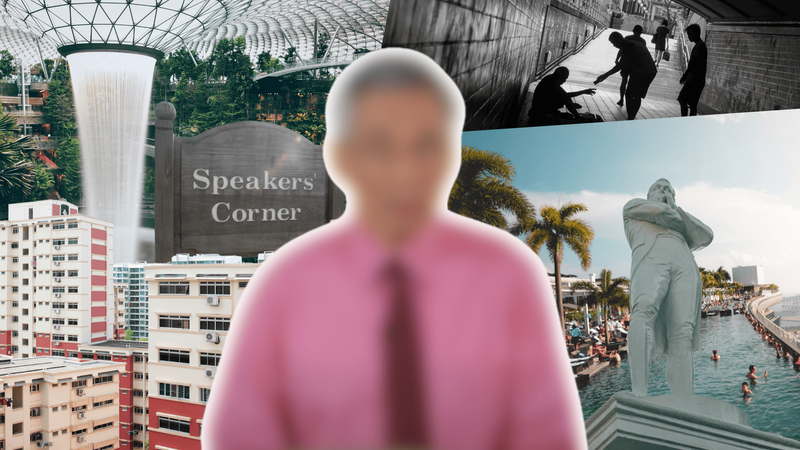
Under Lee Hsien Loong’s leadership, the ruling People’s Action Party (PAP) has transformed Singapore from a regional economic powerhouse into a rich global city. A state previously lumped in as one of four East Asian tigers, part of a broader, post-war industrial miracle, is now, from Bollywood to Silicon Valley, spoken about breathlessly on its own terms, sui generis. The Singapore mythology—of a society going quickly from rags to riches, enabled by a pragmatic technocracy that just works—grows more intense and iridescent by the day. Territories of all sizes and incomes seek to appropriate “Singapore” for their developmental fantasies, whether Brexiteers hoping for a “Singapore on the Thames”, or Israelis wondering if they can turn Gaza into a “Singapore of the Middle East”.
Lee’s headline report cards, from Bloomberg, CNA and others, offer statistical proof of this storied ascent. In his two-decade reign, real GDP per capita has doubled to US$88,000 (S$118,216), higher than in Hong Kong and the US. Assets under management have grown over eight times to S$4.9trn, nearing Hong Kong’s. The government has throughout kept unemployment low. In a tumultuous era when the international order has had to adjust to the end of American hegemony, Lee has, despite some hiccups, adroitly balanced the interests of the US and a rising China—so much so that the likes of Amazon, TikTok, Taylor Swift, Donald Trump, and Kim Jong Un all feel very welcome here.
If Lee were judged purely by these metrics, he might indeed lay claim to being one of the world’s top leaders of the past two decades, as Graham Allison, a professor at the Harvard Kennedy School and Lee’s adviser when he was there, recently suggested. And yet, the reality is far more complex.
Lee leaves behind a Singapore that is probably more unequal and divided than when he entered office; where the raison d’être and dynamics of the much-vaunted public housing system are under growing scrutiny; and where the space for academic freedom and societal dissent appears to be shrinking, hampering the generation of new ideas and modes of thinking.
The gleaming edifice of a global city shimmers, but inside one finds not a vibrant soul, but a troubling void.
The major political failures of Lee’s government encompass the twin challenges of immigration and inequality. When Lee became prime minister in 2004, Singapore’s total fertility rate had already dropped to 1.26, well below the replacement rate of 2.1. There are cultural and economic reasons why fertility has declined across East Asia. Still, the PAP itself was culpable from the 1960s. The party first disincentivised Singaporeans from having more children, then chided us for having listened, and finally said it’ll simply bring in other humans to make up for the ones we should have had.
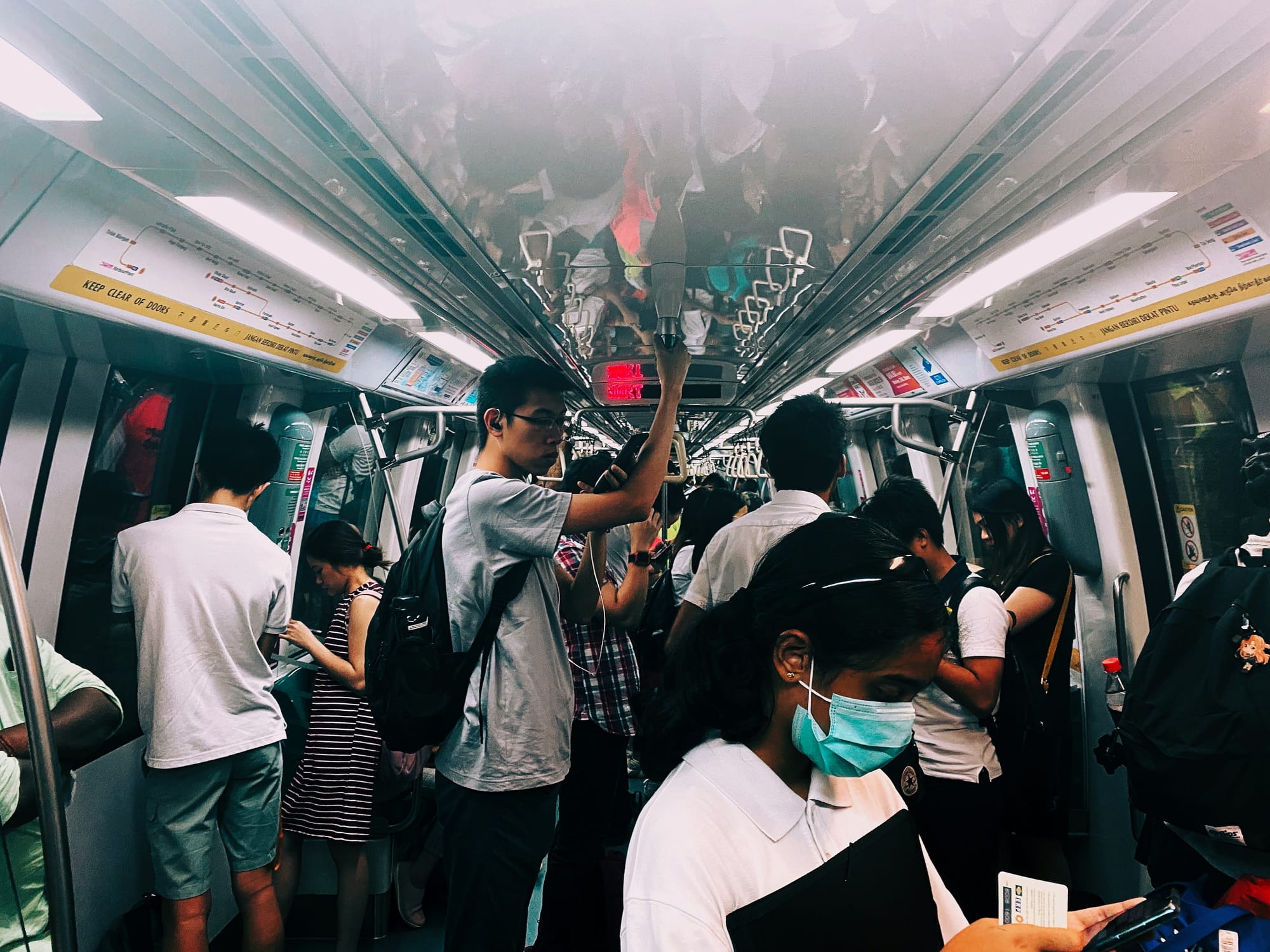
To be sure, from at least 1819, when the British established a colonial trading port here, and perhaps much earlier, Singapore’s openness to the world has underpinned our growth. Still, Lee’s tenure will be remembered for the ramping up of immigration. Between 2004 and 2023, Singapore’s population rose 42 percent from just over 4m to just under 6m, possibly the highest growth rate of any developed country, and higher even than developing countries, such as India and Indonesia, famed for their fertile, youthful populations. Perhaps the fairer comparison is to other global cities. Even then, Singapore’s population growth over that period far outstrips the likes of London and New York City. Perhaps it is testament to the marvels of Singaporean urban planning, and the work of civil servants across ministries, that the city’s infrastructure was somehow able to absorb those people, notwithstanding occasional crises, for instance with the MRT service.
What the technocrats failed to grasp, though, is how dramatic change in our society’s demographic makeup might affect the nascent Singaporean identity and sense of belonging. From 2004 to 2023, the proportion of citizens fell from over 73 percent to just over 61 percent. Lee failed to secure political buy-in for immigration by projecting a positive vision of it; and subsequently to ensure socio-cultural integration of migrants.
In this, his government has been hampered by, among other things, its adherence to a colonial-era race classification model colloquially referred to as “CMIO” (Chinese, Malays, Indians, Others). The PAP’s paranoia about inter-ethnic tensions, which dates back to the prickly 1960s, perhaps blinded it to intra-ethnic tensions—primarily the Chinese and Indians born here versus new migrants from the respective motherlands. (He has belatedly acknowledged this in his recent exit interview with the mainstream media.)
Compounding this is the growing anti-Indian sentiment more broadly, itself likely the result of high immigration from the subcontinent, in turn somewhat attributable to the Comprehensive Economic Cooperation Agreement (CECA) signed in 2005, a year after Lee entered office. (We don’t know the full extent of movements from India or the actual impact of CECA, because the government doesn’t publish data on the ethnic breakdown of our non-resident population, including the number of intra-corporate transfers and their dependents who’ve moved to Singapore under CECA.)
Independent Singapore’s historical bias against non-Chinese can be traced to the racist musings of Lee Kuan Yew (henceforth LKY), Lee’s father and the country’s first prime minister. LKY implemented a discriminatory policy, one reiterated during his son’s leadership, to give preference to Chinese immigrants, in order to ensure that the Chinese never lose their supermajority status. In 1989, LKY said that the lower Chinese birth rate justified the government’s programme of encouraging Chinese immigration from Hong Kong. According to him, the Chinese majority must be maintained, “or there will be a shift in the economy, both the economic performance and the political backdrop which makes that economic performance possible.” Its messaging has been tweaked for the times—what originated in LKY’s ethnic Chinese supremacy has been repackaged under the younger Lee as minority protection. Contemporary biases stem from cultural conflicts with new migrants, and job security fears among the Singaporean professional class. At the lower end of the job ladder, the intersection of class and race, in an exploitative migrant labour model, means that the South Asian worker’s experience of “global city” Singapore is one infused with the kind of bigotry, toil, restrictions, and workplace hazards that no Singaporean would ever tolerate.
In recent years, we’ve seen racial violence and the public scrutiny of inter-racial relationships. Racism and xenophobia are often conflated in a potent mix that affects many minority groups, including new Chinese migrants. “I used to believe that Singapore was moving in the right direction on racial tolerance and harmony,” K Shanmugam, home affairs and law minister, said in 2021. “Based on recent events, I am not so sure anymore.”
Worryingly, instead of trying to address historical racial injustices or engaging Singaporeans in the co-creation of immigration and population policies, Lee’s government has appeared narrowly focused on shutting down anti-racist speech that it believes might sow further discord. Meanwhile, migrants’ desire to engage more in society is regularly pricked by the inscrutable spectre of foreign interference, and the risk that they might be booted out. Many self-censor and, in a sort of self-fulfilling prophecy, become the seemingly aloof, footloose expats whom nativists are primed to fear. In short, genuine public discourse on race and religion, and a truly shared journey of human progress between citizens and non-citizens, have never seemed further away. All this happened on Lee’s watch, and speaks to the failure of his combined immigration and integration efforts, set against broader global nativist forces.
Singaporeans are thus questioning two assumptions of Lee’s neoliberal economic model. The first is that high population growth is necessary to sustain economic development. Defenders of Singapore’s recent high immigration, local and foreign, are often tongue-tied when asked about the logical conclusion of such a developmental trajectory, so much so that the notion of a 10m-person city is taboo in elite circles. (Boosting productivity, by contrast, would be the economist’s antidote to ever more “inputs”.) Many Singaporeans are aghast at plans to further enlarge this island through large-scale reclamation projects, and are instead hungry for alternative paths to progress that are less exploitative of our neighbours, and gentler to the environment. The global city lifestyle Lee has promoted—high consumption, frequent air travel, an emporium of the world’s goods at one’s fingertips—is, in per capita terms, one of the most destructive to our planet. Yet rather than a fundamental rethink of growth, Lee’s government has trumpeted climate mitigation measures, such as the importing of renewable energy from the region, and adaptation efforts, such as the sand-intensive construction of Long Island, that could potentially disadvantage our neighbours further. This beggar-thy-neighbour version of environmentalism is more about personal catharsis than meaningful change.
The related assumption is that Singapore must attract billionaires and other rich investors to our city because trickle-down economics will benefit us all. During Lee’s tenure, scepticism has grown about the motivations of plutocrats moving here, including Chinese tycoons fleeing crackdowns at home and crypto-traders seeking more liberal regimes for their wizardry. Amidst a broader global suspicion of the way the rich use tax havens and offshore vehicles to practise “spiderweb capitalism”—in the words of Kimberly Kay Hoang, professor of sociology at the University of Chicago—more Singaporeans are critiquing our positioning as the “Switzerland of the East”.
The distinction between entrepreneurs who grow rich here and the rich who move here for tax arbitrage is, to some, academic. This year’s Labour Day Rally at Hong Lim Park, a grassroots-driven event now in its second year, was attended by some 600 people, and saw everybody from doctors to bus drivers protesting against oppressive labour practices. One poster led with a photo of Anthony Tan, Grab’s Malaysia-born CEO, and his wife, alongside their supposed S$40m bungalow. “If they can buy million dollar bungalows and take billions,” the poster screamed, “they can afford to provide us riders: Safe Fares! Freedom to Reject Orders! Insurance to all regardless of tiers!” This could also be a harbinger of things to come as Singaporeans unite to resist our drastic societal inequalities.
Consider that Singapore, a city of about 6m people, now has more millionaires than London, a city of over 9.5m. There are now 244,800 people here with liquid investable wealth of at least US$1m (S$1.36m); 336 “centi-millionaires” with at least US$100m (S$136m); and 30 billionaires with at least US$1bn (S$1.36bn). Singapore is also the world’s fastest-growing family office hub. Some 3,400 high-net-worth individuals moved here last year.
At the other end, some 30 percent of working households earn less than the amount required to meet basic needs, according to the Minimum Income Standard (MIS) 2023 report, produced by Nanyang Technological University and the LKY School of Public Policy. (The government disagreed with their delineation of “needs” versus “wants”.) In 2022, meanwhile, there were over 1,000 homeless people in town. Linda Lim, economics professor at the University of Michigan, has spoken extensively about the pitiful salaries for lower-income earners. “A rich country shouldn’t have so many poor citizens—proportionally, Singapore has twice as many poor citizens as OECD countries, other rich countries.”
But it’s not entirely clear how bad inequality here is, partly because Singapore doesn’t measure it accurately. Consider the Gini coefficient, a measure of inequality that ranges from 0 to 1. The higher the number, the more unequal the society. But Singapore’s measure includes only income from work, whereas many other countries also include income from investments and other sources. By omitting income from investments, including rent, Singapore is almost certainly underestimating the incomes of rich people.
Non-working households, as Ng Kok Hoe of the LKY School of Public Policy argued in 2018, are also left out of the measure. Finally, Singapore excludes from the measure the 1.77m non-residents (almost 30 percent of the population), which includes our migrant labour force at one end, and many millionaires at the other—even though the latter undoubtedly contribute to asset and price inflation. Singapore’s unique Gini measure, in other words, leaves out some at the top and bottom, thereby presenting the illusion of greater income equality. And despite all that, our Gini coefficient of 0.433 in 2023, or 0.371 after taxes and transfers, is still higher (more unequal) than many developed countries.
Lee’s administration, meanwhile, didn’t even bother measuring wealth inequality. Though his successor, Lawrence Wong, has introduced minimal wealth taxes, and appears focused on tackling inequality—as do some richer Singaporeans—it’s unclear how far he’ll get. PAP politicians have long glorified cheap food and other aspects of life in what’s sometimes called “a first-world country with a third-world wage structure”. For many of the plutocrats living here, including Karl Liew and members of the “Fujian gang”, inequality might be a feature, not a flaw. Even as our policies allow them to reduce their global tax bill, our drastically unequal wage structure allows them to offer scraps to domestic workers, hawkers, nurses, and many others. “Meritocracy” and “trickle-down economics” provide the intellectual ballast to soothe their souls, to comfort their class angst.
To be clear, all this is not to suggest that Lee ignored the less fortunate. His government launched a slew of socio-economic programmes, from the Progressive Wage Model to the Pioneer, Merdeka, and Majulah packages, which together arguably went further in terms of social spending than any previous administration. The point, rather, is one of relative scale. He’s been seemingly far more successful in attracting the world’s rich and helping them grow their wealth.
What further complicates any effort at redistribution is that Singapore’s ministers belong to the same elite, wealthy class as some of the plutocrats who’ve moved here. Recent revelations that S Iswaran, disgraced former minister, accepted rides in private jets and other gifts as he lived the high life in London—for which he is now under investigation—and that K Shanmugam and Vivian Balakrishnan, current ministers, live in palatial colonial bungalows—leases obtained fairly—only adds to the sense of distance and disaffection with our leaders.
In Oligarchy, Jeffrrey Winters seeks to explain how the elite protect their status across the world. He describes India, Malaysia, Singapore, and the US as different forms of civil oligarchy. “In a pure-form civil oligarchy, oligarchs surrender a major part of their power to an impersonal and institutionalized government in which the rule of law is stronger than all individuals. With property defense well provided by the state, wealth defense in a civil oligarchy is focused on income defense – the effort to deflect the potentially redistributive predations of an anonymous state.”
Do Singapore’s ministers have more in common with the ordinary citizens they represent or the global elite they seek to attract? It is a question that has come to the fore more clearly under Lee than ever before, and in no small part due to the great HDB conundrum.
While contemporary ethnic and class tensions are clearly a product of the past two decades, in ascertaining Lee’s legacy we must also consider policies whose inception pre-dated his prime ministership—but whose fallout emerged during his time. The issue of HDB 99-year lease decay is a ticking time bomb.
Jonathan Lin has written about the complex issue for Jom, in “Affordability in the lion city: is Singapore’s public housing model built to last?” Lin acknowledges that in its first 30 years, Singapore’s public housing model achieved remarkable success of affordable housing and improved living conditions. But in the 1990s, government deregulation and the financialisation of the public housing system led to a shift in the way HDBs were perceived: from an affordable home to an asset. “What was originally intended as a social policy mixed with a smattering of free market economics slowly became a financialised nation-wide investment vehicle.”
Given that the government encouraged the use of Central Provident Fund monies to finance HDBs, it was acutely aware that the housing system represented the retirement nest egg for many. “85 percent of Singaporeans are living in HDB flats and we intend to keep the values of these homes up. It will never go down!” LKY thundered in 2011, ahead of a crucial general election (GE). After his father passed away in 2015, Lee ’s administration effectively backtracked on this. In 2017 Wong, then national development minister, made clear that only a small proportion of flats would be eligible for government buy-back. The rest would see their value decline as their leases ended, a process that would possibly jeopardise their owners’ retirement funds. The market re-adjusted: freehold/leasehold became an even more important signal of value.
While older HDB homeowners want prices propped up, younger prospective owners feel increasingly priced out of the market. “Balancing the interests of current homeowners with prospective ones is arguably the government’s most urgent, and complicated, policy challenge,” said Lin. “The MND [Ministry of National Development] and HDB are faced with a difficult—if not impossible—task.” It’s worth highlighting that there are no simple answers; only a variety of policy proposals, some from the opposition, each with uncomfortable trade-offs. The tweaks offered thus far, including new segments like Standard, Plus, and Prime, seem inadequate. In order to live a financially sustainable life, it appears like middle-class Singaporeans are expected to engage in a relentless property merry-go-round: upsizing in the early part of their lives as their incomes rise, and then downsizing in the latter half as their incomes fall and their property leases decay further.
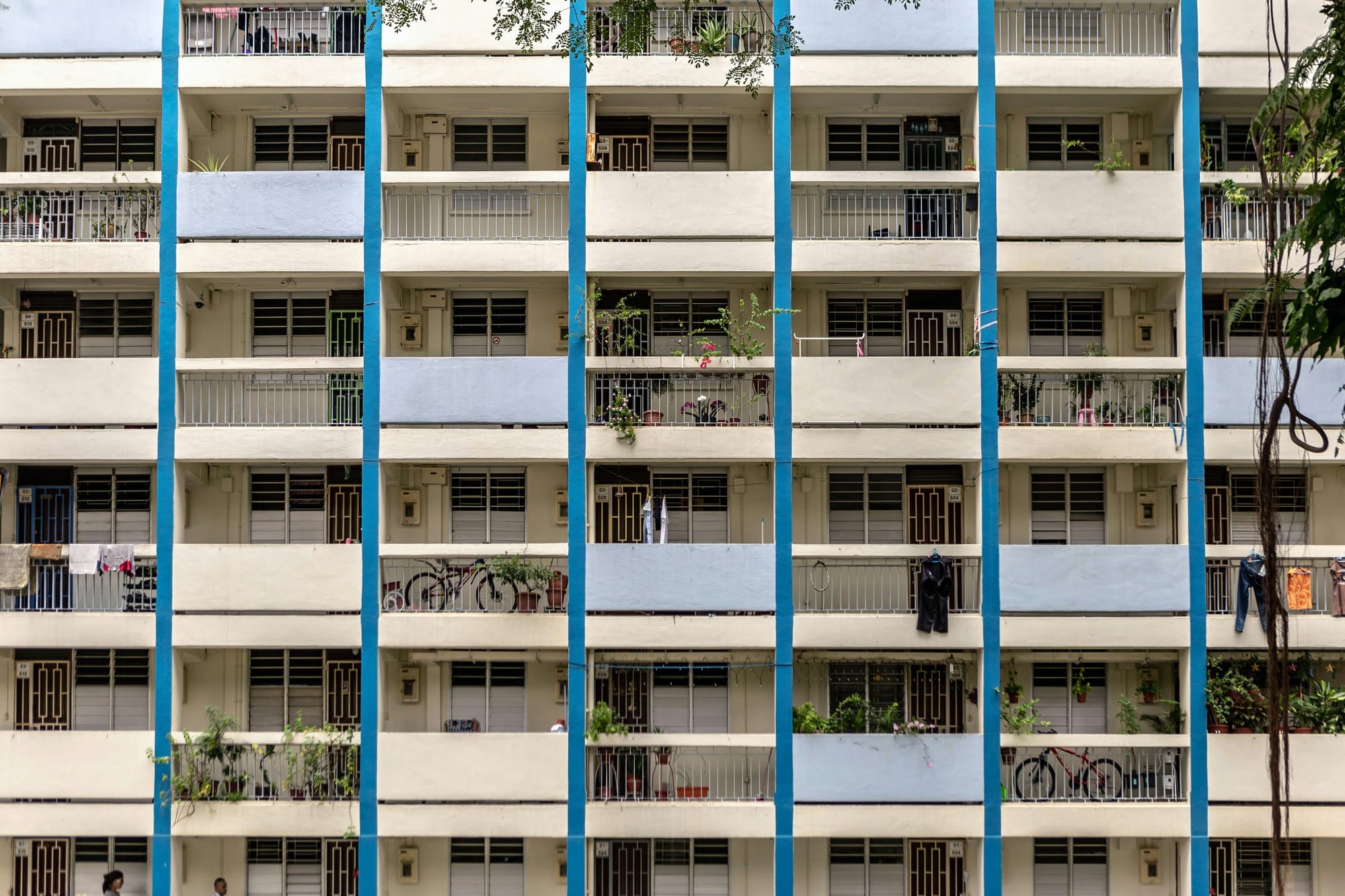
As things stand, Singapore’s unique model of land ownership—with the government by far the biggest landowner—is poised to worsen wealth inequality over time. This is because of intergenerational wealth transfers. Rich Singaporeans who own private freehold properties will be able to pass them onto their kids, their values presumably rising perpetually. Most of the other Singaporeans who own 99-year leasehold properties—the vast majority of homeowners—effectively own assets whose values will rise but then start to decline, and will eventually be worth nothing.
In yet another sop to the wealthy seeking to preserve their status, in 2008 Lee’s administration got rid of inheritance taxes. Over the past decade, even as a growing number of academics globally such as Thomas Piketty have warned of the dangers of extreme income and wealth inequality, Singapore appears to have done too little to address it. Ideological opposition to the PAP’s old neoliberal orthodoxies has been hampered by the apparent shrinking of space for academic freedom and societal dissent.
Some argue that civil and political space has opened up under Lee. There are signs of this, including with the aforementioned rally at Hong Lim Park, the proliferation of independent voices on the internet, and Lee’s appointment in 2020 of Singapore’s first-ever leader of the opposition, the Workers’ Party chief Pritam Singh. Ang Swee Chai’s recent reception at the Harvard Club of Singapore, and her interviews with mainstream media outlets that included detail about her detention and exile, would probably not have been tolerated by LKY.
Yet even if space has expanded, it’s less due to Lee’s benevolence than broader forces of change, including digital disruption of the mainstream media’s monopoly, and society’s hunger for a plurality of views. Younger Singaporeans have been less wedded to the PAP’s dominant discourse about the good life. This explains the PAP’s dwindling vote share under Lee—75.3 percent in the 2001 GE, the last before he took office, to 61.2 percent in 2020. Despite the numerous structural disadvantages it faces, the opposition now holds more seats in Parliament than at any point since the 1960s.
The PAP is also more fractured now than it’s ever been (though still incredibly cohesive). Two events in the past decade led to grave, if unspoken, dissent within the party. First was the government’s decision in 2015 to investigate LKY’s will through a ministerial committee, rather than leaving it to his children to fight it out in the courts. (Some party members believed it should have been a private, not public, affair.) The second was its changing of the constitution in 2017 to reserve the presidential election for Malays, perceived by many as an attempt to block former PAP politician Tan Cheng Bock from contesting. This culminated in Tan forming the Progress Singapore Party in 2019, the closest thing to a PAP splinter. So indeed some civil and political space has opened up, but it has been taken, claimed, rather than granted. Perhaps worried about losing further ground, Lee and the party appear, ominously, to have been clamping down on dissent and speech. There’s a general sense that the 2011 election, where the PAP lost a bigger group representation constituency (GRC) for the first time, was a turning point. Han Fook Kwang, then editor of The Straits Times (ST), was replaced by Warren Fernandez in 2012, who ushered in a more conservative era.
The PAP also seems to have stepped up attacks on independent voices. The point is often made that before Lee, the PAP targeted opposition politicians, but rarely bothered with ordinary citizens (with some notable exceptions, like Catherine Lim). Under Lee, it appears to have become the norm for the party to harangue non-partisan Singaporeans. At a broad level, much of this work is done by what’s known as the PAP Internet Brigade (IB), which traces its roots to “a quiet counter-insurgency” that the party initiated in 2007, wrote ST, to combat its critics online. Individual incidents also speak to the PAP’s targeting of independent voices. In 2014, Lee sued 33-year-old Roy Ngerng for defamation, the first blogger to face such a charge. Tan Tock Seng Hospital, Ngerng’s employer, promptly fired him. In 2019, Ong Ye Kung, then education minister, attacked playwright Alfian Sa’at in Parliament by selectively quoting his poetry, and comparing him, in the context of a course he wanted to teach at Yale-NUS College (YNC), to Nazis and violent jihadis in the West. Under Lee, the demonisation of ordinary Singaporeans in Parliament—a privileged space where those demeaned cannot respond—has also become commonplace. In Lee’s defence, one might argue that the informational universe today is completely different from the one his predecessors contended with—and thus it’s only expected that the PAP’s perception of “threats” has broadened. (Blame the game, not the player.)
The government’s decision in 2021 to close YNC, of course, is the totemic example of its intolerance of academic freedom. The same year, a survey of some 200 academics and researchers at Singaporean universities by AcademiaSG shed light on the problem. Over three-quarters of respondents believed that Singapore’s universities at most exercise only “some” institutional autonomy. Those who considered their research politically sensitive were 1.5-3.5 times more likely to feel constrained in their work, as compared to researchers in non-sensitive areas. And some 38.9 percent said that they did not feel free to invite guest speakers as they wished. Academics regularly complain about problems obtaining data from the government, and the pressures they feel when seeking tenure.
Under Lee, in fact, it seems as if the government is quite happy for a sort of intellectual dichotomy to exist: academics friendly to the PAP on the one side, and those perceived as critics on the other (including the founders of AcademiaSG). A clear manifestation of the problems with this was a commentary by Lim and Nigel Chiang, economists at the University of Michigan, in 2022. They argued that public discourse on inflation in Singapore has been narrow—because it focuses on imported inflation, while ignoring domestic sources, such as high rents and wages, which are rooted in our overall developmental strategy. At the 11th hour, ST pulled this commentary and delayed it indefinitely. And so Lim and Chiang had to publish it on AcademiaSG instead. Only some views are permissible in the national broadsheet, it seems. It’s not a climate conducive to the free exchange of ideas, which a supposed global city thrives on. Lee’s government has accelerated the very ideological and media polarisation it sometimes lambasts Western liberal democracies for.
Space for discourse also shrank because of the battery of new laws, including the Foreign Interference Countermeasures Act (FICA) and the Protection from Online Falsehoods and Manipulation Act (POFMA), that were implemented under Lee. Ostensibly to protect against very real global scourges, the potential for their indiscriminate use has a chilling effect on speech more broadly. Worryingly, they are also part of a series of manoeuvres through which the executive has usurped power from the judiciary. The charitable view of POFMA is that it’s a light touch approach by a hitherto draconian government—indeed, Ngerng might have been “POFMA-ed” rather than sued if the law had been around in 2014. The counter-argument is that the heavy firepower is still around, waiting to be unleashed—as Wake Up, Singapore and Lee Hsien Yang, his estranged brother, surely know.
There are other criticisms one could level at Lee’s tenure, including the spike in mental health issues and suicides (part of a broader global trend), and the fact that progressive policies his government claims credit for were in fact long overdue and, with the repeal of S377A, also forced upon them by the risk of judicial action. Among other facts he might like to forget, Lee was deputy prime minister in the 1990s when Singaporean cops conducted sting operations to attract and catch gay men.
A fair assessment is necessary not only in the broader quest for truth, but also ahead of the next GE (due by November 2025, but which may be as soon as end August). It’ll be tempting to view the PAP’s vote share as a referendum on Wong, but it’ll also be one on 20 years of Lee’s policies. Many Singaporeans who vote for the opposition will be doing so because they believe he’s set the country on the wrong course, which must now be re-routed. The fact that Lee is sticking around as senior minister doesn’t inspire faith in the ability of Wong—once Lee’s principal private secretary—to do so anytime soon.
Perhaps the kind view of Lee’s legacy is that the maths prodigy delivered fantastically on a narrowly defined set of easily quantifiable metrics. High GDP growth? Check. Foreign direct investment? Check. Life expectancy? Check. Social integration and freedoms? Huh?
We should acknowledge Lee’s sacrifice in forsaking the option to pursue a PhD at Cambridge in the 1970s to return home to serve Singapore. As the oldest child of the fearsome LKY, he had some of the biggest shoes in the world to fill, an unenviable task.
That he succeeded in some ways and failed in others, well, just speaks to his humanity.
Sudhir Vadaketh is Jom’s editor-in-chief.
This essay will remain outside the paywall until May 20th 2024. If you enjoy Jom’s work, do get a paid subscription today to support independent journalism in Singapore.
Letters in response to this piece can be sent to sudhir@jom.media. All will be considered for publication on our “Letters to the editor” page.