
Why radio? From the mid 20th century prophets have rung its death knell. “Video killed the radio star” sang The Bugles in 1979, responding with a self-reflexive mix of anticipation and melancholy. Yet if we zoom out, all this was simply in keeping with a long tradition of human inability to grasp emergent communication technologies. Socrates’s warning about writing coming at the expense of memory reveals ancient generational divides over comms—parodied, centuries later, by comedian Victoria Wood: “Radio killed variety and TV killed radio, and the internet will kill television and it will go on and on.”
Sure enough, all forms have persisted. Rather than being drowned by the oncoming waves of technology, radio has surfed on them. Many of us, including Gen Zs fascinated by nostalgia, know the tactile and aural joy of toying with a knob on a transistor radio, a search amongst the blur of white noise for the crack of a voice or instrument. Digital radio and, later, streaming, reflect the neoliberal order’s insatiable drive to make the “production” and “consumption” of content as frictionless as possible. These democratising technologies permit unique accessibility—a fledgling firm like Jom couldn’t have produced a “radio show” in the old days—but that’s tempered by the realisation of, if not resistance to, their ills, including an addiction to personal devices that dangle autonomy at the risk of isolation, algorithms that favour the superstars and alter the very nature of music (and other content), and the shift of money from artists to tech overlords.
Even as we navigate these thorny ethical issues, we marvel at what makes audio special. The communality of a Malayan family huddled around an antennaed radio, screaming along to “Merdeka”, is replicated today by the shared listening of podcasts, whether with a single loved one or an entire online community. Audio evolved along with our behaviours, squirrelling its way into our cars, commutes, and gym routines in ways physical books and video never can.
The modern podcast, then, represents a radical evolution from the original radio. It is on demand. It can platform niche personalities and interests—such as the “People Movers” podcast, exclusively about escalators—because the internet has made it easier to connect with one’s tribe. And, in today’s personality-driven era, it offers a deeper intimacy with your host(s): Alie Ward of “Ologies” is just one whose offbeat, personal, and vulnerable style makes it sound like you’re listening to a chum, not some stuffy, self-important presenter.
When Jom launched four years ago, and sought to build a literary long-form publication for Singapore (and perhaps one day South-east Asia), we knew at some point that we would enter the podcast space—the aural equivalent of our text-and-image based storytelling. But what, whom, and how?
The first decision was to opt for the narrative/documentary genre over commentary and interview-based podcasts. Though we enjoy shows like “On Being” and “The Ezra Klein Show”, we feel the space here is saturated with the likes of “Teh Tarik with Walid”, “Ya Lah But” and The Straits Times’s “The Usual Place”. To do this well, even with charming hosts, requires significant investment in research and production, especially if video is involved. Perhaps one day Jom will have the ability to do so.
At the same time, we believe there is a gap here in, and hunger for, good scripted podcast series—“Saga” by AWARE, a civil society organisation, is perhaps the only one. In journalism, The Economist has over the past few years had immense success with “The Prince” and “Scam Inc”, both hosted by Singapore-based journalist Sue-Lin Wong. (The latter won a Peabody.) Our relatively measly resources notwithstanding, can we learn anything from them?
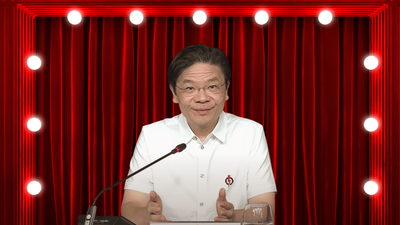
Three years ago, bouncing around ideas, we landed on Lawrence Wong, Singapore’s fourth prime minister. As a subject, he’s fascinating, even if the way he presents—bookish Chinese man—suggests consistency in royal succession. In a still quite classist society, Wong is the first prime minister to not come from an elite school but a so-called “neighbourhood” one—hence the podcast name—and also the first leader of the ruling People’s Action Party not to be unanimously picked by his peers. He wasn’t even their first choice. How did Singapore’s far-sighted leadership succession model falter? It’s one of many larger socio-political interrogations we thought we could embark on through Wong’s story.
Next, access, the ever-present problem in Singapore for indie media. Because the media here is so immature—both journalists and “subjects” unversed in fair, honest, and equal dialogue—it’s not always easy to get interviews. But we knew we had at least two interviewees. Sudhir, our editor-in-chief, knows Wong from graduate school. More importantly, Donald Low, economist and Sudhir’s occasional collaborator, worked with Wong in the civil service for years.
It took us a lot of effort to find and recruit other interviewees. For Episode 1, “Ah boy to man”, we decided to tell the story of a person through those who knew him at different stages of his life. Hence, in addition to the two above, there’s Michael, schoolmate at Tanjong Katong Technical School (“TK Tech”); Leon Perera, former Workers’ Party politician who sat across the aisle; and somebody we call Arundhati, a subordinate of Wong when he led the Ministry for Culture, Community and Youth.
(Episodes 2, 3, and 4? Look out for a new one every Friday this month. Other interviewees there include Walid Abdullah of NTU and Gillian Koh of IPS.)
Finally, given that Jom is a relatively unknown quantity in Singapore, even less so for our podcasts, we decided that there wasn’t much chance Wong would give us an interview without knowing anything about our approach and product. Instead, we decided to invite him after it’s done, once his team could listen to all the episodes, for a special one-on-one with Jean Hew, the podcast host (more below). We know he’s a very busy man, but worth a shot. If he agrees, that’ll be a special bonus episode 5, stay tuned.
Once we realised that we might be able to secure enough interviewees for a podcast, the next question: who’s going to host it? We approached an experienced host, who agreed. Yay! But once we had begun the preparatory work, including thrashing out timelines, they pulled out because of other commitments.
We kept looking, only to realise that the person we really wanted was here all along. Jean, our Employee #1 and then head of research, had by then regaled us at happy hours (she’s a teetotaller) and company retreats with her charismatic personality and elaborate tales.
She’d be perfect, we thought. That she had zero experience in podcasting didn’t bother us—Jom, after all, was founded partly to provide a space to nurture artistic and journalistic talent in Singapore. Try lah.
Jean is also much younger than our initial choice, something that unintentionally influenced our final narrative structure. Jean was born in 1998, a year after Wong entered the civil service, and around the time Singapore was embarking on its global-city drive which, partly through massive immigration and capital inflows, would see incredible transformations to our city-state.
That’s it, we thought. “The Neighbourhood Boy” will intertwine three narratives. That of Wong; that of a changing Singapore over the past three decades (“1965” onwards is so yesterday); and that of Jean Hew, a Gen Z whose aspirations for career, housing, and much else hinge on Wong’s decisions. (That’s what we’ve tried to do. Whether or not we succeeded, dear listener, is entirely up to you.)
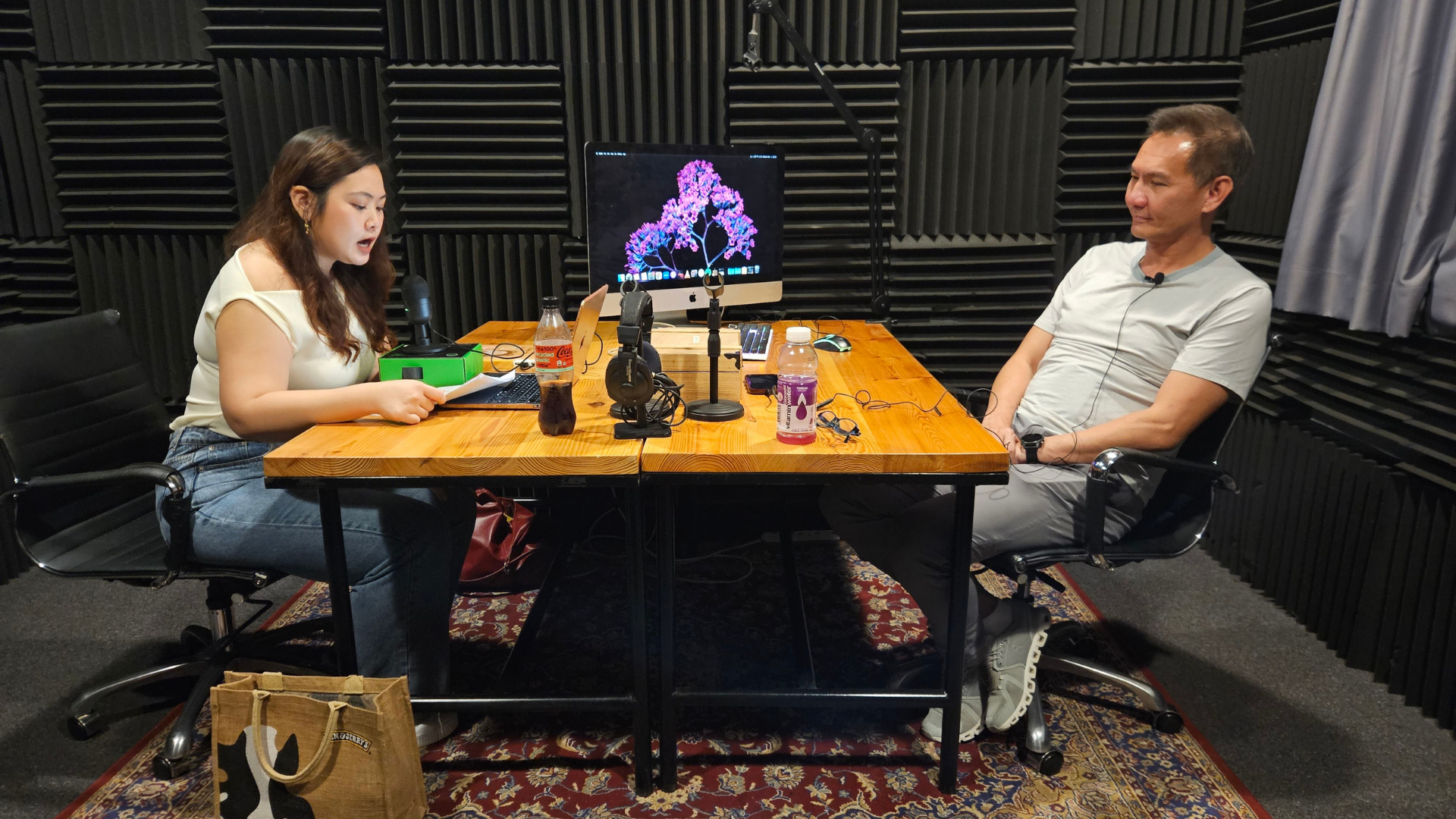
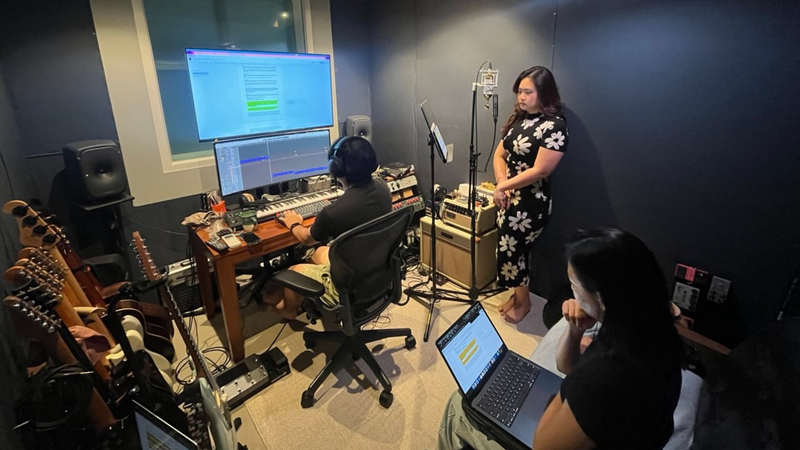
Well, only 15 months late, we guess. Jean left us in early 2025, exactly three years after she joined—that’s Gen Z CV specificity for you—but thankfully agreed to keep working on this. The delay meant we had to reshape the narrative one last time. Instead of an election lead-up, the podcast instead contemplates the election results, and asks what Singapore can expect from Wong. His thumping victory—Wong is, in yet another first, the only prime minister to outperform his predecessor at the GE—adds a final layer of complexion to the podcast.
Subscribe to “The Neighbourhood Boy” on Spotify, Apple Podcasts, YouTube, or wherever you get your podcasts. They’re free, which was one last commercial consideration for us. Perhaps one day Jom will be at a point where we can charge for our podcasts, but, small as we are now, we see them partly as marketing vehicles, to spread brand awareness among communities that may not have yet seen our stuff.
So please stream, download, and share.
Finally, there’s an experiential answer to that question, “Why radio?” Our senses are bombarded daily from all directions, often leaving little space for our inner selves to emerge.
Over 50 years ago a seven-year-old boy apparently told Alistair Cooke, journalist famed for “Letter from America”, that he preferred radio to television “because the pictures were better”. It was an ode to the powers of our imagination, and perhaps, as we all seek to better understand our little red dot, another enlightening path to pursue.
This editorial is from Jom’s team. We’re grateful to all the different contributors to this podcast. Their names, and episode transcripts, can be found on “The Neighbourhood Boy” page on our site.
If you enjoy Jom’s work, do get a paid subscription today to support independent journalism in Singapore.