
BBFA (Bui Bui Forever Alone): Overweight, single men experiencing sexual frustration and destined for a life alone. The term emerged online in the 2010s, in Singapore. “Bui” is the Hokkien word for “fat”.
BBFA is a term employed exclusively by users of online forum HardwareZone, specifically on its Eat Drink Man Woman (EDMW) page. To the forum’s users, who refer to themselves as “EDMWers”, BBFAs are individuals cursed to be ‘forever alone’ due to their unattractive nature: their bodies are bui bui, chubby and out of shape. This description conjures up images of the archetypal asocial, nice guy, relegated to the back of the room at parties, and forever condemned to linger in the shadow of his more attractive counterparts.
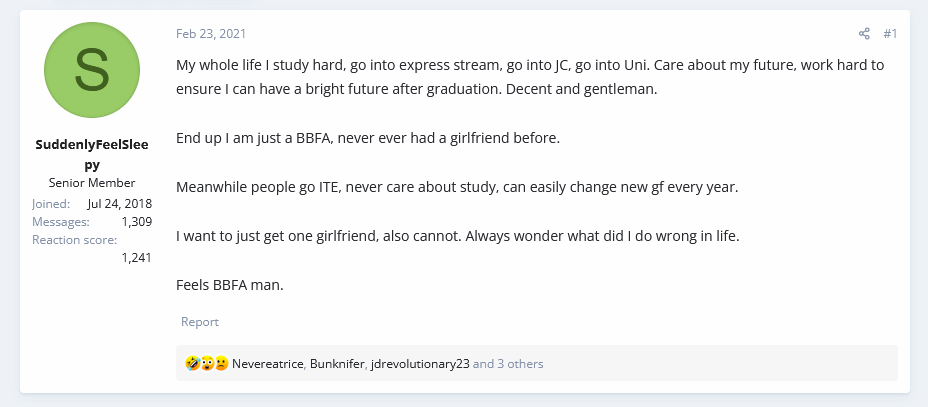
That such a community finds itself at home on EDMW reflects the characteristics of the page and platform. With its relatively lax moderation and rudimentary graphical interface, HardwareZone offers users a throwback to an early digital era, when websites were clunkier but also free from the influence of modern tech monopolies. The nostalgia is important for those who feel stifled by perceptions of excessive content moderation that are associated with more popular platforms like Facebook and Reddit.
It may seem strange for such a platform to thrive under the watchful eye of a nanny state. Stranger still, Singapore’s main government-owned and -controlled media group, SPH Media Trust (SMT), owns HardwareZone. The irony can perhaps be explained by commercial tensions. SMT has accepted mountains of taxpayer dollars—in what many see as a bailout of a failed entity—and is perhaps eager to chart a course to profitability. Hence, the government may be wary of tinkering too much with one of SMT’s crown jewels: HardwareZone attracts millions of hits each month. (The government does occasionally censor HardwareZone’s misinformation, most recently related to Covid.)
Institutional backing aside, as an older and uniquely Singaporean creation, EDMW has benefitted from starting with a primarily local base. This has created a rich and familiar linguistic environment that synthesises Singlish with internet slang, forming new words and phrases suited to a Singaporean audience. Multiple words are chained together and aggregated into acronyms to maximise conversational efficiency. For instance, instead of asking users to upload pictures as proof of an event happening, like saying “pics, or it didn’t happen”, EDMWers use NPNT, or No Picture No Talk.
EDMW posts are hence often indecipherable to the uninitiated. Older users have compiled glossaries to aid new members. Is it any surprise that a term like “BBFA” would emerge on here?

In order to better understand BBFA discourse, I conducted a computational analysis of EDMW’s forum posts. But before presenting the results, it’s important to situate BBFAs within a larger global concern surrounding online harassment that, when pushed to its extremes, can lead to what's now referred to as “misogynist terrorism”.
While uniquely Singaporean, BBFAs aren’t the only online community born out of sexual frustration.
Across Europe and North America another online community called “incels” has emerged under similar circumstances. The term is short for “involuntary celibate”, defined as individuals unable to find a sexual partner despite desiring one. It was first used by a Canadian graduate student who wanted to create a digital space for others to share their experiences behind the veil of anonymity. The forum grew very popular, serving as a refuge for shy, awkward, and alienated individuals.
Unfortunately, these communities were infiltrated by users, mostly men, who blame feminism and its influence on society for their sexual frustrations. They believe that feminism makes women more self-centred and consequently select partners who suit their material needs. This meant having sex with attractive but unfaithful men, called “alphas” or “chads”, when they were younger before settling down with their nerdier and more loyal “betas”, who provide material security after having been “passed around”. This initial resentment grew to incorporate racist and sexist views, causing a deep-seated loathing for modern society and the sexual inequalities it supposedly entrenches.
The most infamous of these incels was Elliot Rodger, who couldn't find a sexual partner despite being the wealthy son of a Hollywood producer. After years of failing to gain sexual validation from the beautiful women he desired, Rodger decided to retaliate against what he considered a broken and unfair society. It was 2014. He was 22.
He wrote a 140-page manifesto lamenting that women ignored him despite his repeated attempts to reinvent himself—by buying nicer clothes or fancier cars. Next, he posted a lengthy video essay swearing vengeance on “hot, blond sorority sluts” who opted for inferior men of minority races, and spurned traditional gender roles in favour of feminism. Rodger then went on a murderous rampage, killing six civilians and injuring 14 before taking his own life.
While some incels were horrified, others cheered him on, and called him the “Supreme Gentleman”, rebranding him as a folk hero of the movement. Rodger’s ‘martyrdom’ may have inspired similar incidents of domestic terrorism, such as the Christchurch shootings in New Zealand and last May’s mass shooting at a grocery store in Buffalo, New York. These acts are considered a part of a broader incel rebellion against today's society, and has raised alarm bells amongst policymakers worldwide. In 2020, the S. Rajaratnam School of International Studies (RSIS) warned of the potential for sexual deprivation to become a source of terror attacks in Singapore.
Debates around the incel phenomenon are often situated within larger political tensions primarily originating in the United States. Conservatives have blamed feminism and neoliberalism for demonising traditional masculinity and alienating men from society. Meanwhile, liberals point the finger at patriarchal norms that provide men with a sense of entitlement over women’s bodies. In The Right To Sex Amia Srinivasan, a philosopher, writes:
“It’s true that the kind of women [Elliot] Rodgers wanted to have sex with—hot, sorority blondes—don’t as a rule date men like Rodgers…It’s also true that this has something to do with the rigid gender norms enforced by patriarchy: alpha females want alpha males. And it’s true that Rodger’s desires—his erotic fixation on the ‘spoiled, stuck-up, blonde slut’—are themselves a function of patriarchy, as is the way the ‘hot, blonde slut’ becomes a metonym for all women.”
In Srinivasan’s view, Rodgers, and incels in general, are both victims and perpetrators of a larger system of sexual domination and hierarchy. Given the common themes of unrequited desire and its potential for sparking violence, are BBFAs the Singaporean equivalent of incels?
Answering the question requires an understanding of what BBFAs are, but an all-encompassing definition remains elusive. For one, BBFAs are a self-titled community that exists on a single forum without an explicit organisational structure. Anyone can identify as a BBFA, although the larger EDMW community subjects this to a certain degree of scrutiny. For instance, revealing that one has been in a romantic relationship may lead to accusations of not being a “real BBFA”.

The term is also used in a derogatory manner by EDMW members, as an insult and in self-defence. It's common to see users weaponising BBFAs’ inability to find sexual partners, contrasting themselves in opposition. For example, in a post that discusses the rising number of men being caught taking upskirt videos of unsuspecting women in public, users are quick to bemoan that the offenders are likely sexually deprived BBFAs and not ‘normal’ Singaporeans like themselves. This mix of interactions by BBFAs and non-BBFAs sheds some light on who the former are.

The sheer volume of content on the EDMW page makes manual filtering and analysis impractical. A computational approach, however, offers the ability to perform a large-scale analysis that can then be corroborated by a detailed reading of a smaller subset of posts. Over 500,000 posts from 2019 to 2022 were scraped to assess two things: the common contexts of the use of the term online; and the prevalence of BBFA discourse within the larger EDMW universe. (A more technical description of the approach is at the end of this essay.)
Firstly, it required calculating the “distances” between words based on how often they occur alongside one another within the same forum post. Words are then ranked in order of their “closeness” to the term “BBFA” to get a measure of contextual similarity.
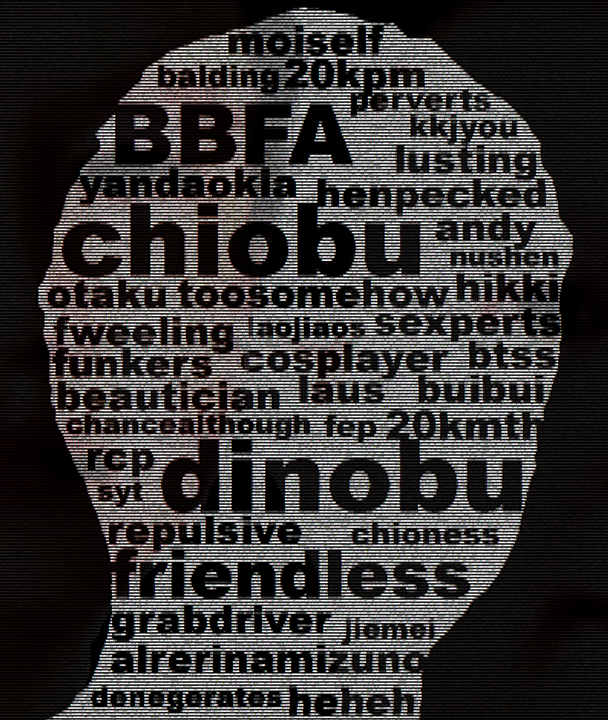
Unsurprising, but still striking, is the hyper-fixation on sex and social alienation (similar to incels). A list of the most interesting terms from the textual analysis is presented below.
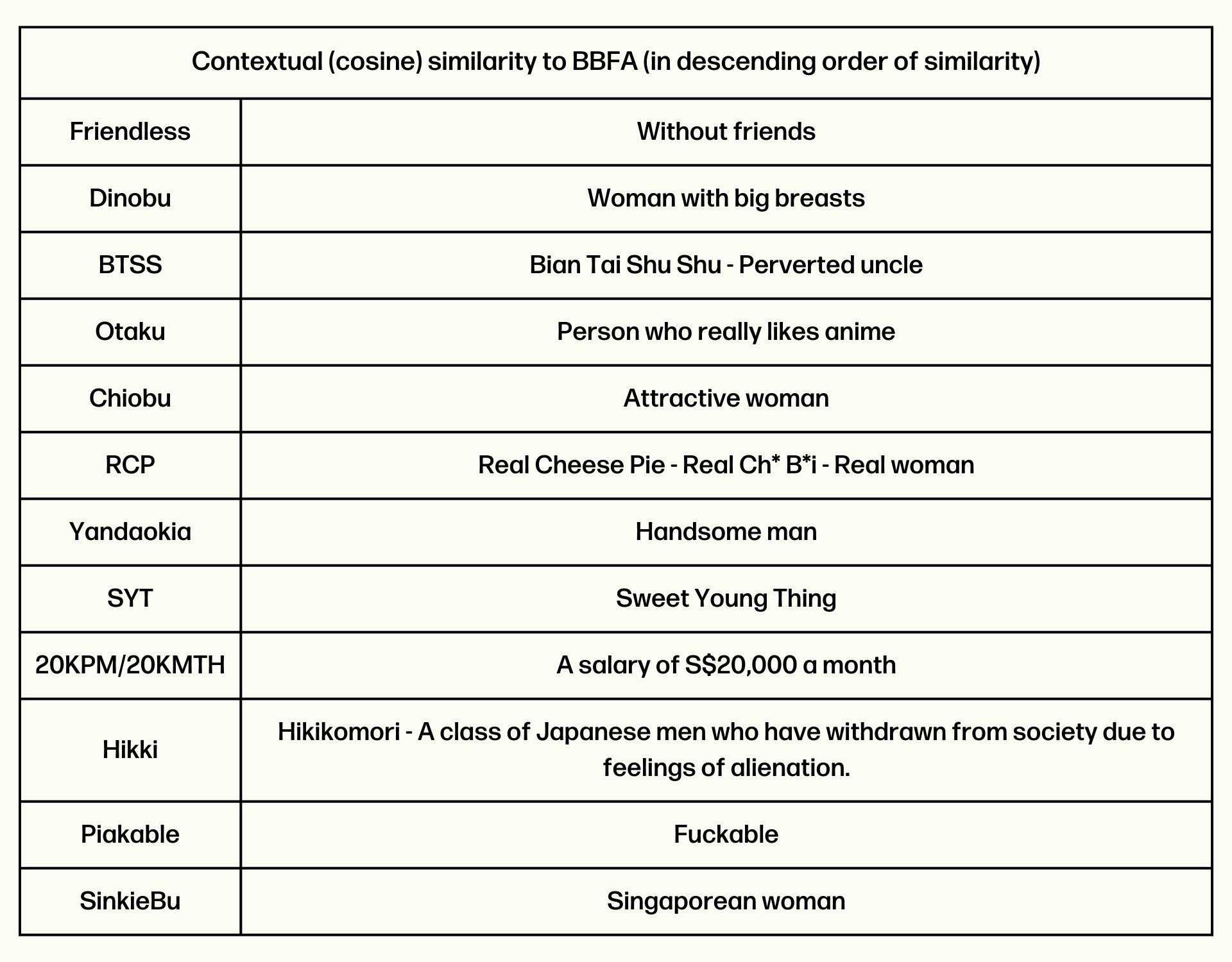
BBFA discourse fixates heavily on the physical traits of “piakable” women. A typical post consists of users uploading pictures of, and deciding whether a woman is “piakable”, accompanied by self-identified BBFAs concluding that the said woman isn't attractive enough for them to entertain the idea of sex. Alternatively, users upload pictures of women they deem “unpiakable”, before remarking that they might still be good enough for desperate BBFAs.


‘Piakable’ and ‘unpiakable’ mirror incel conceptions of desirability. “By talking about ‘fuckability’ and ‘unfuckability’ I am not speaking about some pre-political, innate desirability. I am talking about desirability as constructed by our sexual politics, which enforces a racialised hierarchy,” says Srinivasan. “Fuckability…is precisely a product of the ‘differences in how society rewards you for fucking blondes v black women.’”
Similarly, BBFAs also place themselves and the women they desire on a hierarchy based on physical traits. For example, “SYTs” for their age and “dinobus” for their figure. However, the physical act of sex can’t be the only thing BBFAs desire. If it were, they would deal with their repression by visiting sex workers (Singapore has legal brothels). Yet, words relevant to sex work don’t appear in the collection of most similar terms. Instead, discourse seems to be fixated on what sex represents, as a marker of status and a form of social capital, the result perhaps of how society rewards men for having sex with certain types of women. Sex workers couldn’t offer the same social power that BBFAs crave.
In line with these observations, sayings like “20kmonthly, laus and yandaokia” crop up when BBFAs are mentioned, emphasising that women are only drawn to handsome and wealthy men. This provides a form of self-defence, allowing them to criticise the women who don’t sleep with them as being materialistic and superficial. Such a defence reinforces the fact that they don’t possess the required status, and can lead to more frustration.

According to fellow EDMWers, the most common diagnosis for this malaise is that BBFAs set unfairly high beauty standards for potential partners, excluding most of the available dating pool. Such a convenient explanation is probably specious.
Instead, the presence of BBFAs suggests that there may exist, at least in the minds of certain individuals, a heavily marketised, sexual environment where spoils are distributed unfairly. One crucial feature of this hierarchy is that its levels are not explicitly defined, and neither are individuals’ positions within it. This makes one’s position contingent on the constant interpretation of current norms and assessment of themselves in relation to these standards.
As individuals with low self-esteem and a strong internalisation of this hierarchy, BBFAs interpret their lack of intimate relationships as evidence of them inhabiting the lowest rung of the ladder. They then segregate themselves from everyone, resulting in an acute sense of alienation. This can be seen in the frequent use of words like “degenerate”, “friendless” and “hikki”. These twin forces of unrequited desire and alienation may push them further into the recesses of HardwareZone forums.

But, unlike what’s been often observed with incels, the textual analysis of BBFA posts showed no evidence of violent rhetoric. This separates BBFAs from their Western counterparts, who frequently advocate for the physical harassment and assault of women. Incel forums are filled with calls for women to be raped, which are then disclaimed as jokes.
One possible reason for this lack of violence could be Singapore’s harsh penal codes and strong surveillance apparatus, which act as deterrents. Overall, how prevalent is such rhetoric within the larger discursive space of HardwareZone? A computational analysis can help answer this question, by converting each word in the database into a set of coordinates to create a content map containing every term used on EDMW. The distances between words that are used in similar contexts are then minimised. Words that are used in a consistently similar context are grouped closer together, while those used commonly throughout most posts are grouped closer to the centre.
The resultant graph reveals that BBFA-related rhetoric occupies a small and localised space along the fringes of EDMW’s broader discursive landscape.
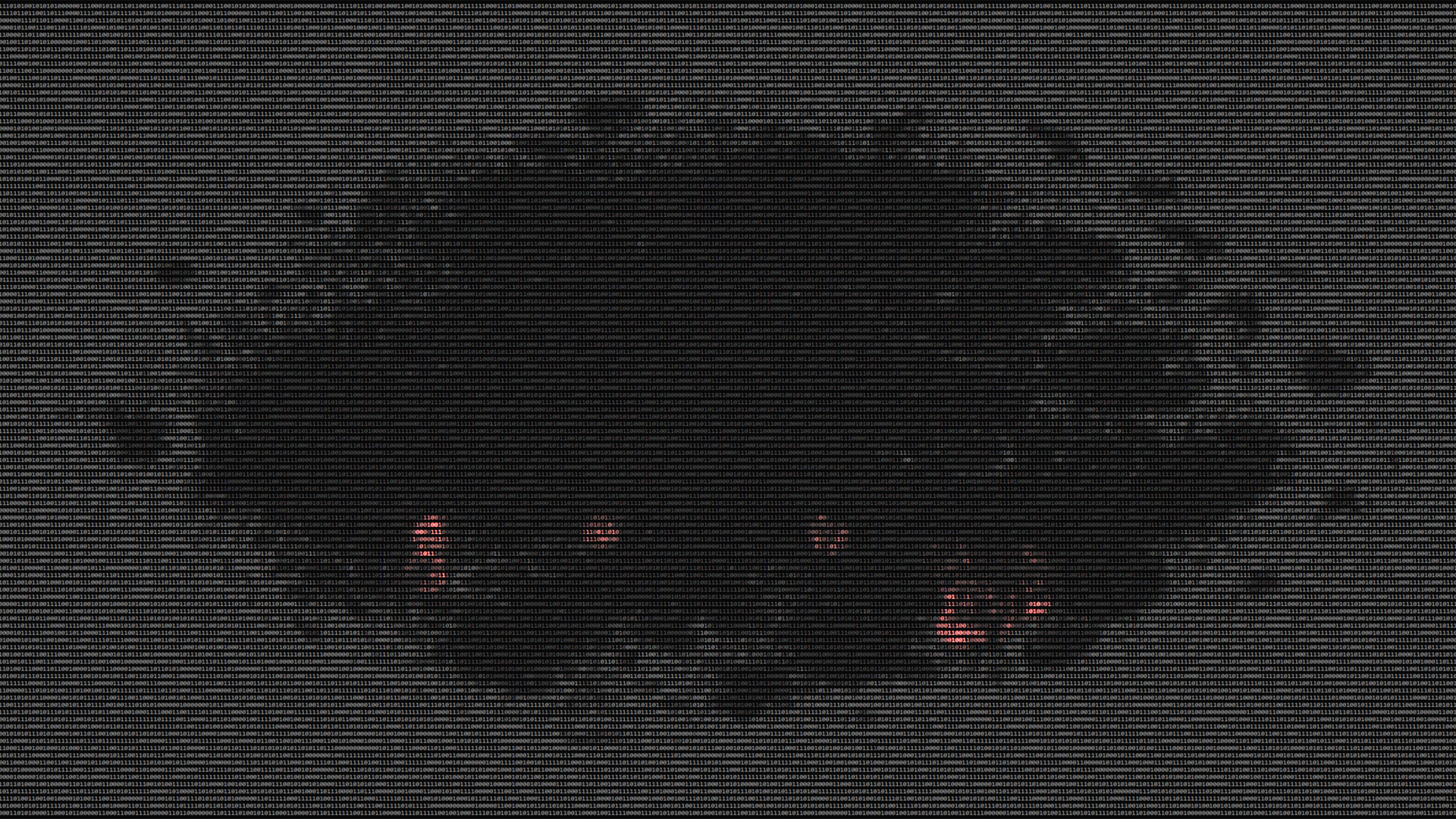
Although they are part of the EDMW community, their topics of conversation don't dominate the site. This is unlike most incel forums that tend to be engulfed by discussions around sex and loneliness. While BBFAs might feel isolated from the wider society like incels, they are, whether they recognise it or not, part of the wider community of EDMWers.
This relationship manifests in unexpected ways: BBFAs are at once defended and bashed by the EDMW community at large. It's possible that BBFAs find themselves in this position because they are a conduit for EDMWers’ own sexual frustrations. As seen in earlier examples, when EDMWers talk about women they commonly deflect their own sexual anxieties by highlighting how poorly BBFAs fare in the sexual marketplace. In one post obsessing over an attractive K-pop singer, EDMWers called out BBFAs for being pathetic by devoting themselves to the musician despite not having a chance at a sexual relationship with her.
Countless examples like this demonstrate how BBFAs end up being a crutch for other members of the community, creating a warped version of a social support network.
Nevertheless, two salient results from the computational analysis suggest that the BBFA phenomenon in Singapore is a much milder version of incels in the West. Firstly, there's an absence of violent rhetoric. And secondly, a relative insignificance of BBFA-related rhetoric in the broader EDMW universe.
In conclusion, here are some postulations about the dynamics around BBFA behaviour.
That BBFAs find solace in EDMW indicates how stifled and immature contemporary conversations about sex and desire are in Singapore. An insistence that conversations about intimate relationships are confined to the home aims to provide families with the freedom to decide when and how to have these discussions. In reality, most people don’t broach the topic, leaving individuals to figure things out themselves. It’s inevitable that some will find themselves wandering into the arms of online communities that provide the space to air their grievances, but have a skewed view of intimacy.
While some of these complaints may contain trenchant observations about modern society, they are ultimately shaped by and subject to the EDMW community’s reactionary discourse. This creates a feedback loop that perpetuates cathartic but unhealthy discussions, which sort, sift, and distinguish between “piakable” and “unpiakable” bodies. And these constructs elaborate fantasies as a form of erotic capital for like-minded individuals to use, while horrifying opponents. Those who are truly seeking a sense of community are denied a space to talk about their feelings in a healthy manner, but might not have other avenues to do so.
In a hyper-competitive culture that encourages people to keep striving for more, failure can result in a profound sense of dislocation. BBFAs embody this phenomenon perfectly, chastising themselves whilst serving as a punching bag for other EDMWers. And even though these discussions are neither as violent nor insular as those involving incels, this endless cycle of derision and self-pity precludes the emergence of a healthier alternative.
Thiyaghessan Poongundranar is a graduate student in Computational Social Science at the University of Chicago. His research focuses on the social networks in online subcommunities and between content creators. His computational analysis and written work here was supported by UChicagoGRAD’s Graduate Global Impact Pitch Your Own Internship Program. Jom is grateful to the university for supporting Thiya’s internship with us.
The analysis was conducted using a gensim word2vec model trained on a corpus of pre-processed forum posts. The cosine similarity score was retrieved for the words with the highest similarity. Most of the work was spent scraping and cleaning the text from forum posts. Dimension reduction for visualisation was performed using t-SNE. All visualisations were created using ggplot2.