

Dear Jomrade,
Today we’ve published:
- “Singapore This Week”, by Jom
- “Chinese with a Singaporean passport: stories of young migrant women”, by Shen Chenzi
“Are you going to write about ministerial salaries?” a friend asked over dinner last night. It was in the news after a former politician trotted out the argument that talented people need astronomical wages in order to enter public service.
Same old story, I replied. Sure, some might want us, as an independent media channel, to lend our voice to that cacophony. But that’s not Jom’s main value add to discourse in Singapore. It’s more important for us to interrogate issues we believe are under-reported or inadequately discussed.
Last Sunday was the fifth birthday party of the End FGC [Female Genital Cutting] Singapore movement. It’s a practice that few here know about, even my more progressive female friends. We felt that story should lead our coverage in “Singapore This Week”.
That’s not to imply that we’ll ignore headline news. Last week, to the government’s credit, it published an improved measure of income inequality and, for the first time ever (hooray), a measure of wealth inequality. We examine the statistical progress, as well as the methodological issues and gaps that remain, in our second story.
What we’ve also started doing, you may have noticed, is just giving you a quick summary, with hyperlinks, of all the other important news stories this week—yes, including that book launch that sparked that discussion. In this way, we hope that this newsletter serves as a proper end-of-week roundup for you. Forward it to a friend who might appreciate it, and get them to sign up too.
And if you appreciate our approach to journalism, join the 2,000 odd paying members now to get access to all our content, starting from just S$10 a month. It’s the only way we can keep doing this.
- Progress to be cheered, but still work to be done, to end female genital cutting in Singapore
- A clearer, if still imperfect, picture of inequality in Singapore
- Are the Thai election results a reflection of its unique democracy or part of a broader Asian trend?
- Why has the government blocked 47 football pirate sites?
- Are Singaporeans ditching dating apps for traditional, in-person meets?
Above are the issues we chose to explore in more depth.
Other news this week included: a roundup of Budget 2026; the tragedy of a six-year-old Indonesian girl killed by a seemingly reckless driver who’s now under investigation; publication of Policy, Fairness and Compassion, a collection of speeches by K Shanmugam, home affairs minister; debates about Shanmugam’s financial “sacrifice” when leaving legal practice for public service; a student-led survey that found that one in three employers do not regularly provide rest days for their foreign domestic workers; an Iranian TikToker’s comment about this “toxic city” sparks a debate about Singapore’s social norms and work culture; and our fab disease-fighting scientists have just published an article, “Dengue Suppression by Male Wolbachia-Infected Mosquitoes”, in The New England Journal of Medicine.
“Chinese with a Singaporean passport: stories of young migrant women”, by Shen Chenzi
What is life like for the talented young Chinese students who win bursaries or scholarships to study in Singapore? Not easy at all, as Chenzi, a recent graduate from NUS, explains today in her absorbing, and oftentimes harrowing, exploration of the lives of three young women, herself included.
It’s a unique demographic. Young women from China, as Chenzi told me, represent one of the largest and most significant groups targeted by Singapore’s talent-driven immigration strategy. They are also the “SG60 generation,” coming of age in a vastly different context than immigrants before. Their journeys are shaped by today’s tightening immigration policies, a precarious post-pandemic job market, and escalating geopolitical tensions.
Each of them is now at a different stage of their citizenship journey: one a new citizen, another a PR, and Chenzi herself still a Chinese citizen. In the week of Chinese New Year, we felt it’s an appropriate time to uncover the latest manifestation of an age-old journey that has led to a Chinese-majority country in the middle of the Malay world. I’ll leave you with a few paragraphs from her intro:
“I thought about my own second semester—just months earlier—when I couldn’t get out of bed, when I sat in the lounge until 2am staring at problem sets I couldn’t solve, when my brain had stopped working the way it used to.
I hadn’t told anyone about that. I thought it was my personal failure, my weakness. But sitting across from Elena, I realised: maybe it wasn’t just me. ‘This is normal,’ I reassured her, again and again.
Those words gave her, perhaps for the first time, a sense of acceptance rather than judgement—and marked the beginning of our friendship. Over the next two years, Elena and I spent countless nights together, sometimes studying, often just talking. When we both struggled with insomnia, we’d squeeze onto one of the narrow dorm beds, holding hands in the dark, keeping each other company until sleep finally came. We’d sit on the stairwell until 3 or 4 AM, talking about everything and nothing. I wonder if this is what previous generations of migrant Chinese female students also did here.”
Jom naik kuda api,
Sudhir Vadaketh, editor-in-chief
Jom
p.s. sorry for the mouthful of a sign-off. My cack-handed way of saying “Happy Year of the Fire Horse”.
Behind Jom’s art

Our longtime collaborator, Ngiam Li Yi, brings her gentle palette back for this story on the precariousness of life as a Chinese scholar in Singapore. The header illustration details everyday elements in a typical rented bedroom, offering us an intimate view of a transient life here, both comforting and mundane. Her dreamlike spot brings together elements of both the Singaporean and Chinese flag, as the students steady themselves, staring at an uncertain future tinged with hope.
Jom on Gen Z anxiety
 Jean Hew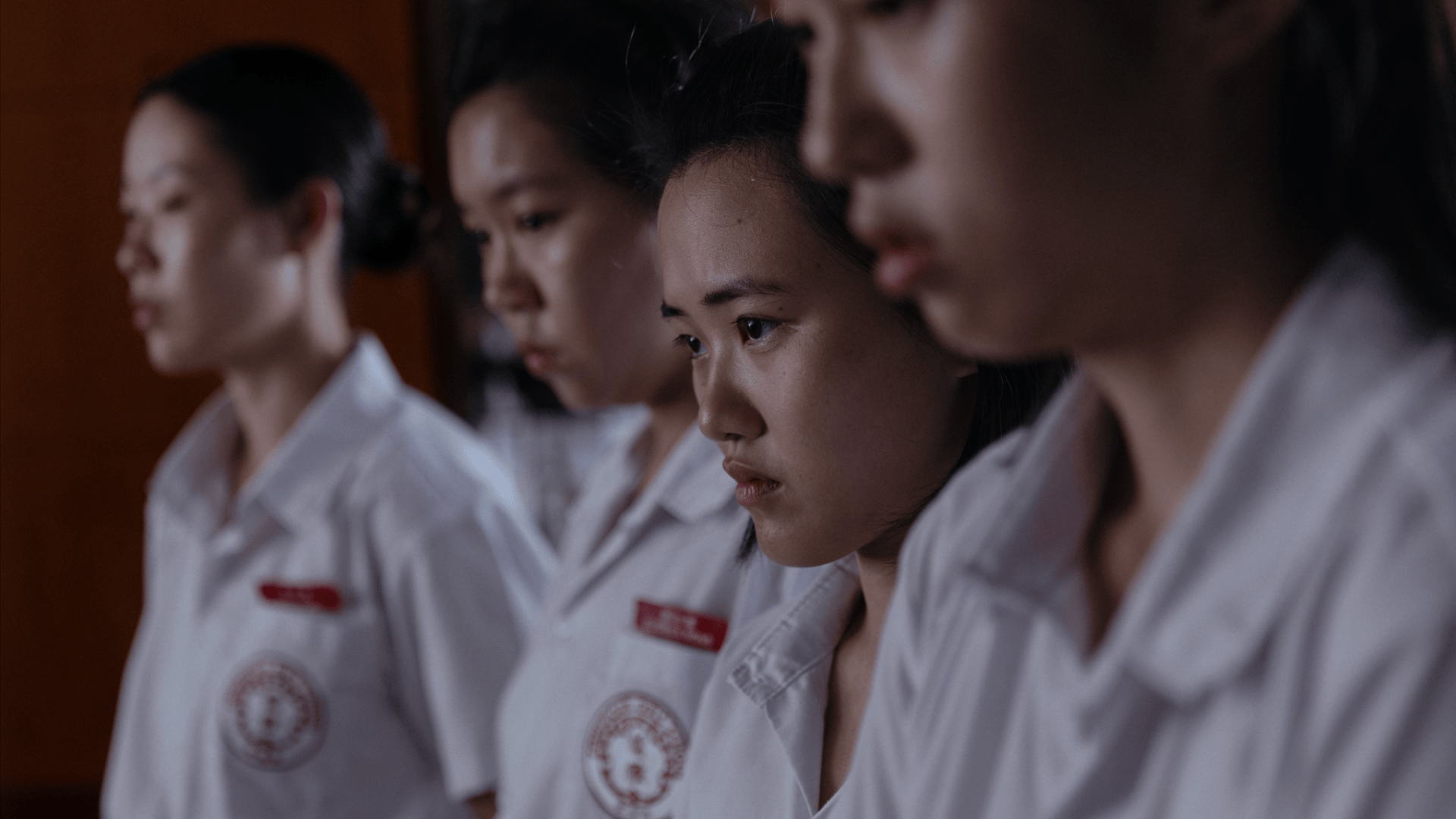
 Aryan Pershad
 Toh Ee Ming
 Corrie Tan
Singapore This Week
Sport: On the high seas

In 2013, the Media Development Authority (MDA) told Singtel to share its English Premier League broadcasting rights with Starhub so fans would not be forced to switch service providers. Singtel had paid an undisclosed sum rumoured to be around S$245m for the right to beam premier league matches in football-crazy Singapore for three years. Big money, but Singtel was still a new entrant to the football broadcasting market—having broken Starhub’s decade-long dominance only in 2010—and its plan was to entice consumers with initially subsidised prices before, presumably, hiking them. MDA’s order was meant to widen public access, which it did in a manner of speaking, but it also pushed Singtel into increasing the price of its standalone EPL package from S$34.90 in 2012-13 to S$59.90 per month the next season. Per MDA, Starhub had to offer the same prices. Singapore became one of the world’s priciest places to watch the EPL.
By then, it was also one of the most well-connected countries in the world. The first generation of digital natives and quasi-natives was coming of age; raised on a diet of high-speed broadband; used to watching what they wanted, when they wanted; and in an ambivalent relationship with paid content anyway (content piracy was quite widespread already). These priced-out youth (and undoubtedly some savvy older folks) gorged on their favoured matches and players via the “dark arts”: User-Generated Content (UGC) sites; VPNs, P2P networks. Online forums and message boards, 21st-century speakeasies with their own language and sub-cultures, buzzed with activity before big games as users shared info on how best to watch them. Singapore, and much of South-east Asia, became a hub of illicit activity with 60 percent of respondents in one contemporary local survey admitting to watching pirated content—among the highest in the world.
Alarmed, the Premier League in 2019 set up its first overseas office, in Tanjong Pagar, with the mandate of fighting piracy. “[I]t is critical that we now deploy local resource [sic] and expertise to combat the increasing threat of piracy which undermines all stakeholders in the creative industry,” said Paul Molnar, then the league’s director of broadcasting. Prices were already stabilising then, and today, a Starhub customer can watch premier league matches on their laptop or phone for S$40 per month (Singtel customers pay more).
MDA’s belief that its “cross-carriage” rules would benefit consumers in the long run has perhaps come true. What the agency could not have anticipated is just how culturally entrenched piracy would become. Economically too, it makes more “sense” than ever, with the spread of physical devices that stream other sports as well as movies, and TV shows for which consumers would otherwise have to subscribe to tens of OTT services. Earlier this year, a Sim Lim retailer was handed a four-month jail sentence for selling one such device; this is in addition to the 800 domains in Singapore and 30,000 sites across Asia Pacific that the courts have helped the premier league ban since 2020. In this context, the High Court’s order directing local Internet Service Providers (ISPs) to block 47 pirate sites is perhaps less a clash with digital buccaneers, more a fist-fight with the tides.
Other stuff we like
The Last Dugong Hunter. As part of her writing residency on Cempedak island, Pamela Ng profiles the last person in Riau to hunt the famed dugong, "sometimes referred to as perempuan laut—“woman of the sea”—in Malay, or putri duyung—“princess mermaid”—in Indonesian"; and interrogates the ecological contradictions of our times.
Walking with migrant writers. Singapore-based French writer Julie Moulin chats with members of Migrant Writers of Singapore, who were featured in last week’s essay, for her literary podcast “Marcher entre les lignes” (Walking Between the Lines). In French with English subtitles.
The War on Diabetes. King’s College London lecturer Mohammad Khamsya Bin Khidzer digs beyond the medical and the epidemiological to unearth the economic rationale behind Singapore's decade-old public health campaign to combat diabetes. Why diabetes? And why then? Mohammad suggests some surprising answers.
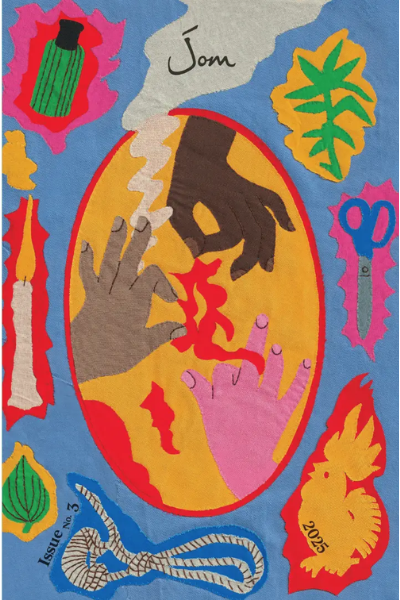
Jom print issue No.3 has just launched!
Dive into its themes of movement, mobility, and magic.
A flavour of Jom. Occasionally, Jom publishes essays outside the paywall. These are on issues we think are in the public interest, and deserve a wider airing. In the past two years, we have published nearly 50 such pieces. Read some of these if you’d like to see samples of our work. We hope they’ll convince you to subscribe. And even if you’re here with no intention of doing so, we hope you’ll enjoy these offerings and consider it time well spent!