

Dear Jomrade,
Today we’ve published:
- “Singapore This Week”, by Jom
- “The past and future of Singapore’s foreign policy”, by Abhishek Mehrotra
Jomfest. Many of you have attended our Jom events, including one with The Economist’s Sue-Lin Wong, another with Yale historian Sunil Amrith, as well as our recent print launch. The sense of community is palpable, though our time together often feels rushed. What if we had a half-day event, with a keynote speaker and a few panels, and lots of time in between to just hang with others in our Jommunity?
That’s what we’ve been slowly building to. It may happen this year if the stars align. Or not. Regardless, it will happen one day, and ahead of that, we’d love to know which speakers you’d like to see at such a Jomfest. Fill out this form to let us know.
“Singapore This Week”. This is our most popular product, an end-of-week staple for many of you, and this is one of those weeks when I just feel so energised by the diversity of stories and literary styles. There’s Abhishek’s description of sociologist Vincent Chua’s star turn at IPS’s Singapore Perspectives; Saki’s probing about the plague of elderly people dying alone; Faris’s mourning about a Kampong Gelam that’s become more Kampong Glam; and Corrie’s portrayal of yeule’s performance on NPR’s Tiny Desk. Hope you enjoy it as much as I did.
- Sociologist Vincent Chua scrutinises “competition” in Singapore at IPS’s annual Singapore Perspectives conference
- Did the PAP newbies win over the wonks at the aforementioned pow-wow?
- What can we do about all our seniors who’re dying alone?
- Jamus Lim questions GIC’s and Temasek’s performance—but can’t do so in The Business Times
- Kampong Gelam, and the sensibilities of a moral versus predatory economy
- yeule, Singaporean artist, performs on NPR’s Tiny Desk
- “Sandcastles”, a new documentary, and what we can learn from the Singapore in Michigan
Above are the issues we chose to explore in depth. Other news this week included: an editorial by The Straits Times (thank you) calling for the Leader of the Opposition appointment rules to be formalised; a worrying trend of property agents putting up fake listings to lure buyers; illegal adoptive babies being smuggled from Indonesia; more young adults being diagnosed with cancer; HOME reiterating concerns over predatory recruitment practices trapping migrant workers in debt; Anthony Chen’s “We Are All Strangers”, the first Singaporean film to compete for the Berlinale’s Golden Bear; and Ratna Damayanti Taha, Epigram Book Prize winner.
Join the over 2,000 paying members now to get access to all our content, starting from just S$10 a month.
“The past and future of Singapore’s foreign policy”, by Abhishek Mehrotra
We’ve written about specific foreign policy issues, from Iraq and Gaza to Myanmar, as well as specific national security ones, but never before have we attempted a commentary that tries to distill for the reader all the important contemporary talking points. Given the dramatic changes in the global order, we felt the time was right. Kudos to Abhishek, our head of content and presumptive next editor-in-chief, for spending a few months thinking about the issue.
What would a Jom editorial on foreign affairs look like? Surely we’re still finding our collective voice. But one conceptual thing that was important to us was the need to platform younger experts more attuned to current scholarship. The people who dominate foreign policy discourse, for better or worse, tend to be those whose experiences were forged in the middle of the last century.
When new diplomats arrive in Singapore, and ask whose views they should seek, I often point to Ja Ian Chong, an associate professor of political science at NUS. Chong appears regularly in the media now, including this past week in a BBC piece about the purged Chinese general. So Chong’s thoughts feature quite prominently in today’s piece. And I love the way Abhishek has woven them into a narrative befitting Jom’s literary style. He opens:
“‘From its founding, the city had to defend itself against attack, and balance carefully its relations with big neighbors like Java and Siam,’ wrote the late John Miksic about 14th century Singapore’s foreign policy. More than half a millennium later, Lee Kuan Yew, S Rajaratnam, and Toh Chin Chye, key first generation (1G) leaders of the People’s Action Party (PAP), articulated something similar: ‘opportunistic non-alignment’. Non-aligned because Singapore would steer clear of cold war rivalries; opportunistic in that it would wring economic benefit from both sides whenever possible. And so, even as it became a workshop for American ships and the playground for American sailors during the Vietnam war, it also made commercial deals with merchant ships servicing the Soviet Pacific fleet.
Another half century on, there are imprints of this opportunistic non-alignment across the foreign policy of a new administration led by Lawrence Wong and his ‘4G’ comrades. None clearer than Singapore’s contradictory approach towards the genocide in Gaza. Even as it publicly condemns Israeli aggression, sends aid to Palestinians, and funds the education here of bright Palestinians, it fetes and enables Israeli arms manufacturers and Zionists, and helps supply the weapon parts crucial to the devastation.
But it’s not business as usual. Unlike his predecessors, Wong has to contend with a wholly new international environment: everything from the ‘rupture’ in the global order, in the words of Canada’s Mark Carney at Davos last week, to an irrepressible desire by ordinary Singaporeans to have more of a say in this city-state’s foreign affairs—armed with new technology to pressure an hitherto aloof and impenetrable elite. What are the forces that might govern his actions?”
Jom fikir,
Sudhir Vadaketh, editor-in-chief
Jom
Jom on Singapore beyond our borders
 Iskandar Manis
 John Lee
 Jom
Jom
 Jom
Jom
Singapore This Week
History weekly with Faris Joraimi
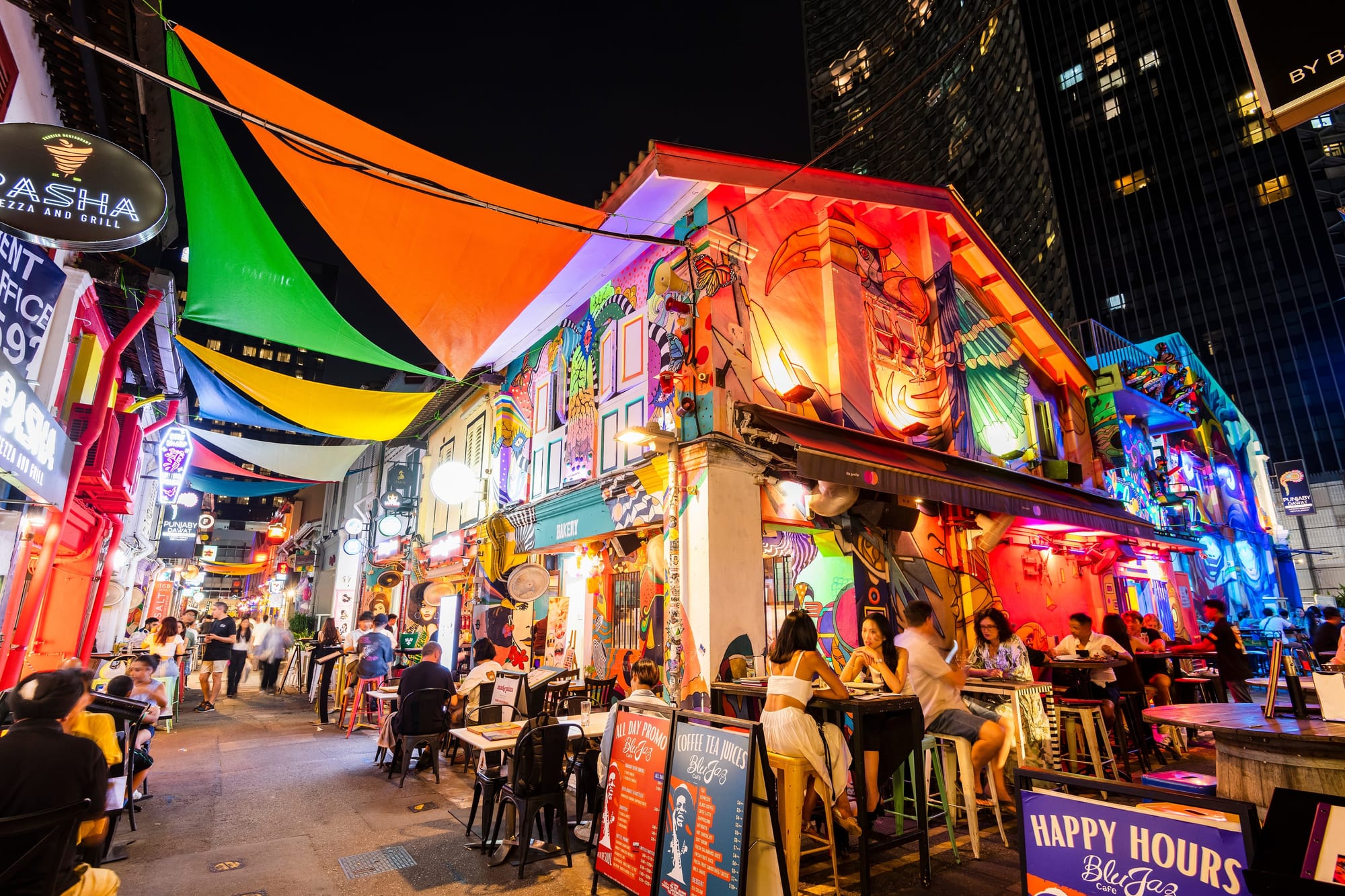
A recent CNA investigative report recently covered soaring commercial rents in Kampong Gelam, causing disquiet among long-term tenants and members of the public about the area’s changing character. The narrow and picturesque Haji Lane, clouded by shisha fumes in the 2010s, has given way to novelty- and tourist-oriented shops. Ice-cream and boutiques aside: stores selling Labubu and blindbox merch? Korean-style self-photobooths? Why are people paying to take pictures of themselves in studios made to look like aeroplane cabins, when you already have the quaint century-old shophouse architecture of Kampong Gelam all around you?
Yet money is spent, and the landlords get richer. There’s been a 25 percent increase in rent here between 2023-2025, which is five times that of Little India and Chinatown in the same period. (Some tenants said rent even doubled over the past year.) Prime location and heavy tourist footfall are driving this, said CNA. But that’s against the backdrop of a freewheeling commercial property market. It’s easy to exploit: a “serial subletter” can monitor leases as they near expiry, bid above existing rates, then rent the units out again at higher rates. The overall rent climbs, as existing tenants struggle to cope. Bigger fish have the appetite to match: as many as four souvenir shops on Haji Lane are run by a single owner. An influx of foreign enterprises stokes concern about the dilution of Kampong Gelam’s culture and heritage.
These anxieties aren’t new. Lifelong resident Faizah Jamal, a former nominated MP, organises walks of Kampong Gelam to resist shallow misconceptions about her neighbourhood. Her serial Facebook posts lament the kitsch, while documenting places that still feel familiar. Urban historian Imran Bin Tajudeen has criticised the area’s redesign and branding by the Singapore Tourism Board (STB) into a postcard scene from the Arabian Nights, despite its vital connections to the Malay-Indonesian world and Islamic societies across the globe.
Arguably, Kampong Gelam has been “changing” since 1824 when Sultan Hussein set up his royal town at the confluence of the Rochor and Kallang rivers. A Muslim community sedimented over it gradually, across generations, creating an economy oriented around the mosques, the annual hajj, and seasonal trade with the Archipelago. But a deeper shift began when the STB made it a cultural attraction in the 1980s. A different kind of experience economy grew, selling “heritage” and vintage vibes. But a lot of the old trades are still around—Arab textile merchants, Minangkabau eating-houses, and Tamil hajj-suppliers. They’re part of the retail and service economy that’s always been the “culture” of Kampong Gelam too. The faithful still come to pray, and patronise these businesses. It’s never been a conflict between commerce and culture, but between a moral economy that serves and sustains a community over time, versus a predatory economy of profit without regard for ongoing traditions and relationships that made the space it’s in. The “Kampong Gelam Alliance” mediates between landlords and tenants, and organises happenings to increase footfall. But without a reform of the current regime that can empower tenants and patrons, we’ll only live and breathe what the landlord sells: even if it’s junk.
Other stuff we like
Locating mangroves through the archives. What is our relationship with the mangroves that line our coasts? ila, multidisciplinary artist and National Library Creative Resident, draws from months of site visits, maps, oral history interviews and research papers to trace the intertwining of mangrove and human life in Singapore. Sign up for her presentation on Feb 11th and find out how we can better care for our mangroves.
Garin Nugroho’s “Samsara”. This sweeping silent epic, set in 1930s Bali, is now streaming on Netflix. The award-winning Indonesian arthouse romance was commissioned by the Esplanade and premiered there in 2024, where it was screened with live music.
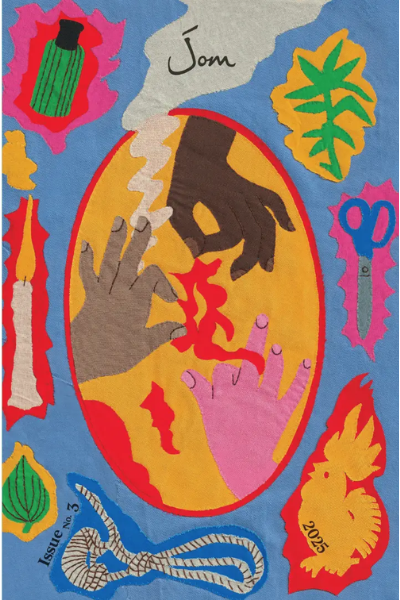
Jom print issue No.3 has just launched!
Dive into its themes of movement, mobility, and magic.
A flavour of Jom. Occasionally, Jom publishes essays outside the paywall. These are on issues we think are in the public interest, and deserve a wider airing. In the past two years, we have published nearly 50 such pieces. Read some of these if you’d like to see samples of our work. We hope they’ll convince you to subscribe. And even if you’re here with no intention of doing so, we hope you’ll enjoy these offerings and consider it time well spent!