
Just 10 minutes away from the grey blocks that make up the Ministry of National Development in Singapore sits an architectural treasure: the Nanyang Hakka Federation located on 20 Peck Seah Street. The building’s quiet facade and current mixed usage as an office building belies its historical significance—the land it sits on was once the gravesite of Singapore’s earliest Chinese settlers. Since the Federation’s founding in 1929, it has served as a community centre for the country’s powerful and well-connected Hakka community. Lee Kuan Yew was perhaps the country’s most prominent Hakka, while the Federation’s first chairman was the “Tiger of Nanyang” Aw Boon Haw, the Chinese tycoon who founded Tiger Balm.
Enter the banquet hall near the entrance of the building and the air of stealth wealth becomes apparent, with the ceilings adorned by golden-framed portraits of Hakka elders staring down at you. In a silent nod to the community’s roots in global trade, the building’s five floors are occupied by shipping companies and others offering anodyne-sounding corporate services, such as auditing, management consulting, and the “wholesale trade of goods without a dominant product”. The last is what Asia Trading and Construction Private Limited purports to do, and this is where lies the darker reality behind the glass-panelled doors of the Nanyang Hakka Federation.
The US has accused Asia Trading of fuelling the Kremlin’s war in Ukraine by being a front for a clandestine arms dealing network linked to the Russian defence industry. According to the Treasury’s sanctions enforcement unit, Asia Trading and its Singaporean director, Serena Ng Bee Lin, had conspired to sell Russian military helicopters to an unspecified Latin American government on behalf of the sanctioned state-owned defence company Rostec, ultimately contributing to the Kremlin’s war chest. This transnational web of weapons dealers, shell companies and faceless middlemen designed to evade Western sanctions was dubbed the “Zimenkov network”, named after its alleged leader Igor Vladimirovich Zimenkov, a Russian-Cypriot dual national and his son Jonatan.
Not much is known about Ng, apart from that fact that she’s in her sixties and her name is listed as a donor and supporter of the Singapore Council of Women’s Organisations, a prominent umbrella network of local feminist groups. Local corporate registry records also list the address of Five Star Resort, the former name of Asia Trading, to a semi-detached house in the affluent neighbourhood of Holland Grove. The trail goes cold there.
Similarly, we know little about another Singaporean, 64-year-old Kwek Kee Seng. Last November, the US State Department announced a US$5m (S$6.8m) bounty for information about Kwek and his activities in North Korea. According to the FBI, Kwek has been accused of international money laundering and enabling the regime’s nuclear proliferation programme by smuggling oil to the country through his shipping and terminal operations company Swanseas Port Services Pte Ltd, since early 2019. The regime is known for diverting the impoverished nation’s public purse towards its weapons development programme. Recent reports indicate how smuggling has accelerated its missile development, with the North Korean government now preparing to launch a military spy satellite weeks after firing more than 80 missiles, including a new intercontinental ballistic warhead.
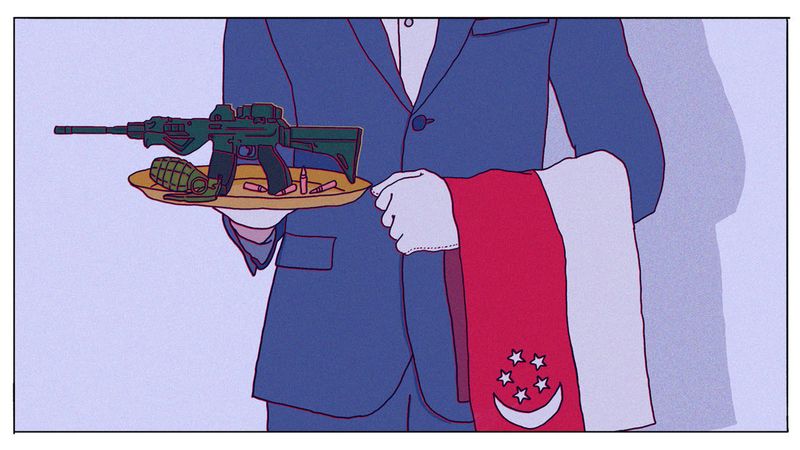
Kwek and Ng join a growing list of Singaporeans either sanctioned, wanted, or extradited to the US to face justice for smuggling everything from perfumes to bomb parts to dictatorships as far flung as Russia and North Korea, or conflict zones closer to home, such as Myanmar. Despite our government’s efforts to combat money laundering, terrorism financing and proliferation financing—a stated goal of the Monetary Authority of Singapore (MAS)—it would appear like many criminals still choose to operate from here.
If so, our open ports and capital markets are being abused to facilitate conflicts and wars around the world. It should be an issue of grave concern to all Singaporeans.
Local involvement in the global arms trade has a long history. During the Iraq war, components of explosives used on the battlefield were linked to a man called Lim Yong Nam, who was eventually extradited to the US to face charges. Around the same period another Singaporean businessman, Balldev Naidu, was also handed over to the US for attempting to buy weapons on behalf of the Liberation Tigers of Tamil Eelam, a militant separatist group that was based in northeastern Sri Lanka and proscribed as a terrorist organisation at the time. This tradition of Singapore being used as a hub for funnelling weapons and cash to conflict zones goes even further back to the early 1900s, when overseas Chinese rallied to support the Nationalist resistance back home.
In the post-war years, South-east Asia saw a generation-defining era of autocrats and strongmen. Two of them, Myanmar’s General Ne Win and Lee Kuan Yew, were friends and golf buddies. Despite Lee’s subsequent reservations about the Burmese junta, the generals and other members of the elite have long been welcome here. Today, relations between the two countries remain solid against a backdrop of widespread international isolation and a litany of evidence relating to massacres, ethnic cleansing, and other war crimes committed by the junta. Singapore has consistently accounted for the largest share of foreign direct investment (FDI) into Myanmar. Following the coup in February 2021, many investors shied away from the country. Not Singaporean firms. From October 2021 to March 2022, Singapore was by far the top source of FDI into Myanmar, with US$297m (S$404m) approved by the junta, more than double from China, the second-biggest investor. Meanwhile, cronies of the regime have properties in Sentosa Cove and access to local bank accounts.
Singapore is also Myanmar’s second-largest trading partner in the region, after Thailand, with bilateral trade worth some S$5.8bn in 2022 alone. In January this year, a group of former UN officials and international law experts from the Special Advisory Council for Myanmar published “Fatal Business: Supplying the Myanmar Military’s Weapon Production”, which offered a window into the bloody and often underreported side of these trade figures. Several Singaporean companies were listed as key suppliers to the junta’s arsenal used to conduct “summary executions, massacres and other human rights atrocities” in response to the popular uprising sparked by the military’s coup, two years ago. A small arms manufacturing plant, which was apparently built and transferred to Yangon by state-owned Chartered Industries of Singapore (now ST Kinetics) in 1998, is also still of seeming importance to the junta. “Singapore functions as a strategic transit point for potentially significant volumes of items—including certain raw materials—that feed the Myanmar military’s weapon production,” the report said. “Companies domiciled in Singapore have been identified as brokering deals and exporting items to the DDI [the Ministry of Defence Directorate of Defence Industries, the main state-owned weapons producer] or to associated civilian front companies for the military in Myanmar.”
Then in May this year, Tom Andrews, the UN Special Rapporteur for Myanmar, released a bombshell 56-page report, “The Billion Dollar Death Trade: The International Arms Networks that Enable Human Rights Violations in Myanmar”. It alleged that US$254m (S$346m) worth of arms, raw materials and manufacturing equipment were shipped from Singapore to “the Myanmar military and Myanmar-based military suppliers” from February 2021, when the coup occurred, to December 2022. Some of the arms listed include “components for MiG-29 fighter jets” and “spare parts for K-8W trainer and light attack aircraft.” This involved not just companies exporting equipment, but local banks that provided services to arms traffickers based in Singapore and beyond. “If the Singapore government stopped all facilitation and shipment of arms to the Myanmar military from its jurisdiction, the impact on the junta’s ability to manufacture arms that it is using to commit its war crimes would be significantly disrupted,” Andrews said in the report’s accompanying summary document.
Despite Singapore being behind Russia and China in the total dollar value of these transactions, it had the highest number of business entities accused of facilitating weapons and related material sales to the junta: 138, almost triple the number of companies in China and Russia combined. The Special Rapporteur’s office said that it informed the Singapore government of these details in March 2023. It has thus far held back on releasing specific details on these local companies—“in order to allow time for the Singapore government and other UN Member States to take action against these entities”—but the scale of these business activities points to the potentially dangerous side of Singapore’s business-friendly policies.
In July, in response to parliamentary questions on the report, Vivian Balakrishnan, minister for foreign affairs, offered an “interim update”. He said, among other things, that of the 138, nine are no longer registered in Singapore; that it’s still unclear what exactly constituted the “arms” that were allegedly shipped through Singapore-based entities to the Myanmar military; that the Singapore government itself has not conducted military sales to the Myanmar military in recent years; and also that it has no desire to block legitimate trade with Myanmar.
Of the 138, 47 were on an initial list, and 91 on a subsequent one. Balakrishnan said that “most of the 47 entities no longer have business facilities with Singapore banks.” The banks will review all other accounts and take measures, he said, to “...curtail their ability to continue with any undesirable business.”
When Balakrishnan’s final report is ready, we should have a better sense for what, if any, ‘undesirable business’ by these 138 firms was facilitated by Singaporean banks. What’s particularly worrying is that they should have known better: on February 25th 2021, just weeks after the coup, MAS reminded Singaporean financial institutions to be vigilant about illicit capital flows.
Was that directive not heeded? Was there a failure of financial regulation or compliance? Or were crooks exploiting loopholes while staying legally onside?
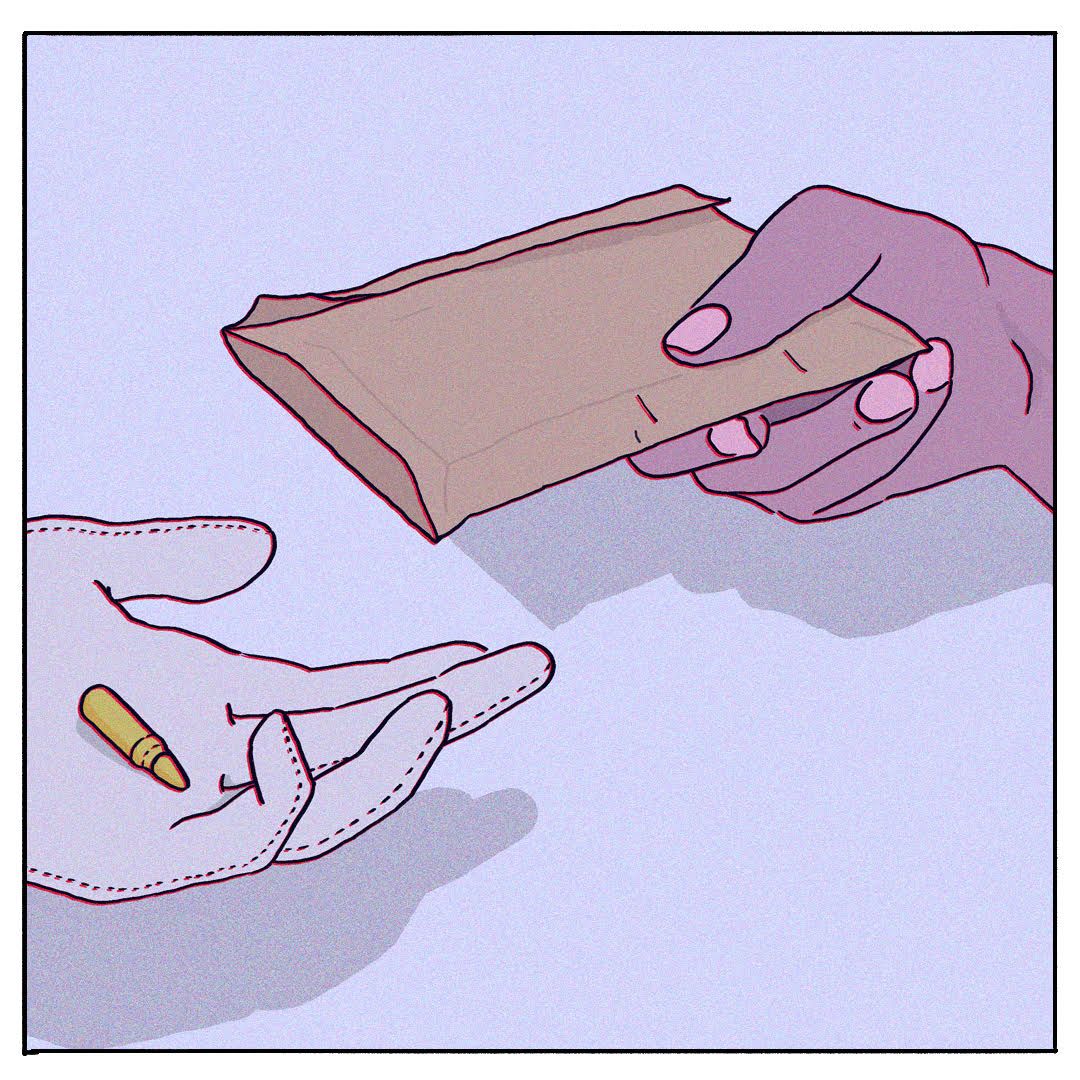
Maybe the banks’ compliance departments were doing all they could. In Spiderweb Capitalism: How Global Elites Exploit Frontier Markets, Kimberly Kay Hoang described “...a meticulous endeavour of playing in the grey, which involves exploiting the grey area between legal/illegal, developed/ undeveloped, clean/corrupt, democratic states/predatory states.”
Singapore’s business-friendly policies, including the ease of setting up a business, contribute to an intricately complex web of shell companies and opaque ownership structures alongside legitimate businesses that regulators appear to be struggling to control.
Other countries with a light-touch approach to business regulation are similarly experiencing this double-edged sword. In Britain, regulators and policymakers have only recently woken up to the consequences of the proliferation of anonymous or fraudulent shell companies on Companies House, due to government policies on making business registration as seamless as possible. Financial crime experts have estimated that billions of pounds are washed through the country’s businesses every year.
The arms trade in South-east Asia also exists in a grey zone. In theory, one would have to apply for an export licence from the Immigration and Customs Authority (ICA) to sell military or dual-use items designed for commercial applications that can be converted for war. But according to George Tan, the president of the Centre for Asia Pacific Trade Compliance and Information Security, while most countries in the Asia-Pacific have “basic legislation on arms and export controls”, the lack of any proper enforcement creates the conditions for the unregulated spread of weapons in the region. “...[E]nforcement is not that strict, so you can still see a number of illegal exports of small weapons,” he said. “In certain Asian countries, some small arms are easily available in the market, which shows that they are not well-controlled domestically.”
If the findings from the two reports are accurate, many of the transferred items would fall under this category and run afoul of multiple arms embargoes on Myanmar, and perhaps Singapore’s own prohibition of weapons sales as well. The Special Rapporteur’s report has also suggested two likely scenarios for how such massive amounts of weapons and money were able to go undetected. Either these companies obtained export permits from the ICA on internationally banned items, or these entities never applied for one but were able to ship their goods undetected to an internationally isolated regime buckling under the weight of multiple sanctions regimes.
All of these scenarios point towards a troubling conclusion: more than a hundred companies were allegedly able to facilitate US$254m (S$346m) worth of suspicious transactions to the junta in just under two years while flying under the radar of the country’s financial watchdogs.
Those looking to square the circle of Singapore’s public statements and the reality of the arms trade might find something akin to an answer in recent statements given by other diplomats at international conferences. In August last year, at the 8th Conference of State Parties to the Arms Trade Treaty (ATT) in Geneva—which Singapore has signed but has yet to implement into local law—the city-state held the position that while the illegal arms trade was a problem, each country still had the sovereign right to buy weapons to protect itself against threats to its security. “We must therefore strike a balance between fulfilling our obligations under the ATT and not impeding the legitimate international trade in conventional arms.” This position was reasserted by the second secretary of the Permanent Mission to the UN almost two months later at the annual General Assembly meeting in New York, highlighting the tension that Singapore faces when it comes to the business of war and conflict.
On the one hand, Singapore, through both carefully worded press releases and impassioned pleas for the sanctity of international law, seeks to defend the global order and play an outsized role in multilateral forums. On the other hand, Singapore seeks to keep bolstering its long-standing reputation as an open economy, including serving as a key node in global financial markets. This could mean that when rogue actors are able to exploit potential loopholes in international finance and trade, Singapore is vulnerable to receiving dirty money, while directly prolonging instability in both far flung places and in its own backyard.
Even though the Singapore government and financial institutions have claimed to be monitoring and restricting illicit flows through our city-state, it’s clear that the global elite still considers Singapore a prime destination for such activities. In 2013, Global Witness, an NGO with offices in Brussels, London and Washington DC, released “Inside Malaysia’s Shadow State”, an undercover video that exposed corruption and cronyism with land deals brokered by Taib Mahmud, then chief minister, and his family. Malaysian lawyer Alvin Chong was caught on camera admitting that many Malaysians love to wash their money in Singapore because “the Singapore government has a China Wall...a fire wall. They will not tell the Malaysian government nothing [sic].” MAS and the Ministry of Finance immediately denied this claim, saying that “...Singapore has, to date, provided fully the information requested by Malaysia for tax purposes.”
Another apparent international miscommunication emerged in the wake of the Americans placing a bounty on Kwek, the alleged merchant to Pyongyang’s barbarous regime, on Nov 3rd 2022. Two days later, the Singapore Police Force (SPF) reported that it knew of Kwek’s whereabouts. Kwek’s passport, it said, had been impounded on April 28th 2021, when an investigation into his activities commenced, and that he was (then) presently in Singapore. SPF had apparently been in touch with the Americans all along, and seemed unclear about the reasons for the bounty. (Singapore’s Ministry of Home Affairs, SPF and the US Embassy in Singapore did not return requests for comment.)
Separately, in late 2021, a US indictment charged six people and a Swiss financial institution with helping three rich Americans evade taxes on over US$60m (S$82.1m) in income and assets held overseas. “They allegedly did this through an elaborate scheme that involved concealing customer assets at a Swiss private bank through nominee bank accounts in Hong Kong and elsewhere, with funds returning to the private bank in the name of a Singapore firm.” At least two have already pleaded guilty. The crooks came up with a simple yet revealing name for their scheme: the “Singapore Solution”.
Kay Hoang, meanwhile, has described how rich Burmese and Vietnamese use offshore financial centres like Hong Kong and Singapore as safe havens. “This is why we all call Singapore the laundromat of South-east Asia,” said Al, a Burmese, to Kay Hoang. “Many of us have to keep our money offshore in Singapore, the Cayman Islands, Hong Kong etc. And we don’t want them to have our names in there because the government can turn on us at any minute.” The difference between (legal) tax avoidance and (illegal) tax evasion is one of many blurry lines in this complex world of “spiderweb capitalism”, as Kay Hoang called it.
The “round-tripping” of Burmese money back into the country, as well as the use of offshore special purpose vehicles in Singapore by entities further away, are reasons why the city-state technically accounts for so much FDI into Myanmar. Meanwhile, an extensive study conducted by the Royal United Services Institute into illicit financial flows across South-east Asia previously revealed how “trade misinvoicing” is a common tactic to obfuscate and move illicit funds between Myanmar and Singapore.
Against this backdrop, Singaporeans probably shouldn’t have been surprised by the arrest in August of 10 individuals originally from mainland China. In what has been described as Singapore’s biggest money laundering case to date, almost S$3bn of assets, including bungalows and Rolls-Royces, were seized from the so-called “Fujian gang”.
In Parliament last week, Josephine Teo, second minister for home affairs, reaffirmed the government’s faith in its three-pronged strategy for dealing with illicit monetary flows: prevention, detection, enforcement. She said that from 2020 to 2022, at least 240 people were convicted of money laundering offences, with over S$1.2bn of assets seized.
Teo also claimed that the uncovering of this case validates Singapore’s vigilance: “...our system is able to detect suspicious individuals and activities, and that when we do, we have the resolve and capabilities to track them down, and take them to task.”
But she had also earlier admitted that determined criminals can get around the most stringent preventive measures. “The reality is that this sheer volume [of transactions in Singapore] provides easy camouflage for illicit activities,” Teo said. “Spotting a suspicious transaction among millions is challenging. It’s not just one needle in a haystack, but one needle in several haystacks.”
It would seem that Teo is both content with the government’s anti-money-laundering efforts, but realistic about its ability to completely address the problem. Perhaps what the government needs is help in searching through these haystacks. It could foster an environment for greater civil society participation, for instance with financial watchdogs. Alternatively, it could encourage the development of proper financial investigative journalism—of the sort that helped to expose everything from the Panama Papers to the Wirecard scandal.
Whether or not the political will for such potential intrusions into the activities of the world’s elite exists is another matter altogether. Singapore’s ministers and senior civil servants earn seven-figure salaries, and likely have substantial private property holdings, which means that many of them, past and current, probably sit in the same wealth bracket—ultra-high-net-worth individuals, with investable wealth of at least US$30m—as footloose plutocrats whose dealings in Singapore might warrant further scrutiny. (Unlike many democracies, Singapore does not require asset declarations from its politicians, hence the caution in the aforementioned statement.) Yet the ongoing investigation into S Iswaran, the transport minister currently on a leave of absence, and his dealings with Ong Beng Seng, a local tycoon, and Bernie Ecclestone, F1 mogul, suggests that the government is eager to weaken any perception of a business-political nexus.
Indeed, if Singaporean gatekeepers, including the government, financial institutions, corporate advisory services and property agents, fail to stem the flow of illicit money through the country, it could fuel the rising cost of living and lead to societal demands to rethink Singapore’s economic model. Moreover, whereas Singaporean citizens may have once seemed apathetic about conflicts far away, a younger generation is far more invested in the lives of those in places like Gaza, Kyiv and Yangon. They will closely assess Singapore’s moral responsibility, as an important global financial and trade node, to societies elsewhere. Given this growing demand for accountability, perhaps the issue for the government is that there are simply too many haystacks to go through.
Near Changi Airport sits a nondescript warehouse once known as Singapore Freeport, a high-security storage facility for the world’s wealthy to quietly store their art and other expensive investments in the liminal space of “transit”, thereby avoiding import duties, indirect taxes and most importantly for its users, any form of rigorous scrutiny. Jean-Luc Martinez, former president of the Louvre, once described free ports as “the greatest museums no one can see”.
Singapore Freeport is now Le Freeport. Despite its lofty ambitions to herald “a new era in wealth protection and creation”, the site is no longer owned by Yves Bouvier, a notorious art dealer currently mired in a lawsuit brought by the Russian oligarch Dmitry Rybolovlev, who accuses him of fraud amounting to US$1bn. In September last year, it was revealed that Bouvier had sold Le Freeport to the Chinese crypto billionaire Jihan Wu for an estimated US$28m (S$40m). Details on what Wu plans to do with a state-of-the-art storage facility in Changi are scarce, but the sale illustrates a growing trend of Asia’s crypto billionaires snapping up masterpieces from Giacometti to Picasso.
Fuelling this dizzying flow of wealth across the region is a silent struggle for global capital playing out across the region. The dramatic collapse of Credit Suisse seven months ago has sparked a rapid exodus of wealth from Switzerland, with armies of lawyers and hedge fund managers from Singapore and Hong Kong racing to attract billions of foreign capital to their shores. These assets could amount to more than US$2tn (S$2.7tn) this year, according to a Reuters analysis of capital flows as the ultra-rich look for other options to park their money.
Singaporeans have long known that global plutocrats regard our city state, the so-called “Switzerland of the East”, as a safe haven for their investments. Yet, recent revelations point to illicit flows that are possibly far more nefarious in nature—and that implicate Singapore, and all Singaporeans, in the most brutal, horrific deaths occurring in Myanmar, North Korea, Russia, and maybe other conflict zones too.
Are we really doing all we can?
John Lee is the pen name of a London-based Singaporean writer. Jom respects his decision to use a pen name because of certain professional sensitivities. Sudhir Vadaketh is Jom’s editor-in-chief.
Letters in response to this piece can be sent to sudhir@jom.media. All will be considered for publication on our “Letters to the editor” page.