
On June 1st 2013, Rebecca Loh, a single mother, was alone with her son Gabriel in her mother’s flat along West Coast Road. The nine-year-old was playing a handheld game in the living room when she forcibly carried him to the kitchen. Gabriel managed to break free from her grasp twice but could not do so a third time. Rebecca lifted him onto a narrow ledge outside the kitchen window, where he clung to the bamboo poles that dried their clothes. Gabriel was crying as she dislodged his grip. She knew that the five-storey fall would severely hurt him but did not expect it to be fatal. A neighbour spotted her weeping by the window while her son lay motionless on the ground.
Rebecca was driven to such inconceivable desperation because her days were filled with the demands of caring for a child with special needs. Gabriel, who suffered from osteoporosis and a liver condition, had exorbitant medical expenses. He was malnourished and yellow from jaundice, and Rebecca believed that he would be better off in a children’s home. If the authorities removed him from her care, she would regain the time to earn her keep; they were both financially dependent on her mother, who earned S$800 a month working part-time in a bakery. Rebecca and her mother had a fraught relationship too. Earlier that year, in February, she tried to strangle her mother. Rebecca was admitted to the Institute of Mental Health (IMH), a common occurrence since she was first diagnosed with schizophrenia in 2006. In 2011, she hit her mother for forbidding her from watching a movie, and brought a chopper to a coffee shop because she thought a stranger had mocked her.
By June 2013, Rebecca had stopped taking her medication and was suffering from post-schizophrenic depression. She was often seen walking with her head bowed while buying meals, usually looking troubled or in a daze. This was the story that the media reported: of a mother who believed that grievously hurting her son was a necessary sacrifice to better both their lives. Her struggles summon the spectre of other single parents in Singapore, each with their own stories of unemployment, isolation, or limited access to resources they desperately need.
When Vivian Pan learnt about what Rebecca had done, she “hurt for her”. She knew what it was like to raise a child alone (her son was just two years younger than Gabriel); to drag herself out of bed every morning despite feeling depressed; and to be consumed by worry about putting food on the table. Vivian could also imagine the burdens that Rebecca bore while raising a son with special needs, from the loss of freedom to strangers’ judgemental glances. She was affronted by netizens who called Rebecca a monster or a cold-blooded murderer. On June 13th 2013, Vivian created a Facebook group named Single Parent Support Group. Two days later, she pleaded for mercy on Rebecca’s behalf at the Speaker’s Corner in Hong Lim Park. “Being a single parent [means] twice the work, twice the stress, twice the tears […] They don’t need more obstacles; they need more [opportunities],” Vivian implored into a loudspeaker. She even showed up outside the subordinate court, hoping to offer Rebecca words of encouragement. They never met. On September 24th 2014, Rebecca was sentenced to 10 years in jail for culpable homicide.
Rebecca’s tragic story flipped a switch in Vivian. Determined to go beyond mere imaginative identification, she decided to help other single parents in Singapore. For over a decade, Vivian ran the Single Parent Support Group on her own, coaxing (mostly) mothers out of dark places. She trained to become a certified relationship counsellor and life coach, ran art classes for young children in rental flats and recently obtained a graduate diploma in child psychology. Today, Vivian updates the Single Parent Support Group only sporadically, with encouraging quotes and mutual aid requests for essentials like diapers and baby formulas. However, there remains a steady stream of parents who message privately in hopes of receiving support: a divorced mother who wants to admit herself to the IMH because her ex-husband’s harassment has driven her into depression; an unwed mother seeking assistance in securing housing for herself and her baby; and a mother whose children’s drawings portray the violence that they’ve witnessed at home.
To appreciate their varied struggles, it is necessary to contextualise single parenthood in a country that still has a highly conservative view of the family unit. The single-parent family is often perceived to be less stable in comparison to its idealised counterpart: the heteronormative nuclear family comprising a mother, father, and their children. With dual incomes, there is higher potential for financial stability and upward mobility. The children and parents are also presumably more likely to receive the emotional and social support that they need.
Since independence, the state’s policy making has been predicated on the belief that the family is subordinate to the nation and its interests. Concerns about overpopulation drove the “Two is enough” campaign in the 1970s: material disincentives working in tandem with public messaging to reduce the birth rate. It worked so well that by 1987, Singaporeans were being asked to “Have three, and more if you can afford it.” Today, “baby bonus” and “childcare subsidies” are part of the national lexicon.
All these policies were introduced in the aftermath of the sexual revolution in the 1960s, precipitated by the invention and widespread use of the birth control pill. As such, women gained greater control over if—and when—they wanted to have children. With the availability of reliable contraception, and abortion being legalised in 1974, women were empowered to engage in sexual activity outside of marriage, which could lead to more births outside of wedlock. In 1985, Lee Kuan Yew, then prime minister, remarked that “[the birth control pill] has led to promiscuity in the West, the total breakdown of all family control over children, a new kind of society where you shack up with people and have one-parent families.”
Rising levels of education and work also liberated women from financial dependency on men. The female literacy rate almost doubled from 34 percent in 1957 to 65 percent in 1975; and then to 76.2 percent in 1980. The concomitant growth of employment opportunities, particularly in manufacturing, and changing attitudes towards women in paid work, together boosted the female labour participation rate: From nearly 22 percent in 1957 to 29.5 percent in 1970 and about 44 percent in 1980. Working women were less likely to have children for traditional reasons such as continuing the family line. Instead, it was not uncommon for them to use contraception, prefer smaller family sizes, postpone pregnancy, space out their births over a longer period of time or avoid having children altogether.
Nevertheless, the government continued to promote the traditional family unit. In 1991, it released a White Paper on Shared Values, which included key values such as “Nation before community and society above self” and “Family as the basic unit of society.” There were hints of Confucianism: children should carry on the family lineage, show respect and deference to their parents and elders in return for their care and concern, and maintain strong ties with relatives to strengthen the family unit. However, the document also had a more liberal Western perspective, suggesting that the relationship between husband and wife should be egalitarian and that siblings should view each other as companions.
Since then, the state has espoused similar iterations of these family values. It continues to legitimise a particular configuration of the heteronormative familial form in hopes of promoting social stability, economic prosperity, and national unity. During the National Day Rally 2024, Lawrence Wong, prime minister, said, “When families are strong, our society is resilient, and our future is secure.”
This is the challenging socio-political environment that confronts single parents. As their families’ sole providers, they must cover rent, utilities, childcare, medical bills, public transportation fees, school pocket money, groceries, and diapers. While they may be eligible for financial assistance from Community Development Councils and Social Service Offices (SSOs), barriers such as limited awareness of available schemes, strict eligibility criteria, and cumbersome application processes may prevent them from doing so. Other obstacles include non-comprehensive needs assessments that underestimate parents’ necessary expenses, and irregular maintenance payments being considered as a source of income. In addition, the support provided by the government through the Marriage and Parenthood Package typically prioritises traditional nuclear families. Unwed single mothers are excluded from the (full) entitlements of the Baby Bonus, Working Mother's Child Relief, and Parenthood Tax Rebate.
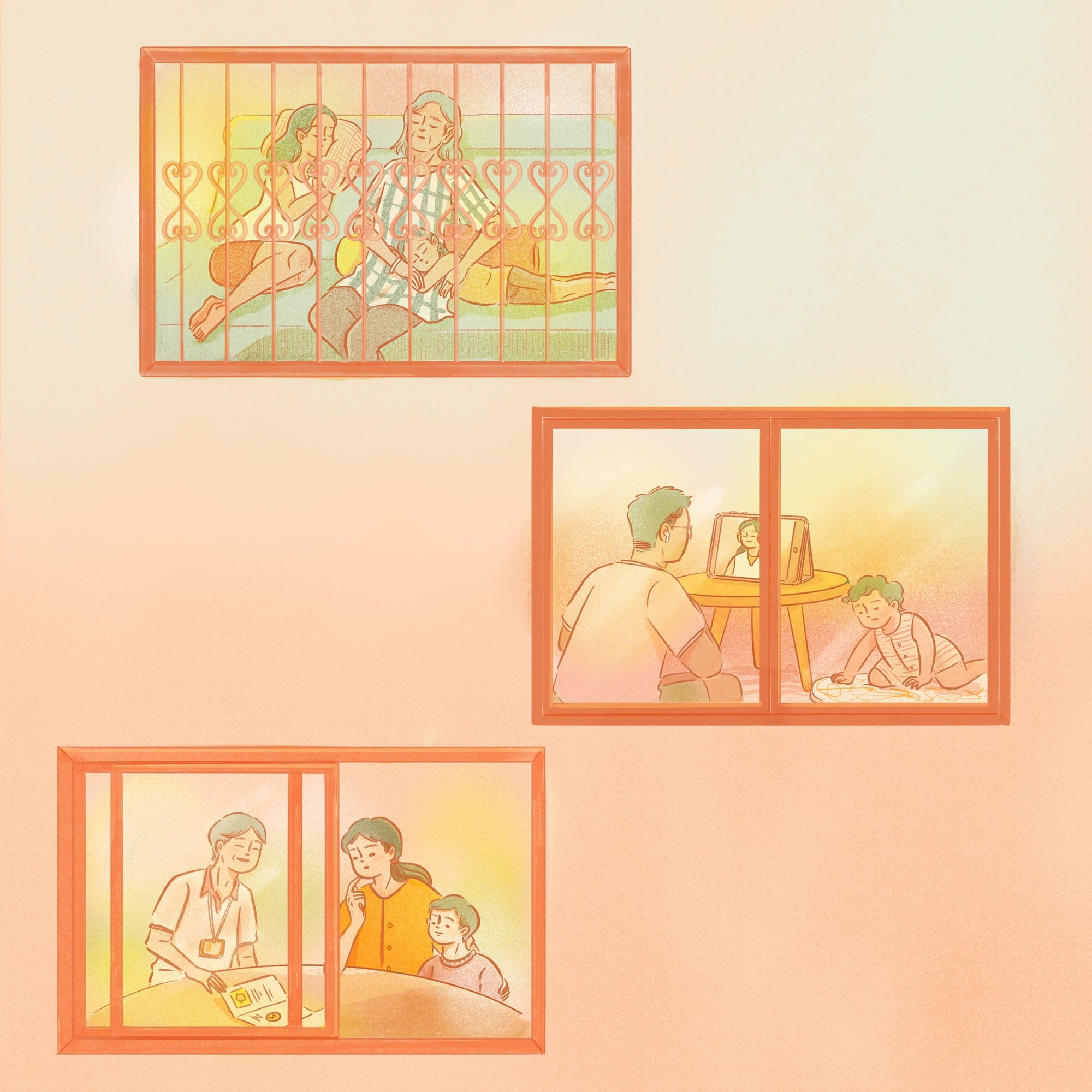
In any case, financial aid seldom leads to financial stability or independence. Those without caregiving support are often caught in a dilemma. They are unable to leave their children to work full-time but cannot afford childcare without an income or sufficient savings. Many settle for low-paying part-time jobs, which are often clerical or in the sales, services, and cleaning sectors. Often, they are stigmatised by employers, are unable to enhance their skills for better career prospects, and struggle to balance work and family responsibilities. Hence, long-term and formal childcare is a critical factor in enabling single parents to seek and sustain employment, which can help them break the cycle of poverty.
The Forward Singapore report, released in October 2023, highlighted that children from lower-income backgrounds are under-represented in pre-schools and that receiving pre-school education is crucial to maintain developmental parity with peers. Presently, the Early Childhood Development Agency provides a basic childcare subsidy of S$300 for employed mothers and S$150 for unemployed ones; additionally, working mothers with a gross monthly household income of S$12,000 and below receive an extra subsidy of up to S$467. During Budget 2024, Wong announced that non-working mothers from lower-income families will soon get more childcare subsidies. This is expected to benefit around 17,000 children, including those raised by single parents. Further policy enhancements will increase single parents’ access to not just caregiving but also financial aid and housing—meeting these interconnected needs is crucial for their families’ well-being.
In September 2021, Diana suspected she was at risk of becoming homeless. After her relationship with her second husband had soured, he gave her an ultimatum. Diana would have to forsake her 16-year-old daughter from her first marriage if she wanted him in her life. The choice was obvious and he broke up with her via a WhatsApp message. Back then, Diana was battling cancer and was so frail that she turned an office chair into a makeshift wheelchair to get around while sweeping the floor and hanging laundry. She borrowed money from her friends and received S$900 a month in ComCare assistance, which she spent on her treatments and bills. It was only after making a full recovery in June 2022 that Diana filed for divorce and began exploring her housing options.
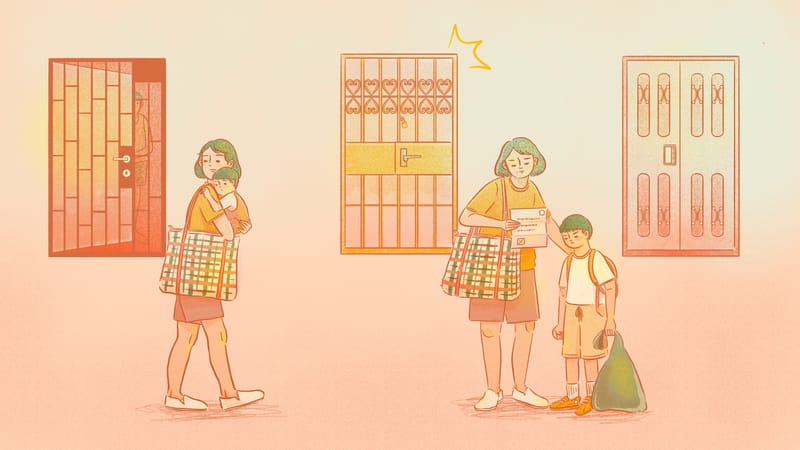
Her parents’ living quarters were already cramped and she could not afford to rent in the open market. Diana moved in with an acquaintance. She appeared on his doorstep carrying only black trash bags stuffed with clothes. Her attempt to secure a rental flat in advance proved futile when HDB informed her that she could only proceed with her application after selling her matrimonial flat. (HDB’s rental eligibility rules forbid property ownership.)
After doing so in June 2023, Diana was told she was ineligible for a rental flat as her salary exceeded the S$1,500 income ceiling. “Even with S$1,700, I could barely survive,” she told me. The second-half of 2023 was “the lowest point” in her life. In desperation, Diana started googling “house” and “temporary shelter”, and stumbled upon the support provided by the Association of Women for Action and Research (AWARE). AWARE assigned a caseworker who shared valuable information and guided her through various options. She also attended Meet-the-People sessions to seek assistance from her member of Parliament.
“I got so depressed that I just quit [my job] altogether. My [rental] application was approved after I signed a letter [declaring my] unemployment.” I was struck by how unemployment became the key to ending her homelessness. It ultimately paid off because Diana later landed a new job that paid her S$2,500 a month. Since HDB only factors in her income at the time of application, it does not jeopardise her eligibility. The only difference is that her rent will be reassessed in approximately two years. It made me wonder about other parents out there: those who had to forgo the job benefits that they had earned over the years to quit temporarily; those who could not return to their roles upon quitting; those who struggled to find a replacement job; and those who could not afford to quit at all.
Single parents with shared care and control of their children are also subjected to a 30-month debarment period that prevents individuals from applying for a rental unit after selling their HDB flat. This is waived for single parents with full custody of their children. However, even when single parents painstakingly secure public rental flats for their families, they are often inadequate in terms of privacy and space. Fights, suicides, drug use, and killer litter are not uncommon occurrences either, making rental flats a less-than-ideal environment for raising children. For some single parents, rental housing serves as a stepping stone toward the ultimate goal of owning their own home.
That was why my mother worked towards buying a resale flat after finalising her divorce when I was six years old. We moved into a spare room in my grandmother’s three-room HDB flat, where the three of us fell into the stable grooves of domesticity. The ordinary moments that I then took for granted are the ones that now stand out: my grandmother and I waiting for my yellow-and-black school bus to arrive in the morning; the enticing aroma of fried garlic wafting from the kitchen, signaling that meal time was near; and doing my homework at the glass dining table while Hokkien soundtracks blared from the TV.
Two years later, my mother and I moved into our own home—and she remarried shortly after. She has an abiding gratitude for how her mother’s door was always open to her. It was a reminder that she was a daughter before becoming a mother, and she would be mothered whenever she needed it. While my mother’s experience was in line with the state’s emphasis on families as our first line of support, it’s a privilege that not all single parents enjoy.
In some instances, single parents’ quest for stable housing is impeded by the very individuals they once considered family: their soon-to-be ex-spouses. Elizabeth Quek, project manager of Advocacy, Research, and Communications at AWARE, revealed that the mothers she has assisted often face prolonged periods of homelessness (two to three years) because their spouses use custody as leverage. Despite the protections offered by the Women’s Charter, women sometimes face pressure from their partners to accept unfavourable terms in the divorce. My mother was prepared to walk away without a single cent from my father if that was what it took to secure full custody. Some relinquish alimony or profits from the sale of their matrimonial flat; others even drop personal protection orders that were previously filed due to violent behaviour. One mother was homeless for five gruelling years because of her uncooperative and abusive husband. She fled their home with her two children as the divorce proceedings were ongoing. Her husband ignored a court order mandating the sale of their matrimonial flat, and even rented out some rooms. The ordeal finally ended when he sold the property so that he could remarry. The troubling reality is that mothers’ love for their children make them vulnerable to their former partners’ manipulative tactics.
Single parents facing housing instability often feel adrift in their bid to secure a roof over their families’ heads. They find themselves overstaying their welcome at the homes of their kith and kin, put on waiting lists for shelters, or struggling to have their stays renewed. The need to uproot and leave after finally settling in one place is highly disruptive and can strain the relationships with their children. Once, when tensions were high after a tiring moving day, Diana’s daughter said, “Ma, your life decisions are affecting me.” It was the articulation of a previously unspoken truth, that their homelessness was a consequence of Diana’s choices to enter and leave a marriage for the second time. Those words were hurtful as they excavated the guilt Diana was trying to suppress and also because she always had her daughter’s best interests at heart. “My priority is my daughter,” she told me. “Everything I do is for her.” Although I was wary of fitting single parents into the virtuous caregiver archetype, everyone I spoke to echoed this sentiment: putting their children’s well-being first, even at their own expense.
Most people become single parents by circumstance, not choice. Common reasons include the death or incarceration of a partner; separation or divorce due to incompatibility, infidelity, domestic violence; or having a child outside of wedlock. Without sufficient preparation, resources and a reliable support network, single parents can easily find themselves struggling to provide for their children. Thus, it is unlikely that making our social policies more inclusive will inadvertently encourage the formation of single-parent families (a conservative scare tactic the world over). On the other hand, excluding single parents from certain welfare benefits and neglecting their unique circumstances in existing social policies can perpetuate feelings of inadequacy and contribute to a wider culture of stigmatisation.
In the aftermath of her divorce, Vivian Pan avoided leaving her house for months because seeing other families in public stopped her dead with longing. She would wonder, “Why can’t I have what they have?” Vivian believed that others thought less of her or considered her a “bad woman”. She stopped attending family gatherings, even during festive celebrations. One day, she decided to visit her grandmother on a whim, after checking that no other relatives were around. Vivian tacitly explained her absence by asking, “Ah ma, do you know that I am divorced?” Her grandmother held her hand tenderly and replied in Hokkien, “Never mind, it’s okay.” She was mostly concerned about whether Vivian had suffered any mistreatment. Her grandmother’s acceptance helped Vivian realise that her social withdrawal denied her loved ones the opportunity to care for her.
It is not uncommon for single parents to refrain from seeking help from friends, family, or assistance programmes, be it for emotional support, caregiving, or financial aid. This reluctance can be attributed to a variety of reasons: embarrassment about their inability to cope; concern about burdening their loved ones with their problems; or fear that others may not understand what they are going through. Vivian understands the impulse to suffer in silence—single parents often feel like they are being unfairly judged for their parenting abilities, making them reluctant to admit that they are struggling. But she has since learnt that solitude is a choice and not having a partner does not mean one must shoulder all their responsibilities alone.
When I asked Vivian why she did not charge for the labour and time she devoted to the Single Parent Support Group, she replied, “You want to help people, just help lor. If you want to help people [and] still collect money, it [becomes] a business eh.” Vivian was content—felt blessed, even—to make a living by offering painting services, toilet stain removal, and ceiling repairs through her self-owned business. “If I’m blessed, I want to be a giver,” she told me. “Givers are happier people. Givers gain. When I see you [healing], I’m happy.”
Yet her benevolence and help have sometimes been misunderstood. In June 2017, Vivian explained on Facebook that a single mother whom she was helping was battling stage two cervical cancer and residing in a cramped one-room rental flat with her two children. “S$1 from you is all I plead for,” she wrote. After five days, the post garnered nearly 1,500 shares and over 800 comments. The donations amounted to about S$40,000. However, some donors observed that their money was credited into Vivian’s account instead of the mother’s. Soon, the Facebook group was filled with livid commenters who accused Vivian of misappropriating the funds. The vitriol and harassment only stopped after she addressed the controversy in an interview with The Independent, revealing that the decision to store the donated funds in her bank account was well-intentioned and strategic. They feared that if the funds were reflected in the single mother’s bank account, she may not qualify for assistance from the relevant governmental agencies. Vivian was simply trying to maximise the financial aid that the single mother could receive to cover her hefty medical expenses.
Following the public uproar, Vivian became depressed because she felt like “the whole world was against her.” She had to take a break from managing the Single Parent Support Group and only felt ready to resume her advocacy work after three years. Meanwhile, when the money from the fundraiser depleted quicker than expected, the single mother returned to ask for more. Vivian was dismayed. She remembers thinking, “Why so fast use finish? I tried so hard to help you [and] even got myself into trouble.” That was when she realised that offering financial support was unsustainable. It was a temporary solution, especially if the single parent lacked proper guidance on budgeting or faced obstacles that made securing stable employment difficult. However, Vivian did not have the resources or bandwidth to devise long-term solutions for everyone who approached her. After all, she is just an individual—a single single mother—doing her utmost to show up for other single parents.
Through the Single Parent Support Group, Vivian hopes to show the single parents who approach her what she failed to tell Rebecca all those years ago: “You are not alone.” She wants them to know that their hardship does not exist in isolation—many have walked similar paths before and more will follow them. Some stories may be punctuated with tragedy and loss, while others seem more ordinary. Yet, every single one of them underscores the importance of more inclusive social policies and a broader culture of empathy towards single parents, who are simply trying their best to thrive in a society that prioritises the traditional nuclear family. These stories remind us that family is defined by far more than its structure; that single parents are no less committed to raising their children with love; that extending some grace and support to those in need can go a long way towards building a more caring and compassionate Singapore.
Sherryl Cheong is a Singapore-based writer who is invested in telling stories that shine a light on our rich inner worlds. Her topics of interest include human connection, the communities that we build in adversity, and our capacity for empathy.
Letters in response to this piece can be sent to sudhir@jom.media. All will be considered for publication on our “Letters to the editor” page.