

It was 1943. Singapore, reeling under the Japanese Occupation, was a ravenous place. “We all were thin, skinny, sickly,” remembered Ismail bin Zain. “Very hard life…Better to die than to live. Another year…if the Japanese were here, I think a lot of people would have died from malnutrition,” he told the National Archives of Singapore’s Oral History department in an interview in 1985.
Another survivor, Frank Tay, was just 10 years old when the Occupation began in 1942. As it wore on, rice and flour became so scarce that his stepmother used ragi to make pancakes. Indeed, in all its recorded history, Singapore has never been hungrier than during those terrible years. With the Japanese seizing extant food stocks for their military, and supply lines from Europe disrupted, many suffered from severe food deprivation. Malnutrition related diseases like beri-beri, rickets and scurvy spread, leading to a spike in deaths. Tay recalled being “perpetually hungry” and on a “starvation diet”. Interviewed in 2010, he spoke of the disbelief these wartime stories elicited from his grandchildren.
“Did you really feel that hungry?!”
The incredulity is a sign in itself of how far we have come. Today, Singapore is near the top of the Global Food Security Index in both affordability and availability; a veritable culinary paradise with all manner of dishes to satiate all manner of tastes and budgets. We have the fifth-highest GDP per capita in the world; the seventh-highest number of Michelin-starred restaurants per capita; a hawker culture so prevalent and with such cheap, varied options that it finds pride of place on UNESCO’s Representative List of the Intangible Cultural Heritage of Humanity. We argue, bond, celebrate and commiserate over food. To even entertain the notion of food insecurity, of hunger, here seems ludicrous.
The truth though is that both persist. Perhaps not in the same form; maybe not to the same extent as they did under the Japanese Occupation, but they persist nonetheless. “We only eat once a day. If I take my medicine, I’ll eat biscuits. Sometimes I’ll mix my Maggi with my biscuits. That’s all, every day,” Hana told National University of Singapore (NUS) researchers Naomi Tan et al in 2016, six years after Frank Tay had shared his wartime experience of hunger. She picked up part-time gigs whenever she could, sometimes as a cook, sometimes as a seamstress, to support herself and her ailing husband, Aslan. Their story was captured in the NUS paper “Food Insecurity in Singapore: The Communicative (Dis) Value of the Lived Experiences of the Poor”.
People living in poverty: theirs is a reality that sits in stark contrast to “mainstream portrayals of food and eating patterns that largely reflect middle-class habits and lifestyles”, noted local charity Beyond Social Services (BSS) in a 2021 quantitative study on food insecurity and food aid. An interviewee shared as much: “We always skip breakfast. Then we always skip lunch. Then we always eat dinner. Our meal is one day one meal only. That’s what I can afford.”
Unsurprisingly, low household income is the strongest and most consistent predictor of food insecurity, defined by the UN’s Food and Agriculture Organization (FAO) as a “lack of regular access to enough safe and nutritious food for normal growth and development and an active and healthy life”.
A 2023 FAO report “The State of Food Security and Nutrition in the World” found that 6.6 percent of Singaporeans faced moderate to severe food insecurity between 2020 and 2022. Based on an average population of 5.6m in that three-year period, that’s an estimated 370,000 people who weren’t getting enough sustenance. The findings back up 2020 research that the Lien Centre for Social Innovation conducted, which had revealed that about 10 percent of the nearly 1,200 Singaporean households (citizens and permanent residents) surveyed had experienced food insecurity at least once in the past year. Of those, two out of five had experienced it at least once every month.
Who are these Singaporeans struggling to fill their bellies? Some, like those with lower educational qualifications, don’t earn enough in the first place. Statistics released in Parliament in 2020 showed that the highest educational qualification for four in five of the estimated 30,000 Singaporean low-wage workers is post-secondary or lower. And about 32,000 full-time workers in Singapore, or 1.7 percent of the local workforce, take home less than S$1,300 each month. This is below the living wage of S$2,990 that the 2023 Minimum Income Standard report, led by researchers Teo You Yenn and Ng Kok Hoe, had proposed.
It is likely that at least some of them are victims of food insecurity. Others may be burdened with constraints such as mortgage or rental payments, debts, childcare costs or medical bills. Yet others may have fallen on hard times due to job loss, disability, family breakdown or dozens of other circumstances beyond their control. Usually, food insecurity stalks the most marginalised communities, including racial minorities, the elderly, women, children and migrant workers.
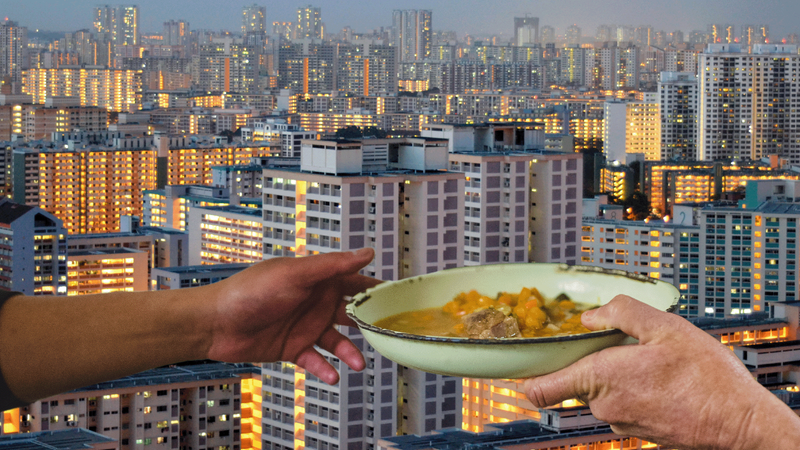
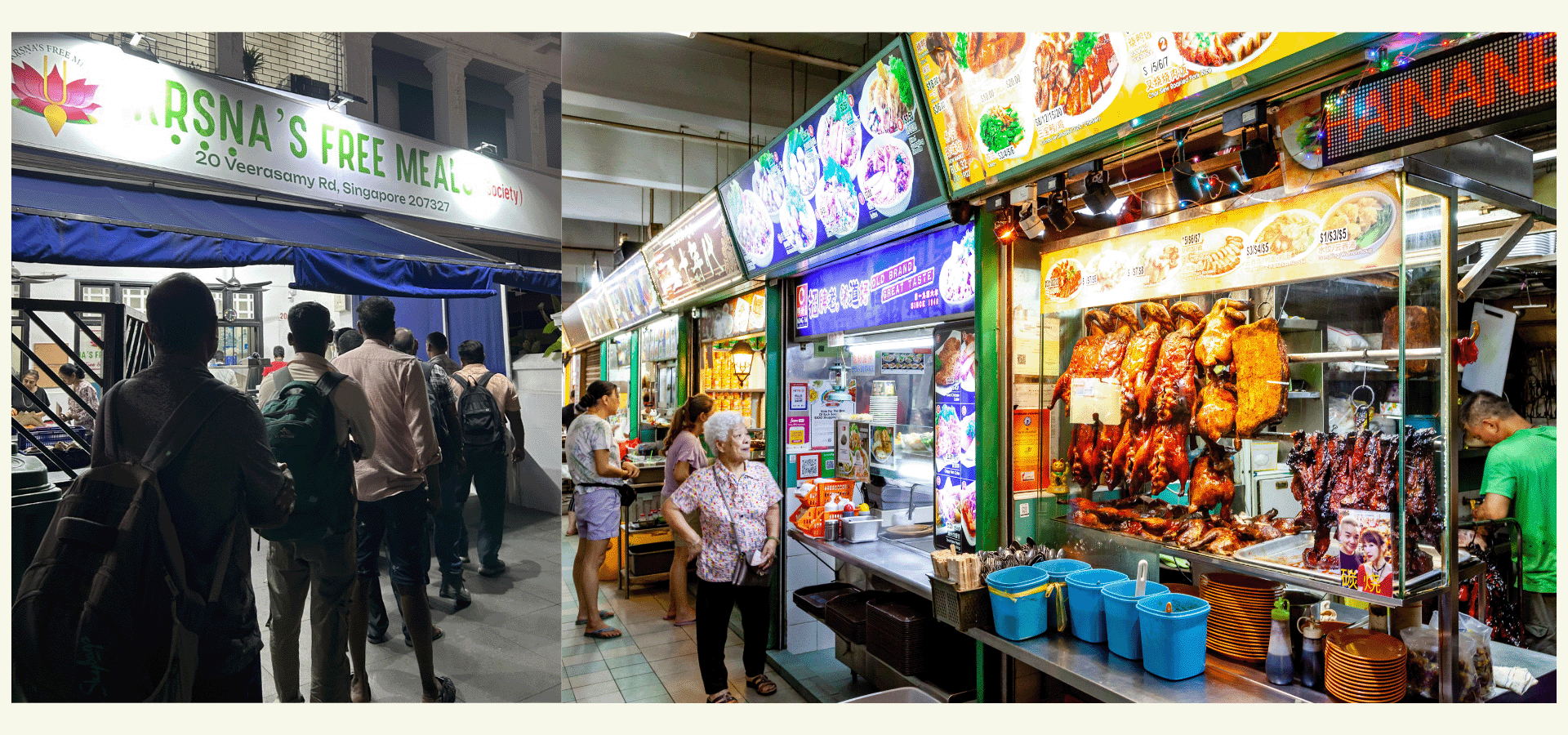
“But food is so affordable in Singapore,” might be the sceptical reaction—one of privilege—to the idea that food poverty exists here. Just walk into any neighbourhood hawker centre or coffee shop, where S$3 bowls of noodles or S$4 plates of cai peng are regularly available. As such, being unable to feed oneself at relatively cheap prices may be considered more of a “personal failure” than a structural issue of economic inequality, observed NUS’s Tan et al. In reality, they said, “Even cheap hawker meals are out of reach for the poorest segments of society.”
Food security isn’t simply the absence of food scarcity and hunger. There are also the broader issues of maintaining a healthy and balanced diet. “Hidden hunger”, says FAO and the World Health Organization, results in people not getting the essential vitamins and minerals they need. This results in a triple burden of malnutrition: undernutrition; micronutrient deficiencies; and paradoxically, overweight and obesity. People on a restricted budget often go through cycles of fasting and bingeing, and have to make trade-offs, choosing food that’s instantly filling, which is often frozen, or processed and high in salt, sugar and fat, over fresh fruit, vegetables and meat/seafood.
In her essay, “Wartime Victuals: Surviving the Japanese Occupation”, author Lee Geok Boi wrote: “In times of war and occupation, food is about survival and not quality or flavour.” Contrast this with what an interviewee told BSS some 80 years later. “Food is just a method to survive…day by day… If you are talking to me about nutrition…I don’t think we people [in this neighbourhood] get all that…[it] is going to cost us a lot,” they said. “Sometimes I bring food from home like keropok [deep fried crackers] or biscuits, I bring to work and eat only that, hold out, starve until night, go back home eat Maggi.”
Ration lines may have disappeared, but there remain plenty of Singaporeans who can ill-afford three decent meals a day. Lousy diets negatively impact physical health, leading to fatigue and chronic diseases, such as diabetes, high cholesterol and heart disease. Often, anxiety and depression, from not knowing where the next meal is coming from, accompany these physical ailments. Limited financial resources force those living in poverty to negotiate between their various conflicting needs. For many, this means skipping doctor visits or choosing between medicine for themselves or food for the family. It doesn’t take long for a vicious cycle to emerge. As the researchers Tan et al put it: “Hunger enacts violence through illness and illness fuels experiences with hunger, which depicts the cyclical relationship between hunger and health.”
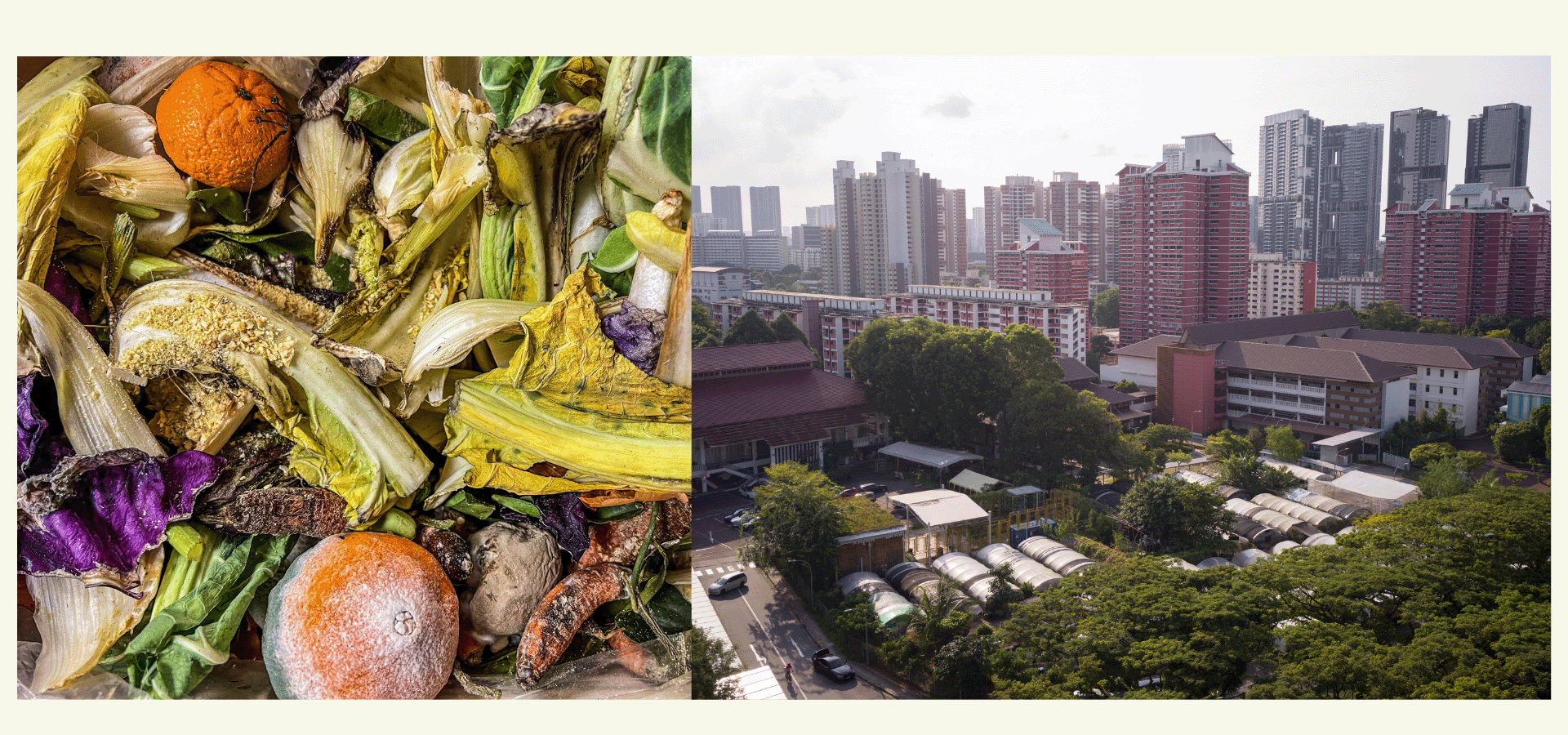
Yet, herein lies the paradox. The world produces more than enough food to feed everyone on the planet—1.5 times the current population or 10bn people. Shockingly, nearly one-third of food (1.3bn tonnes) produced globally each year is never eaten. That’s enough to feed 1.26bn people—almost the entire population of China or India—costing the global economy some US$1trn (S$1.35trn) yearly. Food waste is a perennial problem in Singapore too. In 2023, the country threw out 755,000 tonnes of it. That’s 11 percent of total waste generated. An earlier study in 2019 by the Singapore Environment Council found that one-fifth of imported food and locally farmed fresh produce, or 393,000 tonnes of vegetables, fruits, fish, seafood and eggs, is lost—spoiled or damaged—along the supply chain. This is before it even reaches the consumer.
Food security expert Paul Teng told Jom over e-mail that Singapore has “done well” in achieving food security at national and macro levels. However, said Teng, variances occur at the household level, especially among the 100,000 or so households which are below the food security line. Teng, an adjunct professor with the Centre for Non-Traditional Security Studies at the S Rajaratnam School of International Studies, suggested that for a state which values free markets and minimises welfarism, both food and nutrition security must be used as a measure of food security at the household level. Which brings us back to access and affordability.
According to the latest Economist Intelligence Unit survey, Singapore is the world’s most expensive city, alongside Zurich. Almost everyone from the middle-class down has felt the pinch in recent times, with groups in the lowest income brackets feeling it most acutely. These are the folks who’ve failed to get a footing on the “meritocracy” ladder, or have fallen through cracks in the system due to circumstances beyond their control. The reason we rarely hear about them is because the “poor’s material disenfranchisement is connected with their communicative erasure in the discursive space of Singapore,” said Tan et al. The absence of an official poverty line compounds this erasure, and affects how well the needs of the underprivileged are met.
In 2013, Chan Chun Sing, then minister for social and family development, explained that Singapore wasn’t considering having an official poverty line, because it would not fully reflect the severity and complexity of issues faced by the underprivileged, which may lead to those above the line missing out on assistance. But without an official, transparent benchmark, argued Jamus Lim, member of Parliament from the opposition Workers’ Party, targeting “the poor” is impossible, or at least imperfect. Instead, Lim said that it leaves considerable latitude for defining what is “adequate”. These problems make themselves felt in government schemes like ComCare and Silver Support. The strict and rigid eligibility criteria make it difficult for households in the lowest income brackets to receive timely support; sometimes they’re rejected outright.
These narratives as captured in Tan et al’s report indicate a “disjuncture between how welfare support is carried out by the state versus how low-income people experience poverty and seek out ways to overcome their daily challenges”.
Moreover, state-level welfare support tends to be “decontextualised” from lived experiences, and ends up treating people who need social assistance “as a uniform and monolithic group”. That’s not to say these programmes aren’t beneficial. The researchers acknowledged that the structures of state assistance, while constrained in some ways, are empowering and supportive in others. Seen in this light, the government’s post-Covid initiatives like vouchers for all residents to use at select food stalls and supermarkets; and the budget meal scheme, where participating coffee shops at public housing estates offer lunch or dinner options typically priced below S$3.50, are laudable.
More broadly though, as a non-welfare state without a minimum wage, Singapore relies on a social safety net that hinges on three key principles—self-sufficiency; family as the first line of support; and a multilayered, community-based framework known as “Many Helping Hands” (MHH). MHH is the Ministry of Social and Family Development’s approach to welfare provision, underscored by the government’s belief that the state shouldn’t be solely responsible for those in need of assistance, and must, in fact, be the last resort. The overriding fear seems to be that welfare diminishes incentives to work. Adopted in the 1990s to mid-2000s, MHH invokes support from non-state actors—generous individuals, voluntary welfare organisations (VWOs), charities and communities—to assist the disadvantaged.
In this regard, Singapore’s civil society has done a stellar job of supplementing state efforts. There are more than 20 registered charities and dozens of other food support, grassroots and religious organisations, mostly volunteer-run, that regularly hand out food rations, cooked food and supermarket vouchers. They’ve also installed community fridges and organised collections drives in some neighbourhoods. Yet, this informal food aid ecosystem can’t plug all the gaps—covering all meals for instance, instead of the typical lunch or dinner arrangement.
Lien’s Hunger Report also found a severe misalignment in the distribution of food assistance such that the majority of food insecure households weren’t receiving help. Limited resources also hamper social services’ ability to consider healthcare requirements and preferences, beyond the halal/nonhalal/vegetarian categories. Beneficiaries, naturally, are embarrassed to speak up. “How can we complain about the food people give? Whatever food that people give, we just eat lor. We should not be choosy, right?” one told BSS. A stakeholder engaged in food distribution efforts lamented that for beneficiaries “it’s like, ‘bo pian, bo pian, ai jia, ai tun’ [‘no choice, no choice, must eat, must swallow’].”
A lack of agency in deciding what one consumes appears to contravene the idea of a person’s right to food, understood as the liberty to feed oneself in dignity and to be free from hunger. It was first recognised by the UN’s 1948 Universal Declaration of Human Rights and guaranteed by the 1966 International Covenant on Economic, Social and Cultural Rights (CESCR). Singapore has so far declined to sign and ratify the CESCR, alongside about a dozen other UN states, including Brunei, Malaysia and South Sudan. In 2013 though, it did sign FAO’s voluntary guidelines for the progressive realization of the right to adequate food in the context of national food security”.
In short, food is political, cultural and social, not something to be determined by what’s available, or by corporations, or the status quo, noted Michael Fakhri, the UN special rapporteur on the right to food. We must be able to decide for ourselves what “counts as good food”, he said.
The scale of food insecurity here, at least from the state’s perspective, may be small at the moment. However, Singapore’s reliance on food imports makes her susceptible to any major disturbance in the global supply chain. This dependency appears to be a British legacy. Besides becoming a major free trading port after being colonised, commercial agriculture was also a significant economic activity, with large tracts of land dedicated to cultivating commercial crops, such as pepper, gambier, nutmeg, coconut, pineapple and rubber. Agriculture for local consumption was neglected. “[Before independence] once a disease came along, it wiped out everything,” recalled Cheong Tong Fatt, a former director of the Primary Production Department (PPD). “Farmers were very scared of going large-scale.”
After independence, there were spasmodic efforts to build up Singapore’s agricultural base, largely through the PPD. By the mid-1970s, the city-state’s farm productivity was amongst the highest in the region. But not for long. Industrialisation and urbanisation soon competed for the limited land available. Farms were relocated and consolidated, making way for housing and water catchment development, significantly shrinking the farming industry. As local food production declined in the 1980s, the reliance on imports increased.
Today, there are only 200ha of land available for agriculture, compared to 14,000ha six decades ago. We import more than 90 percent of our food from over 180 countries and regions. It is no surprise that any strong tremor—socio-political or economic—is a jarring reminder of just how tightly entangled we are in global capitalist networks, and how vulnerable we are to any challenges plaguing the global food supply. During the 2007–08 global food crisis, caused by drought and rising oil prices, prices of imported food here surged by 12.1 percent on average. In the past three years, worldwide events outside our control have jolted us repeatedly. The Covid-19 pandemic, China’s zero-Covid policy and Russia’s invasion of Ukraine have all impacted agricultural production and disrupted food supply chains, leading to a surge in food costs, food shortages and changing consumption patterns. Another disruptive global event could push those at the edges into hunger’s gaping maw.
Since the pandemic, the Singapore Food Agency has gone to great lengths to reassure citizens about what’s being done to “shore up” Singapore’s food security. Its “three food baskets” strategy, for instance, involves growing locally; diversifying the country’s import sources to reduce any reliance on a single country to avoid being at the mercy of profiteers; and growing food overseas, to be exported back to Singapore. Another key policy measure is to stockpile essential staples and proteins. Despite the scarcity of available land for agricultural purposes, the government launched an ambitious “30 by 30” plan in 2019 as part of its efforts to bolster food security. It aims to develop the capacity and capability of the local agri-food industry to produce 30 percent of national nutritional needs by 2030.
Grants such as the Agri-Food Cluster Transformation fund, Agriculture Productivity Fund and the Singapore Food Story R&D Programme running into hundreds of millions of dollars have been allocated to support investments and research in sustainable urban food production. These include coastal fish farming; aquaculture; vertical farms; lab-grown, plant-based protein and cultured meat; food safety science; creating food from waste; as well as bankrolling scientists, farmers and entrepreneurs. The hope is to transform the agri-food sector into one that maximises productivity while being climate-resilient and resource-efficient. Singapore’s urban planners have also pushed the idea of rooftop farms and community gardens, to encourage independent, small-scale farmers to take to the soil to grow their own food.
Not all food security experts, however, are convinced. Teng noted that although 30 by 30 is a “good aspirational goal”, it wasn’t clear how it would be achieved or what the 30 percent of nutritional needs consisted of. “My premise is that the 30 by 30 [goal] should not be based solely on increasing self-food production…even if we can produce 30 percent of our nutritional needs, we would still need to import the other 70 percent.”
Teng’s recommendation is to continue to develop agreements with countries that have a food surplus and a record of good governance. This includes sovereign nations that Singapore shares a history of solid diplomatic relations with, such as Australia, which regularly exports more than half of its agricultural produce.
Others have cautioned against an overreliance on complex, expensive technology. Cultivated meat, for instance, is very expensive to produce—as high as US$120 (S$157) per kg—and hence comes with a hefty price tag. “The price point is so high, so adoption is slow,” said Florence Leong, co-founder of food innovation firm Kosmode Health. As a result, Leong added, many start-ups aren’t able to sustain their research and development projects.
Recently, several firms have closed (indoor vegetable farm I.F.F.I); paused operations (alternative meats manufacturer Eat Just); or cancelled expansion plans (VertiVegies). There are numerous other obstacles too: scaling in a small market, lack of technical support and long waits for licences—it took one wife-and-husband team more than a year to obtain a permit for their fish farm, by which time the groupers they’d reared were twice their ideal weight. Funding too is drying up, and farms face an uncertain future: “Investors get the sense that ‘30 by 30’ is dead,” LivFresh owner Karthik Rajan told Bloomberg.
There are alternative ways to create just and inclusive food systems, but these require moral, legal and political action. Brazil’s Belo Horizonte, for instance, has become a pioneer in governance for food security. When mayor Patrus Ananias de Souza of the left-wing Workers’ Party took power in 1993, 11 percent of the city’s 2m population lived in absolute poverty; nearly 20 percent of its children were facing hunger. The de Souza government made food a “right of citizenship” and launched the Belo Horizonte Food Security initiative, with over 20 interconnected programmes involving multiple agencies. It regulated prices; provided free meals in “People’s Restaurants”, or Restaurante Popular (there’s no need to prove that you’re living with poverty to eat here), and every public school; offered food assistance to social service organisations; and ran public nutrition education campaigns. Within a decade, the city’s infant death rate, one of the indicators of hunger, was more than halved. Eventually, hunger and malnutrition were eliminated, with a concomitant decline in extreme poverty. And all this was achieved with just two percent of the city’s annual budget.
The Belo Horizonte experience shows that a right to food doesn’t necessarily mean “more public handouts (although in emergencies, of course, it does),” wrote Frances Moore Lappé, author of Diet for a Small Planet. Instead, it can also mean redefining the “free” in “free market” as the freedom of all to participate; and building citizen-government partnerships that are driven by values of inclusion and mutual respect. “The right to eat is a beautiful and simple concept touching our most natural instinct for life in community,” said Lappé. “But its realization flows from perhaps an even more foundational right—the right to power—which in turn demands a reframing of democracy itself.”
So how might Singapore harness this power? In “Towards a transformative food politics”, Charles Levkoe wrote about reclaiming the commons and shifting the focus away from profit maximisation and commodification. Instead, we may begin to “embed food within meaningful cultural and community relations while improving production of, and access to good, healthy food for all.”
In a time of exceptional wealth, the yawning gap between the rich and underprivileged in Singapore also demands a commitment from the government to tackle the inequities inherent in food insecurity. Such efforts must extend beyond charity to what BSS called “multi-scalar, collaborative actions” that create more socially just and environmentally sustainable food systems. “In recognising the human right to food,” it argued, “access to adequate food should no longer be treated as a gift or an act of benevolence, but a fundamental right and statutory obligation.”
What would that look like in practice? Think communal kitchens and community dining, free state-sponsored school meals, better market access for small-scale farmers, extending land availability for farming via tenancy across the Causeway, systems for food bartering, state-subsidised meals (pay-as-you-can) at incentivised partner restaurants.
Broken food systems aren’t inevitable. Singapore can well-afford to build an alternative system that’s efficient, secure and sustainable. In this process of imagining an alternative food system that’s equitable, inclusive and affords citizens agency, we can also ask what it means to live in a country where citizenship and residency entitles you to food security—no forms to fill out, no proof of poverty needed. To live in a country that truly listens to the voices of its hungriest and most vulnerable? One that works for all by overcoming the privilege of access, and ensures that every person receives the nutrition they need to live a full and healthy life.
It is 2024. No one should have to live hand-to-mouth, not knowing when they’ll eat their next meal. Waking each day to a dull, cavernous ache in their belly, where breakfast, lunch and dinner should have been. Especially not any one who lives in a wealthy city-state, where food is in abundance and so fundamental to the construction and shaping of its national identity.
At the launch of the Forward Singapore exercise last year, Lawrence Wong, then deputy prime minister said: “All governments understand what happens when their citizens are excluded from the country’s progress. People lose faith in each other, and the result is more fractured societies.” Forward Singapore is Wong’s vision for a society that “benefits many, not a few”; a road map to ensure that no one gets left behind, and that refreshes Singapore’s social compact, the “glue that holds society together”.
Let that “glue” also be nutritious and nourishing—one that promotes social cohesion, as well as community health and wellbeing. Only then can we truly consider ourselves a nation that respects and upholds the rights of all its citizens. Food fuels life, fuels existence. Who are we, if not the food that we eat, and the people with whom we eat?
“We live everyday, bodily realities,” wrote Teo You Yenn in This Is What Inequality Looks Like. “Inequality is experienced in the interior of hours and minutes of a day.” Being alive isn’t only about surviving the day-to-day. It’s also about thriving. Of being engaged with the world, wholeheartedly. And who can do that on an empty stomach?
Tsen-Waye Tay is Jom’s co-founder. Read her other essays for Jom here.
This piece was first published in Jom’s annual print magazine issue No. 2, released last year. Letters in response to it can be sent to sudhir@jom.media. All will be considered for publication.