

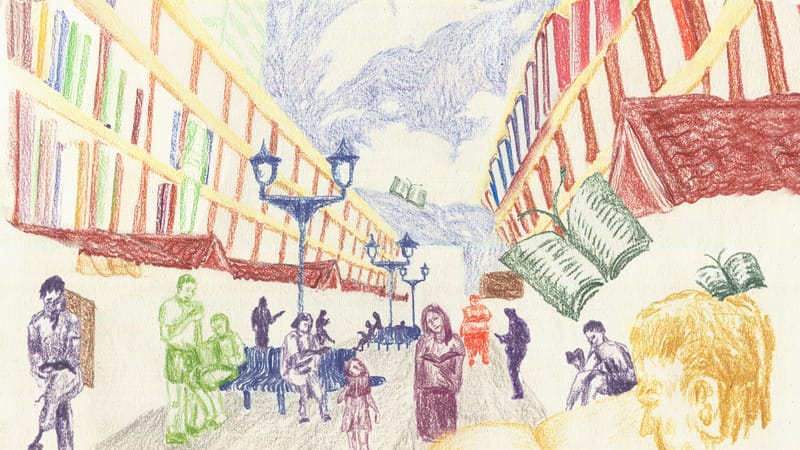
One of my evergreen memories is of nine-year old me queuing, mother in tow, outside my local Popular bookstore on a weekend morning, just to be one of the first to get a pre-ordered copy of Harry Potter and the Order of the Phoenix, the fifth book in the series.
As soon as I got it, I cracked open the first few pages, inhaling that familiar smell of a freshly printed book. With my eyes glued to the hefty tome in the clutch of my hands, my mother guided me home, reminding me to look out for traffic. (Having read to me while I was still in her womb in the hopes it’d be useful, she couldn’t really complain.) As soon as I got home, I plopped myself on my bed and read non-stop, if memory serves, for nine straight hours until I finished the book.
This fervour wasn’t just reserved for the wizarding world of Hogwarts. There is a photograph of me as a toddler perched on the porcelain throne with a book in hand, grinning at the camera. At any mealtime, a book would be propped up in front of my plate or on my lap. I was even able to read on long car, bus, train, and plane rides, having been blessed with no motion sickness symptoms.
As I grew older, my enthusiasm for reading dwindled somewhat. I studied literature in secondary school and junior college, and as a result, began to find reading a chore. Nothing personal against Shakespeare, Tolstoy, or Fitzgerald, but I soon tired of having to read with clear objectives: to find the most salient themes, metaphors and similes; or to indulge in an (over)-analysis of pentameters. It felt much too mechanical, much too tedious.
Also, the smartphone emerged during this period, and it soon displaced the trusty book in my hands wherever I went. Memes on Facebook replaced the adventures of Harry Potter and friends or the fights to the death in The Hunger Games. The fantasy worlds in my head gave way to the doomscrolls of cafe food and holiday destinations on Instagram.
My voluminous bookshelf has grown dustier; the pages of my childhood books have browned in the Singapore humidity. Popular now contains more assessment books and lifestyle peripherals than actual literature, perhaps emblematic of how we’ve come to prioritise reading in this country.
No one is sure when exactly humans first learnt to read, but it corresponds to the invention of writing in the ancient Sumerian city of Kish (now in modern-day Iraq), where tablets with pictographic writing dating back to 3500 BC were found. It is likely this ‘proto-writing’ then inspired Sumerian cuneiform and Egyptian hieroglyphs. (Written Chinese developed independently.)
Before the invention of phonics and neuroscience, we did not understand how we learn to read. Scholars debated this for centuries, from Greek theories that our eyes emitted atoms and rays to perceive and understand the objects they observed, to medieval ones that objects transmitted their images to our senses, which passed them on to our brains, where they are imprinted on our memories, becoming knowledge.
In Reader, Come Home, neuroscientist Maryanne Wolf, who has studied the “reading brain”, makes the case that a reading habit is “neither natural nor innate”. Wolf describes our “reading-brain circuits” as the interconnected brain regions and neural pathways that work together to comprehend and process what we see on a page. According to her, they are “shaped and developed by both natural and environmental factors”, and the latter play a large part in determining how sophisticated our reading abilities are.
Even the way we read nowadays is relatively new. In Confessions, the philosopher Augustine described how his friend and then-Bishop of Milan Ambrose read: “his eyes scanned the page and his heart sought out the meaning, but his voice was silent and his tongue was still.” This seems nondescript now, but it is the first description in Western literature of silent reading, which implies that it was not hitherto the norm. Literacy was the preserve of a rare few in the medieval ages, and so public readings were more important.
Perhaps, then, a history of reading can be better described as a history of readers. Alberto Manguel, an Argentine-Canadian anthologist and author of A History of Reading, describes reading as our “essential function”, and that “we all read ourselves and the world around us in order to glimpse what and where we are”. As soon as we learn how to read, every text adds a layer of experiences to our lives, giving greater meaning to the world we live in. Kingdoms, regimes, and governments from time immemorial have banned books such as the Bible and the Communist Manifesto, for it is through books that we gain access to the most subversive thing of all: ideas. What we read, why we read, how we read—all these are vital in our understanding of how humankind got here.
As we enter a new era of reading, filled with short, snappy articles, captions on videos, and (god forbid) AI-generated summaries of Austen’s, Dickens’s, and Steinbeck’s works, what does the future hold? The impact of technology on adolescents’ declining leisure reading habits is well-documented, and given the explosion of entertainment options available to us in the palm of our hands, maybe books just can’t compete.
Surveys suggest that a decline in reading habits is happening at all levels. The National Library Board’s (NLB) 2021 National Reading Habits Study found that amongst teenagers aged 17-19, there was an increase in reading of online articles, but a decrease in the percentage of physical book readers. Amongst teenagers aged 13-16 surveyed, there was a drop in those reading books (physical and e-books) more than once a week from 48 to 39 percent from 2018 to 2021. One survey depicts the decrease in adolescents who said they “enjoyed reading a lot”, while another reveals declining literacy scores across age groups. The two are linked: if younger children, at the age where they’re most receptive to reading, don’t enjoy reading for fun, what hope do adults, with all their worldly commitments, have?
If you’re a young Singaporean millennial, chances are your friends have complained about the ‘brain rot’ (Oxford University Press’ word of 2024, by the way) that their Gen Z/Alpha sibling is watching on TikTok. They may even lament about how they used to be able to devour books in one sitting; now, they can’t go a few pages without checking their phone. Letters on a page can’t generate the dopamine hits that social media can. Our attention spans, in Gen Z parlance, are ‘cooked’.
For students, this translates into declining reading stamina, and thus worsening performance in analysis and arguments in classwork. Though more studies are needed, exploratory research suggests that digital technologies contribute to the decline of long-form reading among students.
Julien Cayla, an associate professor of marketing at the Nanyang Technological University (NTU), described on Medium how students in admissions interviews struggle to name the last book they read. This, despite Singapore having one of the best public library systems in the world. “It seems that just by the time they enter secondary school, they have neither the time nor the inclination to read any fiction,” he told me over coffee.
A young person’s reading habits evolve in response to societal demands, he said. Children tend to be voracious readers until Primary 6, with parents promoting reading as a way to give them an edge in the PSLE. The drop-off happens around the ages of 15-18, amidst the intense, test-taking culture in secondary schools—much “reading” time is spent on model answers in preparation for exams.
This utilitarian approach to reading pushes them from fiction to non-fiction, particularly books on how to make money. “Fiction doesn't have that transactional dimension, it appears more as an accessory, something you do if you have a lot of time.”
Cayla’s anecdotes prompted me to reflect on my own reading journey. I read largely fiction when I was young; Enid Blyton’s tales equipped me with my basic vocabulary, while Roald Dahl’s stories imbued me with an early sense of justice, and a propensity to back the underdog. My namesake Isaac Asimov’s short stories took me to a distant future, where technology advanced yet humanity’s problems stayed the same, while Suzanne Collins showed me the effects of popular revolution against authoritarian rule in the world of The Hunger Games.
While I did not feel the pull of “transactional” books as I grew older, I definitely shifted towards non-fiction in general, particularly those focusing on history and politics. Think Noam Chomsky’s excoriations of US foreign policy, or the latest edition of The Economist. I delved into the occasional work of fiction, but mostly stuck to the familiar worlds of sci-fi. Like many others, I had my Haruki Murakami phase—partly because I just missed Japan, a place I’d visited often—but also, I suspect, to deal with my adolescent search for identity.
What do we lose without fiction? For starters, reading long-form texts and fiction, in particular, is associated with better reading comprehension skills, while reading short-form digital texts does not have this relationship. This is not surprising. Reading long-form texts like books requires readers to follow arguments closely and engage with the text on a deeper level cognitively. Fiction engages the imagination, leading readers to conjure worlds, relationships, and emotional connections in ways that videos or social media can’t.
In her book, Dr. Wolf cites research that posits that when we read fiction "closely", we activate regions of the brain that are aligned to what the characters are feeling and doing, and in doing so, activate cognitive processes that develop our sense of empathy. She describes the act of reading as a “special place in which human beings are freed from themselves to pass over to others and, in so doing, learn what it means to be another person with aspirations, doubts, and emotions that they might otherwise never have known.” In a recent CNA article, several people emphasised how reading books helped them to understand various cultures and human psychology better, which in turn helped them at the workplace.
Even in ‘pragmatic’ Singapore, we can see how reading fiction might be useful. By developing better reading comprehension, we can grow more discerning of information we read, and less susceptible to disinformation or scams, maybe eventually negating the need for fake news laws. By getting used to seeing ourselves in others’ shoes, we can more easily extend our sense of empathy to others, becoming more gracious towards those who exist at the margins.
When we read, we construct colourful universes and diverse worlds in our heads, envisioning utopias we can strive towards, or dystopias we must work to avoid. When we read, we connect with the complex characters in the pages whom we will never meet, seeking a shared experience that we may never get elsewhere. When we read, sometimes all we want is to escape from the pressures and trivialities of our daily lives, and enter a realm of infinite possibilities. If nothing else, reading fiction can build a society more attuned to slow deliberation.
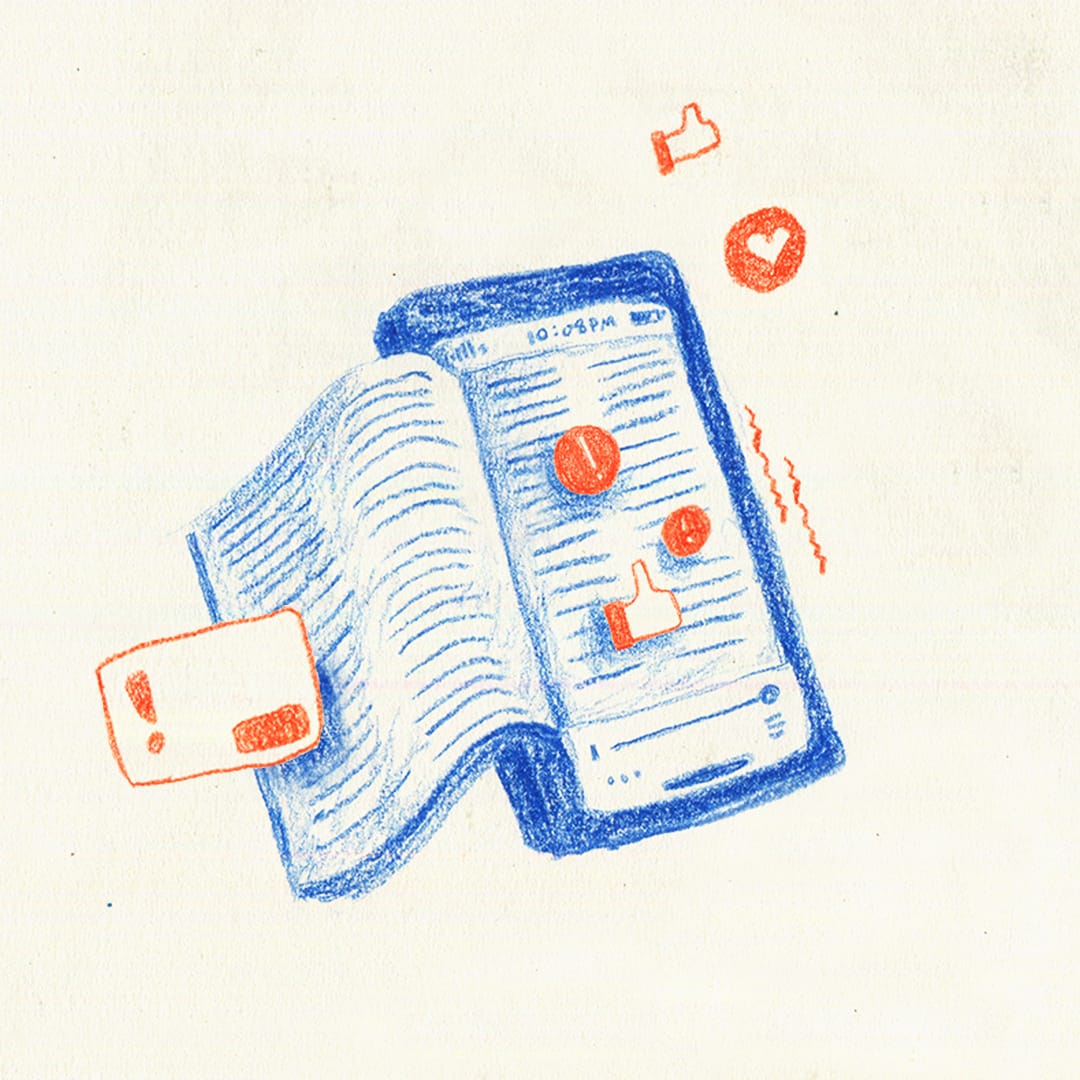
As fiction becomes less important, a related trend is declining stamina for long reads. “Whether it’s related to broader reading practices, like reading fiction, I’m not sure,” said Rebecca Grace Tan, a lecturer in the Political Science department at the National University of Singapore (who also taught me). “But certainly there is the sense that students are looking for the tl;dr (‘too long; didn’t read’) version.” The Atlantic reported that even literature students, those presumably most likely to do their reading, have barely read whole books, and struggle to do so.
This may be linked to the way we read nowadays, often multitasking and switching our attention to different pieces of information, across various devices. This is not just a trite ‘phones make us dumber’ argument that you can chalk off as boomerism—researchers have found that overstimulation in the form of entertainment on electronic devices interferes with how children develop their ‘brain connectivity’, affecting their reading and cognitive abilities. Even the presence of a smartphone near you can reduce your attention span.
In response, educators have adapted their methods. Tan now varies her reading list, prescribing news articles and YouTube videos alongside books and journal articles. “I think that previously it was just taken for granted that our students would read the longer pieces and so it was just a norm to assign [them]. But now we have to really interrogate if a longer piece is necessary, especially if we can’t be sure that it’ll be read,” she said.
Cayla now lectures in bursts of up to 10 minutes before breaking into group discussions or exercises, whereas before he could lecture for up to 30 minutes. He attributed the decline to the Covid-19 pandemic, and the fact that current university students’ formative years were spent online. “I really see a lack of attention, an inability to go through a text of more than two pages. Not all of the students, but a much higher percentage of the students than was the case five years ago.”
But are we being too alarmist? There have always been sceptics of new forms of technology and their impact on people. In the Phaedrus, Socrates argued that writing would ‘create forgetfulness in the learners’ souls, because they will not use their memories; they will trust to the external written characters and not remember of themselves.’ In 1985, the media theorist and cultural critic Neil Postman argued in the searing polemic Amusing Ourselves to Death that the television had a corrosive effect on American politics and public discourse, with viewers only able to passively receive information and not being able to act on them, weakening their abilities for rational inquiry that were previously honed through the oral and print mediums.
Perhaps the shift from print to online reading is just a natural progression as we age. A 2018 study found that Singaporean students prefer reading in print when they’re younger, and shift towards online reading when they’re older. Schoolwork and commitments increase as we get older, so maybe it’s understandable that we have less time to sit and read for prolonged periods. The internet and smartphones are genies unleashed out of the lamp; maybe it’s better to adapt to a brave new world?
The government has anyway been trying to encourage the use of digital technologies in higher education to prepare students for employment. Lower-income teenagers are likely to have fewer physical books at home, so digital technologies can maybe help bridge the socio-economic divide.
Whatever the case, this shift in reading habits has profound consequences. In a 2013 study, researchers found that students who read a piece of text on a computer screen could not recall the details as well compared to those who read it in print. The researchers hypothesised that the ‘fixity’ of the text, or the spatial representation of it in print, can provide better cues for memory recall.
Wolf posits that people who read on screens may be processing the words the same way as they process videos or film (more passively), and committing less details to their working memory (short-term recall). We may skim read instead of utilising our ‘deep reading’ processes, eroding our reading comprehension abilities.
In my day job, I’ve certainly felt the impact of relying too much on the digital medium. I jump ceaselessly from news site to news site, scroll through tweets, and perform Google searches all within a few minutes, just to get the information I need. When I take out my e-reader on the MRT, I get that all-too-familiar itch after tapping the screen to ‘turn’ the page—I must seek new information from elsewhere, now! And so I switch to a physical book, but after I read a few paragraphs, my attention wavers, and I backtrack—what did that passage on the previous page say again?
In short, our reading skill is like a muscle—we need to exercise it, or lose it.
The issue of declining English literacy amongst Singapore adults was discussed in Parliament in January. Chan Chun Sing, then minister for education, cited how adults’s skills may atrophy after leaving formal education and entering the workforce, and skills obsolescence as some reasons for these findings.
Interestingly, beyond the usual exhortations to continuously upskill and reskill through SkillsFuture, Chan also encouraged people to read “to maintain their literacy proficiency in order to process and manage information, especially in today's bewildering world, where the problem is not a deficit of information; the problem is a deluge of information which becomes bewildering.” Perhaps inevitably, the conversation is still very much centered on reading as a way to develop literacy and skills for Singaporeans to do well in school and in the workforce.
Amidst the gloom surrounding the state of reading habits and literacy, there is a bright spot: the rise of book clubs in Singapore. According to event-management platform Eventbrite, listings of Singapore-based book clubs grew by 58 percent in the first five months of 2024 compared to the same period in 2023. This boom has similarly been observed in the UK and the USA.
No Readgrets, a local women-led book club, confirmed this recent spike in attendance. However, even pre-COVID, they had three sessions discussing This is What Inequality Looks Like due to popular demand.
“The way we run [the book club] is more about the social issues that people do want to talk about with the community,” said Elfarina Roszaini, one of its co-founders. Firqin Sumartono, another, added: “When Inequality came out, everyone needed to talk to other people or to see that they’re not alone…people were coming to us and saying ‘we need to discuss this book with others.’ It has now become a space for people to share emotions about issues.”
Martina Moy, the last co-founder, was also there at a session I attended, for the book Neverness, at local bookstore Wardah Books. The book is a fictional coming-of-age novel about the disappearance of a 15-year-old teenager in the Malay village of Engku Aman in Geylang Serai, set in 1970s Singapore. The protagonist, a young female Malay teenager, grapples with the anxieties of identity and development in a period of social and cultural change.
Over an hour and a half, the 15 of us present each narrated stories that our parents/grandparents had told us, bonding over these shared experiences, and reflecting on which passages spoke to us. I said that the narrator’s personal growth throughout the story, grappling with the paths not taken by her and her friends, resonated strongly with some of the conversations I had with friends. The author, Fairoz Ahmad, gave some behind-the-scenes insights about his process, such as revealing which parts were inspired by conversations he had with his family members. Certain themes in the book served as jumping-off points for discussions about wider societal issues such as cultural loss due to economic development, and censorship.
While silent reading tends to be the norm nowadays, we’re still ultimately social animals. As Manguel put it, “Literature is not dogma: it offers questions, not conclusive answers”. And questions need to be discussed. Elfa affirmed the social element as the main driver of No Readgrets, with the team making a point to spotlight minority writers and stories, creating space for them to share their struggles and experiences. “I think that's where the future of book clubs, not just ours, is moving towards, where it's really rooted or grounded in it being just about community building.”
A related recent development is the blossoming of ‘BYOB’ (Bring Your Own Book) book club events, where each attendee discusses a book of their choice (some clubs may specify a certain genre or theme). I checked out one such event, the Bookworm Banter event, which is held monthly at Book Bar, an independent bookstore specialising in Singapore and Asian literature in Tanjong Pagar.
On a rainy Friday night, I ducked into the shop, ordered a cup of hot tea, took a seat at the large communal wooden table, and introduced myself to my companions.
A bell rang, signalling the start of an hour of uninterrupted reading. A hush descended upon the store, punctuated only by sounds from the coffee machine at the counter. I fired up my e-reader to continue my chosen read (Invitation to a Banquet by Fuchsia Dunlop). Even then, at around the 30-minute mark, I felt the all-too-familiar itch to check my phone. I glanced at it for five seconds to make sure no one needed me urgently, before resuming reading, the endorphin itch in my brain scratched.
After the hour, we proceeded to the discussion portion of the event. My companions, thankfully, were ebullient banterers, and for the next hour, we talked about the books we were reading, books that we wanted to read in 2025, our reading habits, and even reading apps that we used. One person said that they “thought that there were very little readers in Singapore, until I went for events like these and SWF (Singapore Writers Festival), and saw much more people than I expected.” At the end, we exchanged our ‘Bookstagram’ handles.
Sarah Lee, a 32-year-old who works as an admin executive, was attending her fourth such event. She told me she’d first gone to “widen my social circle of readers, as prior to Bookworm Banter, my bookish friends were all online.”
Alex Chua, co-founder of Book Bar, and the one who came up with the event in February 2024, told me he was inspired by an article in The New York Times about reading events, and how he simply wanted to encourage more people to read. “We weren’t sure if anyone would sign up at all, but for the first one, when I posted [the publicity post] at night, when I woke up in the morning, it was full,” he said.
Chua also shared how he had encountered parents buying books for their children to read to them, but when he asked them if they wanted any for themselves, they would often reply “No, I’ve got no time.” On the topic of how to motivate more people to read, Alex stridently said, “I think one main problem with that is the fact that our work-life balance is terrible. And the other thing is because reading takes effort lah…compared to coming home, switching on the TV and winding down, or even playing a computer game for most people.”
This topic of being too busy to read was a recurrent one. Elfarina and Firqin noted that the main attendees of No Readgrets were working millennials, half-jokingly theorising about the link between our alienated selves and the increased turnouts at their book club events. At the end of our chat, Elfarina ruminated, “I guess we now realize that the ethos of why we still exist is just to resist the isolation that we see in our millennial group. After eight, nine years of working, we’re like, wow, it is so individualistic.”
If books are worlds we inhabit for short periods of time, in those brief book club sessions, through the act of convivial sharing, strangers offered each other a glimpse into the worlds in which we derive meaning, pleasure, and knowledge from, and by doing so, escaped from the banality of our lives. For those brief moments, we were not isolated, but a community, joined with all the readers that came before us.
As seen by the boom in book clubs and reading events, there is the human urge to reach out and connect with a community over these experiences that we’ve reflected on. It’s great that many of these events are co-organised between publishers and bookstores, some with NLB’s support as well. Perhaps to go further, spaces in community centres can be offered for local reading pods, book launches, and book clubs, making it easier for parents to bring younger kids to such events by reducing their traveling time.
An even bolder move would be to follow the example of countries like the UK and Canada, and remove the GST on books and magazines. Books are admittedly not cheap in Singapore, and while our libraries are top-notch, helping lower-income families procure books for their children will go a long way toward helping them cultivate a reading habit from young. We could also make the newly-announced SG Culture Pass applicable for purchases of all books from local bookstores, in addition to SingLit.
All this, however, will go to nought if our local communities don’t sustain a spirit of reading. We need to support community spaces like the Casual Poet Library, an entirely community-funded literary space featuring curated shelves by everyday Singaporeans. Never mind that there is no immediate economic payoff, nor a ‘plan’ on what this space can achieve; sometimes we just need a space to bond over stories and escape from the transactional or utilitarian aspects of reading in Singapore.
We need not veer towards either extreme amidst the digital revolution. There’s no need to totally ban digital screentime for our children, nor should we participate in the fetishisation of STEM and deem literature ‘dead’ in an age of AI. Parents can allocate equal time for their children to read books as well as using digital devices in ways that supplement their learning. Imagine reading Neverness, and then accessing digital archives to learn more about the changes in 1970s Singapore. This helps in the development of what Dr. Wolf calls the ‘biliterate brain’, which is the ability to utilise deep-reading skills regardless of medium, fostering a next generation of thoughtful digital natives.
While I’ve started reading a lot more in recent years, the notifications on my devices still draw me in like siren songs to Odysseus and his crew. But through slow, intentional ways—supporting spaces for reading, recommending books to others, and creating reading communities—we can change things. I think of Firqin likening the act of reading to ‘forced meditation’.
“I think for a lot of us, especially when we are just hustling and just trying to get through the month, you don’t have that time. And I think it’s very important to carve that time for yourself, where you take care of your mental health. When you take care of yourself, you can take care of others.”
And so, dear reader, if you’ve made it this far, I invite you to join me in recapturing the spirit of reading slowly, of reading intentionally, and of reading meditatively. By sitting in stillness, an act of resistance in our fast-paced society, we can rediscover who we were, who we are, and who we want to be.
Isaac Neo is a writer, analyst, and podcaster based in Singapore. His work has been featured in publications such as Mekong Review and RICE Media, and he was a contributing author to the anthology We Are Not The Enemy: The Practice of Advocacy in Singapore (2024). He also co-hosts the "Before the Ballot" series on socialservice.sg. His Bookstagram account is @neo.chapters.
This is Isaac’s second essay for Jom. Read the first one here.
Letters in response to this piece can be sent to sudhir@jom.media. All will be considered for publication on our “Letters to the editor” page.