
Dear Jomrade,
Today we’ve published:
- “Singapore This Week”, by Jom
- “Everyday Economics: Streaks”, by Serene Koh
This week is four years since Charmaine, Jean, Waye, and I huddled together in a small office on Carpenter Street, our first proper meeting, and started brainstorming names for what would become Jom.
Thanks for being with us on this journey—over 8,000 of you now. Many would have joined long after our founding. In a week when the global order has been upended, when it seems there’s little we can take for granted anymore, it’s an opportune time to remind ourselves of the origins and purpose of this shared myth, project, fantasy, whatever you feel it to be, and of the power of community in the face of incomprehensible forces, by revisiting some of our early “build-in-public” newsletters:
- #1: “Isn't it risky starting a magazine in Singapore?”
- #2: “What's Jom? How are you different from Rice and New Naratif?”
- #3: “Why a Malay name for an English-language magazine about Singapore?”
It’s been exhilarating for us to also witness our team’s growth, evidenced by this week’s content. Abhishek Mehrotra, head of content and presumptive next editor, has written about the scourge (or not?) of microplastics. Sakinah Safiee, head of research and social media, has once again helped us understand her generation, in a piece about Gen Z fashion brands. Maria Oshige, a final-year student at NUS and Jom intern, has written about what we've truly lost with the decline of the school canteen amidst the shift to centralised catering. And Faris Joraimi, our history editor, waxes lyrical about charcoal fires, rendang, and nasi padang in his ode to Warong Nasi Pariaman, which will close at the end of the month after almost 80 years of feeding famished Singaporeans.
Our incredible roster of contributors now also includes Serene Koh, everyday economics columnist, who in her third piece has this week written about the power of streaks, and the behaviours they incentivise—think Duolingo, fitness apps, Wordle, and the like.
Like Pariaman, this is a decades-long project. But we’re still a long way from sustainability. Help us get there by joining the roughly 2,000 paying members now, starting from just S$10 a month.
- Has the PAP won or lost the middle ground by demoting Pritam?
- What we’re losing by shifting from school canteen vendors to centralised catering
- Should Singaporeans be concerned about what Oxfam calls “the rule of the rich”?
- Why are Gen Z fashion brands proliferating now?
- The scourge of microplastics—or not?
- An ode to Warong Nasi Pariaman
- Who really benefits from the frenzy of Singapore Art Week?
Above are the issues we chose to explore in depth. Other news this week included: Donald Trump’s invitation to Singapore to join his “board of peace”; Mark Carney’s “nostalgia is not a strategy” speech at Davos, which has resonated locally; the passing of Liu Thai Ker, Singapore’s first master planner; jail for preschool leaders who covered up molestation of toddlers by a cook; a survey showing that many young Singaporeans expect million-dollar inheritances from their parents; seniors not retiring but choosing “fractional” jobs; a Chinese paper in Malaysia under investigation after allegedly mistranslating the Agong’s speech, after the government’s move to make the teaching of Malay and history mandatory across all schools; and South-east Asian countries banning Grok, an AI-powered chatbot that allows the creation of nude deepfakes, including of children.
“Everyday Economics: Streaks”, by Serene Koh
“I like five-letter words as much as someone can like five-letter words, I suppose, but at this point I don’t actually think it’s just about the words anymore; it’s also about protecting my streak. Every potential Wordle loss now means more than not guessing the right five letters; it means possibly wiping out something that feels larger than 121 solved words.
Once you start noticing them, you see streaks everywhere: in loyalty programmes, fitness apps, Pokémon Go. A number grows. A series forms. And at some point, the streak stops being a record and starts to become the thing that matters. That’s usually the point at which breaking it starts to feel like a loss.”
How do streaks affect each of us every day? Read on to find out.
Jom!
Sudhir Vadaketh, editor-in-chief
Jom
Jom on everyday economics
 Serene Koh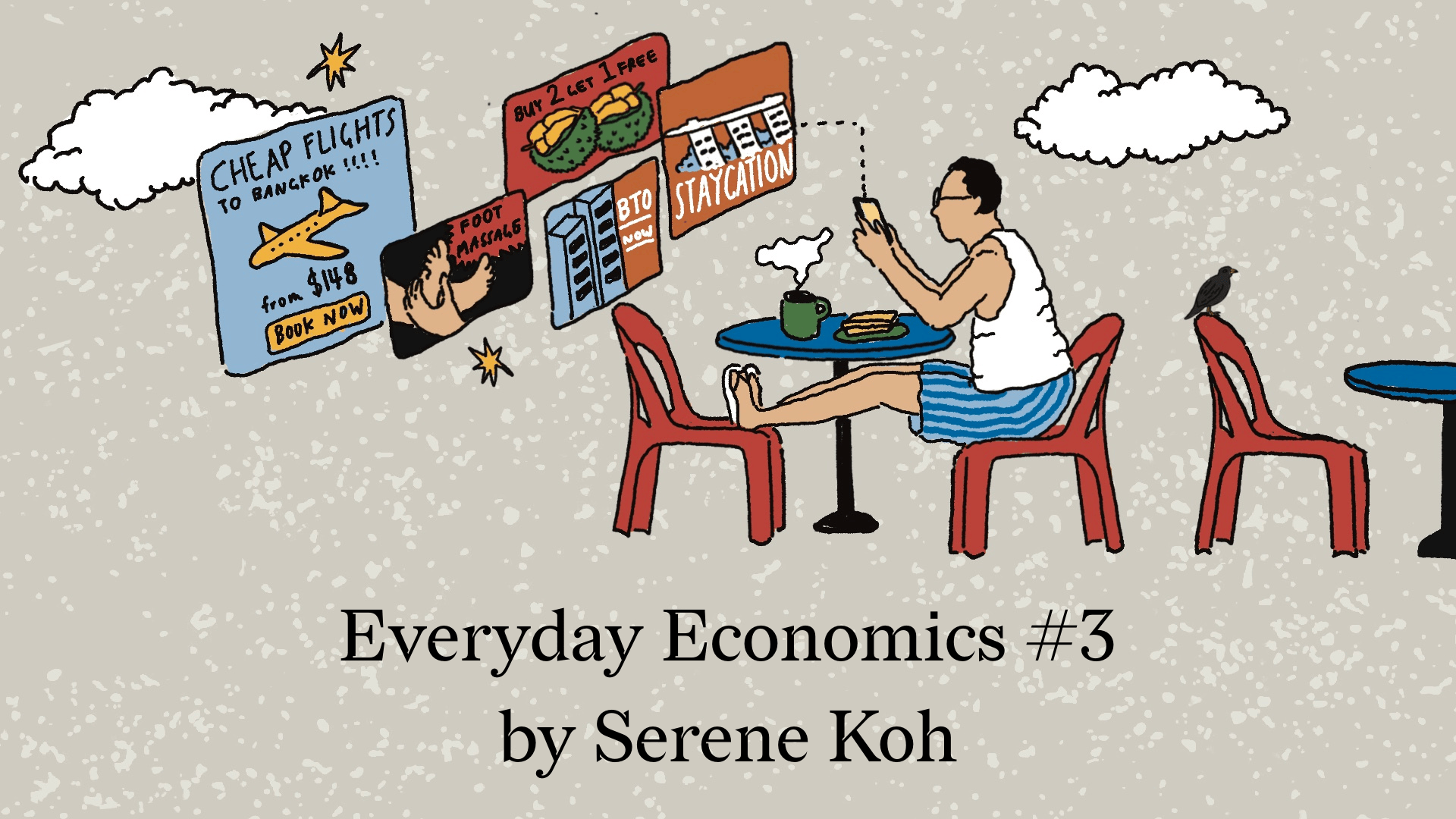
 Serene Koh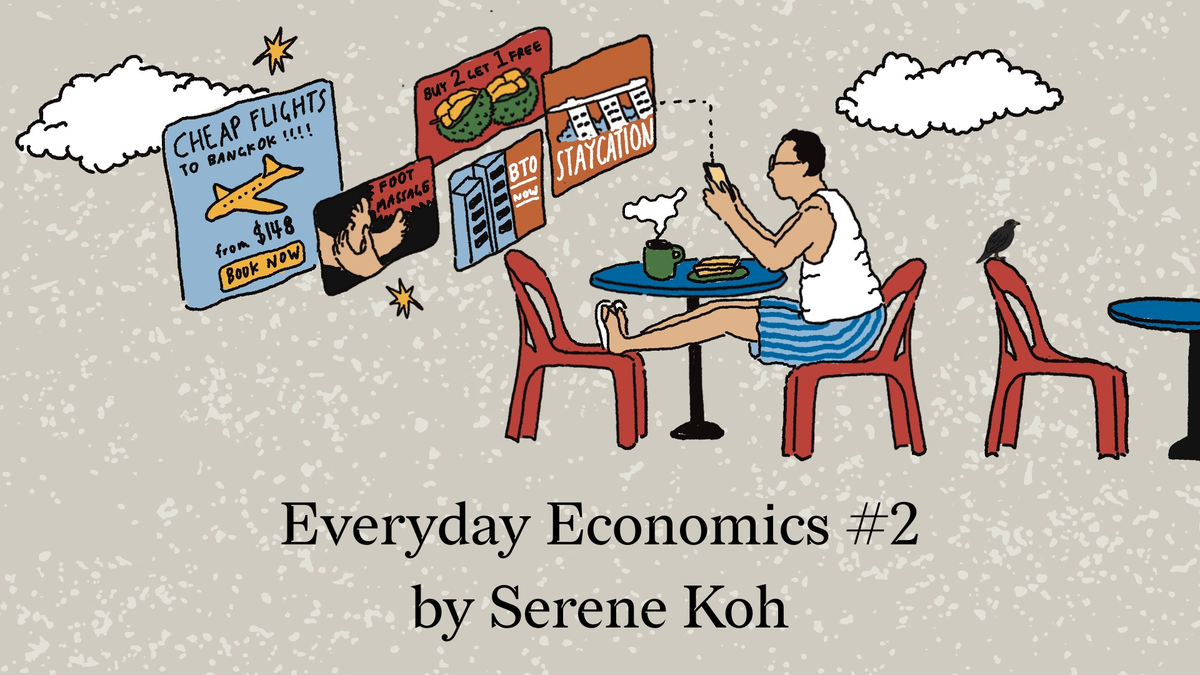
 Serene Koh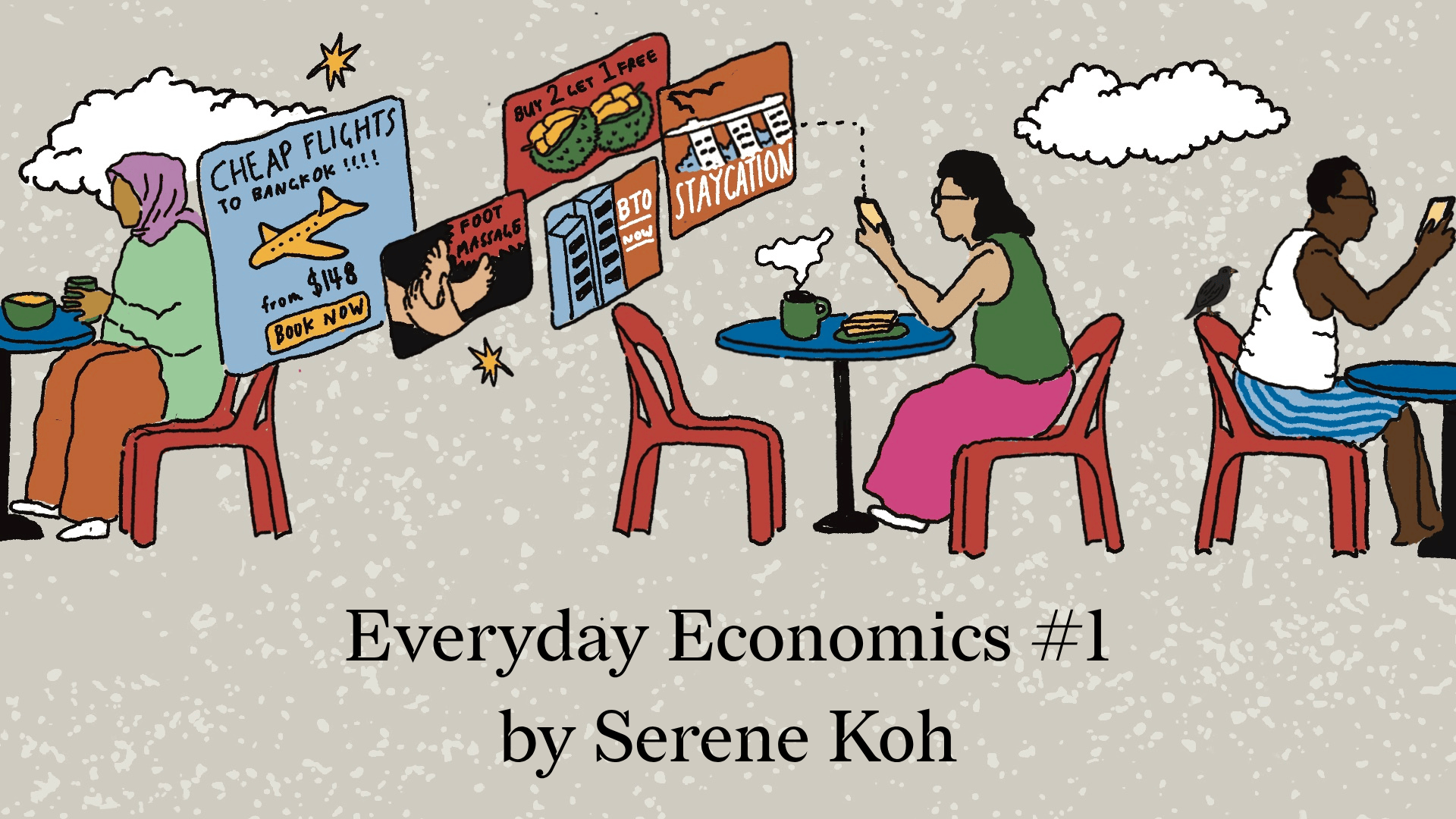
Singapore This Week
Art: SAW XIV
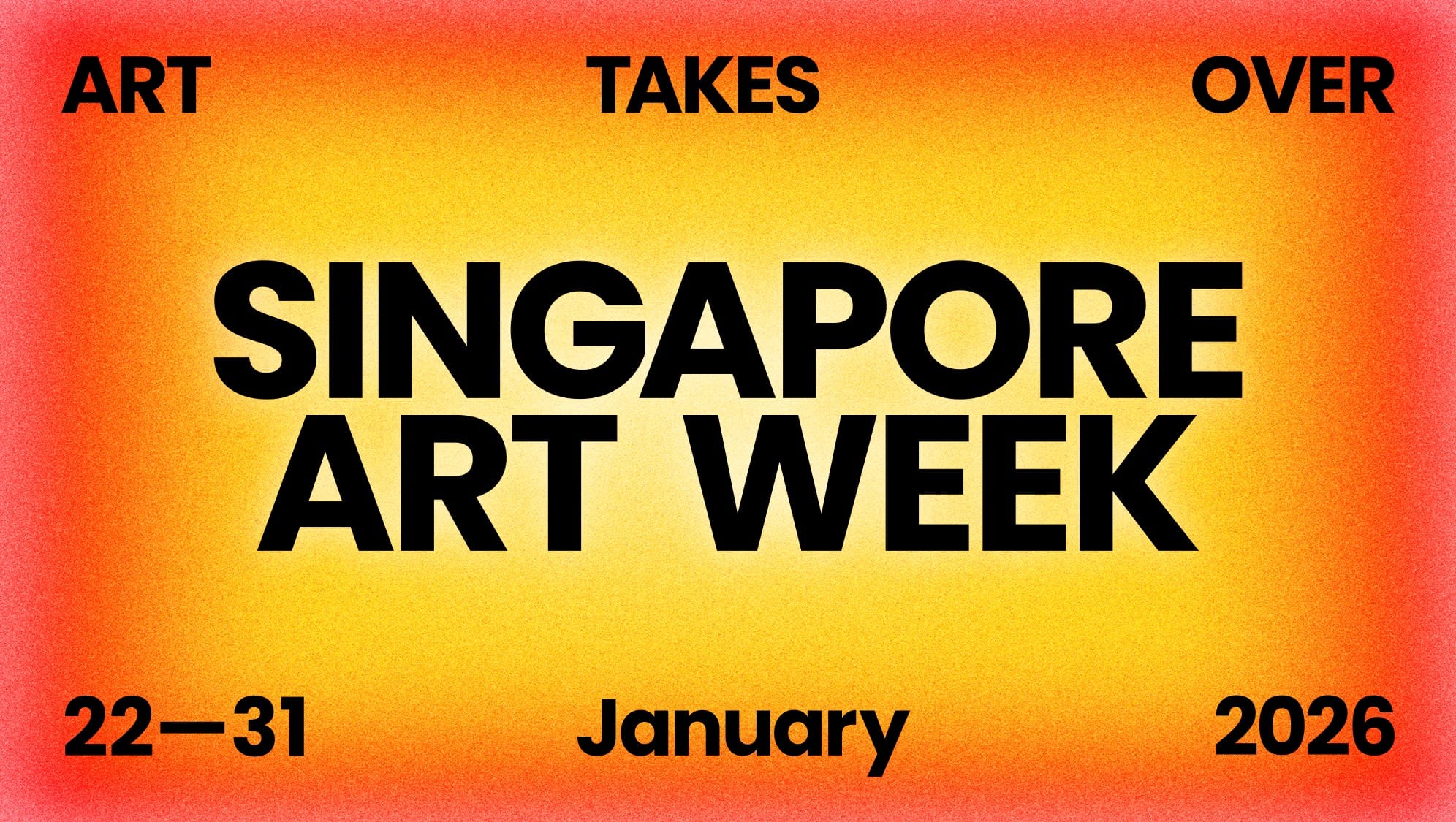
“Please take care of yourself this @sgartweek, your health is most important,” one artist posted to Instagram, against a blister pack of Redoxon Vitamin C tablets. “We have peers doing beautiful work over the next few weeks,” went another, “Save your energy, take it in moderately and most importantly, these works only find meaning when shared with you”. If artists are dispensing medication and advice on moderation, it’s a sure sign that Singapore Art Week (SAW)—a misnomer now more than ever—has become an endurance sport. The visual arts extravaganza frontloads the year, cramming every inch of arable art land with exhibitions, performances, fairs, symposia, talks, workshops, you name it. SAW boasts over 100 programmes running between January 22nd to 31st; the start and end dates of the “week”, however, get a little blurry at the edges. Every other artist and organisation in Singapore, whether involved directly in SAW or not, plans their programming around this sprawl in an attempt to seduce both curious passers-by (including a Jonas Brother) and rarefied curators working in spaces far afield as Paris’s Palais de Tokyo, Shanghai’s Rockbund Art Museum, and the Los Angeles County Museum of Art.
If you’re trying to figure out what to see in this snarl of events, you’re not alone. You could go for the usual suspects, the twin art fairs of S.E.A. Focus and ART SG that typically anchor the season; the ever popular art walk OH! Open House, this year travelling to the obscure Moonstone Lane; or the blockbuster shows served up by the National Gallery Singapore and STPI, the former on five pioneering South-east Asian women artists giving force to the political through the personal, the latter a groundbreaking show on printmaking in contemporary art. But if you’re wondering what it’s like to witness the sights and sounds of SAW from a different perspective, Post Museum’s guided trails might be the adventure for you. This year, the independent outfit’s curated tours feature two that are co-created and guided by visually impaired collaborators. They’ll walk you through shows at the Tanjong Pagar Distripark and Waterloo Street, among other sites, with tours designed around multisensory navigation and spatial storytelling, so you aren’t just digesting art with your eyes, but with your entire body. And then there’s the experimental musical festival Sonic Shaman, in Singapore for the first time, that invites you to broaden your aural horizons with “Borderless”. Rave at a silent disco, encounter a sound-sculpture inspired by a 1,000-year-old Japanese ritual, and make leaf crowns in a participatory installation as your body becomes an instrument in a larger communal orchestra. Perhaps we should have multiple planting and vegetative cycles throughout the year, rather than a forced blooming every spring.
Other stuff we like
End FGC [Female Genital Cutting] Singapore’s birthday on Feb 8th. Celebrate grassroots feminist resistance, creative activism, and community-led advocacy. A panel discussion featuring Saza Faradilla, Diana Rahim, and Dr Vivienne Wee; and a dance performance exploring the topic of FGC, by local artists Nurul Atiqah Zaidi, Syimah Sabtu, Ainin Sofiya Binte Ahmad Rizal, Ruby Jayaseelan, Sonia Kwek, and Hasyimah Harith.
Apply for The AGEncy Fund. T:>Works is inviting individuals aged 60 and over to apply for funding. It’s interested in collaborative, inclusive arts projects that are intergenerational, participatory, and community-based, and that celebrate memories, wisdoms, and legacies. Apply by April 15th for up to S$10,000 per project.
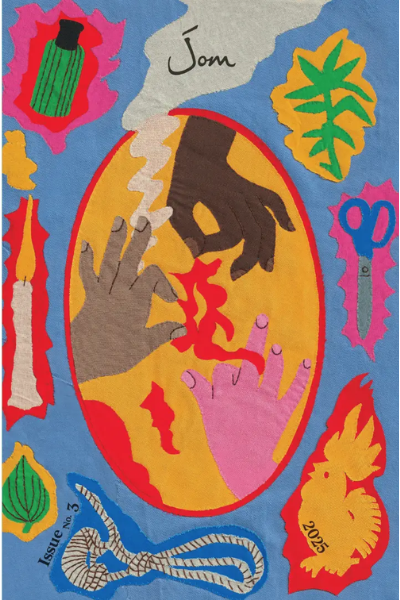
Jom print issue No.3 has just launched!
Dive into its themes of movement, mobility, and magic.
A flavour of Jom. Occasionally, Jom publishes essays outside the paywall. These are on issues we think are in the public interest, and deserve a wider airing. In the past two years, we have published nearly 50 such pieces. Read some of these if you’d like to see samples of our work. We hope they’ll convince you to subscribe. And even if you’re here with no intention of doing so, we hope you’ll enjoy these offerings and consider it time well spent!