

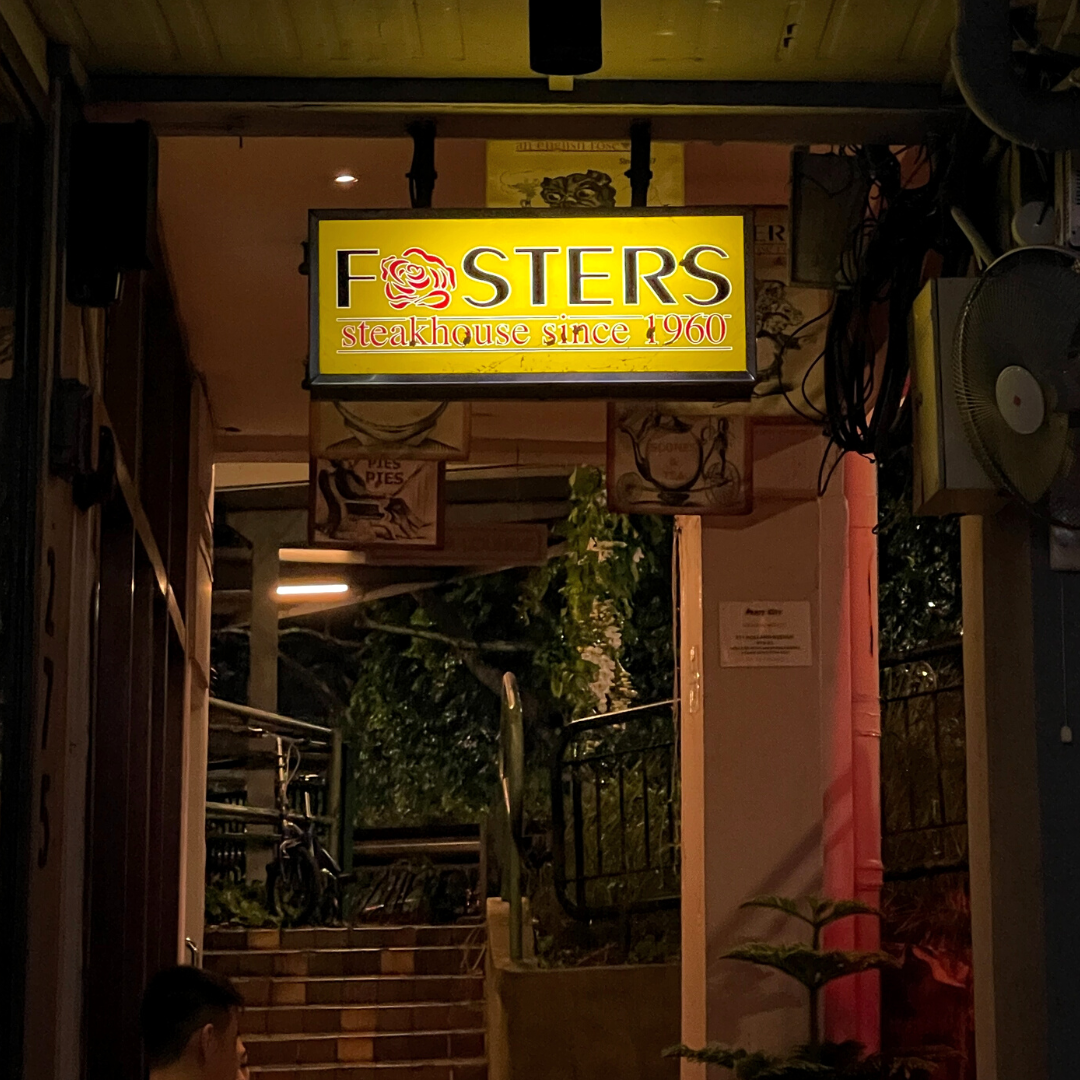
It’s mid-week in Holland Village. Snatches of laughter steal out the door of Fosters Steakhouse, a nondescript tavern at the end of Lorong Liput, and dissolve into the sleepy night. Save for a few people drinking further down on the main drag of Lorong Mambong, there is little going on.
As far as eateries go, 62-year-old Fosters, which has been around longer than Singapore has been independent, may as well be a members-only club. Foodies wouldn’t be satisfied here. Nor would wine lovers. There’s no craft beer on tap. The coffee’s nothing special. Their best deal, two cocktails for S$15 (adjusted to S$16.80 for post-COVID inflation), isn’t well-advertised. By all accounts, Fosters is unremarkable, perhaps even subpar.
Nevertheless, there’s a homely appeal to the tavern. The yellow paint has been peeling off the walls since I first patronised it over a decade ago. Upon entering, one’s eyes are drawn to a sizable blown-up stock image of the inside of a rose.
Fosters was never meant to steal the spotlight. “I always wanted it to be like a secret greenhouse,” TH Chua, the owner, recalls of the design process, which included a balcony that hung over a drain and extended into a small garden. The effect is calming: it feels like a private oasis, natural, as though it has grown from the soil like the greenery that ensconces it. “When you enter the restaurant and you see the foliage I built, you feel this quaint charm,” he says.
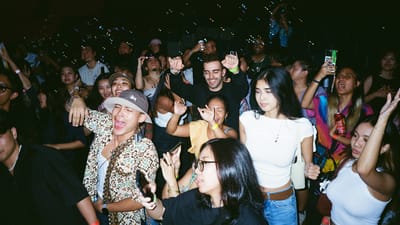
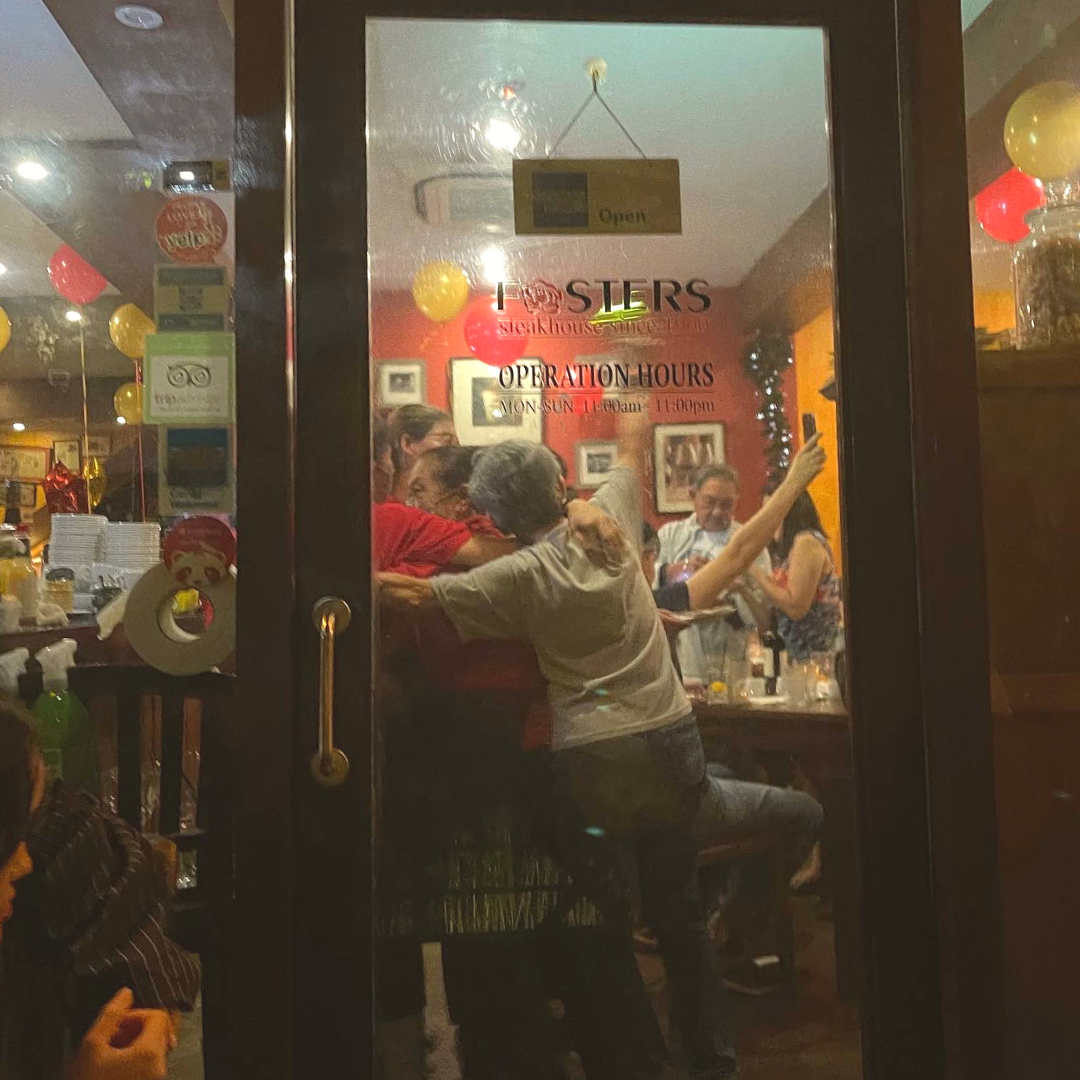
“If only it were like this all the time,” Chua adds, gesturing to the packed room. And with that, he makes the last call—ever—for drinks at Fosters.
I grew up in Fosters. As a child in the early 2000s, I went for afternoon tea with my mother. I remember savouring the heavy, sweet clotted cream while she gossiped to her friends on a hot pink Motorola. Later, in my teens, I drank there with my friends. It was a safe space to indulge. We laughed, argued, cried, and made up in the soft, yellow glow of the citronella candles.
“Are you sure? Some water first?” Michelle, the waitress I grew to love, would ask when I ordered another margarita. She always greeted me with a smile. In the later years, we hugged. I haven’t always felt like I ‘belonged’ in Singapore—though I was born here, I grew up squarely in an expat bubble. At Fosters, I was part of the furniture. Sure and steady like the old wooden bar.
Today, I am the last man standing in my expat cohort that grew up in Singapore. My peers have gone around the world to seek their fortunes. I did too, for some time. But I’m back, indefinitely. I quickly fell into a new, old rhythm here. I go to familiar places, only they are changing. Often, I feel like a ghost.
When I posted on Instagram that Fosters was closing, my inbox was flooded with crying emojis and messages in caps. I wasn’t planning to attend the very last night. Occasions like these are too sad for me. I hate goodbyes, nearly to a pathological extent. Sometimes I stop a movie halfway, so I don’t have to part with the characters.
Perhaps I search for permanence because I was born in transience. It’s been almost 30 years since my parents moved from Dublin to Singapore. Since I was a child, I’ve heard them saying that they’ll stay for a few more years before returning to Ireland. It’s still yet to happen.
Meanwhile, the Singapore I grew up with, alongside the people that shaped my understanding of this island as my home, are all gone. Over the years, though, there’s been one constant in my Singaporean life, a thread that extends from my childhood to this new, old rhythm: Fosters.
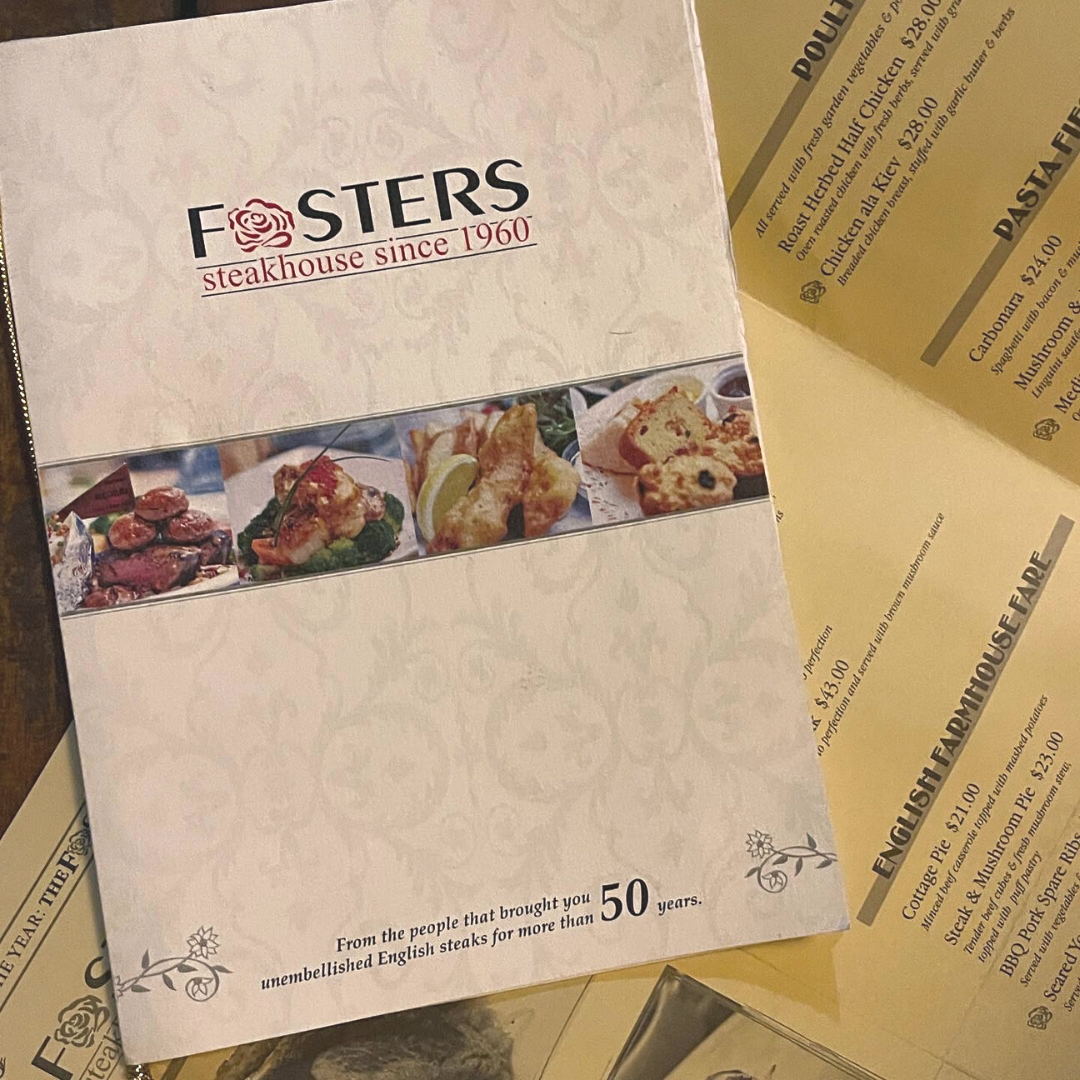
Fosters is tangentially British. Chua purchased the restaurant in 1982 from a man called Mr Fosters, who was an ex-colonel in the Cameron Highlands during the second world war. After his stint in the military, in 1960, Fosters opened a tavern to serve Western food in Amber Mansions on Penang Road. Chua purchased the restaurant from Fosters in 1982 for sentimental reasons. He remembers eating their steak and scones at his father’s office during his childhood, while his father worked on the weekends. The restaurant was never his main source of income, just a “passion project”.
When Amber Mansions was redeveloped, Fosters moved into the Specialist Shopping Centre, the oldest mall on Orchard Road at the time. When it was demolished and redeveloped in the late 1980s, Chua relocated his new business to the basement of Palais Renaissance. The restaurant was doing well, so in 2000 he opened a second location in Holland Village. When Palais Renaissance underwent a facelift around this time, Chua wasn’t given the option to renew his lease. “They said our restaurant didn’t suit their new direction.” Twenty-odd years ago, and it was already out of style.
Despite the collective sadness I gathered from the crowd on closing night, what I felt more urgently was our apathy. No one could believe this place was going, and no one had any idea where they could go for the same effect. It was like Fosters had slipped out of our grasp while we were looking out the window, lost in a daydream.
The disappearance of this sleepy tavern also prompted some anxiety about the state and the future of Holland Village. We grumbled about the loss of its unique topography, and our lack of enthusiasm for yet another high-rise breathing down its neck. “Not enough space,” an older member of the wait staff mentioned when I wondered aloud how this could happen. None of us could think of an effective counter to this.
This is a pragmatic sentiment, and pragmatism in Singapore is an ideology in itself. “Pragmatism can serve as a trustworthy compass when all agree that the good of the nation is what really counts,” The Straits Times editorialised, following Lee Kuan Yew’s death in 2015.
In general, whether in relation to housing, healthcare or the death penalty, we trust our technocrats to make sensible decisions for “the good of the nation.” It’s a surrender, of sorts. When the technocrats are questioned, a familiar pragmatic sentiment emerges: when you trust us to make sensible decisions, you may experience some personal discomfort.
So when the Fosters wait staff said “not enough space” and we all just shrugged, that was an expression of our pragmatic ambivalence, constructed over the decades. We had surrendered our love for this place, because we couldn’t imagine how to keep it alive.
Singapore’s relentless demolition and development is a good metaphor for the existential challenge of magicking a metropolis from the mangroves: we are always starting over.
What have we surrendered to this magicking? Soon, it may be our collective memory, the mental fascia that informs our personal identity through our relationships with each other, our history, and the environment. From the resettlement of the Orang Laut, to the clearing of kampongs and forests, there are puzzle pieces already missing from the Singapore Story.
The proliferation of what’s left of our built heritage is both a pragmatic and an idealistic concern. Protecting, enhancing, and celebrating our collective memory is for “the good of the nation”. But who gets to decide, and where we should start, is up for discussion. When I was trying to think of a reason why Fosters could stick around in conversation with the staff on its last night, I couldn’t imagine where one could even begin this conversation.
Perhaps this is because of its uniqueness in our social topography. Fosters was a British-themed tavern in a neighbourhood, Holland Village, which has a reputation as an expatriate hangout. However, Fosters itself didn’t attract many expats, but locals who travelled from afar.
As the last of my third-culture-kid cohort, Fosters was where I found a community with a version of Singapore (and Singaporeans) beyond my rootless past. My sense of alarm, now, is not just because the tavern is physically gone. I am startled and discomfited by the ever-shedding landscape of Holland Village, and the greater magicking hand that keeps imploring us to begin again.
There are historical reasons why Holland Village evolved to be an enclave for expatriates. Under British rule, retailers catered to the anglo-expatriates who worked on the nearby military base on Buona Vista Road. Subsequently, in the 1960s-70s, international schools and expatriate social clubs were established throughout the catchment area of District 10, from Dover Road to Bukit Tinggi.
When the British withdrew their troops, and there was a mass repatriation in the early 1970s, the fate of Holland Village was unclear. It was rescued by the 1971 Concept Plan with the Buona Vista high-density public housing construction and the addition of more shophouses to support the influx of residents.
With new residents came a tonal shift in the vibe of Holland Village; it grew less reminiscent of a kampong with an outdoor market and became a hip and trendy place to eat, drink, and shop for souvenirs. Was this its first gentrification? It’s hard to pinpoint when the proverbial first brick was dismantled in an ever-moulting country like Singapore.
Over the years, Holland Village proper—Lorong Liput and Lorong Mambong—has remained popular with expatriates (even as its resident population has diversified). Is Holland Village exclusionary towards Singaporeans? In general, I don’t think so. There’s a broader exclusion: the shops, restaurants, and grocery stores cater mostly to the wealthy. (Exceptions include the market and food centre). In contemporary Singapore, this is not unusual.
Still, though, Holland Village does have a history of servicing expatriates. The question is whether or not that’s a heritage worth preserving. This enclave is a fine example of the various competing place meanings in any locale, complicating redevelopment and blurring our identities’ significance.
Sentimental attachments and emotional memories do not exclusively create place meaning. Demolition is corrosive to fostering a sense of connection in urban environments. A sense of continuity is an important aspect, too, so the physicality and, thus, the preservation of architectural features and quirks are crucial components of successful heritage projects. The URA (Urban Redevelopment Authority) is mindful of this in its conservation efforts.
Consider Tiong Bahru, granted conservation status by the URA in 2003. It was conserved—from an aesthetic perspective—with the richness of its art-deco history in mind. The communal, neighbourly fabric of the 20 blocks of pre-war flats and the 36 units of shophouses recalls a simpler time: creative geometry, decorative grilles, fair-faced brickwork, and low-rise buildings with steel windows, timber doors, and open balconies.
Holland Village, by contrast, is known as a locale for its crescent-shaped, low-rise, lackadaisical, distinctly lived-in vibe. It’s all a bit run down, really. Just a smattering of shophouses with greenery and some vast open space. Or it was until about 10 years ago when the Holland Village Mall, colloquially known as ‘The Windmill’—an expansion of an open-air theatre built under British rule—was demolished. In its place is what I can only describe as an eyesore and the harbinger of boorish things to come.
I was living overseas when all that happened. When I returned, I stopped in my tracks, mouth agape in horror, to see an oblong, protruding glass edifice: Holland Piazza, home to an expensive organic grocer and an overpriced Mexican restaurant. I kept blinking. Hard and fast, as if, if I blinked long enough, the familiar would reappear. It was a profound disorientation I felt then. Who am I when the places I have known forever, like the veins on my hand, cease to exist?
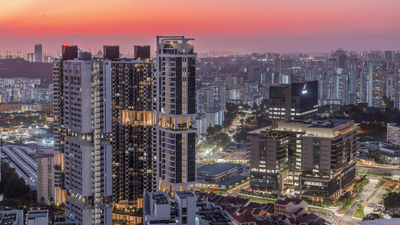
Since then, there has been a slow, insidious metropolis creep in Holland Village. Like much of Singapore, it’s slowly succumbing to architectural globalisation. These contextless glass spires pop up, seemingly out of nowhere, and with no contextual relationship to the built environments they invade.
In 2013, the URA vaguely identified Holland Village as one of Singapore’s “identity nodes”. However, unlike in Tiong Bahru, the URA has not earmarked any specific areas or buildings for conservation. This leaves the whole area vulnerable to future demolition or extensive renovations that significantly alter its character.
In 2018, the government accepted a mixed-use commercial and residential development bid by the Far East Organisation, Sinoland, and Sekisui House consortium for S$1.2bn. Potential buyers had been encouraged to keep the spirit of Holland Village in mind. The resulting project, One Holland Village, is a mammoth, mixed-use project that will create 296 residences and more than 250,000 sq ft of office and retail space.
The mock-ups are jarring. Though the architectural firm claimed to pay close attention to the uniqueness of this hamlet, the high-rise slabs of tope and grey and the boxy, NUS-lite design of the retail space feel incongruent with the sleepy spirit of Holland Village. It creeps inside the crescent, with private residences, offices, and retail outlets standing behind the Holland Village Market & Food Centre. The knock-on effect of developments like these are the slow and merciless deaths of places like Fosters: the charming, characteristic establishments that made the area attractive to developers in the first place.
Though these revisions are monstrous to me, the demand for One Holland Village is astronomical, with prices hitting close to S$2,500 per sq ft—almost S$1,000 more than the national average for a private apartment and some five times the cost of public housing (in 2020). I keep wondering who these people are that have enough money to buy it in the first place, and where they imagine they will be living—or if their plan is simply to be an absentee landlord, cashing out on the next wave.
The latest freakish addition to Holland Village is the Raffles Medical Building, which is like the bigger and uglier sibling of Holland Piazza. “I don’t recognise Holland Village anymore,” said Rosanna, who frequented Fosters from the beginning. That’s 62 years of patronage. Throughout the last night in our sleepy tavern, Rosanna was bopping around like the Energizer bunny—asking the musician to sing The Beatles—occasionally standing behind me and chiming into my interviews with the regulars. It was impossible to get Rosanna to sit for an interview herself; she was having too much fun.
But she did tell me that of all the Fosters locations, this was the best. There’s no reason to visit Holland Village without it.
So, what exactly are we losing in its wake? “It’s a place where you belong to,” said Jane, a Fosters regular, who noted that in a post-Covid world, F&B outlets feel temporary and transactional. According to Chua, the unit will be taken over by a chain fine-dining outlet with a footprint in upscale areas like Club Street and the Central Business District. Another patron referred to Fosters as his “outside home”. Patrons, staff, and the boss all agreed that the regularity and sameness of this place was its lifeblood.
Our sense of self is inextricably tied to the places we frequent. Place identity theory—a collection of ideas used in multi-disciplinary scholarship to describe the relationship between persons and place—seeks to understand how our spaces evolve throughout time, and what these physical evolutions do to create, enhance, or erode our sense of self and community. For the individual, Proshansky (1978) defined place identity as a “complex pattern of conscious and unconscious ideas, feelings, values, goals, preferences, skills, and behavioural tendencies relevant to a specific environment.”
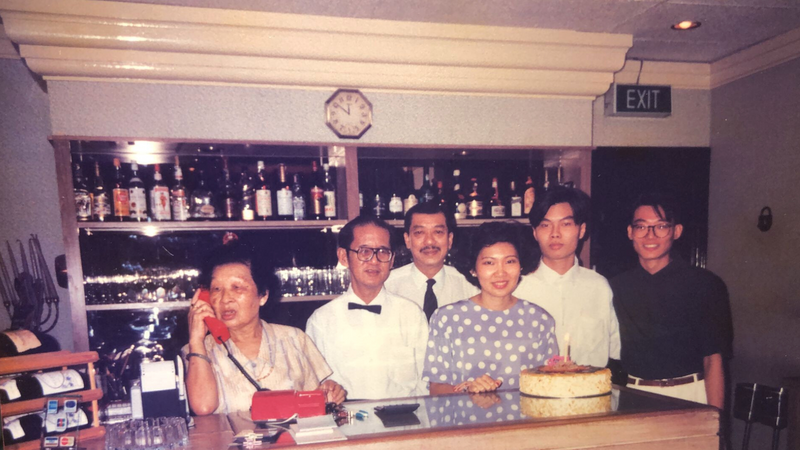
What we experience in a place shapes our perception of it. Trauma, loss, and transition can give a profound meaning to a place in the mind’s eye, positive or negative. Place identity also forms through the relationships made in a locale. Squid had found a chosen family in her colleagues at Fosters when she worked there part-time in the late 2000s during her Polytechnic days.
“Jonny [the bar manager] taught me how to choose a good wine,” she said, on that last night. After a while, Alift, another former part-timer, walked in, and they hugged. That they worked at Fosters for so long—all through their schooling years, and even taking on shifts when they had full-time office jobs—speaks to the strength of the place meanings created here.
“Mr Chua is very accepting,” said Squid, reminding me that this isn’t always the case in Singapore—both Alift and she are queer—especially in service jobs. As if on cue, Chua spotted Squid and bounded to her with a big smile. They jostled and joked for a while. I asked Alift when he last came to Fosters. “Oh, I don’t know. A long time ago.” He went on to say that he never bothered to make visits to Fosters a regular thing: “I just thought it would always be here.”
Squid and Alift are more ambivalent about Holland Village, the hamlet that hosted Fosters. “It’s quite an atas (posh) place, more for expats than us,” Squid mentioned. For the two, their service job at Fosters was more than just something to do in their free time. They needed the money. “Sometimes, the other part-timers would be late for shifts or not show up at all,” Alift said. “Yeah,” Squid laughed, “we couldn’t do that.”
With Fosters gone, Squid and Alift don’t imagine spending much time in Holland Village. The positive place meaning they’ve created for it goes with the tavern. What remains is their feeling of not-belonging there. In a 2009 article, “The Dimensions of Place Meanings”, Maarja Saar and Hannes Palang assert that the “politics of belonging” involves an exclusionary process of deciphering who belongs to a place and who doesn’t.
What’s interesting about Squid and Alift’s place meaning is how similar it is to mine: all three of us felt welcomed, accepted, and cared for at this sleepy tavern. Yet the behavioural tendencies that created our near identical place meanings are totally different. In fact, they seem contradictory. Squid and Alift are too polite to make this distinction clear, but Squid said something off-handed that illustrated the chasm in our meanings.
“I was a bit resentful to the rich kids that worked here for fun,” she said. “They just ordered anything from the menu to eat for lunch. I could never do that.”
It’s unlikely that the three of us would have met in our daily lives, let alone share a unique fondness for a place that led to a night of drinking, laughing, and conversation. Such is the power of constants like Fosters: there, anyone could belong. All one had to do was to keep going.
Beyond the small but devoted team of regulars and the crew of part-timers, one wonders if, pragmatically, a nondescript tavern like this deserves a space in Singapore’s new normal. Perhaps we will just lose businesses that don’t traffic in gimmicks or offer wild bargains and discount promotions on carefully curated social media profiles.
But it’s easy to complain about gentrification, to justify the continued existence of any place that is old or sentimentally important to a select few. What’s harder to do, is to itemise the qualities of the ordinariness we lose, and to measure and weigh these qualities against or alongside modernity, progress, and utility.
At the end of the evening, Chua presented me with a treasured token: the painting of a lobster that once hung over the toilet. I choked up. It’s like an official acknowledgement that some part of this place was mine. We blew out the citronella candles and brought the glassware inside, and then it was over. I swapped information with Squid and Alift, then we headed off separately into the sleepy night.
“We should really catch up more often,” Alift had earlier told Squid. Though there’s clearly much love between them, life has taken them gently in different directions. It reminded me of the many times I had taken friends who had left Singapore and returned for a drink in our sleepy tavern, soaking in our tender distance. I felt grateful, then, to witness their reunion. Sad, also, for the erosion of our separate but equal nucleus.
Zachary Hourihane is a writer based in Singapore. His works of journalism explore the relationship between the person, their place, and their sense of belonging. In poetry and fiction, he grapples with cultural rootlessness.