
“We know of no country in the world which has attracted less notice than Korea. Not a single junk, unless cast away by stress of weather, goes to Korea...
A Korean looks a very grotesque figure. Besides the enormous hat which covers a pointed cap, he wears a pair of sleeves of the moderate dimensions of a sack. This is quite in contrast again with his shoes made of canvas, which fit most closely to his feet, and he is as proud of their smallness as a Chinese lady. The males are remarkable for their symmetry, the females for their extreme ugliness, and they appear here to hold the rank of beasts of burden.”
- The Straits Times, 1838
“Singapore President Halimah Yacob has asked South Korean President Yoon Suk-yeol to consider allowing more flights between the two countries, noting that there is strong demand for travel from both sides.
‘He told me that in a survey they did, when Koreans were asked where they would like to go when borders are open, they said Singapore,’ she told The Straits Times.
‘So I said that the reverse is also true. When Singaporeans are asked where they would like to go, they put (their) number one (choice as) Korea.’”
- The Straits Times, 2022
I remember when it became cool to be Korean in Singapore. It was the early 2010s and I had just begun secondary school.
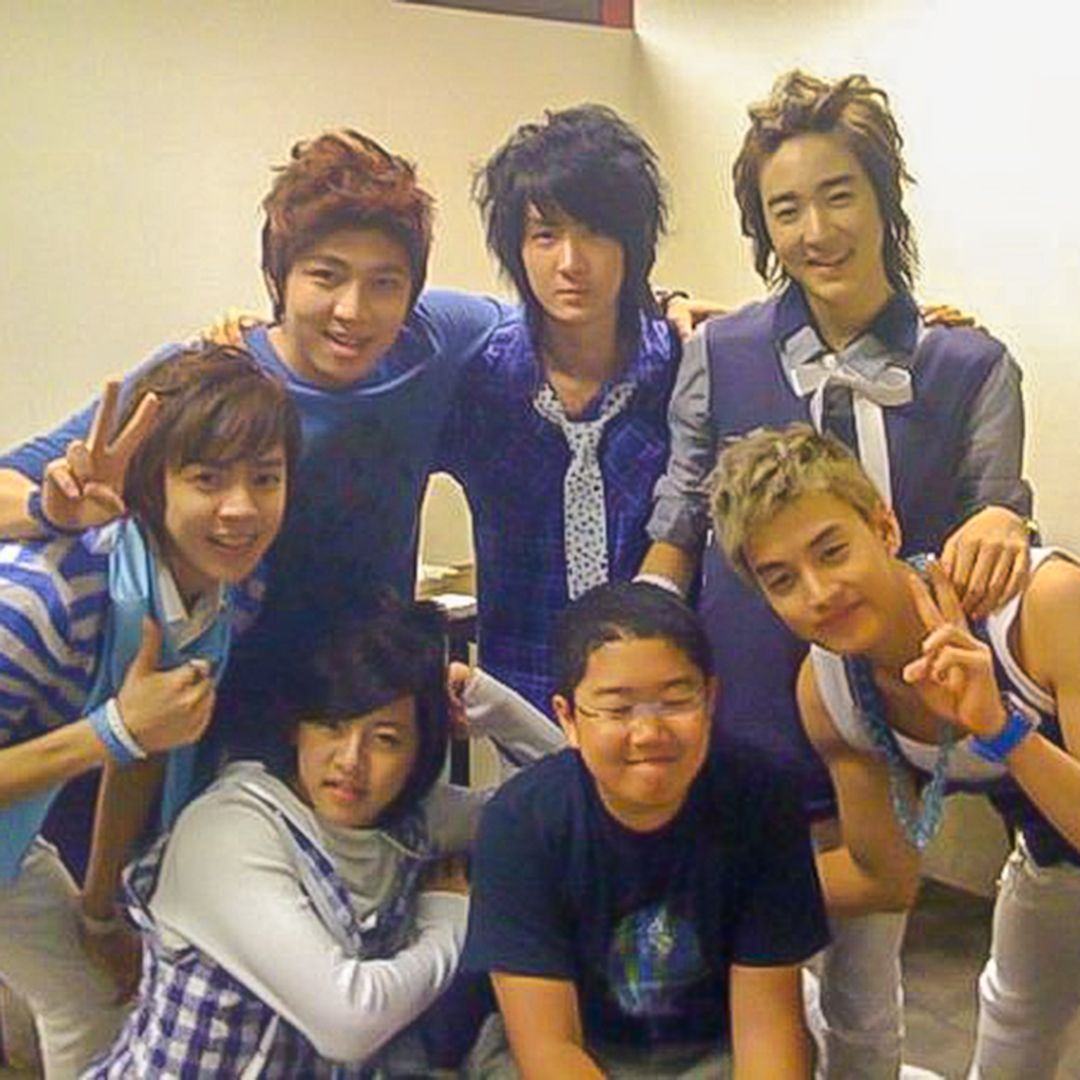
Many a Singaporean housewife had started to swoon over Bae Yong Joon in “Winter Sonata” and be dazzled by Lee Young-ae in “Jewel in the Palace”. Hallyu, or the ‘Korean Wave’, would begin its slow engulfment of their children. My seniors and classmates would change their profile pictures on Facebook to their favourite members of Girls Generation or SHINee, declaring their unabating love for their legs or their looks. Boys would skip class to watch HyunA shake her ass on the library computers. My own cousin, who had debuted in a Korean boyband in 2008, would be chased by eager fans in hired vans whenever they came to Singapore.
Part of me wanted to capitalise on this coolness, this intense allure generated by Korea’s cultural exports. This was the particular way my adolescent insecurity had chosen to make itself apparent. On Facebook, I would host giveaways of albums signed by my cousin’s group. In school, I would gravitate toward Korean friends, only to be held at an occasional distance because I wasn’t fluent in Korean (one even called me a hybrid Korean because of my mixed parentage). And on trips to Seoul to visit family, I would buy shirts, pants, and glasses, hoping to take advantage of the aesthetic connotations that came with being Korean. Ethnicity became ancillary to style.
The particular ubiquity of Korean cultural products, especially with their more accessible and familiar cultural and social values to Singapore’s ethnic communities, has led to recreations of scenes from “Descendants of the Sun” and “Crash Landing on You” by army boys and people watching “Extraordinary Attorney Woo” on their phones on the MRT to work. Such is the power of the Korean Wave that “Minari”, a Korean American film set in Arkansas, US, was marketed in Singapore as if it were a K-drama. Once, at a friend’s place, his father stood up after he had finished dinner to return to watching his drama. Upon hearing my friend proclaim that I am half-Korean, he promptly did a 180-degree turn to share his newfound fascination with the shows.
Today, most Singaporeans imagine our Korean population as being clustered in Tanjong Pagar and Upper Bukit Timah. While many Koreans have regarded Singapore as a transitory destination, the few who have stayed form a community so small that they hardly register in the national imagination. That is, save for the ministerial TikToks featuring BlackPink songs, finger hearts flashed by emcees and politicians, or the occasional actor or singer thronged at the sliding glass doors of Changi Airport. However, the enticements of the world prescribed in Korean dramas and replicated by many a Korean beauty salon or restaurant obscures a longer history of Singapore’s Korean presence, one I have long sought to understand for myself.
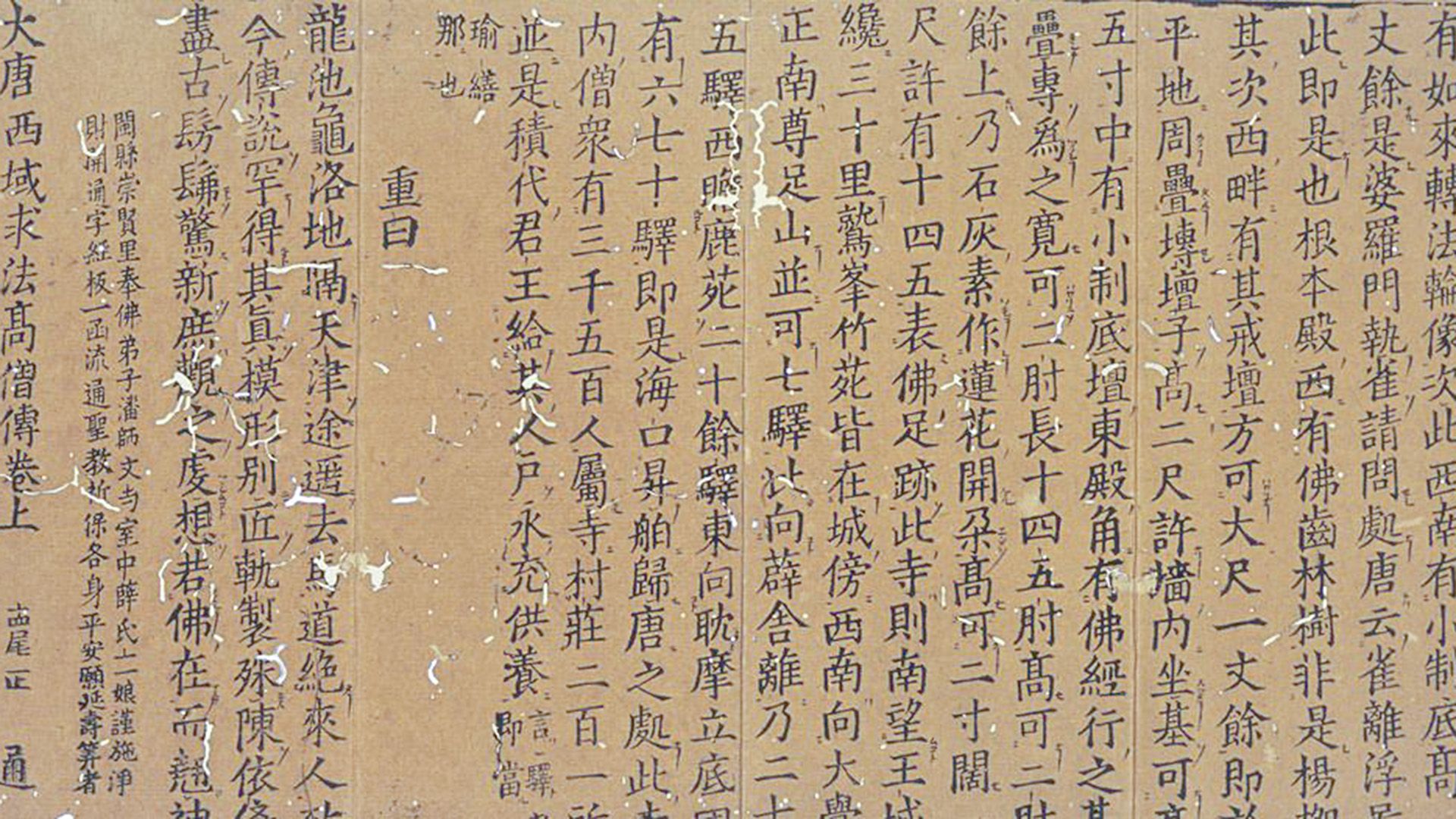
An early account of a possible Korea-Singapore interaction is found in The Buddhist Pilgrim Monks of Tang Dynasty (691 AD). These collected biographies serve as records of pilgrimages to India and South-east Asia made by monks from across China, Tibet, and Silla, one of three kingdoms that would later be unified under the Goryeo Dynasty (918-1392 AD) as Korea.
One record tells of two Buddhist priests returning to Silla. None on board knew their names; each of whom had mastered the Buddhist sutras in thought and practice. Their journey had begun in Chang’an (present-day Xi’an), from where they travelled to the coast and then through the South Seas, riding a vessel until they arrived in Srivijaya (present-day Palembang), a centre for Buddhist learning. They may have stopped over in the island we now know as Singapore. Yet, as fate would have it, both monks encountered illness, dying before they could return home.
From the 7th to the 16th centuries, the Sinocentrism of diplomatic and trade relations in East and South-east Asia meant that there was little recorded by way of interaction between tributary states. There is ample evidence in Tang and Song Dynasty records that envoys from Korea and Srivijaya were at least aware of one another: both are often cited alongside one another in lists of states offering tribute to the Chinese emperor, whether that was ginseng, textiles, or livestock. From the 17th to the 19th centuries, there is little evidence to suggest there were ties between Korea and the entities that ruled Singapore, by then incorporated variously under the Portuguese, the Dutch, and the British.
During the mid-1860s, King Gojong ascended the throne in Korea. His father, Heungseon Daewongun, ruled as regent until Gojong reached adulthood, and was the primary proponent of Korean isolationism. By then, Singapore was under British rule, and had established itself as an open port in a global trading network. In 1871, US and Korean forces clashed in an American attempt at gunboat diplomacy. Such incursions eventually led to the end of Korea’s isolationist policy; in 1883, The Straits Times reprinted an article describing how, “Korea, or Chosen, after its long seclusion from the outer world, with the exception of Japan and China, is at last to be opened.”
The cession of Hong Kong to Britain in 1842 after the Opium Wars, as well as the forced opening of five ports in China, would lead to rumblings of revolutionary fervour. Driven by widespread loathing of the Manchu-led Qing Dynasty, republicans often turned to the overseas Chinese for support. As a focal point in the ‘nanyang’ or South Seas, Singapore served as a base for fundraising and the printing of propaganda materials. Upon the dynasty’s collapse in 1911, Sun Yat-sen’s relinquishing of the presidency to Yuan Shikai, and China’s fragmentation during the warlord period, the revolutionaries in Singapore published the Kok Min Yit Poh (National Daily) to advance a movement against Yuan.
It was at this time that members of Korea’s independence movement established ties with the Chinese revolutionary movement. In 1910, Japan had formally annexed Korea and enforced policies of industrialisation, urban development, and linguistic and cultural assimilation. Hong Myeong-hui, a Korean novelist, entered China in 1913 as part of an exodus of independence activists, before moving to Singapore with others in 1915. Hong worked for the Kok Min Yit Poh and lived in its publication office for months. Another independence activist who arrived at this time was Jeong Dae-ho; Sun Yat-sen had brought him to Singapore to serve as a teacher.
These activists sought a new direction for the Korean independence movement by seeking to establish a Sino-Korean alliance against Japanese expansion. Though Hong left Singapore in December 1917, Jeong opted to remain. His son is said to have established the Korean Association of Singapore in 1963.
On December 7th 1941, Japan launched a surprise military attack on Pearl Harbour, while also separately executing an air raid on Singapore. The next day, the Pacific War officially began as Japanese forces executed landing operations on the northern part of the Malay Peninsula. This fuelled further Korean immigration to Singapore.
Some of the Korean arrivals continued to be involved in the independence movement, vehemently opposed to Japanese rule. In 1937, the Korean Revolutionary Party’s Manifesto outlined not only the annihilation of Korea by Japanese imperialism but also how Japan’s expansionism sought to claim the Philippines, Vladivostok, and Singapore. In 1941, Han Ji Cheong, the foreign affairs director of the Korean Volunteer Team, a China-based independence group, travelled to South-east Asia to seek support for the anti-Japanese movement from the Consulate Generals of Manila, Singapore, and Yangon.
Contrastingly, during the Japanese occupation of Singapore (1942-45), most Koreans in Singapore were forced conscripts into the Japanese Imperial Army: prison guards, civilian attaches, or comfort women forced into sexual labour. The majority resided either in Changi Prison or a camp near Jurong Harbour, which provided ease of repatriation. Many Korean prison guards oversaw the transportation of prisoners from Singapore to Burma to construct the Burma Railway, also known as the “Death Railway”.
After Japan’s surrender to the Allied Powers in 1945, 23 Korean prison guards were tried as war criminals and sentenced to execution, amongst whom 10 were hanged in Changi Prison between January 1946 and July 1947. Their remains are buried in the Japanese Cemetery Park. The last-known living survivor of sexual enslavement in Singapore is Kim Bok Dong, aged 93, who lives in Seoul. She most likely worked at a comfort station in Sentosa.
In 1945, after the Pacific War, the Korean Peninsula was divided into two blocs, governed by the United States and the Soviet Union along the 38th parallel. In April 1950, a South Korean delegation was dispatched to Singapore, seeking, as noted by the Singapore Free Press, to sell apples, silk, ginseng, and mineral products and buy rubber, palm oil, and pineapples. Two months later, North Korea invaded South Korea, instigating one of the most devastating armed conflicts of the 20th century with almost 3 million fatalities. The end of the conflict, signalled by an armistice signed between North Korea, China, and the United States in 1953, yielded the creation of two new countries—the Democratic People’s Republic of Korea and the Republic of Korea. It was the Panmunjom Declaration for Peace, Prosperity and Reunification of the Korean Peninsula, adopted during the 2018 inter-Korean Summit, that would finally bring the war to its official end, at least in principle.
By 1964, emerging from the detritus of war, South Korea established the Korea Trade Centre in Singapore, which enticed Korean officials, labourers, and merchants to migrate. In 1967, two years after Singapore gained independence from Malaysia, it launched a fishing venture with South Korea. South Korea supplied fishing trawlers, equipment, and experts, while Singaporean businessmen were expected to guarantee the market for fish.
In 1969, Kwon Hui Kyong, North Korea’s deputy foreign minister, flew to Singapore to deliver a message from Kim Il Sung, his premier, to Lee Kuan Yew, Singapore’s prime minister. In an official statement, Kwon described the countries’ “common cause against imperialism and colonialism”, while congratulating Singaporeans on “the prosperity and development of the country.”
A month later saw what many considered a strategic act of counter-balance. Han Pyo-wook, South Korea’s ambassador to Thailand, visited Singapore as the special envoy of Park Chung-hee, South Korea’s president, initiating the first official contact between both countries. The “man from Seoul”, as The Straits Times called him, met S. Rajaratnam, Singapore’s foreign minister, and handed him a ‘special message’ from Park to Yusof Ishak, the president. In 1971, The Korea Trade Centre was renamed a consulate-general.
While South Korea moved with business and trade, North Korea emphasised a shared struggle against the ideological and material forces that had degraded the citizens of former colonies. By 1975, Singapore had established formal diplomatic relations with both Koreas.
Sociologist Jeehun Kim divides Korean migration to Singapore into four periods. In the first, from the 1960s till the 1970s, the formalisation of diplomatic relations with South Korea lent energy to the Korean Association of Singapore (established in 1963), which set up Korean language schools, a Woman’s Association, and organised parties and events.
One notable immigrant in this period was Jin Yinji, a singer of mixed Chinese-Korean ancestry, who was invited to perform in Singapore in 1971. While here, she met and married her Singaporean Chinese husband. By 1986 she had begun her acting career in Chinese-language television, which has continued to shape the course of her life in Singapore.
In the second period of Korean migration through to the 1980s, the total number of Korean immigrants to Singapore exceeded 10,000, with 8,600 working as construction workers. In 1980, Korean missionaries established The Korean Church in Singapore. Suzanne Jung, a former news anchor at Channel NewsAsia (CNA), moved to Singapore from South Korea in 1983. She has described being referred to pejoratively as the ‘Korean girl’ in Singaporean schools.
The 1980s proved to be a period of tumult across Asia, particularly with democracy movements erupting in China, Myanmar, and the Philippines. This was the decade when South Korea transitioned from military dictatorship to democracy; coupled with the 1988 Seoul Olympics, political liberalisation would begin to raise South Korea’s profile internationally.
In the third period, from the late 1990s to the 2000s, Kim observed “diversification” among Korean migrants. The early 1990s saw the collapse of the Soviet Union and the inauguration of a new South Korean government. This would presage an ideological debate fought over ‘Asian values’ between Lee Kuan Yew, then senior minister, and Kim Dae Jung, who was four years away from assuming the South Korean presidency. In an interview with Foreign Affairs in 1994, Lee made the spirited assertion that the restriction of individual rights was crucial to upholding social and political harmony, with the fundamental societal institution of family being the foil to ‘Western individualism’. Such a form of social order, inevitably, found its roots in Confucian logic.
Kim, by contrast, argued in a written response in the magazine that the need for a government to be accountable to the people traced its lineage to Confucian and Buddhist teachings, the philosophy of Mencius, and the ‘Tonghak’ (Eastern Learning) movement of the late Joseon period. Addressing the role of imperial bureaucrats, Kim argued that:
Confucian scholars were taught that remonstration against an erring monarch was a paramount duty. Many civil servants and promising political elites gave their lives to protect the right to free speech.
The mobilisation of Confucian rhetoric as the basis for and against free speech and democratic rights is reflective of the atavistic, nationalistic impulse both men drew from when formulating their political philosophies. With the conclusion of the Cold War and the looming dominance of capitalist democracies, seeking an older, non-‘Western’ form of political legitimacy was crucial to both Singapore and South Korea. Yet, while the latter joined Taiwan in an accelerated transition to democracy, Singapore remained a politically illiberal outlier. Kim’s election as South Korea’s president in 1998 brokered a new period in Korean cultural and political life, with democratisation, digitalisation, and economic recovery helping provide the conditions for a boom in cultural exports. In the late 1990s, the Korean Wave began to sweep into Singapore through music, television, and film.
Hallyu fed Singaporean demand for Korean cuisine, lifestyle products, and goods. Amidst the Asian Financial Crisis of 1997, many South Koreans looking for new opportunities established businesses in Singapore. This independent entrepreneurship contrasted heavily with Korean businesses in such cities as New York and Los Angeles, which were historically supported by intensive capital investments from South Korea’s government. Literary scholar Hyo Kyung-woo describes Tanjong Pagar as “a new type of Asian transnational ethnic enclave” that demonstrates “Korean ethnicity as a force operating within a global economic system.” Tanjong Pagar’s restaurants, supermarkets, and boutiques cater primarily to Singaporean customers who seek to enjoy South Korea’s fashion and lifestyle trends.
In the fourth period from the 2010s onward, Kim describes the Korean community as a “global immigrant community”. Singapore’s Korean population increased from 4,000 in 1999 to approximately 30,000 in 2019. It is the third largest community in South-east Asia after those in Vietnam and Indonesia, though with the highest number of Koreans (3,000) with local citizenship or residency. Hannah Press, a newsletter covering business opportunities, Korean cultural events, and advice on successful relocation to Singapore, portrays Korean immigrants as a “model minority”, Hyo observes. They are “members of the middle class who have abundant financial investment opportunities.” They “send their children to English international schools” and “can afford to hire maids.” This glosses over divisions within the community and overlooks the many Korean migrants who work in hotels, beauty shops, and restaurants. Clusters of Korean businesses are presented as “non-threatening ethnic [spaces]” that contribute “to the strong belief in Singapore as a harmonious multiethnic society.”
The familial ideal presented in Hannah Press alludes to another factor that has drawn Koreans to Singapore: education. Scholars Joseph Sung-yul Park and Sohee Bae observe that the Singapore Tourism Board’s website for South Koreans highlights Singapore’s bilingual learning environment and achievements in international Olympiads in mathematics and science. South Korean families often cite these as reasons behind their moving to Singapore. While some families migrate to Singapore in their entirety, others pursue “wild geese” configurations, where fathers remain in South Korea to support their wives and children abroad. Many families regard Singapore as a convenient “trial site” for their children to study overseas, citing its proximity to South Korea, relatively manageable financial costs, and openness to international students. Scholar Yoonhee Kang observes that:
Above all, Singapore’s racial composition where East Asian Chinese are the majority and dominant group allows Korean migrants to be readily placed within the host country without feeling alienated and distress[ed].
Yet, many South Koreans regard Singapore more as a springboard to opportunities in the United States, Europe, or Canada. Few South Koreans settle in Singapore after their children graduate. Those who do create considerable dissonance for Korean boys who are Singaporean permanent residents; they are compelled to choose which military to serve in.
South Korea’s soft power deluge has buoyed a sense of ethnic pride and bolstered resistance toward assimilation. In a study of Korean adolescents in Singapore conducted by scholars You-Jin Chung and Jayashree Mohanty, participants reported feeling different from local friends because of their ethnic identification as Koreans. This sense of difference was attributed not to a feeling of negative discrimination; troublingly, respondents remarked feeling a sense of superiority in terms of their appearances, fashion choices, and culture. To be Korean in Singapore at this juncture of history is to inhabit a curious corner of the CMIO quadrant.
In the 1990s, my parents made the decision to move to Singapore from New York. Granted, they were not enticed by the commercial opportunities that hallyu provided. Rather, my Malaysian Chinese father thought the city a more advantageous place than the US for his work in investments across Asia. My Korean mother, having lived in Seoul and grown up in Hong Kong, slowly began to take to the city.
If she speaks of an early sense of isolation, I am not always sure as to how much of that came down to a question of ethnicity. She has seen the flourishing of Korean restaurants and businesses across the island, though maintains that the quality of Korean food outside of Korea is actually better in the US than here. In primary school, a Singaporean Chinese classmate’s mother noted her delight in finding out my mother was Korean. “Now I know what a Korean looks like,” she quipped when my mother picked me up one day. During school fundraisers, my mother would contract a local Korean restaurant to sell bulgogi bowls to famished students and their parents. I wonder if she thought that the novelty of her identity would help her sell best.
Amidst the mounting pressure of attending a Singaporean primary school, my eyes would glaze during the weekly Korean lessons I attended. The Korean alphabet is said to be the world’s easiest to learn. Figuring out how to read and write, as well as memorising a couple of cursory sentence structures each week, I feigned understanding, thinking I could get away with seeming proficiency until I realised I couldn’t speak to my grandparents. I relied mostly on my mother and aunts to translate from English to Korean. My grandfather, my haraboji, a cosmopolitan of yangban (gentry) extraction, had acquired some English from his years in Hong Kong and his traipsing across Asia.
Perhaps it is ironic that I would look to my being half-Korean as a marker of uniqueness. Having a Malaysian parent is not uncommon in Singapore, but having a Korean one is. To have one of each is even rarer. The simultaneous resistance and alienation I felt about assimilating into a Singaporean Chineseness has shaped part of the fascination I have retained toward an imagined Korea. Though, as is operative within the most fundamental cliche of any diaspora, the Korea I hold to is most often one that is fantastical. Attempts to ethnicise myself through song and film, through study and scholarship, have rarely made up for a feeling of deficiency. At evenings with my mother’s peers from her university, I have largely deferred to the language of bows and handshakes.
It would be remiss to not address the ways in which Singapore and North Korea have deepened their ties over the last 50 years. There is a visible Singaporean influence in Pyongyang: beer, soft drinks and other processed foods are imported from Singapore, while supermarkets and fast food restaurants have been set up by Singaporean entrepreneurs. The proprietors of Waffletown opened a restaurant in Pyongyang selling waffles, burgers, and other ‘Western’-styled foods to North Korea’s elite. Entrepreneur Geoffrey See founded the non-profit group Choson Exchange in 2009, with the aim of teaching entrepreneurship to help work toward a “healthy civil society in North Korea.” The group has brought more than 100 North Koreans to Singapore. J Cheang established the Benata Business Centre in Pyongyang in 2013 where North Koreans could enjoy chicken rice and laksa. Before 2017, North Korea also reportedly exported sand to support Singapore's land reclamation needs. Moreover, prior to his assassination in Malaysia, Kim Jong-nam, brother of Kim Jong-un, North Korea’s supreme leader, is said to have spent time in Singapore, most recently in 2012.
However, Singapore officially suspended trade ties with North Korea in 2017, in accordance with UN-led sanctions that followed nuclear tests. Consequently in 2018, Singapore revoked the work permits of all North Koreans here (the few who could had traditionally migrated for business or education). These sanctions were temporarily suspended during the historic 2018 North Korea-US Summit where Donald Trump, former US president, and Kim met. Infamously, after a jaunt around Gardens by the Bay, Vivian Balakrishnan, Singapore’s foreign minister, took and posted a selfie with Kim (and fellow Singaporean minister Ong Ye Kung).
In examining the history of the Korean community in Singapore, we find many similar currents that have shaped migration patterns around the world—economic opportunity and educational promise. Other factors, such as the cooperation between Korean independence activists and Chinese revolutionaries, may seem surprising. Meanwhile, the presence of Korean prison guards and comfort women drawn from Korea and across South-east Asia in Singapore allude to the pains that lie within a shared wartime history of Singapore and Korea. Both also share psychic wounds from the ensuing legacies of geopolitical partition—between Singapore and Malaysia, South Korea and North Korea.
There are undoubtedly more stories to be told about those of Korean descent who live or have lived in Singapore, whether they are South Korean, North Korean, Korean American, or Koreans overseas with some sort of complex familial history like myself. There continue to be figures in Singaporean public life, including the half-Indian, half-Korean radio presenter Joakim Gomez, who recently hosted the National Day Parade, Kwak Kyung Hoon, a Korean teacher, street dancer, and social media content creator, and Julie Yoo, an anchor and presenter at CNA. There remain reverberations of the debate between Lee Kuan Yew and Kim Dae Jung—for example, The New York Times opted to move its headquarters from Hong Kong to Seoul rather than Singapore, ostensibly given the latter’s hostility to press freedoms.
There continue to be business ventures and educational exchanges, religious and cultural ties, and the consumption and creation of new media. The East Asian Institute at the National University of Singapore established its Korea Centre in 2021, with the stated aim of seeking “to contribute to understanding and interaction between the two Koreas (North and South Korea) and ASEAN countries.” Outside of Korea, the stronghold of Korean Studies has continued to be in the United States, though interest sparked by the Korean wave has not often been matched by requisite funding of Korea-related university programmes across the world. Whether the Korea Centre can help Singapore to carve out a distinctive position in the world of Korean Studies remains to be seen.
In the realm of film and television, the recent Korean drama “Little Women”, which was partially shot in Singapore, as well as “Ajoomma”, a joint Singaporean-Korean film about a Korean drama-obsessed Singaporean widow who travels abroad for the first time ever to Seoul, reflect the strength of a growing, cinematic relationship between South Korea and Singapore. “Ajoomma” is Singapore’s submission to the 2023 Oscars’ International Feature Film category.
Both South Korea and Singapore are ascending in their own way, their respective confidence bolstered by a variety of cultural and material resources: South Korea’s cultural exports, Singapore’s maturing ability to absorb cultural influences and understand the regional diversity in its midst. There exists a fundamental, growing, reciprocal admiration as Singaporeans and South Koreans continue to travel and settle in one another’s homes.
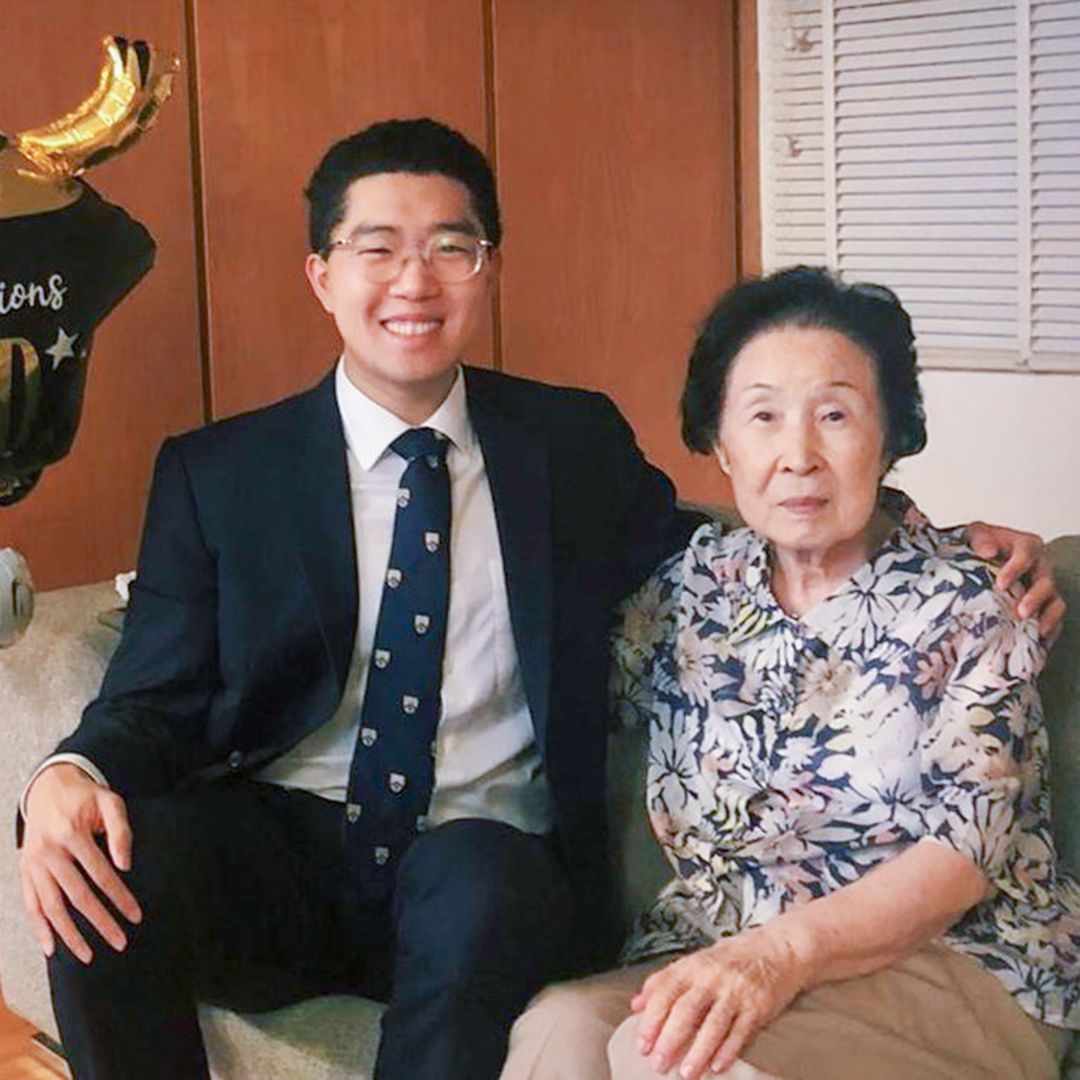
I often think back to an afternoon I spent with my grandmother, my halmoni, during an extended visit she had to Singapore, far from the pretensions and anxieties that had shaped my sense of Koreanness. Sitting on a chair, feeling the breeze and the warmth of the afternoon, she recalled that she used to sing of Singapore while performing physical labour for the Japanese during World War II. The song had been a paean to the reach of Japan’s empire. Through the tumultuous decades that followed—the atomic dissolution of Japanese empire, the war that left Korea riven, the fragmenting of the British Empire into nations, the violence and protests and transformations that South Korea would experience, and the migration that came to define her own life— never did she imagine that she would one day find herself in the place she had only ever known through song.
Acknowledgments: I am indebted to Kim Su Min for her invaluable support in translating material for this essay.
Jonathan Chan is a writer and editor of poems and essays. He received a BA in English from Cambridge and an MA in East Asian Studies from Yale. He is the author of the poetry collection “going home” (Singapore: Landmark, 2022). More of his writing can be found at jonbcy.wordpress.com.
Additional research by Jean Hew, Jom's head of research.