

Dear Jomrade,
Today we’ve published:
- “Singapore This Week”, by Jom
- “Flipping the script: Migrant Writers of Singapore”, by Miguel de la Fuente-Lau
It’s been a terribly busy but fulfilling week at Jom, conducting performance reviews and finalising the recruitment of our new tech lead. We’ve also had to contend with a barrage of fascinating stories, so I’ll just get out of the way and let you enjoy the issue.
- Tharman, HR experts, and others confront issues of societal equity around AI adoption
- What should we make of Singaporean leaders hosting Jeffrey Epstein in 2002?
- Can Singapore nurture a more enlightened approach to sex work?
- How can individuals and the private sector assist in keeping us safe from rising sea levels?
- Ren Faire SG, and the making of one 23-year-old woman’s dream
- Goodbye, Pangdemonium, as Tracie and Adrian Pang bow out
Above are the issues we chose to explore in more depth.
Elsewhere, in Parliament this week: the government’s in-principle support to institutionalise the office of the Leader of the Opposition; the government’s defence of high salaries for political office holders (soon subject to review); debate about mandatory retrenchment benefits, with the PAP’s view, a rebuttal from the WP, and one from the (unelected) PSP; and the WP’s suggestion to Make (Singapore) Equities Great Again.
And other news this week included: a commentary by The Straits Times on Singapore crossing the “super-aged” threshold this year; the prevalence of “problematic [video] gaming” among young adults; Singapore’s new space agency; an update on the Nipah virus; KF Seetoh, referencing the closure of Warong Nasi Pariaman, reiterating the problems with rent and other costs for the F&B industry; “Migrant workers should not be made invisible to be accepted”, HOME’s response to the MOM’s view on shared spaces; the criminal trial of Goh Jin Hian, son of Goh Chok Tong, former prime minister, begins; the AirFish, a water-skimming craft, will soon begin operations between Singapore and Batam (no more bumpy rides?); and the best reason why you shouldn’t take your impression of Bruce Lee too far.
Join the over 2,000 paying members now to get access to all our content, starting from just S$10 a month.
“Flipping the script: Migrant Writers of Singapore”, by Miguel de la Fuente-Lau
Migrant workers: our perception of them, the language that we use with and about them, their working and living conditions, our acceptance of them in public spaces. In all these regards, and more, Singapore today is unrecognisable from just a decade or two ago. It’s been one of the great delights of my lifetime to witness, and proof that we can change.
Of course there’s a long, long way to go, as Jom has asserted many times, whether addressing individual instances of torture or systemic preferences for carting humans like cattle on trucks. Even as we keep grappling with all that, it’s important to recognise progress. Kudos to the activists, artists, civil society workers, and others who’ve led the way.
One of the most invigorating strands of this has been the emergence of the literary migrant worker. And who better to tell their story than Miguel de la Fuente-Lau, first-time Jom writer and an ethnically Filipino migrant (albeit, as he candidly discusses in his intro, a more privileged one.)
One of my favourite passages:“Most of our conversation played out like two friends enthusiastically talking about the craft of writing rather than an actual interview. I learned that Ellen found the haiku quite flexible, beyond the common 5-7-5 rhyme scheme. The quatrain—a four-line stanza with an ABAB rhyme scheme—is her favourite. She also introduced me to the ghazal, a lyrical poetic form originating in Arabic literature…Informed by her careful, observant disposition, she tends to write sad poems, like the one inspired by the cuts on the arms of a fellow MWS writing workshop attendee. ‘I realise that I can’t write happy poems like others do…I don’t know, it’s too easy for me to write painful ones.’
We discussed whether she felt her writing should educate people about migrant workers’ experiences. ‘I think it’s a good way to tell them that…we are not just here as migrants, as domestic workers. If we have talent, we can share it. We don’t have to be a domestic worker forever.’”
There’s much more in Miguel’s piece, including about the brotherhood of Bangladeshi poets here, in keeping with the rich tradition of their homeland; and the vital contributions of Singaporean individuals like Ada Cheong and local organisations, such as Sing Lit Station and The Majurity Trust, towards the vibrancy of this niche literary scene. I hope it inspires you to think of novel ways in which you can empower those around you.
Jom bangkit,
Sudhir Vadaketh, editor-in-chief
Jom
Behind Jom’s art

Accompanying Miguel’s essay this week are Jie Ru’s watercolour illustrations depicting the rich imaginative landscapes of migrant writers, often tended to in the wee hours of the night after a long work day, as everyone else is asleep. From departures and reunions to the toll of caregiving, literature is shown as a means of freedom and liberation, even within the confines of a small room. Jie Ru’s delicate shading parallels the tender, dreamy worlds that these writers have dedicated themselves to, in spite of the harsh labour conditions they endure.
Jom on migrant labour
 Jean Hew
 Robert Godden
 Sudarshana Chanda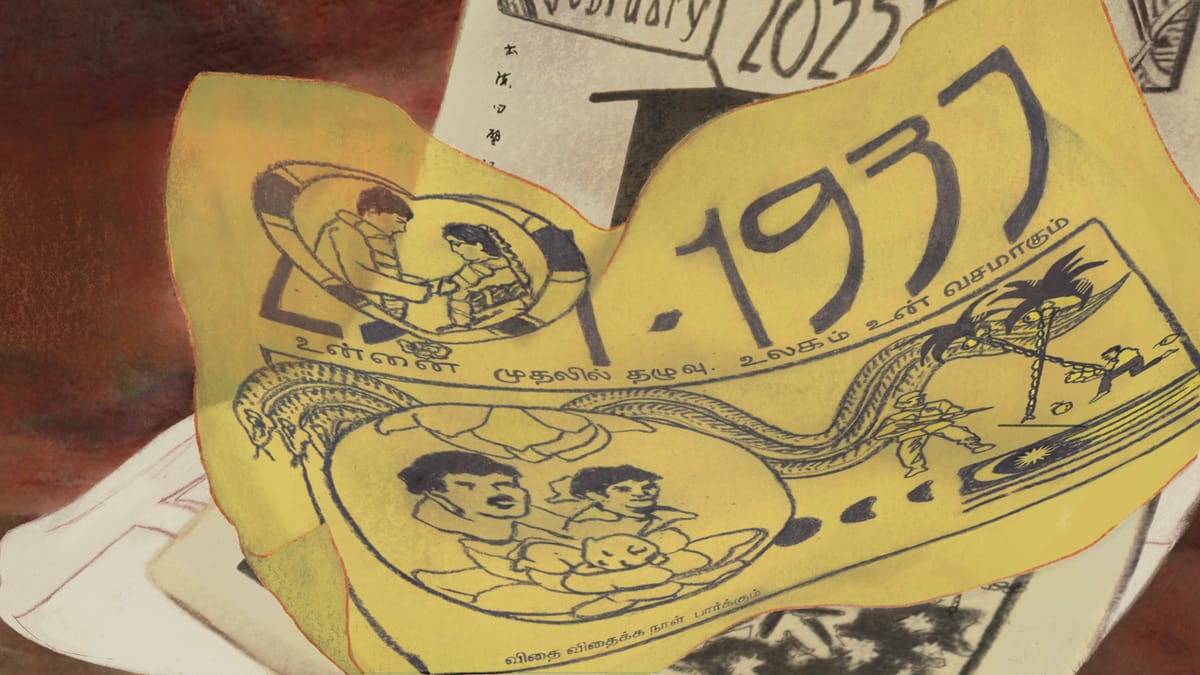
 Carol Yuen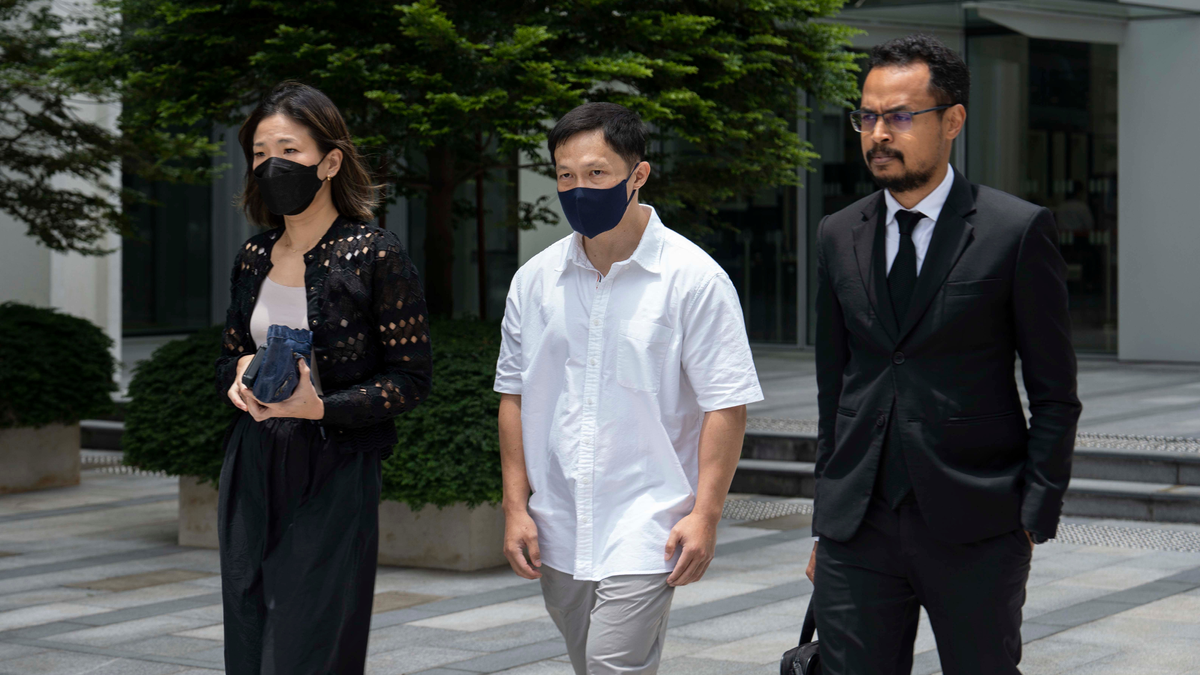
Singapore This Week
Earth: Walled garden
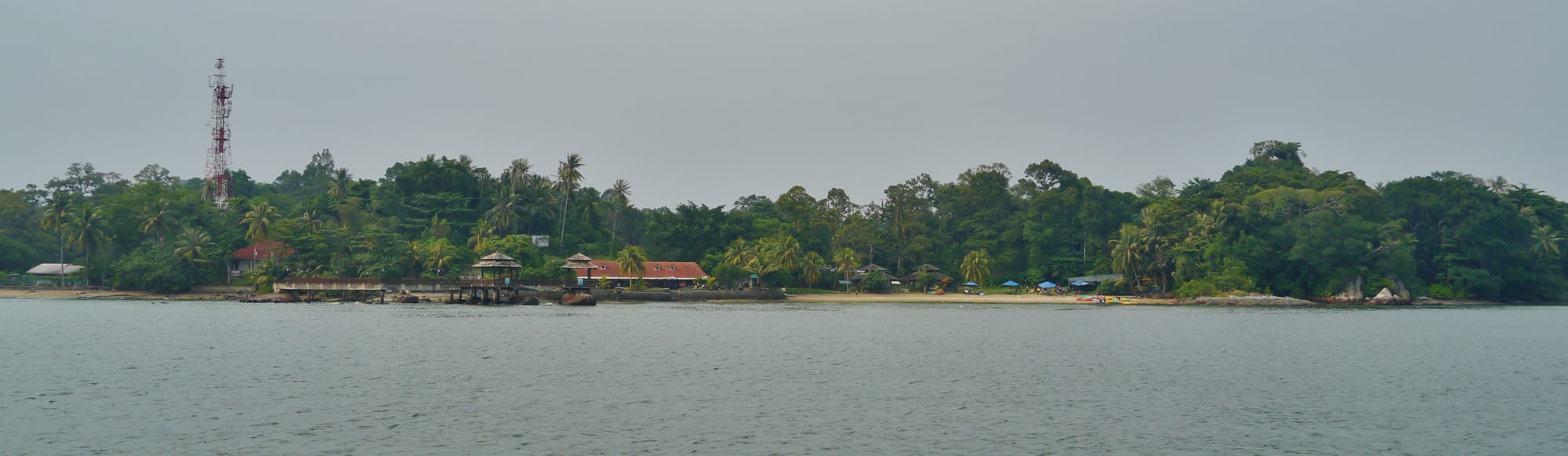
Whose job is it to keep us safe from rising sea levels? The Coastal Protection Bill, to be debated in Parliament next month, spreads responsibility across government agencies as well as corporate land owners and lessees operating along the shoreline. Parties will be required to appoint a flood protection manager to work with PUB, which is expected to issue a code of practice later this year. They’ll have a menu of responses: planting mangroves, building seawalls or deploying more engineered solutions like moveable barriers or flood-defence systems, including gates that can be opened or closed depending on the weather conditions. The aim is for Singapore to over time be garlanded by a continuous natural-manmade barrier holding back the swelling seas.
It’s good that private enterprise is being co-opted in the battle against climate change (although some will wonder whether the proposed legislation’s teeth—up to two years’ jail and a S$200,000 fine for violations or noncompliance—are sharp enough). It’s also encouraging that policy appreciation of mangroves, heedlessly destroyed in Singapore’s headlong rush into modernity—over 95 percent lost over the last 200 years—continues to deepen. Mangroves have been restored on Pulau Semakau and Pulau Tekong; plans are underway for the Mandai Mangrove and Mudflat Nature Park; and the NParks’ supported Restore Ubin Mangroves Initiative hopes to create a four-hectare mangrove ecosystem in Pulau Ubin’s Sungei Durian by 2026. “Utilising mangroves is not only less costly, if the process is done carefully, they are still able to be effective in protecting shorelines to keep up with rising sea levels [here’s how], which hard methods such as sea walls are not able to adapt to,” said associate professor Wong Poh Poh. Besides, mangroves can store huge quantities of planet-warming carbon.
Amidst the plaudits for far-sighted, anticipatory governance though, we must continue to question our own role in deepening the climate crisis. Hard protections such as sea walls and barrages will only feed our hunger for the sand we buy from our poorer neighbours. This promotes “rampant sand dredging and perpetuates a clear and present eco-danger for the region”, especially for the low-lying areas vulnerable to rising waters. Communities in Cambodia, Malaysia, and Indonesia—which recently lifted a two-decade sand export ban—are already suffering the consequences of Singapore’s propensity to wave cash in their governments’ faces. Supporters may argue that the onus lies with those governments to protect their own but surely there’s some ethical burden on us too, urgent as our needs may be.
“There is a need to strengthen trust and solidarity between developed and developing countries,” Grace Fu, minister for sustainability and environment, and one of Time’s Top 100 influential climate leaders in 2025, told the magazine last year. “Deepening this pact is critical to advancing global climate action and ensuring that no one is left behind.” May our actions be faithful to our words.
Other stuff we like
Preschool Tuition Research: Four in 10 Singaporean preschoolers participate in some form of academic tuition. Education NGO EveryChild.SG is studying how parents feel about this phenomenon. If you have a child between 18 months and 6 years, please take this 15-20 minute survey to help ensure that early childhood expectations in Singapore are developmentally-appropriate and evidence-based.
Focus group discussion for women going through Syariah divorces. Beyond The Hijab is looking for women who are either undergoing or have completed their Syariah divorce. This focus group discussion on Feb 14th will contribute to a research project on the lived experiences of those who have navigated these processes. Participants will receive S$80 for their time.
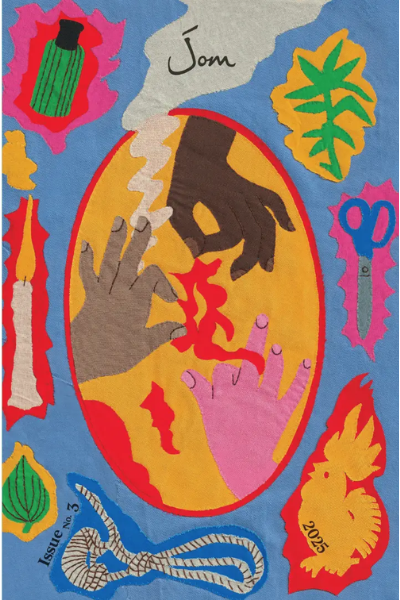
Jom print issue No.3 has just launched!
Dive into its themes of movement, mobility, and magic.
A flavour of Jom. Occasionally, Jom publishes essays outside the paywall. These are on issues we think are in the public interest, and deserve a wider airing. In the past two years, we have published nearly 50 such pieces. Read some of these if you’d like to see samples of our work. We hope they’ll convince you to subscribe. And even if you’re here with no intention of doing so, we hope you’ll enjoy these offerings and consider it time well spent!