
For subscribers only
Subscribe now to read this post and also gain access to Jom’s full library of content.
Subscribe now Already have a paid account? Sign in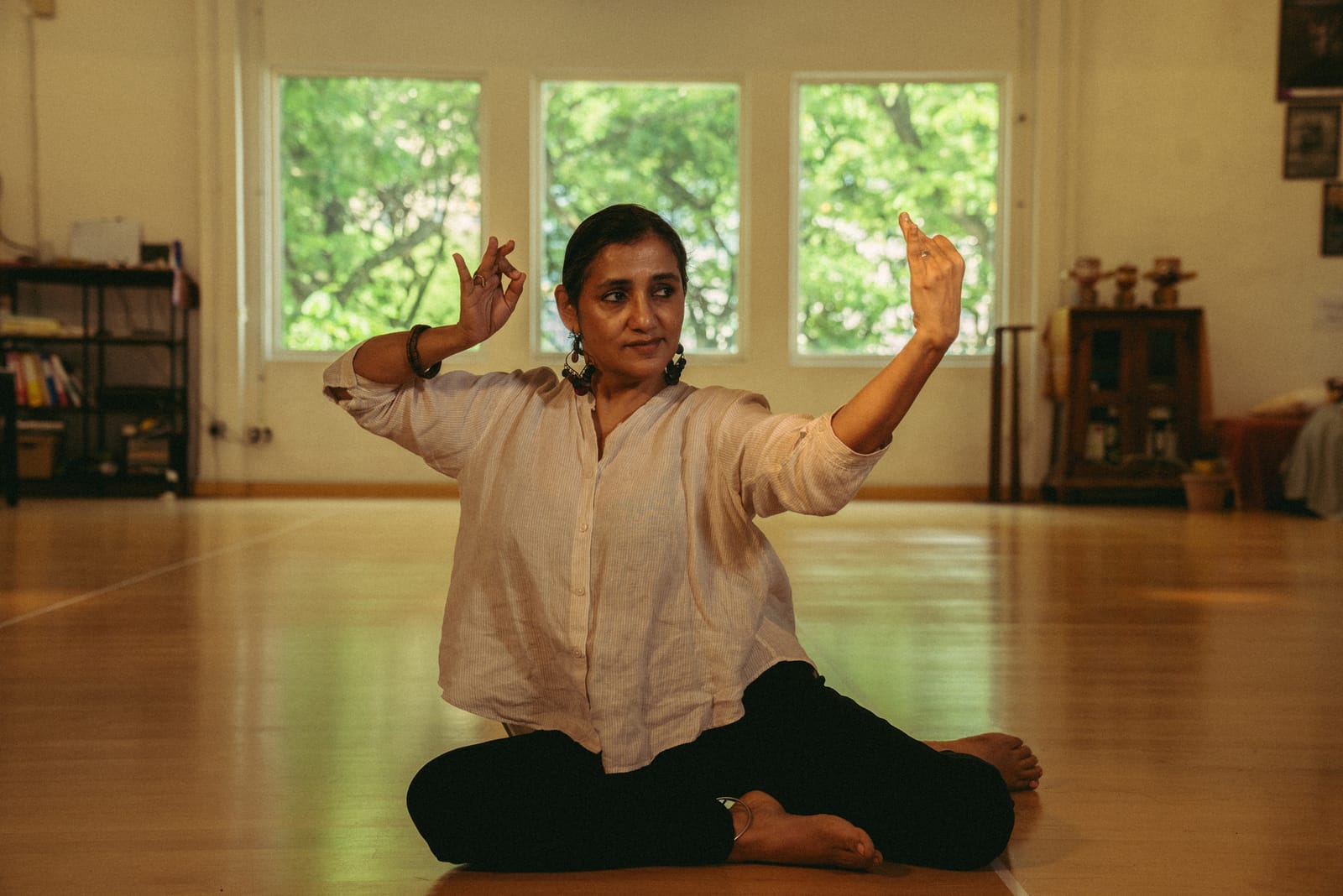
Raka Maitra dances; therefore she is.
Subscribe now to read this post and also gain access to Jom’s full library of content.
Subscribe now Already have a paid account? Sign in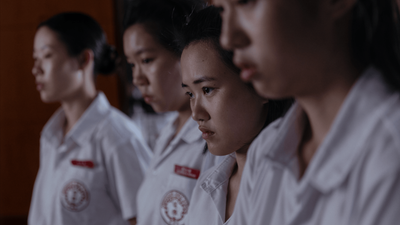
A distorted Confucianism in service of the state may not allow open mutiny but rebellion can still flower within, as Tan Siyou’s award-winning film “Amoeba” movingly shows through its schoolgirl protagonists.
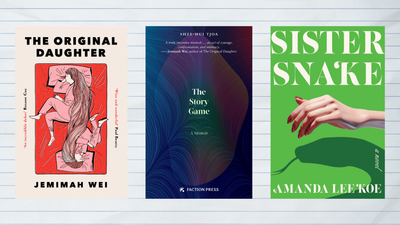
Protector, surrogate parent, role model: is there anything an eldest daughter can’t do? Cherry Tan reads three new Singaporean books that examine sisterhood and daughterhood—Sister Snake, The Original Daughter, and The Story Game—and considers how eldest daughters might (re)write their own story.
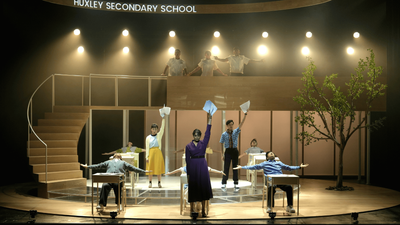
A production of breathtaking ambition and riveting quality, “Secondary: The Musical” lifts the curtain on the toll our education system takes on teachers and students alike.
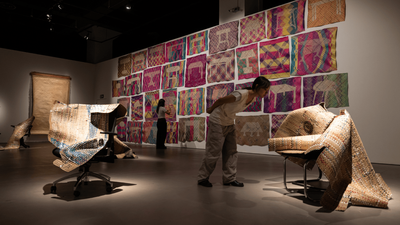
Jom’s arts editor wanders through Yee I-Lann’s stunning survey show at the Singapore Art Museum. The Sabahan artist may insist she’s a poor weaver of mats, but she’s certainly a powerful weaver of worlds.
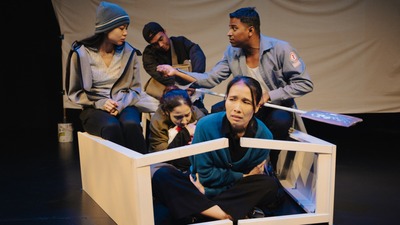
At the Singapore Fringe Festival, two plays grapple with forced displacement just as Jom’s reviewer ponders privilege, power asymmetries, and the deeply personal decision-making processes that shape the choice to stay, or to leave.

Please click on the link sent to your e-mail to login to your account.